

 English
 русский
 Deutsch
 Türk
 中文简体
25mm Series Flexible Seal: Precision Sealing for Gas Springs and Dampers
25mm Series Flexible Seal: Precision Sealing for Gas Springs and Dampers
25mm Series Flexible Seal: Precision Sealing for Gas Springs and Dampers
25mm Series Flexible Seal: Precision Sealing for Gas Springs and Dampers
25mm Series Flexible Seal: Precision Sealing for Gas Springs and Dampers
25mm Series Flexible Seal: Precision Sealing for Gas Springs and Dampers
25mm Series Flexible Seal: Precision Sealing for Gas Springs and Dampers
25mm Series Flexible Seal: Precision Sealing for Gas Springs and Dampers
25mm Series Flexible Seal: Precision Sealing for Gas Springs and Dampers
25mm Series Flexible Seal: Precision Sealing for Gas Springs and Dampers
25mm Series Flexible Seal: Precision Sealing for Gas Springs and Dampers
25mm Series Flexible Seal: Precision Sealing for Gas Springs and Dampers
25mm Series Flexible Seal: Precision Sealing for Gas Springs and Dampers
25mm Series Flexible Seal: Precision Sealing for Gas Springs and Dampers
25mm Series Flexible Seal: Precision Sealing for Gas Springs and Dampers
25mm Series Flexible Seal: Precision Sealing for Gas Springs and Dampers

Deng Yixuan — Domestic Sales Supervisor
Home / Author / Deng Yixuan — Domestic Sales Supervisor / 25mm Series Flexible Seal: Precision Sealing for Gas Springs and Dampers
NEW Category
Contact us
25mm Series Flexible Seal: Precision Sealing for Gas Springs and Dampers
Content
- 1 Why Flexible Sealing Matters in Compact Mechanical Systems
- 2 Product Overview and Dimensional Configuration
- 3 Flexible Dynamic Tracking
- 4 Broad Tolerance for Controlled Gaps
- 5 NBR Material and Practical Application Value
- 6 Designed for the 24mm Steel Pipe and 12mm Piston Rod Assembly
- 7 Performance Across a 50–1300 N Design Range
- 8 Advantages Compared with Generic Sealing Alternatives
- 9 Manufacturing and Technical Strengths
- 10 Advanced Rubber Seal Manufacturing Process
- 11 Quality Assurance for Consistent Product Performance
- 12 Customization and Engineering Support
- 13 Applications Across Multiple Industries
- 14 Installation Recommendations
- 15 How to Select the Correct Seal for a Project
- 16 Comparison of Material Options
- 17 Purchasing and Supply Chain Advantages
- 18 Maintenance and Service-Life Considerations
- 19 Frequently Asked Questions
- 19.1 What is the 25mm Series Flexible Seal used for?
- 19.2 What material is used for the product?
- 19.3 What are the main dimensions?
- 19.4 What does the 50–1300 N range mean?
- 19.5 Does the product include an O-ring?
- 19.6 What advantages does this seal offer over a generic O-ring?
- 19.7 Can the product be customized?
- 19.8 Is NBR suitable for every gas spring or damper?
- 19.9 How should the seal be installed?
- 19.10 What information should be provided when requesting a quotation?
- 20 Conclusion
- 21 References
- 22 Product: 25mm Series Flexible Seal
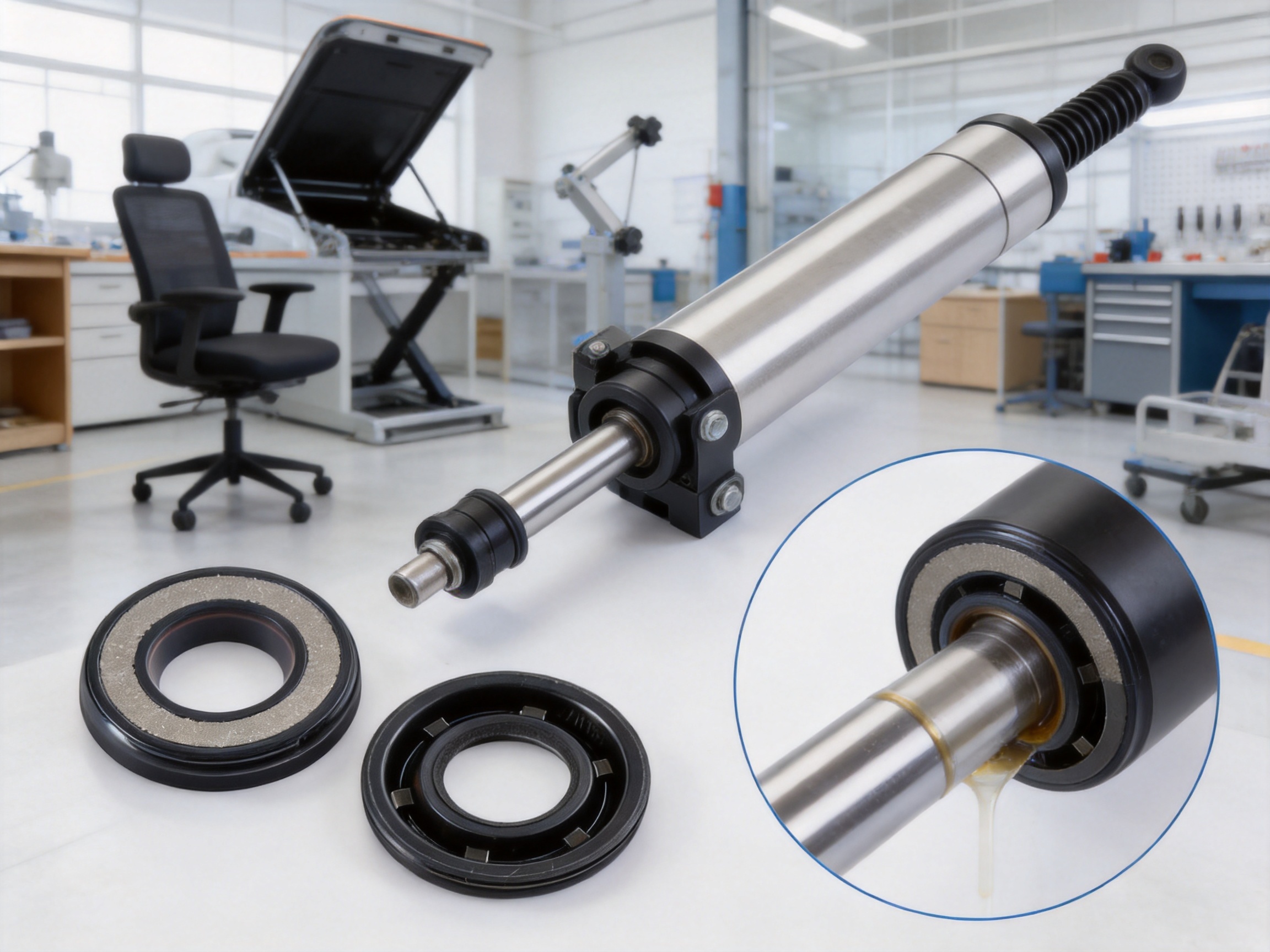
Reliable sealing is essential in gas springs, dampers, adjustable supports, and other compact mechanical systems where smooth movement, controlled force, and long service life must be maintained simultaneously. A seal must prevent gas or oil leakage while also following the movement of a piston rod, accommodating dimensional variation, resisting wear, and remaining stable under repeated loading. The 25mm Series Flexible Seal is designed to address these requirements through a compact flexible profile, nitrile rubber construction, and dimensional compatibility with a 24 mm steel pipe and 12 mm piston rod arrangement.
With an outside diameter of 24.9 mm, a nominal product specification of 25 × 11.3 × 4 mm, and an overall height of 4 mm, this seal is intended for applications requiring controlled sealing in a limited installation space. Its design supports dynamic tracking and maintains flexibility across a stated design applicable force range of 50–1300 N. The seal is also designed to work with a 24 × 2.4 mm O-ring adapter, providing a practical sealing combination for gas spring and damper assemblies.
The product is manufactured by Ningguo Jnsseals Sealing Technology Co., Ltd., a China-based sealing technology enterprise specializing in gas spring, damper, and O-ring sealing solutions. Founded in 2019, the company combines product development, testing, manufacturing, and technical service capabilities. Its experience in sealing applications enables it to provide not only standard products but also customized solutions for automotive, furniture, home appliance, medical equipment, construction, and related industries.
Why Flexible Sealing Matters in Compact Mechanical Systems
A seal used in a gas spring or damper does much more than close a gap. It must create a stable sealing interface around a moving rod while limiting friction and resisting deformation. During operation, the piston rod may move repeatedly through the seal, causing changes in contact pressure, frictional heat, and mechanical stress. If the seal is too rigid, it may fail to follow the rod surface or may produce excessive resistance. If it is too soft, it may deform, extrude, or lose its sealing force.
The 25mm Series Flexible Seal is developed around the balance between sealing contact and movement flexibility. Its flexible construction is intended to maintain contact with the mating components while allowing dynamic movement. This balance is particularly important in gas springs used in vehicle hatches, office chairs, furniture lifting systems, cabinets, beds, and adjustable equipment.
Compact gas spring assemblies also provide limited room for sealing components. A seal must fit within a carefully controlled housing and must work together with other components such as guide rings, O-rings, retaining elements, and piston rods. A small dimensional difference can influence assembly force, friction, leakage performance, and service life. For that reason, a seal with clearly defined dimensions and an application-specific configuration can offer advantages over a generic rubber ring selected without regard to the complete assembly.
In addition, gas springs and dampers may experience fluctuating loads rather than a single constant force. The stated design applicable range of 50–1300 N indicates that the product is intended for assemblies in which the working force changes across a broad operating range. The seal must therefore remain sufficiently adaptable during different stages of movement and under varying mechanical conditions.
Product Overview and Dimensional Configuration
The 25mm Series Flexible Seal is identified by product code A-1-026. It is categorized as a Y-type oil seal ring and is described as a flexible seal for 24 mm steel pipe and 12 mm piston rod applications. The product has an outside diameter of 24.9 mm and a height of 4 mm. The supplied product specification is 25 × 11.3 × 4 mm, while the listed internal dimension is 9.3 mm.
These dimensions should be considered together with the intended housing, rod, adapter, and assembly design. In a production application, the buyer should confirm the complete technical drawing and installation conditions before ordering large quantities. Actual sealing performance depends not only on the nominal seal dimensions but also on housing tolerances, surface finish, rod hardness, lubrication, temperature, pressure, stroke speed, and the compatibility of all materials in contact with the seal.
| Item | Specification | Application Significance |
| Product name | 25mm Series Flexible Seal | Compact seal for gas spring and damper assemblies |
| Product code | A-1-026 | Supports identification, quotation, and production communication |
| Seal category | Y-Type Oil Seal Ring | Flexible sealing profile for dynamic applications |
| Outside diameter | 24.9 mm | Designed for a nominal 25 mm class assembly |
| Listed product specification | 25 × 11.3 × 4 mm | Provides a basic dimensional reference |
| Listed internal dimension | 9.3 mm | Must be checked against the complete component drawing |
| Height | 4 mm | Suitable for compact installation spaces |
| O-ring adapter | 24 × 2.4 mm | Supports an integrated sealing arrangement |
| Application assembly | 24 mm steel pipe × 12 mm piston rod | Indicates the intended gas spring or damper configuration |
| Material | NBR | Commonly selected for general oil and dynamic sealing applications |
| Design applicable force range | 50–1300 N | Indicates a broad application range for fluctuating loads |
The dimensional information allows engineers and purchasing teams to make an initial compatibility assessment. However, dimensions alone do not replace application validation. The housing geometry, compression percentage, rod diameter, groove design, and installation tooling should be reviewed before final approval.
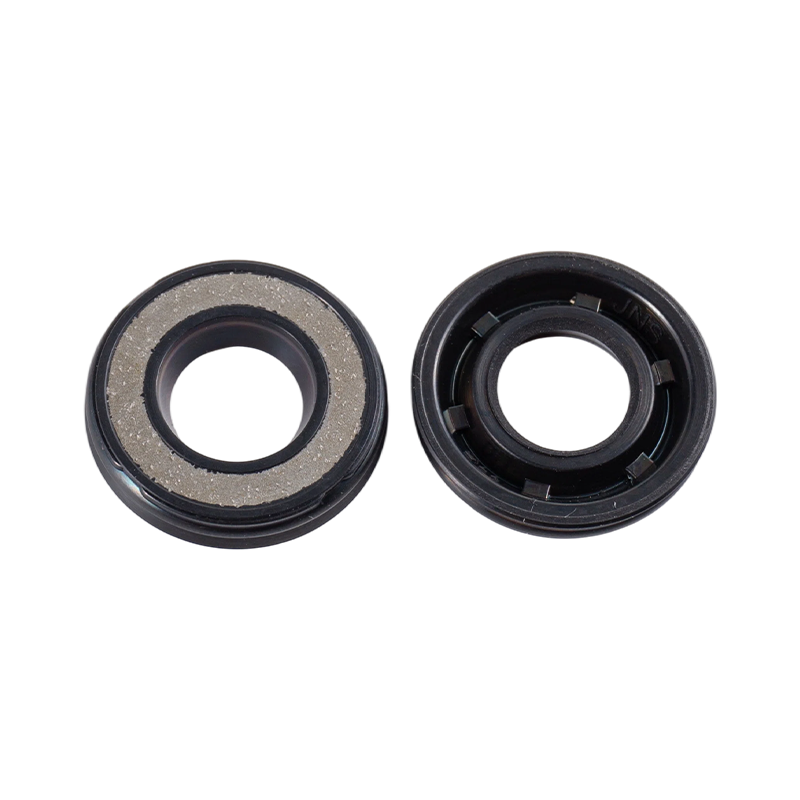
25mm Series Flexible Seal
Flexible Dynamic Tracking
One of the main advantages of this product is its emphasis on flexible dynamic tracking. In a moving seal application, the rod does not remain in one position. It travels through the sealing lip or contact area, and the seal must continuously adjust to small changes in alignment and operating conditions. A flexible profile can help maintain a more consistent contact relationship than a rigid sealing element.
Dynamic tracking is valuable when the piston rod experiences slight radial movement, minor angular variation, or changes caused by manufacturing tolerances. The seal must follow the rod without losing contact around the circumference. If contact becomes uneven, leakage may develop along a localized path. A flexible seal profile can reduce the likelihood of this problem by allowing the sealing edge to respond to movement.
The product description highlights good dynamic tracking and high tolerance for gaps. These characteristics are particularly useful when the assembly includes practical variations between components. No seal can compensate for unlimited clearance or poor component design, but a seal with suitable flexibility may be more forgiving of controlled gaps and ordinary production tolerances than a less adaptable design.
Flexible tracking can also help reduce stress concentration. When a rigid sealing element encounters a small misalignment, pressure may be concentrated in a narrow area. Repeated movement under this condition can accelerate wear. A flexible seal distributes contact more naturally as the rod moves, potentially supporting more stable performance throughout the service cycle.
For manufacturers of gas springs and dampers, this feature can simplify the process of selecting a sealing element for assemblies where rod movement and load conditions are not perfectly uniform. It can also support more consistent performance across a larger production batch, provided that the mating parts and assembly conditions remain within the intended design range.
Broad Tolerance for Controlled Gaps
In real-world manufacturing, a perfect zero-clearance interface is neither practical nor desirable. Components need enough clearance for assembly and movement, and production processes always involve dimensional tolerances. The challenge is to control the clearance so that the seal can compensate without suffering excessive extrusion, friction, or deformation.
The 25mm Series Flexible Seal is described as having a high tolerance for gaps. This means the design is intended to continue sealing across a practical range of controlled installation conditions. The benefit is especially relevant in gas spring and damper production, where the seal must work within a housing that includes a rod, guide, adapter, and pressure-containing body.
A gap-tolerant seal may provide greater application flexibility than a component that requires extremely narrow dimensional control. It can help engineers manage ordinary variations in housing dimensions, rod position, or assembly fit. It may also reduce the risk that a small gap change immediately results in leakage or unstable movement.
Nevertheless, gap tolerance should not be interpreted as permission to disregard engineering limits. Excessive clearance can cause seal extrusion, abnormal wear, and reduced sealing force. The proper installation groove, backup arrangement, and dimensional relationship should be established through design review and testing. The key advantage is that the seal is intended to accommodate reasonable variation while maintaining its basic function.
NBR Material and Practical Application Value
The specified material is NBR, or nitrile butadiene rubber. NBR is widely used for oil seals, O-rings, hydraulic seals, pneumatic seals, and other industrial sealing components. Its popularity comes from a practical combination of oil resistance, mechanical strength, abrasion resistance, flexibility, and cost efficiency.
In gas spring and damper applications, NBR can be suitable where the working medium, temperature, and mechanical conditions fall within the material’s capabilities. It is commonly selected for contact with mineral-oil-based fluids and general lubricants. Its resistance to wear can be valuable in dynamic applications where the sealing interface moves repeatedly over a rod surface.
NBR also offers a balanced solution for standard industrial production. Compared with some higher-cost specialty elastomers, it can provide an economical option for large-volume products while maintaining useful mechanical performance. This balance can benefit manufacturers who need dependable sealing components for furniture hardware, automotive support systems, office equipment, and general mechanical assemblies.
Material selection must always be based on the actual operating environment. Temperature, fluid chemistry, ozone exposure, sunlight, pressure, speed, and storage conditions can affect rubber performance. If the application involves high temperatures, aggressive chemicals, fuels, refrigerants, or unusual fluids, an alternative compound such as HNBR or FPM may be more appropriate. The manufacturer’s broader product capability in NBR, HNBR, and FPM O-ring products can support this type of material evaluation.
The product information identifies this specific seal as NBR. Buyers should request confirmation of the exact compound formulation, hardness, temperature range, fluid compatibility, and applicable test standards when those details are critical to the application.
Designed for the 24mm Steel Pipe and 12mm Piston Rod Assembly
The intended assembly is identified as a 24 mm steel pipe and 12 mm piston rod. This information is important because a seal is not an independent component. Its performance depends on the relationship between the rod, housing, groove, guide, adapter, lubricant, and pressure-containing space.
A 12 mm piston rod presents a relatively compact dynamic sealing surface. The seal must maintain a stable interface around the rod without creating excessive friction. The 24 mm pipe dimension provides the outer assembly reference, while the 24.9 mm outside diameter indicates a close relationship with the 25 mm product series. This configuration is suitable for compact gas springs and dampers used where available installation space is limited.
The product’s 4 mm height can also support compact assembly designs. A shorter seal may help manufacturers manage the total length of the sealing stack and preserve space for guides, retaining rings, and other internal components. At the same time, the available sealing area must be sufficient for the intended pressure and movement conditions. Product validation should therefore include leakage testing, force testing, endurance cycling, and inspection after disassembly.
Because the supplied information includes both a 25 × 11.3 × 4 mm product specification and a listed internal dimension of 9.3 mm, technical teams should confirm how each dimension is defined. Some manufacturers use different reference points for internal diameter, lip opening, or functional sealing diameter. Confirming the engineering drawing before tooling or mass production helps prevent misunderstandings and ensures that the seal is matched correctly with the rod and housing.
Performance Across a 50–1300 N Design Range
The stated design applicable range is 50–1300 N. This value is presented as a force range rather than a conventional pressure unit, which suggests that the product is associated with gas springs or dampers rated according to their operating force. In these assemblies, the gas spring force affects the mechanical load acting on the rod and the overall movement behavior of the product.
A wide force range can be useful for manufacturers serving multiple product families. One seal design may be evaluated across light-duty and heavier-duty applications, reducing the number of separate components that must be stocked. It may also support standardized assembly procedures when similar sealing dimensions are used across products with different force ratings.
However, seal selection should not rely on force alone. Internal gas pressure, working temperature, rod speed, stroke length, surface finish, lubrication, and cycle frequency also influence sealing performance. A gas spring with a higher force rating may create different internal conditions from a lower-force unit, even if both use the same rod diameter.
The 50–1300 N range should therefore be treated as an application reference for design screening. Final suitability should be confirmed through representative testing. Such tests may include static leakage checks, dynamic cycling, low-temperature and high-temperature evaluation, friction measurement, and post-test inspection of the seal lip and contact surfaces.
Advantages Compared with Generic Sealing Alternatives
Generic O-rings are useful in many static sealing applications, but they are not always the best choice for a moving piston rod. A standard circular O-ring may roll, twist, or experience excessive friction during reciprocating movement if the groove and lubrication are not carefully designed. The 25mm Series Flexible Seal is configured as a Y-type oil seal ring, giving it an application-specific profile for dynamic sealing.
The flexible profile can provide a more purposeful sealing interface than a simple circular ring. It is intended to track movement, maintain contact, and tolerate controlled gaps. This application focus may help reduce the compromises associated with adapting a general-purpose O-ring to a dynamic rod seal.
Another advantage is dimensional integration. The product is specified for a 24 mm steel pipe and 12 mm piston rod arrangement and includes a 24 × 2.4 mm O-ring adapter reference. This information gives engineers a starting point for designing the complete sealing set. By contrast, a generic component may require additional modification, trial assembly, or uncertain compatibility.
The product also offers a practical balance between performance and cost through the use of NBR. Specialty materials may be necessary in extreme environments, but NBR can be an efficient choice for standard gas spring and damper applications. Its broad availability and established processing characteristics can support stable sourcing and economical production.
Finally, the product is supported by a manufacturer that offers sealing development and customization. This can be valuable when a standard seal requires changes in dimensions, material, profile, hardness, or application testing. A supplier with design and technical service capabilities may provide more useful support than a distributor offering only catalog dimensions.
Manufacturing and Technical Strengths
Ningguo Jnsseals Sealing Technology Co., Ltd. is a high-tech enterprise founded in 2019 and headquartered in Anhui, China. The company focuses on the research, development, and application of sealing technology for gas springs, dampers, and related O-ring products. This focus gives the company a specialized foundation for understanding dynamic sealing rather than treating seals as generic rubber parts.
The company’s stated capabilities include strong research and development resources, advanced production equipment, and a professional technical service team. Together, these capabilities support the complete product cycle from concept development to production and application assistance.
Research and development is important because seal performance depends on many variables. A successful product may require changes to lip geometry, rubber formulation, hardness, dimensional tolerances, surface finish, or assembly method. An R&D-oriented manufacturer can evaluate these factors systematically rather than relying only on repeated trial production.
Advanced production equipment can improve repeatability. Rubber sealing products require controlled mixing, molding, vulcanization, trimming, inspection, and packaging. Variations in temperature, pressure, curing time, mold condition, or material preparation can affect the final product. Consistent equipment and process control help reduce variation between batches.
A professional technical service team can connect product design with customer requirements. It can assist with dimension confirmation, material selection, application analysis, sample evaluation, and customized product development. This support is especially useful when a customer has a complete gas spring or damper assembly but needs to resolve leakage, friction, durability, or fit concerns.
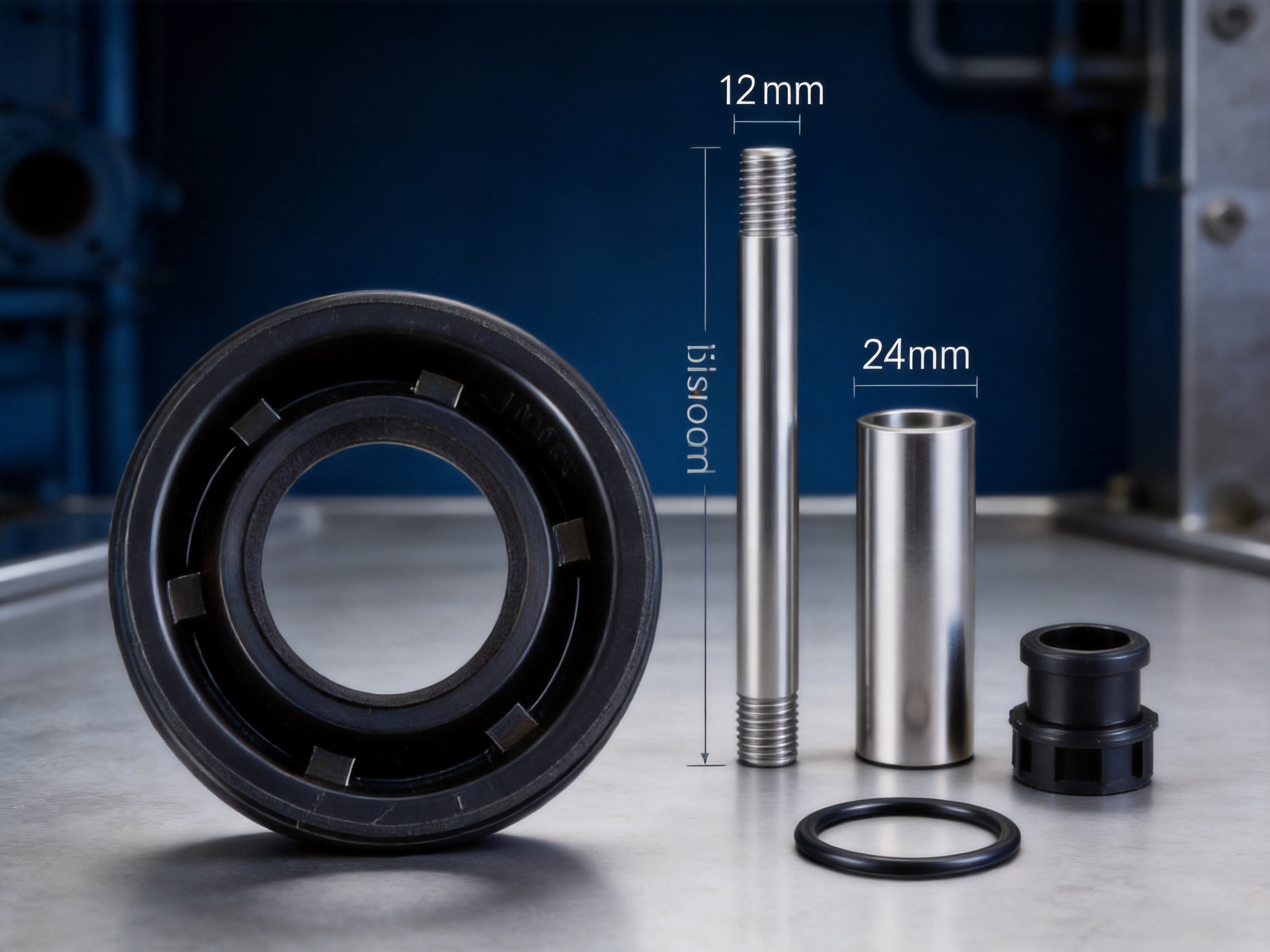
Advanced Rubber Seal Manufacturing Process
The manufacture of a flexible oil seal begins with material preparation. NBR compounds are formulated according to the required balance of hardness, elasticity, tensile strength, abrasion resistance, oil resistance, and processing behavior. The formulation may include polymer, reinforcing agents, plasticizers, curing agents, antioxidants, and other additives. Each ingredient must be accurately weighed and mixed to achieve consistent compound properties.
Mixing is a critical stage because poor dispersion can lead to weak areas, inconsistent hardness, or unpredictable sealing behavior. Controlled mixing equipment helps distribute the ingredients throughout the rubber compound. After mixing, the compound may be sheeted, cooled, aged, and prepared for molding according to the production process.
Mold design is equally important. A Y-type flexible seal contains functional sealing features that must be reproduced accurately. The mold must provide the correct profile, flash control, dimensional stability, and part release characteristics. For a product with an outside diameter of approximately 25 mm and a height of 4 mm, relatively small dimensional changes can affect installation and performance.
During molding and vulcanization, the compound is shaped under controlled heat and pressure. The curing process transforms the compound into an elastic finished material. Insufficient curing may reduce strength and resilience, while excessive curing may make the seal too hard or brittle. Process controls are therefore needed to maintain a repeatable balance of properties.
After molding, parts may undergo trimming and visual inspection. Excess flash, surface defects, incomplete filling, tears, cracks, or deformation can interfere with sealing. Dimensional inspection verifies key features such as outside diameter, internal dimension, height, and profile. Depending on customer requirements, additional testing may include hardness, tensile strength, elongation, compression set, fluid resistance, and aging performance.
Quality control should continue through packaging and storage. Rubber seals can be affected by ozone, direct sunlight, heat, humidity, compression, and contact with incompatible materials. Proper packaging helps protect the parts before assembly. Customers should also store seals in a cool, dry, clean environment and avoid unnecessary deformation or exposure to chemicals.
Quality Assurance for Consistent Product Performance
Consistency is one of the most important differences between a reliable sealing supplier and an occasional rubber parts producer. A seal may appear visually acceptable while still having variations in hardness, dimensions, curing, or elasticity that influence service life. A professional quality system should therefore combine incoming material control, process monitoring, dimensional inspection, functional testing, and traceability.
Incoming material control verifies that the NBR compound or raw materials meet the approved formulation and specification. Production monitoring checks molding conditions and identifies abnormal process trends. Final inspection confirms that the finished parts meet the agreed drawing and acceptance requirements.
For dynamic applications, functional testing is particularly important. A seal that passes a dimensional inspection may still perform poorly if it creates excessive friction or loses contact during movement. Representative testing can expose problems that static measurement cannot detect. Tests may be performed using sample gas springs, damper fixtures, or dedicated rod-and-housing test rigs.
Endurance testing can evaluate the seal after repeated strokes. Inspectors may look for wear, cracking, permanent deformation, lip damage, hardening, swelling, or loss of sealing force. Leakage testing can measure whether the seal maintains containment under specified conditions. Friction testing can help determine whether the seal contributes to excessive operating resistance.
Because the company provides customized sealing solutions, testing can also be tailored to the customer’s actual application. A product used in an office chair may require a different test profile from a product used in an automobile or outdoor construction device. Application-specific validation helps ensure that the seal is judged against realistic service conditions.
Customization and Engineering Support
Standard dimensions are valuable for efficient sourcing, but many customers require variations. Housing dimensions may differ, the piston rod may use another diameter, or the application may require a different material, hardness, lip design, or temperature capability. Customization allows the sealing solution to match the complete assembly instead of forcing the assembly to accommodate an unsuitable standard part.
The company provides customized sealing solutions that include product design, testing, and technical consultation. This creates a development pathway for customers who have a new product concept or need to improve an existing design. The process may begin with drawings, samples, application conditions, and performance targets.
During technical consultation, important information should include rod diameter, housing diameter, groove dimensions, working medium, operating temperature, pressure or force, stroke, speed, cycle frequency, surface finish, lubrication, and expected service life. Providing complete information enables the supplier to recommend a more suitable material and geometry.
Prototyping and sample testing can then be used to confirm installation and performance. If necessary, the seal profile can be adjusted to reduce friction, increase contact, improve gap tolerance, or accommodate a different adapter. Once the design is approved, production controls can be established for repeat orders.
This development capability is an advantage over suppliers that offer only fixed catalog products. It can shorten the path from a sealing problem to an engineered solution and can help customers reduce repeated trial-and-error purchasing.
Applications Across Multiple Industries
The 25mm Series Flexible Seal is primarily associated with gas springs and dampers, but the design principles behind it are relevant to many industries. In automotive applications, gas springs support vehicle hatches, trunks, doors, seats, and other movable panels. These systems require compact components that can operate through repeated cycles and variable loads.
In furniture, gas springs are used in adjustable chairs, recliners, lifting tables, storage beds, cabinets, and workstation systems. Smooth operation and reliable sealing help maintain user comfort and prevent premature loss of lifting force. The compact dimensions of the product can be useful where furniture hardware must remain concealed or integrated into a narrow support mechanism.
Home appliances may use dampers or gas-assisted mechanisms in doors, lids, drawers, and adjustable structures. These systems can benefit from seals that maintain movement control while tolerating repeated opening and closing.
Medical equipment often requires controlled movement, stable operation, and dependable component quality. Seal selection in such equipment must consider the specific environment, cleaning procedures, temperature, and regulatory requirements. The NBR product may be suitable for compatible general mechanical applications, but the complete equipment specification must determine final approval.
Construction equipment and adjustable mechanical supports may impose larger loads, more demanding environmental exposure, or more frequent contamination. In these applications, the seal must be evaluated with respect to dust, moisture, temperature, shock, vibration, and service intervals.
These varied applications illustrate why a sealing manufacturer benefits from broad engineering experience. The same basic seal may be used in different industries, but the validation criteria and material requirements may change significantly.
Installation Recommendations
Correct installation is essential for achieving the intended performance of any flexible seal. Before assembly, the housing and piston rod should be cleaned and inspected. Sharp edges, burrs, scratches, rust, and contamination can damage the seal during installation or create leakage paths during operation.
The seal should be installed using appropriate tools rather than sharp metal objects. Excessive stretching, twisting, folding, or scraping can permanently damage the profile. If lubrication is permitted by the application, a compatible lubricant may be used to reduce installation friction and support initial movement. The lubricant must be compatible with NBR and with the working medium.
The assembly should also confirm the correct orientation of the Y-type profile. A directional or asymmetric seal may not function correctly if installed backwards. The O-ring adapter should be positioned according to the approved assembly drawing, and the adapter should not be pinched, cut, or displaced during insertion.
After assembly, initial movement should be checked for abnormal resistance, jerking, noise, or leakage. A small sample of assembled products should be tested under representative force and stroke conditions before full production release. If the seal is being used in a new housing, the first installation should be treated as a validation activity rather than a routine replacement.
How to Select the Correct Seal for a Project
Product selection should begin with the mechanical dimensions. Confirm the steel pipe inner diameter, piston rod diameter, housing groove, available sealing height, outside diameter, and adapter dimensions. For this product, the intended reference is a 24 mm steel pipe and 12 mm piston rod, with an approximately 24.9 mm outside diameter and 4 mm height.
Next, define the operating conditions. Record the force or pressure range, operating temperature, stroke length, movement speed, cycle frequency, lubricant, gas or oil medium, and expected service life. The stated 50–1300 N design range provides a starting point, but it should be compared with the actual internal conditions of the complete assembly.
Material compatibility must also be checked. NBR is commonly used for oil and general mechanical sealing applications, but it may not be suitable for every fluid or temperature. If the product will face high heat, aggressive chemicals, ozone, or unusual lubricants, discuss HNBR, FPM, or another compound with the manufacturer.
Finally, confirm quality and supply requirements. These may include sample approval, inspection reports, batch traceability, packaging specifications, production capacity, delivery schedule, and technical support. A complete specification reduces misunderstandings and helps ensure that the selected seal performs consistently in mass production.

Comparison of Material Options
| Material | General Strengths | Typical Considerations |
| NBR | Balanced oil resistance, elasticity, abrasion resistance, and cost efficiency | Confirm temperature and chemical compatibility for each application |
| HNBR | Improved heat, aging, and mechanical performance compared with standard NBR | Usually higher cost; selection depends on actual service conditions |
| FPM | Strong resistance to high temperature and many aggressive fluids | May have different low-temperature and dynamic performance characteristics |
| Other compounds | Can be developed for specialized temperature, fluid, or flexibility requirements | Requires application review and technical validation |
This comparison does not mean that one material is universally superior. The best material is the one that matches the operating environment and performance target. For the A-1-026 product, NBR provides a practical solution for compatible gas spring and damper applications. The manufacturer’s ability to work with multiple elastomer families can help customers select a different compound when necessary.
Purchasing and Supply Chain Advantages
For original equipment manufacturers, reliable supply is as important as product performance. A seal that is technically suitable but difficult to source can interrupt assembly schedules and increase inventory risk. A specialized manufacturer with production, testing, and technical service capabilities can provide a more coordinated supply relationship.
Clear product identification also supports purchasing efficiency. The code A-1-026, the 25mm Series Flexible Seal name, the material designation NBR, and the application dimensions provide several ways to identify the product in internal systems. Buyers can use these references in purchase orders, inspection plans, and replacement parts lists.
For repeat orders, customers should establish an approved specification that includes the drawing, material, hardness, dimensional tolerances, appearance requirements, packaging method, and acceptance criteria. This prevents unnoticed changes and makes future shipments easier to verify.
The manufacturer’s location in Ningguo, Anhui Province, China, and its technical focus on sealing products provide an established base for domestic and international supply. Global customers may also benefit from discussing export packaging, labeling, documentation, sampling procedures, and communication requirements at the beginning of a project.
Maintenance and Service-Life Considerations
Seal life depends on the complete system, not only on the rubber compound. A clean and properly finished piston rod reduces abrasive wear. Correct lubrication limits friction and heat. Proper alignment prevents uneven loading. Controlled gaps reduce extrusion risk. Stable temperature and compatible fluids help preserve the material.
Maintenance teams should monitor signs of seal deterioration, including oil or gas leakage, reduced lifting force, inconsistent damping, abnormal friction, rod contamination, and visible damage. If a gas spring or damper shows a performance change, replacing the seal alone may not solve the problem if the rod, housing, guide, or internal fluid has also been damaged.
Storage is another important factor. NBR seals should be kept away from direct sunlight, ozone-generating equipment, excessive heat, moisture, and incompatible chemicals. They should remain in their original packaging where possible and should not be compressed under heavy objects for long periods.
When stored and installed correctly, a quality seal can support long-lasting performance. The product description specifically emphasizes durability, flexibility, and dynamic tracking, but actual service life must be established through application testing and field conditions.
Frequently Asked Questions
What is the 25mm Series Flexible Seal used for?
It is designed for dynamic sealing in gas springs, dampers, and related mechanical assemblies. The intended reference assembly uses a 24 mm steel pipe and a 12 mm piston rod.
What material is used for the product?
The listed material is NBR, or nitrile butadiene rubber. NBR is commonly used for oil seals because it provides a practical balance of flexibility, abrasion resistance, mechanical strength, and oil compatibility.
What are the main dimensions?
The outside diameter is listed as 24.9 mm, the height is 4 mm, and the supplied product specification is 25 × 11.3 × 4 mm. The listed internal dimension is 9.3 mm. Because dimension references can vary by drawing convention, the complete technical drawing should be confirmed before production.
What does the 50–1300 N range mean?
The product information identifies 50–1300 N as the design applicable range. This is a force range associated with gas spring or damper applications. It should be treated as a design reference and confirmed through testing under the actual operating conditions.
Does the product include an O-ring?
The specification lists a 24 × 2.4 mm O-ring adapter. Buyers should confirm whether the adapter is supplied as part of the order or is intended as a separate mating component in the sealing assembly.
What advantages does this seal offer over a generic O-ring?
Its Y-type flexible profile is intended for dynamic rod sealing, with emphasis on movement tracking and tolerance for controlled gaps. A generic O-ring may be suitable for some static or specially designed applications but may not provide the same application-specific dynamic behavior.
Can the product be customized?
The manufacturer provides customized sealing solutions, including product design, testing, and technical consultation. Customization may involve dimensions, material, hardness, profile, or application-specific requirements.
Is NBR suitable for every gas spring or damper?
No. NBR is suitable for many general oil and mechanical sealing applications, but temperature, fluid chemistry, ozone exposure, pressure, and speed must be considered. HNBR, FPM, or another compound may be more appropriate for demanding environments.
How should the seal be installed?
Clean the rod and housing, remove burrs and sharp edges, use suitable installation tools, confirm the correct orientation, and prevent twisting or cutting. Use only a lubricant compatible with NBR and the working medium. Initial movement and leakage should be checked after assembly.
What information should be provided when requesting a quotation?
Provide the product code, dimensions, material, housing and rod sizes, force or pressure range, temperature, medium, stroke, speed, cycle frequency, annual quantity, inspection requirements, and any drawing or sample. Complete information allows a more accurate technical recommendation.
Conclusion
The 25mm Series Flexible Seal is a compact NBR sealing solution developed for gas springs, dampers, and related dynamic applications. Its 24.9 mm outside diameter, 4 mm height, Y-type flexible profile, and compatibility reference for a 24 mm steel pipe and 12 mm piston rod make it suitable for space-limited assemblies. The design emphasizes flexible dynamic tracking, tolerance for controlled gaps, and long-lasting performance across a stated 50–1300 N force range.
Its advantages over generic alternatives include an application-specific dynamic profile, clearly identified assembly references, practical NBR material performance, and compatibility with a 24 × 2.4 mm O-ring adapter. These features can help manufacturers improve sealing consistency, simplify component selection, and reduce the risks associated with adapting general-purpose rings to moving rod applications.
The strength of the product is supported by the manufacturer’s specialization in gas spring and damper sealing technology. Ningguo Jnsseals Sealing Technology Co., Ltd. combines research and development, production equipment, testing, technical consultation, and customized sealing services. This integrated capability allows customers to evaluate not only a catalog component but also a broader engineering solution.
Before mass production, users should confirm the technical drawing, material compatibility, housing dimensions, installation method, and actual operating conditions. With appropriate validation and correct assembly, the 25mm Series Flexible Seal can provide a dependable option for manufacturers seeking compact, flexible, and cost-effective sealing performance.
References
1. Product specification sheet for the 25mm Series Flexible Seal, product code A-1-026.
2. Manufacturer-provided information on NBR, HNBR, and FPM sealing products.
3. Manufacturer-provided company profile and technical service information for Ningguo Jnsseals Sealing Technology Co., Ltd.
4. General engineering principles for elastomeric seals used in reciprocating and dynamic applications.
5. General material-selection guidance for nitrile rubber in oil-sealing and mechanical applications.
Product: 25mm Series Flexible Seal

PREV:No previous article
NEXT:7×1.9 mm Standard Kinetic NBR O-Ring for Low-Friction Reciprocating Sealing
NEXT:7×1.9 mm Standard Kinetic NBR O-Ring for Low-Friction Reciprocating Sealing


Want to know more
about us?
about us?

Precision sealing for gas springs and dampers. Durable, wear-resistant, and built for long-life performance in demanding applications.
Product Categories
Quick Links
Contact Us
-
Email: jns@jnsseals.cn

-
Email: LouZhuoyu@outlook.com
-
Manager Gong: +86-18563770820

-
Manager Wang: +8615357558902
-
No. 5, Meilin Avenue, Meilin Industrial Development Zone, Ningguo City, Anhui Province, China

