

 English
 русский
 Deutsch
 Türk
 中文简体
25.9mm Precision-Gap Seal: Accurate Sealing for Gas Springs and Dampers
25.9mm Precision-Gap Seal: Accurate Sealing for Gas Springs and Dampers
25.9mm Precision-Gap Seal: Accurate Sealing for Gas Springs and Dampers
25.9mm Precision-Gap Seal: Accurate Sealing for Gas Springs and Dampers
25.9mm Precision-Gap Seal: Accurate Sealing for Gas Springs and Dampers
25.9mm Precision-Gap Seal: Accurate Sealing for Gas Springs and Dampers
25.9mm Precision-Gap Seal: Accurate Sealing for Gas Springs and Dampers
25.9mm Precision-Gap Seal: Accurate Sealing for Gas Springs and Dampers
25.9mm Precision-Gap Seal: Accurate Sealing for Gas Springs and Dampers
25.9mm Precision-Gap Seal: Accurate Sealing for Gas Springs and Dampers
25.9mm Precision-Gap Seal: Accurate Sealing for Gas Springs and Dampers
25.9mm Precision-Gap Seal: Accurate Sealing for Gas Springs and Dampers
25.9mm Precision-Gap Seal: Accurate Sealing for Gas Springs and Dampers
25.9mm Precision-Gap Seal: Accurate Sealing for Gas Springs and Dampers
25.9mm Precision-Gap Seal: Accurate Sealing for Gas Springs and Dampers
25.9mm Precision-Gap Seal: Accurate Sealing for Gas Springs and Dampers

Lu Wanyin — Senior After-Sales Service Engineer
Home / Author / Lu Wanyin — Senior After-Sales Service Engineer / 25.9mm Precision-Gap Seal: Accurate Sealing for Gas Springs and Dampers
NEW Category
Contact us
25.9mm Precision-Gap Seal: Accurate Sealing for Gas Springs and Dampers
Content
- 1 1. Product Overview
- 2 2. Why a 25.9mm Outside Diameter Matters
- 3 3. Design Features and Functional Advantages
- 4 4. NBR Material and Its Practical Role
- 5 5. Pressure and Application Range
- 6 6. Competitive Advantages of the Precision-Gap Design
- 7 7. Manufacturing Strengths and Technical Capabilities
- 8 8. Manufacturing Process Considerations for A-1-033
- 9 9. Installation and Application Guidance
- 10 10. Applications and Industry Relevance
- 11 11. Quality, Supply, and Customization Benefits
- 12 12. Selection Checklist for Buyers and Engineers
- 13 13. Frequently Asked Questions
- 13.1 Q1: What is the 25.9mm Precision-Gap Seal?
- 13.2 Q2: Why is the outside diameter listed as 25.9 mm when the product specification begins with 26 mm?
- 13.3 Q3: What is the specified material?
- 13.4 Q4: What is the applicable pressure range?
- 13.5 Q5: What adapter is associated with this seal?
- 13.6 Q6: What piston rod and steel pipe dimensions are referenced?
- 13.7 Q7: Can this seal reduce mechanical play?
- 13.8 Q8: Is the seal suitable for every 26 mm application?
- 13.9 Q9: Can the manufacturer provide customized seals?
- 13.10 Q10: Which industries may use this type of seal?
- 13.11 Q11: How should customers specify the product when requesting a quotation?
- 13.12 Q12: What should be checked if leakage or excessive play occurs after installation?
- 14 14. Conclusion
- 15 References
- 16 Product: 25.9mm Precision-Gap Seal
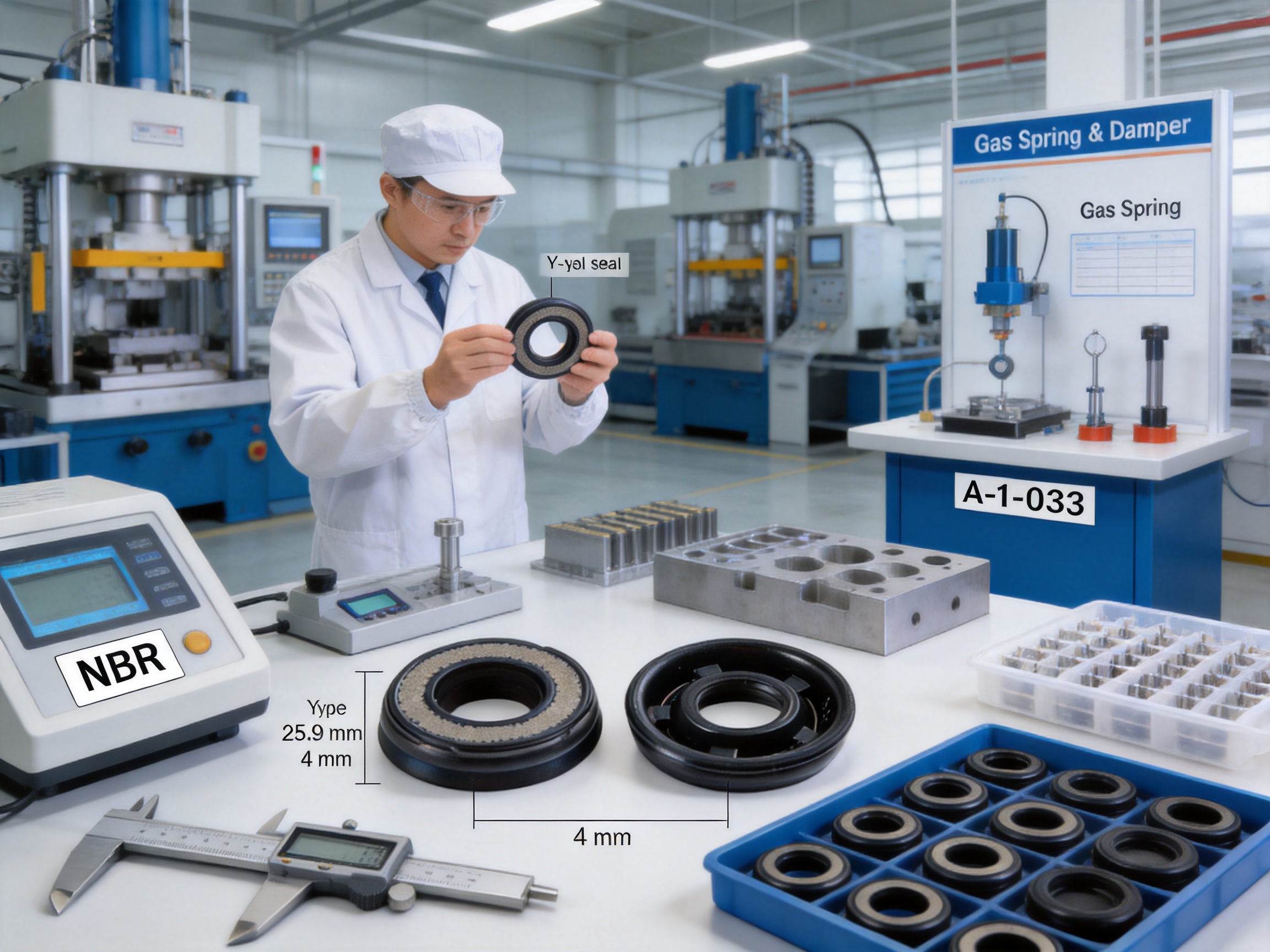
Precision in a sealing system is often determined by a fraction of a millimeter. A seal that is slightly too loose may permit leakage, unwanted movement, or mechanical play. A seal that is too tight may increase friction, complicate assembly, and reduce operating consistency. The 25.9mm Precision-Gap Seal is designed to address this balance through a fine-tuned outside diameter, a controlled internal diameter, a compact four-millimeter height, and a standard NBR material formulation.
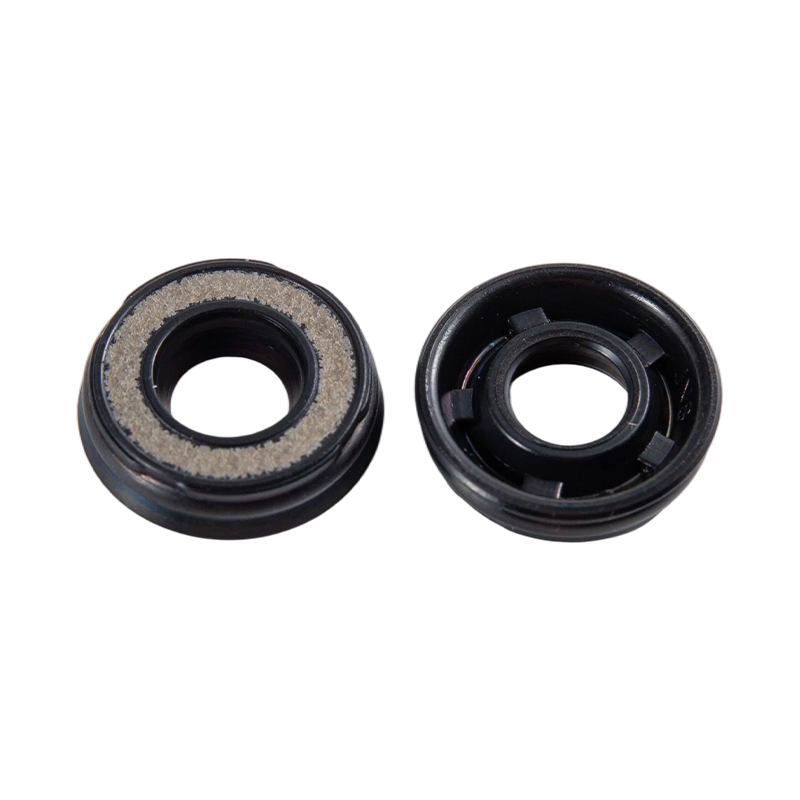
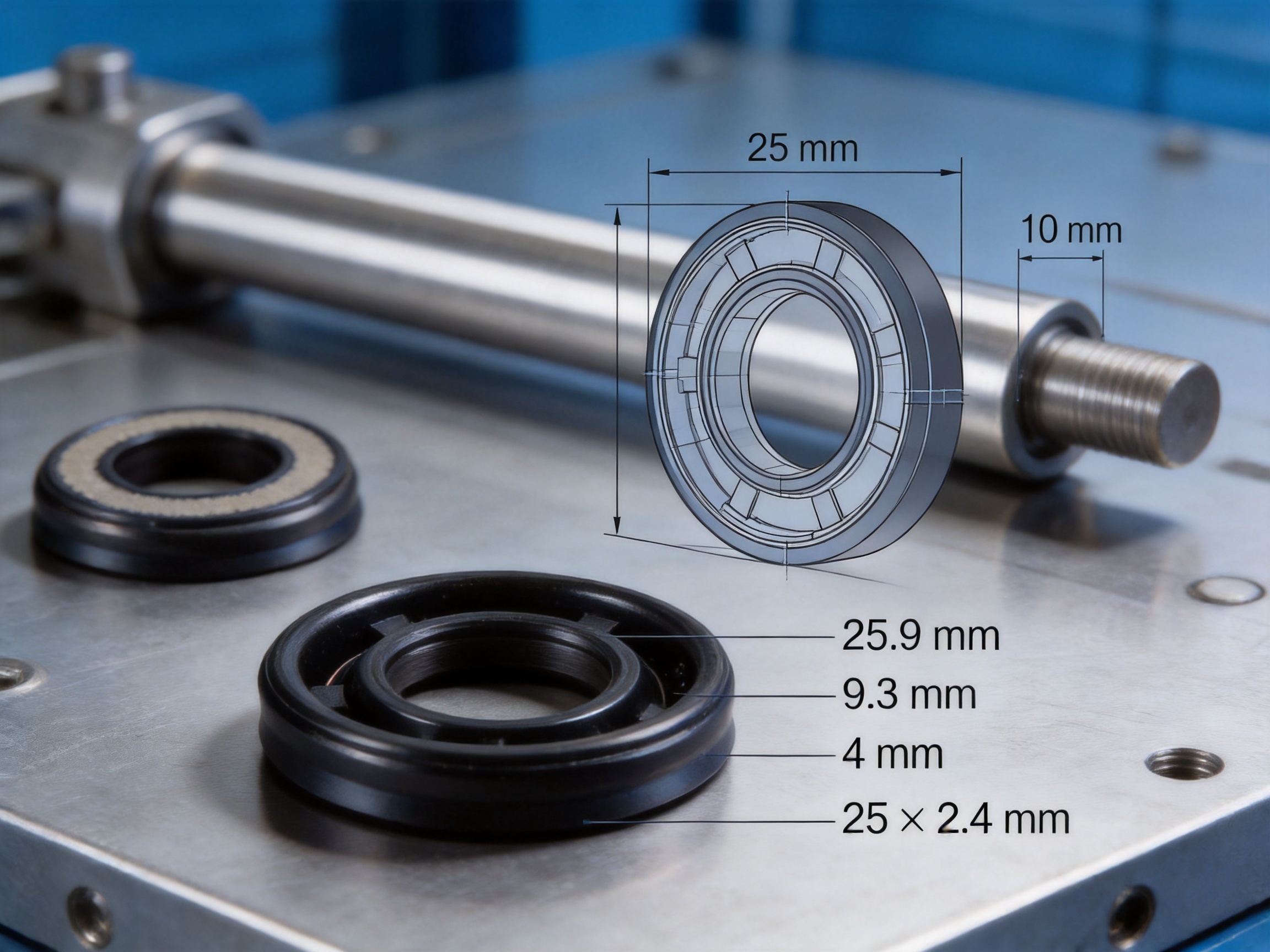
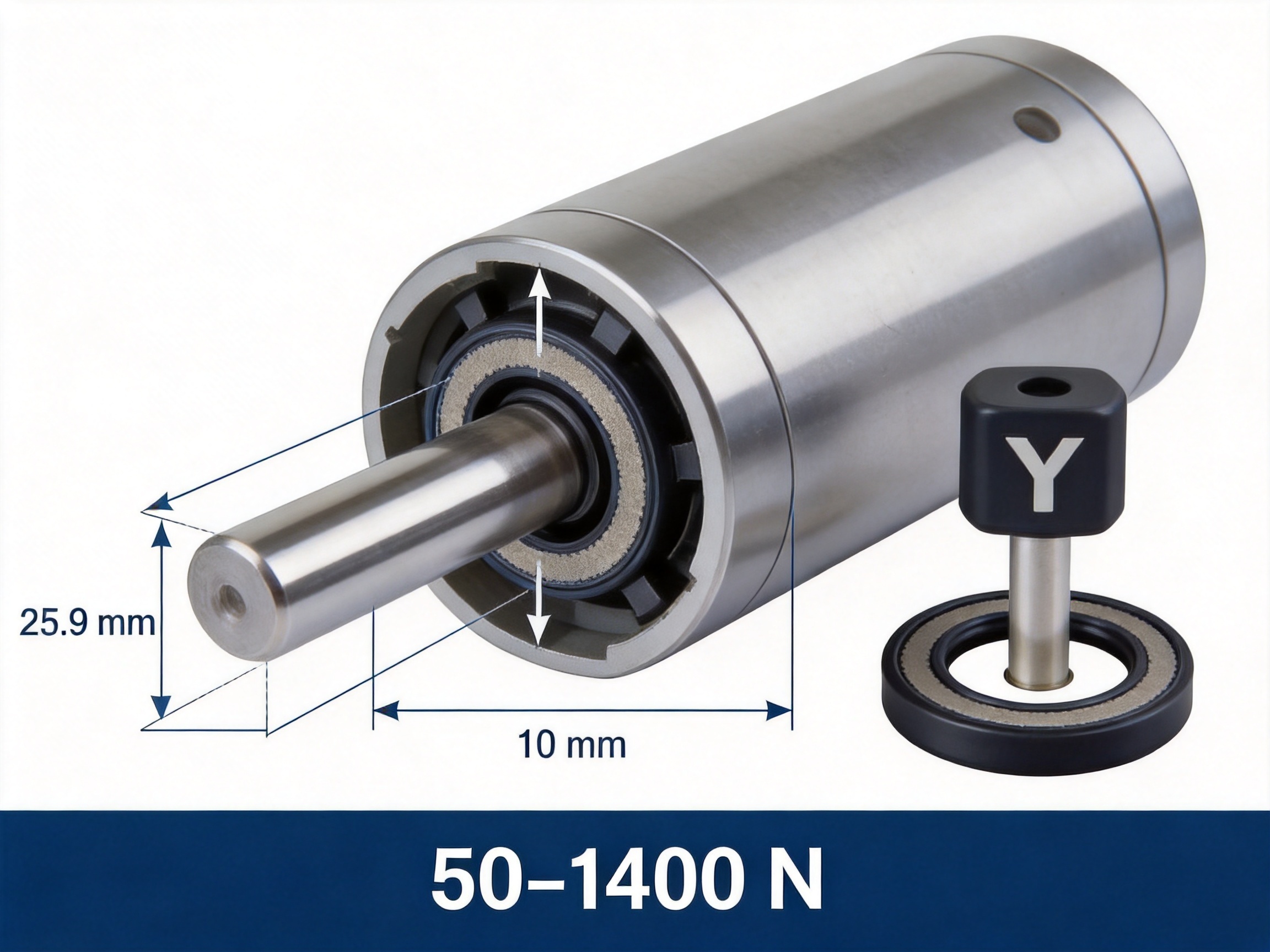
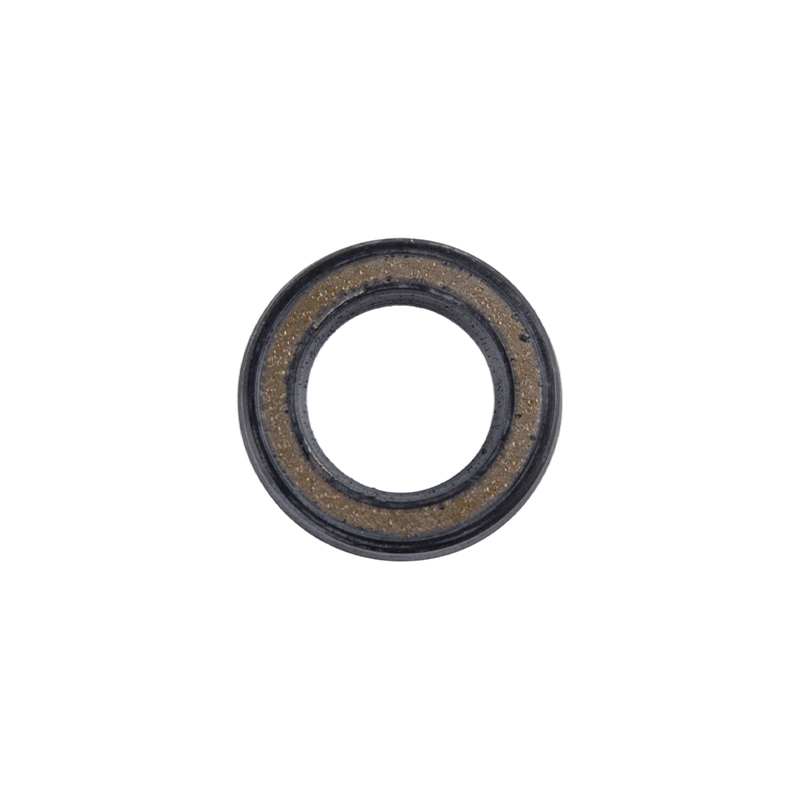
With an outside diameter of 25.9 mm, an inside diameter of 9.3 mm, and a height of 4 mm, this Y-type oil seal ring is intended for applications requiring a close and dependable fit. Its design is specified for an applicable pressure range of 50–1400 N, with a supporting O-ring adapter measuring 25 × 2.4 mm. The product is associated with a 25 mm steel pipe inner diameter and a 10 mm piston rod diameter, making it suitable for selected gas spring and damper assemblies built around these dimensional requirements.
The product code is A-1-033. It is manufactured from NBR, a widely used elastomer for general oil sealing and pneumatic or mechanical sealing applications. The combination of a carefully adjusted 25.9 mm outside diameter and a defined adapter arrangement helps reduce unnecessary clearance and supports more stable positioning inside the assembly.
This article examines the product’s dimensional structure, operating role, material characteristics, manufacturing considerations, quality advantages, application suitability, installation factors, and selection process. It also explains how the technical capabilities of Ningguo Jnsseals Sealing Technology Co., Ltd. support customized sealing solutions for customers in automotive, furniture, home appliance, medical equipment, construction, and other industries.
1. Product Overview
The 25.9mm Precision-Gap Seal is a compact sealing component developed for assemblies in which fit accuracy is especially important. Its name reflects the primary design feature: a fine-tuned outer dimension of 25.9 mm. This measurement is intended to provide a closer fit than a nominally rounded 26 mm dimension in applications where small amounts of clearance can affect performance.
The product belongs to the Y-Type Oil Seal Ring category. Y-type sealing profiles are commonly used where a resilient sealing lip must respond to pressure and maintain contact with a moving or stationary mating surface. In gas spring and damper systems, the seal may operate around a piston rod or within a guided sealing arrangement. The seal must therefore combine flexibility, dimensional stability, and resistance to the working environment.
The product specifications are presented as 26 × 9.3 × 4 in the specification table, while the listed outside diameter is 25.9 mm. This combination indicates that the component is associated with a nominal 26 mm class while using a more precisely controlled 25.9 mm outside diameter. The inside diameter is 9.3 mm, and the height is 4 mm.
| Item | Specification |
|---|---|
| Product name | 25.9mm Precision-Gap Seal |
| Product category | Y-Type Oil Seal Ring |
| Product code | A-1-033 |
| Product specifications | 26 × 9.3 × 4 |
| Outside diameter | 25.9 mm |
| Inside diameter | 9.3 mm |
| Height | 4 mm |
| O-ring adapter | 25 × 2.4 mm |
| Design applicable pressure range | 50–1400 N |
| Steel pipe inner diameter × piston rod diameter | 25 × 10 mm |
| Material | NBR |
The product description identifies the seal as a fine-tuned solution for a 50–1400 N operating range. It is intended to reduce mechanical play and improve positioning while retaining the established practicality of standard NBR. These objectives are important in equipment where the piston rod must travel smoothly and remain accurately located during operation.
2. Why a 25.9mm Outside Diameter Matters
Nominal dimensions are useful for initial product selection, but real sealing performance depends on the relationship between the seal, housing, adapter, rod, tube, and installation conditions. A small dimensional adjustment can influence contact pressure, centering, resistance to movement, and the amount of mechanical play within the assembly.
The 25.9 mm outside diameter is close to the 26 mm nominal specification while remaining deliberately fine-tuned. This can be beneficial in a housing or pipe arrangement where a standard nominal dimension may leave more clearance than desired. By reducing unnecessary space, the seal can help stabilize its position and limit small unwanted movements within the sealing seat.
Mechanical play is not always visible during initial assembly. It may become more apparent when the component is exposed to repeated loading, vibration, changes in orientation, or a moving piston rod. Excessive play can contribute to inconsistent positioning and may influence the perceived quality of a gas spring or damper. A precision-gap seal provides a practical way to address this issue at the sealing interface.
The fine-tuned dimension should not be understood as a universal substitute for every 26 mm seal. Correct selection still depends on the actual housing tolerance, groove design, piston rod diameter, pressure conditions, temperature, lubricant, and assembly method. The value of the 25.9 mm design is that it gives engineers and purchasers a defined option for applications where a closer fit is required.
Compared with a less carefully matched seal, this product can offer a more controlled relationship between the component and its surrounding structure. That relationship is particularly relevant in compact gas spring and damper assemblies, where limited installation space leaves little room for dimensional variation.
3. Design Features and Functional Advantages
3.1 Close-Fit Positioning
The principal advantage of the product is its close-fit positioning capability. The 25.9 mm outside diameter is designed to reduce unnecessary movement between the seal and its surrounding seat. This supports more consistent alignment and can help prevent the sealing component from shifting during service.
A seal that remains properly positioned can contribute to more predictable contact with the piston rod and adjacent parts. Stable positioning is also valuable during installation because it helps the assembler locate the seal correctly before the housing is closed or the retaining components are installed.
3.2 Reduced Mechanical Play
The product description specifically emphasizes the reduction of mechanical play. Mechanical play refers to unwanted clearance or movement between components that should remain relatively stable. In gas spring and damper assemblies, even small amounts of play may affect the feel of movement, the precision of positioning, or the perceived stability of the finished product.
By using a fine-tuned outer diameter and a defined O-ring adapter, the A-1-033 design provides a focused solution for assemblies where excessive looseness is a concern. It is especially relevant when a standard seal dimension has proven insufficient for the required fit.
3.3 Support for Positioning Accuracy
Improved positioning is another stated benefit. In equipment such as adjustable furniture, vehicle components, access systems, and industrial mechanisms, a gas spring or damper may need to hold or guide a moving part in a controlled way. The seal is not the only component responsible for positioning, but its dimensional stability can support the broader assembly design.
When the seal fits consistently, the piston rod and surrounding components can operate with less unwanted lateral movement. This can help designers achieve a more controlled movement profile, provided the complete assembly is correctly designed and matched.
3.4 Compact Four-Millimeter Height
The 4 mm height provides a compact axial profile. Compact seals are useful when the available installation space is limited or when several sealing and guiding functions must be accommodated within a short housing. The defined height also assists with product interchange and assembly planning because engineers can account for the seal’s axial space during groove and stack-up design.
A compact profile can simplify the integration of the seal into a gas spring or damper cartridge. However, the stated height should always be compared with the actual groove depth, compression requirements, adapter position, and retaining arrangement before production use.
3.5 Defined Adapter Compatibility
The listed O-ring adapter size is 25 × 2.4 mm. This specification gives the customer an additional reference for designing or checking the sealing arrangement. The adapter dimension helps clarify how the ring is intended to relate to the rest of the assembly and provides a defined point of comparison during procurement and replacement.
Including the adapter information in the product specification is useful because a seal cannot be evaluated in isolation. Its performance depends on the complete interface, including the housing, adapter, piston rod, and surrounding tube. By identifying the relevant adapter size, the product information supports more accurate technical communication between the seal manufacturer and the equipment producer.
4. NBR Material and Its Practical Role
The 25.9mm Precision-Gap Seal uses NBR, or nitrile butadiene rubber. NBR is a common sealing material selected for its practical balance of flexibility, oil resistance, manufacturability, and cost efficiency. It is widely used in O-rings, oil seals, gaskets, and other elastomeric components.
For general sealing applications, NBR can provide a resilient contact surface that adapts to mating components while maintaining a stable shape. This flexibility is important in a Y-type profile because the sealing lip must create contact without becoming excessively rigid.
Standard NBR also provides a familiar material option for manufacturers that already use nitrile seals in their production systems. This can simplify material qualification, maintenance planning, replacement procurement, and inventory management. Customers can use the A-1-033 product as a defined NBR option for compatible applications rather than introducing an unfamiliar elastomer without a clear need.
Material selection must still be based on the actual operating environment. Temperature, pressure, fluid type, lubricant compatibility, movement speed, storage conditions, and exposure to chemicals can all influence seal life. NBR is not automatically suitable for every application. If the equipment requires a different chemical or temperature performance, a different elastomer may need to be evaluated.
The company’s broader product focus includes NBR, HNBR, and FPM O-ring products. This range suggests that customers can discuss material alternatives when their working conditions require properties beyond standard NBR. The presence of multiple material options is valuable for equipment manufacturers that produce several models or serve different industries.
5. Pressure and Application Range
The listed design applicable pressure range is 50–1400 N. This value should be treated as a product design reference rather than a substitute for complete application validation. The actual pressure behavior of a sealing assembly depends on the seal profile, compression, surface finish, motion, temperature, fluid, installation quality, and the geometry of the surrounding parts.
Within a properly matched assembly, the specified range helps customers determine whether the product is relevant to their application. The lower and upper points provide an initial guide for gas spring and damper designs that operate within this stated load or pressure-related range.
For new equipment, engineers should confirm the design load, travel cycle, operating temperature, piston rod finish, tube dimensions, and expected service life. For replacement projects, they should compare the existing seal dimensions with the A-1-033 specifications and verify the actual cause of failure before selecting a replacement.
A seal designed for a defined range can be more useful than a generic seal that lacks application guidance. The A-1-033 specification communicates a clear intended operating context and gives technical teams a starting point for testing and qualification.
25.9mm Precision-Gap Seal
6. Competitive Advantages of the Precision-Gap Design
The sealing market includes many standard O-rings, oil seal rings, and general-purpose elastomeric components. The 25.9mm Precision-Gap Seal is differentiated by the combination of a fine-tuned outside diameter, a defined Y-type profile, a compact height, an associated adapter size, and an identified pressure range.
6.1 More Specific Than a Generic Seal
A generic seal may be selected only by nominal diameter and material. That approach can be adequate for simple applications, but it may not address mechanical play or alignment concerns. The A-1-033 product provides more application-oriented information, including the 25 × 10 mm steel pipe and piston rod relationship and the 25 × 2.4 mm O-ring adapter.
This additional information supports more accurate engineering discussions. It allows a customer to compare the complete sealing arrangement rather than focusing on a single diameter. In production environments, clearer specifications can reduce the risk of purchasing a component that appears similar but does not fit the intended assembly.
6.2 Fine-Tuned Dimensional Control
The 25.9 mm outside diameter is a key advantage over seals that are offered only in a broad nominal size. A close dimensional target can help customers manage clearance more carefully and reduce the possibility of unwanted movement within the housing.
Dimensional control is especially important in repeat production. When a seal is manufactured to a consistent specification, it can help reduce variation between assembled units. Consistency supports more predictable assembly results, which is valuable for manufacturers supplying large quantities of gas springs, dampers, furniture hardware, automotive components, or other mechanisms.
6.3 Balanced Standard Material Selection
Using standard NBR provides a practical balance between performance and accessibility. Customers do not need to choose a highly specialized material when their operating environment is compatible with nitrile. This can help control cost and simplify sourcing while retaining the benefits of an established sealing elastomer.
6.4 Compact Integration
The 4 mm height supports compact designs and may be advantageous where space is limited. A seal with a defined compact profile can make it easier for engineers to create a controlled assembly stack-up. It may also support replacement in existing equipment where the available axial space cannot be modified.
6.5 Customization Potential
The company provides customized sealing solutions, including product design, testing, and technical consultation. This is an important competitive advantage for customers whose requirements do not match an off-the-shelf part exactly. The A-1-033 product can serve as a reference point for discussing dimensional adjustments, material alternatives, testing requirements, or related sealing components.
Customization is particularly valuable when a customer is developing a new gas spring, changing a damper structure, or adapting a seal to a specialized industry. Rather than treating the seal as an isolated catalog item, the manufacturer can participate in the technical process from initial design through evaluation.
7. Manufacturing Strengths and Technical Capabilities
Ningguo Jnsseals Sealing Technology Co., Ltd. is a high-tech enterprise founded in 2019 and headquartered in Anhui, China. The company focuses on the research, development, and application of sealing technology for gas springs and dampers, together with related O-ring products.
This specialization is relevant to the A-1-033 seal because the product is intended for a technical environment where dimensions, material behavior, and assembly relationships must be considered together. A manufacturer with a focused sealing background can approach the product from the perspective of the complete system rather than only the molded rubber component.
7.1 Research and Development
The company reports strong research and development capabilities. For a precision seal, research and development may involve reviewing the target dimensions, profile geometry, elastomer selection, assembly conditions, and intended load range. It may also involve adapting an existing design when a customer encounters mechanical play, leakage, installation difficulty, or inconsistent positioning.
R&D capability supports continuous product improvement. It can help transform application feedback into changes in seal geometry, material formulation, tooling, inspection criteria, or packaging procedures. For customers, this creates a pathway for solving technical problems rather than merely purchasing a fixed standard item.
7.2 Advanced Production Equipment
The company identifies advanced production equipment as one of its strengths. Modern production equipment is important for rubber sealing products because stable molding, controlled processing, and repeatable handling influence the final dimensions and surface condition of the seal.
In the case of a 25.9 mm precision-gap design, equipment capability supports the need to maintain a controlled outer dimension and a consistent four-millimeter height. The value of advanced equipment is not simply speed. It also lies in repeatability, process stability, and the ability to produce technical parts at an appropriate level of consistency.
Production equipment must work together with suitable tooling, process settings, material preparation, trimming, inspection, and packaging. A precision product depends on the complete production chain. If one stage introduces variation, the final component may not deliver the expected fit even when the nominal design is correct.
7.3 Professional Technical Service
The company maintains a professional technical service team. Technical service is particularly useful when customers need help interpreting product specifications or determining whether a seal is appropriate for a particular gas spring or damper arrangement.
Technical discussions can cover the steel pipe inner diameter, piston rod diameter, adapter size, applied load, material requirements, and expected operating environment. This information allows the manufacturer and customer to evaluate compatibility more effectively.
7.4 Product Design and Testing
The company provides product design and testing services as part of its customized sealing solutions. Testing is important because a seal that fits dimensionally may still need to be evaluated under representative operating conditions. A suitable test program may consider repeated movement, pressure or load exposure, temperature, lubrication, leakage, friction, installation, and dimensional stability.
The exact tests should be defined according to the customer’s application. A furniture gas spring, automotive damper, medical device mechanism, and construction component may have very different requirements. A manufacturer capable of supporting application-specific testing can help customers move from a dimensional concept to a validated product.
7.5 Industry Experience Across Multiple Sectors
The company’s products are used in automotive, furniture, home appliances, medical equipment, construction, and other industries. These sectors place different demands on sealing components. Automotive applications may emphasize durability and environmental exposure. Furniture applications may prioritize smooth movement and reliable positioning. Medical equipment may require careful material and cleanliness considerations. Construction equipment may encounter demanding mechanical conditions.
Experience across industries can broaden the manufacturer’s understanding of how seal designs behave in different assemblies. It also supports the development of adaptable technical solutions for customers with different production volumes, performance targets, and design constraints.
8. Manufacturing Process Considerations for A-1-033
The precise manufacturing route for the A-1-033 seal should be confirmed with the supplier according to the customer’s required configuration. However, the general production logic for a technical NBR seal includes several important stages.
8.1 Material Preparation
The process begins with suitable NBR material preparation. The compound must be selected and processed according to the required flexibility, sealing response, dimensional stability, and application environment. Consistent material preparation is important because changes in compound behavior can influence molding, shrinkage, hardness, and final fit.
8.2 Tooling and Profile Formation
The seal profile is formed using tooling designed for the specified geometry. A Y-type seal requires attention to the sealing lips, body shape, adapter relationship, and overall height. Tooling accuracy contributes to the repeatability of the finished component.
For a product with a 25.9 mm outside diameter, the tooling and process must support the specified dimensional target while accounting for the normal behavior of elastomeric materials during processing and cooling. The manufacturer’s production and inspection systems are therefore important to the final result.
8.3 Molding and Curing
NBR sealing products generally require controlled molding and curing to develop their intended elastic properties. The process must be managed so that the material achieves a stable structure without introducing unacceptable defects. Process control can influence the seal’s resilience, surface quality, dimensions, and ability to maintain contact during operation.
8.4 Trimming and Visual Inspection
After molding, excess material may need to be removed from the parting line or other areas. Careful trimming helps preserve the intended sealing edges and prevents unwanted material from interfering with assembly. Visual inspection can identify visible defects such as tears, incomplete filling, surface damage, or contamination.
8.5 Dimensional Inspection
Dimensional inspection is central to a precision-gap seal. The outside diameter, inside diameter, height, and relevant profile features should be checked against the applicable product specification. The 25.9 mm outside diameter is particularly important because it is the feature associated with the product’s close-fit positioning objective.
Inspection methods and sampling plans should be determined by the supplier’s quality system and the customer’s requirements. For high-volume production, consistent measurement and traceable records can help identify process trends and support corrective action when necessary.
8.6 Packaging and Technical Identification
Proper packaging helps protect elastomeric seals from deformation, contamination, excessive heat, and unsuitable storage conditions. Clear identification using the product code A-1-033 can help prevent mixing with similar-looking components. Product identification is especially important when a manufacturer handles several seal categories, materials, or dimensions.
9. Installation and Application Guidance
Correct installation is essential to achieving the intended performance of any oil seal ring. Even a precisely manufactured seal may perform poorly if it is installed in an unsuitable groove, twisted during assembly, cut by a sharp edge, or exposed to incompatible lubricant.
9.1 Confirm the Assembly Dimensions
Before installation, confirm the relevant dimensions of the application. The listed reference is a 25 mm steel pipe inner diameter and a 10 mm piston rod diameter. The seal itself has a 25.9 mm outside diameter and a 9.3 mm inside diameter. These values should be compared with the actual component dimensions, tolerances, and design drawings.
The O-ring adapter specification is 25 × 2.4 mm. If the assembly uses an adapter, verify that the adapter and the seal are intended to work together. Do not assume that a visually similar adapter will produce the same compression or positioning result.
9.2 Inspect Mating Surfaces
The piston rod and housing should be clean and free from burrs, sharp edges, chips, and excessive surface damage. Any defect that contacts the sealing lip can cause cuts or accelerated wear. Cleaning should be performed using a method compatible with NBR and the complete assembly.
9.3 Use Suitable Lubrication
Where lubrication is required, the lubricant should be compatible with NBR and with the working medium of the application. Excessive or unsuitable lubricant may affect the seal material, attract contaminants, or alter assembly behavior. The correct lubrication method should be established during product validation.
9.4 Avoid Twisting and Overstretching
Elastomeric seals should not be twisted during installation. A twisted Y-type seal may not contact the mating surface uniformly and may create a leakage path or irregular friction. Overstretching the inner diameter can also damage the profile or leave the seal with an unstable shape after installation.
9.5 Control Assembly Force
Assembly force should be sufficient to seat the seal without crushing, cutting, or displacing it. Tools and fixtures should be designed to guide the part into position. If repeated assembly damage occurs, the installation process should be reviewed rather than assuming that the seal itself is defective.
9.6 Validate the Complete Assembly
After installation, the complete gas spring or damper should be tested under representative conditions. Evaluation may include leakage inspection, movement smoothness, holding or positioning behavior, mechanical play, load response, and repeated cycling. Testing is the best way to confirm that the seal and the surrounding components are functioning as intended.
10. Applications and Industry Relevance
10.1 Gas Springs
The product is particularly relevant to gas spring systems. Gas springs are used to assist lifting, lowering, opening, closing, and positioning. The seal must help retain the working medium while allowing controlled piston rod movement. Dimensional accuracy is important because leakage or excess play can affect the performance of the complete spring.
Furniture gas springs, automotive supports, equipment covers, and adjustable mechanisms may all require compact sealing arrangements. The 25.9mm Precision-Gap Seal offers a defined option for systems built around the stated 25 mm steel pipe and 10 mm piston rod relationship.
10.2 Dampers
Dampers control or moderate movement. They may be used to reduce impact, slow closing, absorb vibration, or manage the movement of a mechanical component. A stable seal can support consistent damper performance by helping maintain the internal working environment and guiding the moving rod.
10.3 Furniture Mechanisms
Furniture products often depend on smooth and repeatable movement. Reclining systems, lift mechanisms, adjustable tables, cabinet supports, and other products may use gas springs or dampers. In these applications, users notice unwanted play, uneven travel, and inconsistent positioning quickly. A close-fit seal can contribute to a more controlled mechanism when properly matched with the overall design.
10.4 Automotive Components
Automotive applications may include support struts, dampers, adjustment systems, and other mechanisms involving controlled rod movement. The appropriate material and design must be selected according to temperature, fluids, vibration, and service conditions. NBR may be suitable for certain environments, but application-specific evaluation remains necessary.
10.5 Home Appliances
Home appliances may use small dampers and gas springs in doors, lids, drawers, or adjustable assemblies. Compact dimensions and controlled positioning can be valuable where the mechanism must fit within a limited enclosure. The A-1-033 dimensions provide a defined reference for designers evaluating a replacement or new product concept.
10.6 Medical Equipment and Construction Products
Medical equipment and construction products can involve very different operating conditions, but both may require dependable movement control and sealing. In medical equipment, material selection, cleanliness, and validation are especially important. In construction-related mechanisms, load, durability, and environmental exposure may receive greater emphasis. The product should be evaluated according to the complete application rather than selected solely by size.
11. Quality, Supply, and Customization Benefits
For industrial customers, product quality is only one part of the purchasing decision. Supply support, communication, customization, and technical responsiveness also influence the long-term value of a sealing supplier.
The company’s focus on sealing technology gives customers access to a specialized product source rather than a general industrial trading channel. This can make it easier to discuss profile requirements, material alternatives, adapter arrangements, and application testing.
Customized product design is valuable when an existing seal does not fully address the application. A customer may require a different outside diameter, inside diameter, height, profile, material, or pressure target. The A-1-033 product demonstrates how a nominal size can be fine-tuned to address mechanical play and positioning requirements.
Technical consultation can also reduce the risk of incorrect replacement. Customers can provide drawings, dimensions, application descriptions, or failed samples for review. The manufacturer can then help determine whether the issue is related to size, material, installation, housing design, or operating conditions.
For original equipment manufacturers, cooperation during the development stage can improve the transition from prototype to mass production. Early communication allows the seal supplier to understand the assembly and establish suitable production and inspection requirements before the product is released.
12. Selection Checklist for Buyers and Engineers
Before ordering the 25.9mm Precision-Gap Seal, customers should review the following information:
| Selection point | Reference for A-1-033 | Why it matters |
|---|---|---|
| Seal category | Y-Type Oil Seal Ring | Confirms the intended profile and sealing function. |
| Outside diameter | 25.9 mm | Supports close-fit positioning and clearance control. |
| Inside diameter | 9.3 mm | Must be compared with the rod and sealing interface. |
| Height | 4 mm | Must fit the available axial space and groove design. |
| Adapter | 25 × 2.4 mm O-ring adapter | Helps confirm compatibility with the complete assembly. |
| Material | NBR | Must be compatible with temperature, fluid, and lubricant. |
| Application reference | 25 mm steel pipe inner diameter × 10 mm piston rod diameter | Provides a dimensional guide for gas spring and damper structures. |
| Applicable pressure range | 50–1400 N | Should be compared with the actual operating requirement. |
| Product code | A-1-033 | Helps prevent ordering or inventory errors. |
Customers should also identify the operating temperature, fluid or gas medium, movement speed, stroke frequency, expected service life, storage conditions, and installation method. These details help determine whether the listed standard NBR configuration is appropriate or whether a customized solution should be considered.
13. Frequently Asked Questions
Q1: What is the 25.9mm Precision-Gap Seal?
It is a Y-type oil seal ring identified by product code A-1-033. It has a 25.9 mm outside diameter, a 9.3 mm inside diameter, and a 4 mm height. It is made from NBR and is intended for applications where a close fit, reduced mechanical play, and improved positioning are important.
Q2: Why is the outside diameter listed as 25.9 mm when the product specification begins with 26 mm?
The product is associated with a nominal 26 mm class but uses a fine-tuned 25.9 mm outside diameter. This adjustment is intended to provide a more precise fit in compatible assemblies and help reduce unnecessary clearance.
Q3: What is the specified material?
The specified material is NBR, or nitrile butadiene rubber. NBR is widely used for sealing applications because it offers a practical combination of elasticity, oil resistance, manufacturability, and cost efficiency. Compatibility with the actual operating environment should still be confirmed.
Q4: What is the applicable pressure range?
The listed design applicable pressure range is 50–1400 N. This is a reference for product selection. Final suitability should be confirmed through evaluation of the complete assembly and its actual operating conditions.
Q5: What adapter is associated with this seal?
The listed O-ring adapter is 25 × 2.4 mm. Customers should verify that the adapter, housing, rod, and seal are designed to operate together.
Q6: What piston rod and steel pipe dimensions are referenced?
The product information lists a steel pipe inner diameter of 25 mm and a piston rod diameter of 10 mm. These dimensions provide an application reference for compatible gas spring and damper structures.
Q7: Can this seal reduce mechanical play?
The product is specifically described as helping reduce mechanical play. Its fine-tuned 25.9 mm outside diameter is intended to support a closer and more stable fit. The actual result depends on housing tolerance, assembly accuracy, rod condition, and the design of the complete mechanism.
Q8: Is the seal suitable for every 26 mm application?
No. The 25.9 mm outside diameter should be selected only after comparing the seal with the actual groove, housing, adapter, rod, pressure, temperature, and operating conditions. A nominally similar application may have different design requirements.
Q9: Can the manufacturer provide customized seals?
Yes. The company provides customized sealing solutions, including product design, testing, and technical consultation. Customers can discuss dimensional changes, material alternatives, and application-specific requirements with the technical team.
Q10: Which industries may use this type of seal?
Potential industries include automotive, furniture, home appliances, medical equipment, construction, gas spring production, damper production, and other mechanical equipment sectors. Suitability depends on the technical requirements of each application.
Q11: How should customers specify the product when requesting a quotation?
Customers should provide the product code A-1-033, required quantity, dimensions, material requirement, application description, operating load or pressure, temperature, working medium, adapter information, and any relevant drawings or samples.
Q12: What should be checked if leakage or excessive play occurs after installation?
Check the seal dimensions, housing and rod tolerances, installation direction, surface condition, lubrication, adapter compatibility, and operating conditions. It is also important to determine whether the seal was damaged during assembly or exposed to an incompatible medium.
14. Conclusion
The 25.9mm Precision-Gap Seal is a targeted sealing solution for gas springs, dampers, and related mechanisms that require controlled fit and reliable positioning. Its key specifications are a 25.9 mm outside diameter, 9.3 mm inside diameter, 4 mm height, 25 × 2.4 mm O-ring adapter, NBR material, and a listed design applicable pressure range of 50–1400 N.
Its main advantage is the fine-tuned outside diameter. By addressing the fit more precisely than a broadly defined nominal seal, the product is designed to reduce mechanical play and support more stable positioning. The compact height, defined adapter reference, and application dimensions make it easier for engineers to evaluate the product within a complete assembly.
The product is supported by the technical capabilities of Ningguo Jnsseals Sealing Technology Co., Ltd., including research and development, advanced production equipment, product design, testing, customized solutions, and professional technical service. These capabilities are important for customers that need more than a standard replacement part and require support throughout design, qualification, and production.
For best results, the A-1-033 seal should be selected according to the complete application rather than by diameter alone. When the housing, piston rod, adapter, material, pressure, temperature, and installation method are properly matched, this precision-gap design can provide a practical and dependable option for modern sealing systems.
References
1. Product specification sheet: 25.9mm Precision-Gap Seal, Product Code A-1-033.
2. Product dimensional data: outside diameter 25.9 mm, inside diameter 9.3 mm, height 4 mm, and O-ring adapter 25 × 2.4 mm.
3. Application data: steel pipe inner diameter 25 mm, piston rod diameter 10 mm, and design applicable pressure range of 50–1400 N.
4. Material information: NBR elastomer specification for the A-1-033 sealing component.
5. Ningguo Jnsseals Sealing Technology Co., Ltd. company information concerning sealing technology research, development, production equipment, product testing, technical consultation, and customized sealing solutions.
6. General engineering principles for elastomeric seal selection, installation, dimensional control, material compatibility, and application validation.
Product: 25.9mm Precision-Gap Seal

PREV:No previous article
NEXT:Miniature Precision Linear Damping Seal for Compact Shock Absorbers and Buffers
NEXT:Miniature Precision Linear Damping Seal for Compact Shock Absorbers and Buffers



Want to know more
about us?
about us?

Precision sealing for gas springs and dampers. Durable, wear-resistant, and built for long-life performance in demanding applications.
Product Categories
Quick Links
Contact Us
-
Email: jns@jnsseals.cn

-
Email: LouZhuoyu@outlook.com
-
Manager Gong: +86-18563770820

-
Manager Wang: +8615357558902
-
No. 5, Meilin Avenue, Meilin Industrial Development Zone, Ningguo City, Anhui Province, China

