

 English
 русский
 Deutsch
 Türk
 中文简体
Miniature Precision Linear Damping Seal for Compact Shock Absorbers and Buffers
Miniature Precision Linear Damping Seal for Compact Shock Absorbers and Buffers
Miniature Precision Linear Damping Seal for Compact Shock Absorbers and Buffers
Miniature Precision Linear Damping Seal for Compact Shock Absorbers and Buffers
Miniature Precision Linear Damping Seal for Compact Shock Absorbers and Buffers
Miniature Precision Linear Damping Seal for Compact Shock Absorbers and Buffers
Miniature Precision Linear Damping Seal for Compact Shock Absorbers and Buffers
Miniature Precision Linear Damping Seal for Compact Shock Absorbers and Buffers
Miniature Precision Linear Damping Seal for Compact Shock Absorbers and Buffers
Miniature Precision Linear Damping Seal for Compact Shock Absorbers and Buffers
Miniature Precision Linear Damping Seal for Compact Shock Absorbers and Buffers
Miniature Precision Linear Damping Seal for Compact Shock Absorbers and Buffers
Miniature Precision Linear Damping Seal for Compact Shock Absorbers and Buffers
Miniature Precision Linear Damping Seal for Compact Shock Absorbers and Buffers
Miniature Precision Linear Damping Seal for Compact Shock Absorbers and Buffers
Miniature Precision Linear Damping Seal for Compact Shock Absorbers and Buffers

Lu Wanyin — Senior After-Sales Service Engineer
Home / Author / Lu Wanyin — Senior After-Sales Service Engineer / Miniature Precision Linear Damping Seal for Compact Shock Absorbers and Buffers
NEW Category
Contact us
Miniature Precision Linear Damping Seal for Compact Shock Absorbers and Buffers
Content
- 1 1. The Role of a Miniature Damping Seal in Linear Motion Systems
- 2 2. Product Overview and Key Dimensions
- 3 3. Design Advantages of the A-3-002
- 4 4. NBR Material and Its Engineering Significance
- 5 5. Manufacturing Process and Quality Control Strengths
- 6 6. Advantages Compared with General-Purpose Competitor Solutions
- 7 7. Application Areas
- 8 8. Installation and Design Recommendations
- 9 9. Testing Strategy for Product Qualification
- 10 10. Company Capabilities and Industry Experience
- 11 11. Purchasing and Customization Considerations
- 12 12. Frequently Asked Questions
- 12.1 Q1: What is the A-3-002?
- 12.2 Q2: What are the main dimensions?
- 12.3 Q3: What material is used?
- 12.4 Q4: What applications are suitable for this seal?
- 12.5 Q5: How does the product reduce hysteresis?
- 12.6 Q6: Is a pressure range available?
- 12.7 Q7: Can the seal be customized?
- 12.8 Q8: What should be checked before installation?
- 12.9 Q9: How should the product be tested?
- 12.10 Q10: Why work with a specialized sealing manufacturer?
- 13 13. Conclusion
- 14 References
- 15 Product: Miniature Precision Linear Damping Seal
Modern shock absorbers, compact buffers, precision instruments, and small linear actuators increasingly require sealing components that can operate reliably inside very limited installation spaces. As equipment becomes lighter, smaller, and more responsive, the seal must perform more than a basic fluid-retention function. It must control friction, support repeatable linear movement, resist wear, maintain dimensional stability, and preserve sealing accuracy during rapid short-stroke cycles. The Miniature Precision Linear Damping Seal, product code A-3-002, has been developed to address these requirements.
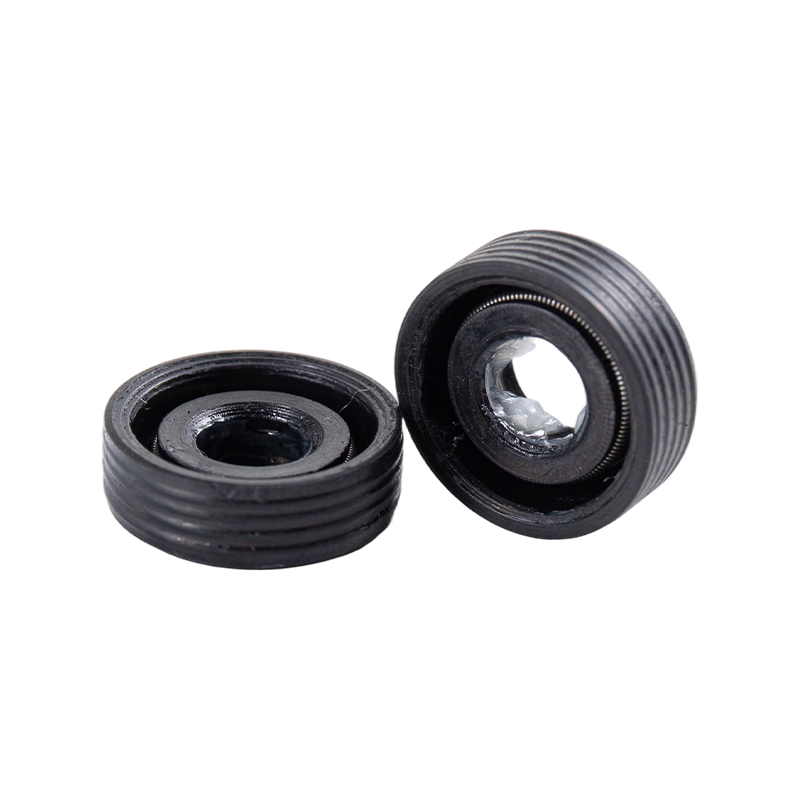
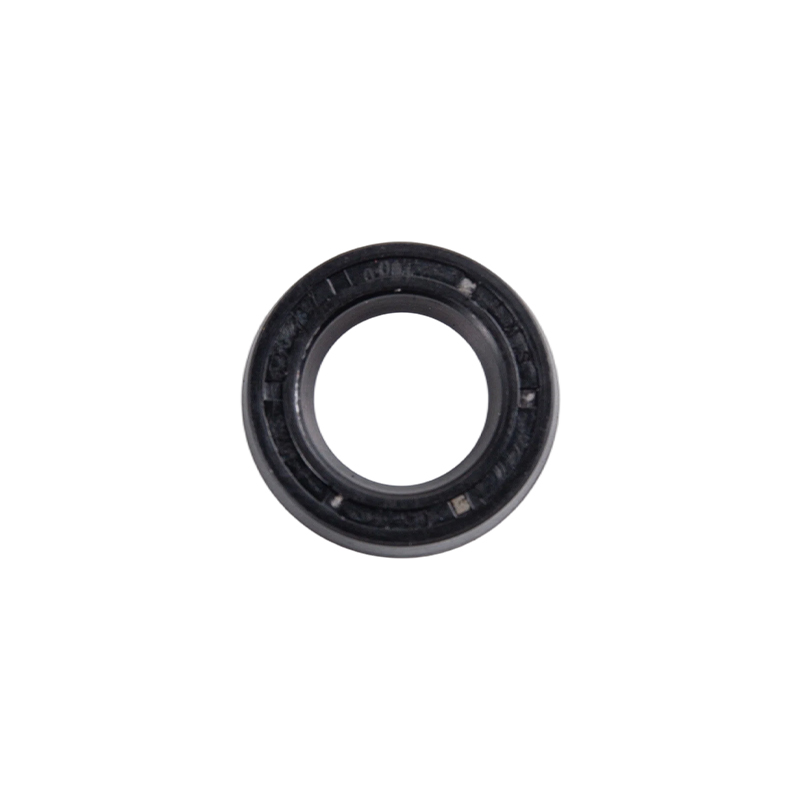
The A-3-002 is a miniature damping oil seal designed for space-constrained precision applications. With an outer diameter of 9.4 mm, an inner diameter of 3.3 mm, and a height of 3.5 mm, it provides a compact sealing solution for small shock absorbers and buffer systems. Its design is associated with 9 mm steel pipe and 4 mm piston rod arrangements, making it suitable for assemblies in which installation precision, low hysteresis, and responsive linear damping are important.
Produced by Ningguo Jnsseals Sealing Technology Co., Ltd., the A-3-002 reflects the company’s specialization in sealing technology for gas springs, dampers, and related O-ring applications. The company combines product development, material selection, molding, inspection, technical consultation, and customized design support to serve customers in automotive, furniture, home appliance, medical equipment, construction, and other industries.
1. The Role of a Miniature Damping Seal in Linear Motion Systems
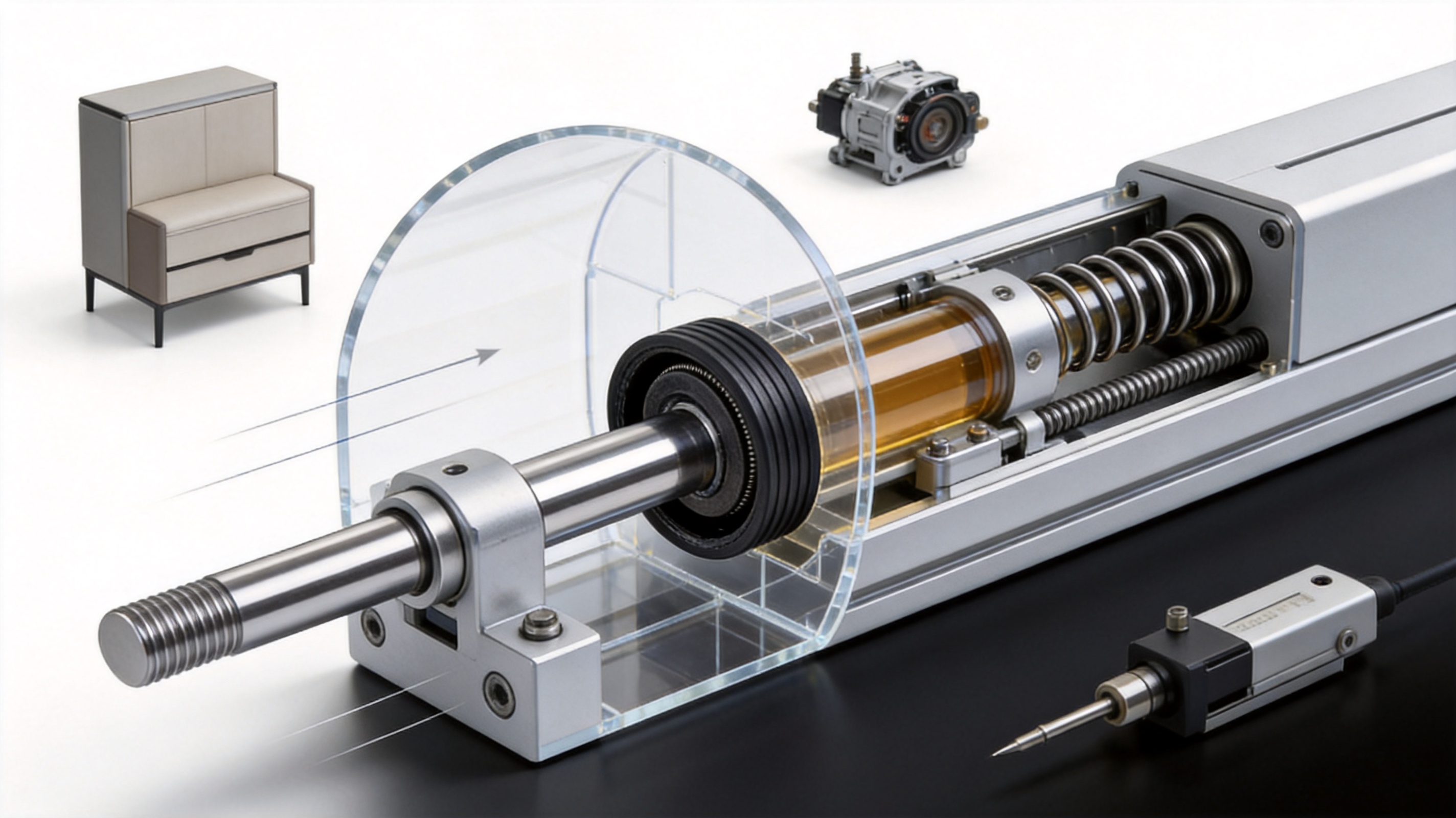
A linear damping system controls the movement of a rod or piston through resistance generated by fluid displacement, restricted flow, friction, or a combination of these mechanisms. The seal is positioned between moving and stationary components to prevent leakage and to help maintain the intended pressure and damping environment. In a compact damper, the seal must work within a small radial and axial envelope while accommodating repeated rod movement.
Unlike a simple static gasket, a linear damping seal is exposed to dynamic conditions. The sealing lip must maintain contact with the moving piston rod, but excessive contact pressure can increase friction and delay movement. Insufficient contact pressure may cause leakage, loss of damping medium, or contamination ingress. This balance is particularly important in short-stroke systems, where even a small amount of friction can influence the response profile.
The A-3-002 has been developed around this balance. Its intended application is linear motion control in shock absorbers and small buffers, especially systems requiring high response sensitivity and sealing accuracy. The compact geometry supports lightweight equipment design and helps engineers reduce the space allocated to the sealing assembly.
In practical terms, the seal contributes to several system-level objectives:
• Maintaining separation between the damping medium and the external environment.
• Supporting stable rod guidance during repeated linear movement.
• Reducing unwanted friction and hysteresis through optimized lip geometry.
• Preserving performance in short-stroke, high-frequency operating conditions.
• Helping designers reduce the overall size and mass of the damper assembly.
• Providing a repeatable sealing interface for compact 9 mm by 4 mm rod and tube arrangements.
Because the seal is one part of a larger assembly, its final performance also depends on shaft finish, housing tolerances, installation equipment, lubricant compatibility, temperature, pressure, stroke frequency, and operating environment. For this reason, proper system validation remains important even when the seal has been designed for the intended application.
Miniature Precision Linear Damping Seal
2. Product Overview and Key Dimensions
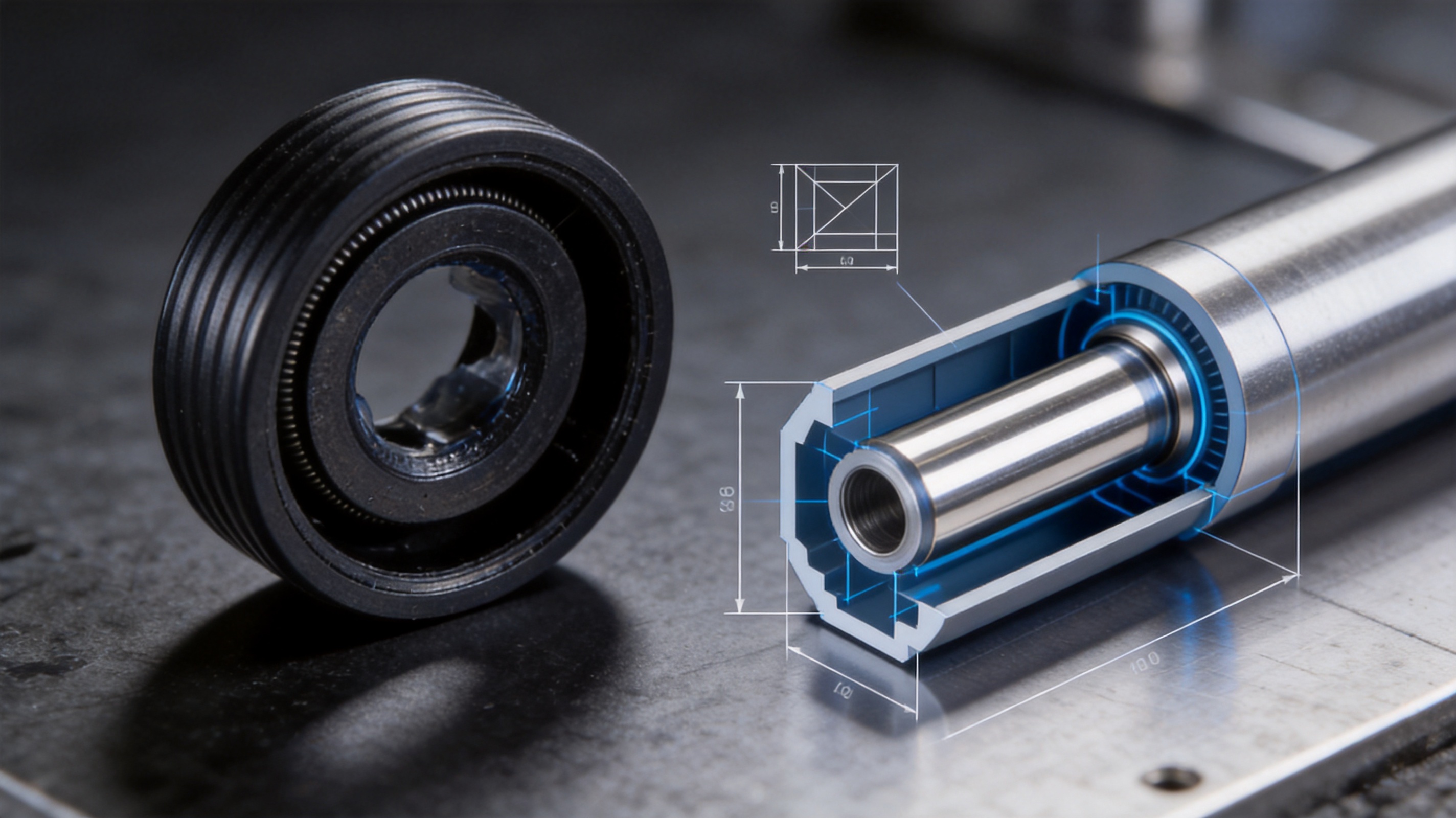
The A-3-002 is identified as a Miniature Precision Linear Damping Seal and belongs to the damping oil seal category. The listed product specification is 9*4*3.5, corresponding to the associated steel pipe inner diameter, piston rod diameter, and seal height arrangement. The technical information identifies a 9.4 mm outside diameter, a 3.3 mm inside diameter, and a 3.5 mm height.
| Item | Specification |
| Product name | Miniature Precision Linear Damping Seal |
| Product code | A-3-002 |
| Product category | Damping oil seal |
| Product specification | 9*4*3.5 |
| Outside diameter | 9.4 mm |
| Inside diameter | 3.3 mm |
| Height | 3.5 mm |
| Associated steel pipe and piston rod arrangement | 9 mm inner diameter by 4 mm piston rod diameter |
| Material | NBR |
| O-ring adapter | Not specified in the supplied product information |
| Design applicable pressure range | Not specified in the supplied product information |
| Application focus | Short-stroke, high-frequency linear damping |
The difference between the listed 3.3 mm inside diameter and the 4 mm piston rod reference should be reviewed during engineering selection. Dimensions in seal catalogs may describe different reference conditions, such as the nominal sealing bore, free-state inner diameter, or an associated installation configuration. Customers should confirm the final drawing, compression condition, rod tolerance, and housing geometry with the supplier before mass production.
This dimensional confirmation is especially important for miniature seals. A difference of a fraction of a millimeter can materially influence interference, lip loading, insertion force, friction, and leakage behavior. A reliable selection process should therefore consider the actual rod diameter, surface finish, roundness, runout, housing bore, groove geometry, assembly direction, and expected temperature range.
The A-3-002’s 9.4 mm outside diameter is a major part of its value proposition. Many conventional sealing solutions are too large for compact buffers or require an enlarged housing that increases product size. A smaller outside diameter enables designers to preserve valuable internal space for fluid volume, spring elements, guide components, or other functional parts. It may also support a lighter housing and reduce the external envelope of the finished product.
3. Design Advantages of the A-3-002
3.1 Compact installation envelope
The most obvious advantage of the A-3-002 is its miniature format. The 9.4 mm outside diameter makes it suitable for equipment where conventional oil seals cannot be accommodated without increasing the body diameter. Small dampers are often integrated into furniture hardware, compact mechanisms, vehicle components, medical devices, and consumer products. In these applications, a large seal can become a limiting factor in the entire design.
A compact seal supports more flexible packaging. Engineers may reduce the diameter of the tube, shorten the surrounding housing, or place multiple small damping components within a restricted assembly. The reduced size can also help simplify the appearance of an end product where the damper must remain concealed or integrated into a narrow structure.
3.2 High installation precision
The product is designed for 9*4 rod sets and emphasizes installation precision. In miniature linear systems, installation accuracy directly affects seal life and damping consistency. Misalignment can cause uneven lip loading, localized wear, rod friction, and leakage. A precisely manufactured seal, combined with a properly controlled housing and rod, helps create a more uniform contact condition around the circumference.
High installation precision is also valuable during automated assembly. As product volumes increase, manufacturers seek components that can be installed consistently with controlled insertion force and predictable seating. A seal with stable dimensions and a well-defined profile can reduce variation between production batches and make assembly equipment easier to calibrate.
3.3 Optimized lip geometry
The A-3-002 uses an optimized lip geometry intended to reduce hysteresis. In a reciprocating seal, hysteresis can be observed when the force required to begin or reverse motion differs from the force measured during continuous movement. Excessive hysteresis may cause delayed response, irregular motion, or a less predictable damping feel.
By balancing the sealing lip’s contact area, flexibility, and pressure distribution, the design can support reliable sealing without imposing unnecessary resistance on the rod. This is particularly relevant in small buffers, where the available damping force may be limited and the moving mass may be low. A seal that creates excessive drag can dominate the behavior of the mechanism rather than simply supporting it.
It is important to recognize that lip geometry does not work independently. The final friction and hysteresis performance also depends on NBR hardness, lubricant, rod surface roughness, rod speed, temperature, pressure, and installation condition. Nevertheless, an application-specific lip profile gives the seal a stronger starting point than a general-purpose static gasket or an oversized standard oil seal.
3.4 Suitability for short-stroke, high-frequency damping
Short-stroke applications often reverse direction repeatedly. The seal may experience many movement cycles within a small distance, making local wear, lubricant retention, and friction stability especially important. The A-3-002 is intended for this type of operating pattern, including small shock absorbers and high-frequency buffer mechanisms.
Because the stroke is short, the same section of the sealing lip may repeatedly contact the same region of the piston rod. A suitable design must therefore maintain stable contact and avoid rapid damage from repeated reciprocation. The seal’s compact profile and damping-oriented lip design are intended to support consistent movement control in this operating environment.
3.5 Lightweight system integration
Miniaturization contributes to system lightweighting in several ways. A smaller seal normally requires less installation space and may allow a smaller tube, cap, guide, or retaining structure. The resulting assembly can be more suitable for portable devices and mechanisms in which mass influences energy consumption, handling, or dynamic response.
For equipment manufacturers, lightweighting is not only a matter of reducing material. It can also improve design freedom. A compact seal may allow engineers to increase the active length of a damping chamber without increasing the external diameter, or to add other functions within the same housing. These advantages are especially relevant when the seal is selected at the beginning of the product design process rather than as a late replacement for a larger component.
4. NBR Material and Its Engineering Significance
The A-3-002 is specified in NBR, or nitrile butadiene rubber. NBR is widely used in sealing applications because it offers a practical combination of oil resistance, elasticity, wear performance, and manufacturing versatility. These properties make it a common choice for oil seals, O-rings, dampers, gas spring components, and hydraulic or pneumatic sealing elements.
For a damping oil seal, NBR can provide the flexible lip behavior needed to maintain contact with a moving rod. It can also offer suitable resistance to many mineral-based oils and lubricants, subject to the exact formulation and operating conditions. The material’s performance is influenced by acrylonitrile content, compound design, hardness, curing system, temperature, and exposure to the working medium.
Material selection should always be based on the complete application. Customers should provide information about the damping fluid, operating temperature, storage conditions, rod speed, frequency, pressure, and expected service life. If a system uses a fluid or temperature range outside the normal capability of standard NBR, an alternative compound may be necessary. The supplied product information identifies NBR for the A-3-002, but does not specify a pressure range, temperature range, hardness, or fluid compatibility list.
This absence of published operating limits does not reduce the value of the product; it indicates that application-specific confirmation is needed. A technically responsible supplier should review the customer’s conditions before recommending a final production specification. This process may include material confirmation, prototype testing, dimensional review, leakage testing, friction measurement, and endurance testing.
5. Manufacturing Process and Quality Control Strengths
The performance of a miniature seal depends heavily on manufacturing consistency. At a small scale, minor variations in compound preparation, mold dimensions, curing, trimming, or inspection can have a noticeable effect on the finished component. Ningguo Jnsseals Sealing Technology Co., Ltd. positions its operations around sealing research, development, production equipment, and technical service, providing a foundation for producing application-focused sealing components.
5.1 Product development and application analysis
The manufacturing process begins before rubber enters a mold. Product development teams analyze the customer’s installation structure, rod dimensions, movement pattern, sealing objective, and space limitations. For a miniature damping seal, this analysis is important because the lip profile must be matched to the actual rod and housing rather than copied from a larger standard seal.
Engineering review may include evaluation of the available sealing width, installation interference, axial retention, assembly direction, and expected dynamic movement. The design team can then establish the profile, material requirement, tolerance strategy, and inspection method. This application-oriented development process is a strength compared with suppliers that only offer catalog components without meaningful technical support.
5.2 Rubber compound preparation
Consistent compound preparation is central to seal quality. NBR raw material is combined with reinforcing agents, plasticizers, curing ingredients, stabilizers, and other formulation components according to the required performance target. Mixing must distribute these ingredients uniformly so that hardness, elasticity, tensile properties, compression behavior, and wear resistance remain consistent throughout the batch.
For a miniature product, compound uniformity is particularly important. The sealing lip is thin and may be sensitive to small changes in modulus or cure state. Inadequate dispersion can create weak points, surface defects, or inconsistent friction behavior. A controlled preparation process helps reduce these risks and supports stable molding results.
Batch identification and traceability are also valuable. When material lots are documented, the manufacturer can connect finished seals with compound records, processing conditions, inspection results, and customer orders. This improves problem-solving capability and supports more reliable production management.
5.3 Precision mold design
The mold determines the basic geometry of the seal, including the outside diameter, inside profile, height, lip form, corners, and any locating or retention features. For the A-3-002, precision mold design is essential because the product operates in a small 9.4 mm outside diameter envelope.
A well-designed mold supports balanced filling, accurate cavity dimensions, controlled parting lines, and repeatable release. It should also minimize flash in functional areas. Excess flash near a sealing lip can affect installation, increase friction, create leakage paths, or require additional trimming. Mold maintenance is therefore a continuing part of quality control rather than a one-time engineering activity.
5.4 Controlled molding and vulcanization
During molding, the prepared NBR compound is formed under heat and pressure. The vulcanization cycle converts the compound into an elastic finished material with the required mechanical properties. Time, temperature, pressure, material charge, and mold condition must be controlled to produce consistent cure.
Under-curing may result in insufficient strength, poor elastic recovery, or unstable sealing performance. Over-curing may make the material excessively hard or reduce flexibility. A controlled process helps the lip maintain the balance between contact force and movement freedom required in a damping application.
Process control also reduces dimensional variation. When the molding cycle is stable, the finished seal is more likely to meet its intended outside diameter, inside diameter, height, and profile requirements. This is essential for automatic assembly and for systems in which a small dimensional change can affect rod friction.
5.5 Trimming and finishing
After molding, seals may require flash removal, edge finishing, visual inspection, and dimensional sorting. The trimming process must remove unwanted material without damaging the lip or changing the designed contact profile. In miniature components, manual or mechanical trimming requires careful control because the functional areas are small and easily affected.
A clean finished surface improves installation and reduces the chance of particles entering the damping assembly. The final part should be free from damaging cuts, cracks, excessive flash, deformation, and other defects that could compromise sealing performance. Surface appearance is not the only quality criterion, but it provides an important first indication of process stability.
5.6 Dimensional and functional inspection
Inspection may include measurement of outside diameter, inside diameter, height, lip geometry, and other drawing dimensions. Depending on the customer’s requirements, inspection can also include hardness, tensile properties, compression set, leakage, friction, reciprocation endurance, and compatibility testing.
For the A-3-002, dimensional inspection should pay particular attention to the 9.4 mm outside diameter and 3.5 mm height because these dimensions influence housing fit and axial installation. The inner sealing profile should be evaluated in relation to the specified 9*4 installation arrangement. Where the catalog dimensions and assembly dimensions appear different, technical confirmation should be completed before tooling release or mass production.
Functional testing can reproduce the intended short-stroke movement and frequency. Such testing is useful because a part can meet static dimensions yet behave differently under dynamic conditions. A complete evaluation may measure leakage, breakaway force, running friction, hysteresis, temperature rise, and changes after repeated cycles.
5.7 Customized engineering support
Ningguo Jnsseals Sealing Technology Co., Ltd. provides customized sealing solutions that can include product design, testing, and technical consultation. This capability is significant for customers who cannot select a suitable seal from a standard catalog. A miniature damper often has unique requirements related to rod diameter, tube bore, stroke, pressure, lubricant, and assembly equipment.
Customized support can begin with a drawing or sample and proceed through design review, prototype manufacture, test validation, and production. The supplier’s technical team can help identify whether the issue is caused by material, geometry, installation, or operating conditions. This collaborative approach can reduce trial-and-error development and help customers reach a stable solution more efficiently.

6. Advantages Compared with General-Purpose Competitor Solutions
The A-3-002 should not be evaluated only as a small rubber ring. Its intended value comes from the combination of miniature dimensions, dynamic lip design, NBR material, and application focus. Compared with a general-purpose seal selected without regard to damping behavior, it offers several potential advantages.
6.1 More efficient use of limited space
A conventional seal with a larger outside diameter may force the designer to enlarge the tube or housing. This can increase material consumption, component weight, and package size. The A-3-002’s 9.4 mm outside diameter is designed specifically for compact arrangements, enabling a more space-efficient design approach.
6.2 Better alignment with dynamic damping requirements
Many standard gaskets are intended primarily for static sealing. They may not provide the lip flexibility or contact profile required for repeated reciprocation. The A-3-002 is intended for linear damping and short-stroke movement, meaning its design objective is more closely aligned with dynamic applications than a basic static sealing ring.
6.3 Reduced risk of excessive friction
An oversized or poorly matched seal can create high friction and inconsistent movement. The A-3-002’s optimized lip geometry is intended to reduce hysteresis while retaining sealing accuracy. This can support smoother response in small dampers, where friction has a relatively large influence on total system force.
6.4 Potentially simpler lightweight integration
A smaller seal may allow a smaller housing and fewer supporting components. This can help manufacturers create lighter products without sacrificing the basic sealing function. The result is especially useful in portable equipment, compact furniture hardware, small vehicle mechanisms, and other products in which every millimeter and gram can matter.
6.5 Stronger technical customization capability
Competition in the sealing industry is not determined only by unit price. It also depends on engineering response, prototype speed, testing capability, production consistency, and communication. A supplier that can provide design, testing, and technical consultation offers a broader value proposition than a supplier that only ships standard parts.
However, customers should avoid assuming that any seal will outperform every competitor in every condition. Actual performance must be demonstrated through application testing. The appropriate comparison should include leakage rate, breakaway force, running friction, hysteresis, cycle life, temperature stability, dimensional consistency, delivery reliability, and total cost of ownership.
7. Application Areas
7.1 Small shock absorbers
The A-3-002 is primarily suited to compact shock absorbers that require a small dynamic sealing interface. Such devices may be used to control movement in hinges, covers, drawers, doors, seat mechanisms, compact actuators, and vehicle-related components. The seal helps retain the damping medium while supporting repeated rod motion.
7.2 Miniature buffers
Small buffers often operate over a short stroke and may cycle frequently. They need responsive movement control without excessive friction. The A-3-002’s intended short-stroke and high-frequency application profile makes it a candidate for these mechanisms, subject to confirmation of the actual medium, speed, temperature, and pressure.
7.3 Precision instruments
Precision instruments may have strict limits on size, mass, movement resistance, and contamination. A miniature seal can help designers maintain a compact package while isolating internal fluids or lubricants. Before use in sensitive equipment, engineers should evaluate extractables, cleanliness, outgassing requirements, and compatibility with the instrument’s environment.
7.4 Furniture and home hardware
Compact damping seals can support controlled closing and opening functions in furniture hardware, cabinet systems, hinges, slides, and lifting mechanisms. These applications often require quiet, smooth, repeatable movement within a concealed or narrow mechanism. The A-3-002 can be considered where its dimensions and NBR material are compatible with the assembly.
7.5 Automotive and transportation components
Automotive and transportation systems commonly use dampers and buffers to manage vibration, movement, and impact. A miniature seal may be valuable in small adjustment mechanisms, interior hardware, compact suspension-related modules, or auxiliary damping components. Automotive validation should include temperature cycling, fluid compatibility, vibration, endurance, and contamination testing.
7.6 Medical and technical equipment
Medical and technical equipment may use small linear mechanisms requiring controlled motion and compact sealing. The A-3-002 can be evaluated for suitable non-patient-contact applications or other equipment functions, but the final material and cleanliness requirements must be reviewed carefully. Regulatory, sterilization, biocompatibility, and traceability requirements may require a specially qualified compound or production process.
8. Installation and Design Recommendations
Correct installation is essential to achieving the intended performance of any dynamic seal. Before assembly, the rod and housing should be checked for burrs, sharp edges, damage, contamination, excessive roughness, and dimensional deviation. A damaged edge can cut the sealing lip during insertion, while contamination can create a leakage path or accelerate wear.
The piston rod should be properly aligned with the housing. Angular misalignment and excessive radial runout can create uneven loading around the seal. In a miniature arrangement, even modest misalignment may cause significant friction variation. Guides and support components should be designed to prevent the rod from placing side loads directly on the sealing lip.
Assembly tooling should support the seal evenly and prevent twisting. If the seal is pressed into position, the force should be applied through a suitable contact surface rather than through the flexible lip. Lubrication during assembly may be beneficial, but the lubricant must be compatible with NBR and the damping medium. Excess lubricant should not be allowed to contaminate adjacent components or alter the intended damping characteristics.
The housing bore should be designed according to the approved drawing and tolerance requirements. A bore that is too large may permit movement or leakage around the outside diameter. A bore that is too small may overstress the seal, increase insertion force, or deform the lip. Axial retention should also be considered, particularly where the seal is exposed to pressure pulses or repeated movement.
Engineers should verify the following before release:
• Actual piston rod diameter and tolerance.
• Rod surface roughness, hardness, roundness, and runout.
• Housing inner diameter, surface finish, and concentricity.
• Seal installation direction and available assembly chamfer.
• Damping fluid or lubricant compatibility with NBR.
• Operating temperature and storage temperature.
• Stroke length, stroke frequency, and rod speed.
• Expected pressure or pressure fluctuation.
• Required leakage limit and service life.
• Cleaning, packaging, and contamination-control requirements.
Because the supplied data does not list a design pressure range, customers should obtain application-specific pressure confirmation before using the seal in a pressurized system. Testing should be conducted with the actual fluid, rod finish, housing, and movement profile whenever possible.
9. Testing Strategy for Product Qualification
A structured qualification program helps determine whether the A-3-002 is suitable for a particular damper. Initial dimensional inspection should confirm that production parts conform to the approved drawing. Static fit testing can then verify insertion, seating, retention, and visible deformation.
Dynamic testing should reproduce the intended stroke, speed, frequency, pressure, temperature, and fluid. Key measurements may include leakage, breakaway force, running force, hysteresis, and friction stability. Testing should continue long enough to identify early wear, swelling, hardening, lip damage, or loss of contact.
For high-frequency short-stroke applications, cycle testing should be designed carefully. A long stroke at low frequency may not reproduce the same lip behavior as a short stroke with frequent reversals. The test should reflect the actual movement pattern and should record changes in force and leakage over time.
Temperature testing is also important. NBR properties can change as temperature changes, affecting elasticity, friction, and compression behavior. If the damper is used outdoors, near a motor, in a vehicle, or in equipment exposed to seasonal conditions, temperature cycling should be included in the validation plan.
Fluid compatibility testing should use the actual damping oil or lubricant. A material that performs well with one oil may swell, soften, shrink, or harden in another. Testing should evaluate mass change, volume change, hardness change, tensile properties, visual condition, and dynamic sealing performance after exposure.
Production validation should not stop with a successful prototype. The customer and supplier should confirm that the production process can repeatedly achieve the same dimensions and performance. First-article inspection, process capability review, batch traceability, incoming inspection, and periodic endurance audits can help maintain quality over the life of the program.
10. Company Capabilities and Industry Experience
Ningguo Jnsseals Sealing Technology Co., Ltd. is a high-tech enterprise founded in 2019 and headquartered in Anhui, China. The company focuses on the research, development, and application of sealing technology for gas springs and dampers, together with related O-ring products. This specialization gives the company a relevant technical foundation for developing dynamic seals such as the A-3-002.
The company states that it is supported by research and development capabilities, advanced production equipment, and a professional technical service team. These strengths are important in miniature sealing because successful products depend on the interaction of material formulation, mold design, production control, and application engineering.
JNS serves customers in automotive, furniture, home appliances, medical equipment, construction, and other sectors. Experience across multiple industries can help the company understand different expectations for durability, appearance, cleanliness, delivery, and customization. The company also provides customized sealing solutions that may include product design, testing, and technical consultation.
A customer evaluating the A-3-002 should consider the supplier’s ability to support the complete development cycle. This includes reviewing drawings, confirming material requirements, producing samples, conducting performance tests, adjusting tooling, establishing inspection standards, and supporting mass production. Clear communication at each stage reduces the chance of a dimension being misunderstood or an unlisted operating condition being overlooked.
The company’s stated philosophy, “People Oriented, Innovation Driven, Pursuit of Excellence,” reflects an emphasis on technical improvement and customer service. For industrial buyers, this philosophy becomes meaningful when it is demonstrated through measurable practices such as responsive engineering communication, controlled production, accurate documentation, reliable delivery, and effective corrective action.
11. Purchasing and Customization Considerations
When requesting the A-3-002, customers should provide the intended application and complete installation information. The product code alone may not be sufficient for final selection if the application has unusual temperature, pressure, fluid, speed, or cleanliness requirements.
A purchasing inquiry should ideally include a technical drawing, rod and tube dimensions, stroke, operating cycle, damping medium, temperature range, pressure range, target service life, annual quantity, packaging requirements, and quality documentation expectations. Photographs or samples of the existing assembly can also help clarify installation conditions.
Customers may ask the supplier to confirm the difference between the listed product specification of 9*4*3.5 and the stated 9.4 mm outside diameter, 3.3 mm inside diameter, and 3.5 mm height. This confirmation should identify which dimensions are nominal, which are functional, and which correspond to the installed rod and tube arrangement.
For new projects, prototype quantities can be used to evaluate fit and performance before production tooling is finalized. If changes are required, it is usually more efficient to adjust the design during the prototype stage than after a large quantity has been manufactured. A documented approval drawing should be issued before mass production.
Packaging also matters for miniature seals. Parts should be protected from dust, deformation, ozone, excessive heat, and contact with incompatible chemicals during storage and transport. The customer and supplier should agree on bagging, labeling, batch identification, shelf-life information, and inspection requirements.
12. Frequently Asked Questions
Q1: What is the A-3-002?
The A-3-002 is a Miniature Precision Linear Damping Seal categorized as a damping oil seal. It is designed for compact shock absorbers, small buffers, and other linear motion systems requiring a small sealing package and responsive dynamic performance.
Q2: What are the main dimensions?
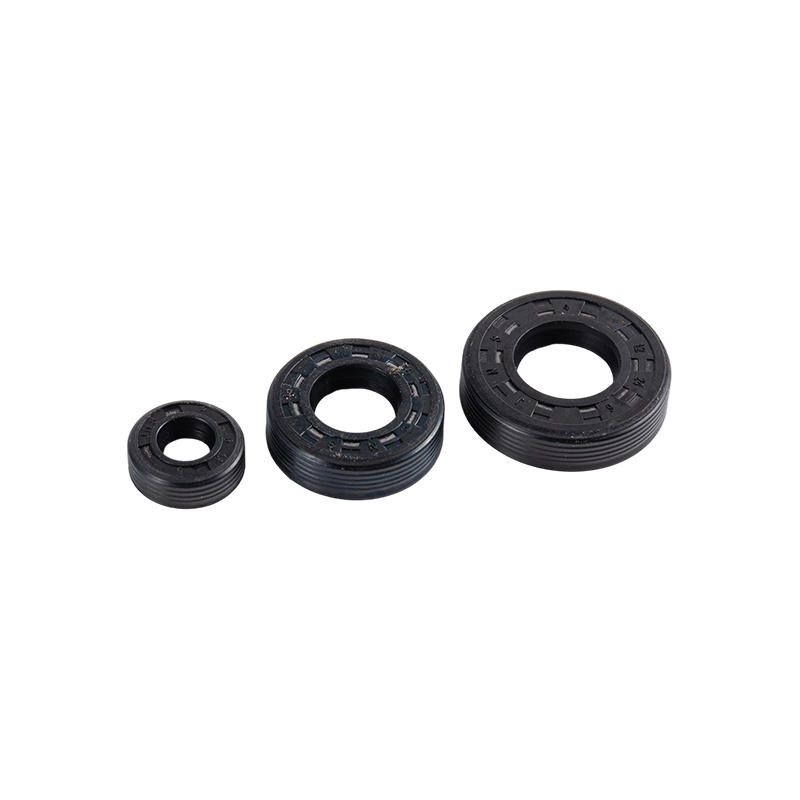
The listed dimensions include a 9.4 mm outside diameter, a 3.3 mm inside diameter, and a 3.5 mm height. The product specification is shown as 9*4*3.5, with an associated 9 mm steel pipe inner diameter and 4 mm piston rod diameter. The final installation dimensions should be confirmed with the supplier.
Q3: What material is used?
The specified material is NBR, or nitrile butadiene rubber. NBR is commonly used for oil-resistant sealing applications, but compatibility must be checked against the actual damping fluid, temperature, pressure, and operating cycle.
Q4: What applications are suitable for this seal?
Typical target applications include small shock absorbers, miniature buffers, compact dampers, precision instruments, and other short-stroke, high-frequency linear mechanisms. Automotive, furniture, home appliance, medical equipment, and construction applications may also be considered after technical validation.
Q5: How does the product reduce hysteresis?
The A-3-002 uses an optimized lip geometry intended to balance sealing contact and movement resistance. This design objective can help reduce the difference between starting, reversing, and running forces. Actual hysteresis depends on the complete system, including the rod, lubricant, temperature, pressure, and alignment.
Q6: Is a pressure range available?
The supplied product information does not specify a design applicable pressure range. Customers should provide the expected pressure and request application-specific confirmation and testing before using the seal in a pressurized system.
Q7: Can the seal be customized?
The company provides customized sealing solutions, including product design, testing, and technical consultation. Customers can discuss alternative dimensions, materials, lip profiles, tolerances, packaging, or performance requirements according to project needs.
Q8: What should be checked before installation?
Customers should check the rod diameter, housing bore, surface finish, runout, concentricity, chamfers, assembly direction, lubricant compatibility, temperature, pressure, stroke, and frequency. The seal should be installed without twisting, cutting, contamination, or excessive deformation.
Q9: How should the product be tested?
Qualification should include dimensional inspection, installation testing, dynamic reciprocation, leakage measurement, friction and hysteresis evaluation, fluid compatibility, temperature testing, and endurance cycling. Testing should reproduce the actual operating conditions as closely as possible.
Q10: Why work with a specialized sealing manufacturer?
A specialized manufacturer can provide more than a standard catalog part. It can support material selection, lip design, tooling, prototypes, testing, process control, and production troubleshooting. This integrated capability is valuable when a miniature seal must meet precise installation and dynamic performance requirements.
13. Conclusion
The Miniature Precision Linear Damping Seal A-3-002 is designed for a demanding class of applications in which sealing accuracy, compact dimensions, and responsive linear motion must coexist. Its 9.4 mm outside diameter supports space-efficient equipment design, while its 3.5 mm height and associated 9*4 arrangement make it relevant to small shock absorbers and buffer systems. The NBR material provides a practical foundation for oil-related sealing applications, subject to confirmation of fluid and temperature compatibility.
The product’s most important design features are its miniature installation envelope, high installation precision, optimized lip geometry, and suitability for short-stroke, high-frequency damping. These characteristics distinguish it from general-purpose static gaskets or oversized dynamic seals that may create unnecessary friction, occupy excessive space, or provide less predictable motion control.
The performance of the A-3-002 also depends on the manufacturing system behind it. Ningguo Jnsseals Sealing Technology Co., Ltd. brings together sealing research, product development, production equipment, material knowledge, technical service, and customized engineering support. Its focus on gas springs, dampers, and O-ring products is directly relevant to the needs of customers developing compact linear mechanisms.
For the best result, customers should treat the A-3-002 as an engineered component rather than an interchangeable rubber part. Confirming dimensions, pressure, temperature, fluid compatibility, rod condition, housing design, and movement profile will help ensure correct selection. When supported by appropriate installation and validation, the A-3-002 can provide a practical and highly compact sealing solution for precision damping systems.
References
1. Product specification information for Miniature Precision Linear Damping Seal A-3-002, including dimensions, material, application focus, and product code.
2. General engineering principles for reciprocating oil seals, dynamic lip contact, friction, hysteresis, and leakage control.
3. General technical references on nitrile butadiene rubber compounds and their use in oil-resistant sealing applications.
4. General guidelines for rubber seal installation, rod surface preparation, housing design, lubrication, and dynamic qualification testing.
5. Company information supplied for Ningguo Jnsseals Sealing Technology Co., Ltd., including its research, development, manufacturing, customization, and technical service capabilities.
Product: Miniature Precision Linear Damping Seal

PREV:25.9mm Precision-Gap Seal: Accurate Sealing for Gas Springs and Dampers
NEXT:700N Wear-Resistant Y-Type Oil Seal Ring for Heavy-Duty Pneumatic Systems
NEXT:700N Wear-Resistant Y-Type Oil Seal Ring for Heavy-Duty Pneumatic Systems



Want to know more
about us?
about us?

Precision sealing for gas springs and dampers. Durable, wear-resistant, and built for long-life performance in demanding applications.
Product Categories
Quick Links
Contact Us
-
Email: jns@jnsseals.cn

-
Email: LouZhuoyu@outlook.com
-
Manager Gong: +86-18563770820

-
Manager Wang: +8615357558902
-
No. 5, Meilin Avenue, Meilin Industrial Development Zone, Ningguo City, Anhui Province, China

