

 English
 русский
 Deutsch
 Türk
 中文简体
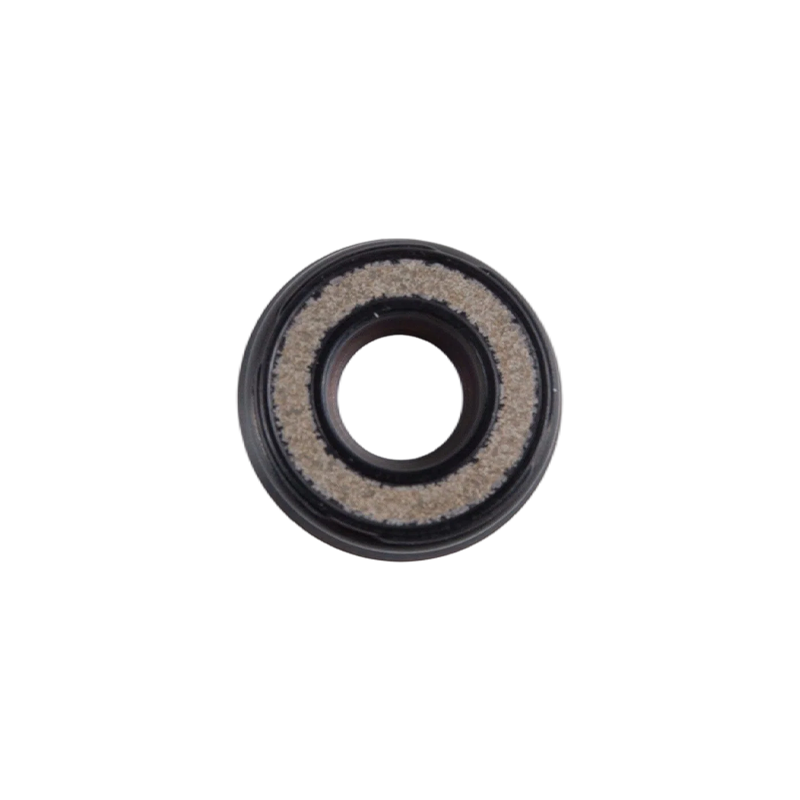
700N Wear-Resistant Y-Type Oil Seal Ring for Heavy-Duty Pneumatic Systems
700N Wear-Resistant Y-Type Oil Seal Ring for Heavy-Duty Pneumatic Systems
700N Wear-Resistant Y-Type Oil Seal Ring for Heavy-Duty Pneumatic Systems
700N Wear-Resistant Y-Type Oil Seal Ring for Heavy-Duty Pneumatic Systems
700N Wear-Resistant Y-Type Oil Seal Ring for Heavy-Duty Pneumatic Systems
700N Wear-Resistant Y-Type Oil Seal Ring for Heavy-Duty Pneumatic Systems
700N Wear-Resistant Y-Type Oil Seal Ring for Heavy-Duty Pneumatic Systems
700N Wear-Resistant Y-Type Oil Seal Ring for Heavy-Duty Pneumatic Systems
700N Wear-Resistant Y-Type Oil Seal Ring for Heavy-Duty Pneumatic Systems
700N Wear-Resistant Y-Type Oil Seal Ring for Heavy-Duty Pneumatic Systems
700N Wear-Resistant Y-Type Oil Seal Ring for Heavy-Duty Pneumatic Systems
700N Wear-Resistant Y-Type Oil Seal Ring for Heavy-Duty Pneumatic Systems
700N Wear-Resistant Y-Type Oil Seal Ring for Heavy-Duty Pneumatic Systems
700N Wear-Resistant Y-Type Oil Seal Ring for Heavy-Duty Pneumatic Systems
700N Wear-Resistant Y-Type Oil Seal Ring for Heavy-Duty Pneumatic Systems
700N Wear-Resistant Y-Type Oil Seal Ring for Heavy-Duty Pneumatic Systems

Lu Wanyin — Senior After-Sales Service Engineer
Home / Author / Lu Wanyin — Senior After-Sales Service Engineer / 700N Wear-Resistant Y-Type Oil Seal Ring for Heavy-Duty Pneumatic Systems
NEW Category
Contact us
700N Wear-Resistant Y-Type Oil Seal Ring for Heavy-Duty Pneumatic Systems
Content
- 1 Product Overview and Application Purpose
- 2 Technical Specifications
- 3 Y-Type Profile and Sealing Principle
- 4 Material Selection: NBR for Practical Industrial Performance
- 5 Wear Resistance and Rough-Rod Performance
- 6 Dry-Run Capability
- 7 Pressure Capability up to 700N
- 8 Advantages Compared with Basic or Poorly Matched Seals
- 9 Manufacturing and Quality Approach
- 10 Research, Development, and Testing Strengths
- 11 Applications in Heavy Industrial Pneumatics
- 12 Applications in Automotive, Furniture, and Equipment Products
- 13 Installation Recommendations
- 14 Design Considerations for Engineers
- 15 Quality Control and Supply Reliability
- 16 Why Choose the A-1-014 Product
- 17 Maintenance and Service-Life Management
- 18 Frequently Asked Questions
- 18.1 What is the 700N Wear-Resistant Sealing ring?
- 18.2 What are the product dimensions?
- 18.3 What material is used?
- 18.4 What type of movement is the seal designed for?
- 18.5 Can it be used on a rough piston rod?
- 18.6 Can the seal operate without lubrication?
- 18.7 What O-ring adapter options are available?
- 18.8 Is the product suitable for all fluids?
- 18.9 What industries can use this seal?
- 18.10 How should the seal be installed?
- 18.11 Can a customized sealing solution be requested?
- 18.12 What should be tested before mass production?
- 19 Conclusion
- 20 References
- 21 Product: 700N Wear-Resistant Sealing
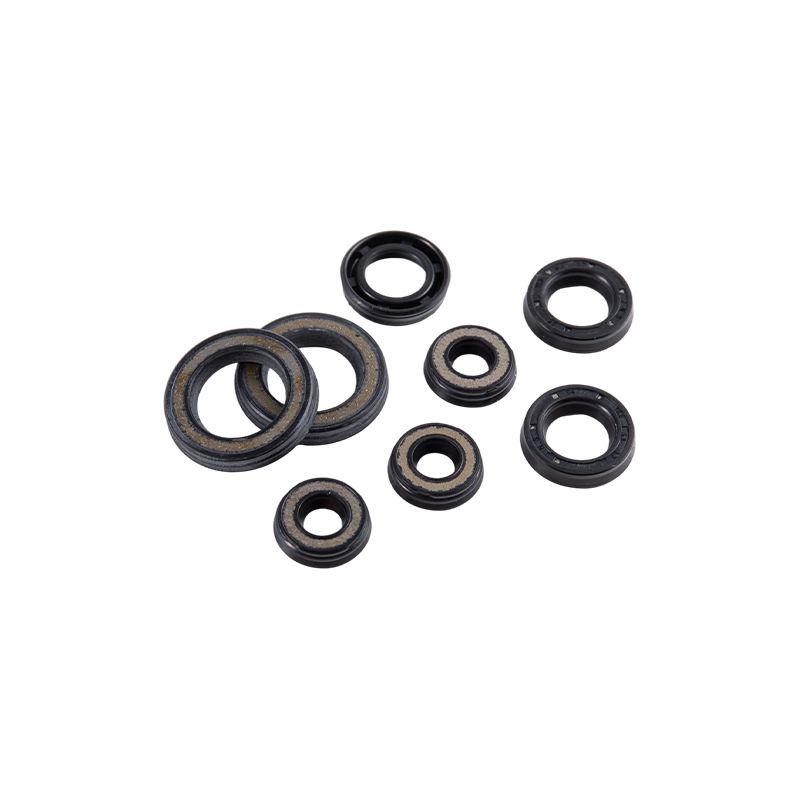
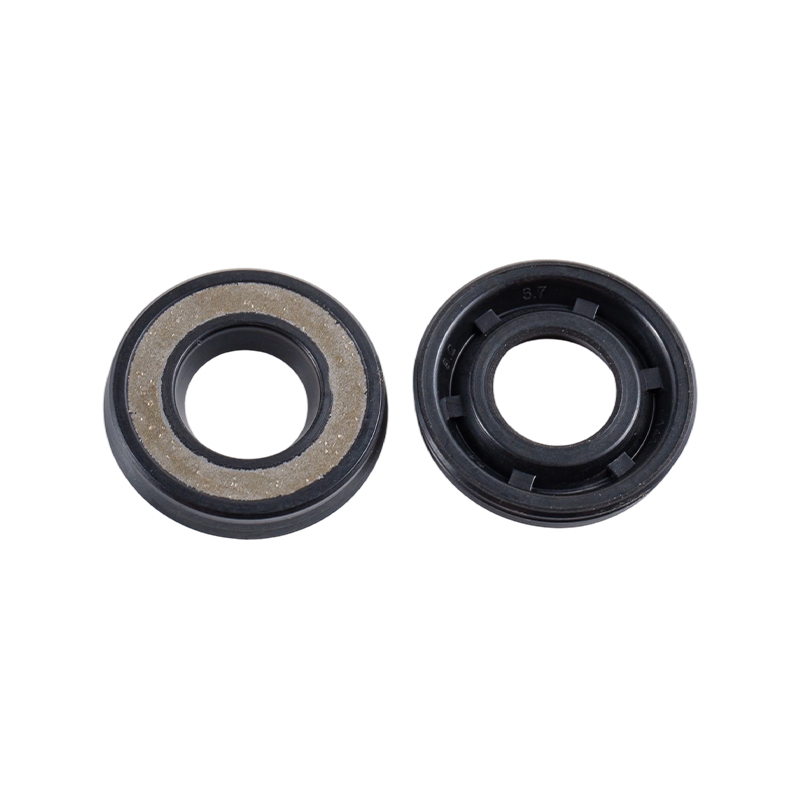
Reliable sealing is essential wherever pneumatic cylinders, gas springs, dampers, and other reciprocating mechanisms must operate safely and consistently. A sealing ring is a relatively small component, but its performance directly influences pressure retention, friction, service life, maintenance frequency, and the overall efficiency of the equipment. The 700N Wear-Resistant Sealing ring, product code A-1-014, is designed for demanding industrial applications that require dependable sealing around a 16 mm steel pipe and a 10 mm piston rod.
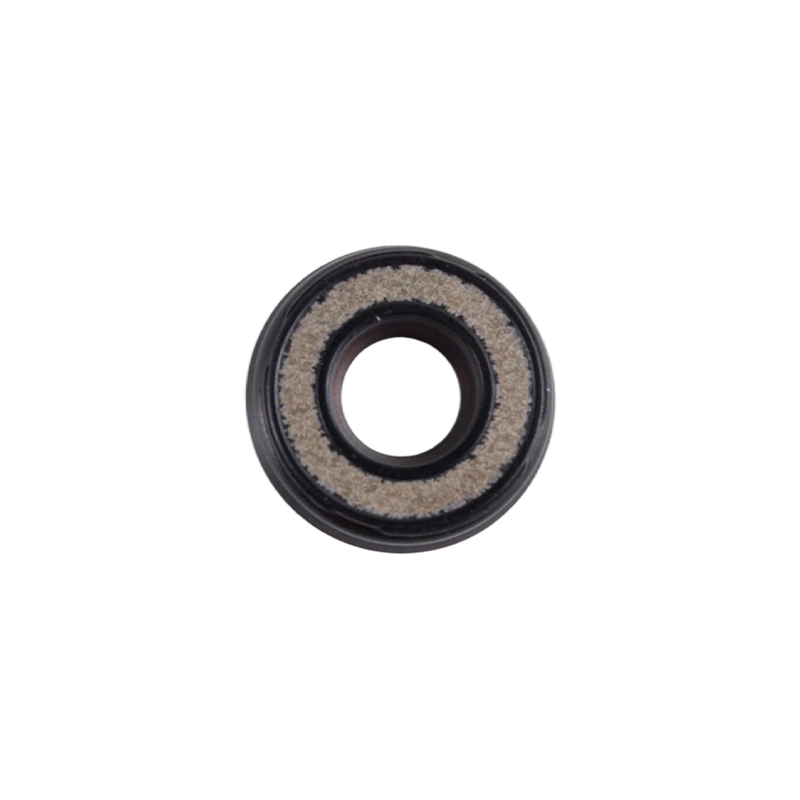
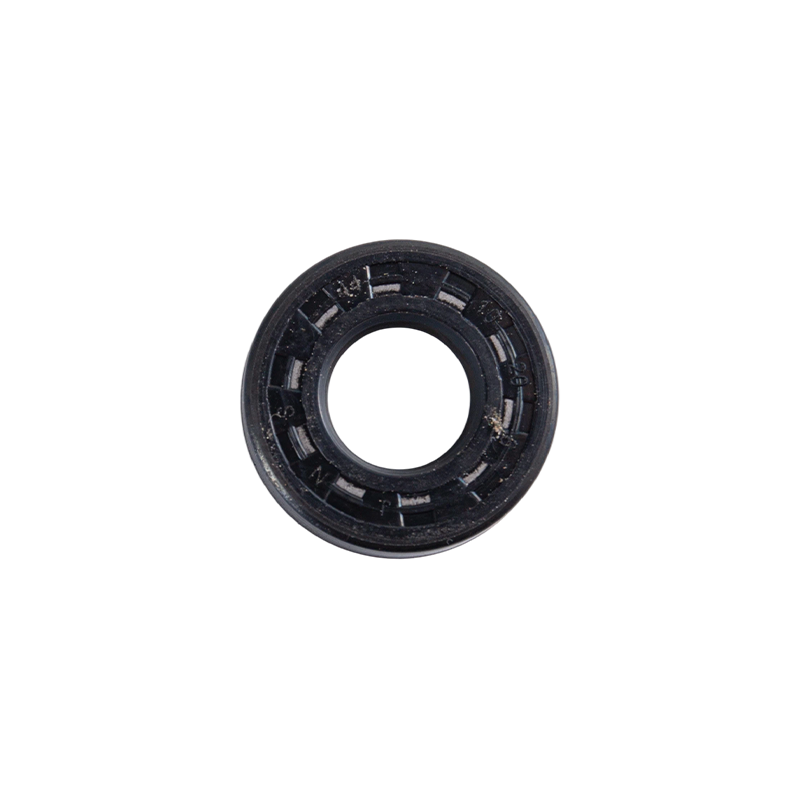
This Y-type oil seal ring is manufactured from NBR and is engineered for a design applicable pressure range of 50–700N. Its profile supports a strong sealing effect while maintaining good dry-run capability and enhanced friction resistance. The product is especially suitable for heavy industrial pneumatics and applications involving rough piston rods, where ordinary sealing rings may experience accelerated wear, leakage, or unstable operation.
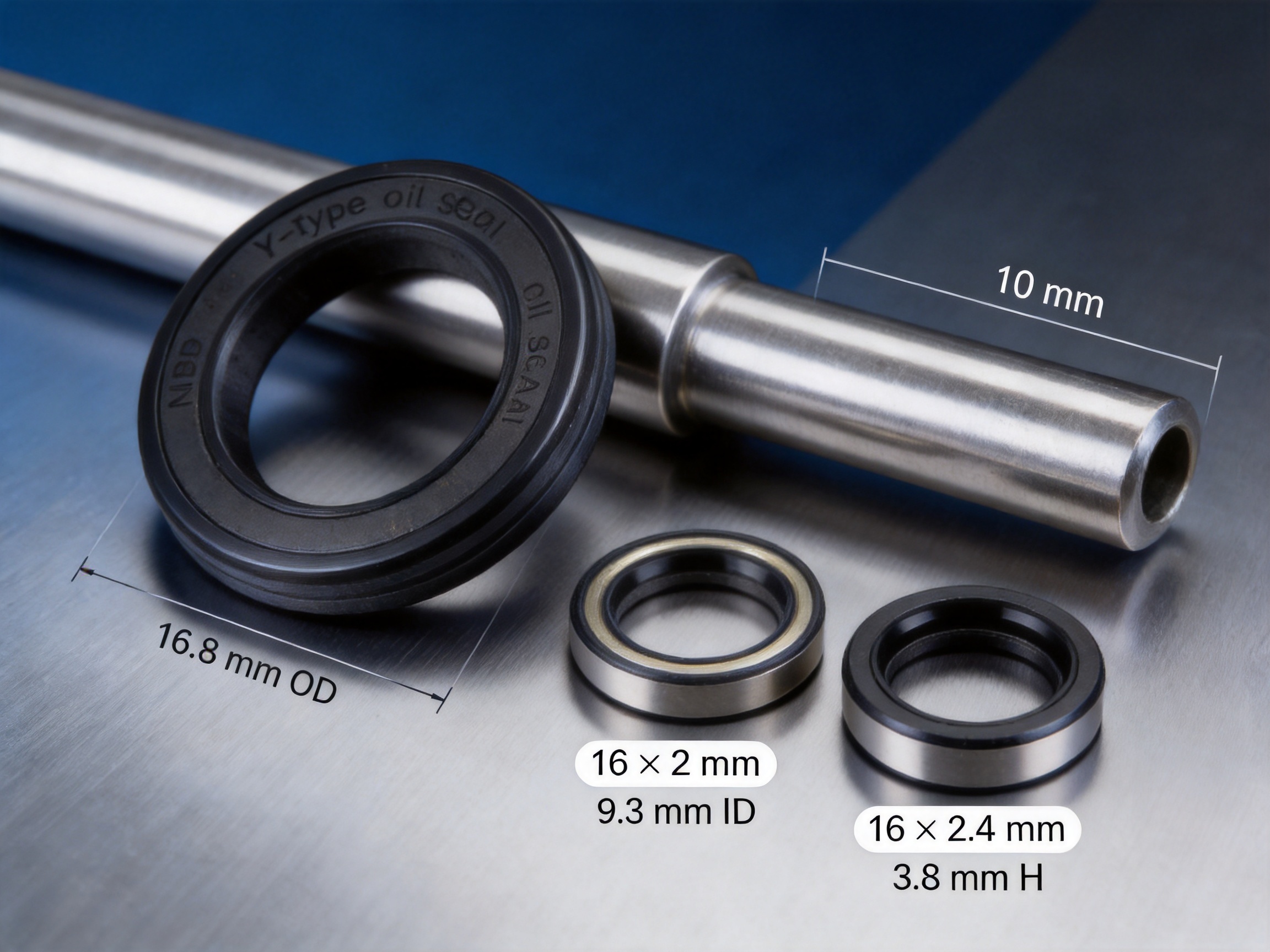
The seal has a product specification of 16.8 × 9.3 × 3.8 mm. The outside diameter is 16.8 mm, the inside diameter is 9.3 mm, and the height is 3.8 mm. It can also be used with a 16 × 2 mm or 16 × 2.4 mm O-ring adapter, allowing designers to select an appropriate configuration for the installation environment. These dimensions are intended for a steel pipe inner diameter of 16 mm and a piston rod diameter of 10 mm.
Beyond its basic dimensions, the product represents an integrated sealing solution supported by material selection, profile design, application knowledge, testing capability, and customized technical service. Its manufacturer, Ningguo Jnsseals Sealing Technology Co., Ltd., develops sealing products for gas springs, dampers, pneumatic systems, and related O-ring applications. The company’s experience in sealing technology enables it to address demanding requirements in automotive, furniture, home appliance, medical equipment, construction, and industrial applications.
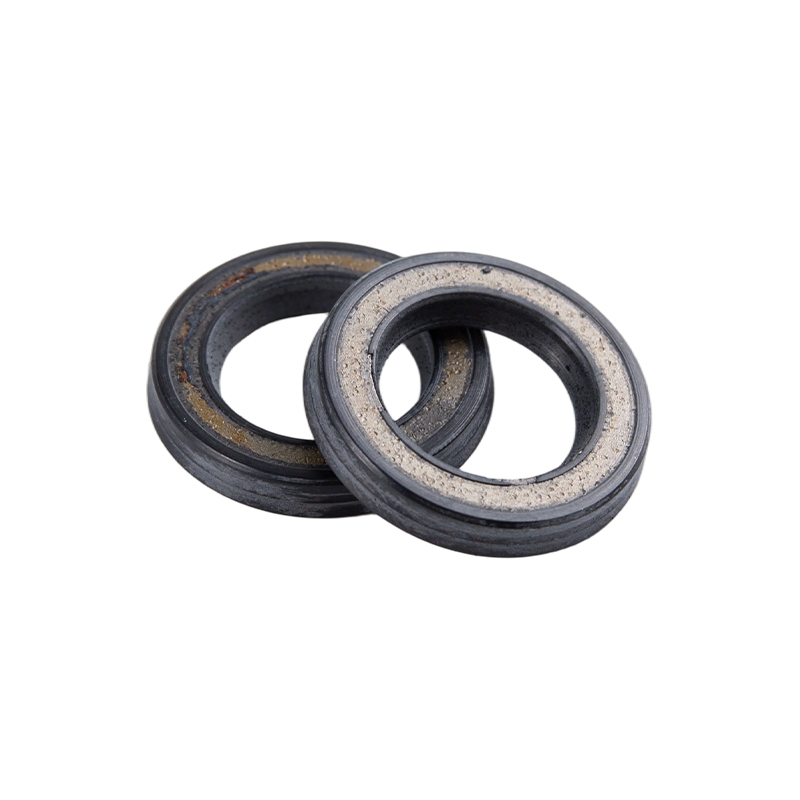
700N Wear-Resistant Sealing
Product Overview and Application Purpose
The 700N Wear-Resistant Sealing ring is a Y-type oil seal intended for reciprocating movement. Unlike a simple static gasket, a reciprocating seal must maintain contact while a piston rod repeatedly moves through the sealing interface. This requires a carefully balanced profile. The sealing lips must be sufficiently flexible to follow the rod surface, but they must also resist deformation, extrusion, abrasion, and premature fatigue.
The product is designed for applications in which the pressure load can reach 700N. The stated applicable range begins at 50N and extends to 700N, providing flexibility for equipment operating under different load conditions. This range makes the seal suitable for pneumatic cylinders, gas spring assemblies, dampers, lifting mechanisms, adjustable furniture components, and other systems in which a rod moves inside a cylinder or steel pipe.
A primary purpose of the seal is to prevent the escape of lubricating oil, gas, or pressurized media while limiting the entry of dust and other contaminants. In a pneumatic or gas-supported mechanism, leakage can cause reduced force, slower movement, poor holding performance, and inconsistent operation. In a damper or gas spring, seal degradation can also affect damping behavior and create visible oil contamination around the rod.
The A-1-014 design is particularly valuable in applications where the piston rod surface is not perfectly smooth. Rough rods can create a more aggressive operating environment because surface irregularities increase contact stress and can scrape or cut the sealing lip. The product’s wear-resistant material and profile are intended to provide more stable performance under these conditions than a basic low-duty sealing ring.
Technical Specifications
| Item | Specification |
|---|---|
| Product name | 700N Wear-Resistant Sealing |
| Seal profile | Y-type oil seal ring |
| Product code | A-1-014 |
| Product specification | 16.8 × 9.3 × 3.8 mm |
| Outside diameter | 16.8 mm |
| Inside diameter | 9.3 mm |
| Height | 3.8 mm |
| O-ring adapter options | 16 × 2 mm or 16 × 2.4 mm |
| Applicable pressure range | 50–700N |
| Steel pipe inner diameter | 16 mm |
| Piston rod diameter | 10 mm |
| Material | NBR |
| Recommended application direction | Reciprocating sealing in pneumatic, gas spring, and damper systems |
Correct dimensional matching is essential. The 16 mm steel pipe inner diameter and 10 mm piston rod diameter establish the basic installation environment for this product. Before production or assembly, customers should verify the actual housing dimensions, rod tolerance, groove geometry, surface finish, chamfer, concentricity, and operating conditions. Even a high-quality seal can perform poorly if the groove is incorrectly designed or if the mating rod is outside the recommended tolerance.
The stated 16.8 mm outside diameter, 9.3 mm inside diameter, and 3.8 mm height define the seal’s installed envelope. The O-ring adapter options provide additional design flexibility and may support secure positioning or system-specific installation requirements. Selection between the 16 × 2 mm and 16 × 2.4 mm options should be based on groove size, compression, pressure, assembly method, and the requirements of the complete seal system.
Y-Type Profile and Sealing Principle
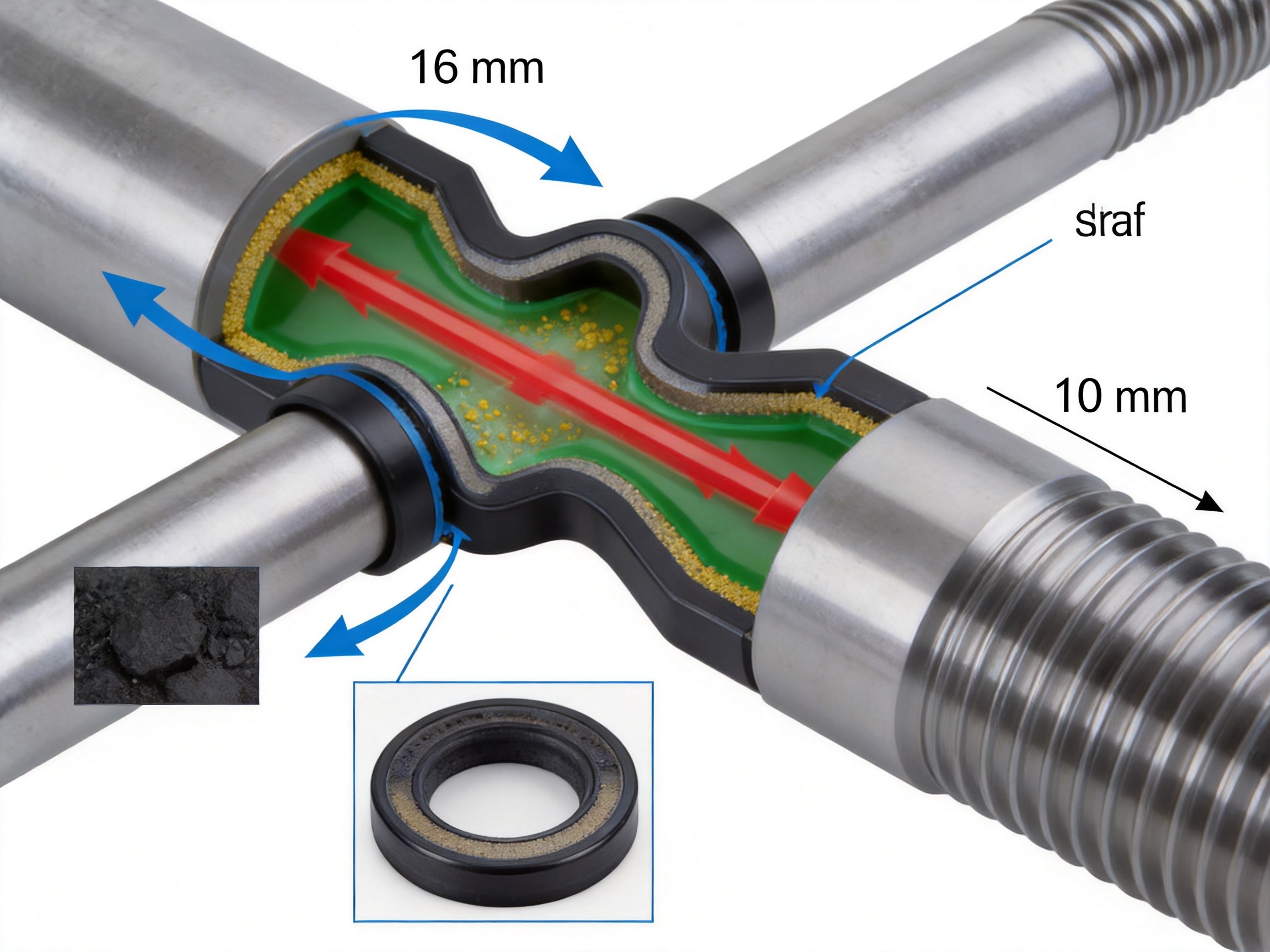
The Y-type profile is widely used for dynamic sealing because its geometry can generate an effective sealing contact under operating pressure. The profile typically includes a central body and two sealing lips that create a characteristic Y-shaped cross-section. Depending on the installation and pressure direction, one lip may face the pressure side while the other supports sealing toward the opposite side.
When the system is pressurized, the sealing lips can be encouraged to press against the mating surfaces. This pressure-assisted behavior helps maintain contact between the seal and the rod or housing. At the same time, the profile must be flexible enough to accommodate small changes in alignment, thermal expansion, and surface variation without creating excessive friction.
In a reciprocating application, the seal is exposed to repeated cycles of compression, sliding, relaxation, and pressure loading. The design therefore has to balance several factors:
First, the sealing lips must retain sufficient contact pressure to reduce leakage. Second, the contact area must not be so aggressive that friction becomes excessive. Third, the material must resist tearing and abrasion as the rod moves. Fourth, the body must remain stable in the housing and resist twisting or rolling during assembly and operation.
The 700N Wear-Resistant Sealing ring is designed around this balance. Its intended advantage is not simply maximum tightness. Instead, it aims to deliver dependable sealing with controlled friction, good dry-run capability, and better resistance to demanding rod conditions. This balance is important in equipment that must move smoothly while maintaining pressure over a long service interval.
Material Selection: NBR for Practical Industrial Performance
The product uses NBR, or nitrile rubber, a widely established elastomer for oil seals, O-rings, and industrial sealing components. NBR is commonly selected for applications involving mineral oils, lubricants, hydraulic fluids, and general industrial media. It also provides a practical combination of mechanical strength, abrasion resistance, compression behavior, and cost efficiency.
For a reciprocating oil seal, mechanical durability is especially important. The sealing edge is continuously exposed to sliding contact, and the material must withstand repeated deformation without rapidly developing cracks, permanent distortion, or edge damage. NBR is well suited to many such applications because it offers useful tensile strength and resistance to wear when properly formulated and processed.
NBR is also a versatile material for customized sealing solutions. Different compound formulations can be developed to address variations in hardness, friction, temperature capability, oil compatibility, and resistance to specific operating media. The most appropriate compound depends on the complete application, including pressure, speed, temperature, lubrication, rod surface, and expected cycle count.
Customers should confirm chemical compatibility before placing the seal into service. NBR is suitable for many petroleum-based lubricants and common industrial fluids, but it may not be the best choice for every chemical, fuel, solvent, or high-temperature medium. When the application involves aggressive chemicals, elevated temperatures, special gases, or unusual lubricants, alternative materials such as HNBR or FPM may need to be evaluated.
The manufacturer’s broader product capabilities include NBR, HNBR, and FPM O-ring products. This material range allows the company to compare different elastomer technologies and provide a more suitable recommendation when an application exceeds the practical operating range of standard NBR.
Wear Resistance and Rough-Rod Performance
One of the most important advertised advantages of the A-1-014 seal is its enhanced friction resistance. Friction is unavoidable in a dynamic seal, but uncontrolled friction can create several problems. It can increase operating force, generate heat, accelerate material wear, damage the rod surface, and reduce the efficiency of the equipment. In pneumatic mechanisms, excessive friction can also cause stick-slip movement and inconsistent response.
Rough rods create a particularly difficult sealing environment. Surface irregularities can act like abrasive particles against the sealing lip. During every stroke, these irregularities may remove small amounts of material, create micro-tears, or interrupt the contact line. If the rod has machining marks, corrosion, scratches, or contamination, the sealing edge can deteriorate more quickly.
The A-1-014 design addresses this challenge through the combination of a wear-resistant NBR compound and a Y-type profile. The material is intended to tolerate repeated sliding contact, while the profile can maintain a functional sealing line even when the rod surface is not ideal. This does not mean that any rod condition is acceptable. Proper rod preparation remains important, but the seal provides a stronger margin of performance than a basic seal designed only for smooth, lightly loaded service.
Enhanced friction resistance also contributes to more predictable maintenance. A seal that wears slowly and evenly is easier to schedule for replacement than one that fails unexpectedly due to local damage. Stable wear can help equipment operators plan inspections, reduce unplanned downtime, and protect surrounding components from leakage-related contamination.
In competitive products, performance may be limited by a narrow balance between low friction and high sealing force. A seal with very low contact pressure may reduce friction but allow leakage. A seal with very high contact pressure may prevent leakage initially but create excessive drag and wear. The A-1-014 product is designed to provide a practical middle ground for heavy industrial pneumatic service, combining pressure retention with resistance to friction-related damage.
Dry-Run Capability
Dry running occurs when the sealing interface has little or no supplemental lubrication. It may happen during initial startup, intermittent operation, maintenance, transportation, low-temperature conditions, or equipment designs that do not continuously supply oil to the rod. Dry running is demanding because the seal must operate without the lubricating film that normally reduces direct contact between the elastomer and the rod.
The product is specified as having good dry-run ability. This feature is valuable because not every machine operates under ideal lubrication conditions. A seal that can tolerate short periods of dry operation is less vulnerable to immediate overheating, scuffing, or edge damage. It can provide additional reliability in equipment where lubrication is difficult to control or where occasional low-lubrication cycles are unavoidable.
Good dry-run ability does not eliminate the need for correct installation and maintenance. Continuous operation without suitable lubrication may still shorten service life, especially at high speed, high temperature, or high pressure. Customers should define the expected dry-run duration, stroke frequency, rod speed, and environmental conditions when evaluating suitability.
For equipment manufacturers, dry-run capability can simplify system design. It may reduce dependence on complex lubrication arrangements and make the seal more tolerant of assembly variation. For end users, it can provide greater confidence during startup and reduce the risk that a brief lubrication interruption will immediately cause seal failure.
Pressure Capability up to 700N
The stated design applicable pressure range of 50–700N makes this seal suitable for a broad selection of load conditions. The 700N value indicates that the product is intended for applications requiring a stronger pressure-handling capability than light-duty sealing systems. This is relevant to heavy industrial pneumatics, gas spring mechanisms, dampers, and similar equipment in which the seal must retain its position and function under substantial loading.
Pressure capability depends on more than the rubber compound. It is affected by the seal profile, housing support, clearance, rod condition, temperature, lubrication, speed, and installation accuracy. If the clearance is too large, the seal may be vulnerable to extrusion or lip damage. If the groove is too shallow or too narrow, excessive compression may raise friction. If the housing is misaligned, the sealing load may become uneven around the circumference.
For this reason, the 50–700N range should be treated as a design reference rather than a substitute for application validation. A successful design review should consider the maximum operating load, pressure fluctuations, peak loads, cycle frequency, temperature range, and expected service life. Where the equipment operates near the upper end of the range, prototype testing is recommended.
Compared with lower-duty sealing rings, the A-1-014 product offers a more appropriate solution for equipment that must maintain sealing performance under heavier industrial conditions. Its pressure range, wear-resistant design, and compatibility with 16 mm pipe and 10 mm rods make it useful for standardized product platforms as well as customized assemblies.
Advantages Compared with Basic or Poorly Matched Seals
The most meaningful comparison is not simply between two brands. It is between a seal selected for the actual operating conditions and a seal chosen only by approximate size. A basic seal may appear acceptable during initial assembly but fail prematurely when exposed to rough rods, repeated reciprocation, dry running, or high pressure. The A-1-014 product is designed to address these factors together.
Its first advantage is application-specific sizing. The product is intended for a 16 mm steel pipe inner diameter and a 10 mm piston rod diameter, with defined dimensions of 16.8 × 9.3 × 3.8 mm. This provides a clear starting point for engineering and reduces the uncertainty associated with using a generic seal.
Its second advantage is the combination of pressure capacity and wear resistance. Some low-cost seals may provide acceptable static sealing but lack the material durability required for continuous rod movement. The A-1-014 ring is designed for dynamic service, where the sealing lip must withstand repeated sliding and pressure variation.
Its third advantage is dry-run tolerance. A product with good dry-run ability can better handle temporary lubrication shortages and startup conditions. This can be important in industrial equipment that experiences irregular duty cycles or cannot guarantee a consistent lubricant film.
Its fourth advantage is suitability for rough rods. Rod quality remains important, but the product is intended to provide improved reliability where the surface is less than perfect. This helps equipment designers manage real-world conditions in which minor surface variation, machining marks, or wear cannot be eliminated entirely.
Its fifth advantage is technical customization. Ningguo Jnsseals Sealing Technology Co., Ltd. provides sealing design, testing, and technical consultation. This means the product can be considered as part of a broader engineering service rather than as an isolated catalog component. Customers can discuss dimensions, material options, application conditions, and validation requirements with a specialized sealing supplier.
Manufacturing and Quality Approach
Producing a reliable dynamic seal requires more than forming rubber into a nominal shape. The manufacturing process must control compound preparation, molding, dimensional accuracy, flash removal, visual quality, inspection, and packaging. Small variations at any stage can affect installation, friction, leakage, and service life.
A professional sealing manufacturer typically begins with controlled raw-material handling. NBR compounds must be prepared according to a defined formulation, with suitable control of polymer, reinforcing agents, plasticizers, curing ingredients, and other additives. Mixing must achieve uniform dispersion so that the final material has consistent hardness, strength, elasticity, and wear behavior throughout the batch.
After compounding, the material is formed using a controlled molding process. The mold must reproduce the Y-type profile accurately, especially at the sealing lips. The lip geometry affects contact pressure, friction, and pressure response. Mold temperature, pressure, curing time, and material flow must be managed to ensure that the seal is fully vulcanized without excessive porosity, distortion, or under-cured regions.
Dimensional control is another essential manufacturing stage. The outside diameter, inside diameter, height, lip position, and overall profile must remain within defined tolerances. Inspection may include precision measurement of sample parts, visual checks for molding defects, and verification that the seal is free from cuts, cracks, bubbles, surface contamination, and excessive flash.
Trimming and finishing must be carefully controlled. Excess flash at the sealing edge can interfere with assembly or create an irregular contact line. However, aggressive trimming can damage the lip. A controlled finishing process helps maintain the intended geometry and improves consistency from part to part.
The manufacturer’s focus on research, development, and sealing application technology supports continuous improvement. Product development can include profile optimization, compound comparison, fixture design, prototype evaluation, and performance testing. This approach is especially valuable for customers who require more than a standard size and need a customized sealing solution.
Research, Development, and Testing Strengths
Ningguo Jnsseals Sealing Technology Co., Ltd. was founded in 2019 as a high-tech enterprise focused on sealing technology for gas springs, dampers, and related O-ring products. Although the company is relatively young compared with some long-established industrial manufacturers, its specialization allows it to concentrate resources on a clearly defined technical field.
The company’s research and development activities cover the design, application, and improvement of sealing products. This includes the ability to evaluate sealing profiles, compare elastomer materials, adapt dimensions, and consider the relationship between seals and the larger mechanical system. Such application-oriented development is important because seal performance depends on the interaction between the seal, rod, cylinder, lubricant, pressure, temperature, and movement pattern.
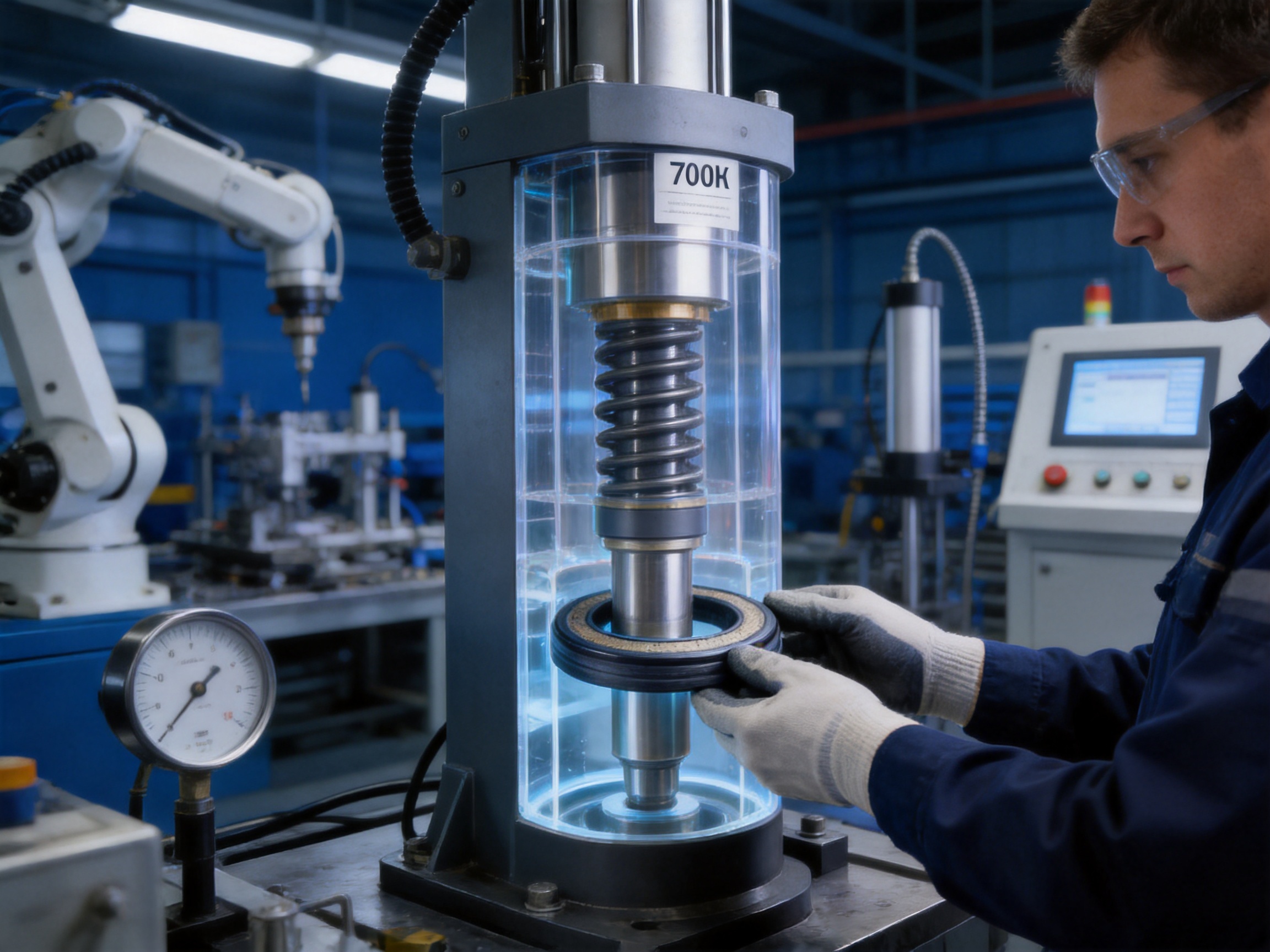
Testing is an important part of product development and customer support. Depending on the application, validation may include dimensional inspection, hardness testing, compression behavior, leakage evaluation, friction measurement, reciprocating cycling, wear analysis, and temperature exposure. Testing conditions should be selected to represent the actual working environment rather than relying only on general laboratory assumptions.
For the 700N Wear-Resistant Sealing ring, useful validation considerations include repeated movement on a 10 mm piston rod, operation inside a 16 mm steel pipe, pressure exposure across the 50–700N range, dry-run intervals, and testing with representative rod surface conditions. Testing near the upper pressure limit can help confirm whether the seal remains stable under demanding loads.
Technical service is another important strength. The company provides customized sealing solutions, including product design, testing, and technical consultation. This allows customers to communicate operating details before selecting a material or profile. A technically informed supplier can often identify problems related to groove design, rod finish, compression, lubrication, or temperature before they become field failures.
Applications in Heavy Industrial Pneumatics
Heavy industrial pneumatic equipment often operates under repeated motion and variable loads. Cylinders may cycle thousands or millions of times during their service life, while the rod may encounter dust, vibration, temperature changes, and inconsistent lubrication. A seal used in this environment must provide stable performance rather than only short-term tightness.
The A-1-014 ring is suitable for pneumatic mechanisms designed around a 16 mm internal steel pipe and a 10 mm piston rod. Potential applications include compact actuators, positioning systems, lifting equipment, clamping devices, industrial control mechanisms, and equipment requiring a guided reciprocating rod.
In pneumatic systems, the seal helps retain pressure and prevent contamination from entering the cylinder. This can support consistent actuation force and reduce the risk of internal wear. A seal with good friction behavior can also help maintain smoother movement, particularly when the actuator must operate at low speed or under changing loads.
The seal may also be considered for gas springs and dampers. These products often require reliable long-term retention of gas or oil, together with a compact sealing package. Furniture hardware, vehicle components, adjustable supports, lids, covers, and industrial dampers can all depend on stable sealing to provide controlled movement and holding force.
In these applications, product selection should account for the direction of pressure, the number of strokes, rod speed, environmental contamination, and temperature. If the system is exposed to outdoor weather, aggressive cleaning agents, or unusual chemicals, additional material review may be necessary.
Applications in Automotive, Furniture, and Equipment Products
Sealing technology is used across many industries because controlled movement and pressure retention are common engineering requirements. In automotive components, seals may be used in dampers, adjustment mechanisms, gas springs, and compact hydraulic or pneumatic assemblies. These systems can experience vibration, temperature changes, and high cycle counts.
Furniture applications include lifting mechanisms, reclining systems, adjustable tables, office chairs, cabinet supports, and bed frames. While these products may operate at lower speeds than industrial machinery, they often require quiet, smooth movement and long service life. A seal with good wear resistance can help maintain consistent operation throughout repeated daily use.
Home appliances may use gas-supported or damped mechanisms in doors, lids, height-adjustment systems, and moving assemblies. Medical equipment can require controlled movement, dependable cleanliness, and reliable performance under repeated adjustment. Construction equipment and industrial machinery may impose higher loads and more severe contamination, making pressure capability and material durability particularly important.
The A-1-014 product is most directly associated with heavy industrial pneumatic conditions, but its compact dimensions and defined application range may make it suitable for related systems. The final decision should always be based on testing under actual operating conditions.
Installation Recommendations
Correct installation is essential for achieving the expected performance of any dynamic seal. Before assembly, inspect the seal for cuts, cracks, deformation, contamination, or visible molding defects. Verify that the product code, dimensions, and material are appropriate for the intended application.
The rod and housing should be clean and free from burrs, sharp edges, chips, and abrasive particles. Any sharp edge at the entrance of the housing can cut the sealing lip during installation. A suitable chamfer or lead-in should be provided where required. The piston rod should also be checked for scratches, corrosion, excessive roughness, and dimensional variation.
Use an appropriate lubricant during assembly when compatible with the NBR compound and the operating medium. Lubrication can reduce installation damage and help the seal settle into position. However, the lubricant should not contain chemicals that attack NBR or cause excessive swelling and softening.
Do not force the seal over sharp threads, keyways, holes, or other discontinuities without suitable protection. If the seal must pass over a potentially damaging feature, use an installation sleeve or another approved protective method. Avoid stretching the ring beyond its elastic capability, twisting it, or installing it with the sealing lips folded.
After assembly, confirm that the seal is seated evenly and that the rod moves without abnormal resistance. Initial movement should be observed for leakage, sticking, noise, or unusual friction. If the equipment operates near the upper pressure range, a controlled break-in and inspection procedure can help identify installation problems before full production use.
Design Considerations for Engineers
Engineers selecting the 700N Wear-Resistant Sealing ring should evaluate the complete operating profile. Important parameters include maximum and minimum pressure, rod speed, stroke length, cycle frequency, temperature, lubricant type, environmental contamination, and expected service life.
Rod surface quality is particularly important. A seal designed for rough-rod tolerance still performs best when the rod has a suitable finish, hardness, straightness, and roundness. Excessively rough or damaged rods can shorten the life of any elastomeric seal. If roughness is unavoidable, engineers should confirm performance through representative testing.
Housing and groove geometry must also be reviewed. The groove should provide adequate support without over-compressing the seal. Excessive clearance may encourage extrusion or rolling, while insufficient space may raise friction. Concentricity between the rod and housing helps distribute contact pressure evenly around the circumference.
Temperature must be considered together with speed and pressure. As temperature increases, elastomer properties can change, and the lubricant may become less effective. At low temperature, the seal may become stiffer and generate higher starting friction. Testing across the actual temperature range is recommended for critical products.
When customers require a modified size, different material, or special profile, the manufacturer can provide customized design and technical consultation. Such cooperation may include reviewing drawings, assessing material compatibility, producing prototypes, performing tests, and refining the design before mass production.
Quality Control and Supply Reliability
Quality control should cover both product conformity and process stability. Incoming raw materials should be identified and controlled. Mixing and curing records should be maintained where appropriate. Molding parameters should be monitored, and inspection standards should define acceptable limits for dimensions and appearance.
For a dynamic oil seal, visual inspection is important but not sufficient. A seal may appear acceptable while still having dimensional variation or material properties that affect service life. Measurement of critical dimensions and periodic performance testing provide greater confidence in production consistency.
Batch traceability can help customers investigate field issues and manage replacement parts. Clear product coding, including the A-1-014 designation, supports accurate ordering and reduces the risk of mixing similar-looking components. Packaging should protect seals from dust, ozone, direct sunlight, excessive heat, and deformation during storage and transportation.
A specialized manufacturer can also support more dependable supply by maintaining product documentation, technical communication, and responsive customer service. This is valuable for equipment manufacturers that need repeatable dimensions across production batches or require engineering support when a design changes.
Ningguo Jnsseals Sealing Technology Co., Ltd. combines product development, manufacturing capability, testing, and technical service. Its focus on gas spring, damper, and O-ring sealing technology positions it to support both standard products and customized projects. Customers can use this combined capability to improve not only the seal itself but also the surrounding application design.
Why Choose the A-1-014 Product
The 700N Wear-Resistant Sealing ring offers a practical combination of application-specific dimensions, NBR material, Y-type geometry, dry-run capability, friction resistance, and pressure suitability. It is designed for a 16 mm steel pipe and 10 mm piston rod, making it straightforward to evaluate in compact pneumatic and damping assemblies.
Its design applicable pressure range of 50–700N supports more demanding service than many light-duty sealing requirements. Its wear-resistant characteristics are useful where rods are exposed to repeated motion or less-than-perfect surface conditions. Its dry-run ability provides additional tolerance during startup, intermittent lubrication, or temporary low-lubrication operation.
The product is also supported by a manufacturer that offers research and development, customized sealing design, testing, and technical consultation. This support can help customers reduce development risk, select a more appropriate material, and confirm performance before committing to large-scale production.
Choosing a seal based on the complete application rather than price alone can reduce maintenance costs and improve equipment reliability. A seal that lasts longer, operates with more consistent friction, and reduces leakage may provide better total value even when its purchase price is not the lowest available.
Maintenance and Service-Life Management
Regular maintenance can extend the service life of the seal and the equipment around it. Operators should inspect the rod area for oil leakage, dust accumulation, unusual wear marks, and changes in movement resistance. A gradual increase in friction may indicate contamination, rod damage, lubrication problems, or seal wear.
If leakage appears, the cause should be identified before replacing the seal. Possible causes include incorrect installation, damaged rod surfaces, excessive clearance, pressure beyond the design range, chemical incompatibility, thermal degradation, or an incorrectly selected groove. Replacing the seal without correcting the underlying issue may result in repeated failure.
During scheduled maintenance, inspect the rod for scratches and corrosion and confirm that the housing has not become distorted. Check whether the seal has rolled, extruded, hardened, softened, or developed edge damage. The condition of the removed seal can provide useful information about the operating environment.
Storage also affects elastomer performance. Seals should be kept in a clean, dry, and temperature-controlled location away from direct sunlight, ozone-generating electrical equipment, solvents, and excessive compression. They should remain in suitable packaging until installation. Proper storage helps preserve elasticity and dimensional stability.
Frequently Asked Questions
What is the 700N Wear-Resistant Sealing ring?
It is a Y-type NBR oil seal ring identified by product code A-1-014. It is designed for reciprocating applications involving a 16 mm steel pipe inner diameter and a 10 mm piston rod diameter. Its applicable pressure range is 50–700N.
What are the product dimensions?
The product specification is 16.8 × 9.3 × 3.8 mm. The outside diameter is 16.8 mm, the inside diameter is 9.3 mm, and the height is 3.8 mm.
What material is used?
The seal is made from NBR, or nitrile rubber. NBR is widely used for oil seals because of its practical combination of oil compatibility, mechanical strength, abrasion resistance, and cost efficiency.
What type of movement is the seal designed for?
The Y-type profile is intended primarily for reciprocating movement, such as the movement of a piston rod inside a pneumatic cylinder, gas spring, damper, or similar mechanism.
Can it be used on a rough piston rod?
The product is designed with enhanced friction resistance and is intended for applications involving rough rods. However, the rod should still meet suitable requirements for diameter, straightness, hardness, surface condition, and cleanliness. Excessive damage may shorten the service life of any seal.
Can the seal operate without lubrication?
The product is described as having good dry-run ability, which provides improved tolerance during periods of limited lubrication. Continuous dry operation at high speed, high pressure, or high temperature should still be validated through application testing.
What O-ring adapter options are available?
The listed O-ring adapter options are 16 × 2 mm and 16 × 2.4 mm. The correct option depends on the groove design, compression, assembly method, and requirements of the complete sealing system.
Is the product suitable for all fluids?
No. NBR is compatible with many petroleum-based oils and common industrial lubricants, but compatibility depends on the specific fluid, temperature, concentration, and exposure time. Customers should confirm chemical compatibility before use, especially with aggressive chemicals, solvents, special gases, or high-temperature media.
What industries can use this seal?
Potential industries include heavy industrial pneumatics, gas springs, dampers, automotive components, furniture mechanisms, home appliances, medical equipment, construction equipment, and other products requiring compact reciprocating sealing.
How should the seal be installed?
Clean the rod and housing, remove burrs and sharp edges, use a compatible assembly lubricant when appropriate, avoid twisting or cutting the sealing lips, and confirm that the seal is seated evenly. The rod should move smoothly after installation without abnormal friction or leakage.
Can a customized sealing solution be requested?
Yes. The manufacturer provides customized sealing solutions that may include product design, testing, and technical consultation. Customers should provide operating pressure, temperature, speed, stroke, lubricant, rod dimensions, groove details, and expected service life.
What should be tested before mass production?
Representative testing should include leakage, friction, reciprocating wear, dry-run behavior, pressure exposure, temperature conditions, and compatibility with the actual rod and lubricant. Testing should reflect the intended equipment rather than relying only on general catalog specifications.
Conclusion
The 700N Wear-Resistant Sealing ring is a specialized Y-type NBR oil seal for demanding reciprocating applications. With dimensions of 16.8 × 9.3 × 3.8 mm, compatibility with a 16 mm steel pipe and 10 mm piston rod, and a design applicable pressure range of 50–700N, it offers a focused solution for heavy industrial pneumatic systems, gas springs, dampers, and related mechanisms.
Its principal advantages include good dry-run ability, enhanced friction resistance, wear-oriented performance, and suitability for rough-rod conditions. These features help distinguish it from basic seals that may be adequate only for smooth rods, light loads, or well-lubricated operation.
The product’s value is strengthened by the manufacturer’s research and development capabilities, advanced production equipment, testing resources, and professional technical service. Through customized design and application support, customers can evaluate the seal as part of a complete engineering solution.
For the best results, engineers should confirm dimensions, groove design, rod condition, pressure, temperature, speed, lubrication, and chemical compatibility before use. When properly selected, installed, and maintained, the A-1-014 seal can contribute to lower leakage, improved motion consistency, longer service intervals, and more dependable equipment performance.
References
1. Product specification sheet for 700N Wear-Resistant Sealing, product code A-1-014.
2. Manufacturer-provided technical information for NBR, HNBR, and FPM sealing products.
3. General engineering principles for elastomeric oil seals and reciprocating sealing systems.
4. Industrial guidance on rubber seal installation, storage, inspection, and maintenance.
5. General technical literature concerning nitrile rubber compound selection and fluid compatibility.
6. General design practices for pneumatic cylinders, gas springs, dampers, and dynamic sealing assemblies.
Product: 700N Wear-Resistant Sealing

PREV:Miniature Precision Linear Damping Seal for Compact Shock Absorbers and Buffers
NEXT:66mm Jumbo Flange O-Ring Seal: A Reliable Solution for Large Static Flange Joints
NEXT:66mm Jumbo Flange O-Ring Seal: A Reliable Solution for Large Static Flange Joints


Want to know more
about us?
about us?

Precision sealing for gas springs and dampers. Durable, wear-resistant, and built for long-life performance in demanding applications.
Product Categories
Quick Links
Contact Us
-
Email: jns@jnsseals.cn

-
Email: LouZhuoyu@outlook.com
-
Manager Gong: +86-18563770820

-
Manager Wang: +8615357558902
-
No. 5, Meilin Avenue, Meilin Industrial Development Zone, Ningguo City, Anhui Province, China

