

 English
 русский
 Deutsch
 Türk
Türk 中文简体
中文简体
Precision Synchronous Seal for Accurate, Low-Hysteresis Motion Control
Precision Synchronous Seal for Accurate, Low-Hysteresis Motion Control
Precision Synchronous Seal for Accurate, Low-Hysteresis Motion Control
Precision Synchronous Seal for Accurate, Low-Hysteresis Motion Control
Precision Synchronous Seal for Accurate, Low-Hysteresis Motion Control
Precision Synchronous Seal for Accurate, Low-Hysteresis Motion Control
Precision Synchronous Seal for Accurate, Low-Hysteresis Motion Control
Precision Synchronous Seal for Accurate, Low-Hysteresis Motion Control
Precision Synchronous Seal for Accurate, Low-Hysteresis Motion Control
Precision Synchronous Seal for Accurate, Low-Hysteresis Motion Control
Precision Synchronous Seal for Accurate, Low-Hysteresis Motion Control
Precision Synchronous Seal for Accurate, Low-Hysteresis Motion Control
Precision Synchronous Seal for Accurate, Low-Hysteresis Motion Control
Precision Synchronous Seal for Accurate, Low-Hysteresis Motion Control
Precision Synchronous Seal for Accurate, Low-Hysteresis Motion Control
Precision Synchronous Seal for Accurate, Low-Hysteresis Motion Control
Lu Wanyin — Senior After-Sales Service Engineer
Home / Author / Lu Wanyin — Senior After-Sales Service Engineer / Precision Synchronous Seal for Accurate, Low-Hysteresis Motion Control
NEW Category
Contact us
Precision Synchronous Seal for Accurate, Low-Hysteresis Motion Control
Content
- 1 Product Overview
- 2 Key Technical Specifications
- 3 How the Y-Type Profile Supports Sealing Performance
- 4 Low Hysteresis for More Predictable Motion
- 5 Wear-Margin Design for Repeated Operation
- 6 NBR Material and Application Suitability
- 7 Advantages Over Conventional Competitor Seals
- 7.1 1. Better Focus on Motion Accuracy
- 7.2 2. Suitable Balance Between Sealing and Friction
- 7.3 3. Wear-Oriented Profile Design
- 7.4 4. Compact Dimensions for Space-Constrained Assemblies
- 7.5 5. Clear Identification and Product Traceability
- 7.6 6. Access to Customized Technical Support
- 7.7 7. More Efficient Supplier Coordination
- 8 Application Range
- 9 Advanced Manufacturing and Engineering Strengths
- 10 Manufacturing Quality Considerations
- 11 Installation Recommendations
- 12 Design Integration Guidelines
- 13 Comparison of Selection Priorities
- 14 Why Manufacturer Capability Matters
- 15 Ordering and Technical Information
- 16 Frequently Asked Questions
- 16.1 What is the Precision Synchronous Seal?
- 16.2 What are the product dimensions?
- 16.3 What material is used?
- 16.4 What does low hysteresis mean in this application?
- 16.5 What is the applicable pressure range?
- 16.6 Can this seal be used in a gas spring?
- 16.7 Is the product suitable for robotic arms?
- 16.8 Does the seal eliminate all friction?
- 16.9 Can the product be customized?
- 16.10 Can NBR be replaced with another material?
- 16.11 What should be checked before installation?
- 16.12 How can the service life be improved?
- 16.13 Why is the seal pink-coded?
- 17 Conclusion
- 18 References
- 19 Product: Precision Synchronous Seal
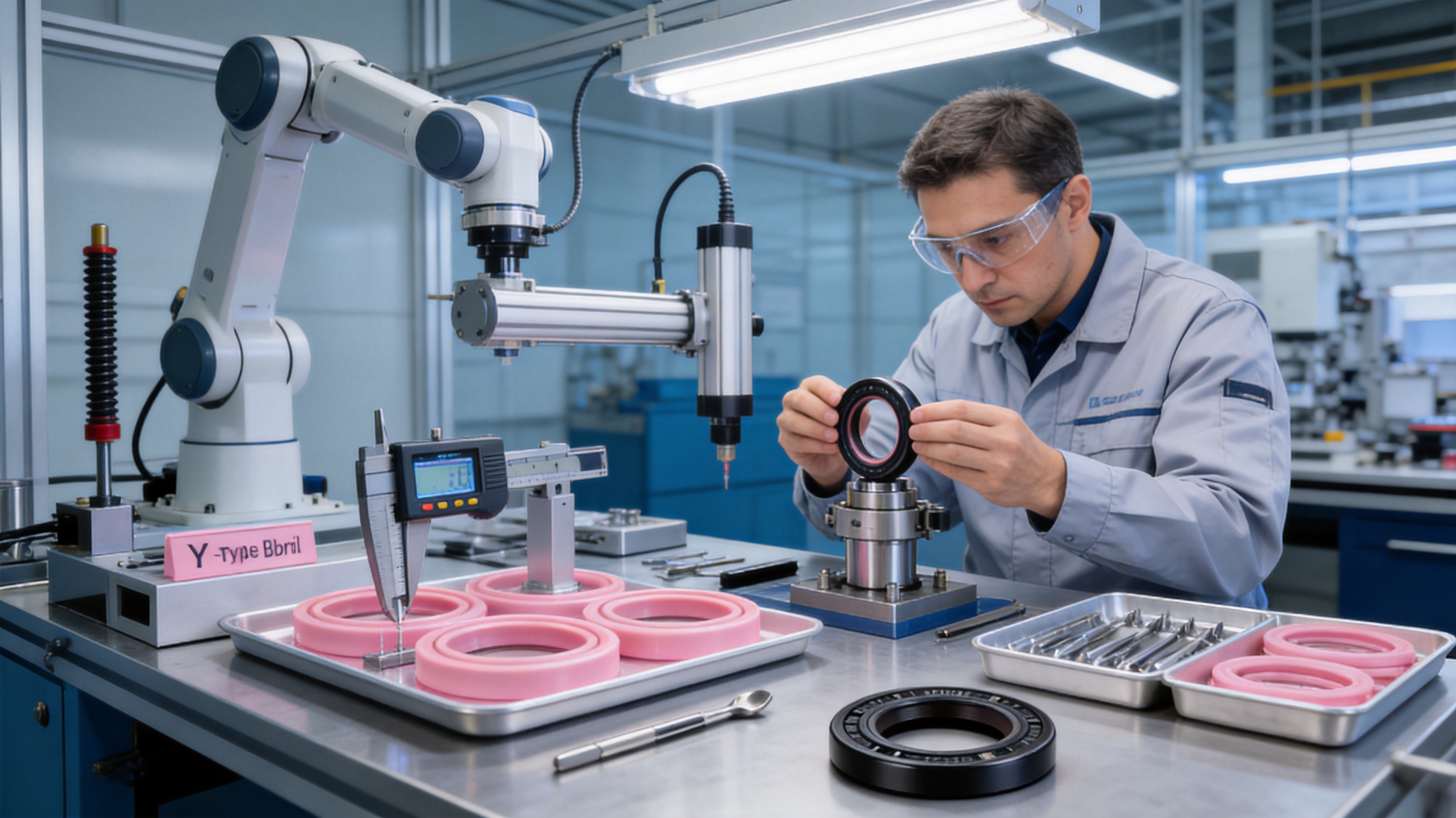
Precision sealing is essential wherever a moving rod, piston, actuator, or mechanical guide must operate smoothly while retaining pressure and preventing lubricant loss. In robotic arms, compact actuators, gas springs, dampers, and other controlled-motion systems, the seal is not merely a barrier against leakage. It is a functional component that directly influences friction, response accuracy, service life, contamination resistance, and the consistency of every operating cycle.
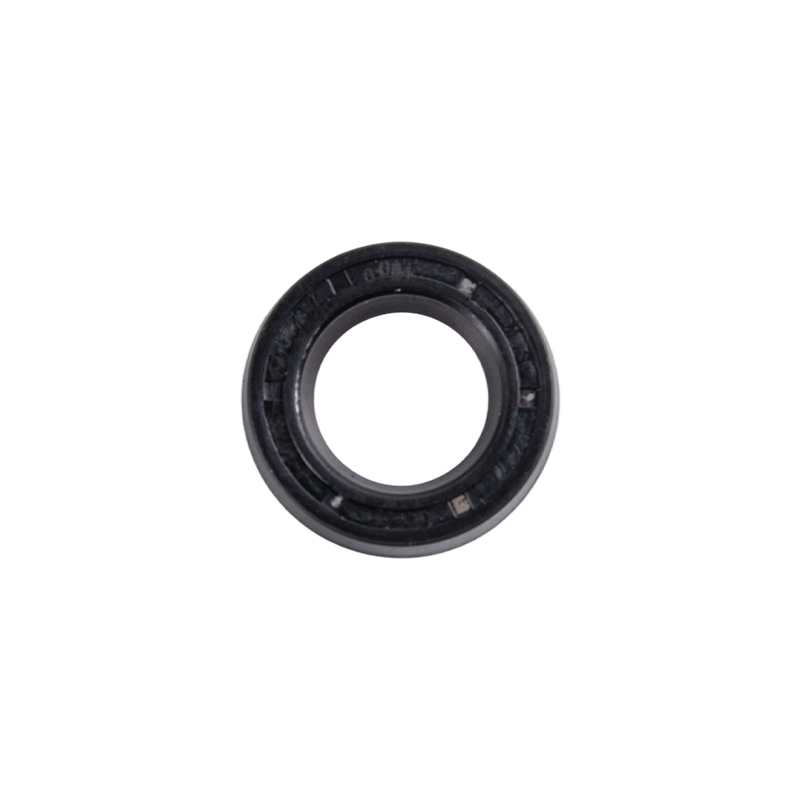
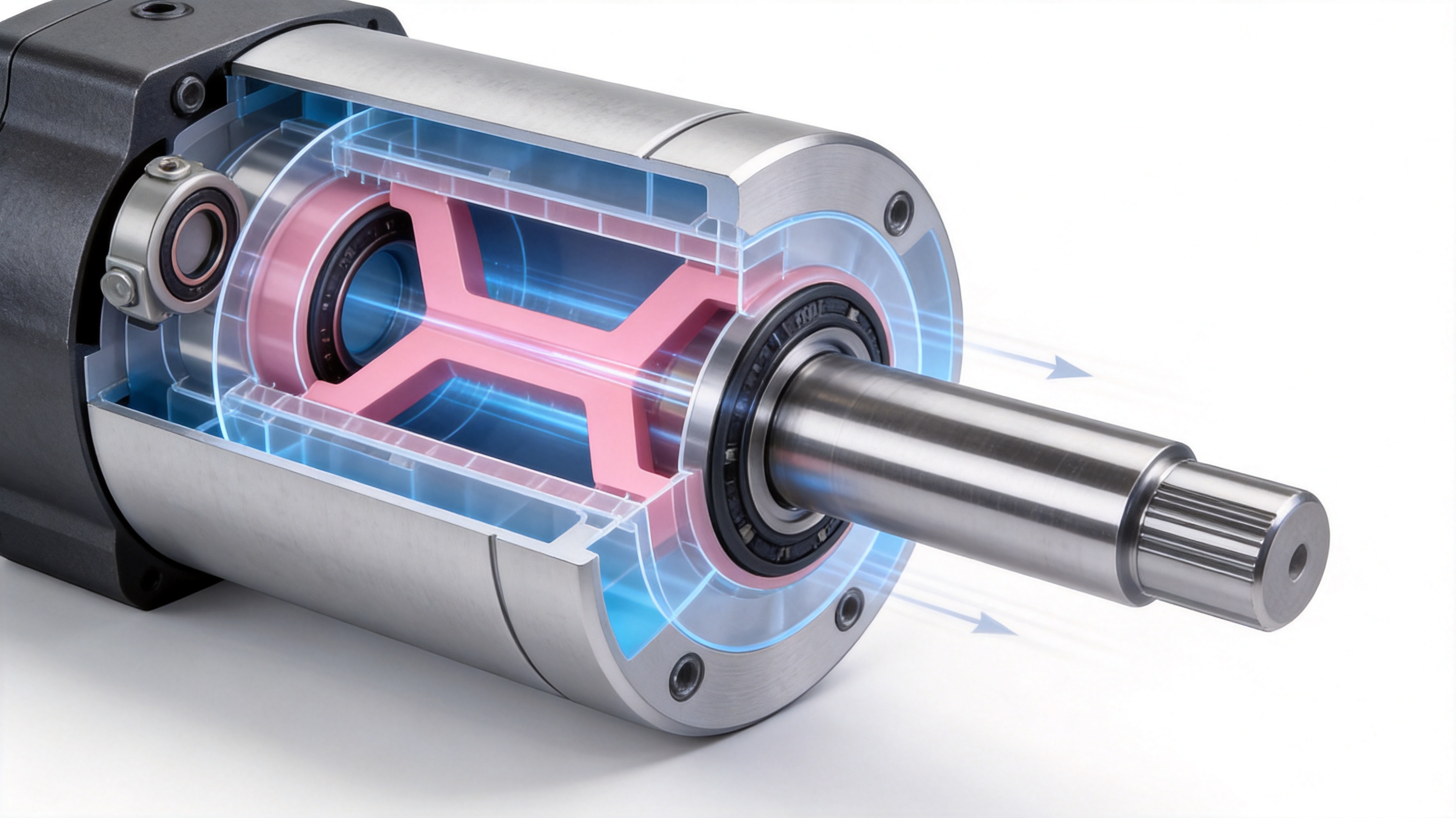
The Precision Synchronous Seal is a pink-coded Y-type oil seal ring designed for applications that require stable motion and dependable sealing under a design applicable pressure range of 50 to 700N. With a compact 20.8 × 9.2 × 3.8 mm specification, an NBR material construction, and an O-ring adapter measuring 20 × 2.4 mm, this seal is developed for applications in which accurate stroke control and low hysteresis are more important than simply achieving basic fluid retention.
Its design is especially suitable for robotic arms, compact linear actuators, gas-spring-related mechanisms, and controlled piston-rod assemblies. The seal combines a precision-oriented geometry with a wear-margin design, helping maintain reliable contact as the sealing lip encounters repeated reciprocating movement. The result is a practical sealing solution for equipment manufacturers seeking a balance between sealing performance, movement sensitivity, production repeatability, and cost control.
Manufactured by Ningguo Jnsseals Sealing Technology Co., Ltd., the product reflects the company’s focus on gas spring and damper sealing technology, as well as its broader experience with O-ring and customized sealing solutions. The company’s research and development capabilities, production equipment, technical service team, and application-oriented approach support customers that require more than an off-the-shelf rubber ring.
Precision Synchronous Seal
Product Overview
The Precision Synchronous Seal is identified by product code A-1-019. It belongs to the Y-Type Oil Seal Ring category and uses NBR, or nitrile butadiene rubber, as its primary material. The design is intended to support controlled reciprocating movement while maintaining a dependable seal between the cylinder or housing and the moving piston rod.
The term “synchronous” refers to the seal’s ability to support consistent movement behavior during repeated strokes. In an actuator or robotic mechanism, a seal with excessive friction can delay movement, create uneven velocity, or cause a difference between commanded and actual position. A seal with insufficient contact can allow leakage or reduce pressure retention. The Precision Synchronous Seal is designed around this balance, with an emphasis on low hysteresis and precise stroke control.
Hysteresis in a seal system is commonly associated with the difference between the force required to initiate or maintain movement in one direction and the force observed during movement in the opposite direction or during a return cycle. High hysteresis can produce stick-slip behavior, inconsistent positioning, and unwanted energy loss. By using a geometry intended for precision movement and incorporating a wear-margin design, the A-1-019 aims to provide a more stable operating response over repeated cycles.
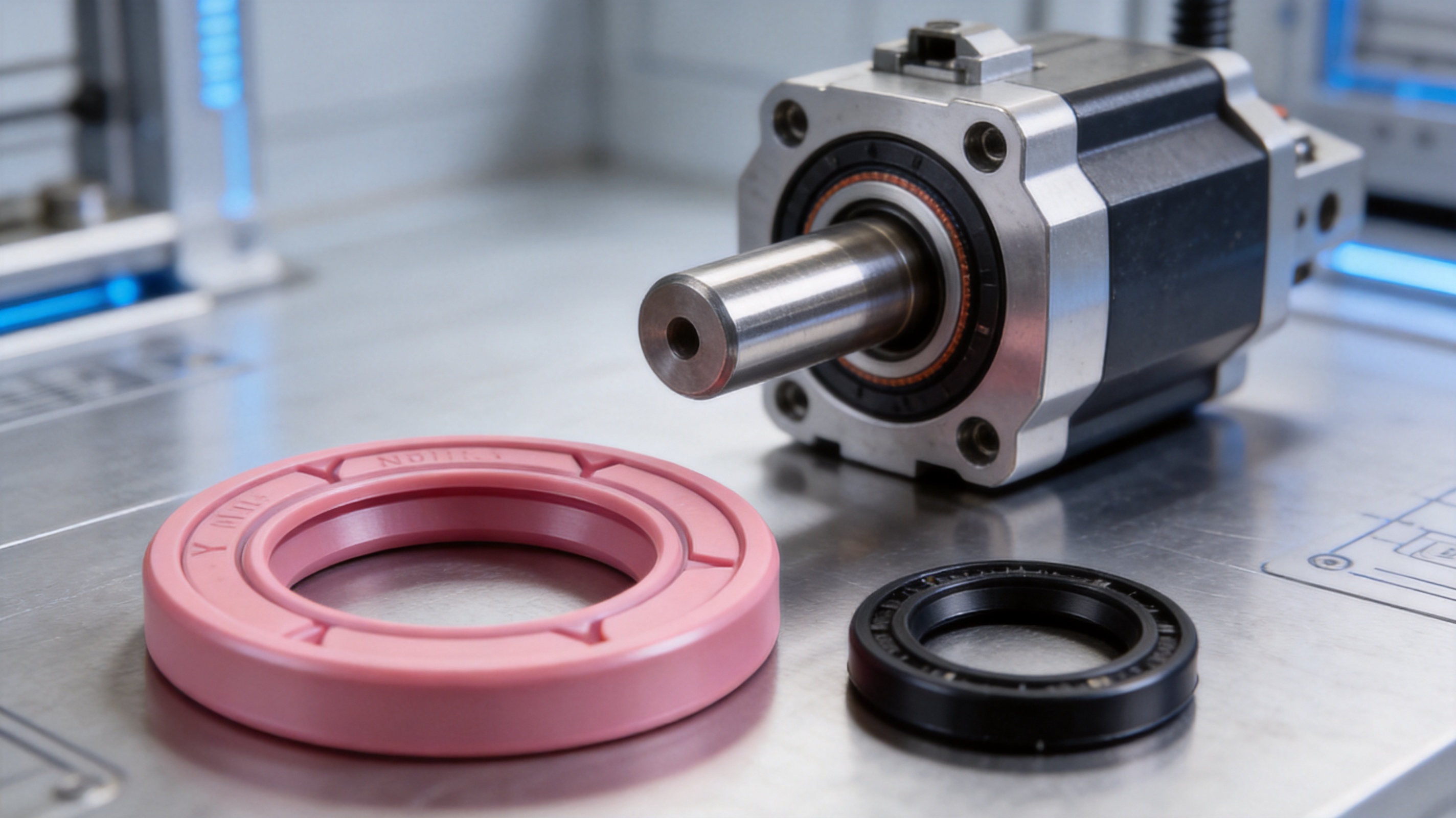
The product is pink-coded for identification. Color coding can assist assembly personnel, quality inspectors, maintenance teams, and inventory managers in distinguishing this precision-oriented seal from other profiles or material grades. This is particularly useful when a production line uses multiple oil seal rings with similar dimensions but different functional purposes.
Key Technical Specifications
| Specification Item | Product Detail |
| Product Name | Precision Synchronous Seal |
| Product Category | Y-Type Oil Seal Ring |
| Product Code | A-1-019 |
| Overall Specification | 20.8 × 9.2 × 3.8 mm |
| Outside Diameter | 20.8 mm |
| Inside Diameter | 9.2 mm |
| Height | 3.8 mm |
| O-Ring Adapter | 20 × 2.4 mm |
| Design Applicable Pressure Range | 50–700N |
| Steel Pipe Inner Diameter × Piston Rod Diameter | 20 × 10 mm |
| Product Material | NBR |
| Color Identification | Pink-coded |
| Primary Functional Focus | Low hysteresis and precise stroke control |
The listed dimensions are important for correct installation and should be checked against the actual housing, bore, piston rod, groove, and assembly tolerances of the target equipment. The steel pipe inner diameter and piston rod diameter information provides a practical reference for applicable gas spring or actuator assemblies, but final suitability should always be confirmed through engineering review and application testing.
How the Y-Type Profile Supports Sealing Performance
A Y-type oil seal ring generally uses a sealing profile with one or more lips that are energized by system pressure and by the elastic properties of the rubber compound. As pressure changes, the lip geometry can press more firmly against the mating surface, helping reduce leakage while allowing the moving rod or piston to travel through the seal.
Compared with a basic static gasket, a Y-type profile is designed for dynamic service. The seal must maintain contact during reciprocating movement, tolerate repeated sliding, and preserve its shape under changing load conditions. The profile therefore has to manage several competing requirements: sufficient contact force for sealing, low enough friction for smooth movement, adequate elasticity for installation, and enough wear resistance for the intended service cycle.
The A-1-019 design is positioned for precision motion rather than high-force industrial sealing alone. Its low-hysteresis objective helps make it suitable for applications where movement quality is a critical part of the product’s performance. In a robotic arm, for example, an actuator may need to move a joint through a controlled angle without hesitation or sudden release. In a compact damper, the piston rod may need to return consistently after every compression cycle. In both cases, seal behavior contributes directly to system behavior.
The O-ring adapter measuring 20 × 2.4 mm adds a complementary sealing element to the overall assembly. When the adapter, groove, and surrounding components are correctly matched, it can help improve static retention and stabilize the sealing arrangement. The complete sealing system still depends on groove design, compression, surface finish, concentricity, lubrication, temperature, and installation quality.
Low Hysteresis for More Predictable Motion
One of the principal advantages of the Precision Synchronous Seal is its low-hysteresis design target. This feature is valuable in systems that rely on accurate movement, particularly when the actuator must respond to small commands or maintain a repeatable position.
In a conventional seal optimized only for maximum contact pressure, the sliding force may be unnecessarily high. The actuator must then overcome additional resistance at the beginning of a stroke. This can result in delayed response, higher energy consumption, increased heat generation, and uneven motion. If the contact force is too low, however, the seal may permit leakage or fail to stabilize the pressure boundary.
The Precision Synchronous Seal seeks to occupy the practical middle ground. Its geometry is intended to provide controlled sealing contact without creating excessive resistance. Low hysteresis can help reduce the difference between starting force and running force, supporting smoother transitions between stationary and moving states.
For robotic or automated equipment, this can improve repeatability. A controller may issue the same movement command many times, but high and variable seal friction can cause different results depending on direction, load, temperature, and previous motion. A lower-hysteresis seal can reduce one source of variation in the mechanical system.
For actuators used in furniture, medical equipment, home appliances, and automotive components, smooth movement can also improve the user experience. A controlled seat adjustment, cabinet lift, medical positioning mechanism, or assisted opening system should move without jerking or requiring excessive input. The seal’s friction characteristics can therefore influence both technical performance and perceived product quality.
Wear-Margin Design for Repeated Operation
Dynamic seals experience gradual wear due to sliding contact, pressure changes, thermal cycling, and exposure to lubricants or environmental contaminants. A seal that performs well during initial assembly may lose effectiveness if its design does not accommodate normal wear. The Precision Synchronous Seal incorporates a wear-margin design intended to help preserve useful sealing performance during service.
A wear margin does not mean that a seal is immune to wear. Rather, it indicates that the profile is designed with operating durability in mind. The sealing lip, support geometry, and material behavior work together to retain functional contact as the seal experiences repeated movement. This is particularly important in gas springs, dampers, and actuators that may complete thousands or millions of cycles over their operating life.
Maintaining a controlled sealing edge during wear can help reduce leakage growth and delay performance degradation. It can also make maintenance intervals more predictable. Equipment manufacturers benefit when seal replacement can be planned as part of scheduled service instead of being triggered by sudden leakage or inconsistent motion.
Wear performance depends on the complete application. Surface roughness, rod hardness, alignment, lubrication, pressure, temperature, contamination, and installation technique all influence the life of a dynamic seal. The wear-margin design provides a foundation for durability, but it must be paired with suitable mating components and operating conditions.
NBR Material and Application Suitability
The Precision Synchronous Seal uses NBR. Nitrile butadiene rubber is widely used in oil seals, O-rings, hydraulic seals, pneumatic seals, and gas spring components because it offers a practical combination of oil resistance, elasticity, mechanical strength, abrasion resistance, and cost effectiveness.
NBR is particularly suitable for applications involving mineral oils, lubricating oils, and many common hydraulic fluids. Its balanced properties make it a standard choice for general industrial sealing and automotive-related components. For equipment designers, NBR can provide dependable performance without the higher material cost associated with specialized elastomers in applications that do not require extreme chemical or temperature resistance.
Material selection should nevertheless be made according to the actual service environment. The specific NBR compound, hardness, temperature range, lubricant formulation, pressure behavior, and exposure conditions should be verified before approval for a critical application. Where equipment uses aggressive chemicals, high-temperature fluids, fuel blends, refrigerants, or severe outdoor exposure, an alternative compound such as HNBR or FPM may be more appropriate.
The company’s product portfolio includes NBR, HNBR, and FPM O-ring products, which allows customers to discuss material alternatives when an application requires a different resistance profile. This broader material capability is an advantage for engineering teams that want to develop multiple sealing components with a single technical partner.
Advantages Over Conventional Competitor Seals
Many seals can prevent leakage under basic conditions, but not all seals deliver the same movement quality, repeatability, or installation consistency. The Precision Synchronous Seal differentiates itself by focusing on controlled dynamic performance instead of treating sealing as an isolated function.
1. Better Focus on Motion Accuracy
Competitor products designed primarily for general-purpose sealing may have a higher or less controlled friction profile. Such products can be acceptable for simple sliding applications, but they may cause delays, stick-slip, or inconsistent force in precision actuators. The A-1-019 is specifically positioned for precise stroke control and low hysteresis, giving it an advantage in applications where motion accuracy matters.
2. Suitable Balance Between Sealing and Friction
A seal must press against its mating surface, but excessive contact pressure can increase friction and wear. The Precision Synchronous Seal is designed to balance contact and movement. This can support lower operating resistance while maintaining a stable pressure boundary within the stated application range.
3. Wear-Oriented Profile Design
Low-cost generic seals may be selected without sufficient attention to long-term profile stability. The wear-margin design of the A-1-019 supports a more durability-conscious approach. It is intended to help preserve functional contact through repeated reciprocating movement, reducing the risk that performance will decline rapidly after installation.
4. Compact Dimensions for Space-Constrained Assemblies
With an outside diameter of 20.8 mm, an inside diameter of 9.2 mm, and a height of 3.8 mm, the seal is appropriate for compact assemblies where available installation space is limited. Smaller actuators and gas springs often require carefully optimized components. A compact profile can help designers retain a slim cylinder or reduce the size of an actuator package.
5. Clear Identification and Product Traceability
The pink color coding and A-1-019 product code support practical identification. Clear product coding can reduce assembly errors when several seal profiles are stored in the same facility. It also helps connect incoming inspection records, production batches, engineering drawings, and replacement orders.
6. Access to Customized Technical Support
Instead of relying only on catalog selection, customers can work with a sealing manufacturer that provides product design, testing, and technical consultation. This is valuable when the application has unusual loads, a special groove, a nonstandard lubricant, a demanding cycle life, or a need for integrated O-ring and dynamic seal design.
7. More Efficient Supplier Coordination
Customers that purchase multiple O-ring products, oil seal rings, damper seals, and customized sealing solutions may reduce supplier complexity by working with a company that covers several related product families. This can simplify communication regarding materials, tolerances, testing methods, packaging, and delivery planning.
Application Range
The design applicable pressure range of 50–700N makes the A-1-019 suitable for selected low-to-moderate force applications. The stated range should be interpreted as a design reference rather than a universal operating guarantee. Actual approval should include the complete load profile, stroke speed, cycle frequency, temperature, fluid, surface condition, and installation configuration.
Robotic Arms
Robotic arms and compact robotic mechanisms require smooth, repeatable actuator movement. A seal with excessive friction can interfere with positioning accuracy, while leakage can reduce force or introduce contamination. The Precision Synchronous Seal is suited to robotic applications where its low-hysteresis characteristics can support controlled extension and retraction.
It may be considered for grippers, compact joint actuators, positioning modules, end-effectors, and auxiliary mechanisms. In these applications, the seal should be evaluated together with the motion controller, rod surface, guide system, and lubrication method.
Linear Actuators
Compact linear actuators used in furniture, appliances, medical systems, and automation equipment often operate through repeated short strokes. These systems can be sensitive to breakaway force and friction variation. The A-1-019 can support a smoother force profile where the actuator must start and stop accurately.
Gas Springs and Dampers
Gas springs and dampers depend on internal pressure retention and reliable piston-rod movement. The reference compatibility of a 20 mm steel pipe inner diameter and a 10 mm piston rod diameter makes this product relevant to selected compact gas spring or damper assemblies. The seal’s wear-oriented profile may help support repeated extension and compression cycles.
Automotive Components
Automotive systems often require compact sealing components that can withstand repeated vibration and movement. Possible areas of consideration include seat mechanisms, lift supports, interior adjustment systems, dampers, and auxiliary actuators. Automotive approval requires careful validation of temperature, fluid compatibility, environmental exposure, and cycle life.
Furniture and Home Appliances
Adjustable furniture, cabinet systems, lift mechanisms, recliners, and appliance doors may use gas springs or compact dampers. In these applications, smooth motion, quiet operation, and reliable retention are important. A low-hysteresis seal can help prevent sudden movement and improve the perceived quality of the finished product.
Medical Equipment
Medical equipment often benefits from controlled, predictable positioning. Adjustment arms, compact lifting mechanisms, examination equipment, and support systems may use actuators or dampers. The seal material and full assembly must be evaluated according to cleaning agents, operating environment, safety requirements, and applicable regulatory standards.
Advanced Manufacturing and Engineering Strengths
Ningguo Jnsseals Sealing Technology Co., Ltd. was founded in 2019 as a high-tech enterprise headquartered in Anhui, China. The company focuses on the research, development, and application of sealing technology for gas springs and dampers, together with related O-ring products. This specialization gives the company a practical understanding of the conditions faced by dynamic seals in compact mechanical systems.
A key strength is the combination of product development and application support. Sealing performance depends on more than rubber formulation. Profile shape, mold accuracy, groove dimensions, surface finish, assembly method, and operating conditions all interact. A manufacturer with experience across these factors can help customers address the complete sealing system rather than selecting a component based only on nominal diameter.
Research and Development
The company maintains research and development capabilities focused on sealing products and application requirements. R&D work may include profile optimization, material selection, dimensional evaluation, product testing, and adaptation to customer-specific assemblies. For the Precision Synchronous Seal, this engineering orientation is reflected in the focus on low hysteresis, precise stroke control, and wear-margin design.
Application-specific development is particularly important when a customer requires a custom seal. The correct solution may involve changing the lip angle, support structure, rubber hardness, adapter arrangement, dimensional tolerance, or material grade. Engineering consultation can help identify which change is most likely to improve performance without creating new problems.
Production Equipment and Process Control
Advanced production equipment supports the repeatable molding and processing of elastomeric sealing products. Consistent temperature, pressure, curing, mold filling, trimming, and dimensional control are necessary to produce parts with stable geometry. Small changes in a lip edge or sealing surface can affect friction and leakage, so manufacturing repeatability is essential for a precision-oriented seal.
Process control should extend from raw material preparation through molding, post-processing, inspection, packaging, and shipment. A systematic manufacturing process helps limit variation between production lots. This is important for equipment manufacturers that need consistent assembly force and operating behavior across large production volumes.
Product Testing
Testing provides a connection between design intent and actual performance. Depending on the application, suitable evaluation may include dimensional inspection, hardness measurement, compression behavior, leakage testing, friction testing, pressure retention, reciprocating cycle testing, temperature exposure, and compatibility assessment with the specified lubricant.
For the Precision Synchronous Seal, testing should emphasize the characteristics that define its intended use: breakaway force, running friction, hysteresis, stroke consistency, leakage behavior, and wear after repeated cycles. Results should be interpreted in relation to the mating rod, bore, lubricant, load, and environmental conditions.
Technical Service
The company provides technical consultation and customized sealing solutions, including product design and testing. This service can be valuable to original equipment manufacturers that do not have an internal elastomer laboratory or sealing specialist. Early technical communication may prevent common issues such as incorrect groove compression, unsuitable rod finish, inadequate chamfering, or improper installation.
Technical support can also assist with replacement development. If an existing seal is unavailable, inconsistent, or unsuitable for a revised actuator, the manufacturer can review the application and recommend a comparable or improved profile. Dimensional drawings, samples, operating data, and failure observations are useful inputs for this process.
Manufacturing Quality Considerations
For a small dynamic seal, quality control must address both visible and invisible characteristics. Flash, tears, mold mismatch, incomplete filling, surface defects, and contamination can affect installation or sealing. Internal material variation, incorrect curing, or inconsistent hardness may not be visible but can influence friction, elasticity, and wear.
Dimensional inspection should verify the outside diameter, inside diameter, height, lip geometry, and adapter dimensions. Tolerances must be matched to the intended housing and piston rod design. An apparently minor dimensional difference can change compression and therefore alter both leakage resistance and operating friction.
Material inspection is also important. NBR compounds may differ in acrylonitrile content, hardness, low-temperature flexibility, oil resistance, and compression set. The selected compound should correspond to the declared product specification and the customer’s application. Batch identification and traceability help connect finished products to material and process records.
Packaging should protect the seal from deformation, ozone, excessive heat, direct sunlight, and contamination. Rubber parts should not be stored under heavy compression or in contact with incompatible chemicals. Correct storage can preserve the seal’s geometry before it reaches the assembly line.
Installation Recommendations
Correct installation is essential to achieving the expected performance of any dynamic oil seal ring. Before installation, the housing, groove, piston rod, and seal should be checked for burrs, sharp edges, chips, rust, and contamination. A damaged groove or rough rod can cut the sealing lip or create an early leakage path.
The piston rod should have a suitable surface finish and adequate hardness for the intended service. It should be free from scratches running in the direction of movement. The rod entry edge should be properly chamfered or protected so that the seal lip is not torn during assembly.
The seal should be installed in the correct orientation. Y-type profiles are directional in function, and the sealing lips must face the correct pressure side according to the application design. An inverted seal may show acceptable results during a brief low-pressure check but fail during normal operation.
Use a compatible assembly lubricant when required. Lubrication helps reduce installation damage and supports initial running behavior. However, the lubricant must be compatible with NBR and with all other materials in the assembly. Excessive lubricant, foreign particles, or improper tools can also interfere with sealing.
Do not stretch, twist, or fold the seal beyond its allowable installation condition. A twisted seal may not recover correctly inside the groove, producing localized leakage or uneven friction. When tools are necessary, they should have smooth, rounded surfaces and should not cut the rubber.
After installation, the actuator or cylinder should be checked through a controlled break-in cycle. Inspection should include leakage, movement smoothness, starting force, abnormal noise, and rod alignment. If the system operates under pressure, pressure should be increased gradually while monitoring behavior.
Design Integration Guidelines
When integrating the A-1-019 into a new product, engineers should consider the seal and mating components as a single system. The nominal 20.8 mm outside diameter, 9.2 mm inside diameter, and 3.8 mm height provide the starting point, but groove dimensions and tolerances determine actual compression and lip behavior.
The 20 mm × 2.4 mm O-ring adapter should be matched to its groove dimensions and intended compression. Too little compression may lead to leakage or movement of the adapter. Too much compression can increase assembly force, raise friction, and accelerate material fatigue.
Rod alignment should be controlled to prevent uneven loading. Eccentricity or side loading can concentrate wear on one part of the lip. In a robotic arm or actuator, the guide system should carry side loads whenever possible so that the seal is not forced to act as a bearing.
Stroke speed and cycle frequency should be evaluated. A seal that performs well at moderate speed may generate more heat at higher speed. Short, frequent strokes can also create different wear behavior from long, occasional strokes. Testing should reproduce the actual movement pattern rather than relying only on static pressure verification.
Temperature affects elastomer flexibility, friction, compression set, and chemical resistance. NBR is suitable for many general industrial applications, but the actual temperature range must be checked against the selected compound and lubricant. Cold conditions may increase stiffness, while high temperatures may accelerate aging.
Contamination control is equally important. Dust, metal particles, moisture, and chemical residues can damage the lip or create an abrasive paste with lubricant. Where the equipment operates in a contaminated environment, designers should consider protective scrapers, wipers, filtration, and suitable housing arrangements.
Comparison of Selection Priorities
| Selection Factor | Generic Basic Seal | Precision Synchronous Seal A-1-019 |
| Primary Design Emphasis | General leakage prevention | Controlled dynamic sealing and stroke accuracy |
| Motion Behavior | May vary with friction and wear | Designed with low hysteresis in mind |
| Wear Consideration | Depends heavily on basic profile design | Includes a wear-margin design objective |
| Identification | May require visual or dimensional sorting | Pink-coded and identified as A-1-019 |
| Material | Varies by supplier and grade | NBR specification |
| Application Reference | May be broadly stated | 50–700N design applicable pressure range |
| Engineering Support | May be limited to catalog data | Customized design, testing, and technical consultation available |
| Best-Fit Applications | Standard low-demand mechanisms | Robotic arms, actuators, gas springs, and dampers requiring repeatable motion |
This comparison is intended to explain the product’s design positioning rather than claim that every competing seal has the same limitations. Competitor performance depends on profile, compound, supplier quality, and application conditions. The main advantage of the A-1-019 is its deliberate focus on dynamic precision, supported by a manufacturer experienced in sealing technology and customization.
Why Manufacturer Capability Matters
Purchasing a seal from a technically capable manufacturer can reduce the risk of treating a complex application as a simple replacement exercise. A seal may match the nominal diameter and still fail because of an incorrect profile, unsuitable rubber compound, poor surface finish, or excessive side loading.
Ningguo Jnsseals Sealing Technology Co., Ltd. concentrates on sealing technology for gas springs, dampers, and related O-ring products. This specialization is relevant to the A-1-019 because these applications demand repeated movement, pressure retention, compact dimensions, and predictable friction behavior.
The company also serves sectors including automotive, furniture, home appliances, medical equipment, and construction. Experience across these markets can expose the engineering team to different requirements involving load, noise, appearance, environmental resistance, assembly efficiency, and service life.
Its stated philosophy, “People Oriented, Innovation Driven, Pursuit of Excellence,” reflects an emphasis on technical development and customer support. For customers, the practical value lies in the ability to communicate with a supplier about design changes, testing plans, materials, and production requirements.
Customization is another important strength. Different customers may require the same basic seal concept with changes to dimensions, hardness, color, compound, packaging, or quality documentation. A manufacturer capable of supporting customized sealing solutions can help integrate the component into a new product instead of forcing the customer to redesign around an unsuitable standard part.
Ordering and Technical Information
When requesting the Precision Synchronous Seal, customers should identify product code A-1-019 and confirm the application dimensions. The nominal product data includes a 20.8 mm outside diameter, a 9.2 mm inside diameter, and a 3.8 mm height. The related O-ring adapter is specified as 20 × 2.4 mm.
Application information should include the actual piston rod diameter, cylinder or steel pipe dimensions, pressure or force profile, stroke length, stroke speed, cycle frequency, working temperature, lubricant type, and expected service life. Information about leakage limits and friction requirements is also useful.
For a new project, customers may provide drawings, samples, photographs of the installation area, or failed parts. These materials can help engineers evaluate whether the standard product is suitable or whether a customized profile should be developed.
Commercial and technical inquiries may be directed to Ningguo Jnsseals Sealing Technology Co., Ltd. at jns@jnsseals.cn. The listed contacts include Manager Gong at +86-18563770820 and Manager Wang at +8615357558902. The company address is No. 5, Meilin Avenue, Meilin Industrial Development Zone, Ningguo City, Anhui Province, China.
Frequently Asked Questions
What is the Precision Synchronous Seal?
It is a pink-coded NBR Y-type oil seal ring identified by product code A-1-019. It is designed for controlled reciprocating movement, low hysteresis, precise stroke control, and wear-conscious service in compact actuators, robotic mechanisms, gas springs, and dampers.
What are the product dimensions?
The listed overall specification is 20.8 × 9.2 × 3.8 mm. The outside diameter is 20.8 mm, the inside diameter is 9.2 mm, and the height is 3.8 mm.
What material is used?
The product uses NBR, or nitrile butadiene rubber. NBR is widely used for oil-resistant sealing applications and offers a practical balance of elasticity, abrasion resistance, mechanical strength, and cost effectiveness.
What does low hysteresis mean in this application?
Low hysteresis means the seal is designed to reduce the difference between its starting and running resistance during reciprocating movement. This can support smoother actuation, more predictable stroke behavior, and improved positioning consistency.
What is the applicable pressure range?
The listed design applicable pressure range is 50–700N. This figure should be used as an application reference and verified through testing under the actual load, speed, temperature, lubricant, and assembly conditions.
Can this seal be used in a gas spring?
It may be suitable for selected compact gas spring or damper assemblies, particularly those using a 20 mm steel pipe inner diameter and a 10 mm piston rod diameter. Final suitability must be confirmed through dimensional, pressure, cycle-life, and material-compatibility testing.
Is the product suitable for robotic arms?
Yes, the product description specifically identifies robotic arms and actuators under 700N as suitable applications. The low-hysteresis design can be valuable where smooth, repeatable movement and precise stroke control are required.
Does the seal eliminate all friction?
No. Every dynamic seal generates some friction because it must maintain contact with the moving surface. The design goal is to control friction and reduce hysteresis while retaining reliable sealing performance.
Can the product be customized?
Ningguo Jnsseals Sealing Technology Co., Ltd. provides customized sealing solutions, including product design, testing, and technical consultation. Customers should provide application conditions and dimensional information so the engineering team can evaluate the required changes.
Can NBR be replaced with another material?
Depending on the application, alternative materials such as HNBR or FPM may be considered. The correct choice depends on temperature, fluid chemistry, mechanical demands, environmental exposure, and required service life.
What should be checked before installation?
Check the groove, housing, piston rod, chamfers, surface finish, alignment, lubricant compatibility, and seal orientation. Remove burrs and contamination, and avoid twisting, cutting, or overstretching the seal during assembly.
How can the service life be improved?
Use a suitable mating surface, maintain proper alignment, control contamination, apply a compatible lubricant, avoid excessive side loading, and operate within the verified pressure, temperature, speed, and cycle conditions. Proper installation and validation are equally important.
Why is the seal pink-coded?
The pink color provides a visual identification feature. It can help assembly and maintenance personnel distinguish the precision synchronous seal from other oil seal rings or elastomer components.
Conclusion
The Precision Synchronous Seal is designed for applications in which a seal must do more than prevent leakage. Its central value is the relationship between sealing and movement. With a low-hysteresis design objective, precise stroke control, a wear-margin profile, compact dimensions, and NBR construction, the A-1-019 is positioned for robotic arms, actuators, gas springs, dampers, and other mechanisms that depend on predictable reciprocating motion.
Its 20.8 × 9.2 × 3.8 mm dimensions and 20 × 2.4 mm O-ring adapter provide a clear starting point for compact assembly design. The stated 50–700N design applicable pressure range offers an initial selection reference, while final approval should be based on application-specific testing.
Compared with a basic generic seal, the product offers a more deliberate focus on friction behavior, stroke consistency, identification, and wear management. Its advantages are strengthened by the manufacturing and engineering capabilities of Ningguo Jnsseals Sealing Technology Co., Ltd., including research and development, production equipment, testing, technical consultation, and customized sealing solutions.
For equipment manufacturers, the most effective way to evaluate this seal is to consider the complete system. Correct groove geometry, rod condition, lubrication, alignment, temperature, contamination control, and cycle requirements will determine the final result. When these factors are properly matched, the Precision Synchronous Seal can contribute to smoother operation, more stable pressure retention, improved repeatability, and a longer-lasting actuator or damper assembly.
References
1. Product specification sheet for Precision Synchronous Seal, Product Code A-1-019.
2. Manufacturer-provided product information for NBR, HNBR, and FPM sealing products.
3. General engineering principles for dynamic Y-type oil seal rings and reciprocating sealing applications.
4. General material reference information for nitrile butadiene rubber in oil-resistant sealing systems.
5. General design and installation practices for gas spring, damper, and compact actuator seals.
Product: Precision Synchronous Seal
PREV:26mm Durable Industrial Seal for High-Load Gas Springs and Dampers
NEXT:700N Wear-Resistant Y-Type Oil Seal Ring for Heavy-Duty Pneumatic Applications
NEXT:700N Wear-Resistant Y-Type Oil Seal Ring for Heavy-Duty Pneumatic Applications


Want to know more
about us?
about us?

Precision sealing for gas springs and dampers. Durable, wear-resistant, and built for long-life performance in demanding applications.
Product Categories
Quick Links
Contact Us
-
Email: jns@jnsseals.cn

-
Manager Gong: +86-18563770820

-
Manager Wang: +8615357558902
-
No. 5, Meilin Avenue, Meilin Industrial Development Zone, Ningguo City, Anhui Province, China

