

 English
 русский
 Deutsch
 Türk
 中文简体
29mm Large Actuator Seal: Rugged NBR Sealing for Heavy-Duty Gas Springs and Hoists
29mm Large Actuator Seal: Rugged NBR Sealing for Heavy-Duty Gas Springs and Hoists
29mm Large Actuator Seal: Rugged NBR Sealing for Heavy-Duty Gas Springs and Hoists
29mm Large Actuator Seal: Rugged NBR Sealing for Heavy-Duty Gas Springs and Hoists
29mm Large Actuator Seal: Rugged NBR Sealing for Heavy-Duty Gas Springs and Hoists
29mm Large Actuator Seal: Rugged NBR Sealing for Heavy-Duty Gas Springs and Hoists
29mm Large Actuator Seal: Rugged NBR Sealing for Heavy-Duty Gas Springs and Hoists
29mm Large Actuator Seal: Rugged NBR Sealing for Heavy-Duty Gas Springs and Hoists
29mm Large Actuator Seal: Rugged NBR Sealing for Heavy-Duty Gas Springs and Hoists
29mm Large Actuator Seal: Rugged NBR Sealing for Heavy-Duty Gas Springs and Hoists
29mm Large Actuator Seal: Rugged NBR Sealing for Heavy-Duty Gas Springs and Hoists
29mm Large Actuator Seal: Rugged NBR Sealing for Heavy-Duty Gas Springs and Hoists
29mm Large Actuator Seal: Rugged NBR Sealing for Heavy-Duty Gas Springs and Hoists
29mm Large Actuator Seal: Rugged NBR Sealing for Heavy-Duty Gas Springs and Hoists
29mm Large Actuator Seal: Rugged NBR Sealing for Heavy-Duty Gas Springs and Hoists
29mm Large Actuator Seal: Rugged NBR Sealing for Heavy-Duty Gas Springs and Hoists

Shen Ruolan — After-Sales Technical Consultant
Home / Author / Shen Ruolan — After-Sales Technical Consultant / 29mm Large Actuator Seal: Rugged NBR Sealing for Heavy-Duty Gas Springs and Hoists
NEW Category
Contact us
29mm Large Actuator Seal: Rugged NBR Sealing for Heavy-Duty Gas Springs and Hoists
Content
- 1 Product Overview
- 2 Why Large Actuators Need a Specialized Seal
- 3 Y-Type Profile and Functional Performance
- 4 NBR Material Advantages
- 5 Application Range and Operating Capacity
- 6 Dimensional Compatibility
- 7 Advantages Compared with Generic or Poorly Matched Seals
- 8 Manufacturing Process and Quality Control
- 9 Company Strengths and Technical Support
- 10 Installation Recommendations
- 11 Maintenance and Service Considerations
- 12 Ordering and Customization Information
- 13 Quality, Reliability, and Competitive Value
- 14 Q&A
- 14.1 What type of product is the 29mm Large Actuator Seal?
- 14.2 What are the main dimensions?
- 14.3 What material is used?
- 14.4 What actuator capacity is associated with this product?
- 14.5 Is the seal suitable for outdoor use?
- 14.6 Can this seal be used in every 12 mm piston rod actuator?
- 14.7 What are the main advantages of a Y-type seal profile?
- 14.8 Can the manufacturer provide customized seals?
- 14.9 What should be checked before installation?
- 14.10 How can premature seal failure be reduced?
- 14.11 How should replacement seals be stored?
- 15 Conclusion
- 16 References
- 17 Product: 29mm Large Actuator Seal
Reliable sealing is essential wherever an actuator, gas spring, damper, gate mechanism, or hoist must operate smoothly under load. A seal that is too soft, poorly sized, or inadequately protected against weather can allow gas or oil leakage, increase friction, contaminate surrounding components, and shorten the service life of the complete assembly. For large actuators operating in demanding industrial or outdoor environments, the seal must combine dimensional accuracy, resilient material performance, mechanical stability, and resistance to changing conditions.
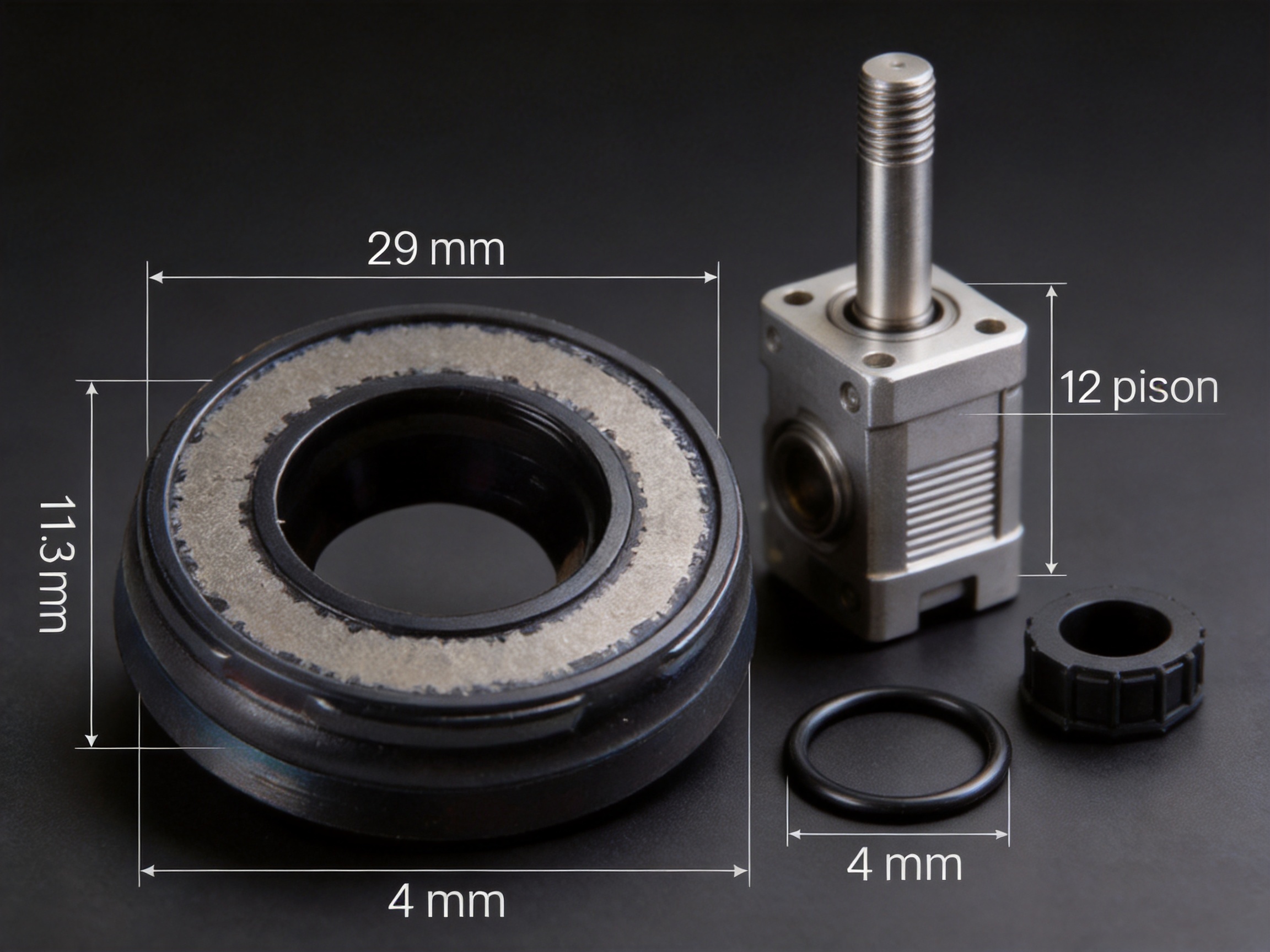
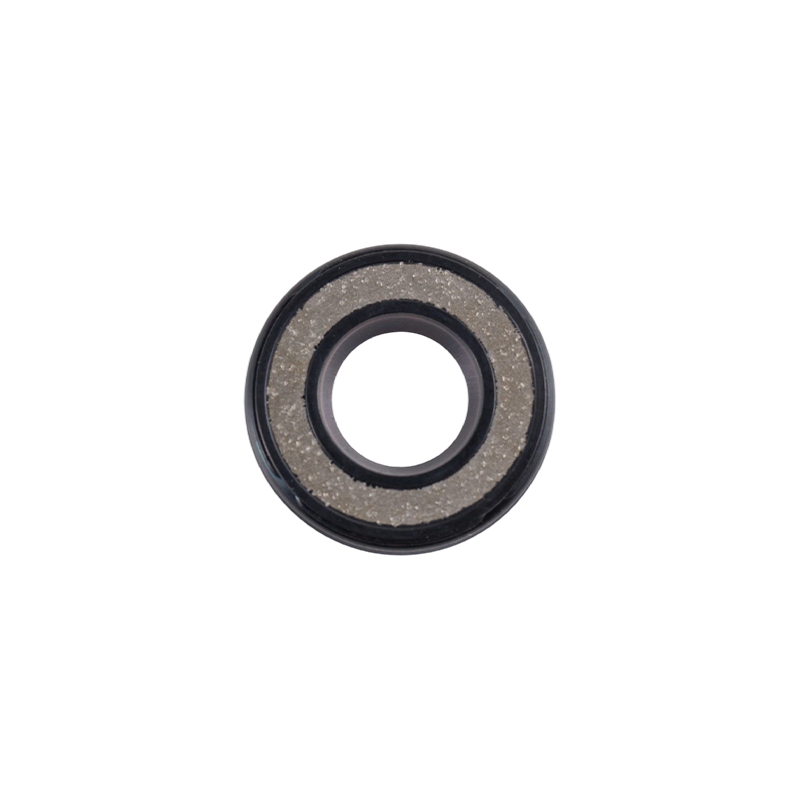
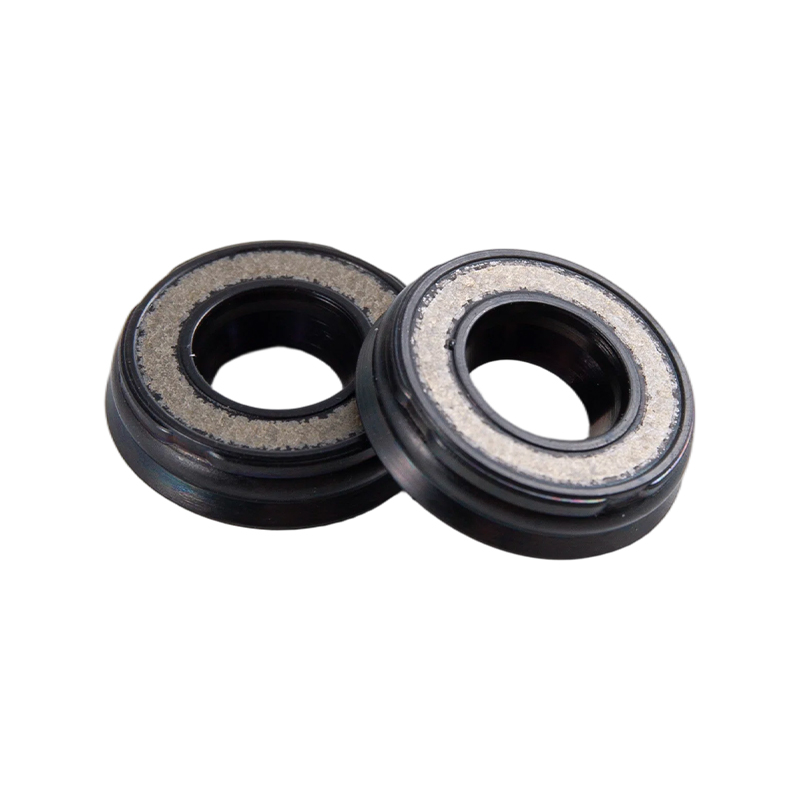
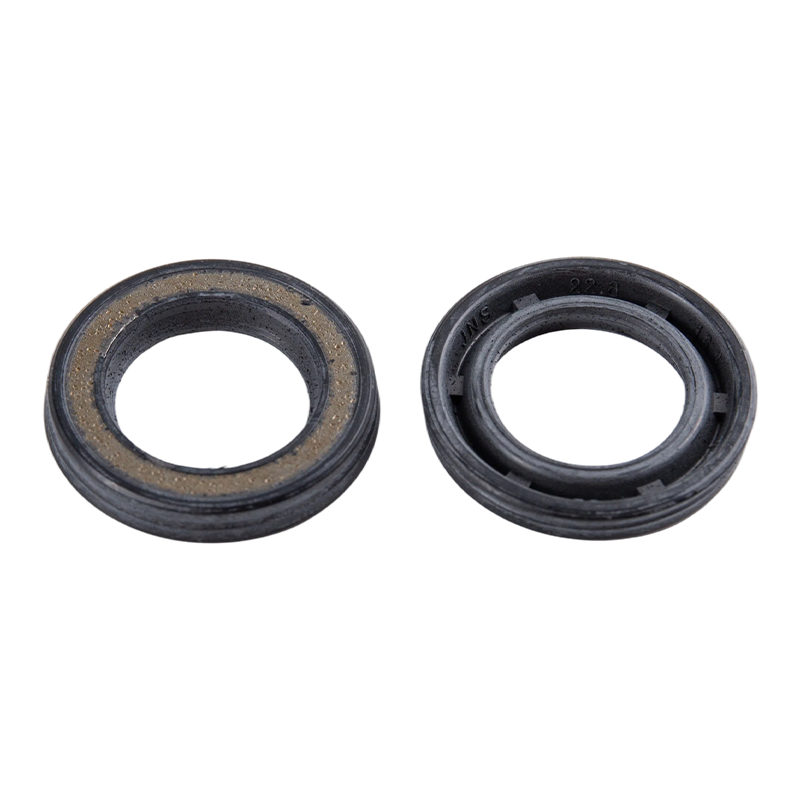
The 29mm Large Actuator Seal is designed for this type of application. Identified by product code A-1-034, it is a Y-type oil seal ring manufactured from NBR and intended for actuator assemblies using a 28 mm steel pipe inner diameter and a 12 mm piston rod diameter. Its principal dimensions are 29 mm outside diameter, 11.3 mm inside diameter, and 4 mm height. The design also uses a 28 mm by 2.4 mm O-ring adapter and is specified for actuator capacities from 50 N to 1800 N.
With its rugged construction, weather-resistant design, and compatibility with large gates or hoists, this seal offers a practical solution for equipment exposed to repeated movement, vibration, loading, and outdoor operating conditions. It is suitable for manufacturers, repair specialists, distributors, and engineering teams that require a dependable sealing component for large actuator systems.
This article examines the product’s construction, dimensions, material, operating suitability, manufacturing considerations, quality advantages, installation requirements, and customization potential. It also explains how the product can help users reduce maintenance requirements and improve the reliability of complete actuator assemblies.
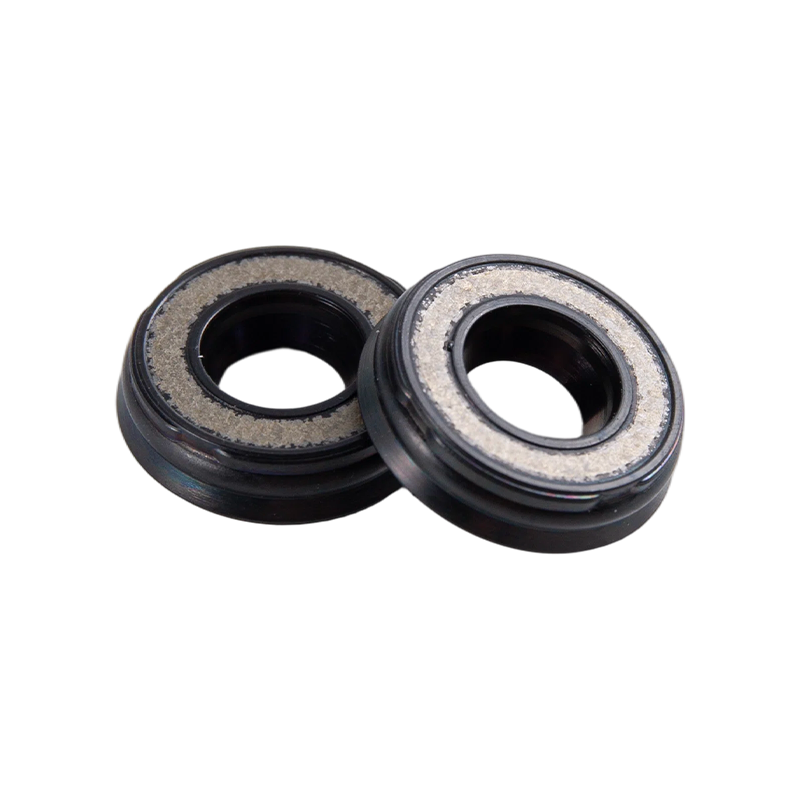
29mm Large Actuator Seal
Product Overview
The 29mm Large Actuator Seal is a compact but highly important component within a large actuator assembly. Its role is to maintain a controlled sealing interface around the piston rod while supporting the retention of lubricant, gas, or hydraulic medium inside the working system. At the same time, the seal helps prevent the entry of dust, moisture, and other external contaminants.
The seal belongs to the Y-type oil seal ring category. A Y-type profile generally uses sealing lips that create a controlled contact zone against a moving rod or related surface. This profile allows the seal to remain flexible while producing sufficient contact pressure for sealing. When the dimensions, material, surface finish, and installation conditions are correctly matched, the design can support smooth reciprocating movement and stable sealing performance.
The product is identified as a large actuator seal because it is intended for relatively large gas spring, damper, gate, and hoist mechanisms rather than small furniture or light-duty actuator systems. Its specified application includes assemblies with a 28 mm internal steel pipe diameter and a 12 mm piston rod diameter. This makes it relevant to equipment where greater structural strength and higher operating force are required.
| Product Name | 29mm Large Actuator Seal |
| Product Code | A-1-034 |
| Seal Category | Y-Type Oil Seal Ring |
| Product Material | NBR |
| Outside Diameter | 29 mm |
| Inside Diameter | 11.3 mm |
| Height | 4 mm |
| O-Ring Adapter | 28 mm by 2.4 mm |
| Applicable Actuator Capacity | 50 N to 1800 N |
| Matching Pipe and Rod Dimensions | 28 mm pipe inner diameter by 12 mm piston rod diameter |
| Typical Applications | Large gates, hoists, outdoor actuators, gas springs, and dampers |
These specifications should be considered together rather than separately. A seal’s performance depends on the relationship between the seal profile, rod diameter, housing dimensions, adapter arrangement, material properties, surface condition, and working environment. Selecting the correct nominal outside diameter alone is not sufficient. The complete installation geometry must be verified before production use.
Why Large Actuators Need a Specialized Seal
Large actuators experience conditions that can be more demanding than those found in small mechanical devices. They may generate higher thrust, carry heavier loads, and operate with greater structural force. Gate mechanisms and hoists may also be exposed to rain, dust, temperature variation, vibration, and intermittent loading. These factors can place stress on the sealing system even when the actuator moves slowly.
A sealing component in a large actuator must address several performance requirements at the same time. First, it must maintain contact with the moving piston rod. Second, it must fit securely within the housing or adapter arrangement. Third, it must resist deformation when exposed to compression and repeated movement. Fourth, it must tolerate the lubricants and environmental contaminants encountered in service.
Insufficient sealing can result in gradual leakage rather than immediate failure. This makes seal quality especially important. A minor leak may initially appear harmless, but it can reduce actuator force, contaminate nearby components, increase operating friction, and eventually cause the complete unit to require repair or replacement.
The 29mm Large Actuator Seal addresses these requirements through a purpose-designed Y-type profile, NBR material construction, and dimensions intended for large actuator geometry. The combination is suitable for applications where a compact sealing element must support a robust mechanical system.
Y-Type Profile and Functional Performance
The shape of an oil seal ring directly influences its ability to seal and move with the actuator rod. The Y-type profile is designed around a flexible sealing form that can create a stable contact interface. Instead of relying only on a rigid interference fit, the profile uses its geometry and material elasticity to maintain sealing contact as the rod moves.
In a reciprocating application, the seal must avoid two opposite problems. If contact pressure is too low, the seal may allow leakage. If contact pressure is too high, friction may increase, heat may accumulate, and the rod or seal lip may wear prematurely. A well-designed Y-type ring helps balance these competing requirements.
The profile also supports controlled adaptation to minor movement and dimensional variation. This does not eliminate the need for proper manufacturing tolerances or a suitable rod surface, but it can improve the seal’s ability to remain effective during normal operation. When installed correctly, the sealing lips can follow the rod while maintaining a barrier against fluid or gas movement.
For large actuator applications, this balance is valuable. The actuator may not operate continuously, but each operating cycle can involve significant force. The seal therefore needs both flexibility and structural resilience. A Y-type ring made from a suitable elastomer can accommodate repeated movement while retaining its basic profile.
Sealing Stability During Reciprocating Motion
Reciprocating movement is different from simple static compression. A static gasket may remain in one position, while an actuator seal must repeatedly respond to rod movement. The contact area is exposed to changing friction, lubrication conditions, and possible pressure differences. A suitable seal must therefore be capable of maintaining contact without rolling, tearing, or being pushed out of its intended position.
The 4 mm height of the A-1-034 seal provides a compact installation profile for the specified actuator structure. Its 11.3 mm inside diameter is designed in relation to the 12 mm piston rod arrangement, while the 29 mm outside diameter corresponds to the surrounding housing geometry. Correct fit is essential because the seal profile can only work effectively when the dimensional relationship is properly maintained.
Protection Against Contamination
Outdoor actuators may encounter water droplets, dust, sand, mud, and airborne industrial particles. Contamination on the rod can reach the sealing interface during retraction. Once inside the sealing area, abrasive particles can damage the lip or scratch the rod surface. Moisture and dirt can also degrade lubricant quality and increase corrosion risk.
A properly fitted Y-type seal helps form a protective barrier around the rod. The seal cannot replace external protective covers or regular maintenance, but it contributes significantly to contamination control. Its weather-resistant design makes it suitable for equipment exposed to outdoor conditions, provided the complete actuator is designed and maintained for the intended environment.
NBR Material Advantages
The 29mm Large Actuator Seal uses NBR, or nitrile butadiene rubber. NBR is widely used in sealing applications because it offers a practical balance of oil resistance, abrasion resistance, elasticity, manufacturability, and cost efficiency. These properties make it a common choice for oil seals, O-rings, gas spring seals, dampers, and industrial sealing components.
NBR is particularly useful where the seal may contact mineral oil-based lubricants, greases, and other petroleum-related media. Compatibility should always be confirmed against the exact working fluid, additive package, temperature range, and exposure time, but the material is generally well suited to many conventional actuator and mechanical sealing environments.
Another advantage is its resistance to wear caused by repeated movement. The piston rod can generate friction at the sealing lip during every operating cycle. NBR’s elasticity helps the seal remain in contact with the rod, while its mechanical strength supports dimensional stability under compression.
NBR can also be processed into precise, repeatable molded profiles. This is important for a Y-type seal because the geometry of the lips and body affects sealing pressure, friction, and installation behavior. A material that can be consistently mixed, molded, cured, and inspected supports more reliable product uniformity.
Balancing Elasticity and Strength
An actuator seal must be elastic enough to conform to the rod and housing, but strong enough to resist extrusion, tearing, and permanent deformation. If the material is excessively soft, it may distort under load. If it is excessively hard, it may generate high friction or fail to accommodate small variations.
NBR provides a useful balance for many general industrial actuator applications. The final performance depends on compound formulation, hardness, curing conditions, and the operating environment. For that reason, material selection should be connected to the customer’s application rather than treated as an isolated specification.
Weather and Outdoor Suitability
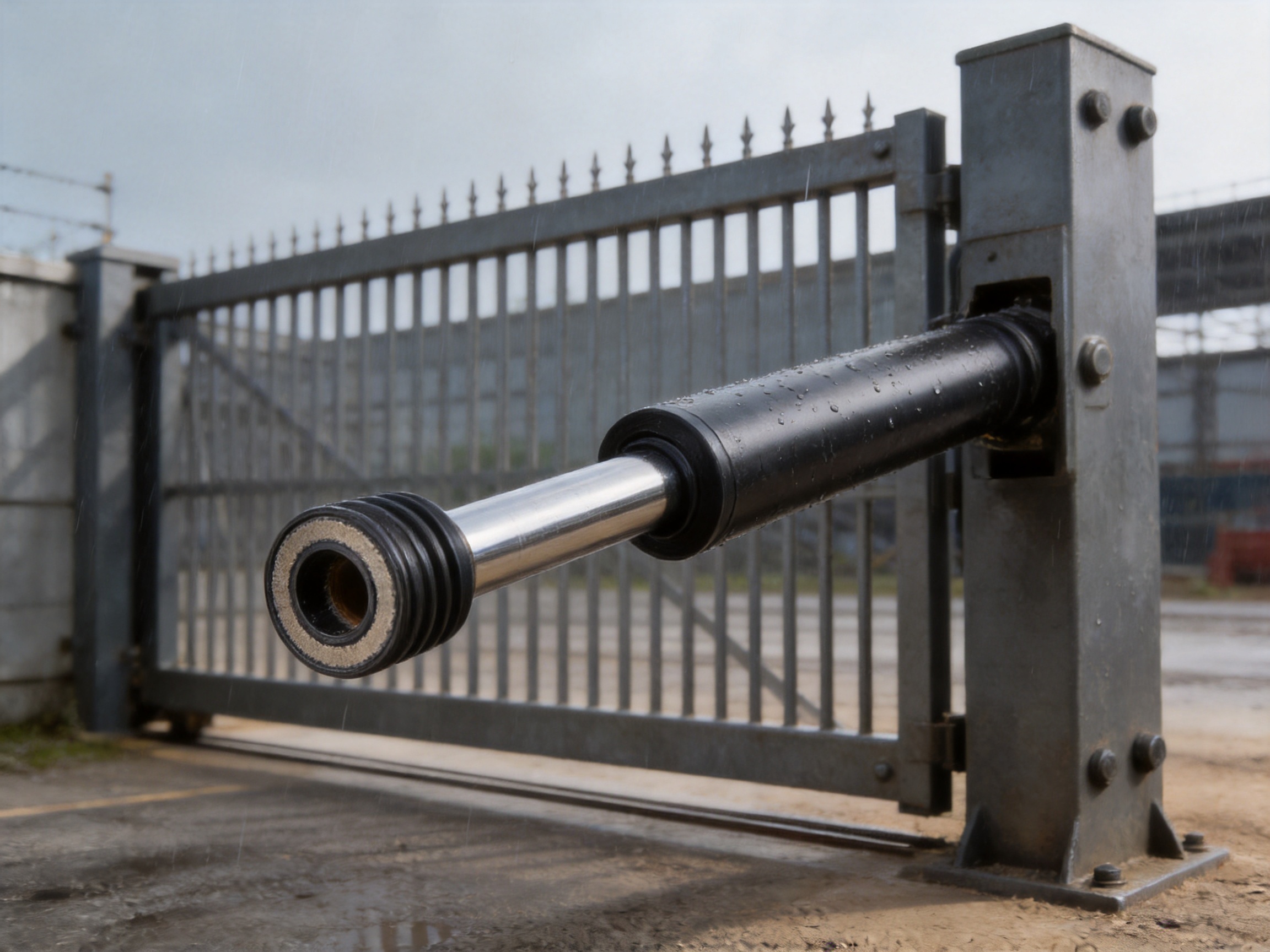
The product is described as weather-resistant and intended for outdoor heavy industry. This makes it suitable for large gates, hoists, and other equipment that may be installed outside. Weather resistance generally involves the ability to maintain useful mechanical properties when exposed to normal environmental variation, including moisture and changing ambient temperature.
Users should still consider the complete range of conditions. Direct sunlight, ozone, extreme cold, extreme heat, aggressive chemicals, and prolonged immersion may require a different compound or additional protection. Where special conditions exist, the manufacturer can evaluate whether NBR is suitable or whether an alternative such as HNBR or FPM should be considered.
Application Range and Operating Capacity
The product specification lists a design applicable pressure range of 50 N to 1800 N. Because newtons measure force rather than pressure, this range should be understood as an actuator capacity or load-related design range. The actual pressure inside a gas spring or damper depends on the internal area, gas charge, working fluid, rod geometry, and operating condition.
Within the stated application range, the seal is intended for large actuator assemblies that require a dependable sealing element around a 12 mm piston rod. The product is particularly relevant to large gates and hoists, where actuator force can be considerably higher than in ordinary furniture gas springs.
Typical applications may include:
• Large access gates and industrial gate operators.
• Lifting mechanisms and hoist systems.
• Outdoor dampers and controlled-motion mechanisms.
• Heavy-duty gas springs.
• Industrial furniture or equipment requiring high-force assisted movement.
• Agricultural, construction, and general mechanical equipment.
• Customized actuator assemblies with matching 28 mm pipe and 12 mm rod dimensions.
Application suitability depends on more than actuator force. The user should also evaluate stroke length, movement speed, cycle frequency, rod surface roughness, lubricant type, temperature, external contamination, and housing design. A seal that performs well in a low-cycle outdoor gate may require different validation for a high-frequency industrial actuator.
Dimensional Compatibility
Dimensional compatibility is one of the most important reasons to use a dedicated actuator seal rather than a generic ring. The A-1-034 model is specified with a 29 mm outside diameter, 11.3 mm inside diameter, and 4 mm height. It is associated with a 28 mm by 2.4 mm O-ring adapter and a 28 mm pipe inner diameter by 12 mm piston rod diameter.
The outside diameter relates to the retaining or housing area. The inside diameter and sealing profile relate to the piston rod. The height determines the axial space occupied by the component. The adapter supports the required relationship between the seal and the actuator body. All these dimensions must be checked against the actual assembly drawing.
Small dimensional differences can have substantial effects. An oversized outside diameter may create installation stress or damage the seal during insertion. An undersized outside diameter may allow movement or bypass leakage. Incorrect inside dimensions may produce excessive friction or insufficient lip contact. Incorrect height may prevent proper assembly or interfere with adjacent components.
| Dimension or Feature | Specified Value | Functional Consideration |
| Outside Diameter | 29 mm | Matches the intended housing or installation location |
| Inside Diameter | 11.3 mm | Works with the specified piston rod and sealing profile |
| Height | 4 mm | Defines axial installation space |
| O-Ring Adapter | 28 mm by 2.4 mm | Supports the related actuator sealing arrangement |
| Pipe Inner Diameter | 28 mm | Identifies the matching actuator body size |
| Piston Rod Diameter | 12 mm | Identifies the moving rod size |
Before ordering, customers should compare the listed product dimensions with the original seal, housing drawing, rod measurement, and assembly tolerances. If the application uses a modified housing or a nonstandard rod surface, technical confirmation is recommended.
Advantages Compared with Generic or Poorly Matched Seals
One of the main advantages of the 29mm Large Actuator Seal is that it is specified for a defined actuator configuration. Generic seals may appear similar in size but differ in lip geometry, material hardness, height, or adapter compatibility. These differences may cause leakage, increased friction, installation damage, or early wear.
The product also provides a clear material designation. NBR is not automatically suitable for every environment, but it gives engineers a known starting point for applications involving common oils, lubricants, and general industrial service. A defined material is preferable to an unverified elastomer of unknown formulation.
Its Y-type design supports the requirements of reciprocating movement. Compared with a flat gasket or a simple static O-ring used in an unsuitable location, the profile is better adapted to maintaining contact around a moving actuator rod.
The product’s size and application data also simplify purchasing and replacement. The product code A-1-034, the 29 by 11.3 by 4 mm specification, the 28 by 2.4 mm adapter information, and the matching 28 mm pipe and 12 mm rod dimensions provide useful identification points for maintenance teams.
Another advantage is suitability for demanding outdoor equipment. The rugged and weather-resistant design supports applications in which the actuator cannot be protected from all environmental exposure. For gates, hoists, and other heavy equipment, reducing leakage and contamination can help preserve the reliability of the complete mechanism.
Potential Lifecycle Benefits
A properly matched seal can reduce the frequency of corrective maintenance. When leakage is controlled, the actuator is more likely to retain its intended performance. This can help reduce downtime, labor associated with repeated disassembly, and the risk of damage to nearby parts.
Seal replacement also becomes more predictable when product identification and dimensions are clearly documented. A maintenance department can record the product code and application dimensions, helping ensure that future replacements are consistent with the original design.
These benefits depend on correct installation and suitable operating conditions. No seal can compensate for a damaged piston rod, contaminated lubricant, excessive misalignment, or an actuator that operates outside its intended capacity.
Manufacturing Process and Quality Control
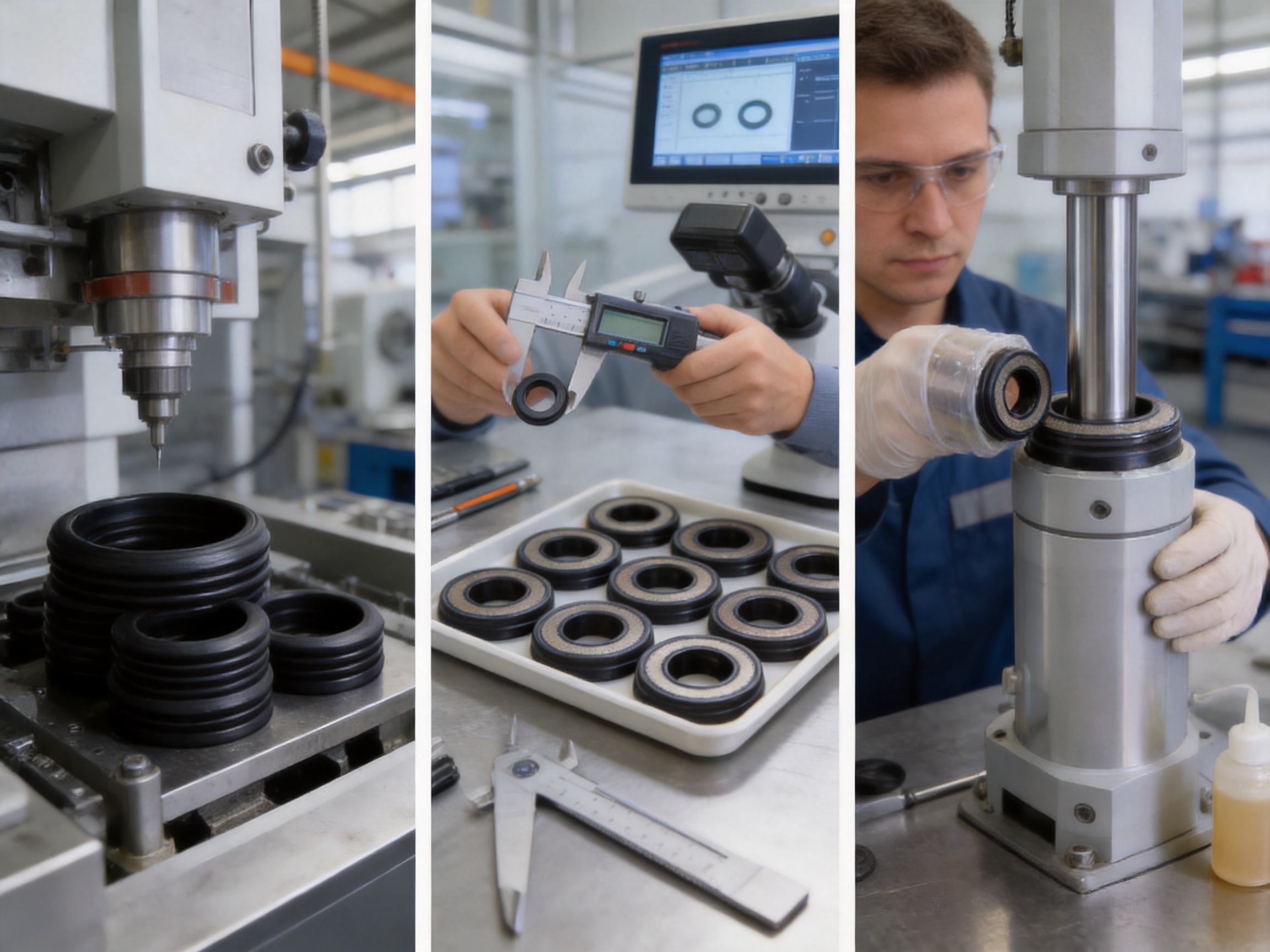
The performance of an actuator seal begins with manufacturing control. A molded elastomer component must retain its designed shape, surface quality, elasticity, and dimensional accuracy. Variations in material preparation, mold condition, curing, trimming, or inspection can influence how the seal performs after installation.
Ningguo Jnsseals Sealing Technology Co., Ltd. focuses on sealing technology for gas springs, dampers, and related O-ring products. The company was founded in 2019 and operates from Anhui, China. Its stated capabilities include research and development, advanced production equipment, product design, testing, technical consultation, and customized sealing solutions.
For a product such as the A-1-034 seal, an effective manufacturing program generally includes several controlled stages. The exact internal process may vary according to the production order and compound, but the core principles are material consistency, mold precision, controlled curing, careful finishing, and dimensional inspection.
Material Preparation
NBR compounds are prepared by combining the base elastomer with selected additives, reinforcing agents, plasticizers, curing agents, and other formulation components. The formulation must be mixed uniformly so that the finished rubber has consistent hardness, elasticity, strength, and resistance characteristics.
Mixing control is important because uneven dispersion can create weak areas or variation between batches. A professional sealing manufacturer uses controlled recipes and documented batch identification to support traceability. The material is then prepared for molding in a form suitable for the production equipment and mold design.
Precision Molding
The seal profile is formed inside a mold that defines the outside diameter, inside diameter, height, sealing lips, and other functional features. Mold accuracy affects the final geometry. For a small seal, even minor flash, mismatch, or profile distortion can influence installation and sealing behavior.
Precision molding also helps support repeatable production. When the mold is maintained correctly and process conditions are controlled, multiple parts can be produced with consistent dimensions. This is especially important for industrial customers who need replacement seals to match existing actuator assemblies.
Controlled Vulcanization
Vulcanization converts the prepared rubber compound into an elastic finished material. Heat, time, pressure, and compound formulation must be controlled to achieve the required cross-linking. Under-curing may result in insufficient strength or poor compression recovery, while over-curing may reduce flexibility or alter other mechanical properties.
Controlled vulcanization supports the balance required for a Y-type actuator seal. The finished part must be flexible enough to follow the rod, yet resilient enough to maintain its shape during repeated movement and compression.
Deflashing and Surface Finishing
After molding, excess material may remain along the mold parting line or near functional edges. Deflashing and finishing remove unwanted material and help maintain a clean sealing profile. The process must be carefully controlled because excessive trimming can damage a sealing lip or alter the designed geometry.
A clean surface is also important during installation. Loose flash or particles can enter the actuator and interfere with the sealing interface. Proper finishing contributes to both appearance and function.
Dimensional and Appearance Inspection
Inspection should verify the principal dimensions, including the 29 mm outside diameter, 11.3 mm inside diameter, and 4 mm height. The O-ring adapter specification and the relationship between the seal and its intended actuator configuration should also be considered during technical review.
Visual inspection can identify cracks, cuts, voids, surface contamination, incomplete molding, excessive flash, and other defects. Depending on the order requirements, additional tests may evaluate hardness, tensile properties, elongation, compression behavior, or resistance to the intended medium.
The company’s research and development and testing capabilities are valuable in this context. They allow the manufacturer to support product design and technical consultation rather than supplying only an undifferentiated commodity part.
Company Strengths and Technical Support
Ningguo Jnsseals Sealing Technology Co., Ltd. presents itself as a high-tech enterprise specializing in sealing technology. Its work covers gas springs, dampers, and O-ring-related products, with applications in automotive, furniture, home appliances, medical equipment, construction, and other industries.
This cross-industry experience can benefit customers seeking a seal for a specialized actuator. Different industries impose different priorities. Automotive systems may emphasize cycle life and temperature variation. Construction equipment may require resistance to dust and vibration. Furniture mechanisms may prioritize smooth operation and compact dimensions. Medical or appliance applications may require precise cleanliness and material controls. Experience across multiple fields can support a broader approach to product development.
The company also provides customized sealing solutions, including product design, testing, and technical consultation. This is particularly useful when a customer’s actuator does not exactly match a standard product. A technical discussion can examine housing dimensions, rod size, working medium, temperature, force, cycle rate, and environmental exposure.
Customization may involve modifying the seal profile, changing dimensions, selecting a different elastomer, adjusting hardness, or developing a related O-ring adapter. Any proposed change should be validated through engineering review and testing before mass production.
The company’s stated philosophy emphasizes people-oriented development, innovation, and pursuit of excellence. From a customer perspective, the practical value of this approach is reflected in communication, technical responsiveness, consistency, and the ability to support a product beyond the initial transaction.
Installation Recommendations
Correct installation is essential to obtaining the intended performance from the 29mm Large Actuator Seal. Before assembly, the installer should confirm that the seal matches the product code, dimensions, actuator design, and replacement requirements.
The piston rod should be inspected for scratches, burrs, corrosion, dents, or sharp edges. A damaged rod can cut the sealing lip during installation or create a leakage path during operation. The rod should be clean and free from abrasive particles.
The housing or seal groove should also be inspected. It must be free of dirt, metal fragments, old seal material, and excessive corrosion. Any sharp edge that could catch the seal should be removed or protected according to the actuator design.
Use a compatible lubricant or assembly medium when required. The lubricant should be suitable for NBR and for the intended actuator system. Avoid using chemicals that may swell, harden, or embrittle the elastomer.
When installing the seal, do not force it over sharp threads, keyways, or unfinished rod edges. Use an appropriate sleeve or protective tool if necessary. The seal should be pressed evenly into its intended position rather than struck directly with a hard object.
After installation, verify that the seal is not twisted, pinched, rolled, or partially displaced. The adapter and retaining components should be correctly positioned. The actuator should then be tested gradually, checking for abnormal friction, leakage, noise, or uneven movement.
Common Installation Errors
One common error is selecting a seal based only on outside diameter. The inside diameter, height, lip profile, adapter, rod size, and housing details are equally important.
Another error is installing a new seal onto a damaged rod. Even a high-quality NBR seal may fail quickly if the contact surface is rough or scratched.
Excessive stretching during installation can permanently deform the seal. Contamination during assembly can also create early leakage. Finally, forcing an incompatible seal into a housing may damage both the seal and the actuator.
Maintenance and Service Considerations
Regular inspection can help extend actuator service life. Maintenance personnel should look for oil or gas leakage, unusual rod movement, increased friction, visible cracking, seal displacement, and contamination around the actuator end.
The inspection interval should reflect the operating environment. Outdoor gates and hoists exposed to dust, rain, or temperature changes may require more frequent checks than equipment operating in a clean indoor environment. High-cycle equipment may also require earlier inspection than low-cycle systems.
When replacing the seal, inspect associated parts rather than replacing the ring alone. Check the piston rod, housing, adapter, lubricant, retaining components, and adjacent guide elements. If the original seal failed prematurely, the cause may be misalignment, excessive load, contamination, incompatible media, or an incorrect installation method.
Replacement seals should be stored in a clean, cool, and dry location away from direct sunlight, ozone-producing equipment, solvents, and excessive heat. Keep products in their original packaging where possible and avoid bending or compressing them for long periods.
Ordering and Customization Information
Customers ordering the A-1-034 product should provide the product code and confirm the application dimensions. Useful technical information includes the actuator type, pipe inner diameter, piston rod diameter, stroke, force range, movement frequency, working temperature, lubricant or internal medium, and environmental conditions.
For standard applications, the key reference is the 29 by 11.3 by 4 mm seal specification with the 28 by 2.4 mm O-ring adapter arrangement. For a modified design, customers should provide drawings or samples whenever possible. This allows the manufacturer to assess the seal interface and recommend an appropriate solution.
Potential technical services include product selection, dimensional review, material consultation, design support, sample development, testing, and production coordination. Customers can contact the manufacturer through its business email or sales managers for application assistance and quotation information.
The company address is No. 5, Meilin Avenue, Meilin Industrial Development Zone, Ningguo City, Anhui Province, China. Its technical and sales contacts can support discussions involving standard products and customized sealing requirements.
Quality, Reliability, and Competitive Value
The competitive value of the 29mm Large Actuator Seal comes from the combination of defined dimensions, a purpose-oriented Y-type profile, NBR material, outdoor suitability, and manufacturer support. A low-cost seal with uncertain material or profile may appear economical at the time of purchase, but premature failure can create higher costs through downtime, labor, leakage, and repeated replacement.
A reliable seal contributes to the performance of the complete actuator. It helps retain the operating medium, protect internal components, and maintain stable rod movement. In large gate or hoist applications, these functions are connected to safety, productivity, and user confidence.
Product quality is also connected to consistency between batches. When dimensions and material performance are controlled, customers can plan maintenance more effectively and reduce unexpected variation during assembly. For manufacturers incorporating the seal into their own products, stable supply and technical cooperation can support their production quality.
The manufacturer’s ability to provide design, testing, and technical consultation adds value beyond the individual molded ring. This is particularly important for customers that require customized actuator components, replacement compatibility, or engineering support during product development.
Q&A
What type of product is the 29mm Large Actuator Seal?
It is a Y-type oil seal ring designed for large actuator assemblies. The product code is A-1-034, and it is intended for applications involving a 28 mm steel pipe inner diameter and a 12 mm piston rod diameter.
What are the main dimensions?
The specified dimensions are 29 mm outside diameter, 11.3 mm inside diameter, and 4 mm height. The related O-ring adapter is specified as 28 mm by 2.4 mm.
What material is used?
The seal is made from NBR, or nitrile butadiene rubber. NBR is widely used for oil seals because of its balance of elasticity, oil resistance, abrasion resistance, and mechanical strength.
What actuator capacity is associated with this product?
The listed design applicable range is 50 N to 1800 N. This is a force range rather than a pressure rating because newtons measure force. The actual operating pressure must be evaluated according to the actuator design.
Is the seal suitable for outdoor use?
Yes. The product is described as rugged and weather-resistant and is intended for outdoor heavy-industry applications such as large gates and hoists. The complete system should still be evaluated for temperature, chemicals, sunlight, moisture, dust, and other environmental factors.
Can this seal be used in every 12 mm piston rod actuator?
No. The rod diameter alone is not enough to confirm compatibility. The housing, pipe inner diameter, seal height, adapter, groove geometry, rod surface, lubricant, force, and operating environment must also match the product requirements.
What are the main advantages of a Y-type seal profile?
A Y-type profile is designed to support sealing around a moving rod. Its flexible sealing form can maintain contact during reciprocating motion while balancing friction and sealing force.
Can the manufacturer provide customized seals?
Yes. The company provides customized sealing solutions that may include product design, testing, and technical consultation. Customers should provide drawings, samples, dimensions, and operating conditions for evaluation.
What should be checked before installation?
Inspect the rod for scratches, burrs, corrosion, and sharp edges. Clean the housing and remove old seal material. Confirm the dimensions, use a compatible assembly lubricant where appropriate, and make sure the seal is not twisted or damaged during installation.
How can premature seal failure be reduced?
Use the correct product, maintain a clean installation environment, protect the seal from sharp edges, inspect the rod and housing, use compatible lubricants, and operate the actuator within its intended force and environmental range.
How should replacement seals be stored?
Store them in a clean, cool, dry location away from direct sunlight, ozone sources, solvents, and excessive heat. Keep the seals protected from deformation and contamination until installation.
Conclusion
The 29mm Large Actuator Seal is a purpose-designed NBR Y-type oil seal ring for large actuator applications. With dimensions of 29 by 11.3 by 4 mm, compatibility with a 28 mm by 2.4 mm O-ring adapter, and suitability for actuator configurations using a 28 mm pipe inner diameter and 12 mm piston rod, it provides a clearly defined solution for heavy-duty sealing requirements.
Its key advantages include a profile suited to reciprocating movement, NBR material performance, rugged construction, weather-resistant suitability, and application relevance for large gates, hoists, dampers, and outdoor equipment. These features can help control leakage, protect internal actuator components, and support dependable mechanical operation.
The product is further supported by the technical capabilities of Ningguo Jnsseals Sealing Technology Co., Ltd., including sealing research and development, advanced production equipment, testing, customized design, and technical consultation. Through controlled material preparation, precision molding, curing, finishing, and inspection, the company can provide sealing components intended to meet practical industrial requirements.
For the best result, customers should confirm all dimensions and working conditions before ordering. When the seal is correctly selected, properly installed, and used within its intended environment, the A-1-034 29mm Large Actuator Seal can serve as a durable and economical component for demanding actuator systems.
References
1. Product specification data for A-1-034, 29mm Large Actuator Seal, including dimensions, material, adapter information, and application range.
2. Ningguo Jnsseals Sealing Technology Co., Ltd. company profile and technical service information.
3. General engineering principles for elastomeric seals used in reciprocating actuator and gas spring applications.
4. General material engineering references concerning nitrile butadiene rubber, oil resistance, abrasion resistance, and elastomer processing.
5. General industrial maintenance practices for piston rods, actuator housings, oil seals, O-rings, and outdoor mechanical equipment.
Product: 29mm Large Actuator Seal

PREV:16.8 mm Standard Industrial Y-Seal for Reliable Rod Sealing
NEXT:26 mm Large-Aperture Adapter Seal for High-Performance Gas Springs and Dampers
NEXT:26 mm Large-Aperture Adapter Seal for High-Performance Gas Springs and Dampers


Want to know more
about us?
about us?

Precision sealing for gas springs and dampers. Durable, wear-resistant, and built for long-life performance in demanding applications.
Product Categories
Quick Links
Contact Us
-
Email: jns@jnsseals.cn

-
Email: LouZhuoyu@outlook.com
-
Manager Gong: +86-18563770820

-
Manager Wang: +8615357558902
-
No. 5, Meilin Avenue, Meilin Industrial Development Zone, Ningguo City, Anhui Province, China

