

 English
 русский
 Deutsch
 Türk
 中文简体
16.8 mm Standard Industrial Y-Seal for Reliable Rod Sealing
16.8 mm Standard Industrial Y-Seal for Reliable Rod Sealing
16.8 mm Standard Industrial Y-Seal for Reliable Rod Sealing
16.8 mm Standard Industrial Y-Seal for Reliable Rod Sealing
16.8 mm Standard Industrial Y-Seal for Reliable Rod Sealing
16.8 mm Standard Industrial Y-Seal for Reliable Rod Sealing
16.8 mm Standard Industrial Y-Seal for Reliable Rod Sealing
16.8 mm Standard Industrial Y-Seal for Reliable Rod Sealing
16.8 mm Standard Industrial Y-Seal for Reliable Rod Sealing
16.8 mm Standard Industrial Y-Seal for Reliable Rod Sealing
16.8 mm Standard Industrial Y-Seal for Reliable Rod Sealing
16.8 mm Standard Industrial Y-Seal for Reliable Rod Sealing
16.8 mm Standard Industrial Y-Seal for Reliable Rod Sealing
16.8 mm Standard Industrial Y-Seal for Reliable Rod Sealing
16.8 mm Standard Industrial Y-Seal for Reliable Rod Sealing
16.8 mm Standard Industrial Y-Seal for Reliable Rod Sealing

Shen Ruolan — After-Sales Technical Consultant
Home / Author / Shen Ruolan — After-Sales Technical Consultant / 16.8 mm Standard Industrial Y-Seal for Reliable Rod Sealing
NEW Category
Contact us
16.8 mm Standard Industrial Y-Seal for Reliable Rod Sealing
Content
- 1 Product Overview and Technical Identity
- 2 How a Y-Type Seal Supports Rod Sealing
- 3 Material Advantages of NBR
- 4 Advantages in Comparison with Less Specialized Alternatives
- 5 Suitability for Automated Lines
- 6 Manufacturing and Quality Strengths
- 7 Engineering Design Considerations
- 8 Applications Across Industrial Equipment
- 9 Customized Sealing Solutions
- 10 Purchasing and Supply Advantages
- 11 Maintenance and Service-Life Factors
- 12 Why the Product Is a Practical Industrial Choice
- 13 Questions and Answers
- 13.1 What is the A-1-012 product?
- 13.2 What are the main dimensions?
- 13.3 What material is used?
- 13.4 What type of groove is suitable?
- 13.5 Is the seal suitable for moving rods?
- 13.6 What does the anti-extrusion feature mean?
- 13.7 What does “above 60N” mean in the product data?
- 13.8 Are O-ring adapters available?
- 13.9 Can the product be customized?
- 13.10 How should the seal be installed?
- 13.11 Which industries may use this seal?
- 13.12 How should customers validate the product?
- 14 Conclusion
- 15 References
- 16 Product: 16.8mm Standard Industrial Y-Seal
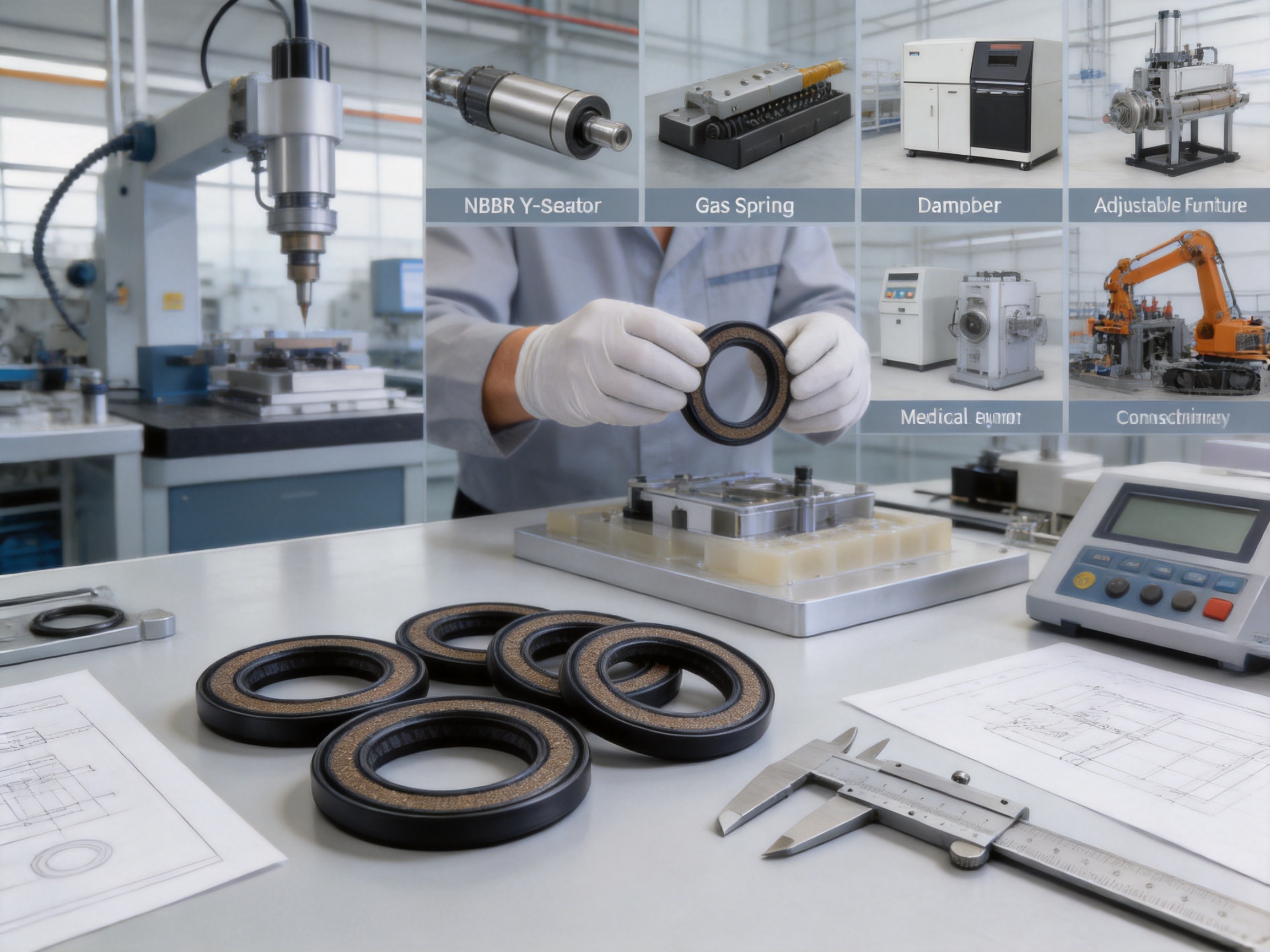
The 16.8 mm Standard Industrial Y-Seal is a compact NBR sealing component developed for industrial rod applications, particularly systems using a 16 mm steel pipe inner diameter and an 8 mm piston rod. Designed for automated lines and equipment requiring a dependable sealing interface above 60N, this Y-type oil seal ring combines a practical installation profile with reliable sealing performance, anti-extrusion capability, and compatibility with ISO standard grooves.
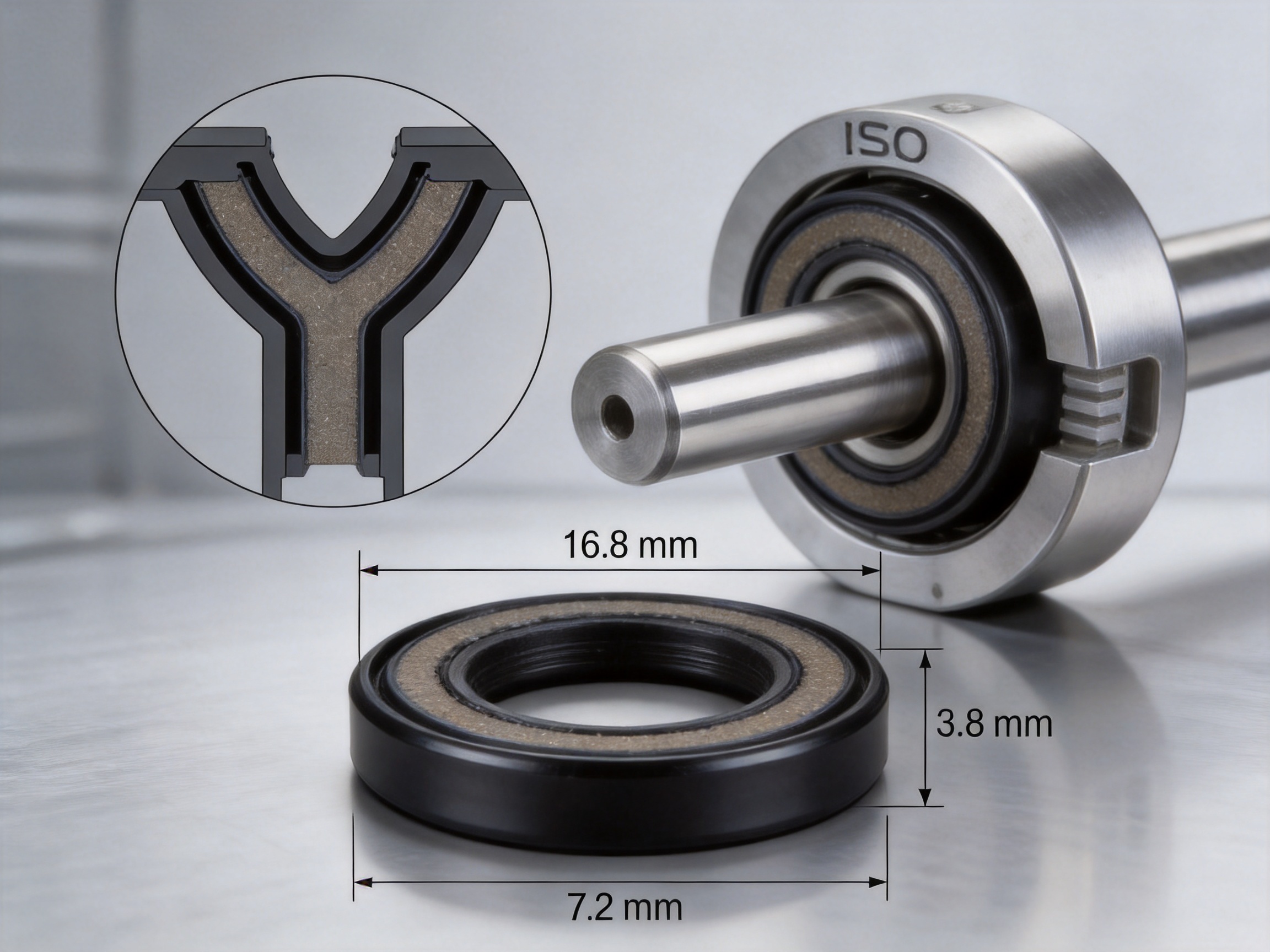
Its product code is A-1-012, and its listed specification is 16.8 × 7.2 × 3.8 mm. The seal is made from NBR, a widely used elastomer for industrial sealing applications. With an outside diameter of 16.8 mm, an inside diameter of 7.2 mm, and a height of 3.8 mm, the component is suited to compact assemblies where dimensional consistency, controlled friction, and dependable fluid retention are important.
Although the seal has a simple appearance, its effectiveness depends on the relationship between its geometry, material, groove, mating rod, and operating conditions. The Y-shaped profile is intended to create a sealing line around the rod while supporting stable contact under working conditions. When correctly selected and installed, it can help prevent lubricant loss, reduce the entry of contaminants, and maintain consistent operation in equipment such as automated mechanisms, gas spring systems, dampers, furniture hardware, home appliances, and other industrial products.
The product is manufactured by Ningguo Jnsseals Sealing Technology Co., Ltd., a China-based sealing technology enterprise founded in 2019. The company focuses on the research, development, and application of sealing solutions for gas springs, dampers, and related O-ring products. Its capabilities include product development, testing, technical consultation, and customized sealing solutions for different industrial requirements.
Product Overview and Technical Identity
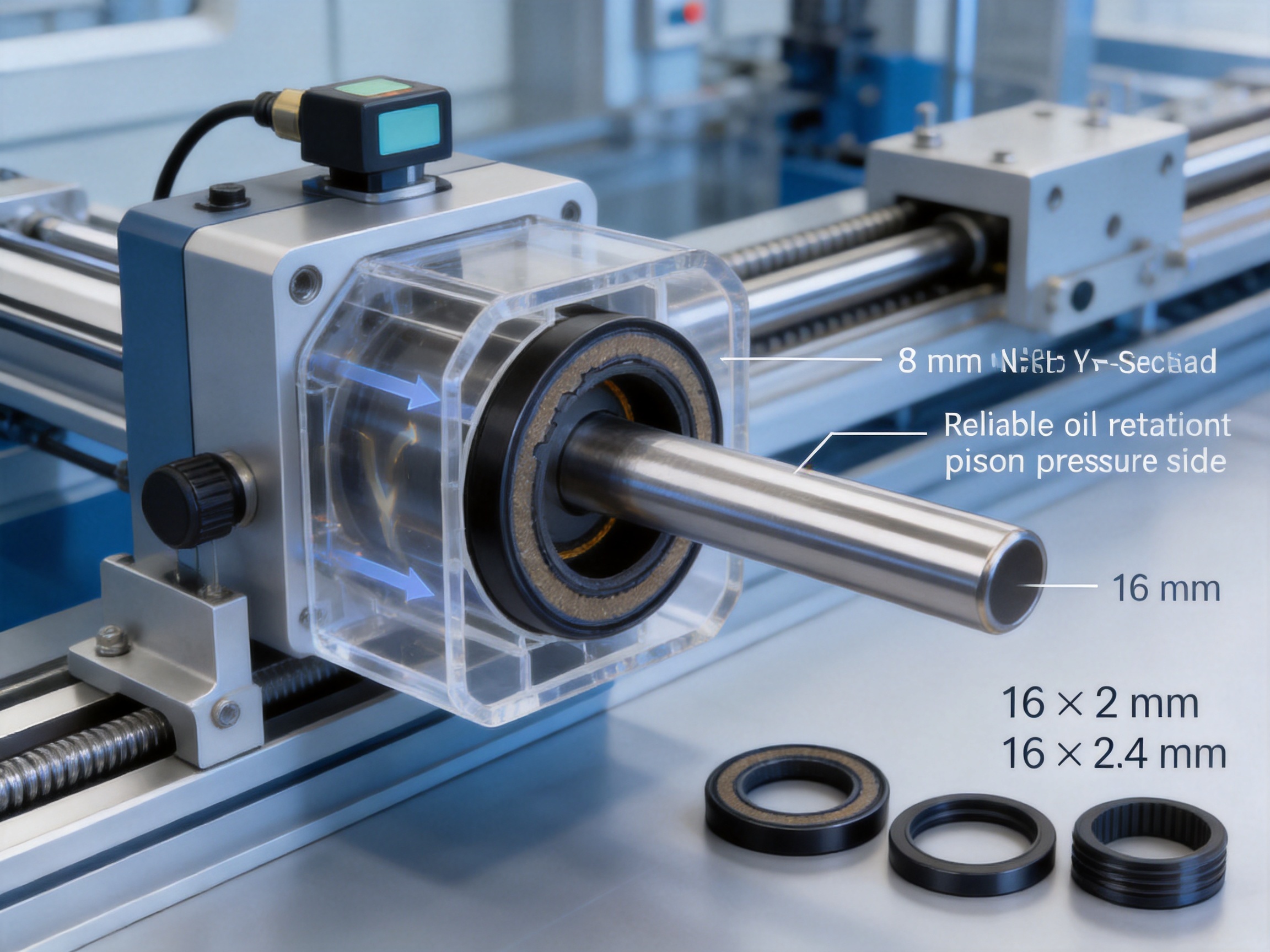
The A-1-012 Y-seal is designed for a nominal 16 mm by 8 mm rod application. In the specified assembly, the steel pipe inner diameter is 16 mm and the piston rod diameter is 8 mm. The seal’s listed dimensions are 16.8 mm outside diameter, 7.2 mm inside diameter, and 3.8 mm height. These dimensions form the basic installation envelope and should be reviewed together with the actual housing, groove, shaft condition, temperature, lubricant, and operating movement.
| Item | Specification |
|---|---|
| Product name | 16.8 mm Standard Industrial Y-Seal |
| Product category | Y-Type Oil Seal Ring |
| Product code | A-1-012 |
| Product specification | 16.8 × 7.2 × 3.8 mm |
| Outside diameter | 16.8 mm |
| Inside diameter | 7.2 mm |
| Height | 3.8 mm |
| Recommended rod and pipe relationship | 16 mm steel pipe inner diameter × 8 mm piston rod diameter |
| O-ring adapter options | 16 × 2 mm / 16 × 2.4 mm |
| Design applicable pressure range | Above 60N, according to the supplied product specification |
| Material | NBR |
The dimensions should not be considered in isolation. A seal may have the correct nominal diameter yet perform poorly if the groove is too deep, the shaft surface is damaged, or the assembly is exposed to a fluid incompatible with the elastomer. For this reason, the A-1-012 is best evaluated as part of a complete sealing system rather than as an independent replacement part.
The product is also listed with O-ring adapter options of 16 × 2 mm and 16 × 2.4 mm. These adapter dimensions provide flexibility for compatible assembly designs, but the correct selection must be confirmed against the actual housing geometry and compression requirements. The adapter choice should be made during the engineering review, especially when the product is being integrated into a new device or a revised production platform.
How a Y-Type Seal Supports Rod Sealing
A Y-type seal uses a profile with sealing lips that form a controlled interface around a moving or stationary rod. The profile is intended to maintain contact with the rod while occupying a compact groove. Compared with a basic circular ring, the Y-shaped cross-section can provide a more defined sealing geometry for reciprocating rod applications. Its working behavior depends on elastic deformation, groove support, surface contact, and the pressure conditions within the assembly.
In a rod-sealing application, the seal must perform several functions at the same time. It must retain oil or other compatible lubricant, limit the movement of contaminants toward the internal mechanism, accommodate small dimensional variations, and remain stable during repeated motion. It must also avoid excessive friction that could increase energy consumption or cause premature wear. A well-designed Y-profile aims to balance these requirements.
The A-1-012 is described as having anti-extrusion characteristics. This is important when a seal is exposed to pressure or mechanical loading that could force the elastomer into a clearance gap. Extrusion can damage the sealing edge and create leakage paths. A profile with suitable support and appropriate installation can reduce this risk, although actual resistance depends on pressure, temperature, gap dimensions, material hardness, surface finish, and assembly quality.
Its compatibility with ISO standard grooves is another practical advantage. Standardized groove concepts can simplify housing design, reduce unnecessary customization, and support more consistent replacement procedures. However, the specific groove should still be checked against the seal drawing or approved engineering data. ISO compatibility does not remove the need to verify groove width, depth, corner radii, compression, and installation clearance.
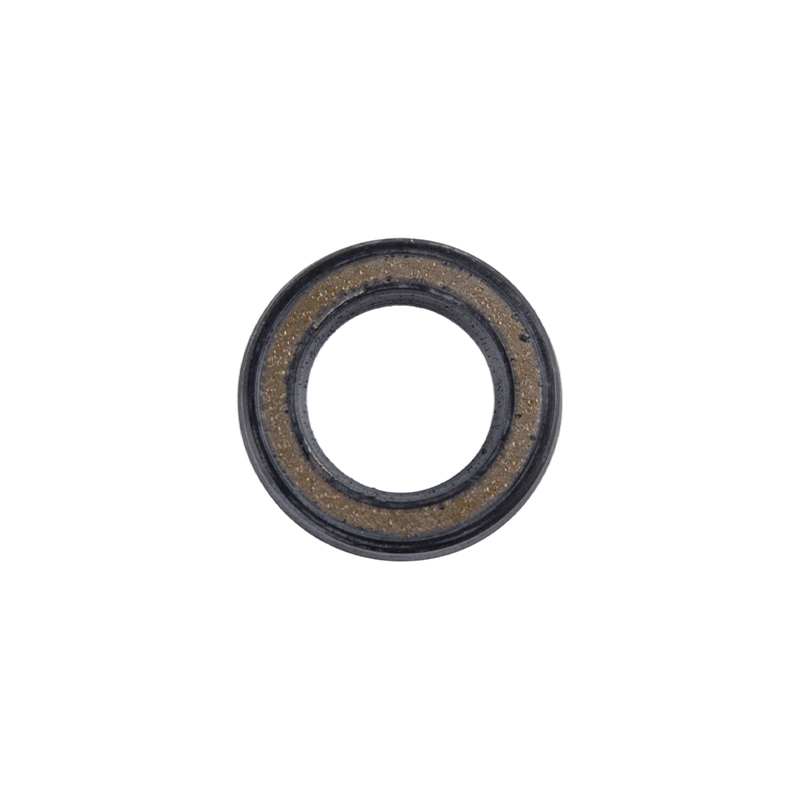
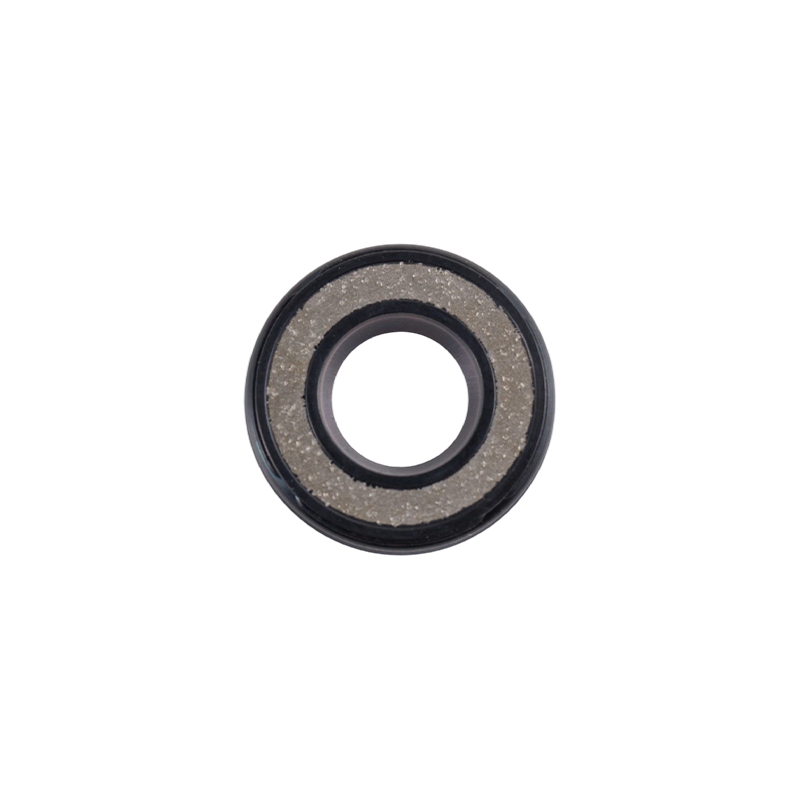
16.8mm Standard Industrial Y-Seal
Material Advantages of NBR
The A-1-012 is produced from NBR, or nitrile rubber. NBR is widely used in industrial sealing because it offers a useful balance of oil resistance, mechanical strength, elasticity, and cost efficiency. It is a practical material for many hydraulic, pneumatic, automotive, appliance, and general machinery applications.
For a rod seal, NBR can provide a resilient contact surface that follows small changes in the rod and housing while maintaining pressure against the sealing interface. Its mechanical properties support applications involving repeated movement and ordinary industrial loading. It is also a familiar material for manufacturers and maintenance teams, which can simplify material identification, procurement, and replacement planning.
Compared with some higher-cost specialty elastomers, NBR can provide an economical solution when the operating environment does not require exceptional chemical, temperature, or weather resistance. This cost-performance balance is one reason NBR remains common in standard industrial sealing. It can help equipment manufacturers control component cost without abandoning a proven elastomeric sealing technology.
At the same time, material selection must always reflect the real operating environment. NBR is not universally compatible with every chemical or temperature range. The customer should confirm the type of oil, additives, cleaning agents, ambient temperature, internal temperature, motion profile, and storage conditions before final approval. If the equipment requires a different elastomer, the manufacturer’s broader material capabilities may support alternative product development, subject to technical evaluation.
Material and Application Review
Before production approval, the following factors should be reviewed:
• The type and viscosity of the working oil or lubricant.
• The minimum and maximum operating temperature.
• The frequency and speed of rod movement.
• The pressure and clearance conditions around the seal.
• The surface finish, hardness, straightness, and cleanliness of the piston rod.
• The expected service life and maintenance interval.
• Exposure to dust, moisture, cleaning chemicals, or external contaminants.
• The compatibility of the seal with the housing and any O-ring adapter.
This review is especially valuable when the seal is being used in an automated production line. Automated equipment can perform thousands or millions of movement cycles, meaning that small installation or material mismatches may become significant over time. A technically appropriate seal design can reduce the possibility of unplanned stoppage and maintenance caused by leakage or excessive friction.
Advantages in Comparison with Less Specialized Alternatives
The A-1-012 offers several advantages compared with generic, poorly matched, or non-standard sealing alternatives. Its dimensions are clearly defined, its application is associated with a 16 mm by 8 mm rod arrangement, and its material is identified as NBR. This information gives engineers and purchasing teams a more reliable starting point than an unspecified seal offered only by approximate size.
Its Y-type geometry is another advantage over a simple flat washer or an incorrectly selected circular ring. A flat washer may not provide the required dynamic sealing function, while an O-ring selected without considering motion and groove design may experience twisting, rolling, or excessive friction. The Y-profile is specifically intended for rod sealing, making it more appropriate for applications where the rod moves through the seal.
The product’s compact 3.8 mm height can support assemblies where installation space is limited. A compact seal can help equipment designers preserve a smaller housing envelope, provided that the groove and compression conditions are correct. This can be valuable in furniture hardware, gas spring assemblies, dampers, and automated mechanisms where space, appearance, and packaging are important.
Anti-extrusion performance can provide an additional benefit compared with a basic elastomer profile that has not been designed for pressure-related deformation. When operating conditions create a risk of the material being pushed into a clearance gap, profile stability becomes important. The A-1-012 is described as suitable for high-reliability industrial use and anti-extrusion service, supporting applications where a standard but dependable sealing geometry is required.
Compatibility with ISO standard grooves can also reduce engineering complexity. A seal intended for a recognized groove concept is easier to evaluate within established design practices than a completely proprietary profile. This may shorten design review, simplify replacement, and improve consistency across multiple equipment models. It can also help production teams standardize tooling and inspection procedures where the same basic groove architecture is used repeatedly.
Another advantage is the manufacturer’s ability to provide customized sealing solutions. Standard products are useful for common applications, but industrial customers often need modifications related to material, dimensions, testing, or installation conditions. A company with experience in product design and technical consultation can support the transition from an off-the-shelf component to a more application-specific solution.
Suitability for Automated Lines
The product description identifies the A-1-012 as suitable for automated lines above 60N. The supplied specification refers to the design applicable pressure range as “Above 60N.” Because new equipment designs may use different terminology for force, pressure, load, or actuation, the customer should confirm the intended engineering interpretation before final selection. The listed value should be treated as a design reference from the product data rather than a substitute for application testing.
Automated lines place particular demands on seals. Motion may be repetitive, frequent, and precisely controlled. Any leakage can affect product cleanliness, actuator performance, sensor reliability, or the stability of the production cycle. A seal that creates too much friction may also increase actuator load, while a seal that has insufficient contact may allow fluid loss or contamination.
The A-1-012’s standardized dimensions and compact design can help support repeatable installation across a production line. When the same seal is used across multiple stations, maintenance personnel can simplify inventory management and reduce the possibility of fitting an incompatible replacement. Consistent product coding, such as A-1-012, further assists traceability during purchasing and maintenance operations.
For automated equipment, the seal should be evaluated under representative cycle conditions. Testing should include the actual rod speed, stroke length, cycle frequency, working fluid, temperature, and pressure. A short static test may confirm initial sealing but may not reveal wear, friction growth, heat generation, or lip damage after extended movement. A more complete validation program can provide better confidence in production service.
Recommended Evaluation Sequence
A practical evaluation sequence begins with a dimensional review. The engineering team should confirm the 16.8 mm outside diameter, 7.2 mm inside diameter, 3.8 mm height, and the intended 16 mm pipe by 8 mm rod configuration. The groove should then be measured or modeled to confirm proper compression and support.
The second stage is a material compatibility review. The actual lubricant or internal medium should be compared with the expected resistance of NBR. If the equipment contains additives, cleaning fluids, or unusual media, a test sample should be exposed under representative conditions before volume production.
The third stage is a functional test. The seal should be installed using the intended assembly process and operated through the expected motion and load range. Engineers should monitor leakage, friction, rod marks, temperature, and visible seal deformation.
The final stage is a durability review. Long-cycle testing can help identify gradual wear, hardening, swelling, extrusion, or loss of sealing force. Results should be recorded together with the assembly date, batch information, lubricant, and operating conditions. This information can support future design decisions and maintenance planning.
Manufacturing and Quality Strengths
The manufacturer is a high-tech enterprise established in 2019 with a focus on sealing technology for gas springs, dampers, and related O-ring products. Its stated business scope includes research, development, application, product design, testing, and technical consultation. These capabilities are important because sealing performance is not determined only by molding a rubber part. It also depends on engineering interpretation, material control, dimensional accuracy, process stability, and application feedback.
Advanced production equipment supports the company’s manufacturing activities. Modern equipment can help improve process repeatability, reduce variation, and support stable production of small sealing components. For a product such as the A-1-012, consistency is particularly important because a small difference in lip geometry, height, or diameter may affect installation force and sealing performance.
A professional technical service team adds value before and after production. During product selection, technical personnel can review dimensions, operating requirements, and installation conditions. During development, they can support design adjustments and testing. After delivery, they can help customers investigate field performance and determine whether a change in material, profile, or assembly method is necessary.
The company also emphasizes strong research and development capabilities. R&D is valuable for customers that require more than a standard catalog item. Gas springs, dampers, and automated mechanisms often have different movement patterns, pressure conditions, and space limitations. A development-oriented supplier can use product data and application feedback to refine the sealing solution rather than treating every application as identical.
Process Discipline for Small Elastomer Components
Manufacturing a reliable elastomer seal requires control across multiple stages. The material must be identified and prepared consistently. The mold and forming process must create the intended Y-profile. The component must be released without damaging the lips or creating unacceptable flash. Dimensional and visual checks must then confirm that the finished part matches the approved specification.
Although the supplied product information does not list every individual machine or inspection parameter, the company’s stated use of advanced production equipment and professional technical capabilities indicates a production structure intended for industrial customers. The relevant strength is not a single machine; it is the coordinated system of development, manufacturing, testing, and service.
For the A-1-012, process control should pay particular attention to the sealing lips, the circularity of the inner and outer surfaces, the overall height, and the relationship between the profile and the specified groove. Surface defects, excessive flash, tears, or dimensional drift may interfere with assembly or shorten service life. Stable production and appropriate inspection help reduce these risks.
Quality also includes packaging, identification, and order management. A product code such as A-1-012 helps prevent confusion between seals with similar dimensions. Clear labeling and controlled storage can protect the material before installation. NBR seals should be stored in conditions that avoid unnecessary exposure to heat, ozone, sunlight, chemicals, and deformation.
Engineering Design Considerations
The success of a Y-seal depends on the design of the complete sealing system. The housing should provide adequate support around the outside diameter, while the rod should present a suitable surface for dynamic contact. Sharp edges near the installation path may cut or roll the seal during assembly. Chamfers, lead-in geometry, and appropriate lubrication can reduce installation damage.
The 7.2 mm listed inside diameter should be reviewed against the actual rod diameter and the intended interference or contact condition. A seal that is too loose may leak, while one that is excessively tight may generate high friction and heat. The correct relationship is influenced by the elastomer, the lip geometry, the rod finish, and the expected pressure.
The 16.8 mm outside diameter should be checked against the housing bore or groove. The housing must restrain the seal without distorting the profile. If the groove is too large, the seal may move or twist. If the groove is too small, installation may damage the seal or create excessive compression.
The 3.8 mm height is also significant. It affects the axial space required for the seal and the way the profile is compressed or supported. The designer should avoid assuming that a nominal height automatically guarantees compatibility with every 16 mm by 8 mm assembly. The final installation should be confirmed through a drawing, sample fitting, or engineering validation.
Rod condition is equally important. The rod should be free from burrs, sharp scratches, rust, and contamination. A rough or damaged surface can abrade the sealing lip. Conversely, an unsuitable surface finish may prevent stable lubricant retention. Straightness and alignment should also be considered, particularly in long-stroke or high-cycle mechanisms.
Installation Recommendations
Before installation, inspect the seal for cuts, tears, deformation, excessive flash, or contamination. Confirm the product code and dimensions against the assembly drawing. Do not install a seal that has been stored in a visibly damaged or compressed condition.
Clean the groove and rod thoroughly. Remove chips, dust, old seal fragments, and other particles. Check the lead-in edges and cover sharp features that could damage the sealing lips. If the application permits, use a compatible lubricant during installation to reduce dry friction and avoid tearing.
Install the seal in the correct orientation. A Y-type profile may have a pressure side and a rod-contact side, and incorrect orientation can reduce sealing performance. The orientation should follow the approved product drawing or the equipment manufacturer’s assembly instruction.
Avoid forcing the seal over sharp threads, keyways, holes, or other interruptions without suitable protection. Do not use tools that can cut or puncture the elastomer. After installation, verify that the seal is fully seated and not twisted, rolled, or partially displaced.
Following installation, operate the rod slowly if possible and check for abnormal friction, noise, leakage, or resistance. Early inspection can identify assembly problems before the equipment enters full production. For automated lines, this step can be incorporated into commissioning or preventive maintenance procedures.
Applications Across Industrial Equipment
The A-1-012 is positioned for universal industrial use in assemblies associated with 16 mm by 8 mm rod dimensions. Its potential applications include automated equipment, gas spring systems, dampers, furniture mechanisms, home appliances, medical equipment, construction-related products, and other machinery using compact rod-sealing arrangements.
In automated lines, the seal can support rod movement in actuators and mechanisms where consistent operation is required. In furniture products, compact sealing components may be used in adjustable mechanisms or gas spring assemblies where clean appearance and smooth movement are important. In dampers, the seal can contribute to the retention of internal fluid and the separation of internal and external environments.
In home appliances and medical equipment, selection must be particularly careful because cleanliness, odor, fluid compatibility, and regulatory requirements may be important. The standard NBR version may be suitable for some applications, but the complete equipment specification should determine whether additional material or compliance requirements apply.
Construction equipment and industrial mechanisms may expose seals to dust, vibration, temperature variation, and irregular maintenance. In such applications, the housing design, external protection, lubricant selection, and inspection schedule are as important as the seal itself. The A-1-012 can provide a practical component for compatible designs, but field conditions should be included in validation.
Customized Sealing Solutions
Not every customer can use a standard product without modification. Some require a special diameter, a different height, an alternative elastomer, a revised lip geometry, or a solution adapted to a particular groove. The manufacturer’s stated ability to provide customized sealing solutions is therefore an important advantage for equipment builders and component distributors.
Customization can begin with a technical consultation. The customer supplies the application conditions, drawings, performance requirements, media, motion profile, and expected life. The manufacturer can then review whether the existing A-1-012 configuration is suitable or whether a related design should be developed.
Product design and testing are essential parts of this process. A modified seal should not be approved only because it fits mechanically. It should also be tested for sealing, friction, wear, extrusion resistance, chemical compatibility, and durability under representative conditions. The appropriate test method depends on the equipment and the customer’s quality requirements.
Customization may also involve adapter selection. The product information lists 16 × 2 mm and 16 × 2.4 mm O-ring adapter options. These options can support different assembly requirements, but they should be selected only after confirming the groove, compression, and operating conditions. A technically appropriate adapter can improve integration; an incorrect one can create leakage or assembly difficulty.
For larger programs, the customer may benefit from early collaboration. Sharing the housing drawing before final tooling or mass production can help identify potential problems with access, installation, tolerances, or maintenance. Early technical involvement often reduces the cost of later changes and helps align the seal with the complete product architecture.
Purchasing and Supply Advantages
A clearly identified product can simplify purchasing and inventory control. The A-1-012 code, product dimensions, NBR material, and application description provide a useful basis for ordering and internal documentation. These details can help prevent the substitution of a visually similar but technically different seal.
For manufacturers using several sealing components, supplier consolidation can also provide operational benefits. A sealing technology supplier that offers Y-type seals, O-rings, damping seals, and other related products may support a broader portion of the customer’s component requirements. This can reduce the number of technical interfaces and make it easier to coordinate material, inspection, and delivery expectations.
The company’s focus on automotive, furniture, home appliance, medical equipment, construction, and other industries demonstrates experience across multiple application environments. Each industry has different priorities, including durability, appearance, cost, cleanliness, customization, and delivery stability. Cross-industry experience can help a supplier recognize recurring sealing challenges and propose practical solutions.
Customers should still define their own quality and supply requirements clearly. These may include sample approval, inspection reports, material certificates, packaging specifications, traceability, delivery schedules, and change-control procedures. A detailed purchasing specification ensures that the expected product remains consistent from initial sample through regular production.
Maintenance and Service-Life Factors
Seal service life is affected by more than the nominal material and dimensions. Lubrication, temperature, rod condition, pressure, motion, contamination, and installation quality all influence performance. A properly selected seal can still fail prematurely if the rod is damaged or if the equipment operates outside its intended conditions.
Maintenance teams should monitor leakage, friction, noise, rod marks, and changes in operating force. A small amount of visible residue may indicate early wear, while sudden leakage may suggest extrusion, installation damage, or a damaged mating surface. Recording these observations can help determine whether the problem originates with the seal, the housing, the rod, or the operating environment.
Replacement intervals should be based on actual service conditions rather than on a universal time period. High-cycle automated machinery may require more frequent inspection than low-cycle equipment. Dusty or chemically aggressive environments may also reduce service life. During replacement, the old seal should be examined for wear patterns, cuts, swelling, hardening, or deformation, because these signs can reveal the cause of failure.
If the seal lip shows uneven wear, the rod or housing may be misaligned. If the seal is torn, installation damage or a sharp edge may be responsible. If the elastomer is swollen or softened, fluid compatibility should be investigated. If the seal has been forced into a clearance gap, the pressure, gap, and anti-extrusion conditions should be reviewed.
Why the Product Is a Practical Industrial Choice
The 16.8 mm Standard Industrial Y-Seal combines several practical features in one compact component. Its dimensions are defined, its material is identified, its target rod configuration is specified, and its profile is intended for industrial rod sealing. The anti-extrusion description and ISO groove compatibility provide additional design guidance for engineers evaluating the part.
Its use of NBR supports a balanced solution for many oil-related industrial applications. The material is familiar, broadly available, and suitable for numerous standard sealing environments when temperature and chemical conditions are appropriate. The compact profile can support equipment where installation space is restricted, while the standardized product code helps simplify procurement and replacement.
The manufacturer’s strengths extend beyond the individual seal. Research and development, advanced production equipment, testing capabilities, technical consultation, and customized design support create a broader service platform. This is especially valuable when the customer needs to move from a standard component to a validated application solution.
Compared with an unverified generic substitute, the A-1-012 provides a clearer technical identity and a more structured basis for evaluation. Compared with an over-engineered specialty seal, it may offer a cost-effective option for standard industrial conditions that do not require more advanced elastomers or complex construction. The final comparison should always consider the complete operating environment, but the product is well positioned for practical, repeatable rod-sealing applications.
Questions and Answers
What is the A-1-012 product?
The A-1-012 is a 16.8 mm Standard Industrial Y-Seal designed for rod-sealing applications. It belongs to the Y-Type Oil Seal Ring category and is specified for a 16 mm steel pipe inner diameter and an 8 mm piston rod diameter.
What are the main dimensions?
The listed product specification is 16.8 × 7.2 × 3.8 mm. The outside diameter is 16.8 mm, the inside diameter is 7.2 mm, and the height is 3.8 mm.
What material is used?
The product is made from NBR, or nitrile rubber. NBR is commonly used for industrial seals because of its useful balance of oil resistance, elasticity, mechanical strength, and cost efficiency.
What type of groove is suitable?
The product description states that it fits ISO standard grooves. The exact groove dimensions, compression, corner radii, and housing condition should still be checked against the approved engineering information before installation.
Is the seal suitable for moving rods?
Yes. Its Y-type profile is intended for rod-sealing applications and can be used in compatible reciprocating or moving-rod assemblies. Actual suitability depends on speed, stroke, temperature, lubricant, pressure, rod finish, and groove design.
What does the anti-extrusion feature mean?
Anti-extrusion performance refers to resistance against the elastomer being forced into a clearance gap under pressure or load. The actual level of resistance depends on the pressure, temperature, gap, material, profile, and installation conditions.
What does “above 60N” mean in the product data?
The supplied specification lists the design applicable pressure range as above 60N. Because force and pressure are different engineering quantities, customers should confirm the intended interpretation with the application engineer before final approval.
Are O-ring adapters available?
Yes. The listed O-ring adapter options are 16 × 2 mm and 16 × 2.4 mm. The correct option must be selected according to the actual groove and assembly design.
Can the product be customized?
The manufacturer provides customized sealing solutions, including product design, testing, and technical consultation. Customers can discuss special dimensions, materials, profiles, or application requirements with the technical team.
How should the seal be installed?
Inspect the seal, clean the groove and rod, remove sharp edges, use compatible lubricant where appropriate, install the seal in the correct orientation, and ensure that it is fully seated without twisting or rolling. The final procedure should follow the approved assembly instruction.
Which industries may use this seal?
Potential industries include automation, gas spring production, damper manufacturing, furniture, home appliances, medical equipment, construction equipment, automotive applications, and other machinery using compatible rod-sealing arrangements.
How should customers validate the product?
Customers should confirm dimensions, groove compatibility, material compatibility, operating temperature, motion profile, pressure or load, and expected service life. Functional and durability testing under representative conditions is recommended before mass production.
Conclusion
The 16.8 mm Standard Industrial Y-Seal is a compact and clearly specified NBR sealing component for compatible 16 mm by 8 mm rod assemblies. Its 16.8 mm outside diameter, 7.2 mm inside diameter, and 3.8 mm height provide a defined installation envelope, while its Y-type geometry is intended to support reliable rod sealing in industrial equipment.
Its principal advantages include a practical NBR material, anti-extrusion characteristics, compatibility with ISO standard grooves, O-ring adapter options, and suitability for automated lines identified above 60N in the supplied product data. These features make it a useful choice for standard industrial applications where dependable sealing, controlled installation, and reasonable cost are important.
The manufacturer strengthens the product offering through research and development, advanced production equipment, testing, technical consultation, and customized sealing support. This combination enables customers to evaluate a standard seal efficiently while also providing a path toward application-specific development when standard dimensions are not enough.
As with every elastomer seal, final performance depends on the complete system. Engineers should verify the groove, rod, lubricant, temperature, motion, pressure, contamination, and assembly method. With proper selection and validation, the A-1-012 can provide a reliable sealing solution for automated machinery, dampers, gas springs, furniture mechanisms, appliances, and other compact industrial rod applications.
References
1. Product specification for the 16.8 mm Standard Industrial Y-Seal, product code A-1-012.
2. Manufacturer-provided technical information on Y-Type Oil Seal Rings, NBR sealing products, and O-ring adapter options.
3. Manufacturer-provided company information concerning sealing technology research, product development, testing, technical consultation, and customized sealing solutions.
4. General engineering principles for elastomeric rod seals, groove design, installation, lubrication, and sealing-system validation.
5. General technical guidance concerning NBR material selection for oil-resistant industrial sealing applications.
Product: 16.8mm Standard Industrial Y-Seal

PREV:1200N High-Load Sealing System for Stable Gas Spring and Damper Performance
NEXT:29mm Large Actuator Seal: Rugged NBR Sealing for Heavy-Duty Gas Springs and Hoists
NEXT:29mm Large Actuator Seal: Rugged NBR Sealing for Heavy-Duty Gas Springs and Hoists



Want to know more
about us?
about us?

Precision sealing for gas springs and dampers. Durable, wear-resistant, and built for long-life performance in demanding applications.
Product Categories
Quick Links
Contact Us
-
Email: jns@jnsseals.cn

-
Email: LouZhuoyu@outlook.com
-
Manager Gong: +86-18563770820

-
Manager Wang: +8615357558902
-
No. 5, Meilin Avenue, Meilin Industrial Development Zone, Ningguo City, Anhui Province, China

