

 English
 русский
 Deutsch
 Türk
Türk 中文简体
中文简体
10.6 Series Standard Piston Seal for Compact Pneumatic and Damping Applications
10.6 Series Standard Piston Seal for Compact Pneumatic and Damping Applications
10.6 Series Standard Piston Seal for Compact Pneumatic and Damping Applications
10.6 Series Standard Piston Seal for Compact Pneumatic and Damping Applications
10.6 Series Standard Piston Seal for Compact Pneumatic and Damping Applications
10.6 Series Standard Piston Seal for Compact Pneumatic and Damping Applications
10.6 Series Standard Piston Seal for Compact Pneumatic and Damping Applications
10.6 Series Standard Piston Seal for Compact Pneumatic and Damping Applications
10.6 Series Standard Piston Seal for Compact Pneumatic and Damping Applications
10.6 Series Standard Piston Seal for Compact Pneumatic and Damping Applications
10.6 Series Standard Piston Seal for Compact Pneumatic and Damping Applications
10.6 Series Standard Piston Seal for Compact Pneumatic and Damping Applications
10.6 Series Standard Piston Seal for Compact Pneumatic and Damping Applications
10.6 Series Standard Piston Seal for Compact Pneumatic and Damping Applications
10.6 Series Standard Piston Seal for Compact Pneumatic and Damping Applications
10.6 Series Standard Piston Seal for Compact Pneumatic and Damping Applications

Deng Yixuan — Domestic Sales Supervisor
Home / Author / Deng Yixuan — Domestic Sales Supervisor / 10.6 Series Standard Piston Seal for Compact Pneumatic and Damping Applications
NEW Category
Contact us
10.6 Series Standard Piston Seal for Compact Pneumatic and Damping Applications
Content
- 1 Product Overview
- 2 How the Seal Supports Reliable Operation
- 3 Material Advantages of NBR
- 4 Application Areas
- 5 Advantages Compared with General Alternative Seals
- 6 Advanced Manufacturing and Engineering Strengths
- 7 Manufacturing Process from Compound to Finished Seal
- 8 Installation Recommendations
- 9 Selection and Validation Guidance
- 10 Quality and Supply Advantages for OEM Customers
- 11 Frequently Asked Questions
- 11.1 What type of seal is the 10.6 Series Standard Piston Seal?
- 11.2 What are the standard dimensions?
- 11.3 What material is used?
- 11.4 Can it be used for both inflation and damping?
- 11.5 What is the O-ring adapter size?
- 11.6 Is this seal suitable for high-temperature or aggressive chemical applications?
- 11.7 How can leakage be prevented during installation?
- 11.8 Can the manufacturer provide customized sealing solutions?
- 11.9 What industries can use this product?
- 11.10 What is the product code?
- 12 Conclusion
- 13 References
- 14 Product: 10.6 Series Standard Piston Seal
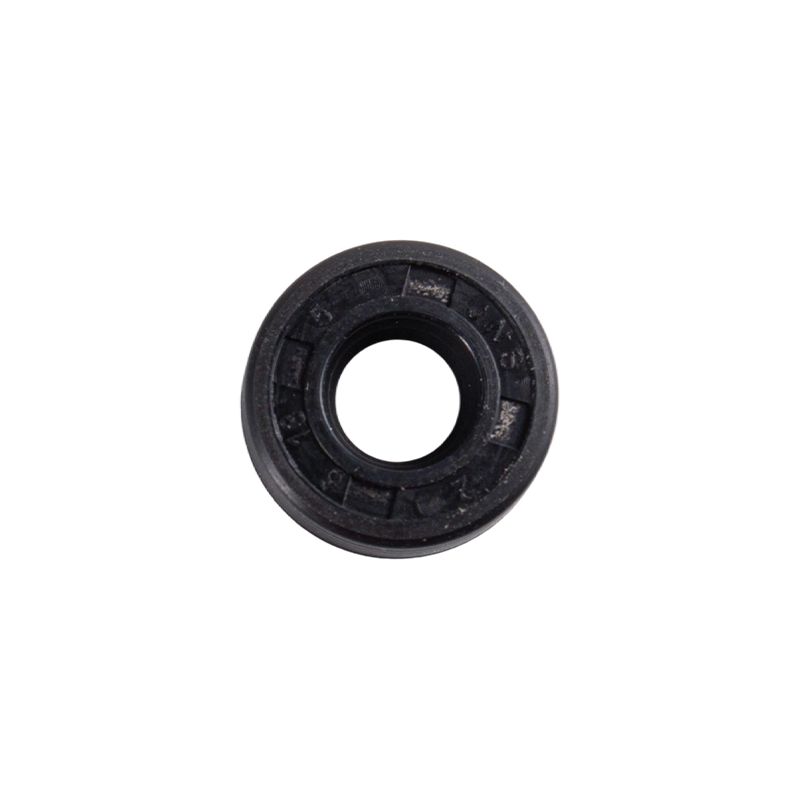
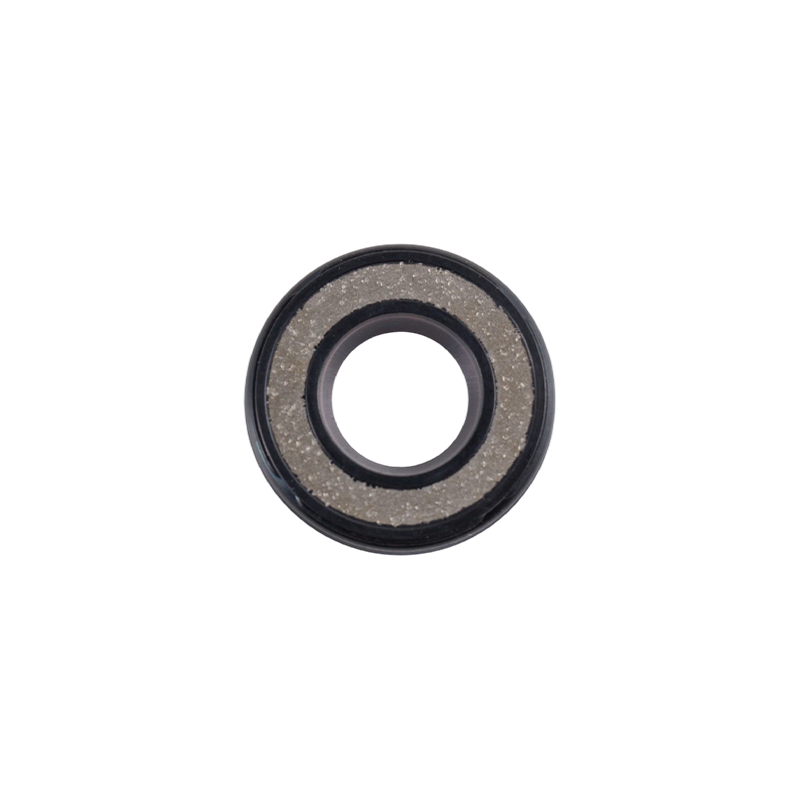
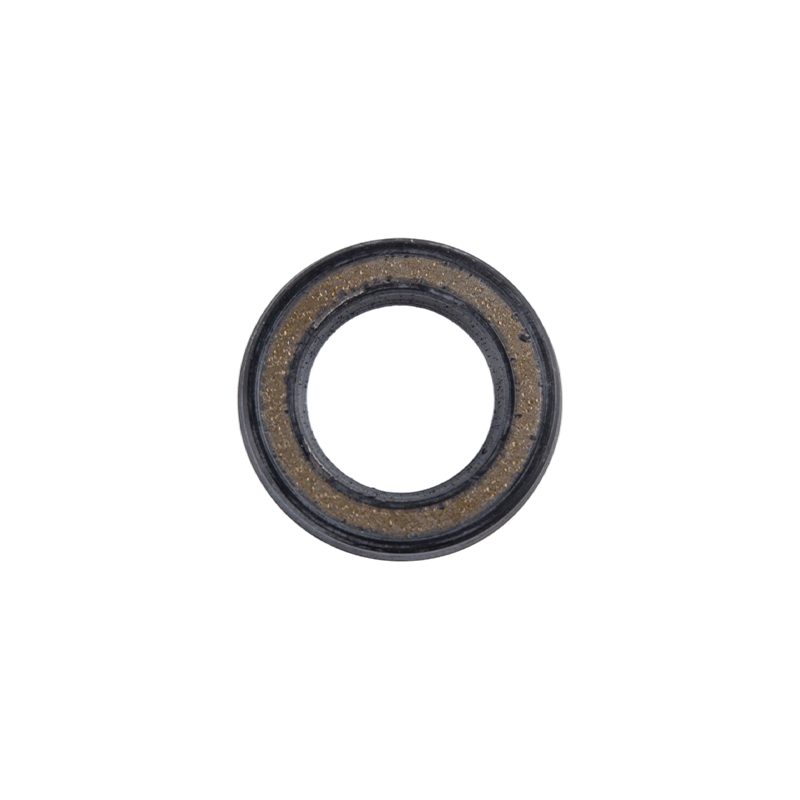
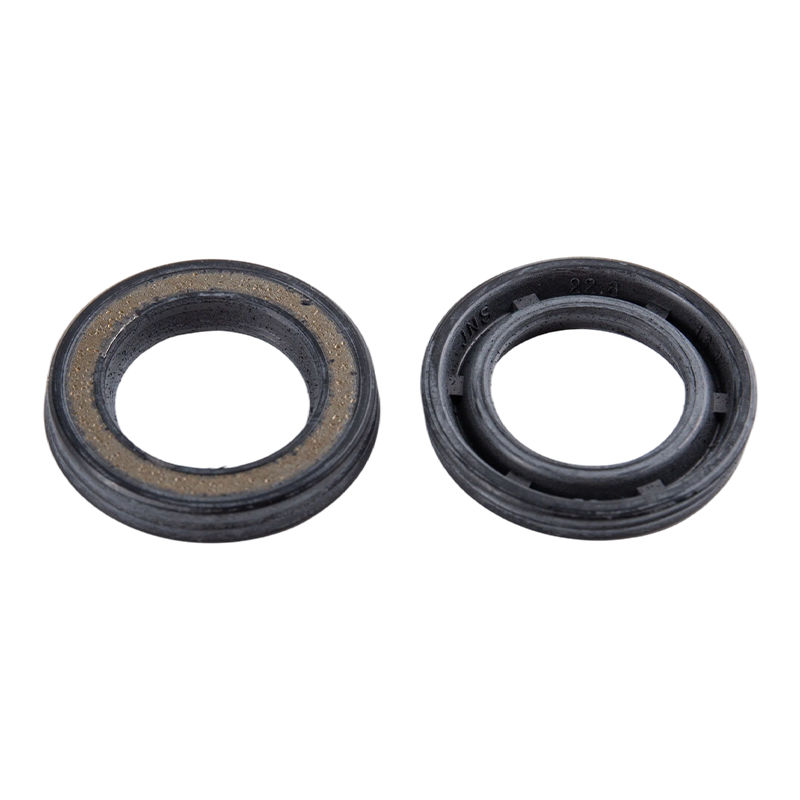
Reliable sealing is essential in any pneumatic actuator, gas spring, damper, or compact mechanical assembly. Even a small seal must maintain contact under movement, resist wear, accommodate dimensional variation, and support consistent performance throughout the service life of the equipment. The 10.6 Series Standard Piston Seal is designed as a compact Y-type oil seal ring for applications that require dependable sealing in a limited installation space.
With an outside diameter of 10.6 mm, an inside diameter of 2 mm, and a height of 3 mm, this seal is developed for small-scale pneumatic actuators and related inflation or damping systems. It is compatible with a 9.7 mm steel pipe inner diameter and a 2.5 mm piston rod diameter. The product also uses a 10 × 1.5 mm O-ring adapter, allowing it to work as part of a coordinated sealing structure rather than as an isolated sealing component.
Manufactured from NBR, the seal combines elastic recovery, practical oil resistance, abrasion resistance, and suitability for general pneumatic and damping environments. Its tight lip design supports reliable sealing around the moving rod, while its compact dimensions make it suitable for assemblies where available space is restricted.
The product code for this model is A-1-002. It is suitable for both inflation and damping applications, making it a flexible option for manufacturers of small gas springs, actuators, dampers, furniture mechanisms, household equipment, and other compact mechanical products.
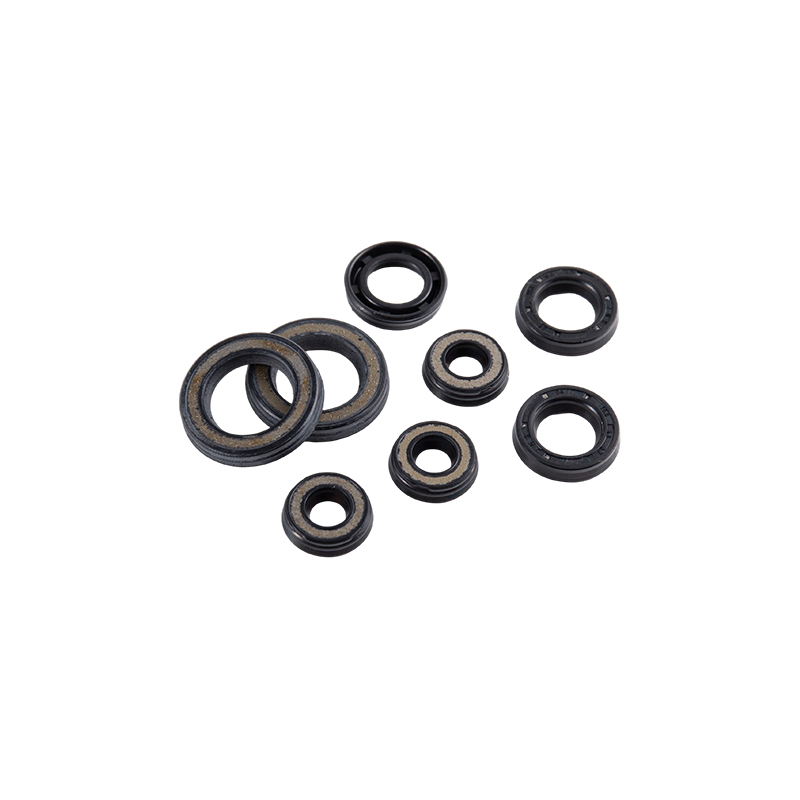
10.6 Series Standard Piston Seal
Product Overview
The 10.6 Series Standard Piston Seal is a precision sealing element intended for small-diameter piston rod systems. Its basic task is to prevent the unwanted passage of air, gas, oil, or other working media along the interface between a moving piston rod and the surrounding cylinder or pipe.
In a typical assembly, the piston rod moves repeatedly through the seal. This movement can create friction, heat, and gradual material wear. At the same time, the seal must remain sufficiently flexible to maintain contact with the rod surface. If the sealing lip is too loose, leakage may occur. If it is too tight, friction can increase and the rod may experience unnecessary resistance. The geometry and material selection of the 10.6 Series Standard Piston Seal are intended to provide a practical balance between sealing tightness and smooth operation.
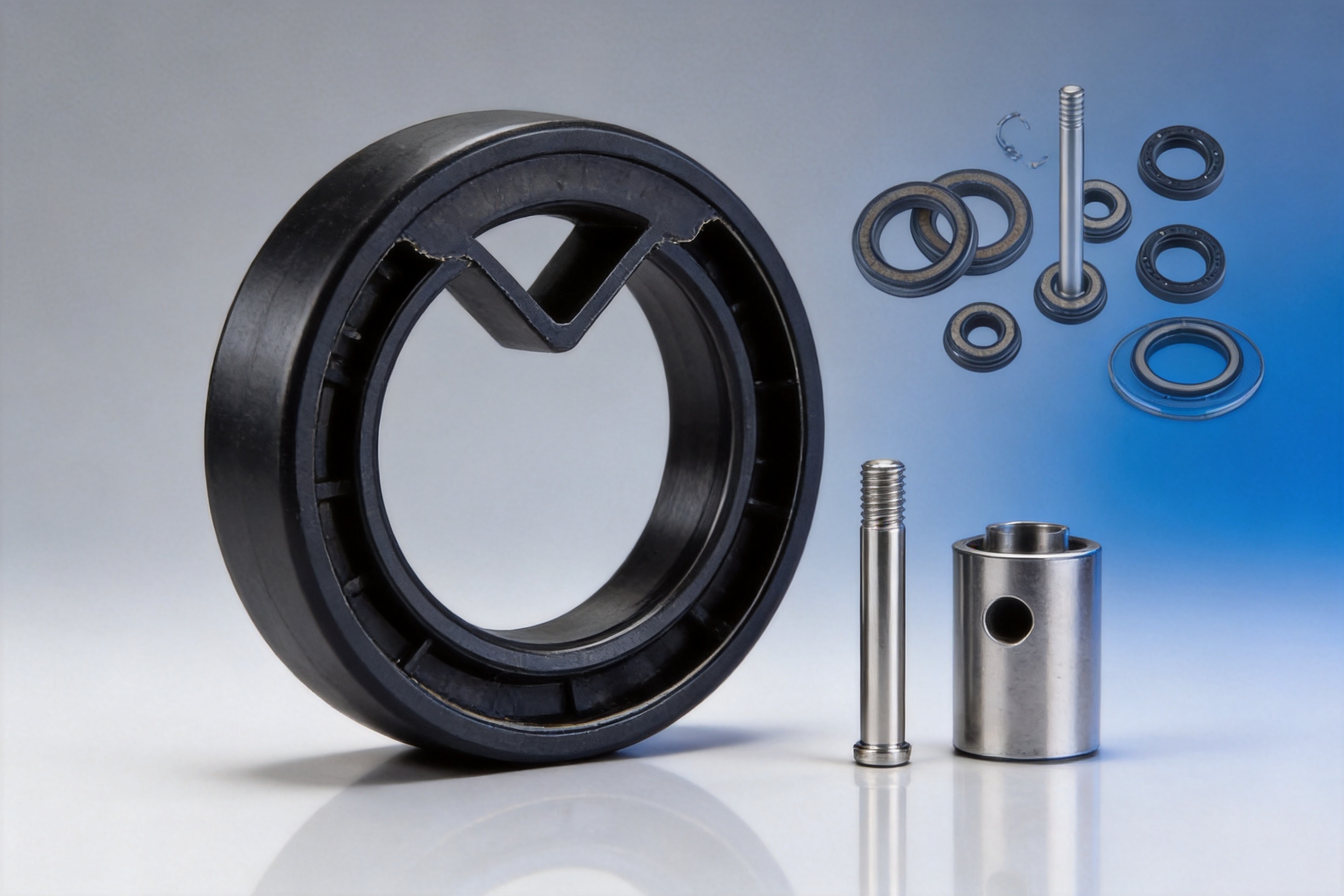
The seal is categorized as a Y-type oil seal ring. The Y-shaped sealing profile is widely used because it can create an effective sealing line while allowing the lip to respond to pressure and movement. In suitable operating conditions, pressure can help press the sealing lip against the mating surface, supporting sealing performance without requiring an excessively tight static fit.
The compact design is particularly valuable in miniature or space-constrained systems. Many small pneumatic and damping products cannot accommodate a large conventional seal. A seal with an outside diameter of 10.6 mm can fit into a narrow housing while still providing a dedicated sealing interface around a 2.5 mm piston rod.
Key Product Data
| Product Name | 10.6 Series Standard Piston Seal |
| Product Category | Y-Type Oil Seal Ring |
| Product Code | A-1-002 |
| Product Specification | 10.6 × 2 × 3 mm |
| Outside Diameter | 10.6 mm |
| Inside Diameter | 2 mm |
| Height | 3 mm |
| O-Ring Adapter | 10 × 1.5 mm |
| Compatible Steel Pipe Inner Diameter | 9.7 mm |
| Compatible Piston Rod Diameter | 2.5 mm |
| Material | NBR |
| Application Note | Suitable for inflation and damping |
Dimensions should always be checked against the actual housing, groove, piston rod, surface finish, and operating conditions before production use. The figures above define the standard product configuration, while application-specific requirements may require technical review or a customized design.
How the Seal Supports Reliable Operation
Tight Lip Sealing
The most important working feature of the product is its sealing lip. A properly formed lip maintains contact with the piston rod and helps reduce the movement of gas, air, or oil through the clearance between components. The tight lip structure is especially important in compact systems, where even minor leakage can reduce efficiency or cause a noticeable change in operating behavior.
In a pneumatic actuator, leakage may lead to reduced force, slower movement, or failure to hold a load. In a damper or gas spring, leakage may affect extension speed, resistance, or load support. By creating a controlled sealing interface, the 10.6 Series Standard Piston Seal helps manufacturers maintain more stable product performance.
The lip must also be flexible enough to accommodate normal movement. NBR provides the elastic behavior needed for the seal to recover its shape after deformation. This supports continuous contact with the rod during repeated operation when the product is used within its intended design conditions.
Wear Resistance
Repeated sliding contact is one of the main causes of seal failure. Every operating cycle creates friction between the sealing lip and the piston rod. If the material wears too quickly, the lip may lose its shape, the contact pressure may decline, and leakage may increase.
The 10.6 Series Standard Piston Seal is made from NBR, a widely used elastomer for general-purpose sealing applications. NBR is known for its practical balance of mechanical strength, elasticity, abrasion resistance, and compatibility with many mineral-oil-based media. These characteristics make it suitable for a broad range of pneumatic and damping assemblies.
The seal’s wear resistance is supported not only by the elastomer itself but also by the relationship between material formulation, profile geometry, molding accuracy, and mating surface condition. A well-designed lip can distribute contact more effectively and avoid unnecessary stress concentrations. Consistent manufacturing helps ensure that the sealing edge remains uniform from one part to the next.
Compact Installation
Small actuators and dampers often have strict dimensional limitations. The sealing component must fit inside a narrow bore without interfering with the piston, guide, retaining structure, or external housing. The 10.6 mm outside diameter and 3 mm height of this product provide a compact configuration for small assemblies.
A compact seal can help product designers reduce the overall size of an actuator or use more available space for structural components. It may also support lighter products, simplified assemblies, and smaller installation footprints. These benefits are important in furniture hardware, home appliances, medical equipment, and other applications where space, appearance, and weight are significant design considerations.
Easy Installation
Installation efficiency has a direct effect on production cost and assembly quality. A seal that is difficult to install may be twisted, cut, stretched, or incorrectly positioned. Such defects can remain hidden until the finished product is tested or placed into service.
The 10.6 Series Standard Piston Seal is designed for practical installation in compatible compact sealing structures. Its standardized dimensions and associated O-ring adapter help manufacturers plan the groove, housing, and assembly process. Correct installation still requires appropriate tools, clean surfaces, suitable lubrication where permitted, and careful control of insertion force.
For high-volume manufacturing, a seal that can be installed consistently is valuable because it reduces assembly variation. It can also make operator training easier and improve the repeatability of final product testing.
Material Advantages of NBR
NBR, or nitrile butadiene rubber, is selected for many sealing applications because it offers a useful combination of elasticity and resistance to common industrial media. For the 10.6 Series Standard Piston Seal, NBR provides the flexible sealing behavior required for a small moving-lip component.
Elastic Recovery
When a seal is installed, its profile is normally compressed or deformed to create contact with the surrounding parts. During operation, the lip may also flex as the piston rod moves. Elastic recovery helps the seal return toward its original shape and maintain contact after temporary deformation.
This characteristic is particularly important in a small seal because the sealing area is limited. A loss of elasticity may quickly reduce contact pressure and lead to leakage. NBR’s practical resilience supports stable sealing when the product is used within its intended temperature, pressure, speed, and media conditions.
Mechanical Strength
Seals may be exposed to installation forces, friction, pressure changes, and repeated movement. The material must resist tearing and excessive deformation during these events. NBR is commonly used where a balance between flexibility and mechanical durability is required.
The final performance of an NBR seal depends on its formulation and processing conditions. Different formulations can be developed for different requirements, such as improved hardness, enhanced low-temperature flexibility, better oil resistance, or altered compression behavior. When an application needs a material other than standard NBR, technical consultation can determine whether HNBR, FPM, or another elastomer is more appropriate.
General Oil and Grease Compatibility
The term oil seal ring reflects the product’s role as a barrier against the movement of fluids and lubricants. NBR is generally suitable for many mineral-oil-based lubricants and commonly encountered industrial oils. However, compatibility must be assessed according to the actual medium, temperature, concentration, pressure, and exposure duration.
Manufacturers should not assume that one elastomer is suitable for every chemical environment. Strong solvents, aggressive chemicals, high-temperature fluids, ozone-rich conditions, and specialized gases may require another compound. For standard pneumatic and damping applications using compatible media, NBR offers an economical and practical starting point.
Application Areas
Small-Scale Pneumatic Actuators
The product is specifically suited to small pneumatic actuators that use a narrow piston rod and compact cylinder structure. In these systems, the seal helps retain compressed air and supports the transfer of pneumatic force into controlled linear motion.
Small actuators are used in automation equipment, light machinery, positioning mechanisms, miniature clamps, and compact control systems. Their performance depends on low leakage, repeatable movement, and stable friction. A properly matched piston seal can contribute to all three requirements.
Because the product is designed around a 2.5 mm piston rod and a 9.7 mm steel pipe inner diameter, it is most appropriate for assemblies built around these dimensions or for designs that have been verified to accommodate the same sealing arrangement.
Gas Springs and Furniture Mechanisms
Compact gas springs are widely used in chairs, cabinets, adjustable furniture, lids, supports, and positioning mechanisms. These products must deliver predictable movement while remaining compact and durable. A small piston seal helps retain the internal gas and support the intended force characteristics.
Furniture applications may involve frequent cycling, variable loads, and diverse environmental conditions. The seal must therefore be able to withstand repeated movement and maintain its shape during the expected product life. The 10.6 Series Standard Piston Seal is suitable for this type of compact gas spring or damping structure when the application conditions match NBR capabilities.
Damping Systems
The product is noted as suitable for damping. In a damper, the seal helps separate or control working media while the piston rod moves through the cylinder. Consistent sealing supports controlled resistance and reduces the risk of performance changes caused by fluid or gas leakage.
Damping systems can be found in furniture hardware, automotive components, appliance doors, storage mechanisms, and industrial equipment. The required sealing performance varies according to piston speed, pressure, temperature, medium, and duty cycle. Product selection should therefore be supported by testing under representative conditions.
Home Appliances and Household Equipment
Compact sealing components are often used in household equipment where smooth movement, controlled opening, and quiet operation are important. Examples may include lid supports, adjustable mechanisms, small dampers, and gas-assisted structures.
The small dimensions of the 10.6 Series Standard Piston Seal can support product designs that require a discreet internal sealing component. Its NBR material and standard configuration may also provide a cost-effective option for high-volume household products, subject to compatibility verification.
Medical and Light Equipment
Sealing technology is used in various medical and light equipment mechanisms, including positioning systems, compact actuators, and controlled-motion assemblies. In these applications, cleanliness, traceability, material suitability, and validation are especially important.
The standard seal can be evaluated for appropriate non-critical mechanical applications. If a product is intended for a regulated medical use, the equipment manufacturer must confirm all applicable material, biocompatibility, cleanliness, quality, and regulatory requirements before approval.
Advantages Compared with General Alternative Seals
Different seal profiles and materials are available in the market, and the best choice depends on the operating environment. The advantages of the 10.6 Series Standard Piston Seal are most evident when a compact, general-purpose Y-type profile is required for a small rod and compatible cylinder structure.
Purpose-Built Compact Geometry
Some general seals are adapted from larger product families and may not provide an efficient fit in small assemblies. An oversized seal can occupy unnecessary space, create excessive friction, or require a larger housing. An undersized or poorly matched seal can fail to develop sufficient contact.
The 10.6 Series configuration is organized around a specific outside diameter, inside diameter, height, rod diameter, and pipe inner diameter. This dimensional relationship helps engineers develop a compatible sealing system rather than selecting a part based only on a nominal diameter.
Balanced Sealing and Movement
A static O-ring may be suitable for a fixed joint, but a moving piston rod often requires a profile designed for dynamic service. The Y-type lip structure is intended to support movement while maintaining a sealing edge. Compared with using an unsuitable static ring in a dynamic location, a purpose-designed lip seal can provide better control of friction and leakage.
The product also includes an O-ring adapter specification of 10 × 1.5 mm. This allows the sealing structure to combine the dynamic lip function with an additional sealing element where the design requires it. The combination can help designers create a more complete barrier around the working chamber.
Practical NBR Performance
High-performance elastomers can be necessary in demanding environments, but they may increase material cost and require different processing or installation practices. For standard pneumatic and damping conditions, NBR often provides an efficient balance between performance and economy.
The use of NBR makes the product suitable for manufacturers seeking a dependable general-purpose seal without automatically selecting a premium material for conditions that do not require it. If the operating environment includes high heat, aggressive chemicals, or unusual gas exposure, alternative compounds should be considered through technical evaluation.
Standardized Product Identification
The product code A-1-002 and the defined 10.6 × 2 × 3 mm specification simplify communication between the seal supplier, engineering department, purchasing team, and production line. Clear identification helps reduce the risk of ordering an incorrect size and supports repeat procurement.
Standardized identification is also helpful when a manufacturer maintains multiple actuator or damper models. Engineers can associate a particular seal with a defined application, bill of materials, inspection plan, and replacement procedure.
Suitability for Inflation and Damping
Some sealing components are optimized for one narrow function. This model is identified as suitable for both inflation and damping, which provides greater flexibility for manufacturers that produce related product families. A common seal platform can simplify inventory management and reduce the number of different components required across compatible designs.
This advantage does not eliminate the need for application testing. Inflation systems and damping systems may have different pressure profiles, speeds, lubricants, and duty cycles. The benefit is that the same basic product can be considered for both functions when the technical conditions are within its validated range.
Advanced Manufacturing and Engineering Strengths
The performance of a molded elastomer seal depends on more than the nominal material name. Dimensional control, compound preparation, mold design, curing, inspection, packaging, and technical support all affect the final result. The manufacturer behind this product focuses on sealing technology for gas springs, dampers, and related O-ring products.
Specialized Sealing Technology Focus
Ningguo Jnsseals Sealing Technology Co., Ltd. is a high-tech enterprise founded in 2019 and headquartered in Anhui, China. Its focus on sealing technology for gas springs and dampers gives the company practical experience in applications where compact seals must operate under repeated motion and controlled pressure.
A focused product strategy can be beneficial compared with a general rubber manufacturer that treats seals as only one of many unrelated product categories. Understanding the complete gas spring or damper assembly allows the manufacturer to consider the relationship between seal geometry, piston rod, cylinder, guide structure, lubricant, and operating cycle.
Research and Development Capability
The company emphasizes research, development, and application of sealing technology. For customers, this means the supplier can participate in more than routine part delivery. Engineering support may include reviewing dimensions, discussing operating conditions, evaluating material choices, and assisting with customized sealing solutions.
Research and development are especially important when a standard seal is close to meeting a requirement but needs modification. Changes may involve lip geometry, hardness, material compound, dimensional tolerance, surface finish, or adapter configuration. A supplier with product development capability can help convert an application problem into a defined engineering project.
Production Equipment and Process Control
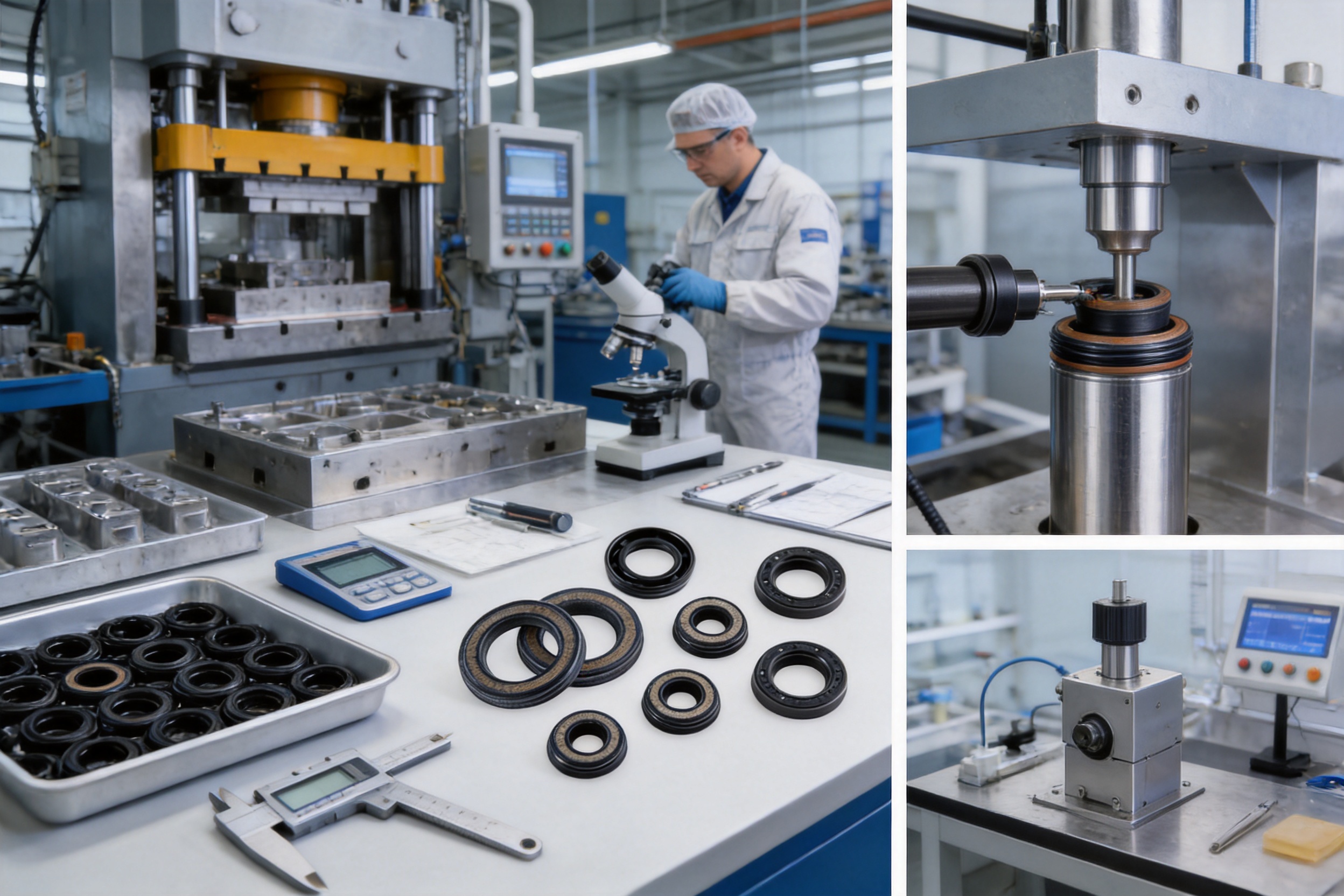
Advanced production equipment supports repeatable molding and processing of elastomer products. In a seal manufacturing process, control begins with material preparation. The rubber compound must be mixed consistently so that the finished material has stable hardness, elasticity, tensile properties, and resistance characteristics.
The compound is then formed through a controlled molding and vulcanization process. Mold temperature, pressure, curing time, material quantity, and cavity condition all influence the final part. For small precision seals, even a minor flash defect, dimensional deviation, or incomplete cure can affect installation and sealing performance.
After molding, parts may undergo trimming, visual inspection, dimensional inspection, and additional testing according to customer requirements. Process control should address critical features such as outside diameter, inside diameter, height, lip condition, surface quality, flash, concentricity, and material consistency.
Modern production equipment can improve repeatability, but equipment alone does not guarantee product quality. Effective manufacturing also requires documented procedures, trained personnel, maintenance, mold management, inspection standards, and feedback from application testing.
Application-Oriented Product Development
The product specification includes not only seal dimensions but also compatible steel pipe and piston rod dimensions. This indicates an application-oriented approach. Instead of treating the seal as an isolated ring, the design relates it to the surrounding mechanical structure.
This approach can reduce engineering errors because sealing performance depends on the complete interface. Groove dimensions, rod diameter, pipe bore, surface roughness, alignment, lubrication, pressure, and movement speed all influence results. A supplier that discusses these factors can provide more useful support than one that supplies a dimension without considering installation conditions.
Customized Technical Services
The company provides customized sealing solutions, including product design, testing, and technical consultation. Customization can be valuable when a customer needs a different size, material, profile, pressure range, temperature range, or installation arrangement.
For example, a customer may have a compact actuator with a rod diameter close to but not identical to the standard 2.5 mm size. Another customer may require an HNBR or FPM compound because the operating temperature or medium exceeds the practical range of standard NBR. A third customer may need a modified lip to reduce friction during high-cycle operation.
Technical consultation should begin with a clear application description. Useful information includes the working medium, pressure, temperature, rod speed, stroke length, cycle frequency, lubricant, mating material, surface finish, expected service life, and installation method. The more complete the data, the more accurately the sealing design can be evaluated.
Professional Technical Service Team
A responsive technical service team can help customers shorten development time and avoid repeated trial-and-error. Support may include interpreting drawings, checking the relationship between the seal and housing, suggesting suitable materials, reviewing test results, and coordinating modifications.
This level of support is an important advantage for original equipment manufacturers and component distributors. It can also benefit smaller engineering teams that do not have extensive internal elastomer expertise.
Manufacturing Process from Compound to Finished Seal
Material Selection and Compound Preparation
The manufacturing process begins with selecting a suitable elastomer and preparing a consistent compound. For the standard product, NBR is used because of its combination of elasticity, wear resistance, and general oil compatibility.
Compound preparation requires accurate weighing and controlled mixing of the base polymer, fillers, plasticizers, curing agents, and other necessary ingredients. Uniform dispersion is important because material inconsistency can produce variations in hardness, compression behavior, and durability.
For customized products, the formulation may be adjusted after considering the working medium, temperature, pressure, dynamic movement, and expected service life. A compound designed for a high-temperature environment may differ significantly from one intended for standard room-temperature pneumatic service.
Mold Design and Preparation
The mold defines the final profile of the Y-type seal. The lip angle, sealing edge, internal support areas, parting lines, and dimensional features must be designed carefully. A well-maintained mold helps produce a clean and repeatable sealing edge.
Before production, the mold should be inspected for cleanliness, wear, damage, and dimensional condition. Residue or damage in the cavity can create surface defects or flash. For a small seal, the impact of a small mold defect can be proportionally significant.
Molding and Vulcanization
During molding, the prepared rubber compound is placed into the mold and subjected to controlled pressure and heat. Vulcanization transforms the compound into an elastic finished material with the required mechanical properties.
Process parameters must be managed carefully. Insufficient curing may produce a weak or overly soft part, while excessive curing may reduce elasticity or create undesirable hardness. Temperature distribution across the mold and consistency between production cycles are important for stable quality.
Deflashing and Finishing
After vulcanization, excess rubber may remain along the mold parting line. Deflashing and finishing remove unwanted material while preserving the lip edge and dimensional profile. Care is necessary because excessive trimming or mechanical damage can compromise the sealing function.
Finished seals should have a clean surface without unacceptable cuts, cracks, blisters, embedded contamination, severe flash, or deformation. The sealing lip deserves particular attention because it directly contacts the piston rod.
Inspection and Testing
Inspection may include visual checks, dimensional measurement, hardness testing, material verification, and functional testing. The exact inspection plan depends on customer requirements and the intended application.
Dimensional inspection should confirm the outside diameter, inside diameter, height, and other critical features. The 10.6 × 2 × 3 mm specification provides the basic reference for the standard product. Measurement equipment should be suitable for small elastomer parts and should account for the flexible nature of rubber.
Functional testing may evaluate leakage, friction, installation behavior, repeated cycling, and resistance to the intended medium. For a gas spring or damper manufacturer, testing a seal in a representative assembly can provide more meaningful information than testing the seal alone.
Packaging and Storage
Correct packaging helps prevent deformation, contamination, sunlight exposure, and accidental damage during transportation. Elastomer seals should be stored in a clean, dry environment away from ozone-generating equipment, direct sunlight, excessive heat, and chemicals that may affect the material.
Long-term storage conditions can influence elastomer performance. Customers should follow appropriate inventory rotation practices and inspect seals before installation, especially when parts have been stored for an extended period.
Installation Recommendations
Correct installation is essential for achieving the intended performance of the 10.6 Series Standard Piston Seal. The housing, rod, and seal should be clean before assembly. Metal particles, dust, sharp edges, or machining residue can cut the lip or create a leakage path.
The piston rod should have a suitable surface condition and should not contain burrs, dents, corrosion, or deep scratches. A damaged rod can quickly wear the seal or cut the sealing edge during the first few operating cycles.
Installation tools should be appropriately sized and free from sharp edges. The seal should not be forced over an unsuitable shoulder or stretched beyond its elastic capacity. If lubrication is permitted by the equipment design, a compatible lubricant can reduce installation friction and help protect the lip during initial movement.
The seal must be oriented correctly. A Y-type seal has a functional profile, and reversing the seal may reduce its ability to retain pressure or may expose the lip to an unsuitable direction of movement. Assembly personnel should follow the approved drawing and work instructions.
The O-ring adapter should also be installed without twisting, cutting, or excessive stretching. The adapter and main seal must be seated correctly in their respective positions. After assembly, the mechanism should be checked for smooth movement, abnormal resistance, and leakage.
Selection and Validation Guidance
Before selecting the product for serial production, engineers should compare the standard specification with the actual assembly. The key dimensions include the housing or pipe inner diameter, piston rod diameter, seal groove, available installation height, and any retaining features.
Operating conditions should also be documented. These include minimum and maximum pressure, temperature range, piston speed, stroke, cycle frequency, working medium, lubricant, environmental exposure, and expected service life.
A laboratory or production validation program may include static leakage testing, dynamic cycling, temperature exposure, pressure variation, installation trials, and post-test inspection. The purpose is to confirm that the seal performs adequately in the actual product rather than relying only on general material properties.
Where the application is new or demanding, prototype testing should be completed before committing to large-volume production. Testing can reveal issues related to rod surface finish, misalignment, excessive compression, lubricant compatibility, or unexpected thermal effects.
Quality and Supply Advantages for OEM Customers
For original equipment manufacturers, the value of a seal supplier includes more than the individual part. Consistent product identification, technical communication, customization capability, and stable production support all influence the total cost of ownership.
A standard product such as A-1-002 can simplify procurement when the same seal is used across compatible models. Consistent dimensions can reduce assembly adjustments and help maintain uniform performance between production batches.
When a customer requires a modified product, the manufacturer’s R&D and testing capabilities can support a more organized development process. Instead of changing several unrelated components, the customer may work with the supplier to adjust the seal profile or material while preserving the existing assembly as much as possible.
Long-term cooperation can also improve feedback. Field performance, returned parts, assembly observations, and test data can be reviewed to identify opportunities for material or geometry improvement. This continuous improvement approach is particularly useful for products that operate through many cycles.
Frequently Asked Questions
What type of seal is the 10.6 Series Standard Piston Seal?
It is a Y-type oil seal ring designed for compact dynamic sealing applications. It is used around a moving piston rod and is suitable for small pneumatic actuators and damping structures when the dimensions and operating conditions are compatible.
What are the standard dimensions?
The standard product specification is 10.6 × 2 × 3 mm. The outside diameter is 10.6 mm, the inside diameter is 2 mm, and the height is 3 mm. The compatible steel pipe inner diameter is 9.7 mm, and the compatible piston rod diameter is 2.5 mm.
What material is used?
The standard product is made from NBR, or nitrile butadiene rubber. NBR provides useful elasticity, mechanical strength, abrasion resistance, and general compatibility with many mineral-oil-based media.
Can it be used for both inflation and damping?
Yes. The product information identifies it as suitable for both inflation and damping. However, each application should be checked for pressure, temperature, speed, working medium, lubrication, and service-life requirements.
What is the O-ring adapter size?
The specified O-ring adapter is 10 × 1.5 mm. The adapter should be installed in the correct location and checked for compatibility with the housing and sealing design.
Is this seal suitable for high-temperature or aggressive chemical applications?
Standard NBR should not automatically be selected for high-temperature, highly chemical, or otherwise extreme environments. HNBR, FPM, or another specialized compound may be more appropriate. The final choice should be based on the actual medium, temperature, pressure, and exposure time.
How can leakage be prevented during installation?
Use clean components, remove burrs and sharp edges, protect the lip during insertion, orient the seal correctly, avoid twisting the adapter, and verify that the rod and housing dimensions are within the approved design. Functional leakage testing is recommended after assembly.
Can the manufacturer provide customized sealing solutions?
Yes. The manufacturer provides customized sealing solutions that may include product design, testing, and technical consultation. Customers should provide detailed drawings and operating data so that the proposed solution can be evaluated accurately.
What industries can use this product?
Potential industries include pneumatic equipment, gas springs, dampers, automotive components, furniture hardware, home appliances, medical equipment, construction products, and other compact mechanical systems. Suitability depends on the specific application conditions.
What is the product code?
The product code is A-1-002. Using the code together with the complete dimensional specification helps ensure accurate ordering and inventory control.
Conclusion
The 10.6 Series Standard Piston Seal is a compact NBR Y-type oil seal ring developed for small pneumatic actuators, gas springs, dampers, and related mechanisms. Its 10.6 mm outside diameter, 2 mm inside diameter, 3 mm height, 2.5 mm piston rod compatibility, and 10 × 1.5 mm O-ring adapter provide a defined configuration for space-constrained sealing systems.
Its key advantages include tight lip sealing, practical wear resistance, compact installation, easy assembly, and suitability for both inflation and damping. Compared with general-purpose seals that may not be designed for a particular dynamic interface, this product offers a more application-oriented relationship between the seal, piston rod, pipe, and adapter.
The manufacturer’s focus on gas spring and damper sealing technology, together with research and development capability, advanced production equipment, customized design, testing, and technical consultation, provides additional value to OEM customers. These strengths can support both standard procurement and application-specific development.
For the best results, customers should validate the seal against the complete mechanical system. Correct dimensions, rod condition, groove design, material compatibility, pressure, temperature, speed, lubrication, and installation procedures all contribute to final performance. When these factors are properly controlled, the 10.6 Series Standard Piston Seal can provide a practical and reliable sealing solution for compact pneumatic and damping products.
References
1. Manufacturer Product Specification, 10.6 Series Standard Piston Seal, Product Code A-1-002.
2. Manufacturer Technical Information, NBR/HNBR/FPM O-Ring and Sealing Product Development.
3. General Engineering Principles for Elastomeric Dynamic Seals and Oil Seal Rings.
4. Industrial Guidelines for Pneumatic Actuator and Gas Spring Seal Selection.
5. Rubber Technology References on Nitrile Butadiene Rubber Properties, Processing, and Applications.
6. General Quality Control Practices for Molded Rubber Components.
Product: 10.6 Series Standard Piston Seal
PREV:Quick-Opening Valve High-Resilience Seal: Performance, Design, and Manufacturing Advantages
NEXT:High-Performance HNBR Dual-Function Seal for Damping and Inflation Applications
NEXT:High-Performance HNBR Dual-Function Seal for Damping and Inflation Applications



Want to know more
about us?
about us?

Precision sealing for gas springs and dampers. Durable, wear-resistant, and built for long-life performance in demanding applications.
Product Categories
Quick Links
Contact Us
-
Email: jns@jnsseals.cn

-
Manager Gong: +86-18563770820

-
Manager Wang: +8615357558902
-
No. 5, Meilin Avenue, Meilin Industrial Development Zone, Ningguo City, Anhui Province, China

