

 English
 русский
 Deutsch
 Türk
Türk 中文简体
中文简体
25.9 mm Precision-Gap Y-Type Oil Seal Ring for Gas Springs and Dampers
25.9 mm Precision-Gap Y-Type Oil Seal Ring for Gas Springs and Dampers
25.9 mm Precision-Gap Y-Type Oil Seal Ring for Gas Springs and Dampers
25.9 mm Precision-Gap Y-Type Oil Seal Ring for Gas Springs and Dampers
25.9 mm Precision-Gap Y-Type Oil Seal Ring for Gas Springs and Dampers
25.9 mm Precision-Gap Y-Type Oil Seal Ring for Gas Springs and Dampers
25.9 mm Precision-Gap Y-Type Oil Seal Ring for Gas Springs and Dampers
25.9 mm Precision-Gap Y-Type Oil Seal Ring for Gas Springs and Dampers
25.9 mm Precision-Gap Y-Type Oil Seal Ring for Gas Springs and Dampers
25.9 mm Precision-Gap Y-Type Oil Seal Ring for Gas Springs and Dampers
25.9 mm Precision-Gap Y-Type Oil Seal Ring for Gas Springs and Dampers
25.9 mm Precision-Gap Y-Type Oil Seal Ring for Gas Springs and Dampers
25.9 mm Precision-Gap Y-Type Oil Seal Ring for Gas Springs and Dampers
25.9 mm Precision-Gap Y-Type Oil Seal Ring for Gas Springs and Dampers
25.9 mm Precision-Gap Y-Type Oil Seal Ring for Gas Springs and Dampers
25.9 mm Precision-Gap Y-Type Oil Seal Ring for Gas Springs and Dampers

Deng Yixuan — Domestic Sales Supervisor
Home / Author / Deng Yixuan — Domestic Sales Supervisor / 25.9 mm Precision-Gap Y-Type Oil Seal Ring for Gas Springs and Dampers
NEW Category
Contact us
25.9 mm Precision-Gap Y-Type Oil Seal Ring for Gas Springs and Dampers
Content
- 1 Introduction
- 2 Product Overview
- 3 Why the 25.9 mm Outside Diameter Matters
- 4 Y-Type Seal Geometry and Operating Function
- 5 NBR Material for General Sealing Applications
- 6 Application in Gas Springs
- 7 Application in Dampers
- 8 Advantages Compared with Generic Competitor Seals
- 9 Manufacturing Strengths Behind the Product
- 10 Quality and Production Consistency
- 11 Installation Considerations
- 12 Design and Purchasing Guidance
- 13 Industries and Potential Uses
- 14 Customization and Engineering Collaboration
- 15 Environmental and Service-Life Considerations
- 16 Why Work with a Specialized Sealing Manufacturer
- 17 Frequently Asked Questions
- 17.1 What type of seal is the A-1-033 product?
- 17.2 What are the main dimensions?
- 17.3 What pipe and piston rod sizes are associated with this seal?
- 17.4 What material is used?
- 17.5 What is the applicable force range?
- 17.6 Does the product include an O-ring adapter?
- 17.7 Can the seal be used in every gas spring?
- 17.8 What is the main advantage of the 25.9 mm size?
- 17.9 Is NBR suitable for high-temperature or aggressive chemical environments?
- 17.10 Can the manufacturer provide customized seals?
- 17.11 What should be checked before installation?
- 17.12 How can customers request technical assistance?
- 18 Conclusion
- 19 References
- 20 Product: 25.9mm Precision-Gap Seal
Introduction
Reliable sealing is essential in gas springs, dampers, adjustable mechanisms, and other compact systems where smooth movement, controlled force, and long service life are required. A seal that is slightly too large may create excessive friction, while a seal that is too small may allow gas or oil leakage, reduce force stability, and accelerate component wear. For this reason, precision in seal geometry is just as important as the choice of elastomer.
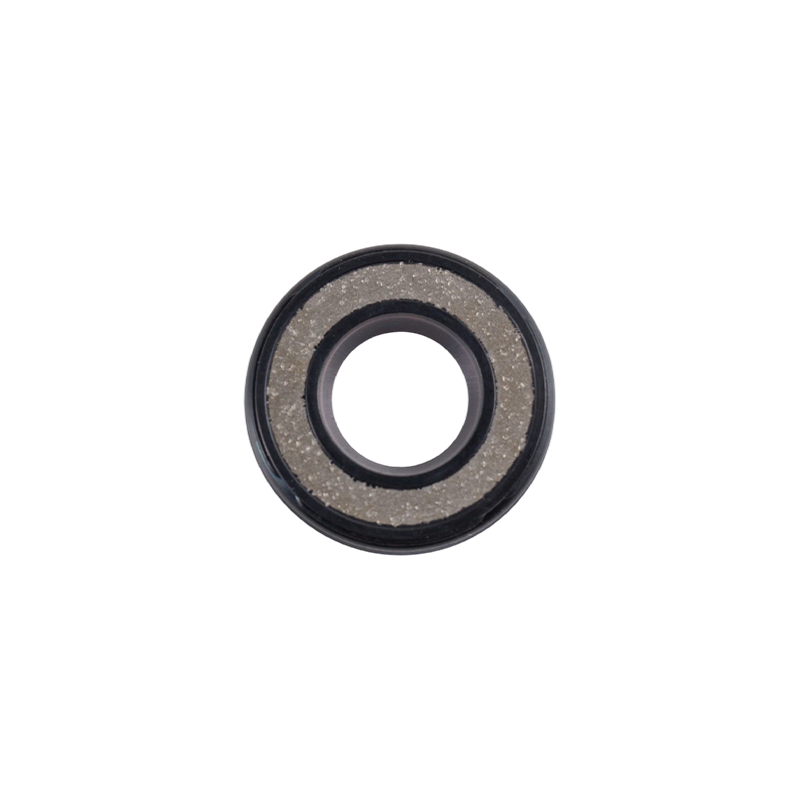
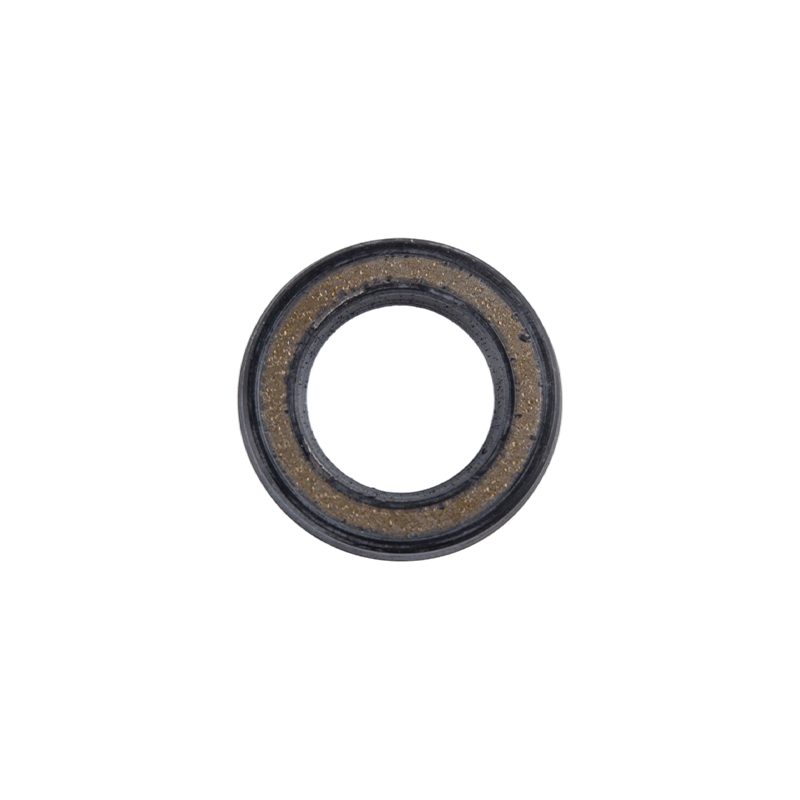
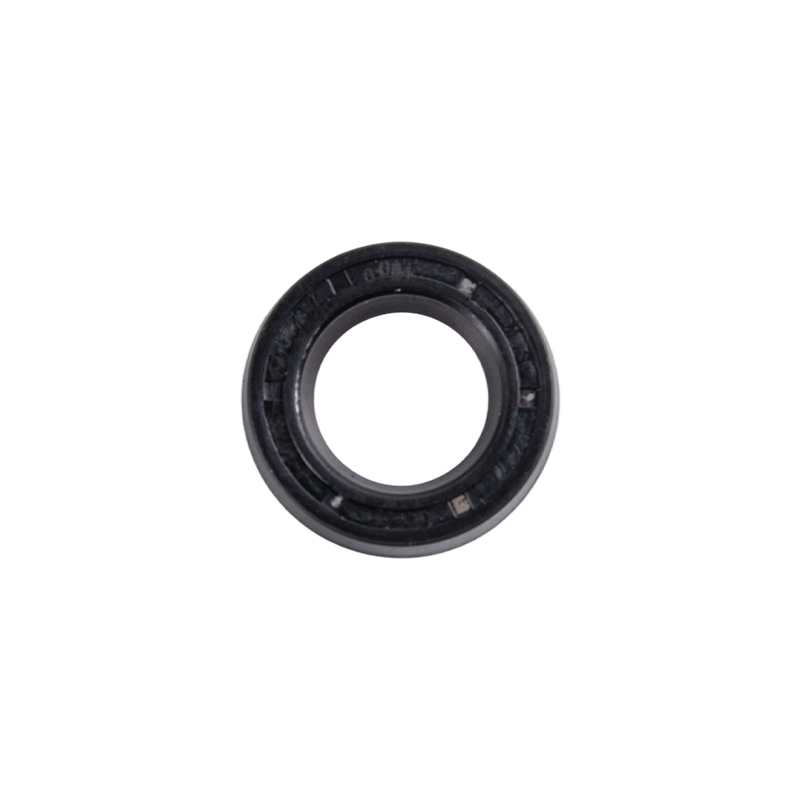
The 25.9 mm Precision-Gap Seal is a Y-type oil seal ring developed for applications requiring a carefully controlled fit within a 25 mm steel pipe and around a 10 mm piston rod. Its listed outside diameter is 25.9 mm, its inside diameter is 9.3 mm, and its height is 4 mm. The seal is manufactured from standard NBR and is designed for an applicable force range of 50–1400 N. An O-ring adapter measuring 25 × 2.4 mm is also specified for the related sealing arrangement.
With its fine-tuned 25.9 mm outside diameter, this seal is intended to reduce mechanical play and improve positioning accuracy. Rather than relying on a generic nominal-size seal, the product uses a dedicated dimensional configuration designed around a particular pipe-and-piston combination. This approach can help equipment manufacturers obtain a more consistent fit, predictable movement, and improved sealing performance.
The product code is A-1-033. It is part of a broader range of sealing products that includes Y-type oil seal rings, L-shaped oil seal rings, damping oil seals, O-shaped oil seal rings, and other miscellaneous sealing components. The product is manufactured by Ningguo Jnsseals Sealing Technology Co., Ltd., a China-based sealing technology enterprise specializing in gas spring, damper, and O-ring sealing solutions.
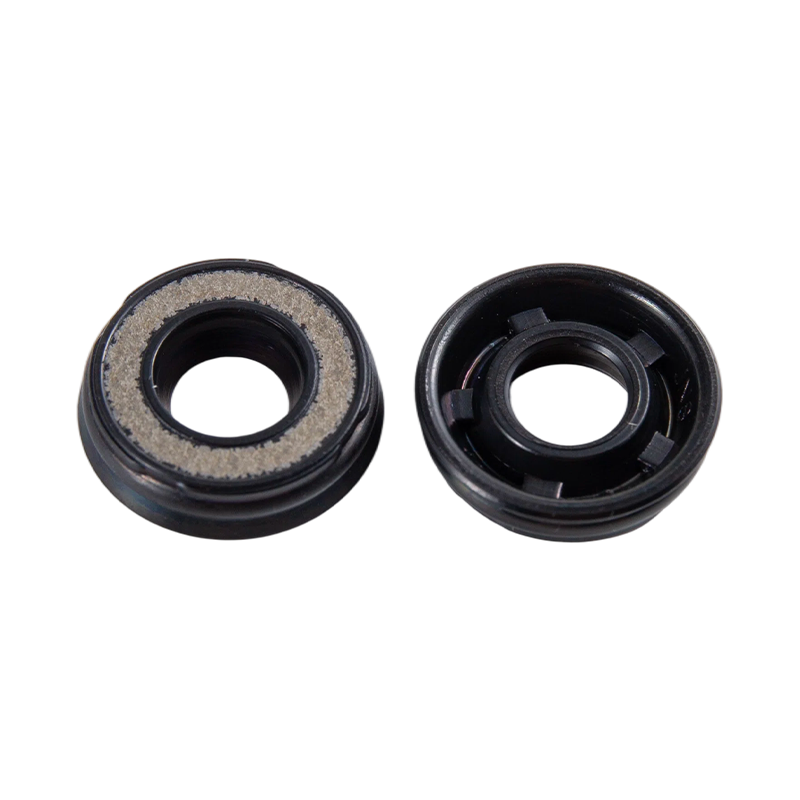
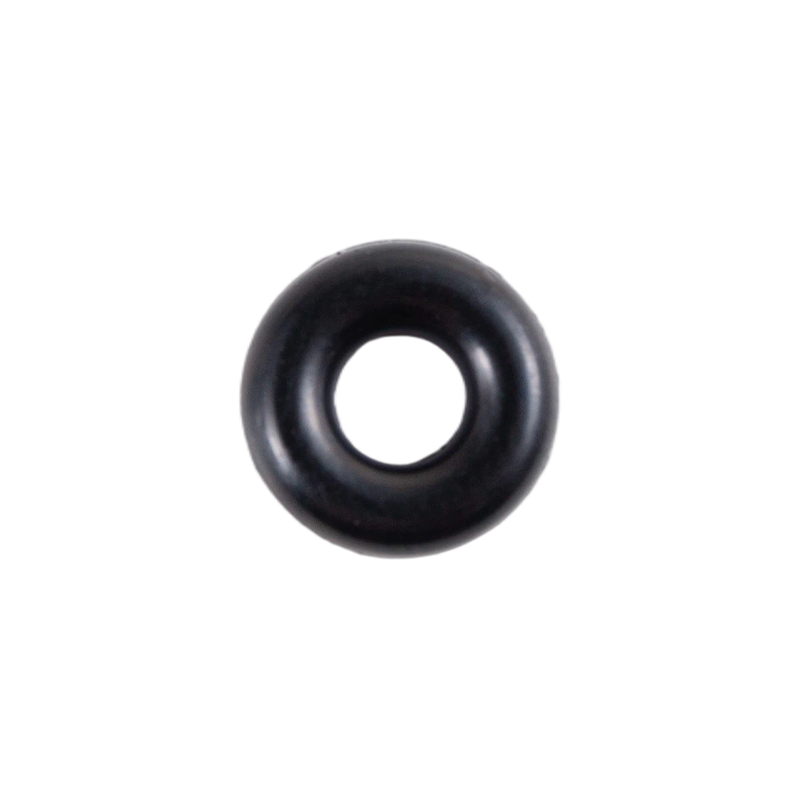
25.9mm Precision-Gap Seal
Product Overview
The 25.9 mm Precision-Gap Seal is a compact elastomeric sealing component intended for use in gas spring and damper assemblies. Its Y-type profile is designed to support sealing around a moving piston rod while maintaining a practical balance between sealing contact and operating friction. The product’s configuration is especially relevant to mechanisms where compact dimensions, controlled motion, and stable force are important.
| Product Item | Specification |
| Product Name | 25.9 mm Precision-Gap Seal |
| Product Code | A-1-033 |
| Seal Category | Y-Type Oil Seal Ring |
| Outside Diameter | 25.9 mm |
| Inside Diameter | 9.3 mm |
| Height | 4 mm |
| Product Specification | 26 × 9.3 × 4 mm |
| O-Ring Adapter | 25 × 2.4 mm |
| Applicable Design Force Range | 50–1400 N |
| Steel Pipe Inner Diameter | 25 mm |
| Piston Rod Diameter | 10 mm |
| Material | NBR |
The difference between the listed product specification of 26 × 9.3 × 4 mm and the stated outside diameter of 25.9 mm reflects the practical distinction between a rounded nominal dimension and a more precise working dimension. The 25.9 mm value is particularly important when evaluating the fit inside the specified 25 mm steel pipe. Buyers should always verify drawing tolerances, housing geometry, surface finish, lubrication conditions, and assembly requirements before production use.
Why the 25.9 mm Outside Diameter Matters
In a compact sealing assembly, dimensional control has a direct influence on sealing behavior. The outside diameter must provide sufficient contact with the housing to help prevent leakage around the outer circumference. At the same time, excessive interference can increase installation force, deform the seal, or create unwanted friction and distortion.
The 25.9 mm outside diameter is a fine-tuned dimension for a nominal 25 mm steel pipe inner diameter. This controlled difference can help establish a more stable radial fit than a broadly selected generic seal. When the seal is matched correctly to the housing, it may reduce unwanted movement between the seal and the pipe while helping maintain the intended position of the sealing element.
This precision is particularly useful in gas springs and dampers. These products often operate with a piston rod that must travel in a controlled line. If the sealing package shifts, tilts, or allows too much radial play, the piston rod may experience inconsistent guidance. A carefully selected seal can contribute to better alignment and more repeatable motion.
The product description emphasizes reduced mechanical play and improved positioning. These benefits are meaningful in applications such as adjustable chairs, vehicle components, furniture mechanisms, medical equipment, and industrial dampers. In each of these areas, a small change in friction or alignment can affect the user’s perception of quality and the equipment’s operating consistency.
Y-Type Seal Geometry and Operating Function
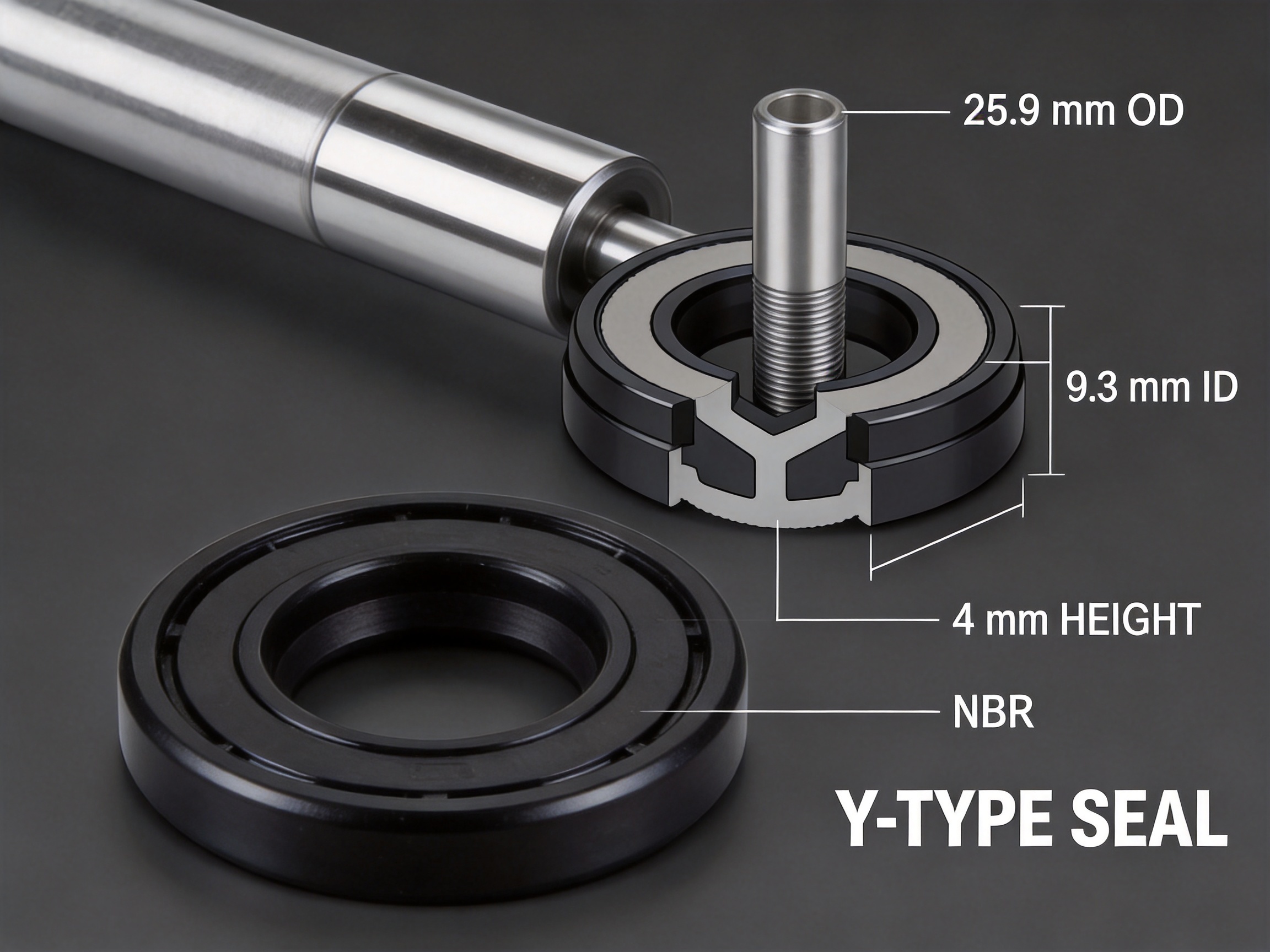
A Y-type seal ring generally uses a profile with sealing lips that form a shape resembling the letter “Y” in cross-section. The lips are arranged to provide contact with the shaft or piston rod while the body of the seal remains supported by the housing. Depending on the application, the design may provide a dynamic sealing interface for reciprocating movement and a static sealing interface against the housing.
The effectiveness of a Y-type seal depends on more than its nominal dimensions. Important factors include lip geometry, elastomer elasticity, contact pressure, rod surface finish, housing condition, lubrication, temperature, assembly method, and the pressure or force environment. The A-1-033 configuration is intended to work as part of a matched sealing arrangement rather than as an isolated component selected without reference to the surrounding design.
For a moving piston rod, the seal must maintain contact during both extension and retraction. Too little contact may result in leakage. Too much contact may increase friction and contribute to stick-slip behavior. A well-selected Y-type design helps maintain a practical sealing line while supporting smooth reciprocating movement.
The 4 mm height also contributes to the compact nature of the product. A short axial height can be advantageous where the seal housing has limited available space. It can help designers preserve room for guide rings, backup elements, adapters, retaining features, or other internal components. However, the final suitability depends on the actual groove and housing design.
NBR Material for General Sealing Applications
The A-1-033 seal is specified in NBR, or nitrile rubber. NBR is widely used in sealing applications because it offers a useful balance of oil resistance, mechanical strength, elasticity, abrasion resistance, and cost efficiency. It is commonly selected for mineral-oil-based lubricants, hydraulic fluids of suitable composition, and general industrial sealing environments.
For gas springs and dampers, NBR can be an appropriate material when the internal medium, temperature, and operating conditions fall within the material’s recommended range. Its resilience helps the seal recover after deformation, while its resistance to many common lubricants supports practical service performance.
Material selection should always be based on the complete application. NBR is not universally suitable for every chemical, temperature, or fluid condition. Exposure to aggressive fuels, certain solvents, highly concentrated chemicals, ozone-rich environments, or temperatures beyond the material’s operating range may require an alternative such as HNBR or FKM. The product range includes sealing materials and configurations for different needs, but the final material choice should be confirmed through technical review.
For standard gas spring and damper designs, the use of NBR can offer an economical solution without unnecessarily increasing material cost. This can be especially valuable in high-volume applications where the seal is installed in large quantities and the customer requires stable quality at a controlled price.
Application in Gas Springs
Gas springs use compressed gas to generate a controlled extension or supporting force. They are used in chairs, cabinets, hatches, automotive systems, medical furniture, machine covers, and many other products. The internal sealing system must retain the gas and lubricant while allowing the piston rod to move repeatedly.
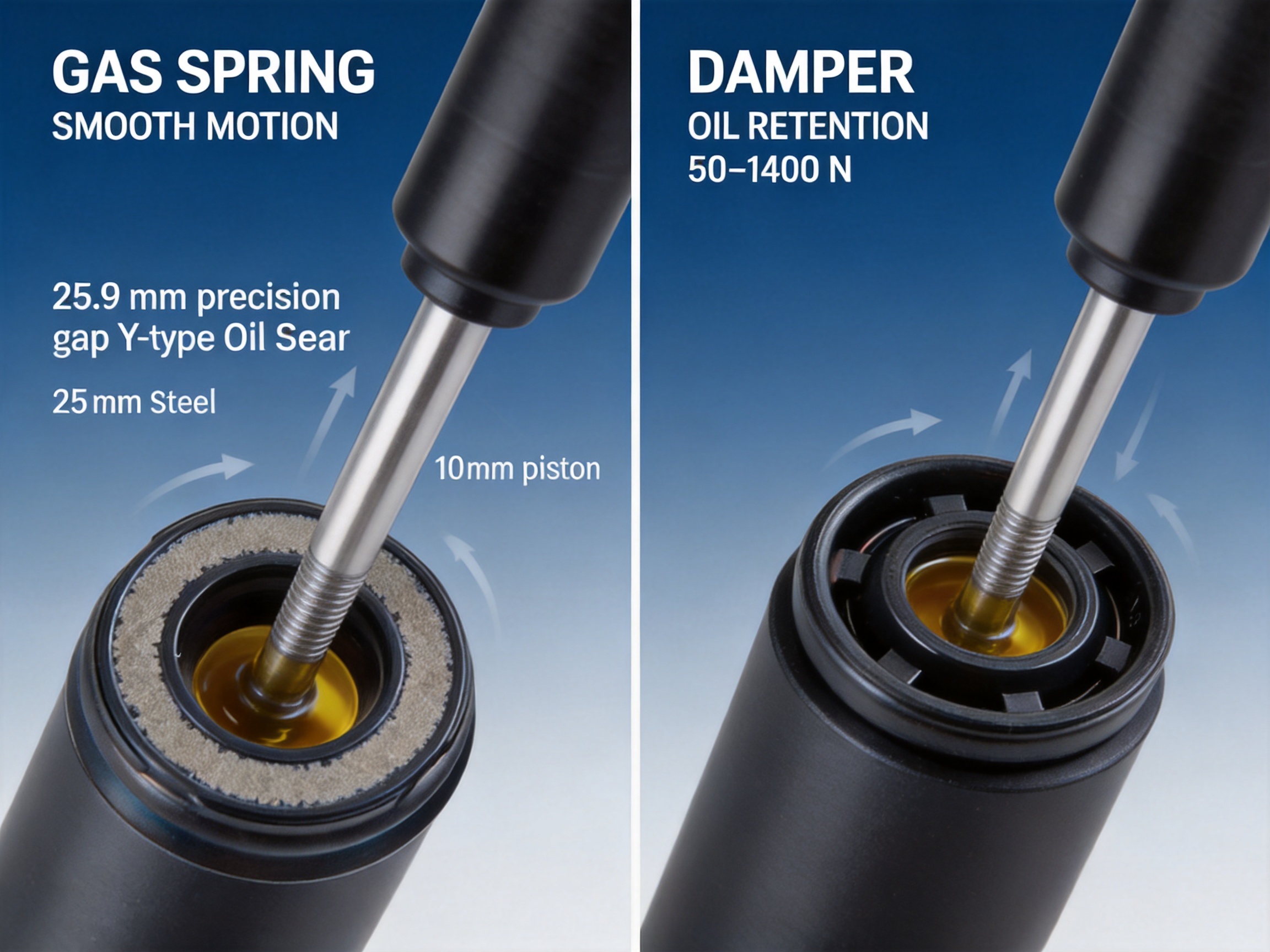
The 25.9 mm Precision-Gap Seal is configured around a 25 mm steel pipe inner diameter and a 10 mm piston rod diameter. This dimensional relationship makes it relevant to selected gas spring constructions using these nominal dimensions. The listed design force range of 50–1400 N covers a broad group of gas spring applications, although the correct use of the seal must be confirmed against actual gas pressure, temperature, stroke frequency, rod speed, lubrication, and assembly conditions.
A gas spring seal must perform under repeated reciprocating motion. Each cycle can expose the sealing lip to sliding friction, pressure changes, lubricant movement, and slight changes in rod alignment. A correctly matched seal can help retain the internal medium and maintain a stable operating feel over the intended service life.
The fine-tuned outer dimension is useful when the designer wants to limit movement between the seal and the tube. Reduced mechanical play may help the piston rod remain better centered, which can reduce uneven lip loading. More uniform loading can support consistent friction and reduce the risk of localized wear.
In furniture and office-chair gas springs, smooth operation and dependable force are essential. Users expect height adjustment to be controlled, quiet, and repeatable. In automotive or equipment applications, the seal also contributes to functional reliability and protection against leakage. The A-1-033 design can therefore serve as a practical component for manufacturers seeking a compact NBR sealing solution for compatible gas spring structures.
Application in Dampers
Dampers are designed to control movement by dissipating energy. They may be used in furniture, automotive assemblies, machinery, doors, cabinets, medical devices, and construction equipment. Depending on the design, a damper may contain oil, gas, or a combination of both. The seal must prevent fluid loss while permitting the intended piston or rod movement.
In a damper, excessive leakage can change the damping force and cause performance to deteriorate. A seal that creates excessive friction can also affect the force curve, especially in small dampers where the sealing contribution represents a meaningful portion of the total resistance. The 25.9 mm Precision-Gap Seal is intended to support a controlled fit that balances containment with movement.
The Y-type profile can be beneficial in reciprocating applications because it creates a defined sealing interface around the moving rod. The NBR material provides a practical solution for compatible oil-based environments. The 4 mm height allows the seal to fit within relatively compact assemblies, which can be important for small dampers and integrated mechanisms.
When used in a damper, the seal should be evaluated together with the piston, guide components, rod coating, fluid, and housing. A seal cannot correct an improperly finished rod or a misaligned housing. For best results, the complete assembly should be designed to control radial movement, prevent sharp edges from damaging the lip, and provide suitable lubrication during installation and operation.
Advantages Compared with Generic Competitor Seals
Fine-Tuned Dimensional Fit
One of the main advantages of the A-1-033 configuration is its 25.9 mm outside diameter for a 25 mm steel pipe inner diameter. Many generic seals are selected only by approximate nominal dimensions. A fine-tuned seal can provide a closer match to the intended housing, helping reduce movement and positioning uncertainty.
Reduced Mechanical Play
The product is designed to reduce mechanical play within the sealing arrangement. Lower play can help the sealing element remain in its intended location and may support improved piston rod alignment. This is valuable in applications where uneven loading or lateral movement could create irregular friction and premature wear.
Compact 4 mm Height
The 4 mm height provides a compact axial profile. Compared with a taller or less specialized seal, this dimension can help designers manage limited installation space. It may allow a more efficient internal layout while maintaining room for supporting elements and retaining structures.
Compatible NBR Material
NBR is a widely understood and readily available sealing material. Its broad industrial use means that customers and engineers often have established knowledge of its compatibility, processing behavior, and maintenance requirements. For suitable oil and temperature conditions, NBR can provide a cost-effective alternative to higher-priced specialty elastomers.
Defined Application Range
The specified design force range of 50–1400 N provides an initial application reference. Instead of presenting the product as a universal seal for every gas spring or damper, the defined range helps engineers identify whether the component is relevant to a particular design. Final qualification should still include testing under actual operating conditions.
Product and Adapter Coordination
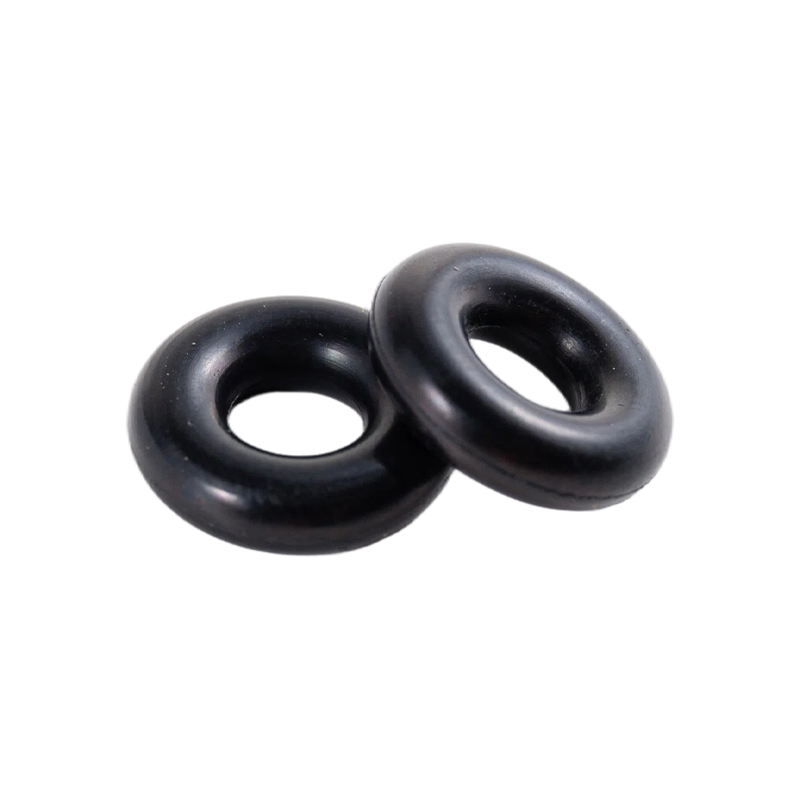
The listed 25 × 2.4 mm O-ring adapter indicates that the seal can be considered as part of a coordinated sealing structure. Compatibility between the main seal and supporting sealing elements can simplify product development and reduce the risk of mismatched dimensions. Customers should request assembly drawings or technical confirmation when the adapter is required.
Manufacturing Support and Customization
Specialized sealing manufacturers can provide more than standard catalog components. They can support design review, dimensional adjustment, material selection, testing, and application consultation. This type of technical cooperation can be a significant advantage over suppliers that only resell generic seals without engineering assistance.
Manufacturing Strengths Behind the Product
Ningguo Jnsseals Sealing Technology Co., Ltd. was founded in 2019 and is headquartered in Anhui, China. The company focuses on sealing technology for gas springs, dampers, and related O-ring products. Its business model combines product development, manufacturing, testing, and technical service, allowing customers to obtain application-oriented sealing solutions rather than isolated replacement parts.
The company describes itself as a high-tech enterprise with research and development capabilities, advanced production equipment, and a professional technical service team. These strengths are important for precision elastomer products because seal quality depends on the interaction of material formulation, mold design, process stability, dimensional control, and final inspection.
Product Development
Seal development begins with understanding the application. Engineers need to consider the housing diameter, rod diameter, groove dimensions, pressure or force, movement type, temperature, fluid, expected cycle life, and assembly process. A product such as A-1-033 reflects this application-oriented approach by specifying not only the seal dimensions but also the related pipe, piston rod, adapter, and force range.
During development, the profile must be designed to provide the required contact without creating excessive friction. Small changes in lip angle, thickness, corner radius, or support area can affect sealing performance. A dedicated product code helps maintain traceability between the design, tooling, production records, and customer application.
Tooling and Molding Control
Elastomer seals are commonly produced through controlled molding processes in which a prepared rubber compound is formed under heat and pressure. For precision seals, the mold must reproduce the profile accurately and consistently. Tooling condition, cavity alignment, molding temperature, curing time, and material preparation all influence the final component.
Advanced production equipment can help stabilize the molding process and reduce variation between batches. Consistent molding is particularly important for a fine-tuned dimension such as 25.9 mm. If the outside diameter varies excessively, the seal may be too loose in some assemblies and too tight in others. Process control therefore supports both performance and production efficiency for the customer.
Material and Compound Management
NBR performance depends on the formulation and processing history of the compound. Rubber hardness, elasticity, compression behavior, tensile strength, tear resistance, and fluid compatibility can all influence sealing results. Proper material management helps prevent contamination, inconsistent mixing, and changes in curing behavior.
A professional sealing manufacturer should maintain control over incoming materials, batch identification, storage conditions, and production records. These practices support repeatability and make it easier to investigate any quality issue. For customers producing gas springs or dampers at scale, stable compound performance is as important as dimensional accuracy.
Dimensional Inspection
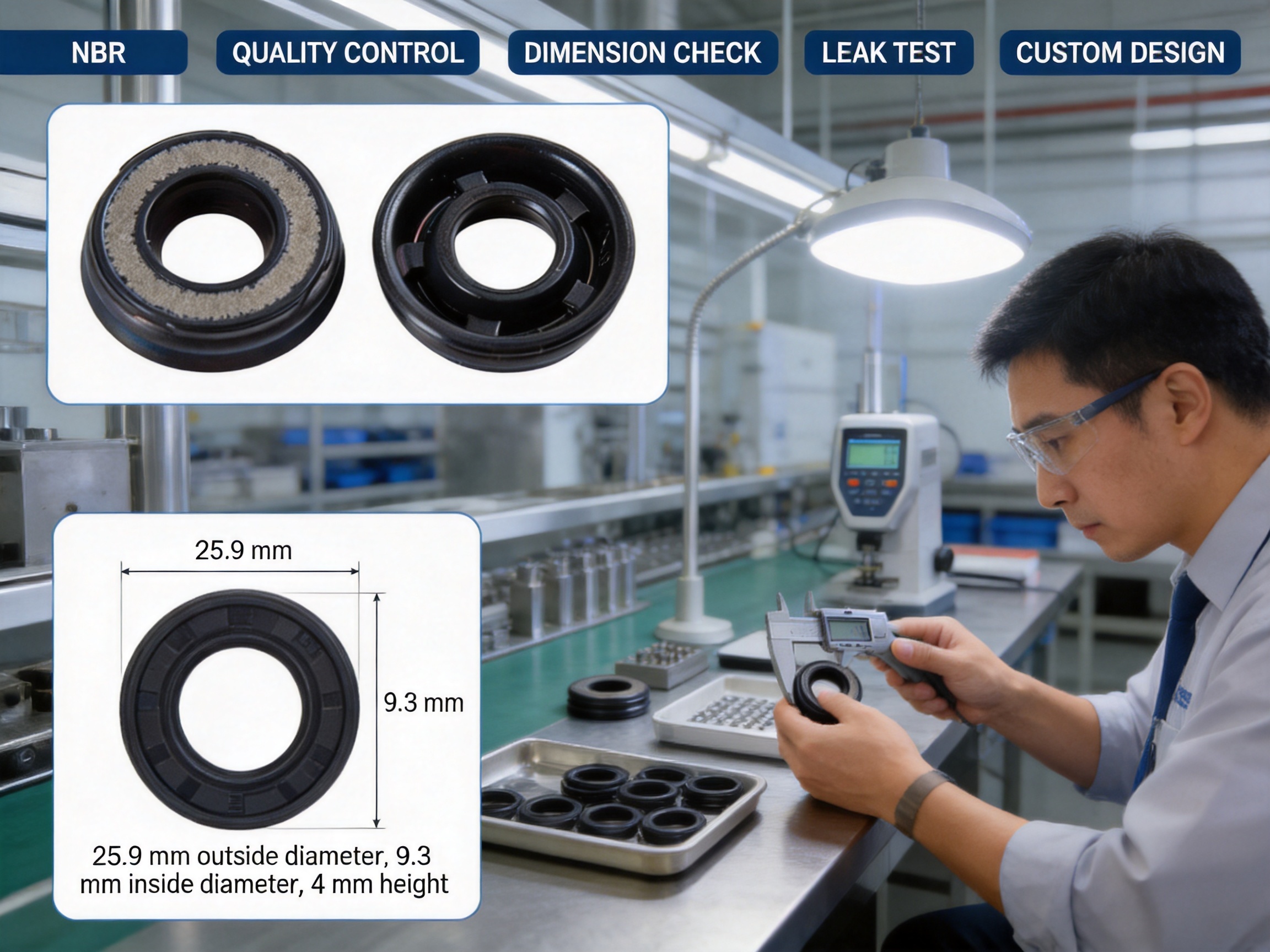
Precision inspection is required to confirm outside diameter, inside diameter, height, profile, and surface condition. Measurements should be taken using suitable gauges or instruments under controlled conditions. Because elastomers can deform under measuring pressure, inspection methods must be selected carefully.
For the A-1-033 seal, the key dimensions include 25.9 mm outside diameter, 9.3 mm inside diameter, and 4 mm height. The related 25 × 2.4 mm adapter must also be evaluated when included in the assembly. Inspection can help identify flash, short shots, mold mismatch, edge damage, surface defects, or dimensional drift before products are shipped.
Testing and Technical Verification
Sealing performance should be verified through tests appropriate to the intended use. Potential evaluations may include leakage testing, reciprocating motion testing, friction measurement, compression or deformation assessment, temperature exposure, fluid compatibility, and dimensional stability. The exact test program depends on the customer’s product and applicable industry requirements.
The company’s stated capabilities include product design, testing, and technical consultation. This is valuable when a customer needs to move from a standard seal to a modified profile or when a new housing requires an application-specific solution. Testing helps convert a dimensional concept into verified product performance.
Quality and Production Consistency
For mass-produced gas springs and dampers, consistency is often more important than the performance of a single sample. Thousands or millions of seals may be installed in one product family. A small variation in dimensions, hardness, or surface condition can influence assembly force, leakage rate, and operating feel across the production line.
A specialized manufacturer can help control these risks through standardized production procedures, batch management, inspection plans, and traceable product coding. The A-1-033 code provides a clear identification reference for communication, ordering, inspection, and repeat production.
Quality control should address both visible and functional characteristics. Visual inspection may identify surface damage, flash, contamination, cracks, or incomplete molding. Dimensional inspection confirms the basic geometry. Functional testing provides additional evidence that the seal performs under representative conditions.
Customers should discuss tolerance requirements with the manufacturer before placing a production order. The dimensions listed for a product are important reference values, but the actual engineering drawing may include tolerances, surface requirements, packaging details, and inspection criteria that are not shown in a short product description.
Installation Considerations
Correct installation is essential to achieving the expected performance of any oil seal ring. Before assembly, the housing and piston rod should be checked for burrs, sharp edges, excessive roughness, corrosion, contamination, and dimensional problems. A sharp edge can cut or roll the seal lip during insertion.
The piston rod should be clean and free from particles that could scratch the sealing interface. The housing should also be cleaned to prevent debris from becoming trapped behind the seal. If the application requires lubricant, the lubricant should be compatible with NBR and with the internal gas or oil system.
Assembly tooling should apply even force and guide the seal into position. Using a tool that presses unevenly on one side may distort the seal or damage the lip. The seal should not be twisted during installation. After assembly, the piston rod can be moved carefully through its initial stroke to confirm smooth motion and identify abnormal resistance.
Any O-ring adapter used with the product should be installed according to the approved assembly arrangement. The 25 × 2.4 mm adapter should not be substituted with an unverified size merely because the nominal diameter appears similar. Small differences in cross-section or stretch can affect compression and leakage performance.
Design and Purchasing Guidance
Engineers considering the A-1-033 seal should first compare the listed dimensions with the actual assembly. The key reference values are a 25 mm steel pipe inner diameter and a 10 mm piston rod diameter. The 25.9 mm outside diameter, 9.3 mm inside diameter, and 4 mm height should be checked against the housing groove and available installation space.
The 50–1400 N design force range is an important reference, but it should not be treated as a substitute for a complete pressure and life analysis. Gas spring force depends on gas charge, piston area, temperature, stroke position, friction, and other design variables. Damper behavior depends on fluid viscosity, orifice design, piston velocity, and temperature. The seal should therefore be tested in the complete assembly.
Customers should also confirm the internal medium. NBR is suitable for many oil-based applications, but fluid composition can vary. If the assembly uses a specialized fluid, elevated temperature, or demanding environmental exposure, an alternative compound may be more appropriate. The manufacturer can assist with material selection and custom development.
For procurement teams, useful questions include whether the product is supplied with the adapter, what dimensional tolerances apply, how the products are packaged, what inspection records are available, and whether production samples can be evaluated. Clear communication at the beginning of the project reduces the risk of selecting a seal that is dimensionally similar but functionally unsuitable.
Industries and Potential Uses
Automotive Applications
Gas springs and dampers are widely used in vehicle hatches, seats, storage compartments, and other mechanisms. A compact NBR Y-type seal can be relevant to compatible assemblies where controlled movement and fluid retention are required. Automotive applications typically require careful validation because temperature changes, vibration, contamination, and repeated cycles can be demanding.
Furniture and Office Equipment
Adjustable chairs, cabinet systems, lifting mechanisms, and reclining furniture often use gas springs or compact dampers. Smooth movement, consistent resistance, and quiet operation affect the user experience. The A-1-033 configuration is suited for consideration in products using a 25 mm pipe and 10 mm rod arrangement.
Medical Equipment
Medical beds, treatment chairs, examination tables, and support equipment may incorporate gas springs or dampers. These mechanisms require dependable adjustment and controlled movement. Material compatibility, cleanliness, and application-specific regulatory requirements should be reviewed before use.
Home Appliances
Appliance doors, lids, drawers, and lifting mechanisms may use dampers or gas-assisted movement. A compact seal can help support smooth operation while keeping the internal mechanism protected from leakage. The exact seal material and design should be selected according to the appliance environment.
Construction and Industrial Equipment
Access panels, protective covers, machine guards, and adjustable structures may benefit from gas spring or damper technology. In industrial environments, sealing products may encounter dust, oil, vibration, and temperature variation. Application testing is recommended to confirm that the NBR material and seal geometry meet the required service conditions.
Customization and Engineering Collaboration
Not every application can use a standard seal without modification. Differences in tube diameter, rod diameter, groove geometry, pressure, temperature, lubricant, and motion speed may require a different profile or material. A manufacturer with design and testing capabilities can help adapt the sealing solution to the customer’s specific requirements.
Customization may involve changes to outside diameter, inside diameter, height, lip shape, material hardness, compound type, or supporting adapter dimensions. It may also include adjustments to packaging, inspection, and production quantities. The goal is not simply to change a dimension, but to preserve the functional relationship between the seal and the complete assembly.
Technical collaboration is particularly useful when a customer experiences leakage, excessive friction, inconsistent force, or difficult assembly with an existing seal. Engineers can examine whether the root cause is related to seal geometry, rod finish, housing tolerance, lubrication, alignment, or operating conditions. A more suitable seal may solve the problem, but only after the full system has been evaluated.
Environmental and Service-Life Considerations
Seal service life is influenced by the interaction of material, design, and operating environment. Repeated movement can gradually wear the lip. High temperature can accelerate aging, while low temperature can reduce flexibility. Contaminants can abrade the sealing interface, and poor alignment can create uneven loading.
The 25.9 mm Precision-Gap Seal is designed to reduce mechanical play, which may help support more even operation in compatible assemblies. Nevertheless, the seal should not be expected to compensate for excessive rod runout, damaged surfaces, incorrect grooves, or unsuitable fluids.
Long-term performance can be improved by maintaining suitable surface finish, using compatible lubrication, protecting the assembly from contamination, and controlling the installation process. Where the product is used in safety-critical or high-cycle equipment, customers should establish a validation program that reflects the actual duty cycle and environmental exposure.
Why Work with a Specialized Sealing Manufacturer
A specialized manufacturer understands that a seal is a functional engineering component, not merely a rubber ring. The profile, material, dimensional tolerance, and production process must work together. This understanding can help customers reduce trial-and-error during product development and improve the reliability of final assemblies.
Ningguo Jnsseals Sealing Technology Co., Ltd. focuses on sealing solutions for gas springs, dampers, and O-ring products. Its stated strengths include research and development, advanced equipment, technical service, product testing, and customized design. These capabilities allow the company to serve customers seeking standard products as well as application-specific solutions.
The company’s product coverage includes several seal categories, including Y-type oil seal rings, L-shaped oil seal rings, damping oil seals, and O-shaped oil seal rings. This broader range can simplify sourcing for manufacturers that use multiple sealing components across different product lines.
Its industry experience extends to automotive, furniture, home appliances, medical equipment, construction, and other fields. Such cross-industry exposure can provide useful insight into different operating requirements, manufacturing volumes, and design priorities.
Frequently Asked Questions
What type of seal is the A-1-033 product?
It is a Y-type oil seal ring, also described as a 25.9 mm Precision-Gap Seal. It is intended for compatible gas spring, damper, and reciprocating rod applications.
What are the main dimensions?
The listed dimensions are 25.9 mm outside diameter, 9.3 mm inside diameter, and 4 mm height. The nominal product specification is shown as 26 × 9.3 × 4 mm.
What pipe and piston rod sizes are associated with this seal?
The product information specifies a 25 mm steel pipe inner diameter and a 10 mm piston rod diameter. Customers should confirm the actual housing and rod dimensions before ordering.
What material is used?
The product is made from NBR, or nitrile rubber. NBR is commonly used for compatible oil-based sealing applications and offers a practical balance of elasticity, wear resistance, and cost.
What is the applicable force range?
The listed design applicable force range is 50–1400 N. This value is an application reference and should be evaluated together with actual pressure, temperature, movement, fluid, and service-life requirements.
Does the product include an O-ring adapter?
The product information lists a 25 × 2.4 mm O-ring adapter. Buyers should confirm whether the adapter is included in the supplied package or ordered as a separate component.
Can the seal be used in every gas spring?
No. It is intended for compatible designs using the specified dimensional and operating relationships. The complete assembly should be checked for housing size, rod size, groove geometry, fluid, temperature, pressure, speed, and cycle life.
What is the main advantage of the 25.9 mm size?
The 25.9 mm outside diameter is fine-tuned for a nominal 25 mm steel pipe inner diameter. This design can help reduce mechanical play and improve the positioning of the seal within the housing.
Is NBR suitable for high-temperature or aggressive chemical environments?
NBR is suitable for many standard oil-based applications, but it is not ideal for every fluid or temperature. HNBR, FKM, or another material may be required for more demanding conditions. Compatibility should be confirmed before production use.
Can the manufacturer provide customized seals?
The company provides customized sealing solutions, including product design, testing, and technical consultation. Customers can discuss alternative dimensions, materials, profiles, or application requirements with the technical team.
What should be checked before installation?
Inspect the rod and housing for burrs, sharp edges, dirt, corrosion, and dimensional problems. Use compatible lubricant where required, avoid twisting the seal, and use suitable tooling to prevent lip damage.
How can customers request technical assistance?
Customers may contact Ningguo Jnsseals Sealing Technology Co., Ltd. through its sales and technical channels to discuss product selection, drawings, samples, testing, and customization requirements.
Conclusion
The 25.9 mm Precision-Gap Seal is a specialized NBR Y-type oil seal ring for compatible gas spring and damper assemblies. Its principal dimensions are 25.9 mm outside diameter, 9.3 mm inside diameter, and 4 mm height, with a related 25 × 2.4 mm O-ring adapter. Designed around a 25 mm steel pipe inner diameter and a 10 mm piston rod, it provides a carefully defined configuration for compact reciprocating mechanisms.
Its main advantages include a fine-tuned housing fit, reduced mechanical play, improved positioning potential, compact height, practical NBR material, and a stated 50–1400 N design force range. Compared with broadly selected generic seals, the product offers a more application-oriented dimensional reference and can help engineers pursue more consistent assembly performance.
The product is supported by a manufacturer focused on sealing technology for gas springs, dampers, and related O-ring products. Research and development, advanced production equipment, product testing, technical consultation, and customization capabilities provide a foundation for serving both standard and specialized requirements.
Before production adoption, customers should confirm the complete application, including material compatibility, dimensional tolerances, rod surface condition, housing design, lubrication, temperature, pressure, movement, and service life. When correctly matched and installed, the A-1-033 seal can be a practical component for manufacturers seeking controlled sealing performance in furniture, automotive, medical, appliance, construction, and industrial mechanisms.
References
1. Product specification information for the 25.9 mm Precision-Gap Seal, product code A-1-033.
2. Manufacturer-provided company information concerning sealing technology, gas spring seals, damper seals, O-ring products, research and development, testing, and customization.
3. General engineering principles for elastomeric seals used in reciprocating rod and piston applications.
4. General technical information concerning nitrile rubber material selection, oil resistance, elasticity, abrasion resistance, and application compatibility.
5. General design and quality-control practices for molded rubber sealing components.
Product: 25.9mm Precision-Gap Seal

PREV:14.8 mm Robust Piston Seal for High-Vibration Applications
NEXT:13 mm Standard General-Purpose NBR O-Ring for Industrial Maintenance
NEXT:13 mm Standard General-Purpose NBR O-Ring for Industrial Maintenance


Want to know more
about us?
about us?

Precision sealing for gas springs and dampers. Durable, wear-resistant, and built for long-life performance in demanding applications.
Product Categories
Quick Links
Contact Us
-
Email: jns@jnsseals.cn

-
Manager Gong: +86-18563770820

-
Manager Wang: +8615357558902
-
No. 5, Meilin Avenue, Meilin Industrial Development Zone, Ningguo City, Anhui Province, China

