

 English
 русский
 Deutsch
 Türk
Türk 中文简体
中文简体
26mm Durable Industrial Seal: Fatigue-Resistant NBR Sealing for Gas Springs and Dampers
26mm Durable Industrial Seal: Fatigue-Resistant NBR Sealing for Gas Springs and Dampers
26mm Durable Industrial Seal: Fatigue-Resistant NBR Sealing for Gas Springs and Dampers
26mm Durable Industrial Seal: Fatigue-Resistant NBR Sealing for Gas Springs and Dampers
26mm Durable Industrial Seal: Fatigue-Resistant NBR Sealing for Gas Springs and Dampers
26mm Durable Industrial Seal: Fatigue-Resistant NBR Sealing for Gas Springs and Dampers
26mm Durable Industrial Seal: Fatigue-Resistant NBR Sealing for Gas Springs and Dampers
26mm Durable Industrial Seal: Fatigue-Resistant NBR Sealing for Gas Springs and Dampers
26mm Durable Industrial Seal: Fatigue-Resistant NBR Sealing for Gas Springs and Dampers
26mm Durable Industrial Seal: Fatigue-Resistant NBR Sealing for Gas Springs and Dampers
26mm Durable Industrial Seal: Fatigue-Resistant NBR Sealing for Gas Springs and Dampers
26mm Durable Industrial Seal: Fatigue-Resistant NBR Sealing for Gas Springs and Dampers
26mm Durable Industrial Seal: Fatigue-Resistant NBR Sealing for Gas Springs and Dampers
26mm Durable Industrial Seal: Fatigue-Resistant NBR Sealing for Gas Springs and Dampers
26mm Durable Industrial Seal: Fatigue-Resistant NBR Sealing for Gas Springs and Dampers
26mm Durable Industrial Seal: Fatigue-Resistant NBR Sealing for Gas Springs and Dampers

Deng Yixuan — Domestic Sales Supervisor
Home / Author / Deng Yixuan — Domestic Sales Supervisor / 26mm Durable Industrial Seal: Fatigue-Resistant NBR Sealing for Gas Springs and Dampers
NEW Category
Contact us
26mm Durable Industrial Seal: Fatigue-Resistant NBR Sealing for Gas Springs and Dampers
Content
- 1 Product Overview
- 2 Why Seal Design Matters in Moving Assemblies
- 3 Core Advantages of the 26mm Durable Industrial Seal
- 4 Competitive Position Compared with Basic Sealing Products
- 5 Manufacturing and Product Development Strengths
- 6 How the Seal Supports Gas Spring and Damper Performance
- 7 Installation Recommendations
- 8 Quality Considerations for Industrial Buyers
- 9 Application Selection Guide
- 10 Industries and Use Cases
- 11 Production Process Perspective
- 12 Maintenance and Service-Life Practices
- 13 Technical Support and Custom Development
- 14 Frequently Asked Questions
- 14.1 What type of product is the 26mm Durable Industrial Seal?
- 14.2 What material is used for this seal?
- 14.3 What are the product dimensions?
- 14.4 What load or pressure range is associated with the design?
- 14.5 How many cycles is the seal designed to support?
- 14.6 Why is shape memory important in an oil seal ring?
- 14.7 Is the product easy to install?
- 14.8 Can this seal be used in every gas spring or damper?
- 14.9 What industries may use this type of seal?
- 14.10 Can customized sealing solutions be developed?
- 14.11 What information should be provided when requesting technical advice?
- 14.12 How should unused NBR seals be stored?
- 15 Why Choose a Specialized Sealing Partner?
- 16 Conclusion
- 17 References
- 18 Product: 26mm Durable Industrial Seal
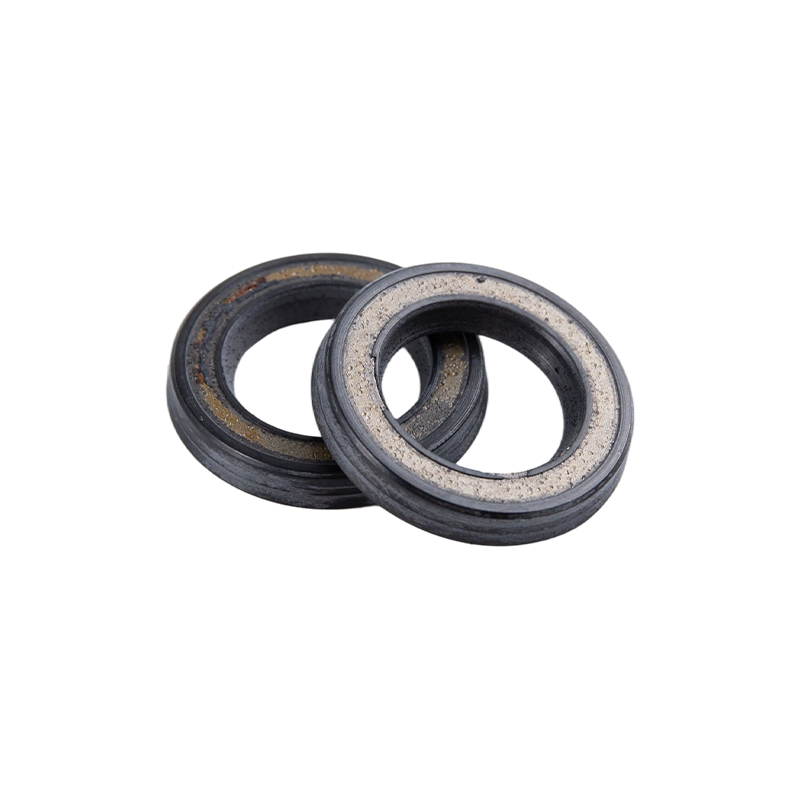
Reliable sealing is essential wherever a gas spring, damper, piston rod, or pressure-assisted mechanism must operate smoothly over an extended service life. A seal is a relatively small component, but its performance can determine whether an entire assembly maintains pressure, controls movement, prevents contamination, and delivers consistent force. The 26mm Durable Industrial Seal is designed for applications that demand dependable sealing performance, practical installation, and strong resistance to repeated mechanical loading.
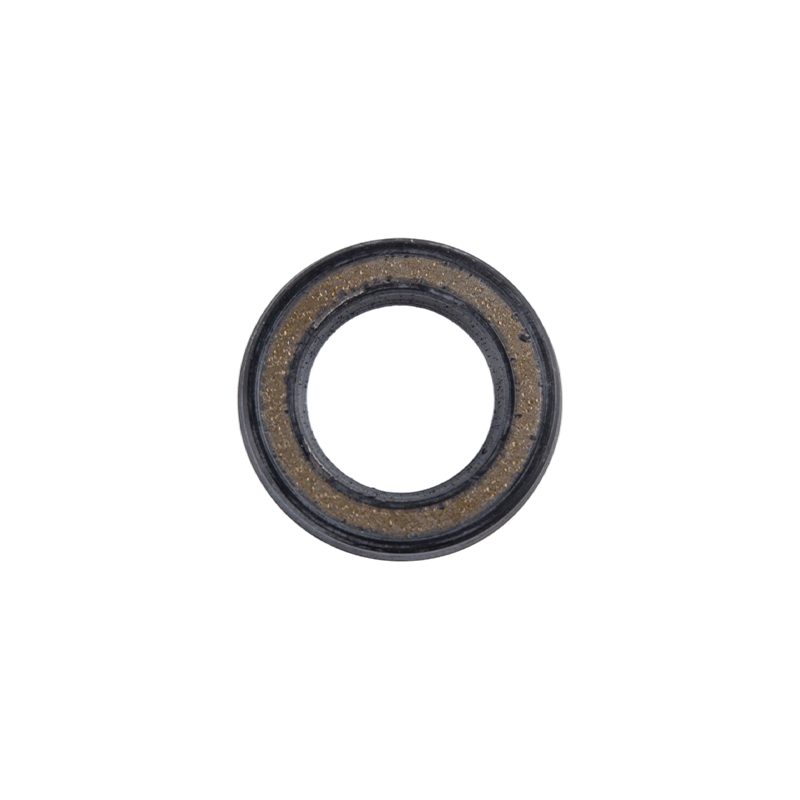
This Y-type oil seal ring is identified by product code A-1-032 and has a nominal specification of 26*7.2*4. Its NBR construction, integrated sealing geometry, and compatible O-ring adapter make it suitable for selected gas spring and damper assemblies. The product is designed around fatigue strength and long-term cycling under a stated applicable load range of 50-2000N. Its shape-memory characteristics help the sealing lip maintain contact with mating surfaces after repeated movement.
In contrast with basic sealing rings that may lose their effectiveness as mechanical cycles accumulate, this product focuses on fatigue resistance, structural recovery, and ease of fitting. These characteristics make it useful for manufacturers and maintenance teams seeking a compact sealing component for automotive, furniture, home appliance, medical equipment, construction, and other industrial applications.
26mm Durable Industrial Seal
Product Overview
The 26mm Durable Industrial Seal is a Y-type oil seal ring manufactured from NBR, or nitrile butadiene rubber. NBR is widely used in sealing applications because it offers a practical balance of elasticity, abrasion resistance, mechanical strength, and compatibility with many common mineral-oil-based media. The material is frequently selected for hydraulic, pneumatic, automotive, and general industrial sealing systems where dependable performance and cost control are both important.
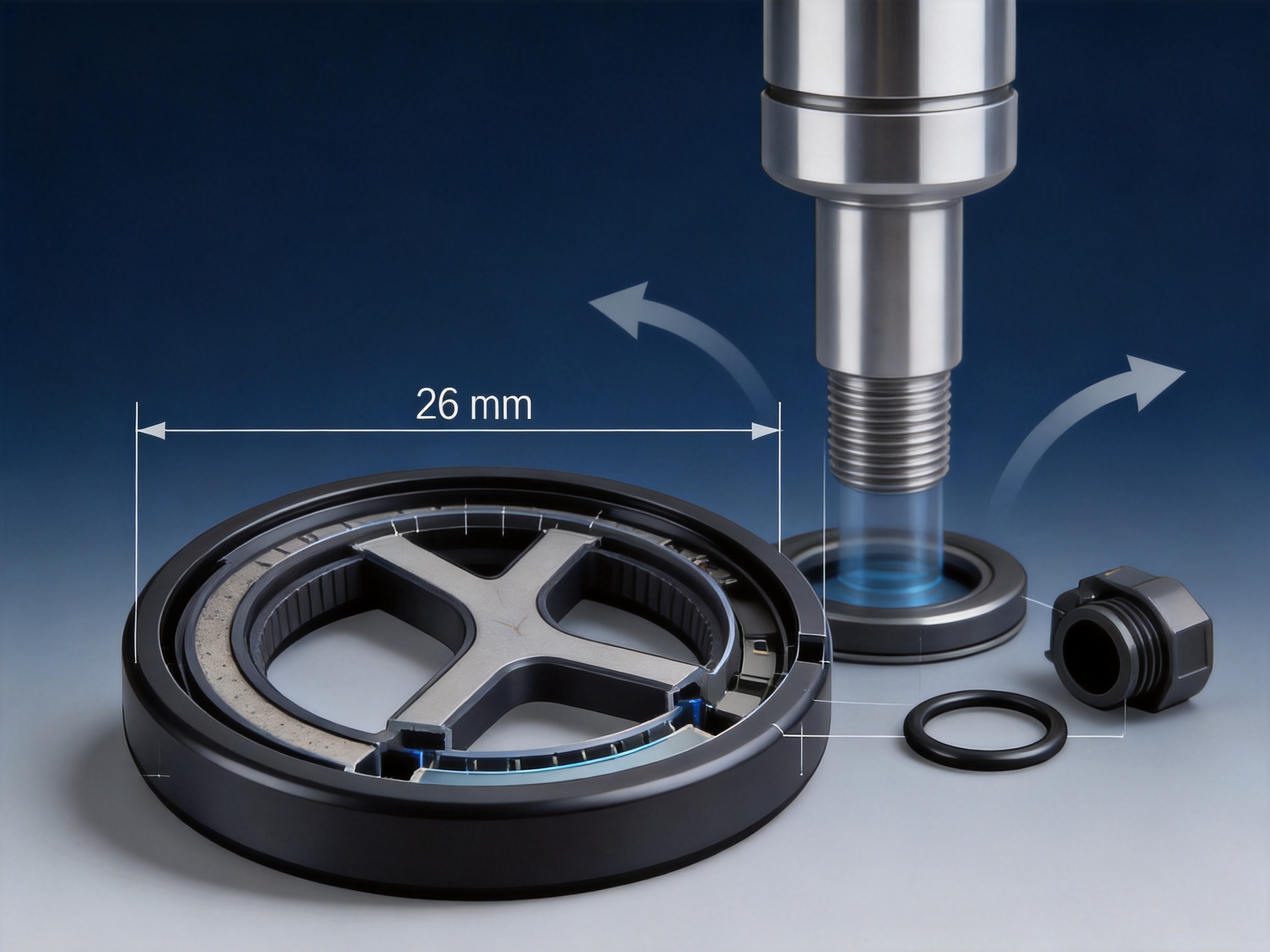
The product’s basic dimensions are an outer diameter of 26 mm, an inner diameter of 7.2 mm, and a height of 4 mm. It is designed for use with a 25*2.4 O-ring adapter and is associated with a steel pipe inner diameter and piston rod diameter combination of 25*8. These dimensions are important during product selection because sealing performance depends on the relationship between the seal, the rod, the housing, the adapter, and the surrounding assembly.
| Item | Specification |
|---|---|
| Product type | Y-type oil seal ring |
| Product code | A-1-032 |
| Product specification | 26*7.2*4 mm |
| Outer diameter | 26 mm |
| Inner diameter | 7.2 mm |
| Height | 4 mm |
| O-ring adapter | 25*2.4 mm |
| Applicable design pressure range | 50-2000N |
| Steel pipe inner diameter and piston rod diameter | 25*8 mm |
| Material | NBR |
| Category | Y-Type Oil Seal Ring |
The product is intended to provide a controlled sealing interface rather than simply fill a gap. Its geometry is designed to support contact around a moving piston rod while helping retain lubricant and reduce the escape of pressurized gas or oil. Correct installation and appropriate application conditions remain essential, but the seal’s design provides a strong foundation for reliable assembly performance.
Why Seal Design Matters in Moving Assemblies
Gas springs and dampers commonly contain moving rods, internal pressure, lubricating media, and components that must operate repeatedly without significant loss of performance. The seal must therefore perform several functions at the same time. It must maintain contact with a moving surface, resist deformation, tolerate repeated friction, and help prevent contaminants from entering the assembly.
A poorly selected seal may cause gradual pressure loss, visible leakage, uneven movement, increased friction, or premature wear of the piston rod. In a furniture gas spring, these problems can affect lifting support and user comfort. In an automotive or industrial damper, they can influence movement control, vibration reduction, and component durability. For this reason, seal selection should be treated as a performance decision rather than a simple replacement task.
The Y-type profile is useful because it can create a sealing action around the rod while allowing the sealing lips to respond to pressure and movement. The shape can help concentrate contact at the sealing edges, where a controlled interface is needed. When supported by suitable material properties and correct dimensional matching, this geometry can provide a practical combination of sealing effectiveness and low installation complexity.
The 26mm Durable Industrial Seal is especially focused on fatigue strength. The supplied product description states that it is designed for million-cycle life under 2000N loads. Actual service life will depend on the complete system, including rod surface finish, lubrication, temperature, pressure behavior, alignment, installation quality, and operating frequency. Nevertheless, the stated cycle-oriented design emphasis distinguishes it from basic seals intended only for occasional or lightly loaded movement.
Core Advantages of the 26mm Durable Industrial Seal
Fatigue Resistance for Repeated Operation
Repeated movement is one of the most demanding conditions for an elastomeric seal. Every stroke can expose the sealing lip to compression, sliding friction, pressure changes, and small changes in shape. Over time, these stresses can contribute to permanent deformation, cracking, hardening, or loss of contact. A fatigue-focused design seeks to reduce the effect of these repeated stresses and preserve the seal’s working profile for longer.
The A-1-032 seal is developed with fatigue strength as a primary performance objective. Its stated million-cycle capability under a 2000N load reflects an emphasis on long-term repetitive service. This is particularly valuable in applications such as adjustable furniture, vehicle support systems, industrial dampers, and equipment that is opened, closed, lifted, lowered, or repositioned many times during its operating life.
Compared with an ordinary low-duty sealing ring, a fatigue-oriented seal may offer better consistency over the service interval. It can help reduce the frequency of replacement, limit maintenance interruptions, and support more predictable product performance. For equipment manufacturers, this may also contribute to a stronger finished product because the sealing element is selected with the intended duty cycle in mind.
Strong Shape Memory
Shape memory is an important characteristic in a rubber sealing component. After being compressed during assembly or deformed during operation, the material should recover its intended form sufficiently to maintain contact with the mating surfaces. If the rubber remains permanently flattened or distorted, sealing pressure may decline and leakage risk may increase.
The 26mm Durable Industrial Seal is described as having strong shape memory. This characteristic supports the seal’s ability to return toward its designed geometry after installation and repeated movement. In practical terms, shape recovery can help maintain a stable sealing edge, compensate for small dimensional changes, and support more reliable contact as the component cycles.
Shape memory is especially relevant where the seal experiences frequent reciprocating motion. A piston rod does not remain stationary; it repeatedly passes through the seal, creating a continuously changing contact condition. A resilient material and well-designed profile can help the seal adapt to this motion without losing its basic sealing function.
Simple Installation
Ease of fitting is another important advantage. A seal that is difficult to install may be damaged during assembly, incorrectly oriented, twisted, or seated unevenly. These issues can create leakage even when the seal itself has suitable material and dimensions. A design that is simple to fit can reduce assembly variation and make production or maintenance more efficient.
The A-1-032 product is described as simple to fit. Its compact dimensions and compatibility with a 25*2.4 O-ring adapter allow it to be integrated into an appropriately designed assembly without an unnecessarily complicated installation process. The installer should still verify orientation, groove dimensions, surface cleanliness, lubrication, and the absence of sharp edges before inserting the piston rod.
For high-volume manufacturing, straightforward installation can provide operational benefits. It may shorten assembly time, reduce training requirements, and lower the chance of handling damage. For service teams, a practical installation process can help restore equipment more quickly and reduce the risk of errors during field maintenance.
Compact 26mm Format
The 26mm outer diameter offers a compact sealing solution for assemblies built around a 25mm steel pipe inner diameter and an 8mm piston rod diameter. Compact components are valuable when the surrounding equipment has limited space or when the product designer wants to keep the overall gas spring or damper structure small.
A compact seal can also support efficient material use and simplified assembly architecture. However, dimensional compatibility must always be confirmed before ordering. The listed dimensions are product specifications, not a substitute for checking the exact housing, rod, groove, adapter, and tolerance requirements of a specific application.
NBR Material Balance
NBR is a proven engineering elastomer for many general-purpose sealing applications. It provides useful resistance to abrasion and mechanical wear, while its elasticity helps create contact around moving surfaces. NBR can also provide a practical cost-performance balance for manufacturers that require reliable sealing without selecting a more specialized compound for every application.
The material is suitable for many environments involving mineral oil and related industrial media, subject to the specific compound formulation and operating conditions. Buyers should evaluate temperature, fluid type, pressure, speed, and exposure to chemicals before confirming suitability. If the application requires unusual media or extreme temperatures, a different elastomer such as HNBR or FPM may be more appropriate.
The product information identifies this particular seal as NBR. This clear material designation supports more efficient technical communication between the seal manufacturer, equipment designer, purchasing department, and end user. It also helps prevent accidental substitution with a material that may not behave the same way in service.
Competitive Position Compared with Basic Sealing Products
Many sealing products appear similar when viewed only by outside dimensions. However, two rings with the same nominal size may perform differently because of variations in rubber formulation, profile precision, hardness, mold quality, surface finish, dimensional tolerance, and quality control. The advantages of the A-1-032 design are therefore best understood as a combination of geometry, material selection, fatigue emphasis, and manufacturing support.
Against basic seals intended for low-frequency or low-load use, this product offers a more clearly defined focus on repeated operation. The million-cycle design statement and 2000N load reference communicate that the seal is intended for demanding cyclic applications rather than merely static retention. This can make it a stronger candidate for products where service life and stable movement are purchasing priorities.
Against seals that rely on a generic elastomer without clear application guidance, the product provides more useful selection information. Buyers receive the product code, dimensions, adapter specification, material designation, and related pipe and rod dimensions. These details make it easier to compare the seal with a drawing, bill of materials, or existing assembly.
Against products that are difficult to install, the simple-fitting design can help reduce assembly risk. Installation convenience does not replace engineering validation, but it can improve consistency when the seal is handled correctly. A seal that can be fitted efficiently and inspected easily may be advantageous in both automated and manual production environments.
Against products with limited customization support, the manufacturer’s broader sealing technology capabilities are also important. The company focuses on research, development, and application of sealing solutions for gas springs, dampers, and related O-ring products. This technical orientation can help customers move beyond catalog purchasing and obtain assistance with product design, testing, and application consultation.
These comparisons should not be interpreted as a universal claim that one seal is suitable for every application. Seal performance is application-specific. The practical advantage of the A-1-032 product is that it combines a defined size, NBR material, fatigue-oriented design, and technical support potential in a format intended for gas spring and damper-related systems.
Manufacturing and Product Development Strengths
Research and Development Orientation
The manufacturer is a high-tech enterprise founded in 2019 and headquartered in Anhui, China. Its stated focus is the research, development, and application of sealing technology for gas springs, dampers, and related O-ring products. This specialization is relevant because sealing products perform differently depending on whether they are used in static housings, rotating shafts, reciprocating rods, gas springs, hydraulic systems, or shock-absorbing assemblies.
A company that concentrates on gas spring and damper sealing can build practical knowledge around the operating conditions that affect these products. These conditions may include reciprocating stroke, rod movement, internal pressure, friction, lubrication, assembly compression, and long-term fatigue. Such application knowledge supports more informed product design than a purely general-purpose approach.
Product development begins with understanding the application. For a seal such as A-1-032, that includes reviewing the rod diameter, pipe inner diameter, adapter size, expected load range, movement pattern, material requirements, and service-life expectations. The result is a product specification that connects the seal’s dimensions with a particular assembly concept.
Advanced Production Equipment
The company reports the use of advanced production equipment. In elastomeric seal manufacturing, suitable equipment is important for achieving stable molding conditions, repeatable geometry, and efficient production. Rubber components are sensitive to temperature, pressure, curing time, compound preparation, mold condition, and demolding technique. Variations in these areas can affect dimensions and sealing behavior.
Modern production equipment can support more consistent control of the molding process. It can also help manufacturers produce complex lip profiles with better repeatability. For a Y-type oil seal ring, profile accuracy matters because the sealing edges must interact correctly with the piston rod and surrounding components. A small variation in lip geometry, flash, height, or concentricity can influence installation and sealing performance.
Advanced equipment is most valuable when combined with experienced process management. Machines provide capability, but engineers and production teams determine how that capability is applied. Material preparation, mold maintenance, process parameters, inspection methods, and corrective action all contribute to the final product.
Professional Technical Service
The manufacturer maintains a professional technical service team to support customers worldwide. Technical support is especially useful when a customer is selecting a seal for a new gas spring, modifying an existing design, or investigating a leakage or durability issue. The correct answer may involve more than changing the rubber ring; it may require reviewing the rod finish, groove geometry, adapter position, lubrication, or assembly sequence.
Technical consultation can help customers confirm whether the 26*7.2*4 specification matches their housing and piston rod arrangement. It can also support discussions about material options, custom dimensions, testing requirements, and production quantities. This type of support is valuable for original equipment manufacturers that need a consistent component supply and a responsive development partner.
Customized Sealing Solutions
The company provides customized sealing solutions, including product design, testing, and technical consultation. Customization may be necessary when a standard seal does not match the available housing, when a customer needs a special material, or when the equipment must meet a particular stroke, pressure, temperature, or durability target.
A structured customization process can begin with drawings and application data. Important information may include static and dynamic dimensions, rod speed, stroke length, operating temperature, fluid or gas exposure, pressure, expected cycles, surface roughness, and installation method. From this information, the manufacturer can evaluate the required profile and material direction.
Testing is another important part of customization. A seal may be evaluated for dimensional stability, leakage resistance, repeated cycling, friction behavior, compression recovery, or compatibility with the customer’s media. Testing results should be interpreted in relation to the actual assembly because laboratory results from an isolated seal may not fully predict field performance.
How the Seal Supports Gas Spring and Damper Performance
A gas spring depends on controlled internal pressure to generate supporting force. The piston rod must move through the sealing area while the internal gas and lubricant remain contained. A reliable seal helps preserve the pressure balance needed for predictable extension and compression behavior.
In a damper, the seal helps contain the working medium and prevent external contaminants from entering the internal mechanism. This is important because contamination can accelerate wear on the rod, guide, and internal components. A well-fitting seal contributes to the system’s ability to maintain controlled movement over repeated cycles.
The A-1-032 seal is not the only factor that determines gas spring or damper performance. Rod surface quality, guide design, lubricant selection, internal pressure, temperature, alignment, and component tolerances all matter. However, the seal is one of the primary interfaces between the moving rod and the pressure-containing body. Its fatigue resistance and shape recovery can therefore contribute directly to system durability.
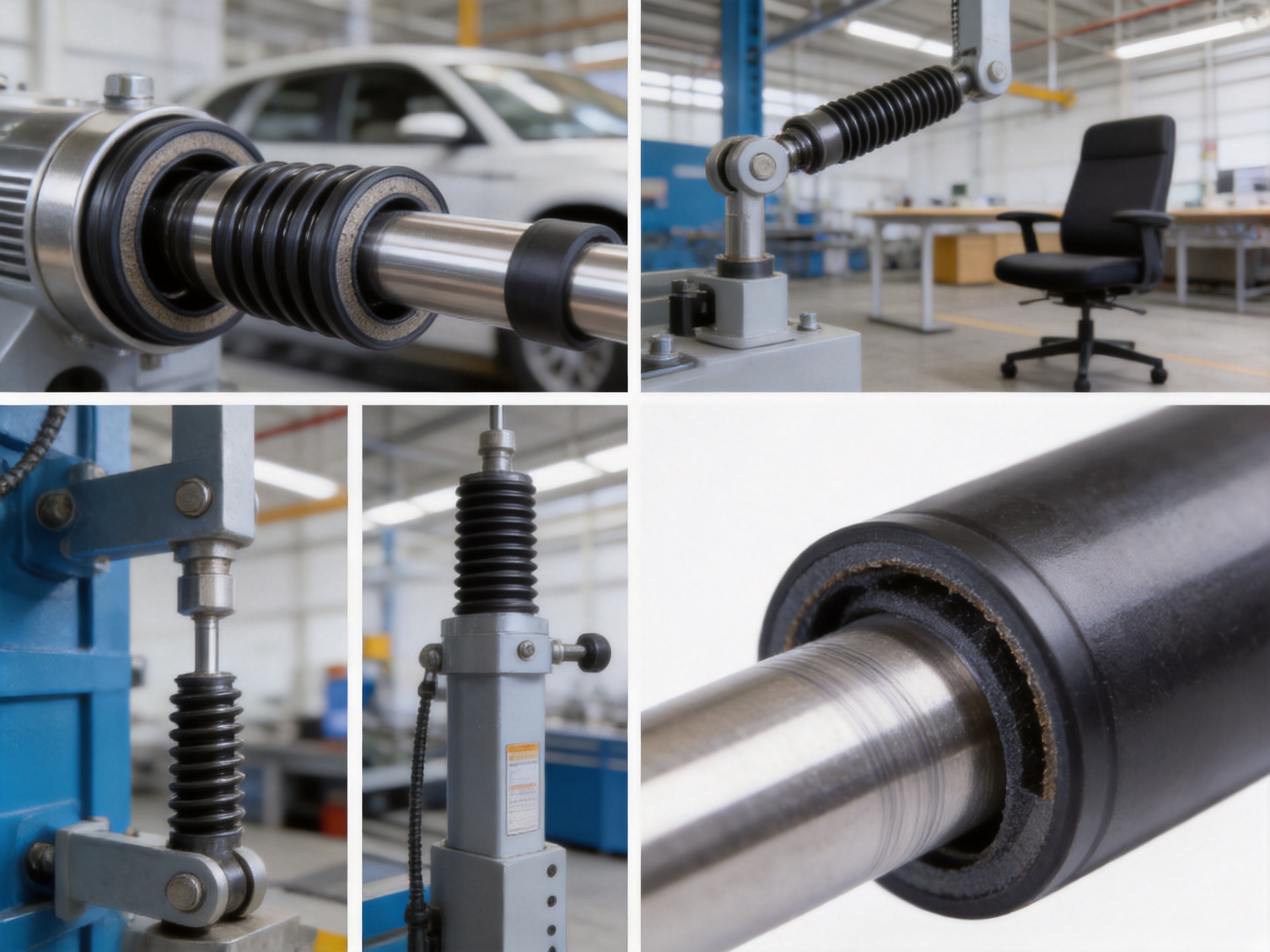
In furniture applications, gas springs may be used in office chairs, adjustable tables, cabinets, recliners, beds, and lifting mechanisms. These products often require smooth movement and reliable support during frequent daily use. A seal designed for repetitive operation can help manufacturers pursue more consistent performance throughout the product’s intended life.
Automotive applications may involve greater environmental variation, vibration, and duty-cycle demands. While application validation is necessary, the product’s focus on fatigue strength and NBR mechanical performance makes it a candidate for selected automotive support and damping components. Engineering teams should confirm temperature and media compatibility before use.
Industrial equipment may use dampers or gas springs in access panels, safety mechanisms, lifting systems, machine covers, and controlled-motion devices. In these systems, seal reliability can help reduce unplanned maintenance and maintain predictable operation. The compact 26mm format may be beneficial where installation space is restricted.
Installation Recommendations
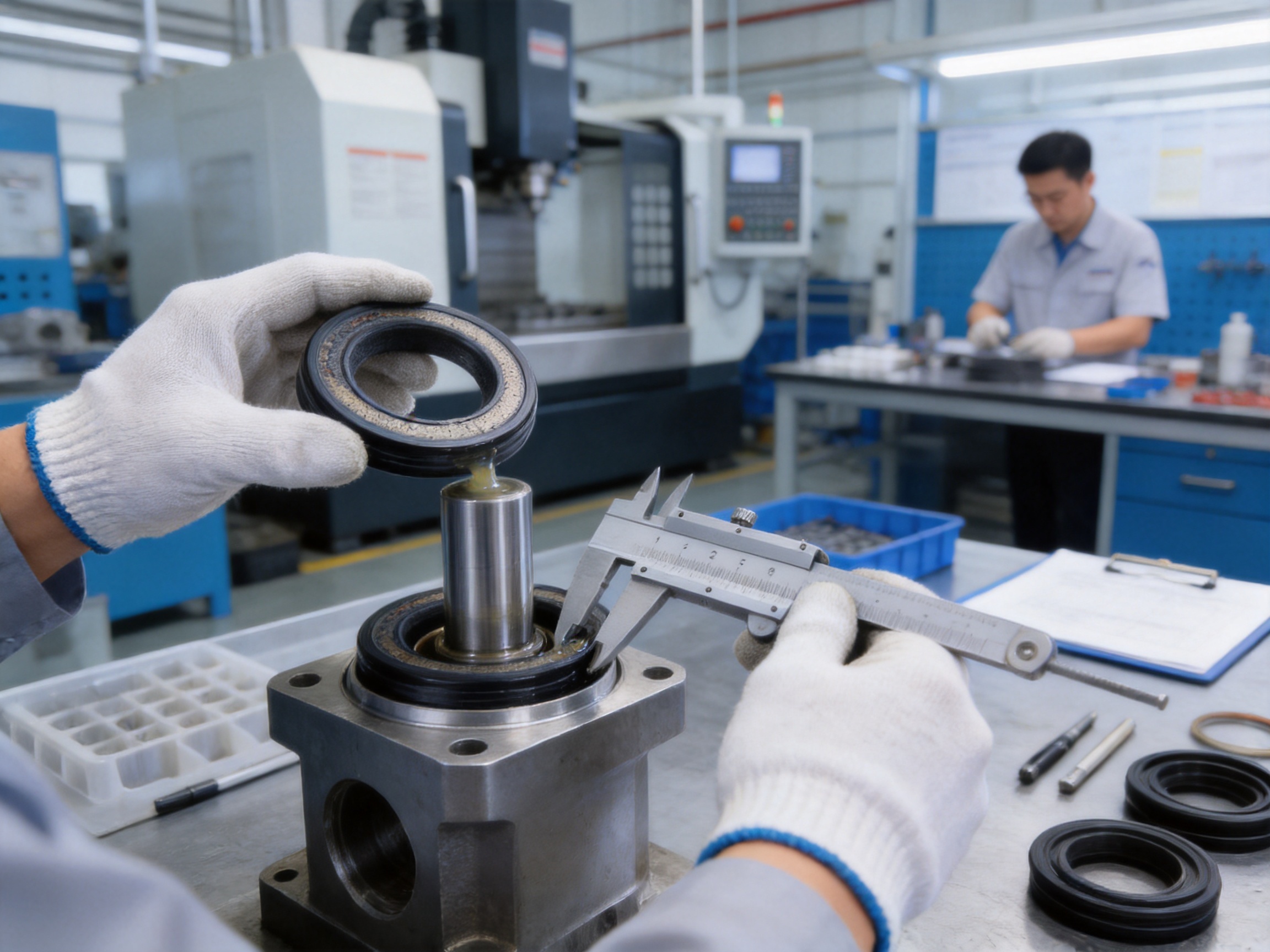
Correct installation is essential for achieving the intended performance of any elastomeric seal. Before assembly, inspect the seal for cuts, tears, mold damage, deformation, foreign particles, or visible surface defects. Confirm that the product code and dimensions match the required design.
Inspect the piston rod and housing as well. The rod should be clean, smooth, and free from burrs or sharp edges that could cut the sealing lip. The housing and adapter should be free from metal chips, dust, old seal fragments, and excessive lubricant residue. Any contamination trapped beneath the seal may create a leakage path or damage the rubber during movement.
Verify the orientation of the Y-type profile before insertion. The sealing lips must face the intended pressure and movement direction according to the assembly drawing. Installing a directional seal in the wrong orientation may reduce sealing effectiveness, increase friction, or cause premature wear.
Use an appropriate assembly lubricant when required by the equipment design and rubber compound. Lubrication can reduce installation friction and help protect the lip during the first operating cycles. The lubricant must be compatible with NBR and with the working medium. Avoid using an unknown chemical or solvent that could cause swelling, softening, hardening, or cracking.
Do not force the piston rod through the seal at an angle. Align the rod carefully and apply steady, controlled pressure. If unusual resistance is encountered, stop and check the dimensions, orientation, surface condition, and adapter position. Excessive force may roll, cut, or permanently deform the sealing lip.
After installation, check that the seal is seated evenly and that no section is twisted or displaced. If the assembly permits, perform a low-speed movement or pressure check before placing the product into full service. Early inspection can identify installation errors before they develop into leakage or equipment damage.
Quality Considerations for Industrial Buyers
Industrial purchasing teams should evaluate more than unit price when comparing oil seal rings. A lower-cost seal may become more expensive if it causes leakage, frequent replacement, production stoppage, warranty claims, or damage to nearby components. A fatigue-oriented product can be evaluated in terms of total ownership cost and expected service reliability.
Dimensional consistency is a key consideration. The listed 26mm outer diameter, 7.2mm inner diameter, and 4mm height should be matched with the customer’s approved drawing and tolerance requirements. The 25*2.4 O-ring adapter and 25*8 pipe-and-rod arrangement should also be reviewed. Purchasing teams should maintain clear records so that replacement orders use the correct product code, A-1-032.
Material traceability and consistent production practices are also valuable. Buyers may request relevant material information, inspection documentation, sample approval, or batch records according to their quality system. For critical applications, incoming inspection may include visual checks, dimensional measurement, hardness verification, and sampling based on the customer’s quality plan.
Packaging and storage should not be overlooked. NBR seals should be protected from direct sunlight, ozone-generating equipment, excessive heat, oils or chemicals that are not part of the intended application, and mechanical deformation during storage. Correct storage can help preserve the seal’s dimensions and elasticity before installation.
Supplier communication is particularly important for customized or high-volume projects. The manufacturer’s ability to provide design, testing, and technical consultation can help customers establish a clearer approval process. A strong technical relationship can also speed up troubleshooting if field data indicates a need for design adjustment.
Application Selection Guide
The A-1-032 seal may be considered when the application requires a Y-type oil seal ring with a 26*7.2*4 dimensional format, NBR material, and compatibility with a 25*2.4 O-ring adapter. The listed 50-2000N design pressure range provides an initial reference for selection, but the complete assembly must be checked before approval.
It is suitable for consideration in gas springs and dampers that use an 8mm piston rod and a 25mm steel pipe inner diameter. The application should involve a suitable temperature range and a working medium compatible with NBR. The expected movement should also be compared with the product’s intended reciprocating sealing function.
The product may be less appropriate when the application involves extreme heat, aggressive chemicals, specialized gases, or conditions outside the stated design parameters. In such cases, customers should consult the manufacturer about alternative compounds or modified profiles. HNBR or FPM may be considered for certain demanding conditions, although the final selection depends on the exact environment.
Design engineers should also consider the surface finish and hardness of the piston rod. Even a high-quality seal can wear rapidly against a rough, damaged, corroded, or improperly finished rod. Likewise, excessive misalignment can create uneven lip loading and reduce service life. Seal selection and mechanical design must therefore be treated as a coordinated process.
Industries and Use Cases
Automotive Components
Automotive systems frequently rely on gas springs and dampers for controlled movement, vibration management, lifting support, and access-panel operation. The seal must withstand repeated cycles and mechanical vibration while helping retain internal pressure or lubricant. The A-1-032 design may be evaluated for selected automotive applications where its dimensions and NBR characteristics are appropriate.
Furniture and Office Equipment
Furniture gas springs are used in chairs, desks, recliners, beds, cabinets, and adjustable mechanisms. These products may be operated many times each day, making fatigue resistance a valuable design consideration. A compact, simple-fitting seal can support efficient assembly and help maintain smooth movement in mass-produced furniture components.
Home Appliances
Home appliances may include controlled-motion mechanisms, damped doors, lifting supports, or adjustable structures. In these applications, a compact seal can contribute to quiet and consistent operation. The manufacturer’s ability to develop customized sealing solutions may be useful when a standard component does not fit a particular appliance architecture.
Medical Equipment
Medical equipment often requires controlled motion, dependable operation, and careful component selection. Where a gas spring or damper is used in an adjustable bed, chair, cabinet, or support mechanism, the seal may contribute to smooth and stable movement. Application validation is especially important in medical equipment because design requirements can include cleanliness, material documentation, and strict reliability expectations.
Construction and Industrial Equipment
Construction and industrial equipment may use dampers and gas springs to control covers, panels, access doors, lifting mechanisms, and safety systems. These environments can involve dust, vibration, repeated movement, and changing operating conditions. The seal’s resistance to fatigue and its practical installation characteristics can be useful when maintenance access is limited or downtime is costly.
Production Process Perspective
Although the exact internal process parameters are determined by the manufacturer, high-quality elastomer seal production generally involves several controlled stages. The process begins with material selection and compound preparation. For an NBR product, the compound must be formulated to provide the required balance of elasticity, strength, compression recovery, abrasion resistance, and processing stability.
The compound is then prepared for molding. Consistent mixing and processing help ensure that the rubber behaves uniformly throughout the seal. Variations in compound distribution can lead to differences in hardness, curing behavior, or mechanical response. These differences may affect how the sealing lip performs during repeated movement.
Mold design is particularly important for a Y-type seal. The mold must reproduce the lip geometry, outer diameter, inner diameter, height, and other functional features accurately. It must also support efficient filling and curing while minimizing flash and dimensional variation. Mold maintenance is necessary to preserve profile quality across production batches.
During molding and curing, controlled temperature, pressure, and time help establish the final elastomer properties. Insufficient curing may reduce strength or dimensional stability, while excessive curing may affect elasticity and flexibility. Stable process control helps the finished seal achieve more predictable performance.
After molding, the seals may undergo trimming, visual inspection, dimensional inspection, and other quality checks. Careful removal of flash is important because excess material at the sealing lip can interfere with assembly or create an irregular contact line. Inspection should focus on the features that influence sealing, including lip condition, concentricity, surface quality, and overall dimensions.
For products intended for repetitive duty, testing and validation are important parts of development. Cycle testing can provide information about fatigue behavior, leakage, deformation, and changes in friction. The stated million-cycle design objective for the A-1-032 product reflects this type of durability-oriented approach, although customers should confirm test conditions and acceptance criteria for their own applications.
Maintenance and Service-Life Practices
Even a durable seal requires a suitable operating environment. Regular inspection can help detect early signs of leakage, rod damage, abnormal friction, or contamination. If a gas spring or damper begins to move unevenly, make unusual noises, lose force, or show visible oil residue, the assembly should be evaluated before continued use.
Rod cleanliness is especially important. Dirt and abrasive particles can be carried into the sealing interface during movement. Over time, these particles may scratch the rod or wear the sealing lip. Protective covers, clean assembly practices, and appropriate maintenance can help reduce contamination-related wear.
Do not reuse a seal that has already been removed from an installed assembly unless the equipment procedure specifically permits it. An installed elastomer may have taken a compression set or adapted to the original mating surfaces. Reuse can produce uncertain sealing performance and may increase the risk of leakage.
Replacement seals should be stored in a way that prevents compression, bending, excessive heat, sunlight, and ozone exposure. Keep products in their original packaging where possible and avoid placing heavy items on top of seal cartons. Good storage practices protect the material before it reaches the assembly line.
Technical Support and Custom Development
Customers often need more than a standard product number. A new equipment project may require a special groove, a nonstandard rod size, a different elastomer, a modified lip geometry, or a specific durability test. The manufacturer’s stated capabilities in product design, testing, and technical consultation can support these requirements.
A useful technical inquiry should include the existing seal drawing, housing dimensions, rod dimensions, working temperature, pressure or load, stroke, speed, cycle count, lubricant, operating medium, and expected service life. Photographs of the assembly and failed parts can also help identify installation or application issues.
For a replacement project, the product code A-1-032 and the 26*7.2*4 dimensions provide a clear starting point. Customers should still submit their application data if the original seal experienced premature failure. Replacing the part without investigating the cause may result in repeated problems if the underlying issue is a damaged rod, incorrect groove, excessive pressure, poor alignment, or incompatible lubricant.
For an original equipment manufacturer, early technical cooperation can reduce later redesign. The supplier can help review dimensions, evaluate material options, prepare samples, and organize testing. This approach may provide a more reliable path than selecting a seal solely from an outside diameter or a general catalog description.
Frequently Asked Questions
What type of product is the 26mm Durable Industrial Seal?
It is a Y-type oil seal ring identified by product code A-1-032. The product has a nominal specification of 26*7.2*4 mm and is designed for selected gas spring, damper, and related moving-rod sealing applications.
What material is used for this seal?
The listed material is NBR, or nitrile butadiene rubber. NBR is commonly used for industrial sealing because it offers useful elasticity, mechanical strength, abrasion resistance, and compatibility with many mineral-oil-based applications. The exact suitability should be confirmed against the customer’s temperature and media conditions.
What are the product dimensions?
The outer diameter is 26 mm, the inner diameter is 7.2 mm, and the height is 4 mm. The associated O-ring adapter is 25*2.4 mm. The listed steel pipe inner diameter and piston rod diameter combination is 25*8 mm.
What load or pressure range is associated with the design?
The product information lists a design applicable pressure range of 50-2000N. This value should be treated as an application reference. Actual approval requires review of the complete assembly, operating conditions, rod movement, temperature, and service-life requirements.
How many cycles is the seal designed to support?
The product description emphasizes million-cycle life under 2000N loads. Actual service life depends on the rod surface, alignment, lubrication, temperature, pressure, installation quality, and other system conditions. Customers should request test details when a specific cycle-life requirement applies.
Why is shape memory important in an oil seal ring?
Shape memory helps the elastomer recover toward its intended profile after compression and repeated deformation. This can help maintain sealing contact and reduce the effects of permanent flattening or distortion during service.
Is the product easy to install?
The product is described as simple to fit. Correct orientation, clean mating surfaces, suitable lubrication, and careful rod alignment are still required. The installer should never force the rod through a misaligned or damaged seal.
Can this seal be used in every gas spring or damper?
No. It should be selected only when the dimensions, material, load range, operating environment, and assembly design are suitable. A technical review is recommended for applications involving unusual temperatures, aggressive chemicals, special gases, or demanding durability requirements.
What industries may use this type of seal?
Potential industries include automotive, furniture, home appliances, medical equipment, construction, and general industrial equipment. The specific application must be validated because operating conditions vary significantly between industries.
Can customized sealing solutions be developed?
The manufacturer provides customized sealing solutions, including product design, testing, and technical consultation. Customers can discuss special dimensions, materials, profiles, and performance requirements with the technical service team.
What information should be provided when requesting technical advice?
Useful information includes drawings, housing and rod dimensions, stroke, speed, pressure or load, temperature, working medium, lubricant, expected cycle count, installation method, and service-life target. Photos and failed samples may also help with troubleshooting.
How should unused NBR seals be stored?
Store them in a cool, dry, clean location away from direct sunlight, ozone-generating equipment, excessive heat, and incompatible chemicals. Avoid bending, stretching, or compressing the seals during storage, and retain the original packaging where possible.
Why Choose a Specialized Sealing Partner?
Choosing a seal supplier involves more than confirming that a component fits into a groove. A specialized partner can contribute knowledge about elastomer behavior, profile design, molding, testing, application engineering, and production consistency. This broader capability is particularly valuable when the seal is part of a pressure-containing or safety-relevant mechanism.
Ningguo Jnsseals Sealing Technology Co., Ltd. focuses on sealing technology for gas springs, dampers, and O-ring-related products. The company was founded in 2019 and operates from Anhui, China. Its stated strengths include research and development, advanced production equipment, professional technical service, product testing, and customized sealing solutions.
The company’s products are used across automotive, furniture, home appliance, medical equipment, construction, and other industries. This range of applications indicates experience with different product structures and customer requirements. Its company philosophy emphasizes people-oriented development, innovation, pursuit of excellence, and the goal of becoming a globally leading sealing technology supplier.
For customers evaluating the A-1-032 seal, this supplier background offers practical value. The product is not presented as an isolated rubber component; it is part of a broader sealing technology program that includes design support and technical consultation. This can simplify communication when customers need a product recommendation, a replacement analysis, or a customized solution.
Conclusion
The 26mm Durable Industrial Seal is a compact NBR Y-type oil seal ring designed for demanding repetitive applications. Its 26*7.2*4 dimensions, 25*2.4 O-ring adapter compatibility, and association with a 25*8 steel pipe and piston rod configuration provide clear selection information for suitable gas spring and damper assemblies.
Its main advantages are a focus on fatigue strength, stated million-cycle design capability under 2000N loads, strong shape memory, practical installation, and the balanced performance of NBR. These features can make it a stronger alternative to basic sealing products when repeated movement, stable contact, and service-life expectations are important.
Successful performance depends on correct application engineering. Buyers should confirm dimensions, orientation, material compatibility, pressure or load, temperature, lubrication, rod condition, alignment, and installation practices. When standard specifications are not sufficient, the manufacturer’s product design, testing, and technical consultation capabilities can support customized development.
For equipment manufacturers, maintenance departments, and industrial distributors seeking a reliable sealing component for gas springs and dampers, the A-1-032 product offers a practical combination of compact design, fatigue-oriented performance, and technical support potential.
References
1. Product specification data for A-1-032, including dimensions, material, adapter information, and applicable design load range.
2. Manufacturer-provided product description concerning fatigue resistance, million-cycle design life, shape memory, and installation convenience.
3. General engineering principles for nitrile butadiene rubber selection in oil seal and O-ring applications.
4. General guidelines for reciprocating rod seal installation, lubrication, surface preparation, and storage.
5. Manufacturer company information concerning sealing technology research, product development, testing, customization, production equipment, and technical service.
Product: 26mm Durable Industrial Seal
PREV:High-Performance HNBR Dual-Function Seal for Damping and Inflation Applications
NEXT:Micro Precision Y-Seal for Low-Pressure Pumps and Damping Devices
NEXT:Micro Precision Y-Seal for Low-Pressure Pumps and Damping Devices


Want to know more
about us?
about us?

Precision sealing for gas springs and dampers. Durable, wear-resistant, and built for long-life performance in demanding applications.
Product Categories
Quick Links
Contact Us
-
Email: jns@jnsseals.cn

-
Manager Gong: +86-18563770820

-
Manager Wang: +8615357558902
-
No. 5, Meilin Avenue, Meilin Industrial Development Zone, Ningguo City, Anhui Province, China

