

 English
 русский
 Deutsch
 Türk
Türk 中文简体
中文简体
Micro Precision Y-Seal for Low-Pressure Pumps and Damping Devices
Micro Precision Y-Seal for Low-Pressure Pumps and Damping Devices
Micro Precision Y-Seal for Low-Pressure Pumps and Damping Devices
Micro Precision Y-Seal for Low-Pressure Pumps and Damping Devices
Micro Precision Y-Seal for Low-Pressure Pumps and Damping Devices
Micro Precision Y-Seal for Low-Pressure Pumps and Damping Devices
Micro Precision Y-Seal for Low-Pressure Pumps and Damping Devices
Micro Precision Y-Seal for Low-Pressure Pumps and Damping Devices
Micro Precision Y-Seal for Low-Pressure Pumps and Damping Devices
Micro Precision Y-Seal for Low-Pressure Pumps and Damping Devices
Micro Precision Y-Seal for Low-Pressure Pumps and Damping Devices
Micro Precision Y-Seal for Low-Pressure Pumps and Damping Devices
Micro Precision Y-Seal for Low-Pressure Pumps and Damping Devices
Micro Precision Y-Seal for Low-Pressure Pumps and Damping Devices
Micro Precision Y-Seal for Low-Pressure Pumps and Damping Devices
Micro Precision Y-Seal for Low-Pressure Pumps and Damping Devices

Deng Yixuan — Domestic Sales Supervisor
Home / Author / Deng Yixuan — Domestic Sales Supervisor / Micro Precision Y-Seal for Low-Pressure Pumps and Damping Devices
NEW Category
Contact us
Micro Precision Y-Seal for Low-Pressure Pumps and Damping Devices
Content
- 1 1. Product Overview
- 2 2. Why Miniature Sealing Requires Specialized Design
- 3 3. Y-Type Profile and Functional Advantages
- 4 4. Application in Pneumatic Damping and Inflation Systems
- 5 5. Comparison with General-Purpose Sealing Solutions
- 6 6. Manufacturing and Engineering Strengths
- 7 7. Installation and Design Considerations
- 8 8. Quality, Reliability, and Service-Life Factors
- 9 9. Value for Equipment Manufacturers
- 10 10. Company Capabilities and Industry Experience
- 11 11. Development Process for a Customized Version
- 12 12. Sustainability and Efficient Product Design
- 13 13. Practical Selection Guide
- 14 14. Frequently Asked Questions
- 14.1 What type of product is the Micro Precision Pump Y-Seal?
- 14.2 What are the main dimensions?
- 14.3 What piston and pipe arrangement is recommended?
- 14.4 What pressure range is the product designed for?
- 14.5 What material is used?
- 14.6 Can the seal be used for air and oil applications?
- 14.7 Why is low breakout force important?
- 14.8 Is this seal a replacement for every O-ring?
- 14.9 Can the product be customized?
- 14.10 What should be checked before installation?
- 14.11 What industries may use this type of seal?
- 14.12 How can customers request technical support?
- 15 15. Conclusion
- 16 References
- 17 Product: Micro Precision Pump Y-Seal
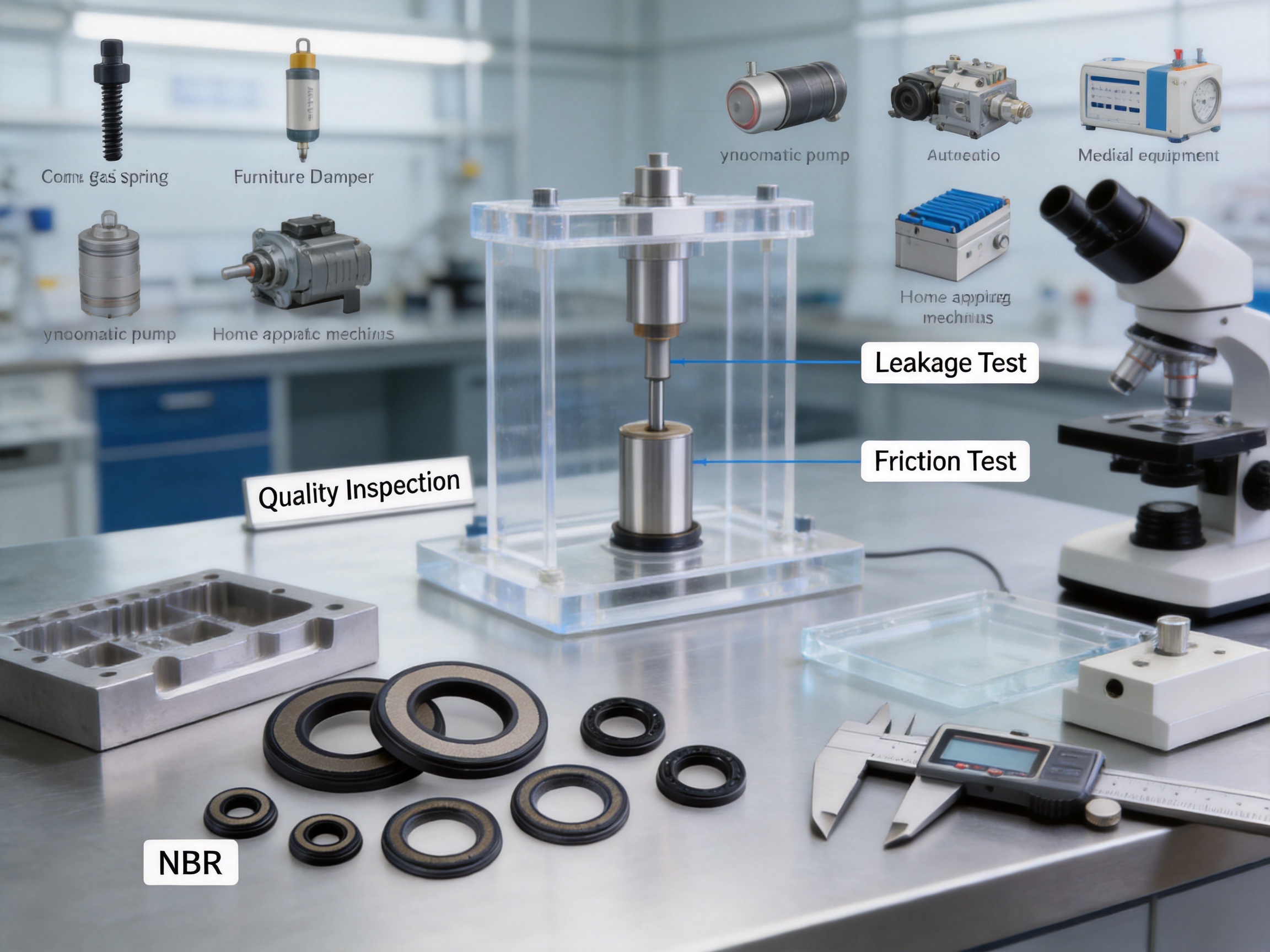
Micro-scale sealing components often determine whether a compact pump, damper, or pneumatic mechanism performs smoothly and reliably. In a miniature assembly, even a small amount of leakage, excessive friction, or inconsistent compression can affect operating force, response time, service life, and overall product quality. The Micro Precision Pump Y-Seal is designed to address these challenges in applications that require a compact oil-resistant sealing element for low-pressure operation.
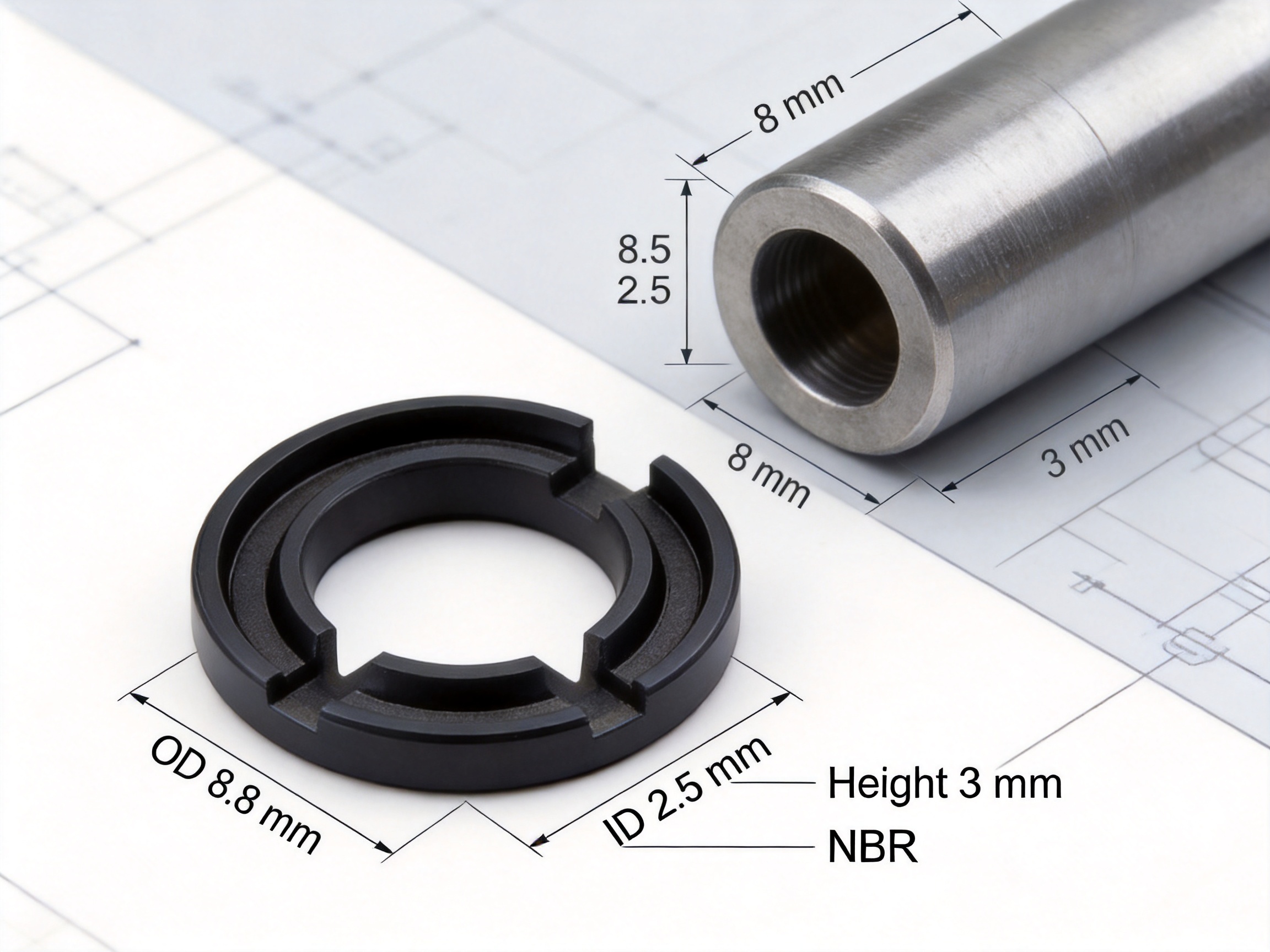
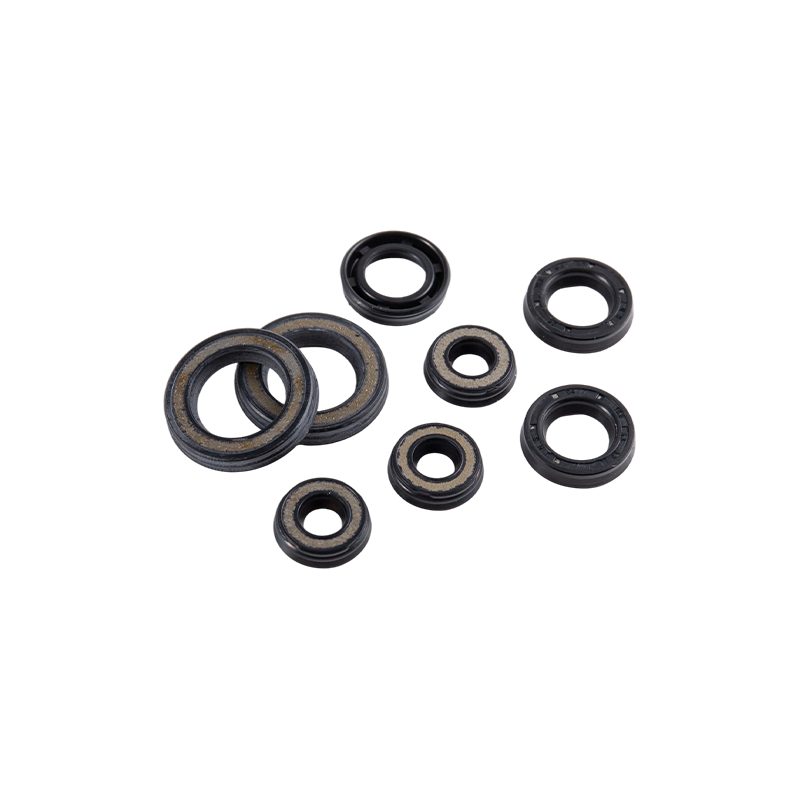
Developed for micro-devices with an outside diameter of approximately 8.8 mm, this Y-type oil seal ring combines a small installation envelope with low breakout force and practical sealing performance. Its design is suitable for pressure conditions in the 5–10 N range and can be applied to both inflation and damping functions. With an inner diameter of 2.5 mm, a height of 3 mm, and NBR construction, the seal is intended for compact assemblies using an 8 mm steel pipe and a 3 mm piston rod.
This article examines the construction, operating characteristics, material selection, manufacturing strengths, application value, installation considerations, quality factors, and customization capabilities associated with this micro precision Y-seal. It also explains how the product can provide advantages over less specialized sealing solutions in miniature pneumatic and oil-containing mechanisms.
1. Product Overview
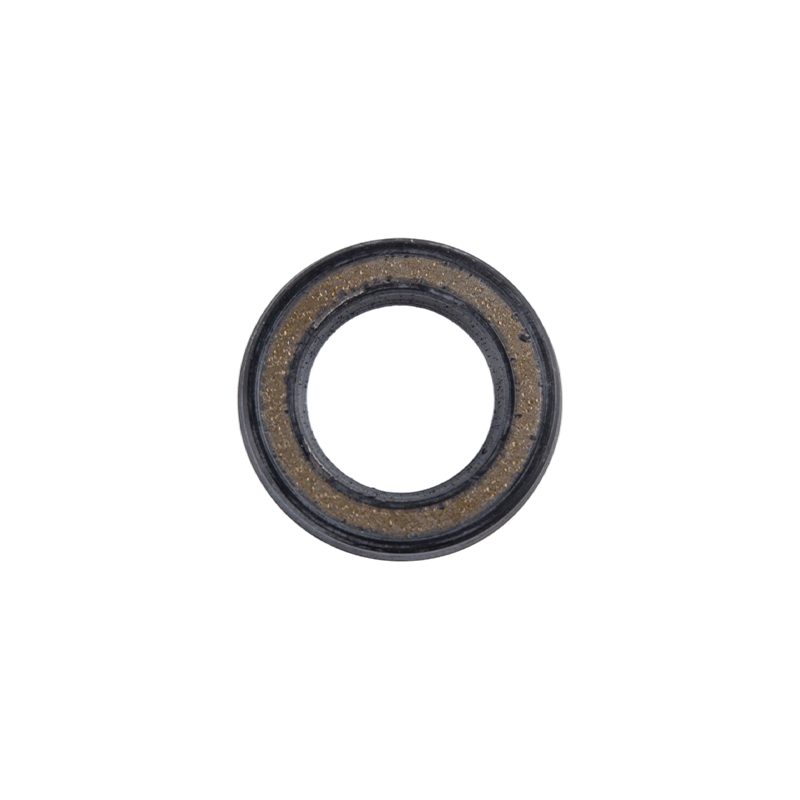
The Micro Precision Pump Y-Seal is a Y-shaped oil seal ring engineered for compact mechanical systems. Its primary function is to maintain a sealing interface between a moving piston rod and the surrounding housing or cylinder structure. The product is especially suitable for small pumps, gas springs, dampers, pneumatic adjustment mechanisms, and other devices where available installation space is limited.
The seal is identified by product code A-1-001 and is manufactured from NBR, a commonly selected elastomer for applications involving mineral oils, lubricating oils, and general-purpose pneumatic equipment. The specified product dimensions are 8.9 × 2.5 × 3 mm, while the listed outside diameter is 8.8 mm. The internal diameter is 2.5 mm, and the height is 3 mm.
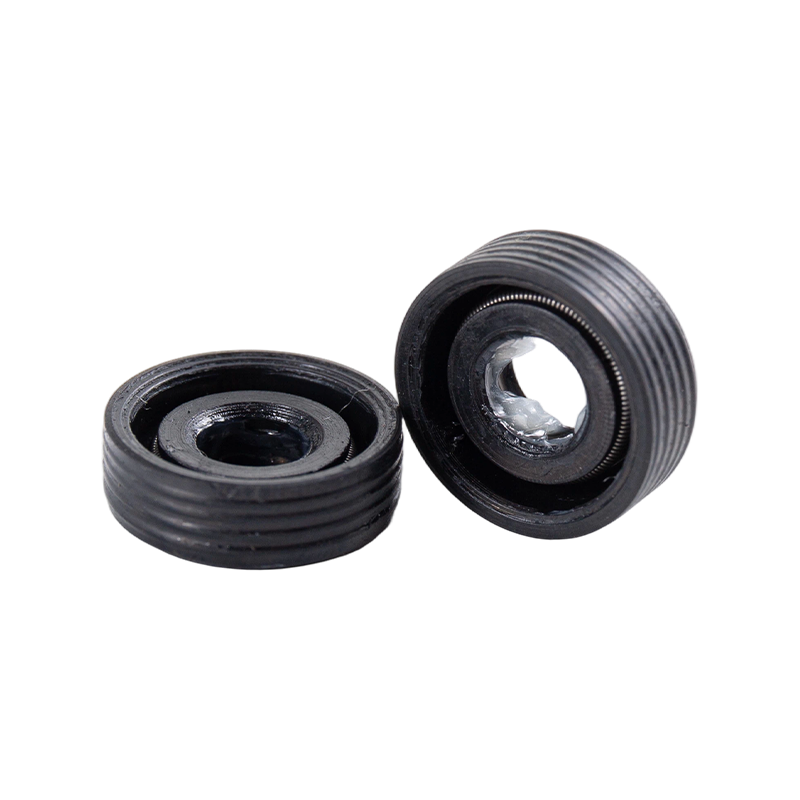
Unlike a basic circular gasket, a Y-type seal uses a shaped sealing profile. The two sealing lips form a geometry that can create an effective contact interface while allowing the seal to accommodate movement. This profile is beneficial in reciprocating applications because it can balance sealing contact with movement resistance more effectively than an oversized solid ring.
The product is optimized for low-pressure conditions in the 5–10 N design range. This makes it appropriate for precision mechanisms that do not require a high-pressure hydraulic seal but still need dependable retention of oil, air, or damping media. In such systems, reducing friction can be just as important as preventing leakage.
Key Product Data
| Item | Specification |
|---|---|
| Product name | Micro Precision Pump Y-Seal |
| Product category | Y-Type Oil Seal Ring |
| Product code | A-1-001 |
| Product specification | 8.9 × 2.5 × 3 mm |
| Outside diameter | 8.8 mm |
| Inside diameter | 2.5 mm |
| Height | 3 mm |
| Design pressure range | 5–10 N |
| Steel pipe inside diameter | 8 mm |
| Piston rod diameter | 3 mm |
| Material | NBR |
| Recommended functions | Inflation and damping |
| O-ring adapter | Not specified |
The dimensions and application parameters should be reviewed together rather than independently. A seal may have a suitable nominal diameter but still perform poorly if the rod finish, groove geometry, compression, concentricity, or assembly clearance is not properly controlled. For this reason, the product is most effective when integrated into a sealing system designed around its specified dimensions and operating conditions.
2. Why Miniature Sealing Requires Specialized Design
Miniature devices present a different set of sealing challenges from standard industrial cylinders. When the sealing diameter is only a few millimeters, dimensional variation becomes proportionally more significant. A small change in lip geometry or material compression may create a large change in friction or leakage behavior.
In a compact pump or damper, the available driving force may be limited. If the seal produces excessive static friction, the piston may hesitate before moving. This phenomenon, commonly described as stick-slip or breakout resistance, can cause inconsistent output. The equipment may require more actuation force than intended, respond unevenly, or fail to return smoothly to its original position.
Low breakout force is therefore a central design objective for the Micro Precision Pump Y-Seal. The sealing profile is intended to create sufficient contact for oil resistance while avoiding unnecessary interference with the moving piston rod. This balance is particularly useful in products where smooth movement and repeatable low-force operation are important.
Another challenge is the limited space available for the sealing groove and retaining structure. A large industrial seal may provide strong sealing performance but cannot be installed in a micro-device without increasing the size of the housing. The compact dimensions of this Y-seal allow designers to maintain a smaller product envelope while preserving a dedicated sealing interface.
Miniature seals must also tolerate practical manufacturing and assembly conditions. The piston rod may experience slight eccentricity, surface variation, or movement over a relatively short stroke. A properly designed elastomeric profile can accommodate minor deviations more effectively than a rigid sealing element, provided that the application remains within the intended pressure, temperature, media, and speed limits.
3. Y-Type Profile and Functional Advantages
The Y-shaped cross-section is one of the defining characteristics of this product. The profile typically includes a base area for retention and two sealing lips that face the operating interface. During installation, the lips are compressed against the mating surface, creating a controlled sealing line.
One advantage of this configuration is its suitability for reciprocating motion. A piston rod can move through the seal while the lips maintain contact with the rod surface. In oil-containing equipment, the geometry can help retain lubricating media and reduce the risk of leakage through the clearance between the rod and housing.
The profile can also support pressure-responsive behavior. When pressure is applied from the appropriate direction, the seal lips may be encouraged toward the mating surface. This can improve sealing effectiveness without requiring the same level of static interference as a solid, heavily compressed ring. The exact response depends on groove design, elastomer hardness, pressure direction, surface finish, and assembly tolerances.
Compared with an unprofiled gasket, a Y-seal can provide a more controlled relationship between sealing contact and movement. This is particularly valuable in low-pressure applications where excessive compression is not desirable. A gasket that is compressed too heavily may prevent leakage but also create high friction, accelerated wear, and increased actuation requirements.
The Y-profile should not be treated as a universal replacement for every seal type. It is most suitable when the application requires a compact, reciprocating sealing element and operates within the specified design range. High-pressure hydraulic systems, high-temperature environments, aggressive chemicals, and applications with severe abrasive contamination may require a different profile or elastomer.
Low Breakout Force
Breakout force is the initial force needed to start movement after a component has remained stationary. In small mechanisms, this force can have a major effect on user experience and device accuracy. A high breakout force may cause delayed movement, sudden release, or inconsistent damping.
The Micro Precision Pump Y-Seal is optimized for ultra-low breakout behavior. Its compact Y-type geometry is intended to minimize unnecessary contact resistance while maintaining sealing contact. This can help a piston begin moving more smoothly and can contribute to more consistent response in low-force mechanisms.
Lower breakout force may also reduce energy consumption in automated equipment. If an actuator does not need to overcome excessive seal resistance, the overall drive system can be smaller or operate with a lower input force. In battery-powered or compact mechanical devices, this can support more efficient system design.
Oil Resistance
NBR is widely used in oil seal applications because it offers a practical balance of oil resistance, elasticity, abrasion resistance, and cost. The material is suitable for many mineral-oil-based lubricants and general industrial fluids. This makes it a logical choice for compact oil-containing mechanisms and damping systems operating under ordinary conditions.
Oil resistance helps maintain the seal’s physical properties during service. If an elastomer absorbs too much fluid, it may swell, soften, harden, or lose dimensional stability. Such changes can alter friction and sealing force. The NBR formulation used for a particular application should therefore be matched with the actual oil, temperature range, and service duration.
NBR should not automatically be selected for every chemical environment. Applications involving aggressive fuels, strong solvents, ozone exposure, or unusually high temperatures may require HNBR, FPM, or another specialized compound. JNS can evaluate material requirements when customers provide detailed operating conditions.
4. Application in Pneumatic Damping and Inflation Systems
The product is described as suitable for both inflation and damping. These two functions may appear different, but both can require a controlled interface between a moving piston and a small cylinder or pipe.
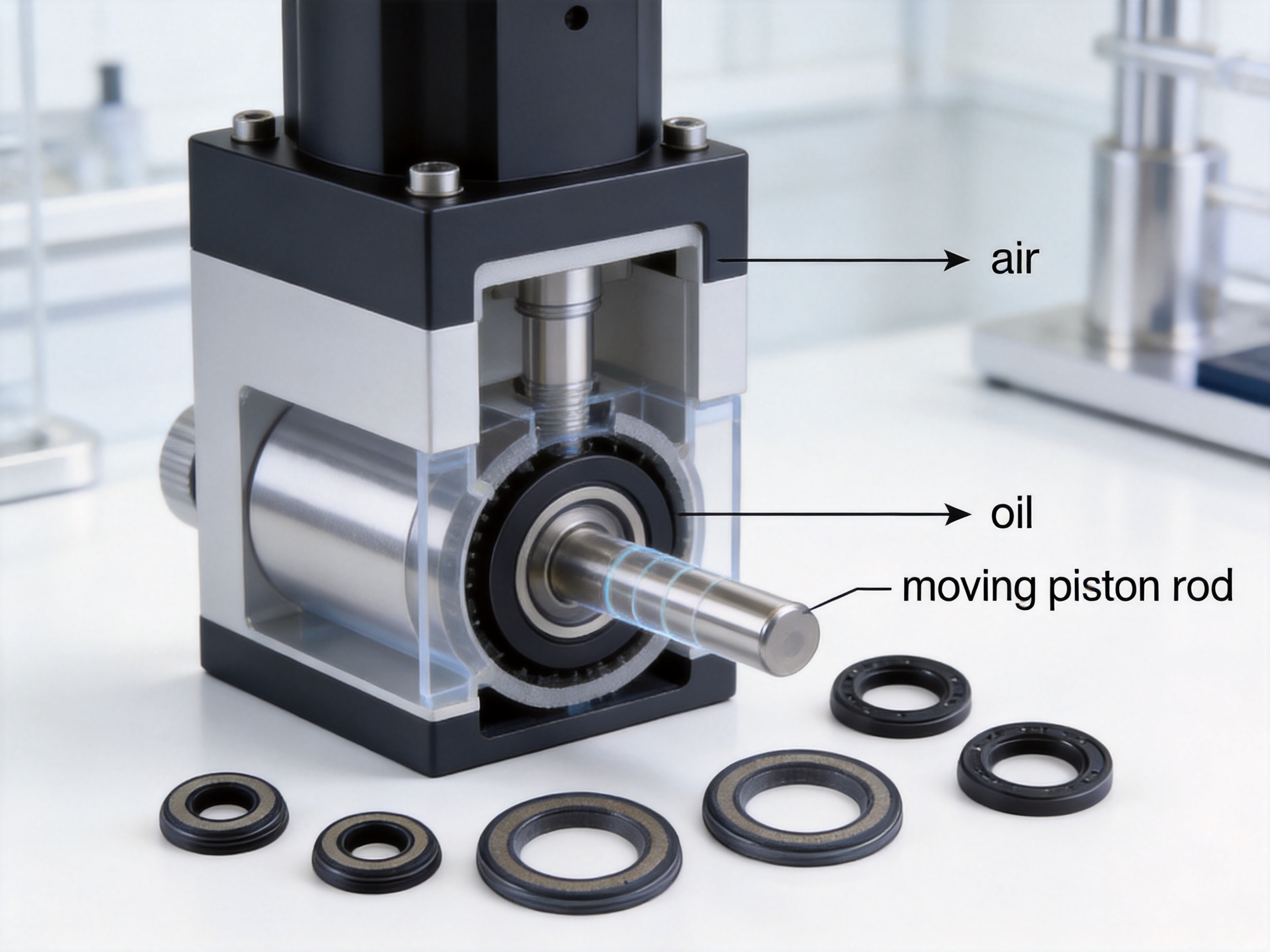
In an inflation mechanism, the seal helps support the movement of air or gas through a compact chamber. The sealing interface can reduce unwanted bypass around the piston and support more efficient compression or transfer. When the mechanism is designed for low pressure, minimizing friction is essential because the available force may be limited.
In a damping application, the seal helps separate moving sections and retain oil or another damping medium. The goal may not be to eliminate all movement resistance. Instead, the damper must provide a predictable response while limiting leakage and maintaining smooth travel. The seal contributes to this performance by controlling the boundary between the piston rod and the housing.
Potential application areas include compact furniture dampers, small gas spring components, automotive subassemblies, home appliance mechanisms, medical equipment, and precision pneumatic devices. The suitability of the seal depends on the complete assembly, including fluid type, stroke length, speed, temperature, pressure, rod finish, and expected service life.
For furniture and home appliance applications, low noise and smooth user operation are often important. A seal that creates excessive friction may cause a lid, drawer, adjustment mechanism, or support arm to move unevenly. The low-force design objective of this product can help engineers pursue a smoother operating feel.
In medical equipment, cleanliness, material compatibility, dimensional consistency, and traceability may be critical. The seal should be evaluated according to the applicable equipment requirements and validation procedures. Product selection should include consideration of sterilization, fluid compatibility, and regulatory obligations where relevant.
In automotive systems, temperature cycling, vibration, oil exposure, and long service intervals can impose additional requirements. The NBR material and compact geometry may be appropriate for selected applications, but the final design must be validated under representative conditions rather than assumed from dimensional compatibility alone.
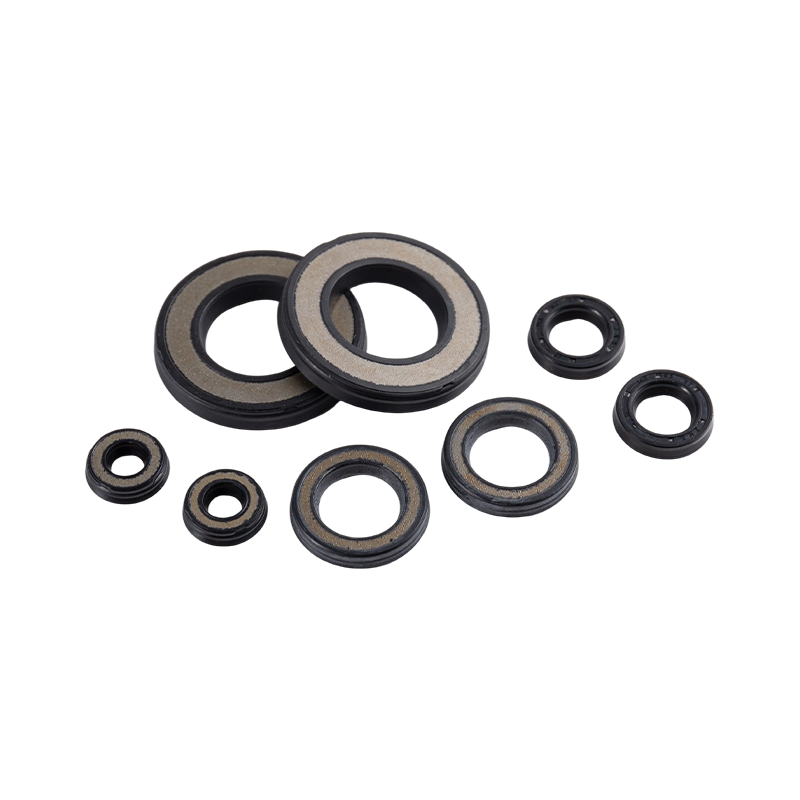
5. Comparison with General-Purpose Sealing Solutions
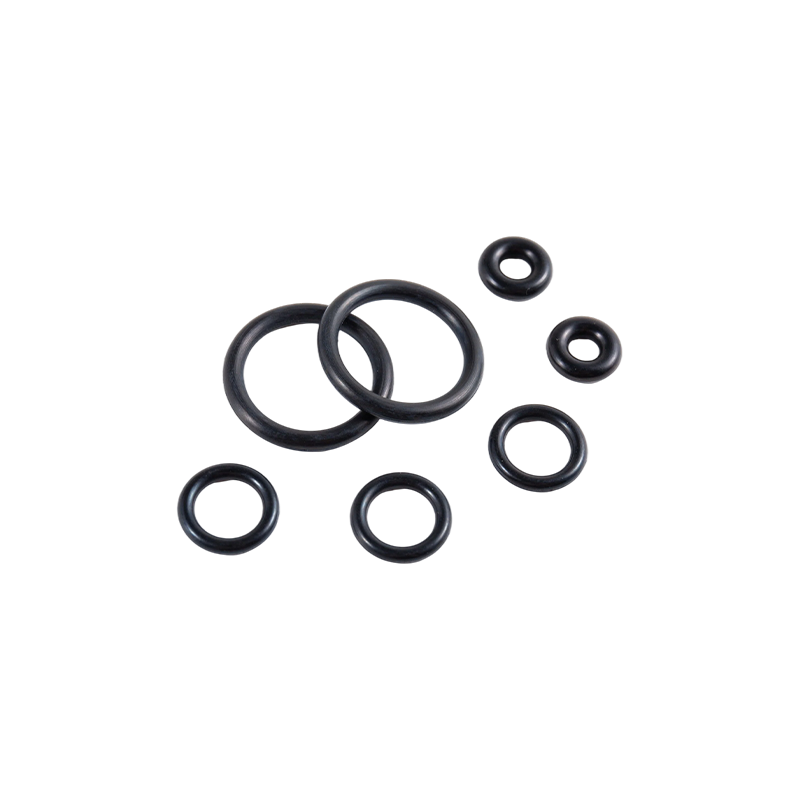
Product selection is often based on a comparison between specialized profile seals and more general-purpose components. A standard O-ring may be easy to source and can provide effective static sealing. However, a moving piston application may require a profile specifically designed for reciprocating motion.
An O-ring used in a dynamic application can experience rolling, twisting, extrusion, or increased friction if the groove and movement conditions are not carefully controlled. In contrast, the Y-type profile is shaped around the requirements of a moving sealing interface. This does not mean that a Y-seal is always superior to an O-ring, but it may offer a more suitable design starting point for compact reciprocating mechanisms.
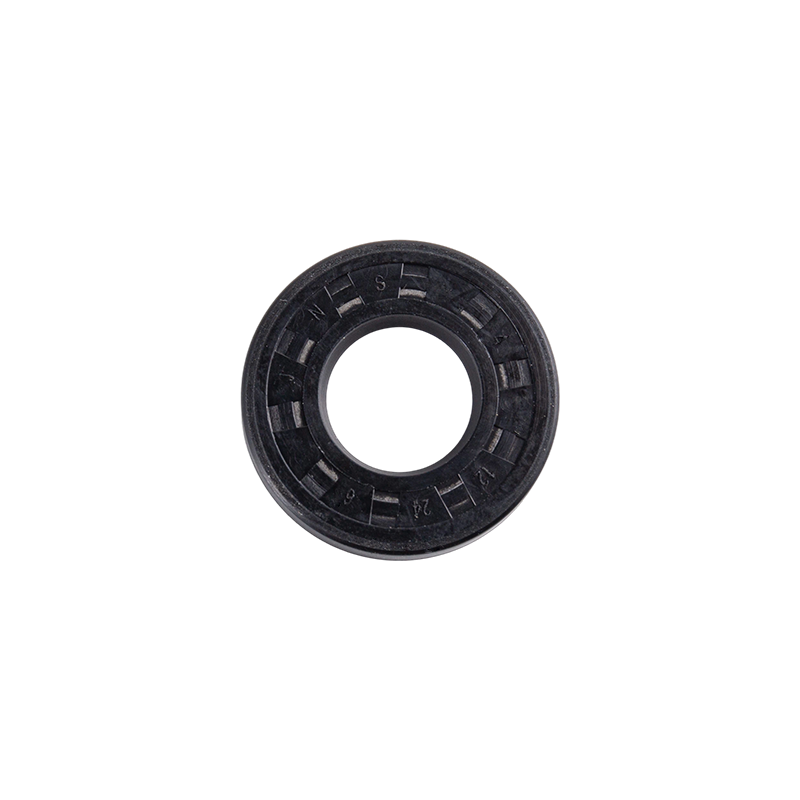
A larger conventional oil seal may provide strong performance in a high-speed rotating shaft or a larger hydraulic cylinder, but its dimensions may be unsuitable for an 8 mm steel pipe and 3 mm piston rod. The Micro Precision Pump Y-Seal is specifically sized for micro-scale integration, reducing the need to enlarge the housing to accommodate a larger sealing component.
A rigid plastic seal may offer low swelling in certain fluids, but it may require tighter manufacturing tolerances and a more precise mating surface. An elastomeric NBR seal can provide flexibility and conformability, allowing it to accommodate small surface or alignment variations. This can simplify the sealing design in compact assemblies, although the limits of elastomer deformation must still be respected.
A heavily compressed gasket may reduce leakage but can introduce high friction and difficult assembly. The Y-seal’s emphasis on low breakout force provides an alternative approach: create a functional sealing interface through profile geometry rather than relying only on high compression.
Potential Advantages Over Less Specialized Alternatives
The first potential advantage is dimensional suitability. The 8.8 mm outside diameter and 2.5 mm inside diameter are intended for a compact piston-and-pipe arrangement. A seal designed around these dimensions can help reduce redesign work compared with adapting a standard component with a substantially different size.
The second potential advantage is movement performance. The Y-type profile is more directly associated with reciprocating sealing than a basic flat gasket. Its geometry is intended to support a balance between contact and movement, which is important for low-force devices.
The third potential advantage is application flexibility. Because the product is suitable for both inflation and damping, the same general seal concept may be considered across related product families. This can simplify development and purchasing when multiple mechanisms share similar dimensional and performance requirements.
The fourth potential advantage is material practicality. NBR offers a well-established combination of oil resistance and mechanical properties for many industrial applications. It can provide a cost-effective solution where the operating environment does not require a premium fluoroelastomer or hydrogenated compound.
The fifth potential advantage is customization support. The manufacturer provides sealing technology research, product development, testing, and technical consultation. This allows customers to discuss application conditions rather than selecting solely from a fixed catalog.
6. Manufacturing and Engineering Strengths
Ningguo Jnsseals Sealing Technology Co., Ltd. is a high-tech enterprise founded in 2019 and headquartered in Anhui, China. The company focuses on sealing technology for gas springs, dampers, and related O-ring products. Its business model combines product manufacturing with research, development, testing, and technical support.
The company’s focus on gas spring and damper sealing is relevant to the Micro Precision Pump Y-Seal because these applications require more than basic material molding. They demand an understanding of reciprocating movement, friction behavior, oil retention, pressure response, and long-term dimensional stability.
A specialized manufacturer can support the full development process, beginning with application analysis and profile selection. Engineers can review the piston rod diameter, cylinder or pipe dimensions, operating medium, pressure conditions, temperature, stroke, speed, and assembly method. This information can then guide material and geometry recommendations.
Material and Compound Control
Elastomer performance depends not only on the generic material name but also on the compound formulation, hardness, curing system, filler package, and processing conditions. NBR compounds with different acrylonitrile content and hardness levels can show different oil resistance, low-temperature flexibility, abrasion resistance, and friction behavior.
A capable manufacturer should manage material preparation and batch consistency carefully. Compound control helps ensure that molded seals remain within expected physical and dimensional ranges. It also supports more reliable comparison between trial samples and production parts.
For the A-1-001 product, NBR is selected as the standard material. When the customer’s fluid, temperature, or environmental conditions exceed the normal NBR range, material alternatives can be evaluated. Possible choices may include HNBR for improved heat and aging resistance or FPM for enhanced resistance to certain fuels and high-temperature environments.
Precision Molding
Micro seals require precise molds because the sealing lips are small and their geometry directly influences performance. Mold design must account for shrinkage, parting lines, flash, venting, demolding, and dimensional stability. Excessive flash on a sealing lip can increase friction or create an irregular contact line.
Modern molding processes can be combined with controlled curing parameters to produce repeatable profiles. Temperature, pressure, cure time, and material flow must be managed to prevent under-cure, over-cure, voids, knit lines, or deformation. These controls are especially important when the finished component has a small cross-section and limited tolerance for defects.
After molding, parts may undergo trimming, cleaning, visual inspection, dimensional inspection, and sampling tests. The objective is to ensure that the sealing edge is clean and that the product maintains its intended geometry throughout the production batch.
Product Testing and Validation
Testing should reflect the actual service conditions of the customer’s equipment. Dimensional checks can confirm inside diameter, outside diameter, height, and critical lip features. Physical property testing can evaluate hardness, tensile strength, elongation, compression set, and aging behavior.
Functional testing may include leakage evaluation, reciprocating movement tests, friction measurement, oil immersion, pressure cycling, and temperature exposure. For a micro pump or damper, breakout force and running friction can be particularly important. These tests help determine whether the seal supports smooth operation instead of merely passing a static leakage test.
Testing can also help identify the relationship between seal performance and assembly variables. For example, a change in rod surface roughness or groove compression may affect friction more than expected. Technical collaboration between the seal manufacturer and equipment designer can therefore shorten the development cycle and reduce trial-and-error work.
Technical Service and Customization
Sealing performance is highly dependent on the application. A supplier that offers technical consultation can help customers avoid selecting a component based solely on nominal dimensions. JNS provides customized sealing solutions that may include product design, testing, and technical consultation.
Customization may involve modifying the inner diameter, outside diameter, height, lip angle, base geometry, compound hardness, or material type. It may also involve adapting the seal to a specific groove or changing the profile to accommodate pressure direction and movement requirements.
Custom development is especially valuable when a customer needs to reduce the size of an existing mechanism, lower operating force, improve oil retention, or replace an unavailable component. The A-1-001 product can serve as a reference point for discussions involving similar micro-scale applications.
7. Installation and Design Considerations
Correct installation is essential for achieving reliable performance. Even a well-manufactured seal may leak or wear prematurely if it is installed in an unsuitable groove or damaged during assembly.
The groove should be designed to support the seal without excessive distortion. The dimensions must provide enough retention to prevent movement of the seal while allowing the lips to function properly. Excessive compression can increase breakout force, while insufficient compression can reduce sealing reliability.
The piston rod should have a suitable surface finish and should be free from burrs, scratches, sharp edges, and contamination. A damaged rod can cut the sealing lip during assembly or create a leakage path during operation. Chamfers or lead-in features can help guide the rod through the seal without folding or tearing the lip.
Assembly tools should be selected to avoid direct contact with delicate sealing edges. Metal tools with sharp corners can create small cuts that are difficult to detect visually but can cause leakage after the mechanism begins operating.
Clean lubrication may be applied where compatible with the seal material and operating medium. Lubrication can reduce installation damage and help the seal achieve a stable initial interface. However, the lubricant must not react adversely with NBR or contaminate a sensitive product.
The seal orientation should follow the pressure and movement requirements of the design. A Y-type seal is not necessarily symmetrical in functional behavior. Installing it in the wrong direction may reduce pressure-assisted sealing or alter friction performance.
Recommended Assembly Checklist
| Check point | Purpose |
|---|---|
| Confirm seal dimensions | Ensure compatibility with the groove, pipe, and piston rod |
| Inspect the sealing lips | Identify flash, cuts, deformation, or contamination |
| Check piston rod edges | Prevent lip damage during insertion |
| Verify rod surface condition | Reduce wear and leakage caused by roughness or scratches |
| Confirm orientation | Match the seal profile to the pressure direction |
| Use compatible lubricant | Support assembly and initial running-in |
| Control compression | Balance leakage prevention and friction |
| Perform functional inspection | Verify movement, breakout force, and leakage behavior |
8. Quality, Reliability, and Service-Life Factors
Seal service life depends on the interaction of material, geometry, movement, fluid, pressure, temperature, and surface condition. No seal can provide reliable performance if one of these factors falls far outside the intended range.
For the Micro Precision Pump Y-Seal, a low-pressure environment is a key part of the design context. The specified 5–10 N range should be used as a starting reference for equipment design and validation. If the application involves substantially higher pressure or unusually high reciprocating speed, the profile and material should be reassessed.
Temperature can affect elastomer flexibility and compression behavior. At low temperatures, NBR may become less flexible, which can increase breakout force. At elevated temperatures, aging and compression set may become more significant. The final operating temperature should therefore be compared with the selected compound’s tested range.
Fluid compatibility is equally important. Mineral oils and many common lubricants are generally compatible with suitable NBR compounds, but additives can influence swelling and aging. Customers should provide the exact fluid name or chemical composition whenever possible, especially for long-life or safety-critical equipment.
Rod finish and contamination can strongly influence wear. A rough or contaminated rod may abrade the lip, while external particles can enter the sealing interface and create a leakage path. Protective design features, clean assembly, and appropriate maintenance can extend service life.
Consistent production quality also affects reliability. Small variations in lip thickness, inside diameter, or material hardness may produce noticeable changes in friction in a micro-device. Quality control should therefore include both dimensional checks and functional performance evaluation.
9. Value for Equipment Manufacturers
For equipment manufacturers, selecting a specialized micro seal can reduce development risk. A seal that already corresponds to an 8 mm pipe and 3 mm piston rod provides a practical reference for early-stage design. Engineers can evaluate a known product configuration before deciding whether customization is necessary.
The compact size can help preserve a small product footprint. This may be useful in portable equipment, space-constrained furniture mechanisms, compact vehicle components, and miniature actuators. A smaller housing can reduce material use and support more flexible product packaging.
Low breakout force can also improve the perceived quality of a finished product. Users may notice whether a mechanism moves smoothly, starts consistently, and returns without hesitation. In damping applications, controlled friction can contribute to a more predictable motion profile.
The product’s dual suitability for inflation and damping can support platform standardization. A manufacturer producing several related mechanisms may be able to use a common seal family across different models, subject to appropriate validation. Standardization can simplify inventory management, supplier communication, and replacement planning.
Technical support provides additional value during development. Instead of treating the seal as an isolated purchased part, the customer can discuss the complete interface with the manufacturer. This approach may help identify problems related to groove design, surface finish, material selection, or pressure direction before mass production.
10. Company Capabilities and Industry Experience
Ningguo Jnsseals Sealing Technology Co., Ltd. serves customers in industries including automotive, furniture, home appliances, medical equipment, construction, and other industrial fields. These sectors require different combinations of sealing performance, durability, cost control, and customization.
The company’s focus on sealing solutions for gas springs and dampers gives it experience with products that must operate smoothly under movement while maintaining reliable fluid or gas separation. This experience is directly relevant to the requirements of a small Y-type oil seal.
Its stated capabilities include research and development, advanced production equipment, testing, product design, and technical consultation. Together, these capabilities support a development process that can move from application analysis to prototype evaluation and production implementation.
A professional technical service team can help customers communicate requirements in engineering terms. Important information may include the mating component dimensions, pressure direction, stroke, cycle count, operating temperature, fluid, expected friction, installation method, and target service life.
The company’s quality philosophy emphasizes people-oriented development, innovation, and pursuit of excellence. In practical terms, these principles are reflected in the need to combine manufacturing discipline with application-specific problem solving. A sealing supplier must understand both the physical product and the equipment in which it operates.
For international customers, clear product identification is also important. The A-1-001 code, defined dimensions, material designation, and application description provide a basis for quotation, sampling, technical discussion, and repeat ordering.
11. Development Process for a Customized Version
When the standard configuration does not fully meet an application, a structured customization process can be used. The first step is requirement collection. Customers should provide drawings or dimensional data for the groove, pipe, piston rod, and surrounding components.
The next step is operating-condition analysis. The seal manufacturer should review pressure, temperature, fluid, movement type, speed, stroke, cycle frequency, environmental exposure, and service-life expectations. These factors determine whether NBR is appropriate and whether the standard Y-profile requires modification.
Prototype design can then address geometry and material. A revised lip angle may change contact force, while a different hardness may influence friction and conformability. The goal is not simply to make the seal tighter; it is to achieve a balanced interface for the specific mechanism.
Prototype samples should be tested in representative hardware whenever possible. Testing only the seal by itself may not reveal problems caused by rod finish, groove tolerance, alignment, or assembly conditions. A component-level test provides more useful information about actual behavior.
After testing, the design may be adjusted to improve leakage resistance, movement smoothness, wear, or assembly stability. Once the performance target is met, production tooling and inspection standards can be finalized.
Documentation should include the approved drawing, material specification, inspection criteria, packaging requirements, and change-control procedures. This creates a stable reference for future production and helps prevent unintended variation.
12. Sustainability and Efficient Product Design
Seal selection can contribute to more efficient product design. A compact component may allow the surrounding equipment to use less material and occupy less space. Lower friction can reduce the energy required to operate a mechanism, particularly when the device performs many cycles.
Reliable sealing can also extend equipment service life by reducing lubricant loss, contamination, and premature wear. A longer service interval may reduce the need for replacement parts and maintenance operations.
Material selection should still be based on actual service requirements. Using a more complex or higher-grade elastomer than necessary can increase cost and environmental impact without providing meaningful benefit. Conversely, selecting a material that cannot withstand the operating medium may result in early failure and repeated replacement.
Manufacturing efficiency depends on stable processes, controlled scrap, appropriate packaging, and accurate production planning. Precision molding and effective inspection can help reduce rejected parts and support consistent output. These considerations are part of the broader value of working with a specialized sealing manufacturer.
13. Practical Selection Guide
The Micro Precision Pump Y-Seal is a strong candidate when the application has a small piston rod, limited installation space, low-pressure operation, and a need for oil-resistant dynamic sealing. The 3 mm piston rod and 8 mm steel pipe reference provide a clear starting point for compatibility evaluation.
It is especially relevant when low breakout force is important. Designers of miniature dampers, pneumatic mechanisms, and compact pumps should consider not only leakage performance but also the force required to start and maintain movement.
NBR should be considered when the operating fluid and temperature are compatible with the compound. If the application involves high temperature, aggressive chemicals, or demanding aging requirements, an alternative compound should be reviewed.
The seal should be validated under the real pressure and movement conditions. A successful bench test at room temperature may not represent performance after prolonged oil exposure, temperature cycling, or repeated reciprocation.
Customers should also confirm whether the standard dimensions meet their groove requirements. The listed specification, outside diameter, inside diameter, and height should be compared with the actual housing drawing before ordering production quantities.
14. Frequently Asked Questions
What type of product is the Micro Precision Pump Y-Seal?
It is a Y-type oil seal ring designed for compact pumps, dampers, and related pneumatic or oil-containing mechanisms. Its shaped profile is intended for sealing around a moving piston rod.
What are the main dimensions?
The listed outside diameter is 8.8 mm, the inside diameter is 2.5 mm, and the height is 3 mm. The product specification is listed as 8.9 × 2.5 × 3 mm. Customers should confirm the final drawing and tolerance requirements before production use.
What piston and pipe arrangement is recommended?
The reference application uses an 8 mm steel pipe inside diameter and a 3 mm piston rod diameter. The surrounding groove and assembly structure must also be designed correctly.
What pressure range is the product designed for?
The design pressure range is listed as 5–10 N. This should be treated as an application reference rather than a universal pressure rating. Final performance depends on the complete sealing system and operating conditions.
What material is used?
The standard material is NBR. NBR is commonly used for oil-resistant sealing applications and offers a practical balance of elasticity, abrasion resistance, and compatibility with many mineral-oil-based fluids.
Can the seal be used for air and oil applications?
Yes. The product is described as suitable for both inflation and damping. The actual suitability depends on the pressure, fluid, temperature, speed, and mechanical design of the application.
Why is low breakout force important?
Low breakout force helps a moving piston start smoothly after rest. It can reduce hesitation, stick-slip behavior, sudden release, and unnecessary actuator load in compact mechanisms.
Is this seal a replacement for every O-ring?
No. An O-ring may be suitable for many static or selected dynamic applications, while a Y-seal is shaped specifically for a particular sealing interface. The correct choice depends on movement, pressure, groove design, fluid, temperature, and service requirements.
Can the product be customized?
Customized sealing solutions can be developed according to application requirements. Possible changes may include dimensions, profile geometry, hardness, or material. Customers should provide detailed drawings and operating conditions for evaluation.
What should be checked before installation?
Confirm the seal dimensions, groove design, orientation, piston rod diameter, rod surface finish, lead-in chamfer, lubrication compatibility, and assembly cleanliness. Inspect the sealing lips for cuts, flash, or deformation.
What industries may use this type of seal?
Potential industries include automotive, furniture, home appliances, medical equipment, construction, pneumatic devices, gas spring systems, and compact damping mechanisms.
How can customers request technical support?
Customers can contact Ningguo Jnsseals Sealing Technology Co., Ltd. through its technical and sales channels to discuss dimensions, material requirements, testing, customization, and application conditions.
15. Conclusion
The Micro Precision Pump Y-Seal is designed for a demanding category of miniature sealing applications where space, friction, oil resistance, and movement consistency must be considered together. Its compact 8.8 mm outside diameter, 2.5 mm inside diameter, 3 mm height, NBR material, and 5–10 N design range provide a focused solution for selected low-pressure pumps, dampers, and pneumatic mechanisms.
The Y-type profile offers a practical alternative to less specialized sealing components when the application involves reciprocating movement and limited installation space. Its low breakout force objective can support smoother operation, while its NBR construction provides oil resistance for many general industrial environments.
The value of the product extends beyond its dimensions. Ningguo Jnsseals Sealing Technology Co., Ltd. combines sealing research, manufacturing equipment, product testing, engineering support, and customization capabilities. This enables customers to evaluate the seal as part of a complete system rather than as an isolated replacement part.
For the best results, engineers should validate the seal against actual operating conditions, including pressure, fluid, temperature, rod finish, groove compression, speed, and service life. When these factors are properly matched, the Micro Precision Pump Y-Seal can help equipment manufacturers achieve compact, smooth, and dependable sealing performance.
References
1. Ningguo Jnsseals Sealing Technology Co., Ltd., Product Specification A-1-001, Micro Precision Pump Y-Seal.
2. Ningguo Jnsseals Sealing Technology Co., Ltd., Technical Information on NBR, HNBR, and FPM Sealing Products.
3. Parker Hannifin Corporation, O-Ring Handbook and Elastomer Seal Design Principles.
4. ISO 3601, Fluid Power Systems and O-Rings.
5. ISO 23936, Petroleum, Petrochemical, and Natural Gas Industries—Non-Metallic Materials in Contact with Media.
6. ASTM D2000, Standard Classification System for Rubber Products in Automotive Applications.
7. ASTM D395, Standard Test Methods for Rubber Property—Compression Set.
8. ASTM D471, Standard Test Method for Rubber Property—Effect of Liquids.
9. Standard engineering practices for reciprocating elastomeric seal design, installation, and validation.
Product: Micro Precision Pump Y-Seal
PREV:26mm Durable Industrial Seal: Fatigue-Resistant NBR Sealing for Gas Springs and Dampers
NEXT:1500N Heavy-Duty Hydraulic Seal: Design, Performance, Manufacturing Quality, and Application Guide
NEXT:1500N Heavy-Duty Hydraulic Seal: Design, Performance, Manufacturing Quality, and Application Guide


Want to know more
about us?
about us?

Precision sealing for gas springs and dampers. Durable, wear-resistant, and built for long-life performance in demanding applications.
Product Categories
Quick Links
Contact Us
-
Email: jns@jnsseals.cn

-
Manager Gong: +86-18563770820

-
Manager Wang: +8615357558902
-
No. 5, Meilin Avenue, Meilin Industrial Development Zone, Ningguo City, Anhui Province, China

