

 English
 русский
 Deutsch
 Türk
Türk 中文简体
中文简体
3000N Peak-Load Sealing for Heavy-Duty Cylinders
3000N Peak-Load Sealing for Heavy-Duty Cylinders
3000N Peak-Load Sealing for Heavy-Duty Cylinders
3000N Peak-Load Sealing for Heavy-Duty Cylinders
3000N Peak-Load Sealing for Heavy-Duty Cylinders
3000N Peak-Load Sealing for Heavy-Duty Cylinders
3000N Peak-Load Sealing for Heavy-Duty Cylinders
3000N Peak-Load Sealing for Heavy-Duty Cylinders
3000N Peak-Load Sealing for Heavy-Duty Cylinders
3000N Peak-Load Sealing for Heavy-Duty Cylinders
3000N Peak-Load Sealing for Heavy-Duty Cylinders
3000N Peak-Load Sealing for Heavy-Duty Cylinders
3000N Peak-Load Sealing for Heavy-Duty Cylinders
3000N Peak-Load Sealing for Heavy-Duty Cylinders
3000N Peak-Load Sealing for Heavy-Duty Cylinders
3000N Peak-Load Sealing for Heavy-Duty Cylinders

Deng Yixuan — Domestic Sales Supervisor
Home / Author / Deng Yixuan — Domestic Sales Supervisor / 3000N Peak-Load Sealing for Heavy-Duty Cylinders
NEW Category
Contact us
3000N Peak-Load Sealing for Heavy-Duty Cylinders
Content
- 1 Product Overview
- 2 Why Peak-Load Sealing Matters
- 3 Y-Type Profile and 2-in-1 Sealing Function
- 4 Material Advantages of NBR
- 5 Dimensional Compatibility and Installation Fit
- 6 Advantages Compared with General-Purpose Alternatives
- 7 Application Areas
- 8 Manufacturing Strengths and Technical Capability
- 9 Production Process for High-Performance Seals
- 10 Performance Factors in Service
- 11 Maintenance and Troubleshooting
- 12 Selection Guidance for Equipment Manufacturers
- 13 Q&A
- 13.1 What type of product is the A-1-030?
- 13.2 What pressure range is associated with this seal?
- 13.3 Which cylinder dimensions are specified for the product?
- 13.4 What material is used?
- 13.5 What is the function of the O-ring adapter?
- 13.6 Can this seal replace every other oil seal of similar size?
- 13.7 What are the main advantages over a basic low-load seal?
- 13.8 Is the product suitable for high-temperature applications?
- 13.9 How can installation damage be prevented?
- 13.10 What should be checked if leakage appears after installation?
- 13.11 Can customized versions be requested?
- 13.12 Which industries may use this product?
- 14 Why Choose a Specialized Sealing Manufacturer?
- 15 Conclusion
- 16 References
- 17 Product: 3000N Peak-Load Sealing
Reliable sealing is one of the most important requirements in gas springs, dampers, hydraulic-style mechanisms, automotive components, furniture systems, and other moving-cylinder applications. A seal must prevent oil leakage, protect internal components from dust, tolerate repeated piston-rod movement, and maintain its function when pressure rises sharply. In demanding equipment, a conventional sealing element may perform adequately under normal loads but lose efficiency when exposed to peak pressure, contamination, chemical contact, or long-term reciprocating motion.
The 3000N Peak-Load Sealing product, identified by product code A-1-030, is designed for high-performance heavy-duty cylinders using a 25 mm steel pipe inner diameter and a 14 mm piston rod diameter. Its primary purpose is to provide dependable sealing at pressures within a stated design range of 50–3000N. The product combines oil-sealing and dust-sealing functions in a compact component made from NBR material, with an O-ring adapter used to support installation and sealing performance.
Its design is particularly suitable for applications in which a cylinder must withstand repeated movement and occasional pressure peaks without allowing oil to escape or external contaminants to enter. Instead of treating dust exclusion and oil retention as entirely separate tasks, the seal incorporates a 2-in-1 sealing approach. This design can simplify the sealing arrangement, reduce the number of individual components, and improve protection around the piston-rod interface.
This article examines the product’s construction, operating advantages, dimensional characteristics, material selection, application range, manufacturing strengths, quality considerations, installation requirements, and suitability for different industries. It also explains why a peak-load seal can offer practical advantages over less specialized alternatives in heavy-duty cylinder systems.

3000N Peak-Load Sealing
Product Overview
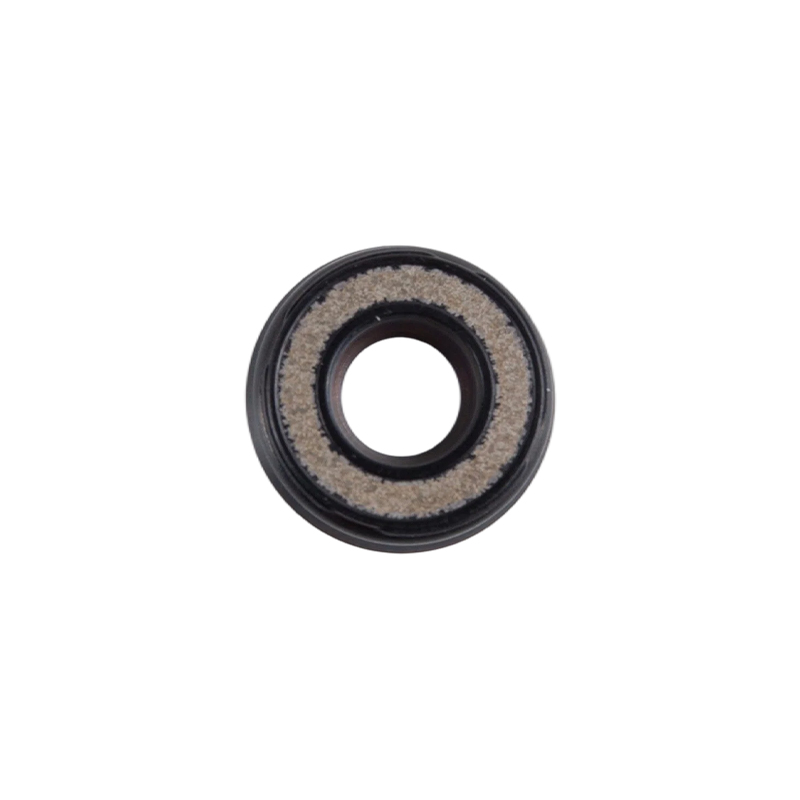
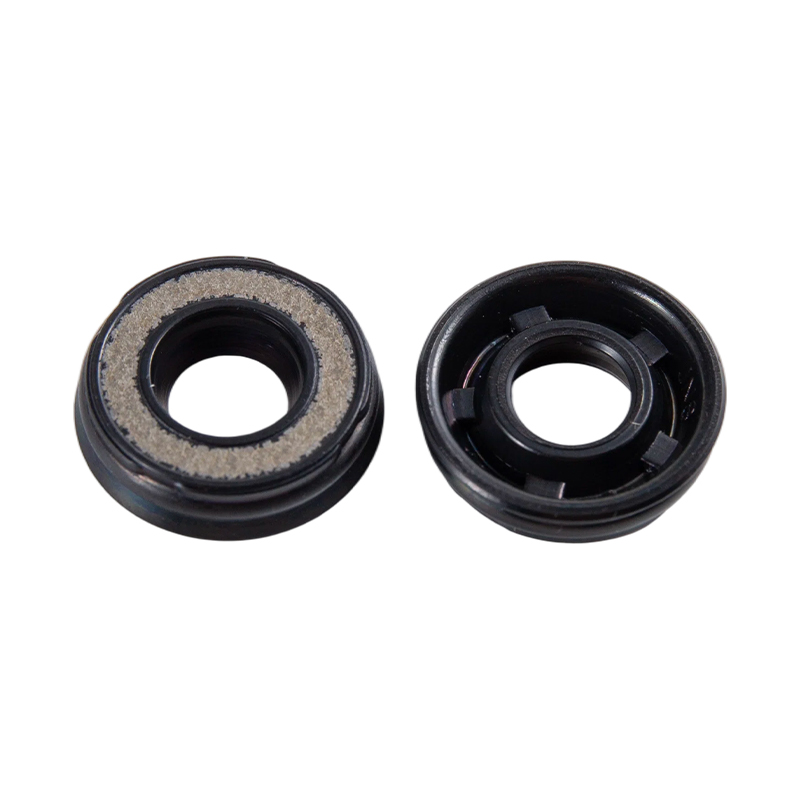
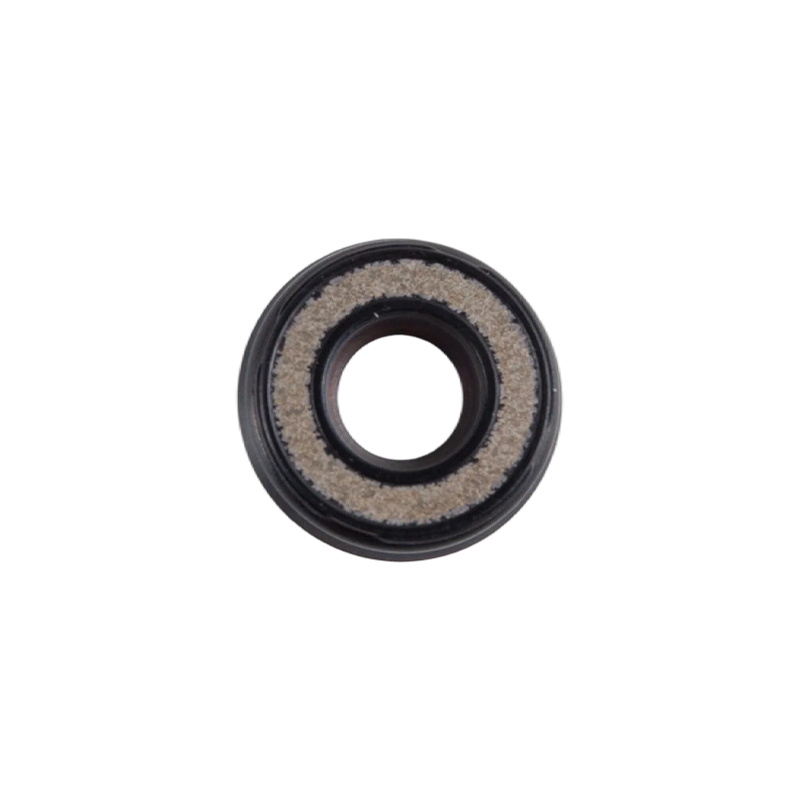
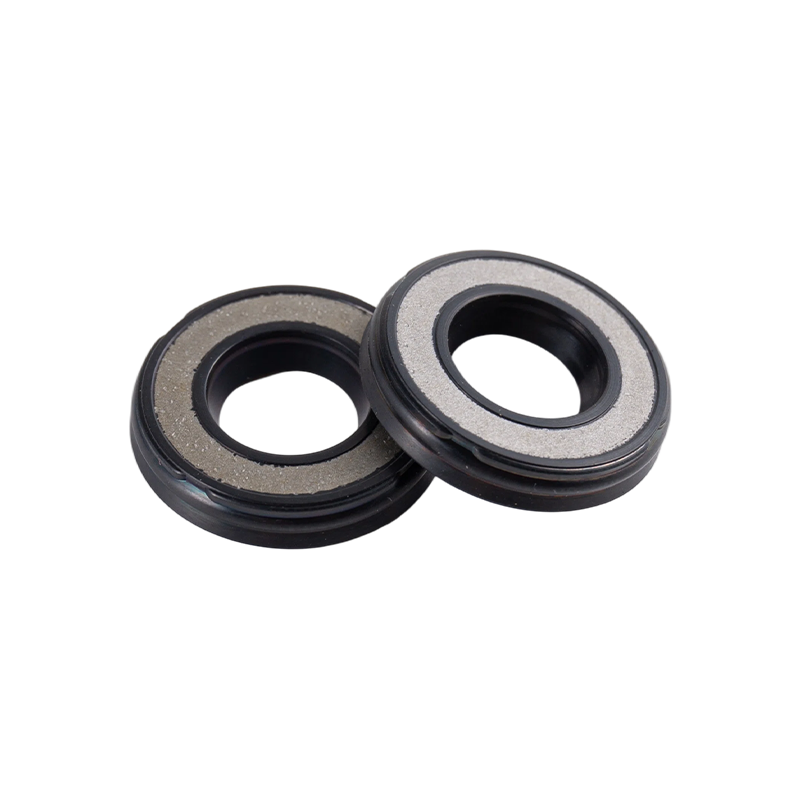
The A-1-030 is a Y-Type Oil Seal Ring developed for high-pressure and heavy-duty cylinder applications. It has a product specification of 26 × 13.3 × 4 mm, with an outer diameter of 26 mm, an inner diameter of 13.3 mm, and a height of 4 mm. The product is associated with a 25 × 14 cylinder configuration, meaning that it is intended for use with a steel pipe inner diameter of 25 mm and a piston rod diameter of 14 mm.
The seal is manufactured from NBR, or nitrile butadiene rubber. NBR is widely used in oil-sealing applications because it offers a useful balance of oil resistance, elasticity, abrasion resistance, and cost efficiency. In a reciprocating cylinder, the sealing material must remain flexible enough to follow small dimensional changes while resisting wear caused by continuous piston-rod movement. NBR is well suited to many mineral-oil-based environments and general industrial sealing duties.
The stated design applicable pressure range is 50–3000N. The upper value identifies the product as a peak-load sealing solution for demanding conditions. In practical terms, this means the seal is intended to retain its sealing function when the cylinder experiences significant pressure or load fluctuations. The product is not simply a general-purpose ring for low-load equipment; it is positioned for heavy-duty cylinders where pressure resistance is a central performance requirement.
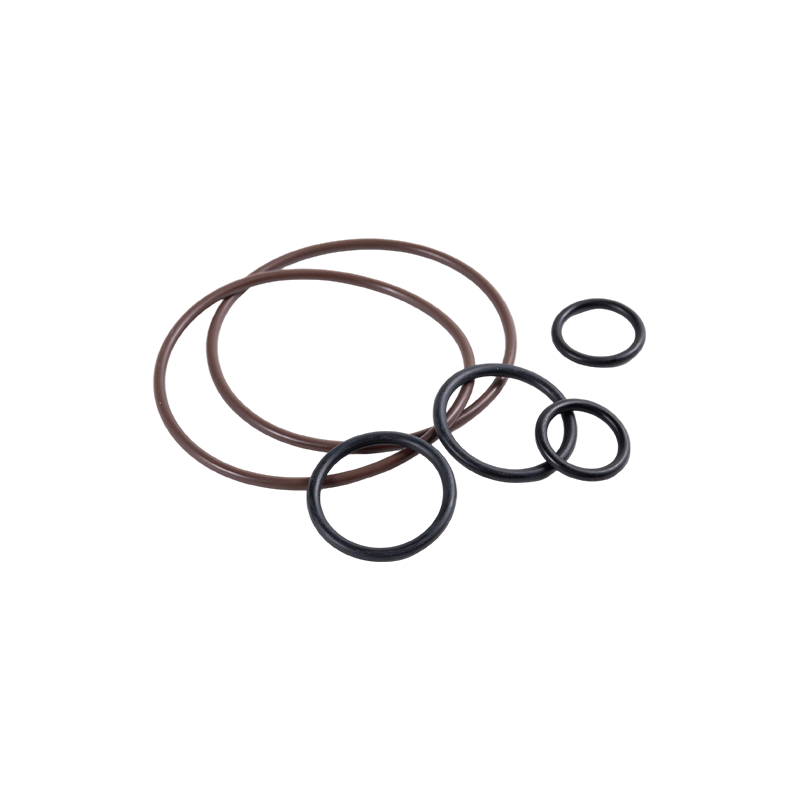
The seal also uses a 25 × 2.4 mm O-ring adapter. This adapter supports the sealing assembly and helps create a more secure interface between the sealing element and its installation position. The combination of the Y-type sealing profile and the O-ring adapter allows the assembly to maintain contact and sealing stability during piston-rod movement.
| Product Attribute | Specification |
| Product name | 3000N Peak-Load Sealing |
| Product type | Y-Type Oil Seal Ring |
| Product code | A-1-030 |
| Product specification | 26 × 13.3 × 4 mm |
| Outer diameter | 26 mm |
| Inner diameter | 13.3 mm |
| Height | 4 mm |
| O-ring adapter | 25 × 2.4 mm |
| Design applicable pressure range | 50–3000N |
| Steel pipe inner diameter and piston rod diameter | 25 × 14 mm |
| Material | NBR |
| Primary functions | Oil sealing and dust sealing |
Why Peak-Load Sealing Matters
Many cylinder systems operate under variable loads rather than a single stable pressure. A gas spring in a vehicle seat, furniture fitting, or industrial mechanism may experience rapid compression, sudden extension, impact, or repeated changes in external force. During these events, the pressure acting on the sealing edge can increase substantially compared with normal operating conditions.
A seal designed only for ordinary loads may suffer from several problems when peak conditions occur. The sealing lip may deform excessively, allowing oil to pass. The ring may shift in its groove or lose adequate contact with the piston rod. Repeated pressure cycling can also accelerate fatigue and permanent deformation. Once the seal begins to leak, internal lubrication may decline and the cylinder’s performance may become inconsistent.
The A-1-030 addresses this challenge through a design intended for a wide pressure range up to 3000N. Its role is to maintain a stable sealing interface across both ordinary and high-load operating conditions. This broad design range can reduce the need to select a different seal for every minor variation in application load, provided that the cylinder dimensions, operating environment, material compatibility, and installation conditions are appropriate.
Peak-load capability is also valuable because pressure peaks are not always easy to predict. A system may operate within its normal load specification most of the time but occasionally encounter a heavier user, a sudden mechanical stop, an uneven load, or a rapid movement cycle. A seal with additional pressure capacity provides a greater design margin against these events.
In engineering terms, the sealing component should be viewed as part of the cylinder’s overall reliability system. The seal cannot compensate for an incorrectly machined bore, a damaged piston rod, excessive side loading, or unsuitable lubricant. However, when the surrounding components are correctly designed, a high-capacity sealing element can help the cylinder maintain oil retention and contamination resistance throughout its service life.
Y-Type Profile and 2-in-1 Sealing Function
The Y-type profile is commonly associated with a sealing geometry that uses one or more flexible lips to maintain contact with a moving rod or bore. The geometry allows the sealing edges to respond to pressure and movement. As pressure increases, the sealing lips can be urged more firmly against the mating surface, supporting oil retention when the cylinder is under load.
The performance of a Y-type seal depends on several factors, including lip geometry, rubber hardness, groove dimensions, surface finish, lubrication, and the relationship between the seal and the piston rod. A well-designed profile can provide a practical balance between low friction and reliable sealing. Excessive contact pressure may create unnecessary friction and heat, while insufficient contact pressure may cause leakage. The A-1-030 is intended to provide a suitable sealing arrangement for the specified 25 × 14 cylinder configuration.
One of the product’s key advantages is its 2-in-1 dust and oil sealing function. Oil sealing prevents the working lubricant from escaping from the cylinder. Dust sealing limits the entry of particles, moisture, and other external contaminants from the surrounding environment. Combining these functions in one sealing component can simplify the assembly compared with a design that requires multiple independent rings.
This integrated approach can offer several practical benefits. Fewer components may reduce assembly time and lower the possibility of incorrect installation. A compact arrangement can also be useful where the available groove space is limited. In addition, reducing the number of interfaces may help simplify maintenance and inventory management for manufacturers that build multiple cylinder models.
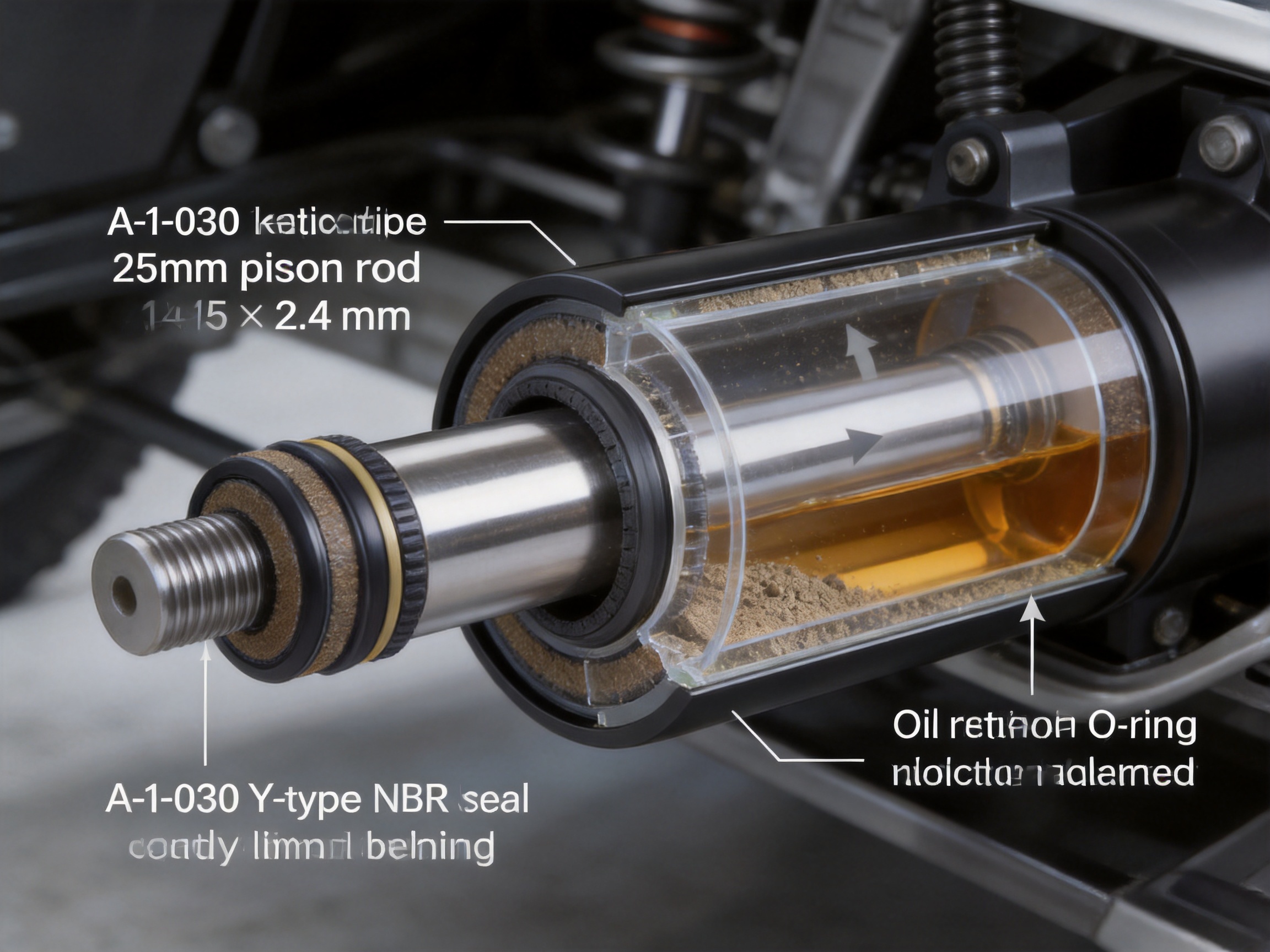
The dust-sealing function is particularly important for equipment used in workshops, construction environments, automotive interiors, outdoor mechanisms, and industrial facilities. Dust particles that enter a cylinder can mix with lubricant and form an abrasive compound. Over time, this mixture may damage the piston rod, sealing lip, guide surfaces, and internal components. By limiting contaminant entry at the rod interface, the seal helps protect the complete cylinder assembly.
Material Advantages of NBR
NBR is a practical elastomer for many oil-sealing applications. Its molecular structure provides good resistance to mineral oils, greases, and common petroleum-based lubricants. It also offers good mechanical strength and abrasion resistance, which are important for a seal exposed to repeated sliding contact.
For a reciprocating piston rod, the material must endure repeated deformation without quickly losing its original shape. NBR can provide the required resilience for many general-purpose gas spring and damper systems. Its balance of elasticity and durability makes it suitable for compact sealing components where the lip must remain in contact with the rod while moving over a large number of cycles.
NBR is also widely available and familiar to seal manufacturers and equipment designers. This can support stable sourcing, consistent processing, and predictable application engineering. Compared with some specialized elastomers, NBR can provide a more economical solution when the operating temperature, fluid type, and chemical exposure remain within its suitable range.
Material selection must nevertheless be based on actual service conditions. NBR is not automatically suitable for every fluid, temperature, or chemical environment. If the cylinder is exposed to aggressive chemicals, elevated temperatures, ozone, specialized fuels, or unusual fluids, the material should be evaluated by the manufacturer or application engineer. The A-1-030 is specified as NBR, and customers requiring HNBR, FPM, or another elastomer should request a compatibility review and customized recommendation.
The use of NBR in this product supports the intended combination of oil resistance, flexibility, wear resistance, and production efficiency. When matched with compatible lubricants and correctly controlled assembly conditions, the material can contribute to stable long-term sealing in a wide range of commercial and industrial products.
Dimensional Compatibility and Installation Fit
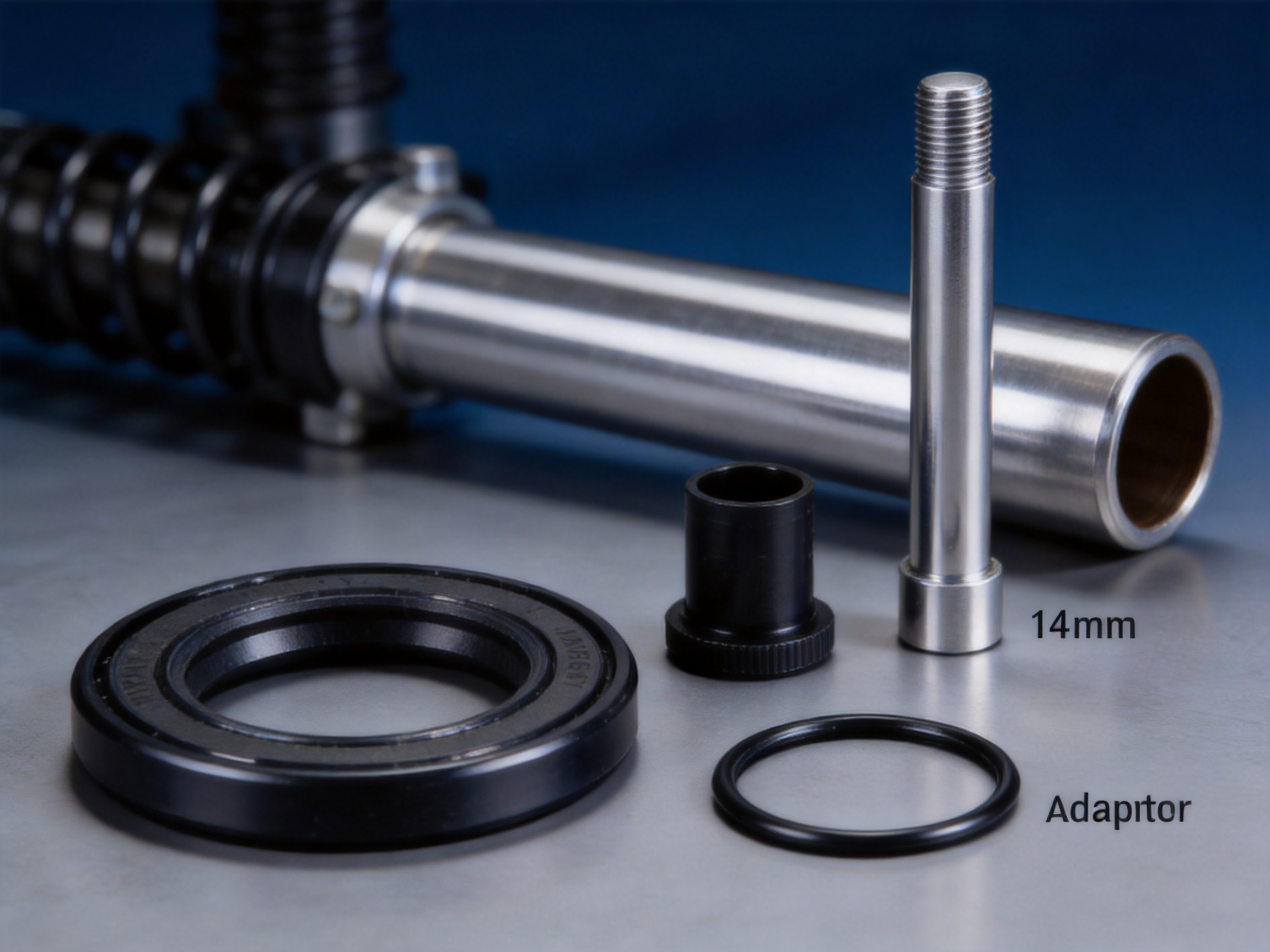
Correct dimensional matching is essential for any oil seal. The A-1-030 has a stated overall specification of 26 × 13.3 × 4 mm. These dimensions should be considered together with the specified 25 × 14 cylinder arrangement and the 25 × 2.4 mm O-ring adapter. The apparent difference between nominal rod size and seal inner diameter reflects the functional geometry of the sealing profile, deformation allowance, and installation relationship.
The outer diameter determines how the seal interacts with the housing or bore. A suitable interference or retention relationship is necessary to prevent movement, rotation, or leakage around the outside of the seal. The inner diameter and lip geometry determine how the sealing edge contacts the piston rod. The height affects axial positioning and available installation space.
Before installation, the cylinder manufacturer should verify the groove dimensions, housing tolerances, piston-rod diameter, rod surface finish, chamfer geometry, and available axial space. The recommended installation dimensions should be confirmed through the relevant technical drawing or application consultation. Nominal dimensions alone are not sufficient to guarantee sealing performance if the surrounding components are outside their intended tolerances.
The piston rod should be clean, smooth, and free from burrs, dents, deep scratches, rust, and sharp edges. Even a high-performance seal can be damaged during assembly if it is forced over a sharp shoulder or dragged across a damaged rod surface. The installation path should include an appropriate lead-in chamfer where necessary, and a protective sleeve may be used to prevent the sealing lip from catching on threads, grooves, or other discontinuities.
Lubrication during assembly can reduce friction and protect the lip from damage. The lubricant used for installation should be compatible with NBR and with the operating fluid inside the cylinder. Excessive lubricant should be avoided if it may contaminate the assembly or alter the intended operation of the cylinder.
The O-ring adapter should be installed without twisting, cutting, stretching beyond its design capability, or placing it in the wrong groove. A twisted O-ring may create an uneven sealing load and may fail prematurely. Operators should use appropriate tools rather than sharp metal objects that could cut the rubber.
Recommended Installation Checks
Confirm that the seal code and size match the cylinder design before opening the package. Check the seal for cuts, cracks, surface defects, deformation, or contamination. Inspect the rod and housing for burrs and confirm that the groove is clean. Verify that the installation direction corresponds with the pressure side and sealing function. Apply a compatible assembly lubricant, use suitable tooling, and avoid excessive force. After assembly, test the cylinder at controlled pressure before placing it into full service.
These steps are not merely procedural details. Installation quality has a direct effect on leakage, friction, and service life. A seal that is technically suitable may underperform if it is installed in a damaged groove, exposed to an incompatible lubricant, or forced over a rough surface.
Advantages Compared with General-Purpose Alternatives
The A-1-030 offers several design advantages compared with a basic low-load oil seal or a sealing arrangement that separates dust exclusion from oil retention. These advantages should be evaluated in relation to the application rather than treated as universal claims for every operating environment.
Higher Design Load Capacity
The most obvious distinction is the stated design range of 50–3000N. Many general-purpose sealing products are selected for ordinary pressure conditions and may not provide the same design margin for peak-load cylinder applications. A seal intended for higher loads can be more appropriate where pressure fluctuates or where occasional load spikes are expected.
Integrated Protection
The combined dust and oil sealing function can reduce the number of separate sealing elements required in the assembly. This may help reduce component count, simplify production, and make maintenance more straightforward. A compact integrated design can also help equipment designers manage limited installation space.
Suitable for Heavy-Duty Cylinder Formats
The product is specifically associated with a 25 mm steel pipe inner diameter and a 14 mm piston rod diameter. This application orientation gives it a clearer engineering target than an unspecified universal seal. A product designed around a known cylinder configuration can support more predictable selection and reduce trial-and-error during component development.
Balanced NBR Performance
NBR provides a combination of oil resistance, flexibility, abrasion resistance, and manufacturing practicality. This balance can make the product more cost-effective than specialized materials when the application does not require the extreme temperature or chemical resistance of higher-grade elastomers.
O-Ring-Assisted Sealing Arrangement
The 25 × 2.4 mm O-ring adapter supports the sealing assembly and can improve retention and interface stability when properly installed. The adapter is an important part of the intended sealing arrangement rather than an unrelated accessory. Its condition, material compatibility, and installation accuracy should therefore be considered during product selection and maintenance.
Potentially Lower Assembly Complexity
A combined sealing component may reduce the number of assembly operations compared with a multi-ring design. Lower assembly complexity can help manufacturers improve consistency, reduce handling time, and minimize the risk of installing separate dust and oil seals in the wrong sequence or orientation.
These advantages are strongest when the product is applied within its intended dimensions and operating range. Seal selection should always account for temperature, fluid, speed, stroke, rod surface condition, side load, pressure pattern, and expected cycle life.
Application Areas
The A-1-030 is suitable for consideration in gas springs and dampers that use the specified 25 × 14 cylinder configuration. Such systems are found in vehicle components, adjustable furniture, office chairs, cabinets, beds, lifting mechanisms, access panels, medical equipment, and industrial support devices.
In automotive applications, sealing reliability can affect comfort, control, and durability. Gas springs and dampers may experience vibration, temperature variation, dust, repeated motion, and occasional shock loads. A sealing component with a high design load range and integrated contamination protection can support stable operation when matched with the correct cylinder design.
Furniture mechanisms also benefit from compact, durable sealing solutions. Reclining chairs, adjustable desks, storage beds, cabinet supports, and height-adjustable systems may be cycled frequently by users. A seal that helps retain lubricant and exclude dust can contribute to smooth movement and a longer maintenance interval.
In home appliances, dampers and gas springs may be exposed to moisture, household dust, repeated opening and closing, and varying loads. The compact size of the A-1-030 can be beneficial where the product must fit within a small cylinder assembly without sacrificing the ability to manage peak loads.
Medical and care equipment often requires controlled movement and dependable mechanical support. Examples may include adjustable beds, equipment covers, treatment chairs, and access mechanisms. The suitability of the seal in such applications depends on the complete product design, cleanliness requirements, applicable regulations, and material compatibility.
Construction and industrial equipment can expose seals to more severe contamination and mechanical stress. Although the product’s operating conditions must be verified for each machine, the dust-exclusion function and heavy-duty design make it a candidate for cylinders that encounter dirty working environments and fluctuating loads.
Manufacturing Strengths and Technical Capability
Ningguo Jnsseals Sealing Technology Co., Ltd. is a high-tech enterprise founded in 2019 and headquartered in Anhui, China. The company focuses on sealing technology for gas springs, dampers, and related O-ring products. Its stated capabilities include research and development, product design, testing, production, and technical consultation.
For a product such as the A-1-030, manufacturing quality depends on more than rubber molding alone. The sealing profile must be designed with attention to lip geometry, compression, contact behavior, pressure response, and installation fit. Dimensional accuracy is equally important because small variations in the inner diameter, outer diameter, height, or adapter size can influence friction and leakage.
A capable sealing manufacturer normally integrates several technical stages. Product development begins with application analysis, including cylinder dimensions, movement pattern, load range, lubricant, expected environment, and service life. Engineers then select an elastomer and develop a profile that balances sealing force with sliding resistance. Prototypes or trial samples can be evaluated before production approval.
Tooling and mold precision are central to consistent seal production. A clean and accurately manufactured mold helps maintain the intended lip profile and reduce flash, surface defects, and dimensional variation. Process controls for rubber preparation, mixing, molding temperature, curing time, and pressure are necessary to achieve stable physical properties.
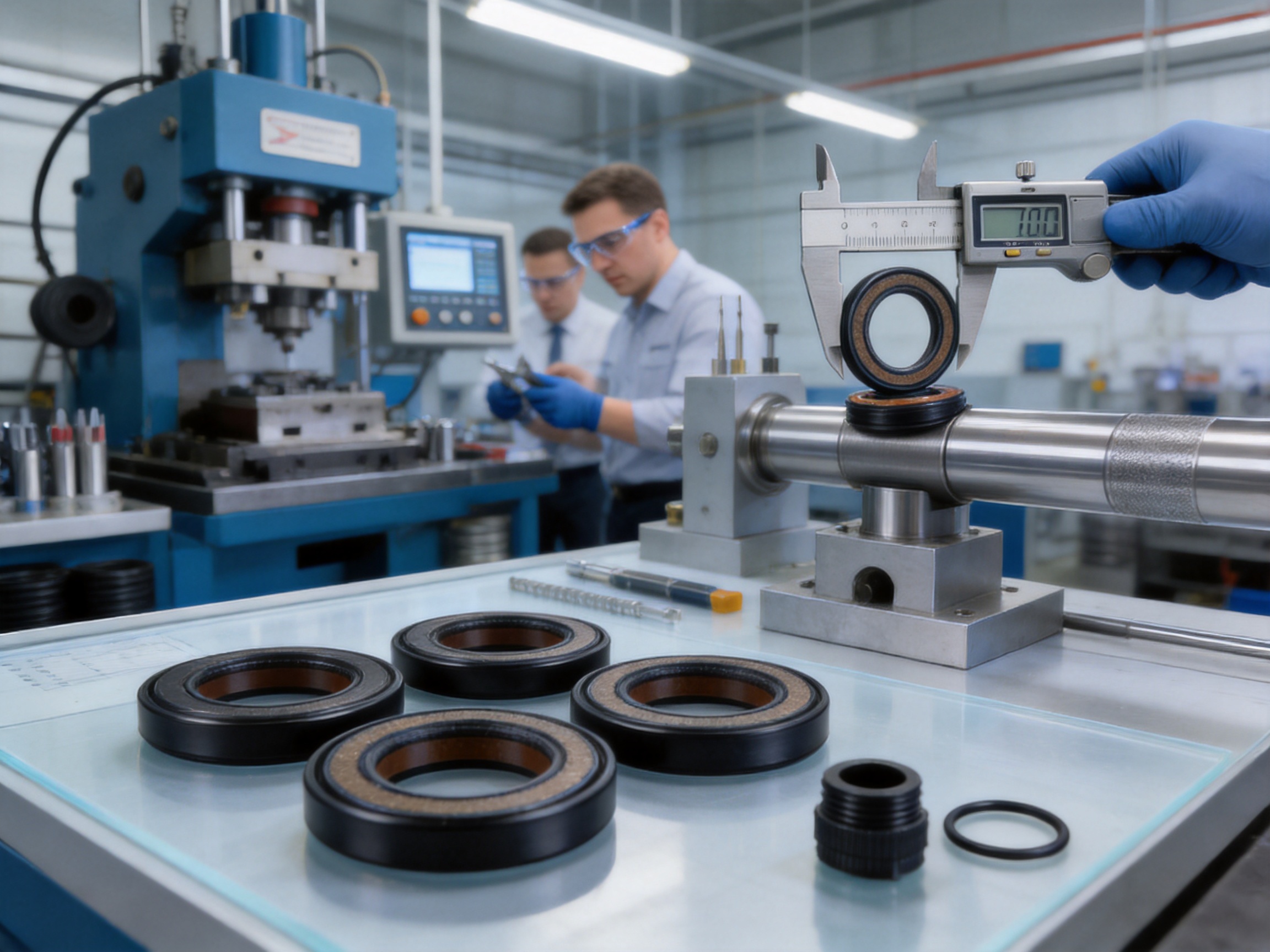
Post-molding inspection can include visual examination, dimensional measurement, surface-quality checks, and sampling of physical properties. Depending on the customer’s requirements, testing may also evaluate compression set, tensile behavior, elongation, hardness, fluid resistance, leakage performance, friction, and durability under repeated movement.
The company’s focus on R&D and technical service is particularly valuable for customers with nonstandard requirements. A sealing supplier that can provide design assistance, testing, and consultation can help customers avoid selecting a component solely by nominal size. This engineering approach is important because two seals with similar dimensions may perform differently due to profile geometry, material formulation, and groove interaction.
Quality Consistency
Large-scale or repeated cylinder production requires consistency from batch to batch. Variations in hardness, curing, dimensions, or surface quality can lead to differences in assembly force and leakage performance. A structured manufacturing process helps control these variables and supports more predictable customer production.
Quality management should include incoming material inspection, formulation control, mold maintenance, process monitoring, final inspection, packaging protection, and traceability. For industrial customers, documentation such as inspection records, material information, sample approval data, and batch identification can support incoming quality control and production audits.
Customization and Application Support
Not every cylinder uses the same rod size, groove design, pressure pattern, or operating fluid. JNS provides customized sealing solutions, including product design, testing, and technical consultation. This capability allows customers to discuss modifications or alternative materials when the standard A-1-030 configuration does not fully meet their requirements.
Potential customization areas may include dimensions, sealing profile, rubber compound, hardness, color identification, packaging, and application-specific testing. Any modification should be verified through engineering evaluation rather than assumed to be interchangeable with the standard product.
Production Process for High-Performance Seals
1. Application Definition
The production process begins with understanding the service conditions. Engineers review the cylinder structure, piston-rod dimensions, pressure or load range, stroke, movement speed, temperature, lubricant, contamination level, and expected cycle count. This information determines whether an NBR Y-type seal is suitable and whether the standard A-1-030 configuration can be used without modification.
2. Compound Preparation
NBR rubber is combined with selected additives and processing ingredients to achieve the required hardness, elasticity, wear resistance, oil resistance, and curing response. Accurate weighing and controlled mixing are important because inconsistent compound preparation can affect the physical properties of the finished seal.
3. Precision Molding
The prepared compound is formed in a mold that defines the Y-type profile, sealing lips, outer surface, and dimensional features. Molding conditions must be controlled to ensure that the rubber fills the cavity correctly and cures uniformly. Poorly controlled molding may cause voids, incomplete filling, flash, or profile distortion.
4. Trimming and Finishing
After molding, excess flash is removed and the part is finished. The sealing edges should remain sharp and well formed without cuts or unintended deformation. Finishing operations must be performed carefully because excessive trimming can change the lip geometry and reduce sealing performance.
5. Inspection and Testing
Finished seals are inspected against the product specification. Dimensional checks confirm the 26 mm outer diameter, 13.3 mm inner diameter, and 4 mm height, while the associated O-ring adapter is checked against the 25 × 2.4 mm specification. Visual inspections identify surface defects, contamination, cracks, and molding imperfections.
Application testing may be performed using representative cylinder assemblies. Testing can examine leakage, friction, pressure response, and durability under repeated reciprocation. The purpose is to verify that the product performs as intended in a realistic assembly rather than only meeting isolated dimensional requirements.
6. Packaging and Storage
Seals should be protected from dust, direct sunlight, ozone, excessive heat, moisture, and contact with oils or chemicals during storage. Packaging should prevent deformation, compression, and contamination. Proper storage is important because elastomer products can age before installation if they are exposed to unsuitable conditions for extended periods.
Performance Factors in Service
Pressure capacity is only one part of sealing performance. The actual service life of the A-1-030 will also depend on piston-rod alignment, surface roughness, movement speed, temperature, lubrication, side loading, and contamination. A properly selected seal may still fail early if the rod is bent or if the cylinder is exposed to severe lateral force.
Rod alignment is especially important in reciprocating systems. Excessive angular misalignment can load one side of the sealing lip more heavily than the other. This uneven loading increases wear and may create a leakage path. Cylinder designers should use suitable guides and supports to keep the piston rod aligned throughout its stroke.
Surface finish should be smooth enough to avoid cutting or rapidly abrading the lip, but it must also be capable of carrying a suitable lubricant film. Deep scratches oriented along the direction of movement can become leakage channels. Corrosion or pitting can damage the seal during every cycle.
Temperature affects rubber stiffness, elasticity, compression set, and chemical resistance. At low temperatures, NBR may become less flexible, while elevated temperatures can accelerate aging and reduce material strength. The actual temperature range should be reviewed together with the lubricant and environmental exposure.
Side loads can be especially harmful in gas springs and dampers. If the piston rod is forced laterally against the seal, contact pressure can become concentrated on one part of the lip. Equipment designers should minimize side loading through correct mounting, alignment, and guiding components.
Contamination control remains important even though the product includes a dust-sealing function. The external environment may contain fine dust, metal particles, water, cleaning agents, or other materials. The seal helps limit entry, but the cylinder should also be designed with suitable protective features and should not be exposed to conditions beyond its intended capability.
Maintenance and Troubleshooting
Regular inspection can identify sealing problems before they cause major equipment failure. Signs of a possible seal issue include oil film around the rod, visible leakage, increased operating friction, irregular movement, loss of damping force, unusual noise, or progressive reduction in gas spring performance.
A small amount of lubricant on a rod does not always indicate immediate seal failure. Some applications require a thin lubricating film, and the appearance of oil may be influenced by assembly conditions. However, persistent wetness, dripping, accumulation of oil, or rapid performance loss should be investigated.
If leakage occurs, maintenance personnel should inspect the rod surface, groove, seal orientation, O-ring adapter, and cylinder alignment. The seal may have been cut during installation, installed in the wrong direction, twisted, compressed incorrectly, or exposed to a fluid that is incompatible with NBR.
Replacing the seal without correcting the underlying cause may lead to repeated failure. For example, a new seal installed on a scratched piston rod may begin leaking again quickly. Similarly, replacing an NBR seal with another NBR seal will not solve a chemical compatibility problem if the operating fluid attacks the material.
When a seal is removed for inspection, it should not normally be reused in a critical application. Elastomeric sealing lips can be permanently deformed during service, and the removed part may contain hidden damage. A new seal and, where appropriate, a new O-ring adapter should be installed after the cause of failure has been addressed.
Selection Guidance for Equipment Manufacturers
Manufacturers considering the A-1-030 should begin by confirming the cylinder dimensions. The standard configuration is associated with a 25 mm steel pipe inner diameter and a 14 mm piston rod diameter. The product dimensions are 26 × 13.3 × 4 mm, and the O-ring adapter is 25 × 2.4 mm.
The expected load should then be compared with the stated design range of 50–3000N. If the application regularly approaches the upper end of the range, the complete cylinder assembly should be evaluated under representative pressure and cycle conditions. If the application includes shock loads above the stated range, additional engineering review is recommended.
Fluid compatibility must also be confirmed. NBR is generally suitable for many petroleum-based oils and greases, but not all fluids have the same effect on rubber. The equipment manufacturer should provide information about the operating medium, additives, cleaning agents, and possible chemical exposure.
Next, the manufacturer should consider environmental conditions. Outdoor equipment may experience rain, ultraviolet exposure, dust, mud, and temperature changes. Indoor furniture may experience lower contamination but very frequent cycles. Automotive and industrial equipment may combine vibration, heat, oil mist, and side loads. The sealing solution should be validated against the most demanding realistic condition.
Finally, customers should discuss quality documentation, sample approval, packaging, delivery requirements, and customization with the supplier. Technical communication at the design stage can reduce the risk of later changes caused by leakage, installation difficulty, or dimensional mismatch.
Q&A
What type of product is the A-1-030?
The A-1-030 is a Y-Type Oil Seal Ring designed for high-performance heavy-duty cylinders. It provides oil-sealing and dust-sealing functions in a 2-in-1 configuration.
What pressure range is associated with this seal?
The stated design applicable pressure range is 50–3000N. The 3000N upper value identifies it as a peak-load sealing product. Actual application suitability should be verified against the complete cylinder design and operating conditions.
Which cylinder dimensions are specified for the product?
The product is associated with a steel pipe inner diameter of 25 mm and a piston rod diameter of 14 mm. Its listed seal dimensions are 26 mm outer diameter, 13.3 mm inner diameter, and 4 mm height.
What material is used?
The standard product is made from NBR, or nitrile butadiene rubber. NBR is commonly selected for oil-sealing applications because of its oil resistance, flexibility, abrasion resistance, and practical manufacturing cost.
What is the function of the O-ring adapter?
The product uses a 25 × 2.4 mm O-ring adapter. The adapter supports the sealing arrangement and helps maintain a secure interface when correctly installed in the intended groove.
Can this seal replace every other oil seal of similar size?
No. Similar nominal dimensions do not guarantee interchangeability. Groove geometry, pressure direction, rod surface, material, temperature, lubricant, and installation space must all be confirmed before substitution.
What are the main advantages over a basic low-load seal?
The principal advantages are its stated peak-load design capability up to 3000N, its combined dust and oil sealing function, its suitability for the specified heavy-duty cylinder configuration, and its NBR material balance of oil resistance and mechanical durability.
Is the product suitable for high-temperature applications?
NBR may be suitable for many normal industrial temperatures, but the actual temperature limit depends on the compound and operating conditions. High-temperature applications should be reviewed with the supplier, and an alternative material may be required.
How can installation damage be prevented?
Keep the rod and groove clean, remove burrs, use a suitable lead-in chamfer or protective sleeve, apply compatible assembly lubricant, avoid sharp tools, and ensure that the seal and O-ring are not twisted or cut during installation.
What should be checked if leakage appears after installation?
Inspect the piston rod for scratches or bending, check seal orientation, verify groove dimensions, examine the O-ring adapter, confirm lubricant compatibility, and look for side loading or misalignment. Replacing the seal alone may not correct the root cause.
Can customized versions be requested?
The manufacturer provides customized sealing solutions, including design, testing, and technical consultation. Customers should provide detailed information about dimensions, pressure, movement, fluid, temperature, and expected service life so that an appropriate solution can be evaluated.
Which industries may use this product?
Potential applications include automotive components, furniture mechanisms, home appliances, medical equipment, construction equipment, industrial devices, gas springs, and dampers. Each use requires confirmation of dimensions and operating conditions.
Why Choose a Specialized Sealing Manufacturer?
A specialized manufacturer can contribute more than a standard catalog part. Sealing performance is closely related to profile design, compound formulation, mold precision, process control, and application testing. A supplier with experience in gas springs, dampers, and O-ring products can better understand how a seal behaves inside a compact reciprocating cylinder.
JNS combines product development with manufacturing and technical service. Its focus on sealing technology supports the development of solutions for different industries and operating environments. The company reports strong R&D capabilities, advanced production equipment, and a professional technical service team. These resources can help customers move from an initial sealing requirement to a validated production component.
The company’s service scope includes product design, testing, and technical consultation. This is valuable for original equipment manufacturers that need to optimize sealing performance rather than simply purchase a replacement ring. Engineering cooperation can address problems such as excessive friction, early leakage, difficult assembly, temperature exposure, or unusual pressure cycling.
As a manufacturer based in Anhui, China, Ningguo Jnsseals Sealing Technology Co., Ltd. serves customers in automotive, furniture, home appliance, medical, construction, and other sectors. Its stated business philosophy emphasizes people-oriented development, innovation, excellence, and reliable sealing technology. These principles align with the requirements of customers seeking stable quality and responsive technical support.
Conclusion
The 3000N Peak-Load Sealing product is designed for cylinder applications where pressure resistance, oil retention, and dust exclusion are all important. Its A-1-030 configuration combines a Y-type oil seal ring, NBR material, a 25 × 2.4 mm O-ring adapter, and a stated design applicable pressure range of 50–3000N. The product is associated with a 25 mm steel pipe inner diameter and a 14 mm piston rod diameter, with listed seal dimensions of 26 × 13.3 × 4 mm.
Compared with a basic low-load sealing element, the product offers a more specialized approach to heavy-duty cylinder sealing. Its peak-load orientation provides additional design capacity for pressure fluctuations, while its 2-in-1 dust and oil sealing function can support a compact and practical assembly. NBR contributes a balanced combination of oil resistance, flexibility, abrasion resistance, and cost-effective production for suitable operating environments.
Performance depends on correct application. Customers should verify cylinder dimensions, groove design, pressure, temperature, fluid compatibility, rod surface condition, alignment, side load, and installation method. When these factors are properly controlled, the A-1-030 can support reliable performance in gas springs, dampers, and other reciprocating cylinder systems.
Supported by R&D, precision manufacturing, testing, and customization capabilities, Ningguo Jnsseals Sealing Technology Co., Ltd. provides more than a standard sealing component. Its technical approach can help equipment manufacturers develop, validate, and produce sealing solutions suited to demanding applications. For heavy-duty cylinders requiring dependable sealing at peak loads, the A-1-030 is a strong candidate for engineering evaluation and product integration.
References
1. Product technical information for A-1-030, 3000N Peak-Load Sealing, including dimensions, material, pressure range, and cylinder application data.
2. General engineering principles for reciprocating oil seals, dust seals, elastomeric sealing lips, and O-ring-assisted sealing assemblies.
3. Standard material reference information for nitrile butadiene rubber, including oil resistance, abrasion resistance, elasticity, and application limitations.
4. Industrial guidance on seal installation, piston-rod surface preparation, groove inspection, lubrication compatibility, and contamination control.
5. Manufacturer information concerning sealing technology research and development, product testing, customized design, and technical consultation.
Product: 3000N Peak-Load Sealing

PREV:High-Temperature FPM Rotary Sealing Ring for Demanding Industrial Applications
NEXT:26mm Durable Industrial Y-Type Oil Seal Ring for High-Cycle Applications
NEXT:26mm Durable Industrial Y-Type Oil Seal Ring for High-Cycle Applications


Want to know more
about us?
about us?

Precision sealing for gas springs and dampers. Durable, wear-resistant, and built for long-life performance in demanding applications.
Product Categories
Quick Links
Contact Us
-
Email: jns@jnsseals.cn

-
Manager Gong: +86-18563770820

-
Manager Wang: +8615357558902
-
No. 5, Meilin Avenue, Meilin Industrial Development Zone, Ningguo City, Anhui Province, China

