

 English
 русский
 Deutsch
 Türk
 中文简体
High-Pressure Reinforced L-Type Seal for Demanding Gas Spring and Damper Applications
High-Pressure Reinforced L-Type Seal for Demanding Gas Spring and Damper Applications
High-Pressure Reinforced L-Type Seal for Demanding Gas Spring and Damper Applications
High-Pressure Reinforced L-Type Seal for Demanding Gas Spring and Damper Applications
High-Pressure Reinforced L-Type Seal for Demanding Gas Spring and Damper Applications
High-Pressure Reinforced L-Type Seal for Demanding Gas Spring and Damper Applications
High-Pressure Reinforced L-Type Seal for Demanding Gas Spring and Damper Applications
High-Pressure Reinforced L-Type Seal for Demanding Gas Spring and Damper Applications
High-Pressure Reinforced L-Type Seal for Demanding Gas Spring and Damper Applications
High-Pressure Reinforced L-Type Seal for Demanding Gas Spring and Damper Applications
High-Pressure Reinforced L-Type Seal for Demanding Gas Spring and Damper Applications
High-Pressure Reinforced L-Type Seal for Demanding Gas Spring and Damper Applications
High-Pressure Reinforced L-Type Seal for Demanding Gas Spring and Damper Applications
High-Pressure Reinforced L-Type Seal for Demanding Gas Spring and Damper Applications
High-Pressure Reinforced L-Type Seal for Demanding Gas Spring and Damper Applications
High-Pressure Reinforced L-Type Seal for Demanding Gas Spring and Damper Applications

Deng Yixuan — Domestic Sales Supervisor
Home / Author / Deng Yixuan — Domestic Sales Supervisor / High-Pressure Reinforced L-Type Seal for Demanding Gas Spring and Damper Applications
NEW Category
Contact us
High-Pressure Reinforced L-Type Seal for Demanding Gas Spring and Damper Applications
Content
- 1 Introduction
- 2 Product Overview
- 3 Why High-Pressure Sealing Requires a Reinforced Design
- 4 Advantages Compared with Conventional Light-Duty Seals
- 5 Applications in Gas Springs and Dampers
- 6 Manufacturing Strengths and Technical Capabilities
- 7 Material Selection: Why NBR Is Used
- 8 Installation and Design Considerations
- 9 Quality Control and Product Validation
- 10 Benefits for Equipment Manufacturers
- 11 Comparison with Basic L-Type Seals
- 12 Selection Guide for the A-2-004
- 13 Q&A
- 13.1 What is the High-Pressure Reinforced L-Type Seal?
- 13.2 What material is used for the A-2-004?
- 13.3 What is the maximum stated load capacity?
- 13.4 What are the product dimensions?
- 13.5 Which piston rod and tube sizes are compatible?
- 13.6 How does the product resist high pressure?
- 13.7 Is the A-2-004 suitable for every temperature and fluid?
- 13.8 Can the manufacturer provide customized seals?
- 13.9 What industries can use this seal?
- 13.10 What should be checked before installation?
- 13.11 How can customers confirm whether the product is suitable?
- 14 Conclusion
- 15 References
- 16 Product: High-Pressure Reinforced L-Type Seal
Introduction
Sealing components used in gas springs, dampers, lifting equipment, pressing systems, and other high-load applications must perform reliably under pressure, movement, friction, and repeated shock. A seal that works adequately in a light-duty environment may fail quickly when exposed to high thrust, sudden pressure changes, or continuous reciprocating motion. For these demanding conditions, the High-Pressure Reinforced L-Type Seal, product code A-2-004, provides a robust sealing solution designed around high-load performance and anti-extrusion protection.
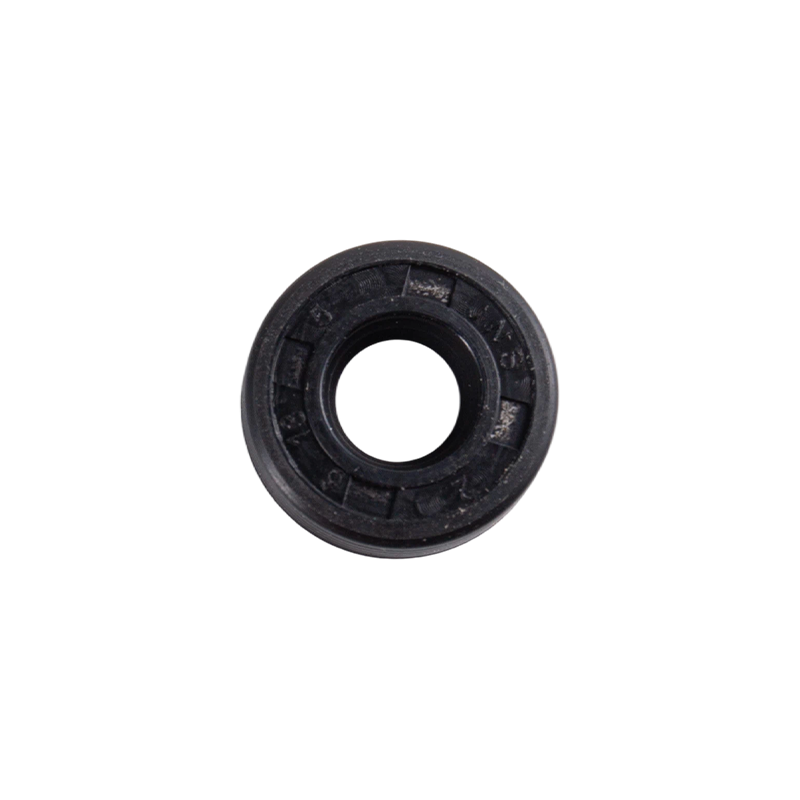
The A-2-004 belongs to the L-Shaped Oil Seal Ring category. It is manufactured from NBR and is specified for an applicable pressure range of 600–1800N. With an outside diameter of 24.5 mm, an inside diameter of 9.2 mm, and a height of 6 mm, the seal is engineered for compact assemblies that require dependable sealing in a confined installation space. Its reinforced L-shaped structure, thickened lips, and compatible O-ring adapter help it withstand demanding working conditions while maintaining sealing contact around the piston rod.
This product is developed for applications in which safety, service life, and dimensional compatibility are equally important. It is suitable for use with a 24 mm steel pipe inner diameter and a 10 mm piston rod diameter, supporting a wide range of gas spring and damper assemblies. The design is especially appropriate for heavy lifting and pressing equipment, where pressure shocks and repeated load cycles can place exceptional stress on the sealing system.
Manufactured by Ningguo Jnsseals Sealing Technology Co., Ltd., the A-2-004 reflects the company’s focus on sealing technology for gas springs, dampers, and related O-ring products. The manufacturer combines product research and development, production equipment, testing capabilities, and technical support to provide standard and customized sealing solutions for customers in automotive, furniture, home appliance, medical equipment, construction, and other industries.
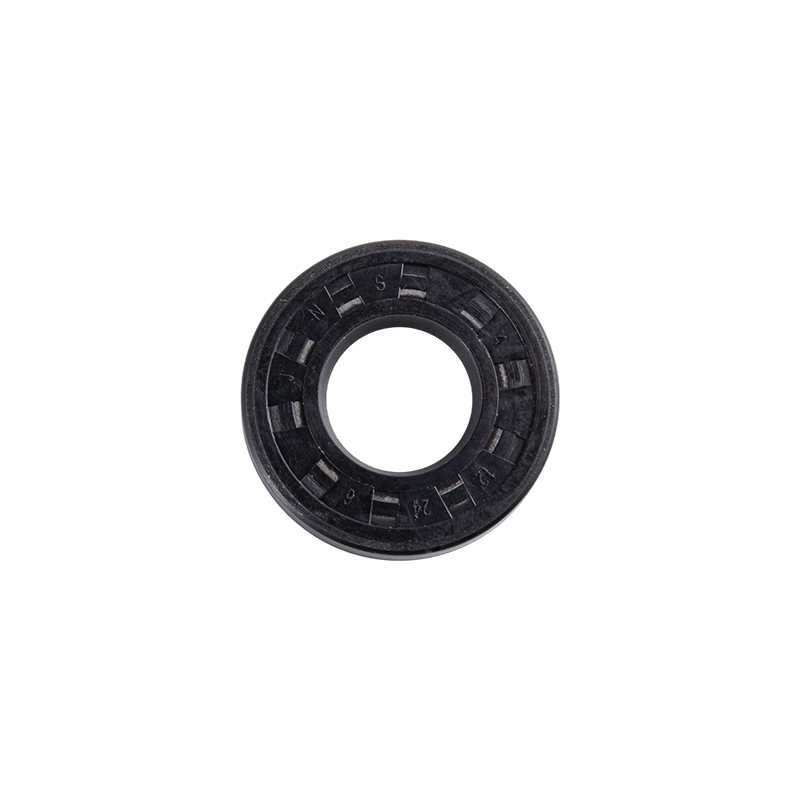
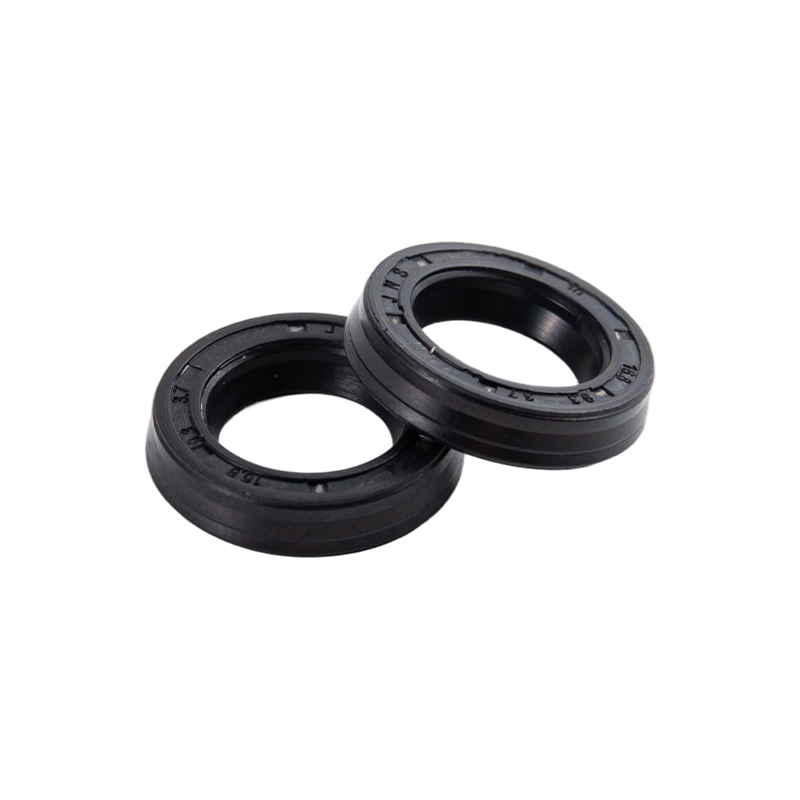
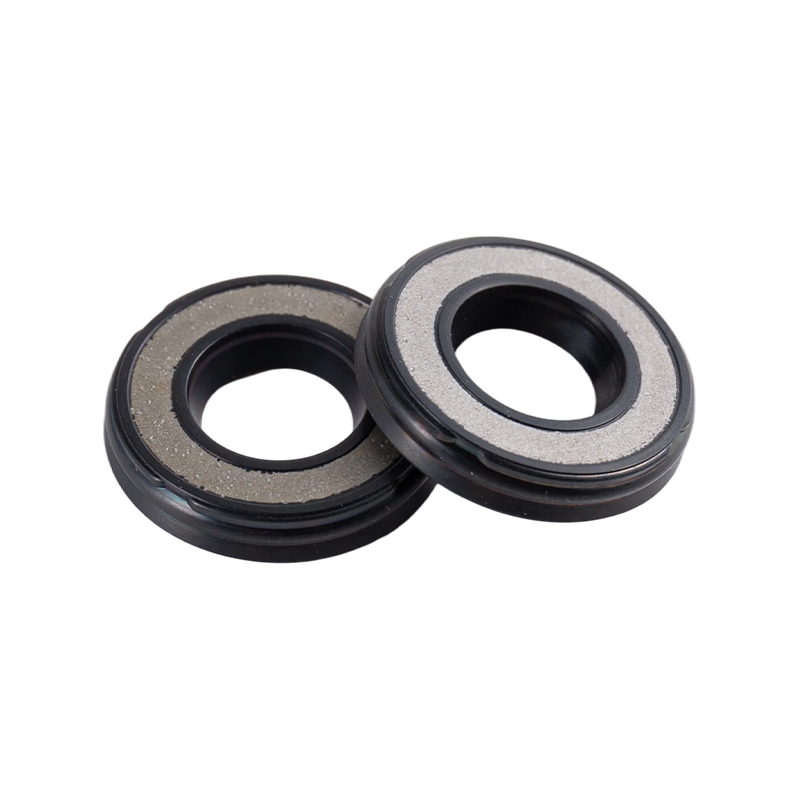
High-Pressure Reinforced L-Type Seal
Product Overview
The High-Pressure Reinforced L-Type Seal is a specialized sealing element designed for high-thrust environments. Its L-shaped cross-section supports a stable installation profile and helps the seal maintain its position during compression, movement, and pressure fluctuations. The design is reinforced for applications in which an ordinary light-duty seal may be vulnerable to deformation, extrusion, or premature lip wear.
Product code A-2-004 identifies this particular configuration within the manufacturer’s L-series. The product specification is listed as 10*24*6, with an outside diameter of 24.5 mm, an inside diameter of 9.2 mm, and a height of 6 mm. The O-ring adapter size is 24*10, and the recommended steel pipe inner diameter and piston rod diameter are also listed as 24*10. These dimensions should be reviewed against the final assembly drawing before production use, especially where tolerances, groove geometry, surface finish, and pressure conditions are tightly controlled.
The seal uses NBR, or nitrile rubber, as its primary material. NBR is widely used in oil seals and fluid-sealing applications because it offers a useful balance of oil resistance, mechanical strength, elasticity, and cost efficiency. In a gas spring or damper assembly, these properties help the seal maintain contact with the piston rod and housing while resisting the effects of lubricants and repeated movement.
The A-2-004 is specified for a design applicable pressure range of 600–1800N. The upper value indicates that the product is intended for substantially higher loads than many general-purpose sealing elements. Its maximum stated load capacity is 1800N, making it suitable for heavy-duty equipment where the sealing assembly must tolerate high thrust and pressure shock.
Key Product Data
| Product Name | High-Pressure Reinforced L-Type Seal |
| Product Code | A-2-004 |
| Product Category | L-Shaped Oil Seal Ring |
| Material | NBR |
| Product Specification | 10*24*6 |
| Outside Diameter | 24.5 mm |
| Inside Diameter | 9.2 mm |
| Height | 6 mm |
| O-Ring Adapter | 24*10 |
| Applicable Design Pressure Range | 600–1800N |
| Compatible Steel Pipe Inner Diameter | 24 mm |
| Compatible Piston Rod Diameter | 10 mm |
| Maximum Stated Load Capacity | 1800N |
Although the dimensions are compact, the product is not designed as a light-duty component. The reinforced configuration is intended to provide stability under high thrust, while the thickened lips support long-term sealing contact. The combination of material selection and structural design makes the A-2-004 a practical choice for equipment manufacturers seeking a compact seal with heavy-duty performance characteristics.
Why High-Pressure Sealing Requires a Reinforced Design
Pressure creates several challenges for a sealing element. As pressure increases, the sealing lip is pushed against the mating surface. This can improve sealing contact initially, but excessive pressure may also increase friction, deform the elastomer, or force the material into small clearances. This phenomenon, commonly known as extrusion, can damage the sealing edge and eventually create a leakage path.
Pressure shocks are particularly demanding because the load is not applied gradually. A sudden impact or rapid change in force can momentarily expose the seal to conditions more severe than the average operating load. If the seal is too thin, too soft, or insufficiently supported, the lip may distort during the shock. Repeated cycles can then cause permanent deformation, cracking, wear, or loss of resilience.
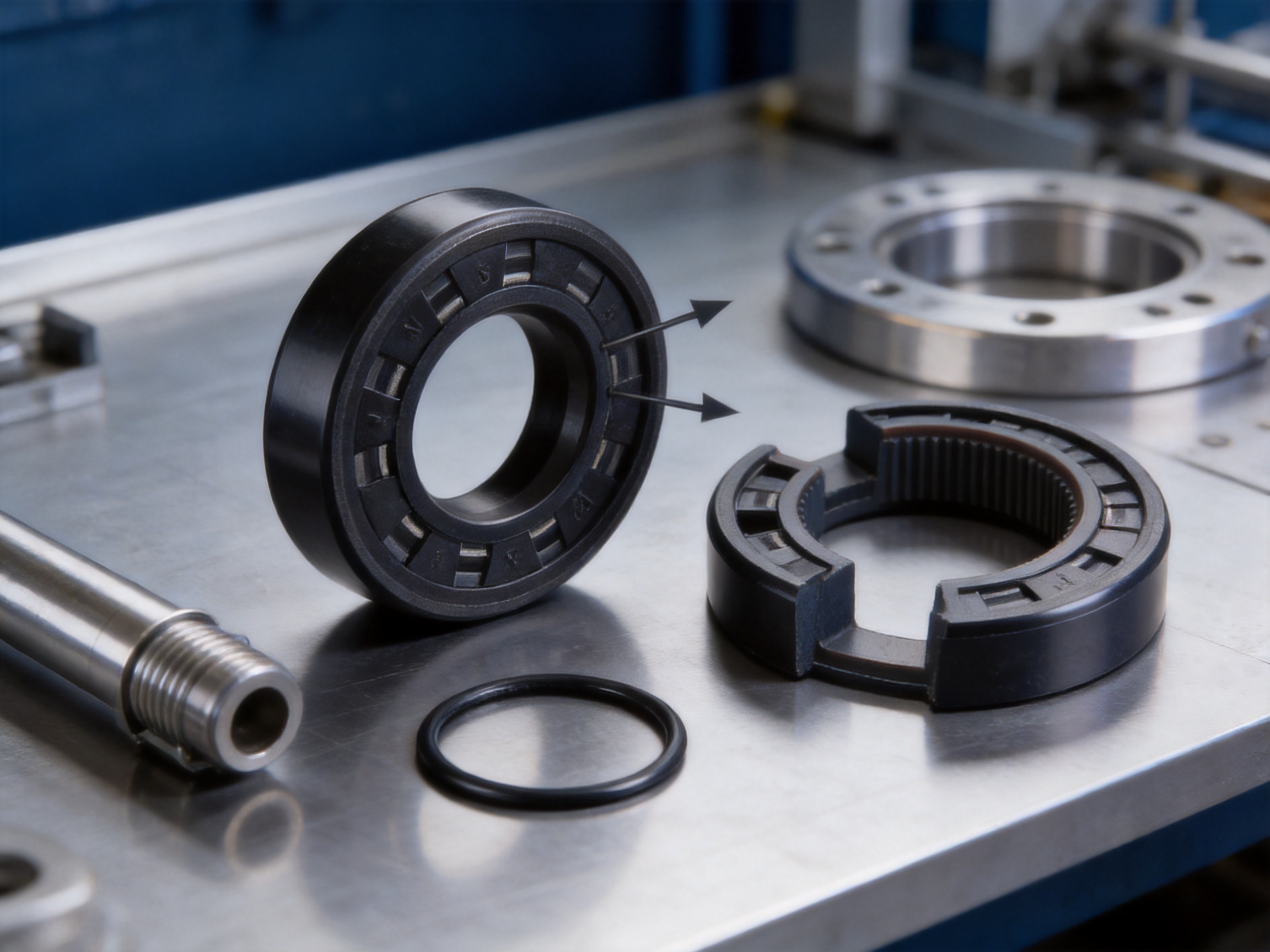
The A-2-004 addresses these risks through several design features. Its reinforced L-shaped structure provides a more substantial support profile than a basic lip seal. Its anti-extrusion design helps limit unwanted movement of the sealing material into clearance areas. Its thickened lips are intended for high-thrust conditions, where a stronger sealing edge can maintain contact for a longer service period.
A reinforced seal does not eliminate the need for correct assembly. The housing, groove, piston rod, lubrication, surface finish, and operating environment all influence sealing performance. However, a seal designed specifically for high pressure gives the equipment designer a stronger starting point and greater confidence when developing a heavy-duty assembly.
Pressure Shock Resistance
The A-2-004 is described as capable of withstanding high-pressure shocks up to 1800N. This feature is important in lifting and pressing equipment, where loads may vary rapidly as the mechanism starts, stops, or changes direction. The seal’s thickened lips and reinforced body help it remain stable during these transitions.
Pressure shock resistance can also support more consistent equipment operation. When a seal deforms excessively under a sudden load, it may cause temporary leakage, increased friction, or irregular rod movement. A stronger sealing profile helps reduce the possibility of such instability, provided that the complete assembly is correctly designed and operated within its specified range.
Anti-Extrusion Protection
Anti-extrusion performance is one of the principal advantages of the A-2-004. Under high pressure, elastomeric materials may be pushed toward the clearance between the piston rod and housing. If this continues over many cycles, the material can be cut, torn, or permanently displaced. The resulting damage may appear as a worn lip, a damaged edge, or a gradual loss of sealing force.
The A-2-004 uses a reinforced configuration to resist this type of movement. Its design is intended to keep the sealing material in its working position and reduce the likelihood of pressure-driven deformation. This makes it more suitable than a conventional low-load seal for applications involving heavy thrust, repeated impact, or high-pressure operation.
Thickened Sealing Lips
The sealing lip is the portion of the product that maintains contact with the moving piston rod or mating surface. A thin lip can provide low friction, but it may not have enough material strength for high-load applications. The A-2-004 uses thickened lips to provide greater mechanical support in high-thrust environments.
Thicker lips can improve resistance to deformation and wear, particularly where the seal experiences frequent reciprocating motion. They can also help maintain a more stable contact line when the pressure changes. As with every seal design, the balance between sealing force and friction must be considered, but for heavy-duty equipment, durability and stability are often more important than achieving the lowest possible starting friction.
Advantages Compared with Conventional Light-Duty Seals
The A-2-004 offers several advantages when compared with conventional seals designed for lower pressure or lighter mechanical loads. These advantages are based on its stated pressure range, reinforced structure, thickened lips, and compatibility with high-load gas spring and damper assemblies.
Higher Load Capability
With a maximum stated load capacity of 1800N, the A-2-004 is intended for applications that exceed the demands of ordinary light-duty seals. This makes it a better candidate for heavy lifting, pressing, and other equipment in which the seal must remain stable under substantial force.
Higher load capability can simplify product selection. Instead of adapting a general-purpose seal to a high-pressure application and accepting a narrow safety margin, an equipment designer can select a component developed for a defined high-load range. The 600–1800N design range provides a clear reference for preliminary component matching, subject to validation in the final assembly.
Improved Resistance to Deformation
The reinforced L-shaped design provides additional support around the sealing profile. This can help prevent the seal from rolling, twisting, or being pushed out of its intended location during operation. Such stability is particularly useful in compact systems, where even a small amount of deformation may cause leakage or irregular movement.
Longer Service Potential
Thickened lips and anti-extrusion protection can contribute to a longer service life by reducing the mechanical damage associated with high pressure and repeated motion. While actual service life depends on temperature, lubrication, rod surface finish, speed, pressure, installation quality, and contamination, a reinforced design is better suited to demanding conditions than a basic seal optimized only for low-load operation.
Compact Installation Dimensions
Heavy-duty performance does not always require a large component. The A-2-004 has a listed height of 6 mm and is intended for a 24 mm steel pipe inner diameter with a 10 mm piston rod diameter. This compact dimensional arrangement makes it suitable for assemblies where installation space is limited but pressure performance remains important.
Material Versatility for Common Oil-Sealing Applications
NBR is a widely recognized material for oil seals and O-rings. Its balance of elasticity, abrasion resistance, and resistance to many petroleum-based lubricants makes it suitable for numerous industrial sealing applications. For designers already using NBR in related components, the A-2-004 can support material consistency across an assembly.
Material selection should always be reviewed against the exact medium and temperature range. If the assembly is exposed to aggressive chemicals, unusually high temperatures, or specialized fluids, alternative elastomers such as HNBR or FPM may be considered through consultation with the manufacturer. The supplied product information identifies the A-2-004 material as NBR, while the company also works with NBR, HNBR, and FPM O-ring products for different requirements.
Applications in Gas Springs and Dampers
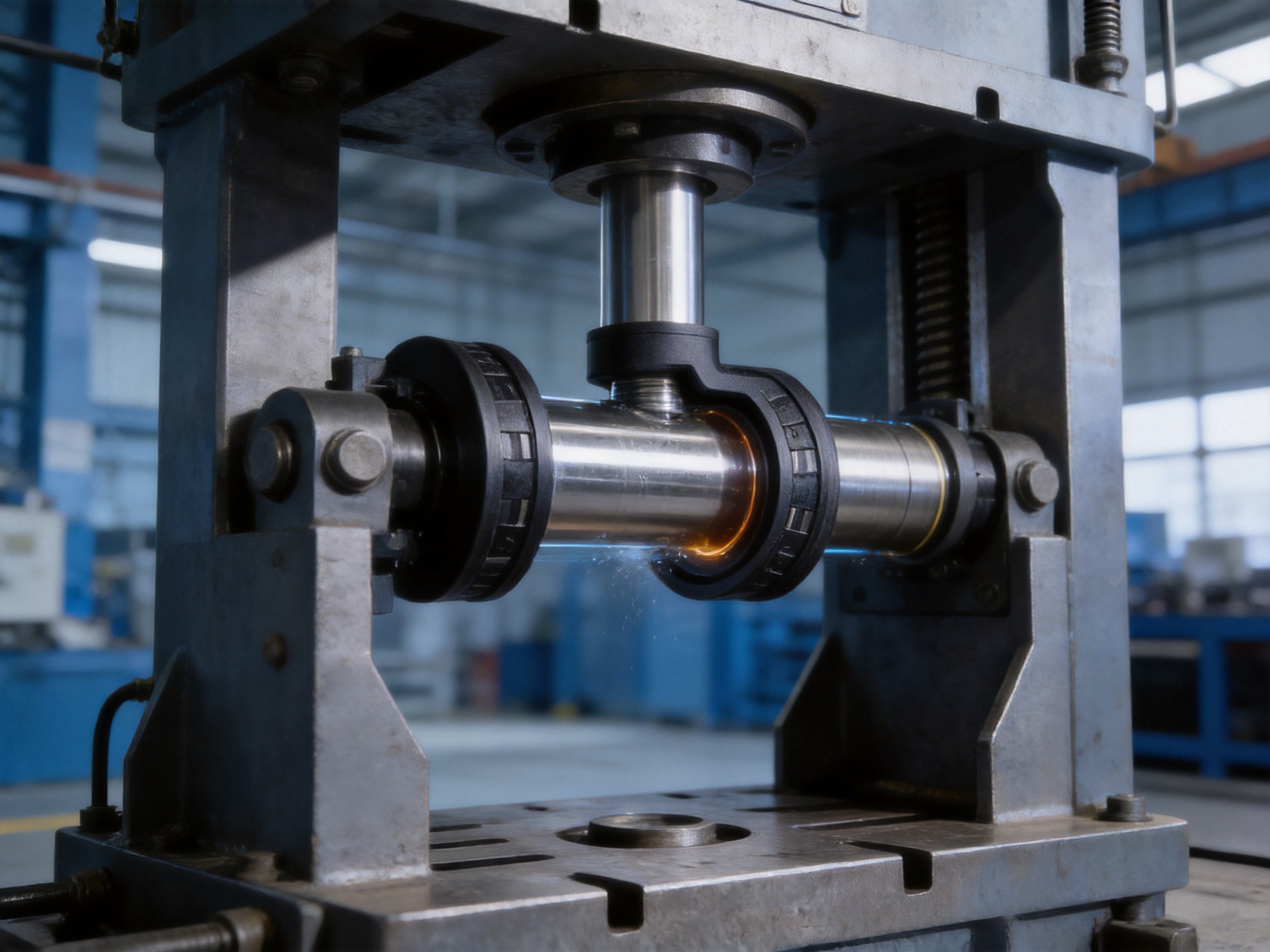
Gas springs and dampers rely on controlled movement and reliable pressure retention. A gas spring generally contains a pressurized gas chamber, a piston rod, guiding elements, lubricant, and sealing components. The seal must prevent gas and lubricant leakage while allowing the rod to move through the housing with an acceptable level of friction.
In a damper, the seal may also be exposed to frequent reciprocating movement and pressure changes. The operating cycle can include rapid compression, extension, vibration, and repeated changes in direction. These conditions make the sealing lip a critical component in maintaining functional stability.
The A-2-004 is designed around the requirements of such assemblies. Its 24*10 compatibility corresponds to a 24 mm steel pipe inner diameter and a 10 mm piston rod diameter. Its reinforced configuration is intended to manage the high thrust associated with heavy-duty applications. It can therefore be evaluated for gas springs, dampers, lifting supports, adjustable furniture mechanisms, automotive components, and other systems using compatible dimensions and operating conditions.
Automotive Equipment
Automotive applications may include gas struts for doors, hatches, seats, covers, and adjustable mechanisms. These products may be exposed to vibration, temperature changes, repeated actuation, and varying loads. A dependable seal helps maintain internal pressure and supports consistent movement throughout the service period.
For heavy-duty automotive or specialty vehicle applications, the A-2-004 can be evaluated where the dimensions and pressure range are appropriate. The final selection should account for temperature, fluid compatibility, rod speed, duty cycle, and required service life.
Furniture and Adjustable Mechanisms
Gas springs are widely used in office chairs, adjustable beds, recliners, cabinets, tables, and other furniture products. Although many furniture mechanisms operate at moderate loads, certain heavy-duty products require stronger support and greater resistance to repeated movement. The A-2-004 may be considered for these applications when a compact but reinforced L-type seal is required.
Construction and Lifting Equipment
Construction-related equipment often operates under demanding mechanical loads. Lifting supports, access equipment, compact actuators, and pressing devices can subject seals to high thrust and pressure fluctuations. In these applications, anti-extrusion protection and thickened lips can provide an advantage over seals intended only for low-pressure mechanisms.
Medical and Home Appliance Equipment
Medical equipment and home appliances may use gas springs or dampers for controlled opening, closing, positioning, or height adjustment. These systems often require predictable operation, low maintenance, and reliable sealing. Product selection should consider cleanliness, material compatibility, operating environment, and any industry-specific requirements in addition to pressure performance.
Manufacturing Strengths and Technical Capabilities
Ningguo Jnsseals Sealing Technology Co., Ltd. was founded in 2019 and is headquartered in Anhui, China. The company focuses on the research, development, and application of sealing technology for gas springs and dampers, together with related O-ring products. This specialization gives the manufacturer a practical understanding of the operating conditions that sealing components must withstand in real assemblies.
The company’s capabilities include product design, testing, technical consultation, and customized sealing solutions. These capabilities are important because a seal cannot be evaluated only by its nominal diameter. Successful sealing performance depends on the interaction between the elastomer, groove, housing, piston rod, pressure, speed, temperature, lubricant, and assembly process.
Research and Development Orientation
A strong research and development process enables the manufacturer to improve sealing structures for different load ranges and application environments. For a product such as the A-2-004, development work may involve evaluating lip geometry, material behavior, anti-extrusion performance, dimensional stability, and compatibility with gas spring or damper assemblies.
The company’s stated focus on sealing technology supports a product development approach centered on application requirements rather than on generic rubber parts alone. This is valuable for customers who need a seal matched to a specific pressure range, tube dimension, piston rod diameter, or operating cycle.
Advanced Production Equipment
The manufacturer reports the use of advanced production equipment to support its sealing product range. Production equipment is essential for maintaining repeatable dimensions, consistent molding quality, stable material processing, and reliable surface characteristics. In an L-shaped seal, small dimensional variations can influence installation force, lip contact, extrusion resistance, and leakage performance.
Consistent production is especially important when seals are supplied for serial manufacturing. A customer may install thousands of seals across a production run, and variation between batches can affect assembly efficiency and field performance. Controlled processing helps reduce unnecessary variation and supports a more predictable supply chain.
Professional Technical Service
Technical support is another important strength. Customers may require assistance with product selection, dimensional confirmation, installation methods, testing plans, or material alternatives. A professional technical service team can help identify whether the A-2-004 is suitable for a given application or whether a modified design would be more appropriate.
Technical consultation is particularly useful when a customer is replacing an existing seal. The replacement should not be selected solely by comparing outside diameter and inside diameter. The original groove, compression, rod tolerance, pressure, temperature, lubricant, and movement speed should also be considered. The manufacturer’s ability to discuss these factors can help reduce selection errors.
Customized Sealing Solutions
Different industries have different sealing requirements. An automotive component may prioritize vibration resistance and long service life. A furniture mechanism may require smooth movement and compact installation. A construction application may focus on load capacity and resistance to pressure shock. A medical equipment manufacturer may emphasize material suitability and controlled production.
JNS provides customized sealing solutions that may include product design, testing, and technical consultation. This approach allows customers to work with a supplier that can consider the complete application instead of supplying only an off-the-shelf dimension. Where the A-2-004 does not exactly match a customer’s requirements, the product can serve as a reference point for discussing modifications in geometry, material, or performance range.
Material Selection: Why NBR Is Used
NBR is a common elastomer for oil seals because it offers a practical combination of performance characteristics. It generally provides good resistance to mineral oils and lubricants, useful tensile strength, abrasion resistance, and flexibility. These qualities make it suitable for moving seals in gas springs, dampers, and related mechanical systems.
For the A-2-004, NBR supports the product’s intended use in high-pressure oil-sealing applications. The material can maintain elastic contact with the piston rod while the reinforced geometry provides additional structural support. Together, the material and design help the seal accommodate movement without losing its basic sealing function.
However, NBR is not automatically suitable for every environment. Designers should assess operating temperature, gas type, lubricant chemistry, exposure to ozone or weathering, and contact with cleaning agents. If the application requires higher temperature resistance or improved resistance to specific chemicals, the manufacturer may be able to recommend HNBR, FPM, or another appropriate material for a customized design.
NBR, HNBR, and FPM Considerations
NBR is often selected for general oil-sealing applications where balanced performance and cost are important. HNBR may be considered when improved heat resistance, mechanical strength, or resistance to demanding environments is required. FPM is commonly evaluated for applications involving higher temperatures or more aggressive chemical conditions.
The correct material should be determined by the complete operating profile rather than by pressure alone. A seal may withstand the mechanical load but fail because of incompatible lubricant or excessive temperature. For this reason, material consultation and application testing are important parts of responsible product selection.
Installation and Design Considerations
Even a high-performance seal can be damaged during installation if the assembly process is not controlled. The piston rod should be free from sharp edges, burrs, deep scratches, and excessive surface roughness. The housing and seal groove should be clean and dimensionally accurate. Foreign particles trapped beneath the lip can create an immediate leakage path or accelerate wear.
Before installation, the seal should be checked for cuts, deformation, contamination, and dimensional defects. The correct orientation must be confirmed according to the assembly drawing. Where an O-ring adapter is used, it should be installed without twisting, pinching, or overstretching. Lubrication should be compatible with NBR and applied in a way that prevents dry startup without introducing excessive contamination.
The piston rod should be inserted carefully and aligned with the seal. Forcing a rod through a dry or misaligned seal may fold the lip, cut the elastomer, or dislodge the seal from its seat. In automated production, insertion speed, tooling design, and alignment should be controlled to achieve consistent results.
Dimensional Verification
The product information lists a 24.5 mm outside diameter and a 9.2 mm inside diameter, with a nominal product specification of 10*24*6. Because different manufacturers may use different measuring methods or reference points, customers should verify the complete drawing and dimensional tolerances before ordering large quantities.
The listed compatibility with a 24 mm steel pipe inner diameter and a 10 mm piston rod diameter provides a useful application reference. However, the actual housing geometry and rod tolerance may affect compression and sealing force. A trial installation or engineering validation is recommended for new designs.
Surface Finish and Rod Condition
The piston rod surface plays a major role in seal life. A surface that is too rough can abrade the lip, while a surface that is damaged or corroded can cut the elastomer. Excessive surface waviness may prevent stable contact and promote leakage. Proper rod finishing and cleanliness should therefore be treated as part of the sealing system, not as an unrelated manufacturing detail.
Pressure and Load Management
The A-2-004 is designed for a stated applicable range of 600–1800N. Operating outside the specified range may increase the risk of extrusion, excessive friction, or premature failure. The pressure and load should be evaluated during starting, stopping, extension, compression, and abnormal conditions, not only during steady operation.
Where pressure shocks are expected, the complete assembly should be tested under representative dynamic conditions. A static pressure test alone may not reveal problems associated with repeated movement, sudden load changes, or thermal effects.
Quality Control and Product Validation
Reliable sealing products require more than a suitable design. They also require consistent raw materials, controlled production, dimensional inspection, and performance evaluation. A manufacturer with dedicated sealing expertise can establish quality procedures that address the most important failure modes for oil seals and O-rings.
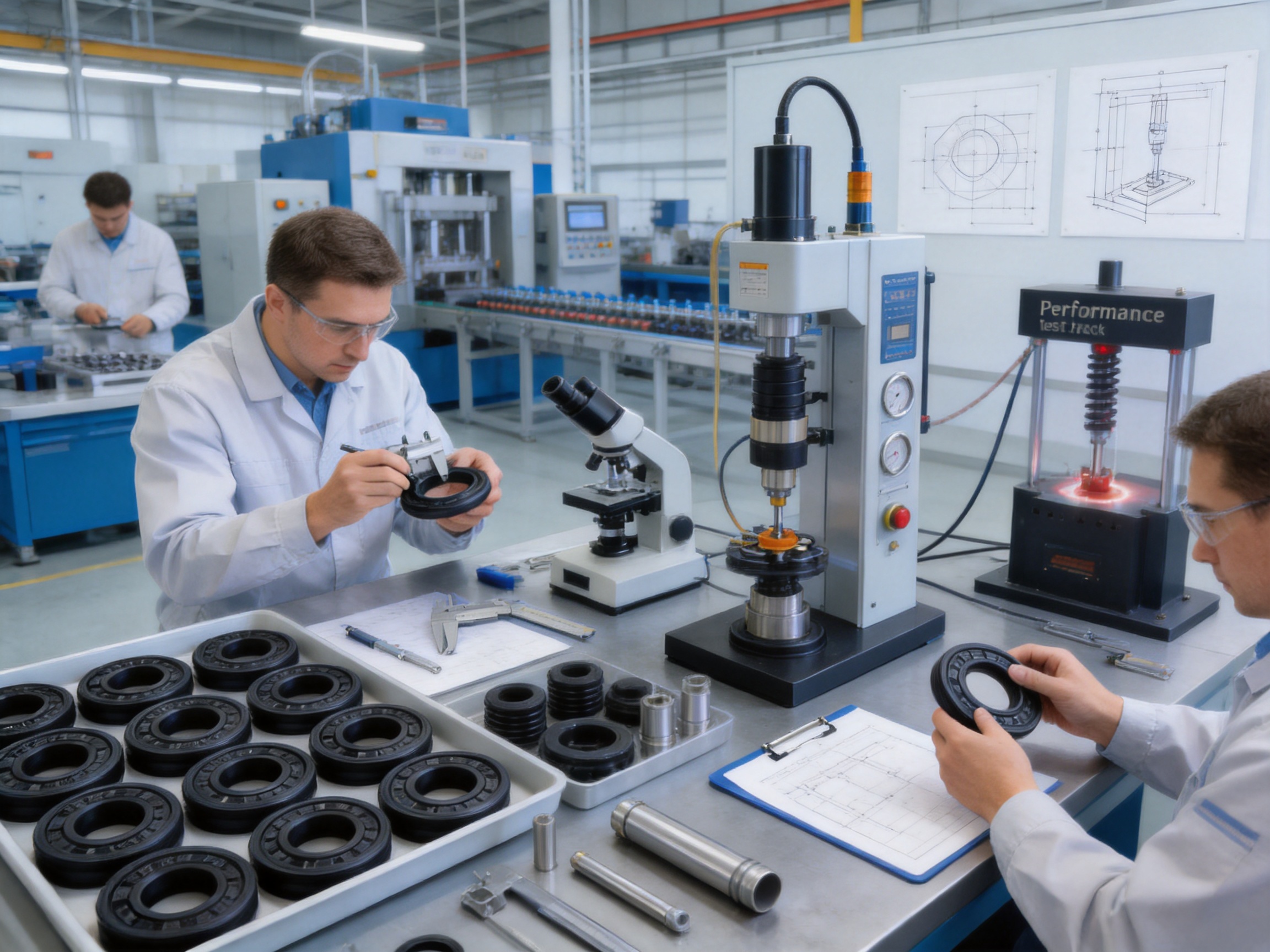
For a product such as the A-2-004, quality control may include inspection of outside diameter, inside diameter, height, lip geometry, material hardness, surface condition, and visual appearance. Depending on customer requirements, testing may also examine compression behavior, leakage resistance, pressure response, friction, and durability under repeated movement.
The company’s stated testing and technical capabilities support cooperation with customers who need application-specific validation. Testing can be adapted to the customer’s assembly, allowing the seal to be evaluated under actual or simulated pressure, load, temperature, lubricant, and cycle conditions.
Batch Consistency
Batch consistency is important for manufacturers of gas springs and dampers. A seal that varies significantly in dimensions or hardness may produce inconsistent assembly force and product performance. Stable manufacturing processes help ensure that production components behave similarly from one batch to the next.
Consistent packaging and identification also support traceability. Product code A-2-004 provides a clear reference for ordering, production planning, and technical communication. Customers should retain product specifications and inspection records as part of their quality management process.
Application Testing
Application testing should reflect the intended duty cycle. If a seal will be used in a heavy lifting mechanism, the test should include the expected load range and pressure shocks. If it will be used in a damper, the test should include repeated reciprocating motion, temperature variation, and the appropriate lubricant.
Testing can help confirm that the A-2-004 is appropriate for the specific assembly and can also reveal whether a customized design is needed. Cooperation between the customer and manufacturer during this stage may improve product reliability and shorten development time.
Benefits for Equipment Manufacturers
Equipment manufacturers can benefit from selecting a seal that has been designed for the required load range. The A-2-004 provides a defined product code, known dimensions, NBR material, and a stated 600–1800N design range. This information supports preliminary engineering decisions and purchasing communication.
The reinforced structure can also help reduce the risk of using an under-specified seal in a heavy-duty application. A seal failure may cause leakage, loss of pressure, irregular movement, equipment downtime, warranty claims, and safety concerns. Choosing a product with anti-extrusion protection and thickened lips can support a more robust design strategy.
Another benefit is access to a supplier capable of customization. If the standard A-2-004 configuration requires adjustment, the manufacturer can discuss alternative dimensions, materials, or sealing structures. This can be more efficient than attempting to modify a general-purpose seal through an unverified workaround.
JNS also serves multiple industries, including automotive, furniture, home appliances, medical equipment, and construction. Experience across these sectors can help the company understand different requirements for durability, compactness, movement, pressure, and production efficiency.
Comparison with Basic L-Type Seals
Basic L-type seals may be appropriate for low or moderate loads, stable pressure, and less demanding duty cycles. They can offer economical performance where the operating environment is controlled. However, they may not provide sufficient resistance to extrusion or deformation when pressure shocks and high thrust are introduced.
The A-2-004 is differentiated by its heavy-duty positioning. Its design emphasizes high-pressure shock resistance, a maximum stated load capacity of 1800N, anti-extrusion protection, and thickened lips. These features make it more appropriate for demanding equipment than a seal selected solely for dimensional similarity.
Cost should be evaluated over the entire service life of the equipment. A lower-cost seal that wears quickly may increase maintenance labor, replacement frequency, and downtime. A reinforced seal may provide better value when it reduces the risk of premature failure and supports longer operating intervals. The actual economic benefit should be confirmed through application testing and service data.
Selection Guide for the A-2-004
The A-2-004 should be considered when the application meets most of the following conditions:
The assembly requires an L-shaped oil seal ring.
The compatible steel pipe inner diameter is approximately 24 mm.
The piston rod diameter is approximately 10 mm.
The application involves a load or pressure range of approximately 600–1800N.
The seal must withstand pressure shocks or high thrust.
The application benefits from anti-extrusion protection.
The working environment is compatible with NBR.
The equipment requires a compact seal with a listed height of 6 mm.
Before final selection, the customer should confirm the groove design, actual tolerances, operating temperature, lubricant, gas medium, rod surface finish, movement speed, cycle count, and installation method. These factors determine whether the standard product is suitable or whether a customized solution is advisable.
Q&A
What is the High-Pressure Reinforced L-Type Seal?
It is an L-shaped oil seal ring identified by product code A-2-004. It is designed for high-pressure and high-thrust applications, including gas springs, dampers, lifting equipment, and pressing equipment.
What material is used for the A-2-004?
The product is made from NBR. NBR is commonly used for oil seals because it offers a balance of elasticity, mechanical strength, abrasion resistance, and resistance to many lubricants.
What is the maximum stated load capacity?
The product is specified for a design applicable pressure range of 600–1800N, with a maximum stated load capacity of 1800N.
What are the product dimensions?
The listed specification is 10*24*6. The outside diameter is 24.5 mm, the inside diameter is 9.2 mm, and the height is 6 mm. The O-ring adapter is listed as 24*10.
Which piston rod and tube sizes are compatible?
The product information lists compatibility with a 24 mm steel pipe inner diameter and a 10 mm piston rod diameter. Final compatibility should be confirmed using the complete assembly dimensions and tolerances.
How does the product resist high pressure?
The A-2-004 uses a reinforced L-shaped structure, anti-extrusion design, and thickened lips. These features are intended to reduce deformation and maintain sealing contact under high thrust and pressure shocks.
Is the A-2-004 suitable for every temperature and fluid?
No. NBR is suitable for many common oil-sealing applications, but the exact temperature, lubricant, gas, and chemical environment must be reviewed. HNBR, FPM, or another material may be considered for specialized conditions.
Can the manufacturer provide customized seals?
Yes. The company provides customized sealing solutions that may include product design, testing, and technical consultation. Customers can discuss alternative materials, dimensions, or structures when the standard product does not fully match the application.
What industries can use this seal?
Potential industries include automotive, furniture, home appliances, medical equipment, construction, gas spring manufacturing, damper manufacturing, lifting equipment, and pressing equipment, subject to dimensional and operating-condition verification.
What should be checked before installation?
The housing, groove, piston rod, seal orientation, surface finish, lubrication, and cleanliness should be checked. The seal should not be installed over sharp edges or damaged surfaces, and the piston rod should be inserted in alignment to prevent lip damage.
How can customers confirm whether the product is suitable?
Customers should provide the manufacturer with the operating load, pressure, temperature, movement speed, duty cycle, lubricant, gas medium, rod dimensions, tube dimensions, and installation drawing. The manufacturer can then help evaluate the standard A-2-004 or recommend a customized solution.
Conclusion
The High-Pressure Reinforced L-Type Seal A-2-004 is designed for applications in which a compact sealing component must withstand high thrust and pressure shocks. Its NBR material, reinforced L-shaped structure, anti-extrusion design, and thickened lips make it a strong candidate for heavy-duty gas springs, dampers, lifting systems, pressing equipment, and other compatible assemblies.
With a stated applicable pressure range of 600–1800N, a maximum load capacity of 1800N, and compatibility with a 24 mm steel pipe inner diameter and 10 mm piston rod diameter, the product provides clear technical references for preliminary selection. Its 24.5 mm outside diameter, 9.2 mm inside diameter, and 6 mm height support compact installation while maintaining a design focus on durability and stability.
The product is supported by Ningguo Jnsseals Sealing Technology Co., Ltd., a sealing technology company focused on gas springs, dampers, O-ring products, research and development, testing, technical service, and customized sealing solutions. The company’s production capabilities and application-oriented approach allow customers to address not only basic dimensional requirements but also the broader factors that determine sealing performance.
For equipment manufacturers, the A-2-004 offers an opportunity to improve pressure resistance, reduce the risks associated with extrusion, and select a seal better matched to demanding operating conditions. Final performance will always depend on correct installation, compatible materials, suitable surface conditions, and operation within the specified range. When these factors are properly controlled, the High-Pressure Reinforced L-Type Seal can provide a dependable foundation for long-life sealing in high-load mechanical systems.
References
1. Product specification sheet for High-Pressure Reinforced L-Type Seal, product code A-2-004.
2. Manufacturer-provided technical information for NBR, HNBR, and FPM sealing products.
3. Manufacturer-provided company profile and sealing technology capability information.
4. General engineering principles for elastomeric oil seals, anti-extrusion design, and reciprocating sealing applications.
5. General design considerations for gas springs, dampers, lifting mechanisms, and high-pressure sealing assemblies.
Product: High-Pressure Reinforced L-Type Seal

PREV:20mm Medium-Duty Hydraulic O-Ring: Reliable NBR Sealing for Hydraulic Actuators
NEXT:High-Temperature FPM Rotary Sealing Ring for Demanding Industrial Applications
NEXT:High-Temperature FPM Rotary Sealing Ring for Demanding Industrial Applications


Want to know more
about us?
about us?

Precision sealing for gas springs and dampers. Durable, wear-resistant, and built for long-life performance in demanding applications.
Product Categories
Quick Links
Contact Us
-
Email: jns@jnsseals.cn

-
Email: LouZhuoyu@outlook.com
-
Manager Gong: +86-18563770820

-
Manager Wang: +8615357558902
-
No. 5, Meilin Avenue, Meilin Industrial Development Zone, Ningguo City, Anhui Province, China

