

 English
 русский
 Deutsch
 Türk
 中文简体
1500N Heavy-Duty Hydraulic Seal: Design, Performance, Manufacturing, and Application Guide
1500N Heavy-Duty Hydraulic Seal: Design, Performance, Manufacturing, and Application Guide
1500N Heavy-Duty Hydraulic Seal: Design, Performance, Manufacturing, and Application Guide
1500N Heavy-Duty Hydraulic Seal: Design, Performance, Manufacturing, and Application Guide
1500N Heavy-Duty Hydraulic Seal: Design, Performance, Manufacturing, and Application Guide
1500N Heavy-Duty Hydraulic Seal: Design, Performance, Manufacturing, and Application Guide
1500N Heavy-Duty Hydraulic Seal: Design, Performance, Manufacturing, and Application Guide
1500N Heavy-Duty Hydraulic Seal: Design, Performance, Manufacturing, and Application Guide
1500N Heavy-Duty Hydraulic Seal: Design, Performance, Manufacturing, and Application Guide
1500N Heavy-Duty Hydraulic Seal: Design, Performance, Manufacturing, and Application Guide
1500N Heavy-Duty Hydraulic Seal: Design, Performance, Manufacturing, and Application Guide
1500N Heavy-Duty Hydraulic Seal: Design, Performance, Manufacturing, and Application Guide
1500N Heavy-Duty Hydraulic Seal: Design, Performance, Manufacturing, and Application Guide
1500N Heavy-Duty Hydraulic Seal: Design, Performance, Manufacturing, and Application Guide
1500N Heavy-Duty Hydraulic Seal: Design, Performance, Manufacturing, and Application Guide
1500N Heavy-Duty Hydraulic Seal: Design, Performance, Manufacturing, and Application Guide

Fang Zhiqing — International Product Sales Manager
Home / Author / Fang Zhiqing — International Product Sales Manager / 1500N Heavy-Duty Hydraulic Seal: Design, Performance, Manufacturing, and Application Guide
NEW Category
Contact us
1500N Heavy-Duty Hydraulic Seal: Design, Performance, Manufacturing, and Application Guide
Content
- 1 Introduction
- 2 Product Overview
- 3 How the Y-Type Profile Works
- 4 Primary Performance Advantages
- 5 Advantages Compared with Generic or Light-Duty Seals
- 6 Manufacturing Process and Technical Strengths
- 7 Application Areas
- 8 Installation Recommendations
- 9 Operating Conditions and Service Life
- 10 Quality and Engineering Support from the Manufacturer
- 11 Product Selection Checklist
- 12 Maintenance and Troubleshooting
- 13 Q&A
- 13.1 What type of seal is the 1500N Heavy-Duty Hydraulic Seal?
- 13.2 What is the maximum stated load range?
- 13.3 What are the main dimensions?
- 13.4 What rod and pipe dimensions are associated with the product?
- 13.5 Why is the wall made thicker?
- 13.6 Is NBR suitable for every hydraulic application?
- 13.7 Can the seal be used in gas springs and dampers?
- 13.8 What advantage does the optimized lip angle provide?
- 13.9 How should the seal be installed?
- 13.10 What should be checked if leakage occurs?
- 13.11 Does the manufacturer offer customized sealing solutions?
- 14 Conclusion
- 15 References
- 16 Product: 1500N Heavy-Duty Hydraulic Seal
Introduction
Hydraulic sealing components are small in size but fundamental to the safety, efficiency, and service life of hydraulic equipment. A seal must prevent fluid leakage, maintain pressure, protect moving surfaces, tolerate repeated mechanical loading, and continue working under changing temperature and operating conditions. When a hydraulic system is exposed to high thrust, vibration, impact, or frequent reciprocating motion, the sealing element must provide much more than basic fluid retention. It must also maintain a stable contact relationship with the piston rod or cylinder surface while resisting deformation and wear.
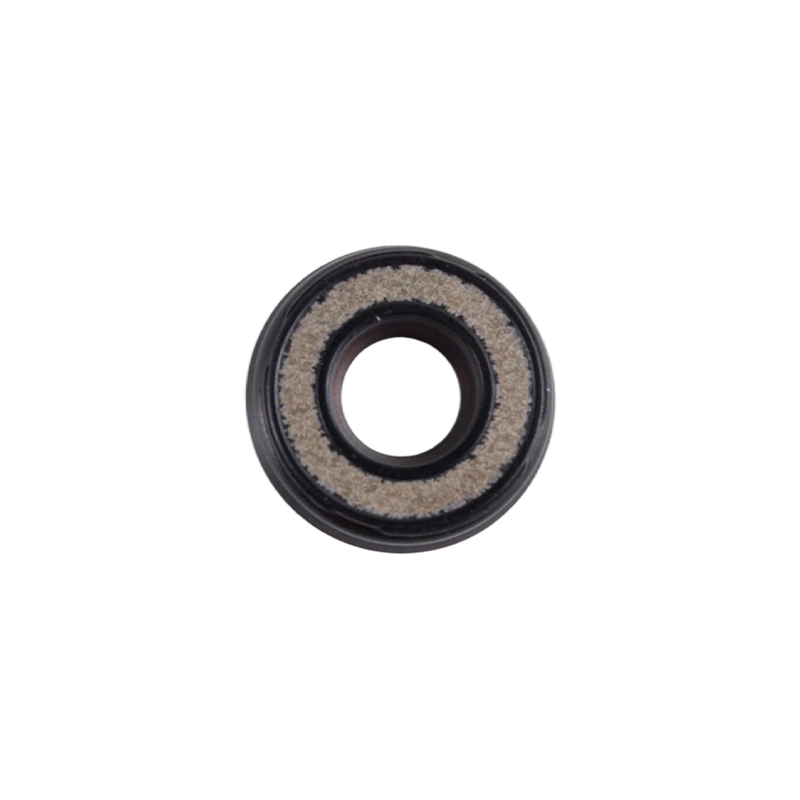
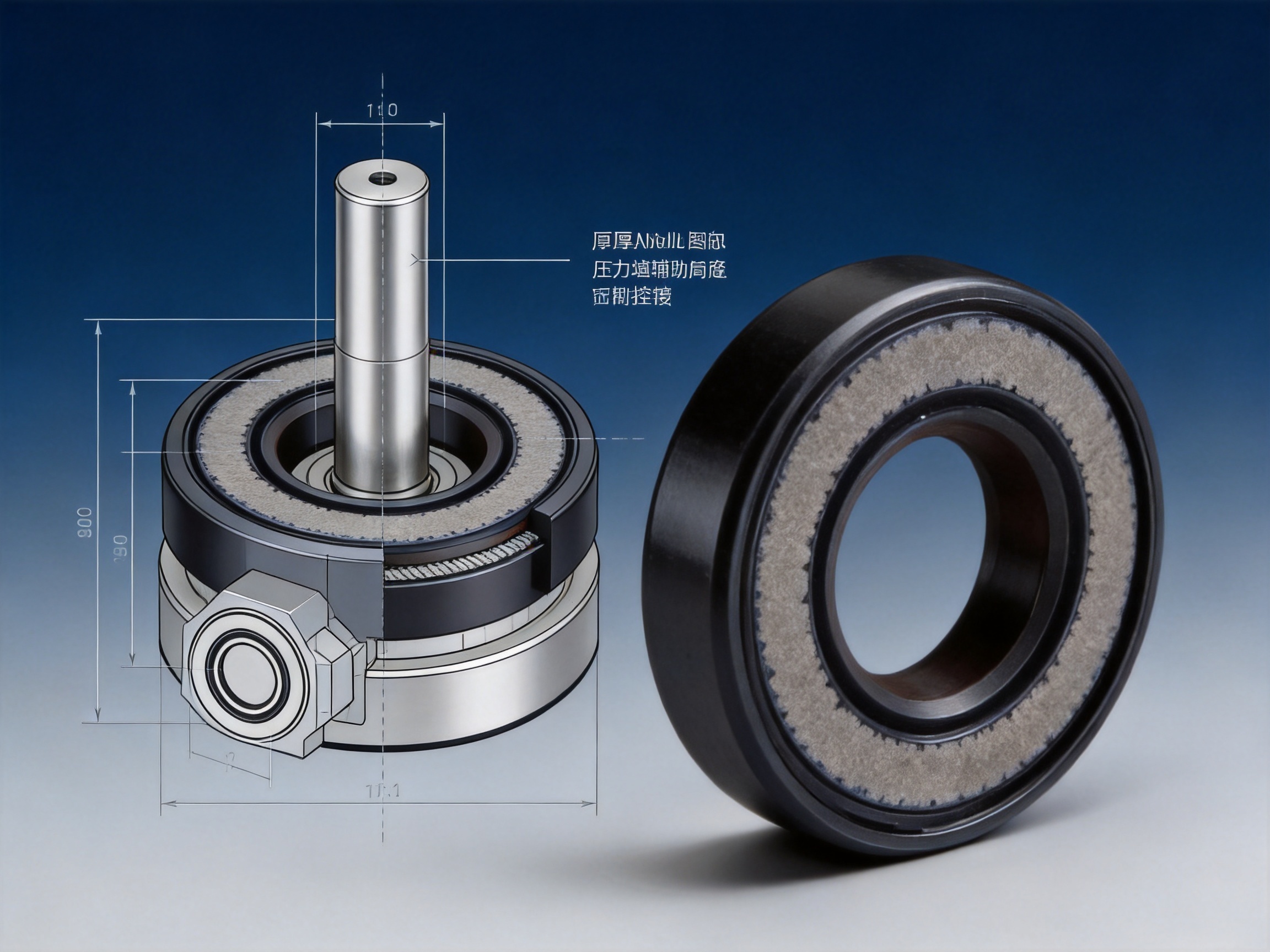
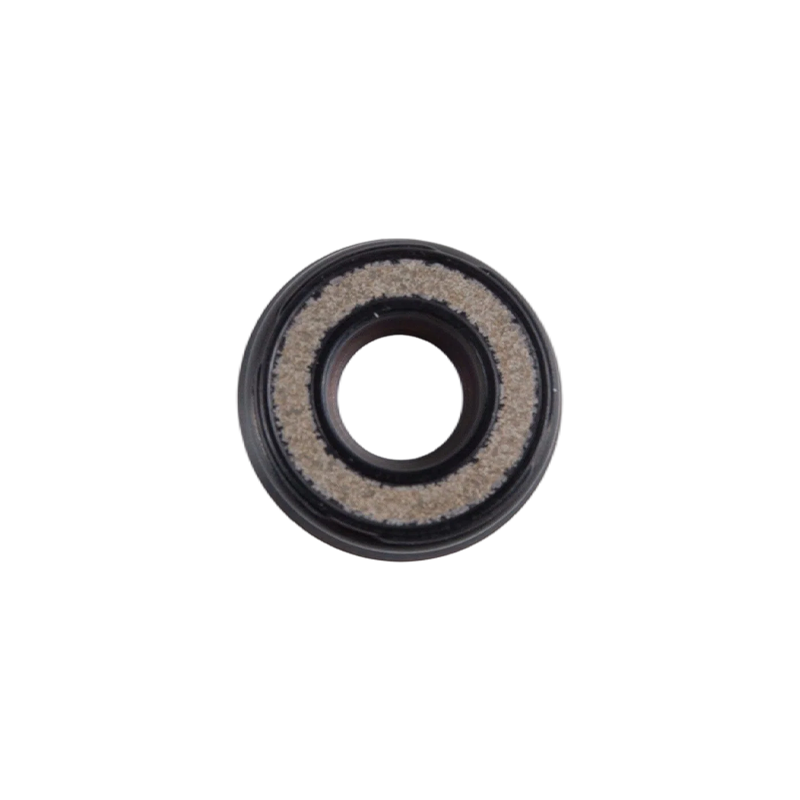
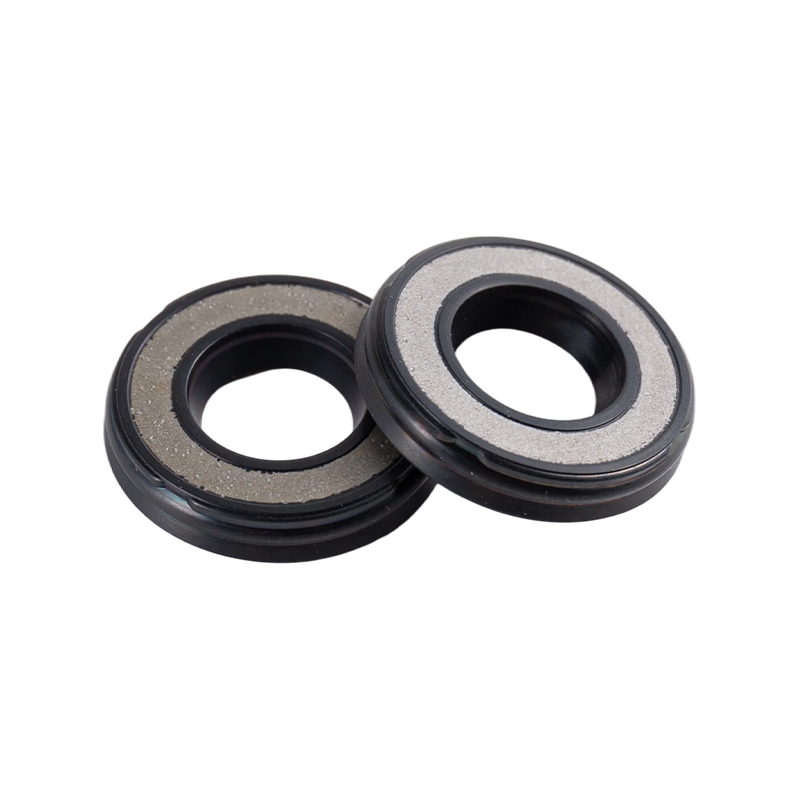
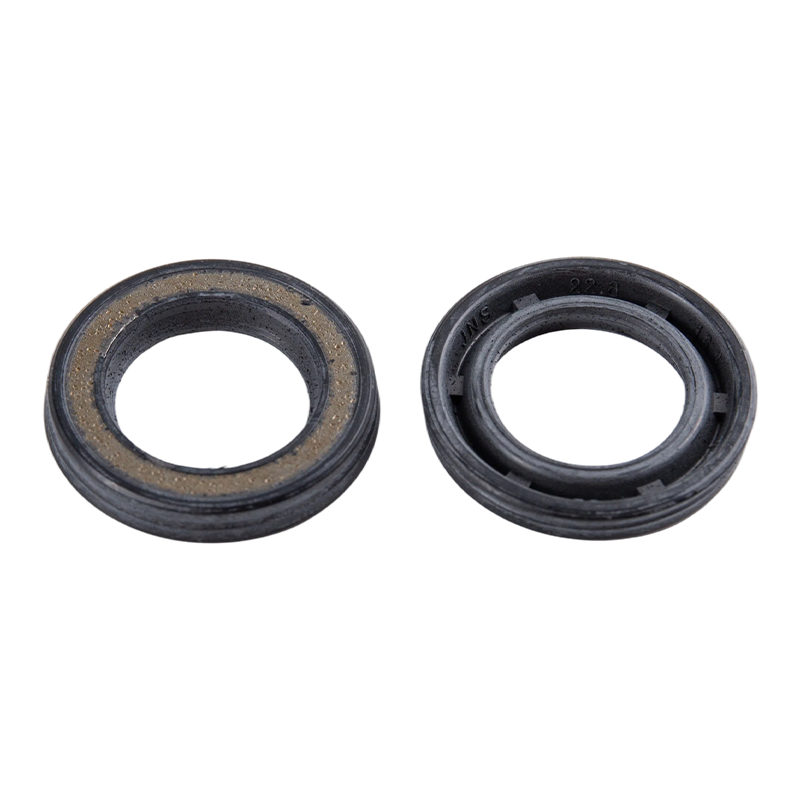
The 1500N Heavy-Duty Hydraulic Seal is designed for demanding sealing applications in compact hydraulic assemblies. Identified by product code A-1-017, this Y-type oil seal ring uses a thick-wall structure and an optimized lip angle to support applications with a design pressure range of 50N to 1500N. Its stated product dimensions are 20.8 mm outside diameter, 11.2 mm inside diameter, and 3.8 mm height. The seal is manufactured from NBR and is intended for an assembly using a 20 mm steel pipe inner diameter and a 12 mm piston rod diameter.
The product is especially suitable for applications where compact dimensions must be combined with strong resistance to thrust and impact. Its design addresses a common challenge in hydraulic sealing: achieving effective pressure retention without creating excessive friction or premature lip wear. By combining a reinforced geometry, appropriate material selection, and controlled manufacturing processes, the seal provides a practical solution for hydraulic cylinders, gas springs, dampers, and related mechanical systems.
This article examines the product’s structure, operating advantages, material characteristics, manufacturing considerations, quality-control requirements, application suitability, installation practices, maintenance value, and the technical capabilities of Ningguo Jnsseals Sealing Technology Co., Ltd. It also explains why a purpose-designed heavy-duty seal can offer advantages over ordinary oil seals or generic replacement rings in demanding applications.
1500N Heavy-Duty Hydraulic Seal
Product Overview
The 1500N Heavy-Duty Hydraulic Seal is categorized as a Y-type oil seal ring. The Y-shaped profile is widely used in reciprocating sealing because it can create effective sealing contact through a combination of lip geometry, elastic deformation, and system pressure. Instead of relying solely on static compression, the seal’s working lips respond dynamically as pressure changes. This makes the profile suitable for piston rods and other components that move back and forth during operation.
The product code is A-1-017, and the supplied description identifies it as a heavy-duty seal designed for 2012 specifications. The product content describes a load capacity of up to 1.5kN of extreme thrust, equivalent to 1500N. The design includes a thick wall for impact resistance and an optimized lip angle intended to support reliable sealing under elevated mechanical demand.
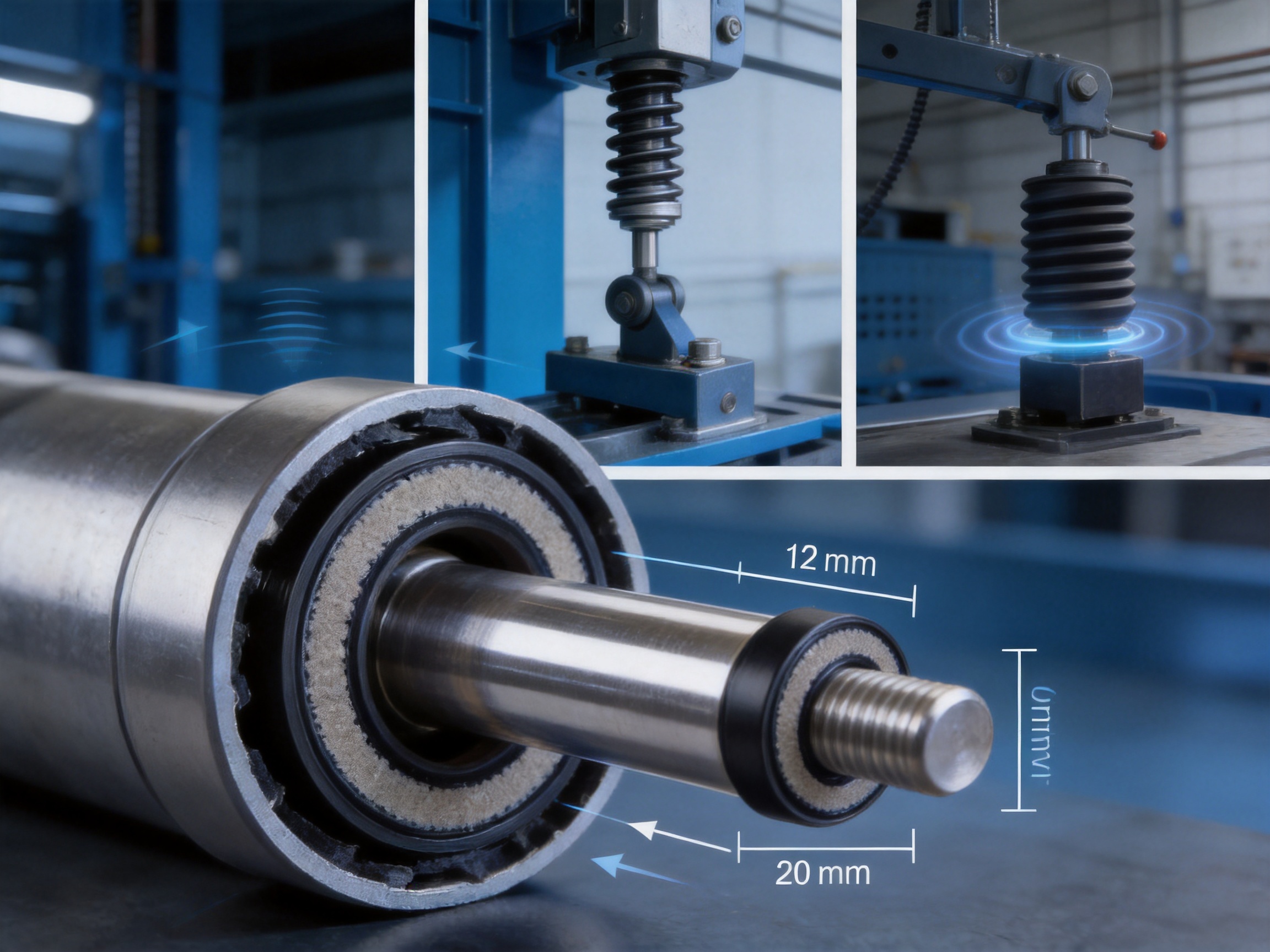
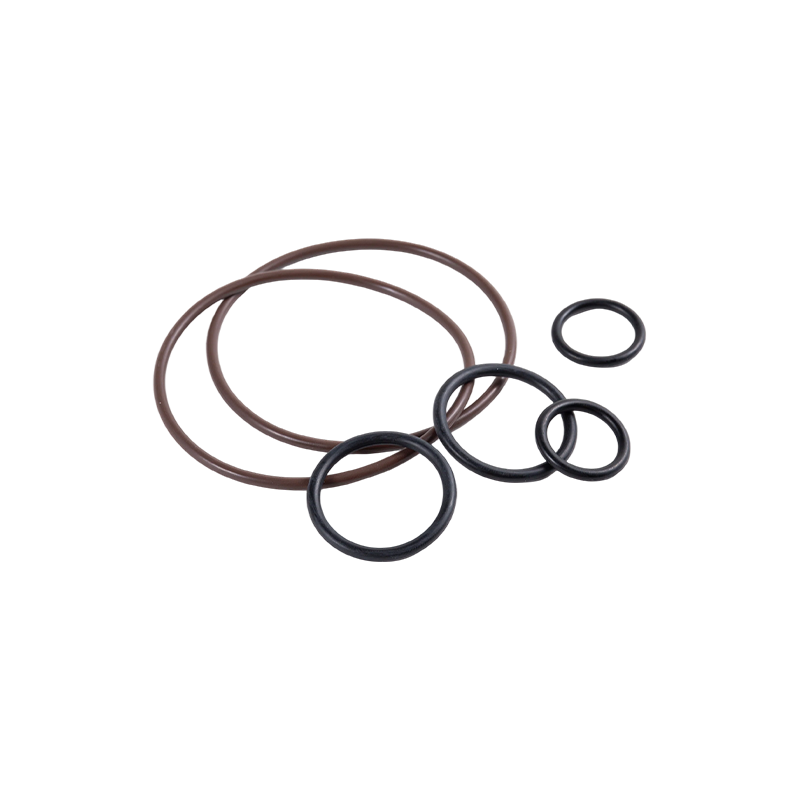
The seal’s dimensional configuration is compact. Its outside diameter is 20.8 mm, its inside diameter is 11.2 mm, and its height is 3.8 mm. The accompanying O-ring adapter is specified as 20 mm by 2.4 mm. The recommended assembly relationship is a steel pipe inner diameter of 20 mm and a piston rod diameter of 12 mm. These dimensions should be verified against the actual housing, groove, rod finish, tolerances, and operating conditions before production installation.
| Item | Specification |
| Product name | 1500N Heavy-Duty Hydraulic Seal |
| Seal type | Y-type oil seal ring |
| Product code | A-1-017 |
| Outside diameter | 20.8 mm |
| Inside diameter | 11.2 mm |
| Height | 3.8 mm |
| O-ring adapter | 20 mm × 2.4 mm |
| Design applicable pressure range | 50N–1500N |
| Recommended pipe inner diameter and piston rod diameter | 20 mm × 12 mm |
| Primary material | NBR |
| Application focus | Heavy-duty hydraulic, gas spring, damper, and reciprocating sealing assemblies |
How the Y-Type Profile Works
A Y-type seal normally includes a sealing body and one or more lips that contact the moving surface. During assembly, the lip is positioned against the piston rod or equivalent shaft. When fluid pressure enters the sealing region, the pressure can energize the lip and increase contact against the mating surface. This pressure-assisted action allows the seal to maintain a barrier even when the system experiences changes in load or pressure.
The lip angle is especially important. If the angle is too open, the seal may not generate sufficient contact force at low pressure. If it is too aggressive, friction may increase and the lip may experience unnecessary heat and wear. The optimized lip angle described for A-1-017 is intended to balance sealing force and sliding performance. In practical terms, this means the seal can maintain stable contact while reducing the risk of excessive drag compared with an incorrectly proportioned profile.
The thick-wall design contributes to structural stability. A thin or poorly supported seal may deform when exposed to shock loading, pressure fluctuation, or installation force. Deformation can create an uneven contact band, allowing leakage or accelerating localized wear. The thicker body of the A-1-017 provides greater resistance to distortion and helps the ring retain its designed shape when installed in a compact housing.
The O-ring adapter specified with the product can also assist with static positioning and housing sealing. While the primary Y-type lip addresses dynamic sealing around the moving piston rod, the adapter can support the seal body at the stationary housing interface. This division of function is important because a seal assembly may need to control leakage along both the moving rod and the fixed bore.
Primary Performance Advantages
High thrust capability
The central advantage of the product is its design for a load range extending to 1500N. This makes it appropriate for applications in which the seal is exposed to strong axial thrust, pressure-induced loading, or mechanical impact. Ordinary light-duty oil seals may perform adequately in low-load mechanisms but can deform, roll, or lose contact when used in more demanding assemblies. The A-1-017 is designed specifically to address this type of elevated load requirement.
A 1500N rating should not be interpreted as a universal operating limit for every application. Actual performance depends on pressure, speed, temperature, fluid compatibility, surface finish, clearance, installation quality, and the supporting hardware. Nevertheless, the stated range provides an important indication that the product is intended for heavy-duty service rather than low-stress sealing alone.
Impact resistance
Impact is a major source of seal failure in hydraulic and gas spring equipment. A piston rod may encounter sudden resistance, an end stop may create a shock load, or an external component may transmit vibration into the seal housing. The thick-wall construction helps the seal absorb and distribute these forces more effectively than a delicate, thin-section profile.
Improved impact resistance can reduce several failure modes. The seal is less likely to buckle during assembly, collapse under sudden loading, or lose its intended lip orientation when the mechanism experiences a rapid change in direction. This is particularly valuable in compact equipment, where there may be limited room for backup components or additional mechanical support.
Compact dimensional design
With a 20.8 mm outside diameter, 11.2 mm inside diameter, and 3.8 mm height, the A-1-017 is suitable for assemblies where installation space is limited. Compact seals can help equipment designers reduce housing size, simplify component layouts, and preserve space for springs, guides, bearings, or damping elements.
Small dimensions also create manufacturing and installation challenges. A compact seal must be accurately formed because even minor variation can affect lip contact, groove filling, or rod clearance. The value of a compact heavy-duty product therefore depends on more than nominal size. It requires controlled tooling, consistent material behavior, and careful inspection of critical dimensions.
Balanced sealing and friction
In reciprocating applications, sealing performance and friction must be balanced. Excessive contact force can increase drive energy, heat generation, and wear. Insufficient contact force can cause leakage, especially during startup or low-pressure operation. The A-1-017’s lip geometry is intended to provide reliable contact without requiring an unnecessarily high interference fit.
A balanced seal can contribute to smoother movement and more consistent equipment response. In gas springs and dampers, for example, friction affects the force curve and the perceived smoothness of motion. In hydraulic cylinders, uncontrolled friction can contribute to stick-slip behavior, reduced efficiency, and wear on the rod surface. A properly designed lip helps limit these problems.
Material suitability for general sealing service
NBR, or nitrile butadiene rubber, is widely used for oil seals because it provides a practical combination of oil resistance, elasticity, abrasion resistance, and cost effectiveness. It is compatible with many mineral-oil-based hydraulic fluids and lubricants when the specific compound and temperature range are appropriate.
NBR is also well suited to molded sealing profiles because it can be formulated to achieve the hardness, resilience, and compression behavior required for dynamic seals. The material can support a reliable lip edge while retaining enough elasticity to follow small surface variations in the mating component.
Material selection must always be matched to the operating medium. If the application uses aggressive chemicals, high-temperature fluids, ozone-rich environments, or specialized synthetic oils, another elastomer such as HNBR or FPM may be more appropriate. Ningguo Jnsseals Sealing Technology Co., Ltd. identifies NBR, HNBR, and FPM O-ring products among its broader product capabilities, allowing customers to discuss material alternatives when NBR is not the optimum choice.
Advantages Compared with Generic or Light-Duty Seals
Generic seals are often selected by nominal diameter alone. This can be risky because two rings with similar dimensions may have very different lip geometry, material hardness, pressure capability, and resistance to mechanical deformation. A light-duty seal may fit physically but fail quickly when exposed to the thrust or impact conditions for which A-1-017 was designed.
The first advantage of the heavy-duty design is application matching. Instead of treating the seal as a simple consumable, the design considers load, lip angle, wall thickness, and mating dimensions together. This approach improves the likelihood that the seal will remain stable during repeated operation.
The second advantage is better resistance to deformation. When a seal is too flexible for its environment, pressure can push the lip away from the surface or force the body into an unwanted shape. Deformation can produce leakage, extrusion, and uneven wear. The thicker structure of A-1-017 is intended to provide additional mechanical support.
The third advantage is improved consistency in demanding assemblies. A purpose-designed product can be evaluated against a defined specification, including the 20.8 mm outside diameter, 11.2 mm inside diameter, 3.8 mm height, and 20 mm by 2.4 mm adapter. This is more reliable than selecting an unverified replacement based on approximate size.
The fourth advantage is engineering support. A specialist sealing manufacturer can review operating pressure, temperature, fluid, speed, housing configuration, and rod condition before recommending a product or material. Such support is especially valuable when the same seal must be used across different equipment models or when a customer requires a customized profile.
Finally, the product’s compact heavy-duty design can reduce the need for oversized housings or multiple sealing components. Where the installation conditions are suitable, a robust single sealing element may simplify assembly and reduce the number of possible leakage interfaces.
Manufacturing Process and Technical Strengths
Material preparation
The manufacturing process begins with material preparation. NBR compounds are selected and mixed according to the required hardness, elasticity, abrasion resistance, fluid compatibility, and processing behavior. A stable compound is essential because the final performance of a seal depends on more than its geometry. Variations in polymer, filler, plasticizer, curing agent, or processing aid can change compression behavior and dynamic wear resistance.
For a product such as A-1-017, material preparation should be controlled to support a consistent lip edge and stable body dimensions. Proper mixing helps distribute additives evenly throughout the compound. The compound is then prepared for molding in a form that supports repeatable loading into the production tooling.
Precision mold design
Seal performance is closely linked to mold accuracy. The mold must reproduce the outside diameter, inside diameter, height, lip angle, wall thickness, and adapter-related features. The sealing lip is particularly sensitive because small changes in its angle or thickness can affect contact pressure and friction.
Advanced seal manufacturing therefore relies on carefully designed tooling and controlled mold maintenance. The production team must manage parting lines, venting, cavity filling, shrinkage, and demolding. Poor venting may create voids or surface defects, while inaccurate compensation for material shrinkage can lead to dimensional inconsistency.
A specialist manufacturer with dedicated sealing experience can refine tooling based on production data and application feedback. This accumulated knowledge is valuable when producing small, complex rings where conventional machining or simple molding methods may not provide adequate consistency.
Controlled molding and vulcanization
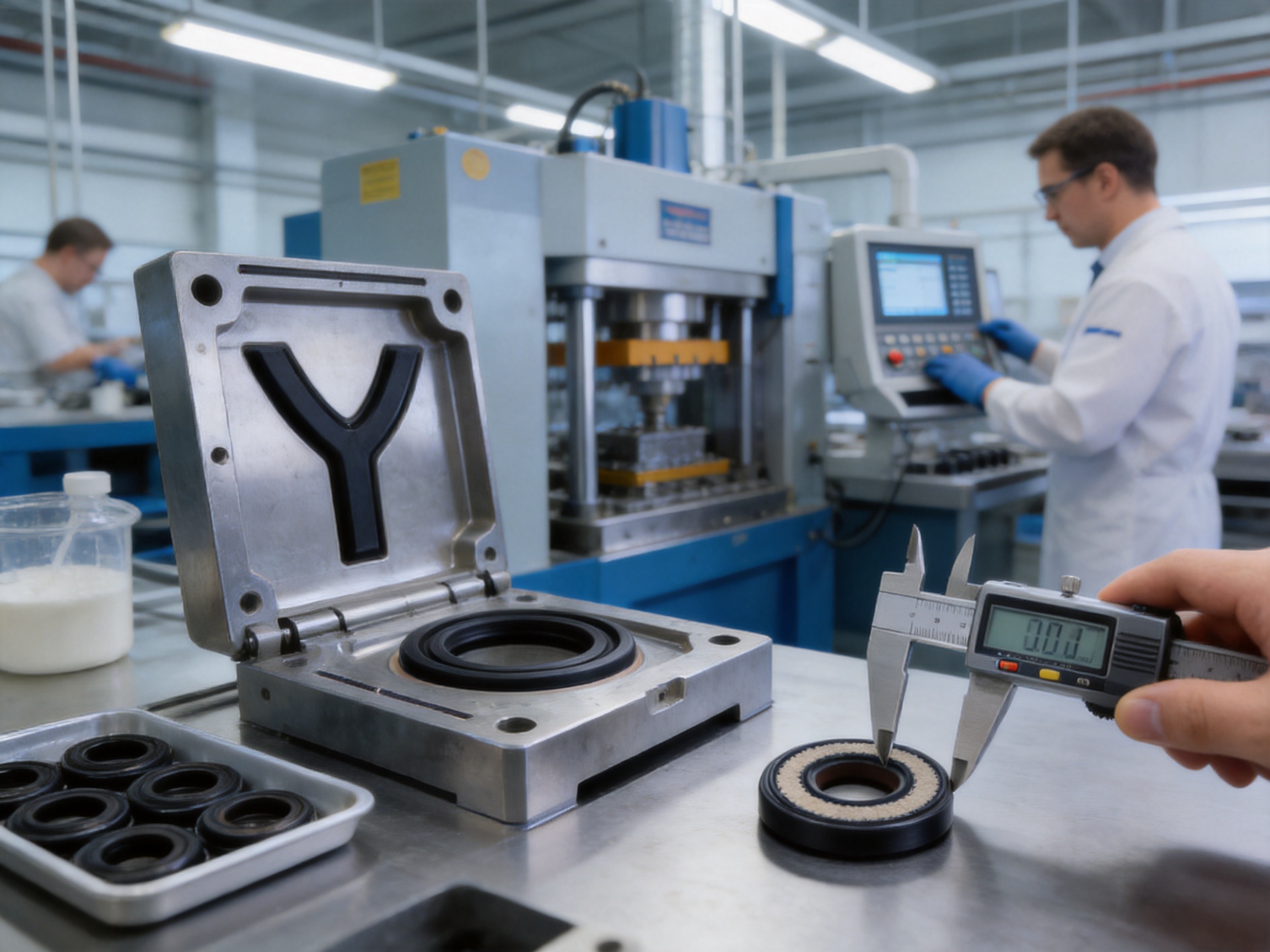
NBR seals are generally formed through a molding and vulcanization process. During molding, the prepared compound fills the cavity and takes the shape of the product. During vulcanization, heat and pressure create cross-links within the rubber, converting the compound into an elastic, durable sealing material.
Vulcanization must be controlled carefully. Insufficient curing may result in poor strength, excessive compression set, or unstable dimensions. Over-curing can reduce elasticity and make the seal too hard or brittle. A controlled process helps produce the desired balance of resilience, hardness, and wear resistance.
For heavy-duty sealing products, the process should also protect the lip geometry. The lip must emerge from the mold with a clean edge and without tearing, distortion, or flash that could interfere with sliding contact. Production parameters, mold temperature, pressure, curing time, and handling procedures all influence the final result.
Post-molding finishing
After molding, seals may require trimming or deflashing. Excess material along the parting line can create a leakage path, interfere with installation, or damage the mating surface. Finishing must remove unwanted material without cutting into the functional lip or reducing the designed wall thickness.
Visual inspection is an important part of this stage. Operators check for surface cracks, blisters, foreign particles, incomplete filling, flow marks, deformation, and visible flash. Since a seal’s working edge is small, inspection lighting and handling methods should be appropriate for detecting fine defects.
Dimensional inspection
Critical dimensions should be verified against the product specification. For A-1-017, inspection includes the outside diameter of 20.8 mm, inside diameter of 11.2 mm, and height of 3.8 mm. The associated adapter dimension and the fit relationship with a 20 mm steel pipe inner diameter and 12 mm piston rod should also be considered during assembly validation.
Dimensional inspection may use calibrated gauges, optical measurement equipment, profile projectors, or other suitable instruments. Because elastomeric products can deform under measurement force, the inspection method must be selected carefully. A measurement that compresses the seal excessively may not represent the actual installed condition.
Performance validation
Dimensional conformity alone does not guarantee sealing performance. A capable manufacturer may evaluate compression behavior, lip recovery, leakage resistance, friction, wear, and resistance to repeated movement. Test conditions should reflect the intended application as closely as practical.
For heavy-duty hydraulic sealing, validation may include pressure cycling, reciprocating movement, temperature exposure, fluid immersion, and impact or load simulation. The purpose is to determine whether the seal maintains its shape and sealing contact after repeated service rather than only during initial installation.
Ningguo Jnsseals Sealing Technology Co., Ltd. describes itself as a high-tech enterprise focused on sealing technology for gas springs, dampers, and related O-ring products. Its stated capabilities include research and development, product design, testing, and technical consultation. These capabilities support a development process in which a seal can be adjusted according to actual equipment requirements instead of being treated as a fixed, one-size-fits-all component.
Production management and traceability
Reliable seal production also depends on production management. Material batches, tooling conditions, molding parameters, inspection results, and packaging information should be organized so that product quality can be reviewed and controlled. Traceability is valuable when a customer needs to investigate a field issue or repeat an order after a long interval.
Consistent coding is another practical advantage. Product code A-1-017 provides a clear reference for purchasing, production planning, quality documentation, and replacement ordering. Correct identification reduces the chance of mixing products with similar dimensions but different materials or profiles.
Application Areas
Hydraulic cylinders
The seal can be considered for compact hydraulic cylinders where the piston rod moves reciprocally and the sealing element must resist fluid leakage and mechanical loading. The specified 20 mm pipe inner diameter and 12 mm piston rod diameter provide a starting point for equipment matching, but the complete cylinder design must also be reviewed.
Rod surface roughness, hardness, concentricity, guide support, pressure, speed, and fluid type all affect seal life. A strong seal cannot compensate for a damaged rod, excessive clearance, misalignment, or contamination in the fluid. The best results come from treating the seal and its surrounding hardware as one engineered system.
Gas springs
Gas springs require low leakage over long periods, smooth rod movement, and resistance to repeated compression and extension. The seal must tolerate stored gas pressure and the friction conditions associated with a compact rod assembly. Because gas springs are commonly used in furniture, automotive components, machinery covers, and adjustable equipment, consistent performance is important for both safety and user experience.
The product’s compact design and NBR material make it a potential choice for suitable gas spring environments. The actual gas composition, pressure, temperature, rod finish, and lubrication conditions should be reviewed before approval.
Dampers and shock absorbers
Dampers and shock absorbers are exposed to repeated movement and energy dissipation. Their sealing components may experience rapid changes in velocity, pressure pulses, and vibration. The thick-wall design of A-1-017 is relevant to applications where mechanical impact and repeated dynamic loading are concerns.
In these systems, sealing friction can influence damping force and response consistency. Therefore, the seal should be tested in the actual damper design to ensure that the product delivers the required balance between leakage prevention and movement control.
Furniture and adjustable mechanisms
Gas-assisted furniture mechanisms often use compact cylinders or dampers. Examples include adjustable chairs, lifting tables, cabinet supports, recliners, and controlled-opening systems. These products may operate frequently and must remain clean, quiet, and reliable over their service life.
A compact heavy-duty seal can help manufacturers design smaller mechanisms without sacrificing resistance to thrust. However, product selection should account for the expected cycle count, ambient temperature, storage conditions, and any requirements related to noise or smooth operation.
Medical, home appliance, and construction equipment
Sealing products are used in many other industries, including medical equipment, home appliances, construction mechanisms, and general industrial devices. Each sector imposes different requirements. Medical and clean equipment may require special material, cleanliness, or documentation. Construction equipment may require greater abrasion and contamination resistance. Home appliances may prioritize low noise, compact dimensions, and long-term consistency.
The A-1-017 should therefore be treated as a defined product for suitable applications rather than as a universal seal for every environment. The manufacturer’s technical team can help determine whether the standard NBR version is appropriate or whether a modified material or profile is needed.
Installation Recommendations
Correct installation is essential for achieving the intended performance of any hydraulic seal. Before installation, inspect the groove, bore, piston rod, guide components, and surrounding hardware. Remove burrs, sharp edges, metal particles, dust, and old seal fragments. A sharp edge can cut the lip during insertion, while contamination can become embedded in the sealing contact area.
Confirm the product dimensions and orientation. The 20.8 mm outside diameter, 11.2 mm inside diameter, and 3.8 mm height should correspond to the approved assembly drawing. The seal should not be forced into a groove that is too small or left loose in a cavity that is too large. Both conditions can cause twisting, leakage, extrusion, or premature wear.
Protect the sealing lip when passing it over threads, keyways, retaining grooves, holes, or other interruptions in the rod surface. A temporary installation sleeve or suitable protective film may be used where necessary. Do not use sharp tools to push directly against the lip.
Apply a compatible lubricant before assembly when permitted by the application. Lubrication reduces initial friction and helps prevent dry running during startup. The lubricant must be compatible with NBR and the hydraulic or gas medium. Incompatible oils, solvents, or cleaning chemicals can cause swelling, hardening, cracking, or loss of elasticity.
Install the seal squarely and avoid twisting. A twisted Y-type ring may have an uneven lip contact pattern and may fail immediately or after only a short operating period. After installation, move the rod slowly through its initial stroke if possible. Observe any abnormal resistance, leakage, noise, or seal displacement before placing the equipment into full service.
Where an O-ring adapter is used, ensure that it is correctly seated and not pinched or stretched beyond its intended condition. The adapter must support the stationary sealing interface without interfering with the dynamic lip. The groove design, compression, and assembly sequence should follow the approved engineering drawing.
Operating Conditions and Service Life
Seal life depends on the complete operating environment. Pressure is only one factor. Reciprocating speed, stroke length, cycle frequency, temperature, fluid cleanliness, rod alignment, surface finish, and side loading can each affect performance.
High speed may generate heat at the lip, especially when lubrication is poor or contact force is excessive. High temperature can accelerate material aging and reduce physical properties. Low temperature can reduce flexibility and increase starting friction. Contamination can abrade the lip or create a permanent leakage channel.
Side loading is particularly harmful to rod seals. If the rod is not properly guided, the seal may contact more heavily on one side than the other. This produces uneven wear and may cause leakage even when the seal material and dimensions are correct. Appropriate guides, bearings, and housing alignment are therefore essential.
For long service life, the hydraulic medium should be kept clean and maintained according to the equipment manufacturer’s requirements. Filtration helps limit abrasive particles. Rod surfaces should be protected from corrosion and impact. During maintenance, the seal should be replaced if there is visible damage, hardened material, permanent deformation, or repeated leakage after alignment and fluid conditions have been checked.
Quality and Engineering Support from the Manufacturer
Ningguo Jnsseals Sealing Technology Co., Ltd. was founded in 2019 and is headquartered in Anhui, China. The company focuses on sealing technology for gas springs, dampers, and related O-ring products. Its stated business scope covers research and development, product design, testing, technical consultation, and customized sealing solutions.
This focus gives the company a practical understanding of the conditions faced by sealing components in compact mechanical assemblies. Gas springs and dampers require reliable dynamic sealing, controlled friction, resistance to pressure, and stable performance across repeated cycles. Experience in these areas can be applied to hydraulic seal development and customer-specific product adaptation.
The company describes its production base as being supported by advanced production equipment and a professional technical service team. In sealing manufacture, equipment quality affects mold precision, process repeatability, inspection capability, and production efficiency. Technical personnel are also needed to interpret application data, solve leakage problems, and select appropriate elastomer compounds.
Another strength is the ability to provide customized sealing solutions. Customers may need a different hardness, alternative elastomer, modified lip geometry, special dimensions, or a new adapter configuration. A manufacturer involved in design and testing can evaluate these requirements systematically rather than relying only on catalog substitution.
The company’s products are stated to serve automotive, furniture, home appliance, medical equipment, construction, and other industries. Serving multiple sectors can support broader application knowledge, although each product must still be approved according to its own specifications and operating conditions.
The company philosophy of being people oriented, innovation driven, and committed to excellence reflects the importance of combining technical development with customer service. For industrial buyers, responsive communication, clear product identification, stable repeat orders, and technical consultation are practical benefits that can be as important as the initial unit price.
Product Selection Checklist
Before selecting the A-1-017 seal, engineers and purchasing teams should collect the basic information listed below:
| Selection factor | Information to verify |
| Housing | Groove diameter, groove width, bore condition, retention method, and available installation space |
| Moving component | Piston rod diameter, surface finish, hardness, straightness, and corrosion condition |
| Pressure or thrust | Normal operating value, peak value, pressure fluctuation, and expected load up to the design requirement |
| Movement | Reciprocating speed, stroke length, cycle frequency, and direction changes |
| Temperature | Minimum, normal, and maximum service temperatures, including startup conditions |
| Fluid or gas | Hydraulic oil, lubricant, gas composition, additives, and chemical compatibility |
| Environment | Dust, moisture, ozone, ultraviolet exposure, vibration, impact, and external contamination |
| Material | Suitability of NBR or need for HNBR, FPM, or another elastomer |
| Quality requirements | Dimensional tolerance, visual standards, testing, packaging, traceability, and documentation |
Providing this information to the manufacturer improves the quality of the recommendation. It can also prevent costly trial-and-error replacement cycles. If an application is close to the upper limit of the stated load range, a sample test or application-specific validation should be completed before mass production.
Maintenance and Troubleshooting
Leakage does not always indicate that the seal itself is defective. A damaged rod, excessive clearance, incorrect installation, contamination, incompatible fluid, or misaligned guide can produce the same symptom. Troubleshooting should begin with a complete inspection rather than immediate replacement with another seal.
If leakage appears immediately after assembly, inspect for a cut lip, twisted profile, incorrect orientation, damaged groove, or assembly contamination. If leakage develops gradually, inspect for wear, rod scoring, hardening, swelling, compression set, and changes in operating temperature.
High friction may result from excessive interference, a rough rod surface, insufficient lubrication, an incompatible material, or a seal that has been installed in a distorted housing. Low-speed stick-slip can be associated with surface finish, material hardness, lubrication, or side loading. The lip geometry may also need to be reviewed if operating conditions differ significantly from the original design assumptions.
Seal inspection after removal can provide useful evidence. A polished and even contact band may indicate normal operation. One-sided wear suggests misalignment or side loading. A torn edge may indicate installation damage or a sharp mating surface. Swollen rubber may indicate chemical incompatibility, while hardened or cracked material may indicate excessive temperature, aging, or incompatible fluid exposure.
Q&A
What type of seal is the 1500N Heavy-Duty Hydraulic Seal?
It is a Y-type oil seal ring designed for reciprocating sealing applications. The product code is A-1-017, and its primary material is NBR.
What is the maximum stated load range?
The design applicable pressure range is specified as 50N to 1500N. The product description identifies the seal as suitable for handling up to 1.5kN of extreme thrust. Actual service limits must be confirmed against pressure, speed, temperature, fluid, clearance, and equipment design.
What are the main dimensions?
The outside diameter is 20.8 mm, the inside diameter is 11.2 mm, and the height is 3.8 mm. The specified O-ring adapter is 20 mm by 2.4 mm.
What rod and pipe dimensions are associated with the product?
The stated assembly relationship is a 20 mm steel pipe inner diameter and a 12 mm piston rod diameter. These dimensions should be checked against the actual groove and hardware drawings before installation.
Why is the wall made thicker?
The thick-wall design is intended to improve resistance to impact and deformation. It helps the seal retain its shape under high thrust, pressure fluctuation, and demanding mechanical conditions.
Is NBR suitable for every hydraulic application?
No. NBR is suitable for many mineral-oil-based hydraulic fluids and general oil-sealing applications, but compatibility depends on the exact fluid, temperature, and compound formulation. HNBR, FPM, or another material may be more suitable for high-temperature, chemical, ozone, or specialized-fluid environments.
Can the seal be used in gas springs and dampers?
It may be suitable for compatible gas spring and damper applications because its design addresses compact dimensions, reciprocating motion, and heavy-duty sealing. The gas composition, pressure, temperature, rod finish, cycle requirements, and lubrication system should be reviewed before approval.
What advantage does the optimized lip angle provide?
The lip angle is intended to balance contact pressure and sliding friction. A suitable angle helps maintain sealing contact while reducing the risk of excessive drag and localized wear.
How should the seal be installed?
Clean the housing and rod, remove burrs, verify dimensions, protect the lip from sharp edges, apply a compatible lubricant when permitted, and install the ring without twisting. The seal should be seated evenly and tested at low speed before full operation.
What should be checked if leakage occurs?
Inspect the seal for cuts, twisting, wear, swelling, hardening, or deformation. Also inspect the piston rod, groove, guide, fluid, alignment, clearance, pressure, temperature, and contamination level. Replacing the seal without correcting a damaged rod or misaligned assembly may not solve the problem.
Does the manufacturer offer customized sealing solutions?
The company states that it provides customized sealing solutions, including product design, testing, and technical consultation. Customers can discuss material alternatives, profile modifications, dimensions, and application-specific requirements with the technical team.
Conclusion
The 1500N Heavy-Duty Hydraulic Seal is a compact Y-type oil seal ring developed for demanding reciprocating applications. Its 20.8 mm outside diameter, 11.2 mm inside diameter, and 3.8 mm height allow it to fit compact assemblies, while its thick-wall structure is intended to improve resistance to impact and deformation. The optimized lip angle supports a practical balance between sealing force and friction, and the NBR material provides a widely used solution for compatible oil-based environments.
Compared with generic or light-duty seals, the product offers a more application-focused design for elevated thrust and mechanical demand. Its stated 50N to 1500N design range, 20 mm by 2.4 mm O-ring adapter, and recommended 20 mm pipe inner diameter with a 12 mm piston rod provide clear starting points for engineering evaluation.
Performance depends on correct selection, accurate housing design, suitable fluid, controlled installation, clean operating conditions, and proper alignment. The seal should therefore be evaluated as part of a complete hydraulic, gas spring, or damper assembly. When the application requires a different elastomer, geometry, or dimensional configuration, the manufacturer’s stated research, development, testing, and technical consultation capabilities can support customization.
Through its focus on sealing technology, advanced production equipment, application knowledge, and customer-oriented technical service, Ningguo Jnsseals Sealing Technology Co., Ltd. provides a manufacturing base for standard and customized sealing products. For equipment makers and replacement-part buyers seeking a compact seal with heavy-duty characteristics, A-1-017 offers a technically focused option that merits consideration and application-specific validation.
References
1. Ningguo Jnsseals Sealing Technology Co., Ltd., Product Specification: A-1-017 1500N Heavy-Duty Hydraulic Seal.
2. Ningguo Jnsseals Sealing Technology Co., Ltd., Corporate Information and Sealing Technology Capability Statement.
3. International Organization for Standardization, ISO 3601, Fluid Power Systems—O-Rings.
4. International Organization for Standardization, ISO 6194, Rotary-Shaft Lip-Type Sealing Rings Incorporating Elastomeric Sealing Elements.
5. Parker Hannifin, Fluid Sealing Technology Handbook and Elastomer Selection Principles.
6. Engineering fundamentals of elastomeric seals, hydraulic reciprocating sealing, material compatibility, and installation practice.
Product: 1500N Heavy-Duty Hydraulic Seal

PREV:Micro Precision Pump Y-Seal for Low-Pressure Pneumatic and Damping Applications
NEXT:2000N Extreme Thrust Seal: High-Pressure NBR Sealing for Demanding Hydraulic Applications
NEXT:2000N Extreme Thrust Seal: High-Pressure NBR Sealing for Demanding Hydraulic Applications



Want to know more
about us?
about us?

Precision sealing for gas springs and dampers. Durable, wear-resistant, and built for long-life performance in demanding applications.
Product Categories
Quick Links
Contact Us
-
Email: jns@jnsseals.cn

-
Email: LouZhuoyu@outlook.com
-
Manager Gong: +86-18563770820

-
Manager Wang: +8615357558902
-
No. 5, Meilin Avenue, Meilin Industrial Development Zone, Ningguo City, Anhui Province, China

