

 English
 русский
 Deutsch
 Türk
 中文简体
2000N Extreme Thrust Seal: High-Pressure NBR Sealing for Demanding Hydraulic Applications
2000N Extreme Thrust Seal: High-Pressure NBR Sealing for Demanding Hydraulic Applications
2000N Extreme Thrust Seal: High-Pressure NBR Sealing for Demanding Hydraulic Applications
2000N Extreme Thrust Seal: High-Pressure NBR Sealing for Demanding Hydraulic Applications
2000N Extreme Thrust Seal: High-Pressure NBR Sealing for Demanding Hydraulic Applications
2000N Extreme Thrust Seal: High-Pressure NBR Sealing for Demanding Hydraulic Applications
2000N Extreme Thrust Seal: High-Pressure NBR Sealing for Demanding Hydraulic Applications
2000N Extreme Thrust Seal: High-Pressure NBR Sealing for Demanding Hydraulic Applications
2000N Extreme Thrust Seal: High-Pressure NBR Sealing for Demanding Hydraulic Applications
2000N Extreme Thrust Seal: High-Pressure NBR Sealing for Demanding Hydraulic Applications
2000N Extreme Thrust Seal: High-Pressure NBR Sealing for Demanding Hydraulic Applications
2000N Extreme Thrust Seal: High-Pressure NBR Sealing for Demanding Hydraulic Applications
2000N Extreme Thrust Seal: High-Pressure NBR Sealing for Demanding Hydraulic Applications
2000N Extreme Thrust Seal: High-Pressure NBR Sealing for Demanding Hydraulic Applications
2000N Extreme Thrust Seal: High-Pressure NBR Sealing for Demanding Hydraulic Applications
2000N Extreme Thrust Seal: High-Pressure NBR Sealing for Demanding Hydraulic Applications

Fang Zhiqing — International Product Sales Manager
Home / Author / Fang Zhiqing — International Product Sales Manager / 2000N Extreme Thrust Seal: High-Pressure NBR Sealing for Demanding Hydraulic Applications
NEW Category
Contact us
2000N Extreme Thrust Seal: High-Pressure NBR Sealing for Demanding Hydraulic Applications
Content
- 1 Product Overview
- 2 Why High-Pressure Sealing Requires a Specialized Design
- 3 Core Advantages of the 2000N Extreme Thrust Seal
- 4 Comparison with General-Purpose Competitor Seals
- 5 Design and Functional Principles
- 6 Manufacturing Strengths and Quality Control
- 7 Application Areas
- 8 Installation Recommendations
- 9 Maintenance and Service-Life Considerations
- 10 Customized Sealing Solutions
- 11 Quality, Research, and Technical Service
- 12 Purchasing and Evaluation Checklist
- 13 Environmental and Storage Considerations
- 14 Frequently Asked Questions
- 14.1 What type of product is the 2000N Extreme Thrust Seal?
- 14.2 What pressure range is specified for the product?
- 14.3 What material is used?
- 14.4 What are the product dimensions?
- 14.5 What rod and pipe configuration is indicated?
- 14.6 What is the main advantage over a general-purpose oil seal?
- 14.7 Can the seal be used in every hydraulic fluid?
- 14.8 Is the seal suitable for dynamic movement?
- 14.9 Can the product be customized?
- 14.10 How should the product be installed?
- 14.11 Which industries may use this type of seal?
- 14.12 Who manufactures the product?
- 15 Conclusion
- 16 References
- 17 Product: 2000N Extreme Thrust Seal
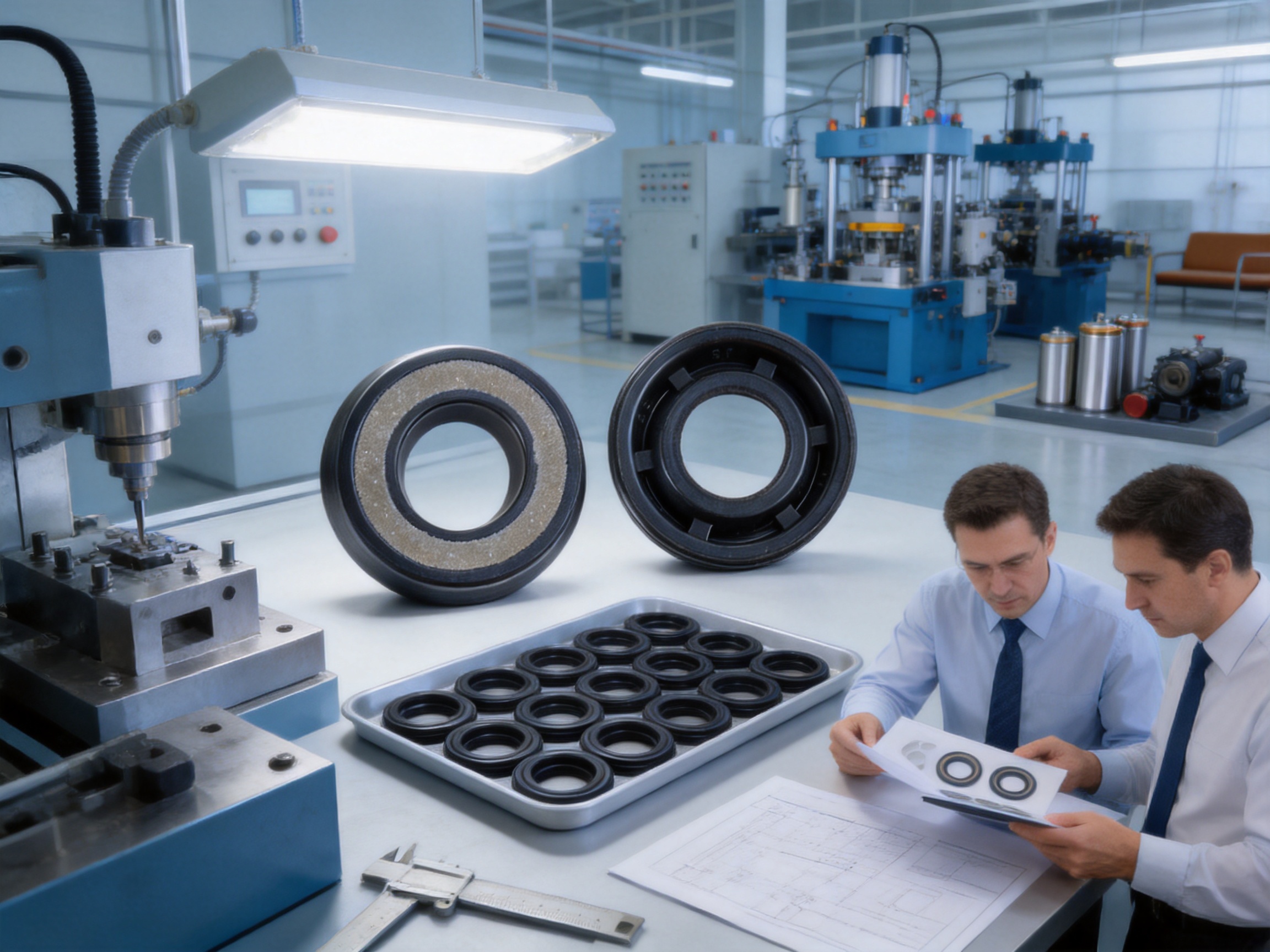
Reliable sealing is one of the most important requirements in hydraulic equipment, gas springs, dampers, industrial actuators, and other pressure-driven systems. A seal must control fluid movement, maintain contact with a moving surface, resist pressure-related deformation, and continue performing through repeated operating cycles. When a system works under elevated pressure, ordinary sealing components may experience extrusion, leakage, accelerated wear, or loss of elasticity. Choosing a seal specifically designed for high-pressure service is therefore essential to equipment performance and operating safety.
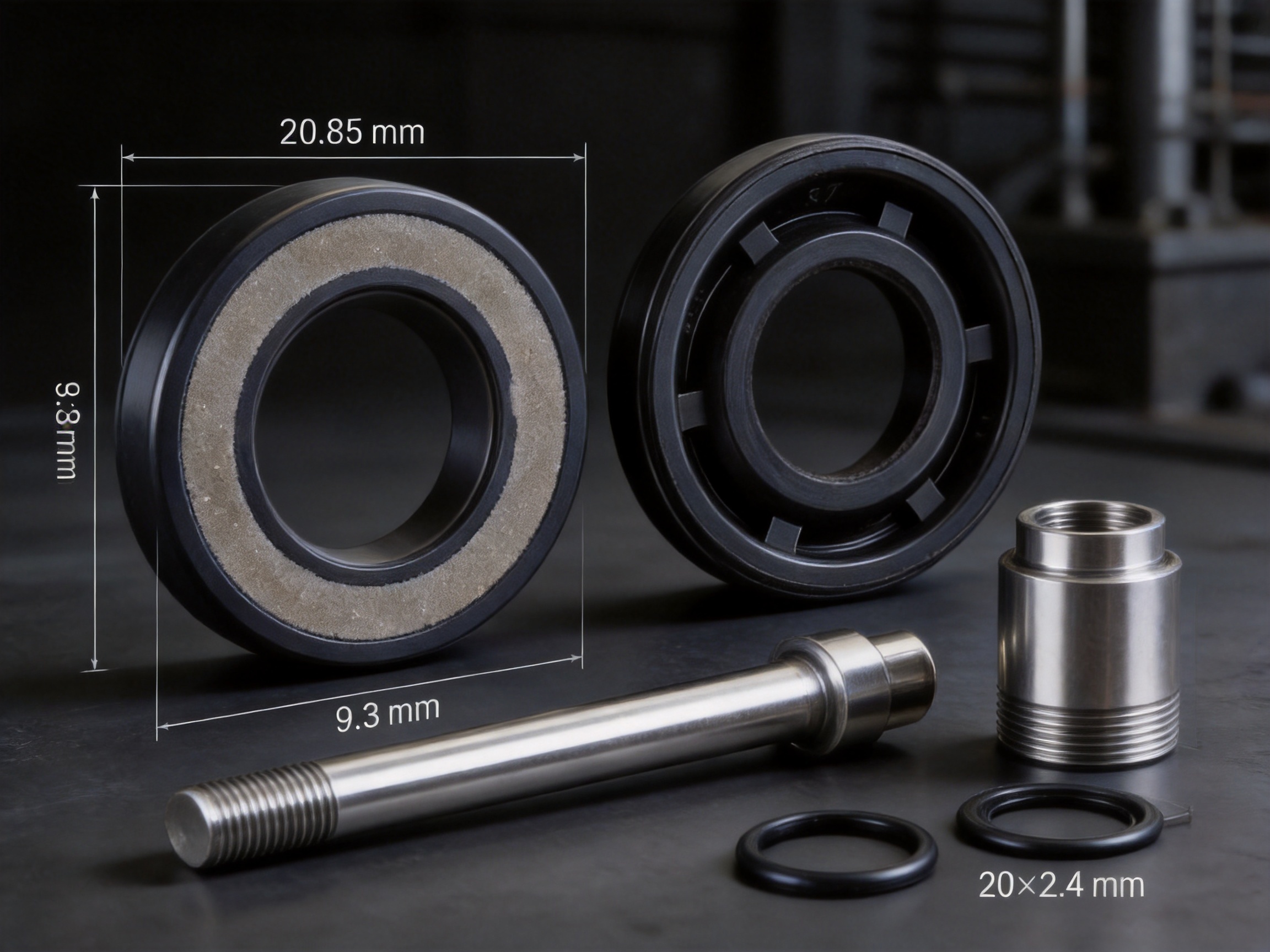
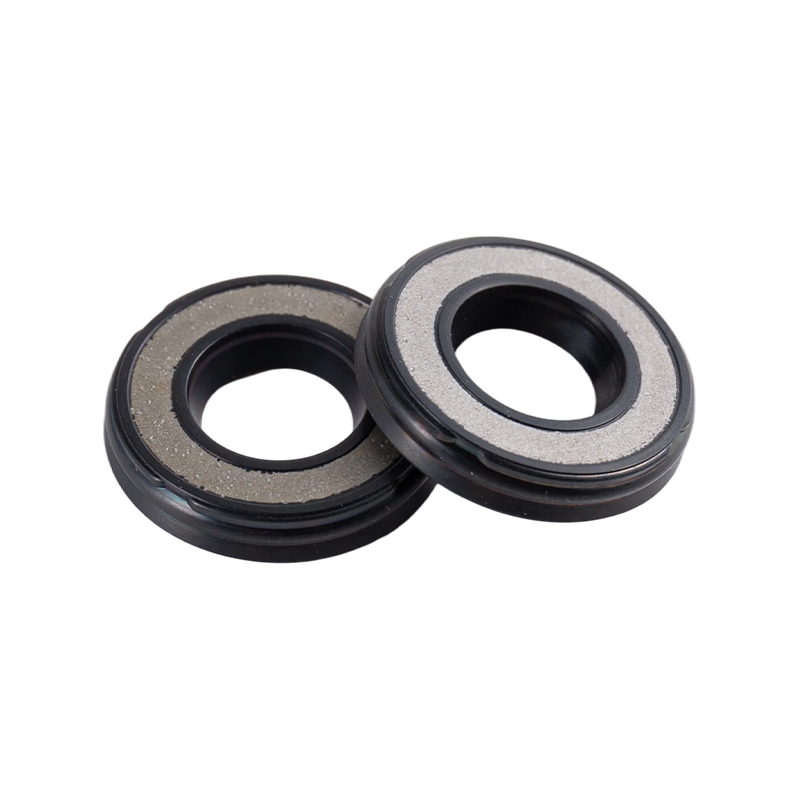
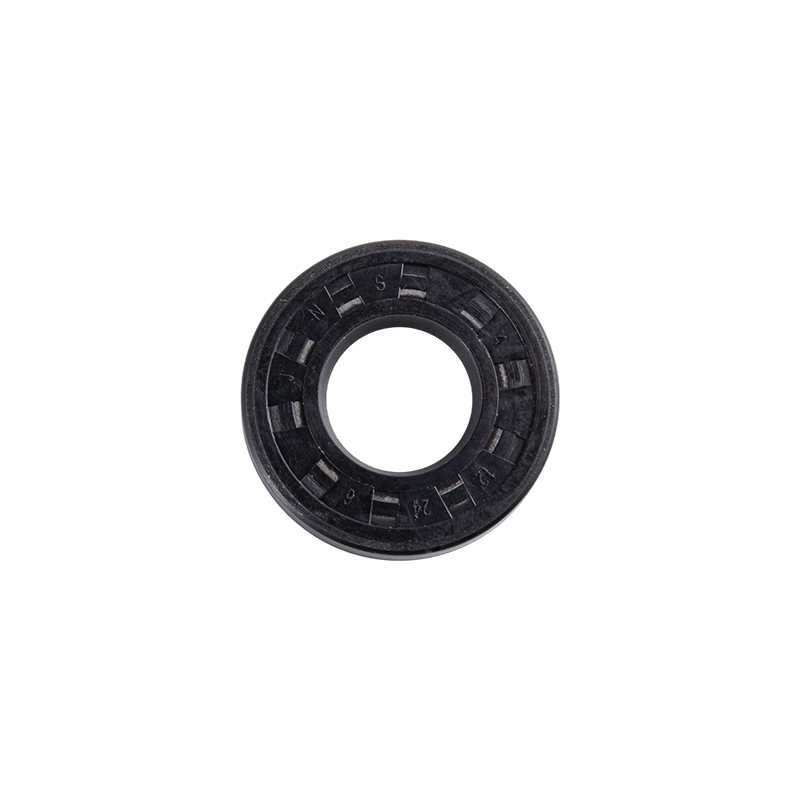
The 2000N Extreme Thrust Seal is a high-pressure Y-type oil seal ring developed for demanding hydraulic stations and related applications. Its design is intended for an applicable pressure range of 800–2000N, with a maximum peak pressure capacity of 2000N under suitable operating conditions. Manufactured from NBR, the seal combines resilient material performance with a compact configuration measuring approximately 20.85 mm in outside diameter, 9.3–9.35 mm in inside diameter, and 3.8 mm in height.
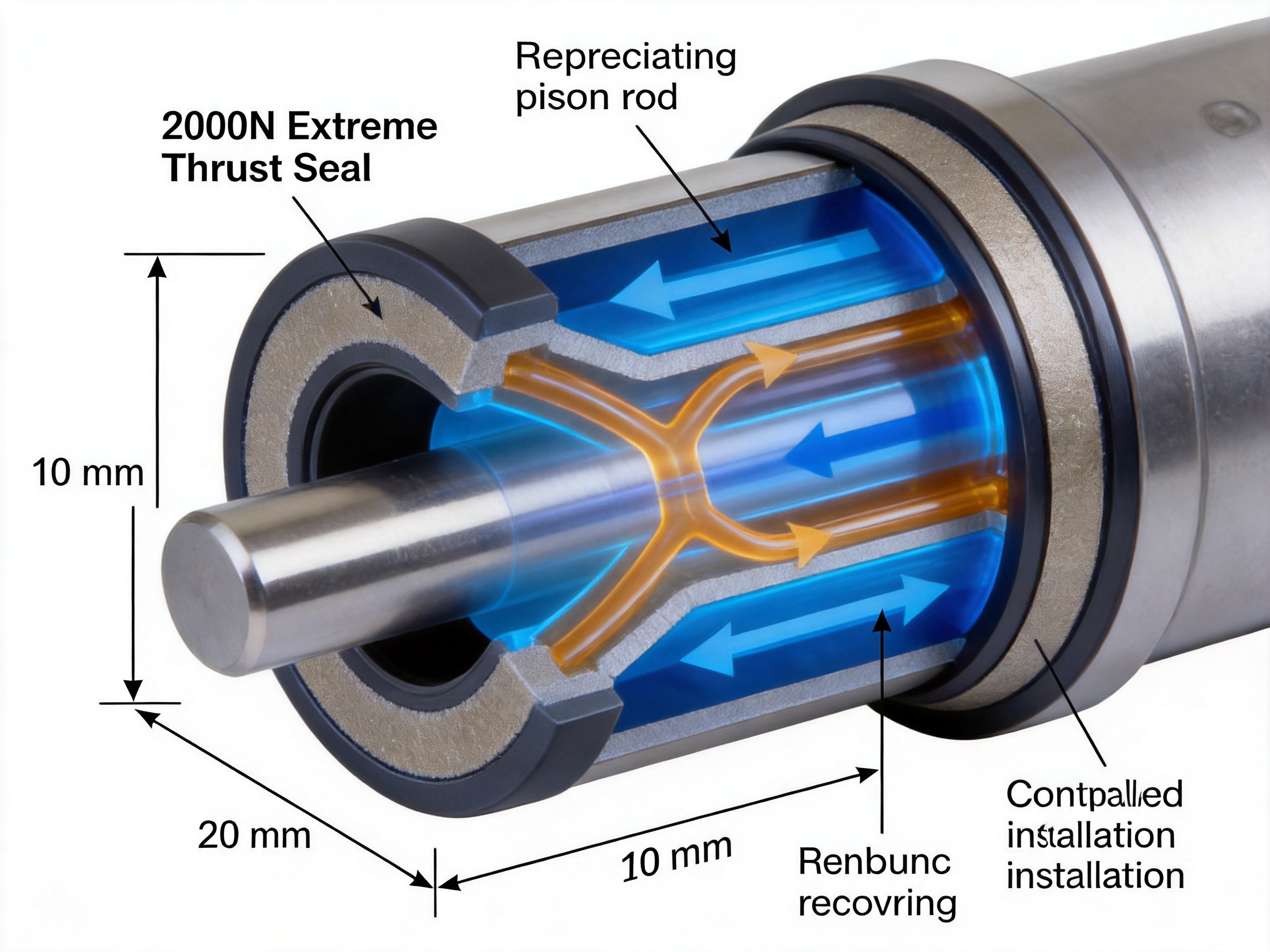
This product is identified by product code A-1-023. It is configured for use with a steel pipe inner diameter and piston rod diameter of approximately 20 mm and 10 mm respectively, together with a 20 × 2.4 mm O-ring adapter. The configuration is aimed at applications where a reliable sealing interface is required around a reciprocating or pressure-loaded piston rod.
Unlike a general-purpose low-pressure seal, the 2000N Extreme Thrust Seal is positioned as a specialized solution for high-pressure oil environments. Its advantages are connected with its pressure-oriented geometry, high rebound factor, NBR material selection, dimensional compatibility, and the manufacturing and technical capabilities supporting its development.
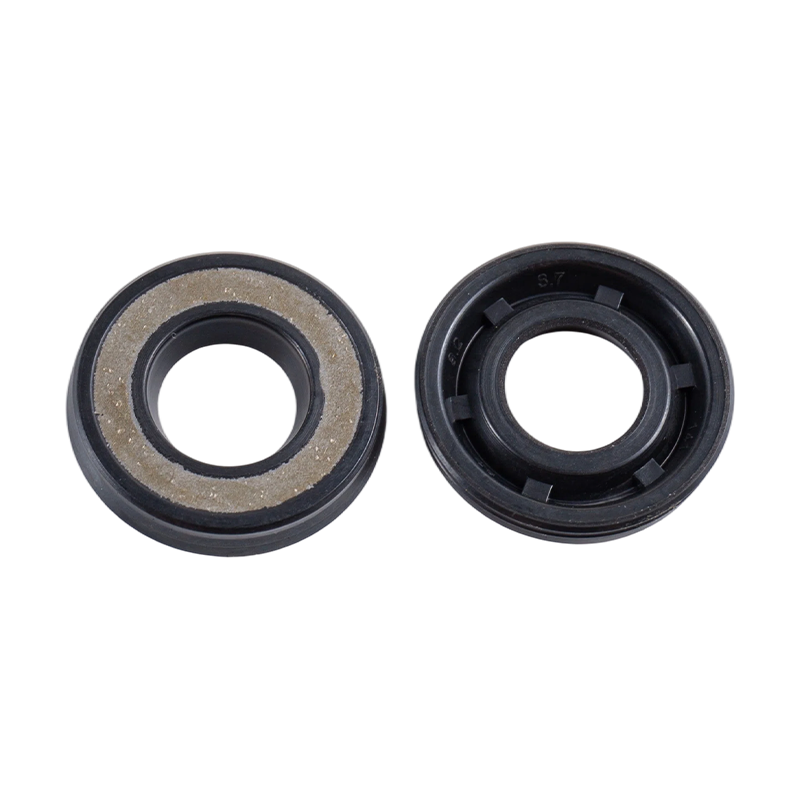
2000N Extreme Thrust Seal
Product Overview
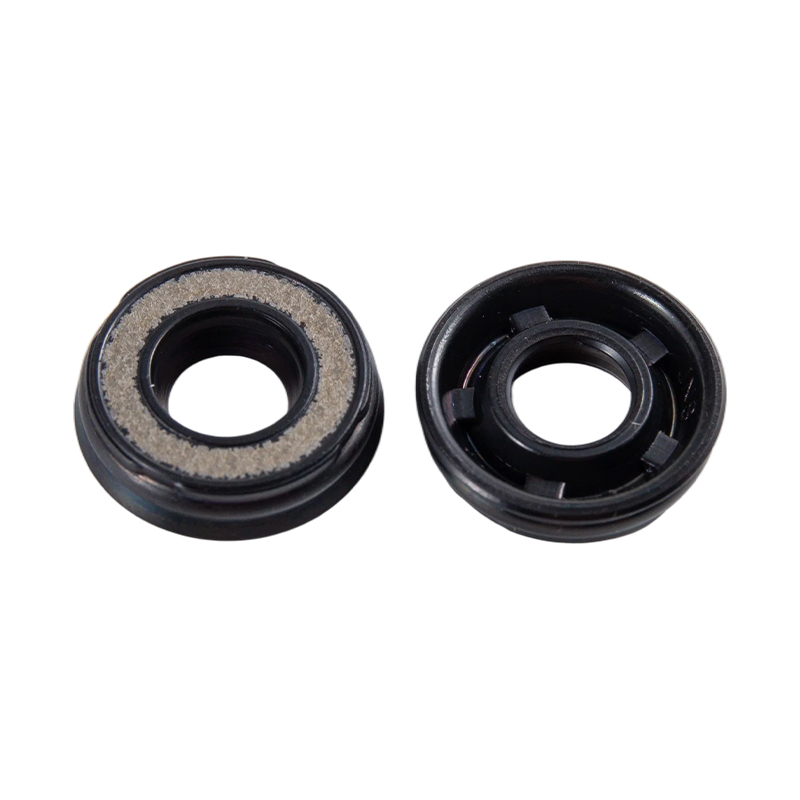
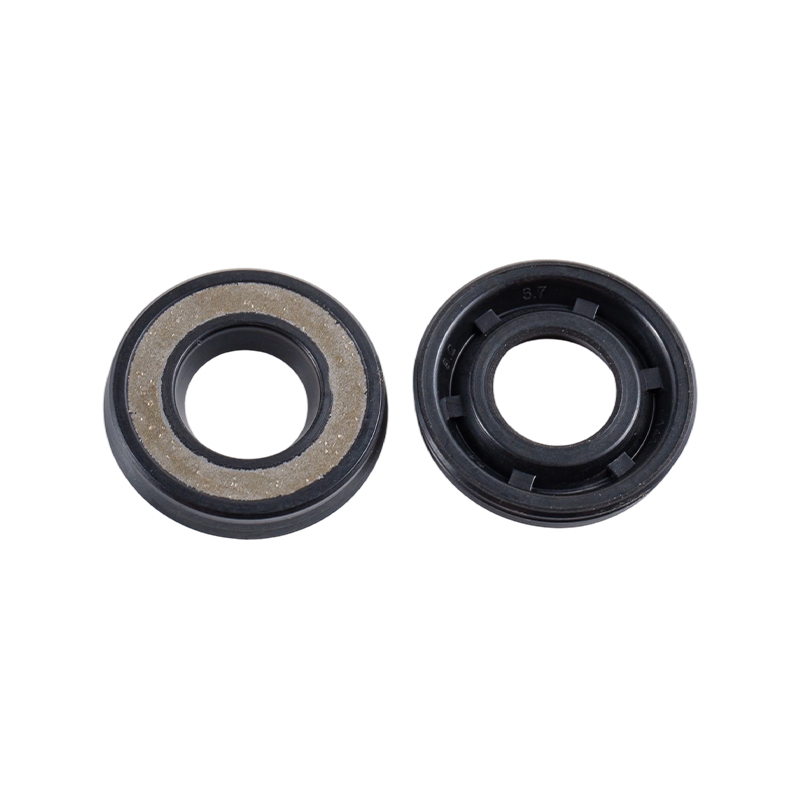
The 2000N Extreme Thrust Seal belongs to the Y-type oil seal ring category. A Y-type profile typically uses two sealing lips or functional contact edges arranged around a central body. This geometry allows the seal to maintain contact with a rod or shaft while supporting pressure control in a compact installation space.
In a hydraulic assembly, the seal is positioned between stationary and moving components. The sealing lips contact the piston rod or corresponding moving surface, while the body is retained within the housing. When pressure is applied, the seal profile is designed to use the pressure environment to reinforce contact rather than allowing the sealing interface to open easily.
The 2000N Extreme Thrust Seal is intended for high-pressure oil systems where pressure loading is a primary design consideration. The stated design applicable pressure range is 800–2000N. This range indicates the intended thrust or pressure-load class of the product; actual service suitability should also be evaluated against fluid type, temperature, rod finish, stroke speed, installation condition, and system design.
Its compact dimensions make the product suitable for equipment in which available installation space is limited. The listed product specification is 20.85 × 9.35 × 3.8 mm, while the separate inside-diameter specification is listed as 9.3 mm. This small difference may reflect a measurement or specification-format variation. Customers should confirm the controlled drawing, tolerance requirements, and final installation dimensions before mass production or assembly.
| Product Attribute | Specification |
| Product name | 2000N Extreme Thrust Seal |
| Product category | Y-Type Oil Seal Ring |
| Product code | A-1-023 |
| Product specification | Approximately 20.85 × 9.35 × 3.8 mm |
| Outside diameter | 20.85 mm |
| Inside diameter | 9.3 mm as separately listed |
| Height | 3.8 mm |
| O-ring adapter | 20 × 2.4 mm |
| Applicable pressure range | 800–2000N |
| Steel pipe inner diameter × piston rod diameter | 20 × 10 mm |
| Material | NBR |
Why High-Pressure Sealing Requires a Specialized Design
Pressure creates several challenges for an oil seal. First, it increases the force acting on the sealing lips and body. Second, it can push the seal into small clearances between mating parts. This phenomenon, commonly known as extrusion, may permanently damage the seal. Third, pressure can change the contact pattern between the sealing lip and the moving rod. If contact becomes too weak, leakage can occur. If contact becomes excessive, friction and heat may rise.
A seal intended for high-pressure service must balance these conditions. It needs enough flexibility to follow surface movement and compensate for minor dimensional variation, but it must also retain sufficient structural strength to resist pressure-induced distortion. Material resilience, profile design, dimensional accuracy, and installation support all contribute to this balance.
The 2000N Extreme Thrust Seal is designed around this pressure-management requirement. Its stated maximum pressure capacity and high rebound factor indicate a product intended to recover its sealing shape after loading and maintain functional contact during pressure fluctuations. This is particularly important in systems that repeatedly start, stop, reverse, or change pressure.
In a standard low-pressure seal, the sealing lip may depend mainly on its initial interference with the rod. In a pressure-oriented Y-type design, the lip geometry can help distribute pressure and preserve a defined sealing edge. This design approach may offer a more dependable sealing interface when the equipment is exposed to high hydraulic loads.
Pressure performance should not be considered independently from system conditions. A 2000N rating does not mean that every installation will safely operate at the maximum value under every temperature, speed, fluid, and clearance condition. Correct housing design, controlled rod diameter, suitable surface roughness, adequate lubrication, and proper installation remain necessary for reliable service.
Core Advantages of the 2000N Extreme Thrust Seal
High Pressure Capacity
The primary advantage of the product is its stated ability to address pressure conditions up to 2000N. This makes it more suitable for high-pressure applications than ordinary sealing products designed only for light or moderate service. For equipment manufacturers, selecting a seal with a pressure class that matches the application can reduce the risk of early leakage and unplanned maintenance.
The 800–2000N applicable range also provides flexibility. The seal is not limited to one narrow pressure point; it is intended for a broader range of pressure-loaded applications within its design category. This can simplify component selection for product families that use similar hydraulic architectures but operate at different pressure levels.
High Rebound Factor
Rebound performance is an important property for an elastomeric seal. During operation, the sealing lip can be compressed, deflected, and exposed to changing pressure. A high rebound factor helps the material and profile return toward their original shape after the load changes.
This recovery behavior can support sealing continuity during pressure cycling. It may also help the lip compensate for minor movement or vibration at the sealing interface. In equipment that operates intermittently or experiences repeated pressure pulses, recovery performance can be as important as static pressure resistance.
High rebound behavior must be balanced with hardness, friction, temperature resistance, and wear resistance. The product’s NBR formulation and profile design are intended to provide a practical balance for high-pressure oil applications. Final performance should be verified in the actual operating medium and temperature range.
Compact Dimensions
The product has an outside diameter of 20.85 mm and a height of 3.8 mm. These dimensions allow the seal to be used in compact mechanisms where there is limited axial and radial space. A compact sealing element can help equipment designers reduce housing size, simplify assembly, and preserve room for other functional components.
Compact design can be especially valuable in gas springs, dampers, hydraulic actuators, furniture mechanisms, automotive components, and small industrial systems. However, compactness does not eliminate the need for correct groove design. The housing must provide adequate support and clearance control for the seal to work effectively.
Compatibility with a 20 × 10 mm Configuration
The product information specifies compatibility with a steel pipe inner diameter of 20 mm and a piston rod diameter of 10 mm. This provides equipment designers with a practical reference when evaluating the product for a matching assembly. The specified 20 × 2.4 mm O-ring adapter further indicates that the seal is intended to work as part of a coordinated sealing configuration rather than as an isolated component.
Using a seal that corresponds closely to the original equipment geometry can reduce redesign requirements. It may also simplify replacement and maintenance because the component is associated with a defined pipe and rod arrangement. Before use, customers should verify actual dimensions, tolerances, groove geometry, rod finish, and the relationship between the seal and adapter.
NBR Material for Oil-Sealing Applications
NBR, or nitrile butadiene rubber, is widely used for oil seals and hydraulic sealing elements. Its popularity comes from its useful balance of oil resistance, elasticity, abrasion resistance, and cost effectiveness. NBR is commonly selected for mineral-oil-based hydraulic fluids, lubricating oils, and many general industrial sealing applications.
For the 2000N Extreme Thrust Seal, NBR provides a practical material foundation for a pressure-loaded oil seal. The material can maintain elastic contact with a moving rod while resisting many of the effects associated with oil exposure. It also supports efficient production of precision-molded sealing profiles.
Material selection must always be matched to the fluid and temperature. NBR may not be the best option for every chemical medium, high-temperature condition, or specialized hydraulic fluid. Applications involving aggressive chemicals, elevated temperatures, ozone exposure, or unusual fluid formulations may require alternative materials such as HNBR or FPM. The supplier can assist with material selection and validation where necessary.
Comparison with General-Purpose Competitor Seals
Competitor products may vary significantly in profile, material, pressure rating, and production quality. The 2000N Extreme Thrust Seal should therefore be compared with products that have similar dimensions and application categories rather than with every oil seal on the market.
Compared with a basic low-pressure Y-ring, the product’s stated 800–2000N pressure range is a clear application advantage. A low-pressure seal may provide adequate performance in a lightly loaded system but may be more vulnerable to extrusion or leakage when pressure increases. The 2000N product is specifically positioned for higher pressure, giving equipment designers a more appropriate option for demanding service.
Compared with a standard seal that has limited rebound, the high rebound factor may help the 2000N seal maintain contact during repeated pressure changes. A seal that does not recover adequately can develop a weakened interface after compression or deformation. The recovery characteristic of this product is intended to support more stable performance across pressure cycles.
Compared with oversized or overbuilt alternatives, the compact 20.85 mm outside diameter and 3.8 mm height can help reduce installation space. Smaller equipment often cannot accommodate a large seal housing. A compact product can support more efficient equipment architecture while still addressing a high-pressure requirement.
Compared with an unverified low-cost seal, a product supported by defined dimensions, material identification, product coding, and technical consultation offers greater traceability. Traceability is important for quality management, repeat orders, failure analysis, and production control. It allows the buyer to connect a component to a specific product specification instead of relying only on visual similarity.
Price alone should not be the basis for comparison. A lower initial purchase price may be offset by leakage, replacement labor, equipment downtime, fluid loss, and warranty claims. A correctly selected high-pressure seal can provide better total cost performance when it reduces maintenance frequency and supports stable equipment operation.
| Comparison Factor | 2000N Extreme Thrust Seal | Typical General-Purpose Seal |
| Pressure orientation | Designed for an applicable range of 800–2000N | May be intended for lower or less demanding pressure conditions |
| Profile category | Y-type oil seal ring | May use a different profile with different pressure behavior |
| Rebound emphasis | High rebound factor stated in the product description | Rebound performance may vary or be unspecified |
| Material identification | NBR | May vary by supplier and order |
| Installation reference | 20 mm pipe inner diameter and 10 mm piston rod reference | May require separate dimensional matching |
| Traceability | Product code A-1-023 | Depends on supplier documentation |
| Customization support | Available through a technical sealing manufacturer | Depends on the individual competitor |
Design and Functional Principles
Pressure-Activated Sealing Contact
A well-designed hydraulic seal does more than simply occupy a space between two components. It creates a controlled contact interface. As system pressure rises, the pressure may act on the internal geometry of the seal and increase the force pressing the sealing lip against the rod or housing. This can help prevent fluid from passing through the interface.
The Y-type profile is useful because its geometry can provide a defined sealing edge while retaining elastic flexibility. The profile must be manufactured accurately so that the lip is neither excessively tight nor too loose. Excessive interference may increase friction and heat, while insufficient interference may permit leakage during low-pressure or start-up conditions.
Extrusion Control
High pressure can force elastomer into the clearance gap between the piston rod and housing. If this occurs repeatedly, the seal may develop nibbling, tearing, or permanent deformation. The risk depends on pressure, material hardness, temperature, clearance, dynamic speed, and profile geometry.
The 2000N Extreme Thrust Seal is positioned for high-pressure service, but extrusion control remains a system-level responsibility. The equipment designer should maintain suitable clearances and provide adequate support around the seal. If the design includes an O-ring adapter, that component must also be correctly installed and dimensioned.
Dynamic Rod Movement
Seals used on piston rods or similar components are exposed to sliding motion. The rod surface may move back and forth, carrying a thin lubricating film through the sealing interface. The seal must retain sufficient contact to prevent fluid loss while allowing the rod to move without excessive friction.
Rod surface quality is therefore important. Scratches, sharp edges, corrosion, or excessive roughness can damage the sealing lip. A smooth but properly finished rod can support longer seal life, while an unsuitable surface may cause early wear even when the seal itself is correctly manufactured.
Pressure Cycling and Recovery
Many hydraulic products do not operate at one constant pressure. They experience frequent pressure changes as valves open and close, loads change, or actuators reverse direction. During these cycles, the seal is repeatedly compressed and released.
The high rebound factor stated for the product is relevant to this operating pattern. Elastic recovery helps the seal return toward its working profile after pressure changes. This can help preserve contact and reduce the risk that the seal remains permanently flattened or distorted.
Manufacturing Strengths and Quality Control
The performance of a high-pressure seal depends not only on the material formula but also on the consistency of its manufacturing process. A sealing profile may be only a few millimeters in size, yet small dimensional changes can influence interference, friction, pressure capability, and leakage behavior. Advanced manufacturing control is therefore essential.
Ningguo Jnsseals Sealing Technology Co., Ltd. is a high-tech enterprise founded in 2019 and headquartered in Anhui, China. Its business focuses on sealing technology for gas springs and dampers, as well as related O-ring products. This specialization provides a relevant technical foundation for developing seals used in compact, pressure-loaded, and reciprocating mechanisms.
The company reports strong research and development capabilities, advanced production equipment, and a professional technical service team. These strengths support the development of sealing products from design through testing and production. For customers, this means that product selection can be supported by technical discussion rather than being limited to a simple catalog transaction.
Material and Compound Management
Consistent material preparation is a key part of elastomer seal production. NBR compounds must be controlled for composition, hardness, elasticity, oil resistance, and processing behavior. Variations in the compound can change the final seal’s compression, rebound, friction, and service life.
A professional manufacturer can control incoming raw materials, compound preparation, mixing conditions, storage, and batch identification. These controls help ensure that repeated orders remain close to the approved product specification. For high-pressure applications, material consistency is especially important because the seal must perform under demanding mechanical loads.
Precision Mold Design
The profile of a Y-type seal is formed by its mold. The mold determines the shape of the lips, body, contact edges, and supporting surfaces. Accurate mold construction helps maintain the intended dimensions and reduces variation between production batches.
Advanced mold design also supports efficient production of small and complex sealing components. The mold must allow material to fill the cavity properly while minimizing defects such as voids, incomplete filling, flash, or uneven edges. Proper venting and process control are important for obtaining clean sealing lips.
Controlled Vulcanization
Vulcanization converts the rubber compound into an elastic finished material. Temperature, pressure, and time must be controlled carefully. Inadequate vulcanization can lead to weak or unstable material, while excessive processing can affect elasticity and aging performance.
For a pressure seal, the vulcanization process must support a balance between resilience and structural integrity. The finished NBR should retain its shape under load and recover sufficiently after compression. Stable curing conditions help produce a consistent pressure-sealing profile.
Dimensional Inspection
Dimensional inspection is essential for a product with a defined outside diameter, inside diameter, height, and adapter specification. Measurements may include the outside diameter, inside diameter, cross-sectional areas, lip geometry, height, and critical tolerances.
Inspection equipment and methods should be selected according to the size and geometry of the seal. Because elastomers are flexible, measurement force and environmental conditions can influence results. A controlled inspection process helps ensure that the product is assessed consistently and that the dimensions correspond to the intended installation.
Visual and Defect Inspection
Visual inspection can identify flash, cuts, cracks, surface contamination, incomplete molding, deformation, or other visible defects. The sealing lip deserves particular attention because even a small defect on the contact edge may create a leakage path.
For higher-volume production, manufacturers may combine operator inspection with standardized lighting, fixtures, gauges, and sampling plans. This improves repeatability and helps identify process trends before they become larger quality problems.
Performance Verification
Dimensional compliance alone does not fully prove sealing performance. A high-pressure product may also require testing for compression, rebound, leakage, pressure resistance, fluid compatibility, aging, and repeated movement. Test methods should be selected based on the intended application and customer requirements.
The company provides customized sealing solutions that may include product design, testing, and technical consultation. This capability is valuable when a customer needs more than a standard part. It enables the manufacturer and customer to evaluate operating conditions together and determine whether the standard A-1-023 configuration is suitable or whether an adjusted design is necessary.
Application Areas
Hydraulic Stations
The product description identifies heavy hydraulic stations as a primary application direction. Such equipment may contain pressure-generating, control, or actuation systems that require reliable oil retention. The product’s pressure-oriented design and NBR material make it a candidate for suitable oil-based hydraulic systems within the specified operating range.
Gas Springs and Dampers
Gas springs and dampers often use compact rods, cylinders, and internal sealing systems. These products may experience repeated movement, changing internal pressure, and limited installation space. A compact Y-type seal can support the sealing requirements of such mechanisms when the material and pressure conditions are compatible.
The manufacturer’s focus on gas spring and damper sealing technology is particularly relevant to this application area. Experience with these products can help address practical issues such as small component size, dynamic rod travel, assembly repeatability, and pressure retention.
Automotive Components
Automotive systems may use seals in dampers, actuators, seat mechanisms, suspension-related components, and other moving assemblies. These applications frequently require consistent production, controlled dimensions, and resistance to oil exposure. The 2000N Extreme Thrust Seal may be considered for suitable automotive subassemblies after validation of temperature, fluid, vibration, and durability requirements.
Furniture Mechanisms
Adjustable furniture, lift mechanisms, recliners, and other products may use gas springs or dampers that require compact sealing components. Although the pressure and duty cycle may differ from heavy industrial hydraulics, leakage prevention and smooth movement remain important. The product’s compact configuration may be advantageous in furniture designs with limited space.
Home Appliances and Industrial Equipment
Home appliances and industrial equipment may contain small hydraulic or gas-assisted mechanisms. In these applications, the seal can contribute to pressure retention, smooth actuation, and product reliability. The suitability of NBR depends on the working medium, temperature, and expected service life.
Medical Equipment
Medical equipment may include precision actuators, adjustable mechanisms, or damped movement systems. Seals used in such products require careful consideration of cleanliness, material compatibility, odor, extractables, and regulatory requirements. The standard product should not be assumed to meet medical-specific requirements without application review and appropriate validation.
Installation Recommendations
Correct installation is essential to realizing the performance of any high-pressure seal. Before installation, inspect the seal for cuts, cracks, contamination, deformation, or damaged lips. Confirm that the product code and dimensions match the approved specification.
Inspect the rod, pipe, groove, and adapter. The rod should be free from sharp edges, burrs, corrosion, and deep scratches. The housing should have the correct dimensions and sufficient support. Any assembly feature that may contact the sealing lip should be properly chamfered or protected.
Use a compatible lubricant during installation when permitted by the application. Lubrication can reduce initial friction and protect the lip while it passes over the rod or housing edge. The lubricant must be compatible with NBR and the operating fluid. Contamination such as metal particles, dust, or fibers should be prevented.
Do not stretch, twist, fold, or roll the seal unnecessarily. A twisted Y-type seal may not seat correctly and can develop a leakage path during operation. Use suitable installation tools rather than sharp screwdrivers or unprotected metal edges.
After assembly, verify that the seal is seated evenly and that the rod moves smoothly. Initial testing should include low-pressure operation before the system is exposed to the full intended pressure. Check for leakage, abnormal friction, noise, or temperature rise during the test.
Maintenance and Service-Life Considerations
Seal life is influenced by more than pressure rating. Temperature, fluid cleanliness, rod speed, stroke length, pressure cycling, surface finish, clearance, installation quality, and storage conditions all affect performance.
Contaminated hydraulic oil can damage the sealing lip and accelerate wear. Maintaining appropriate filtration and fluid cleanliness can help reduce abrasive particles at the sealing interface. If the system operates in a dusty or corrosive environment, the external rod condition should be monitored regularly.
Excessive heat can reduce elastomer life and change the material’s elasticity. NBR is suitable for many oil-sealing applications, but the temperature range should be confirmed for the specific compound and fluid. If the system operates near or beyond the expected temperature range, an alternative material may be more appropriate.
During maintenance, inspect the rod for scoring, rust, or wear. Replacing a seal without correcting a damaged rod may result in repeated leakage. The housing and adapter should also be checked for deformation or incorrect installation.
Replacement parts should be ordered using the product code A-1-023, dimensional information, and the approved material specification. Visual matching alone is not sufficient because two seals with similar appearance may have different materials, pressure capabilities, or tolerances.
Customized Sealing Solutions
Not every application can use an off-the-shelf component without modification. Differences in pressure, rod size, housing geometry, fluid, temperature, speed, and service life may require a customized seal. A manufacturer with design and technical support capabilities can help evaluate these variables.
Ningguo Jnsseals Sealing Technology Co., Ltd. provides customized sealing solutions that include product design, testing, and technical consultation. This service can be useful for customers developing new products or replacing an existing seal that is no longer available.
A customization project commonly begins with application information. Important data includes the working pressure, peak pressure, fluid type, temperature, rod diameter, housing diameter, stroke, speed, duty cycle, expected service life, and assembly method. Drawings, samples, failure photographs, and test reports may also help the manufacturer understand the requirement.
The manufacturer can then evaluate material options, profile geometry, dimensions, and production feasibility. Prototype or sample testing may be used to compare leakage, friction, wear, and pressure behavior. Once the design is approved, production controls can be established for repeat orders.
This engineering approach offers an advantage over suppliers that only provide standard catalog parts. It allows the seal to be considered as part of the complete system. A well-matched seal can improve equipment reliability, reduce redesign work, and support more predictable production.
Quality, Research, and Technical Service
The company’s stated philosophy is “People Oriented, Innovation Driven, Pursuit of Excellence.” In practical terms, this reflects an emphasis on technical development, customer support, and continuous improvement. Sealing products require close interaction between material science, mechanical design, production engineering, and application testing.
Research and development capabilities are valuable because new equipment often requires smaller, more durable, or more specialized seals. Product development may involve modifying the lip geometry, adjusting material hardness, improving rebound, changing the adapter arrangement, or adapting the seal to a specific fluid.
Advanced production equipment can contribute to stable molding, controlled curing, accurate trimming, and consistent inspection. Professional technical teams can help translate customer requirements into measurable product specifications. Together, these capabilities support a more systematic approach than selecting a seal based only on nominal size.
The company serves industries including automotive, furniture, home appliances, medical equipment, construction, and other sectors. This range indicates experience with different product environments and customer requirements. Each industry may place different priorities on cost, durability, cleanliness, compactness, customization, or delivery consistency.
Purchasing and Evaluation Checklist
Before purchasing the 2000N Extreme Thrust Seal, confirm the required pressure range. The listed design applicable range is 800–2000N. If the system has pressure spikes, the peak value should be included in the evaluation rather than considering only the average operating pressure.
Confirm the dimensions and installation arrangement. The product is listed with an outside diameter of 20.85 mm, an inside diameter of 9.3 mm, a height of 3.8 mm, and a 20 × 2.4 mm O-ring adapter. The product specification separately lists approximately 20.85 × 9.35 × 3.8 mm, so the approved drawing and tolerance should be verified before production use.
Confirm the rod and pipe dimensions. The listed configuration is a 20 mm steel pipe inner diameter and a 10 mm piston rod diameter. Check whether the actual assembly, including tolerances and surface finish, corresponds to this reference.
Confirm the fluid and temperature. NBR is widely used with many oil-based fluids, but compatibility should be checked for the specific hydraulic oil, additives, cleaning agents, and environmental exposure.
Confirm the movement conditions. Record the stroke length, speed, frequency, pressure cycle, and expected service life. A seal used in a slow intermittent mechanism may experience very different wear conditions from one used in a fast, continuously cycling actuator.
Request samples or technical documents when necessary. A sample evaluation can verify fit, friction, leakage, and assembly behavior before mass production. Technical communication is especially important where the seal is used in safety-related, high-value, or difficult-to-service equipment.
Environmental and Storage Considerations
Elastomer seals should be stored in a clean, dry, and temperature-controlled environment. Avoid direct sunlight, ozone-generating equipment, excessive heat, moisture, and contact with oils or chemicals that are not part of the intended application.
Seals should remain in their original packaging until needed. Do not hang them from nails, wires, or sharp supports because this may stretch or deform the material. Avoid stacking heavy objects on packages that may compress the seals.
Before installation, older inventory should be inspected for hardening, cracking, deformation, or surface changes. Proper storage can help preserve the material’s elasticity and dimensional stability. The storage period and recommended conditions should be managed according to the supplier’s technical guidance and the customer’s quality system.
Frequently Asked Questions
What type of product is the 2000N Extreme Thrust Seal?
It is a Y-type oil seal ring designed for high-pressure applications. The product is identified by code A-1-023 and is intended for pressure-loaded oil-sealing systems.
What pressure range is specified for the product?
The listed design applicable pressure range is 800–2000N, with a stated peak pressure capacity of 2000N. Actual operating suitability depends on the complete system, including temperature, fluid, clearance, speed, and installation quality.
What material is used?
The listed product material is NBR, or nitrile butadiene rubber. NBR is commonly used for oil seals because it offers a practical balance of oil resistance, elasticity, abrasion resistance, and cost effectiveness.
What are the product dimensions?
The listed outside diameter is 20.85 mm, the separately listed inside diameter is 9.3 mm, and the height is 3.8 mm. The overall product specification is shown as approximately 20.85 × 9.35 × 3.8 mm. Customers should confirm the controlled dimensional drawing because the listed inside-diameter values differ slightly.
What rod and pipe configuration is indicated?
The product information indicates a steel pipe inner diameter of 20 mm and a piston rod diameter of 10 mm. It also lists a 20 × 2.4 mm O-ring adapter.
What is the main advantage over a general-purpose oil seal?
The main advantage is its pressure-oriented design for an applicable range of 800–2000N. The product also emphasizes a high rebound factor, compact dimensions, NBR material, and a defined installation configuration.
Can the seal be used in every hydraulic fluid?
No. NBR is compatible with many oil-based hydraulic fluids, but fluid formulations and temperatures vary. Compatibility should be confirmed for the specific fluid, additives, cleaning agents, and environmental conditions.
Is the seal suitable for dynamic movement?
The Y-type oil seal ring is intended for sealing around a moving rod or similar component. Rod surface condition, speed, lubrication, pressure cycling, and installation quality must be controlled for reliable dynamic performance.
Can the product be customized?
The manufacturer provides customized sealing solutions, including product design, testing, and technical consultation. Customers can discuss alternative dimensions, materials, or profiles when the standard configuration does not meet the application requirement.
How should the product be installed?
Inspect the seal and mating components, remove burrs and contamination, use compatible lubrication where appropriate, avoid twisting or cutting the sealing lip, and confirm that the seal is seated evenly. Perform low-pressure testing before full-pressure operation.
Which industries may use this type of seal?
Potential industries include hydraulic equipment, gas springs, dampers, automotive products, furniture mechanisms, home appliances, construction equipment, industrial machinery, and selected medical equipment. Suitability must be evaluated for each specific application.
Who manufactures the product?
The product is manufactured by Ningguo Jnsseals Sealing Technology Co., Ltd., a China-based sealing technology enterprise focused on gas springs, dampers, and related O-ring products.
Conclusion
The 2000N Extreme Thrust Seal is a compact NBR Y-type oil seal ring developed for pressure-demanding applications. Its stated 800–2000N applicable pressure range, 2000N peak pressure capacity, high rebound factor, and defined 20 × 10 mm pipe-and-rod configuration make it a targeted alternative to ordinary low-pressure sealing components.
The product’s value is not based on pressure capacity alone. Its compact dimensions, oil-compatible NBR material, pressure-oriented profile, product traceability, and potential for customized support make it suitable for equipment designers and manufacturers seeking a dependable sealing solution. Compared with an unverified general-purpose seal, the product offers a clearer technical starting point for high-pressure evaluation.
Reliable performance still depends on the complete application. Customers should confirm the final dimensions, pressure conditions, fluid compatibility, temperature, surface finish, clearance, installation method, and testing requirements. When these factors are properly controlled, the 2000N Extreme Thrust Seal can support stable fluid retention and long-term operation in hydraulic stations, dampers, gas springs, automotive components, furniture mechanisms, and other compact pressure-driven systems.
Supported by research and development capabilities, advanced production equipment, technical service, and customized design support, Ningguo Jnsseals Sealing Technology Co., Ltd. is positioned to provide more than a standard molded rubber component. Its manufacturing and engineering approach enables customers to evaluate sealing performance as part of a complete product system, helping improve reliability, reduce leakage risk, and develop more efficient sealing solutions for demanding applications.
References
1. Product specification information for the 2000N Extreme Thrust Seal, product code A-1-023.
2. Manufacturer-provided information on NBR material, Y-type oil seal ring applications, and applicable pressure range.
3. Manufacturer-provided company information concerning sealing technology research, development, production, testing, and technical consultation.
4. General engineering principles for elastomeric hydraulic seals, dynamic rod sealing, pressure management, extrusion control, and installation practice.
5. General materials engineering references concerning nitrile butadiene rubber performance in oil-sealing applications.
Product: 2000N Extreme Thrust Seal

PREV:1500N Heavy-Duty Hydraulic Seal: Design, Performance, Manufacturing, and Application Guide
NEXT:13.3mm Precision-Fit NBR O-Ring for Reliable Non-Standard Sealing Applications
NEXT:13.3mm Precision-Fit NBR O-Ring for Reliable Non-Standard Sealing Applications


Want to know more
about us?
about us?

Precision sealing for gas springs and dampers. Durable, wear-resistant, and built for long-life performance in demanding applications.
Product Categories
Quick Links
Contact Us
-
Email: jns@jnsseals.cn

-
Email: LouZhuoyu@outlook.com
-
Manager Gong: +86-18563770820

-
Manager Wang: +8615357558902
-
No. 5, Meilin Avenue, Meilin Industrial Development Zone, Ningguo City, Anhui Province, China

