

 English
 русский
 Deutsch
 Türk
 中文简体
Micro Precision Pump Y-Seal for Low-Pressure Pneumatic and Damping Applications
Micro Precision Pump Y-Seal for Low-Pressure Pneumatic and Damping Applications
Micro Precision Pump Y-Seal for Low-Pressure Pneumatic and Damping Applications
Micro Precision Pump Y-Seal for Low-Pressure Pneumatic and Damping Applications
Micro Precision Pump Y-Seal for Low-Pressure Pneumatic and Damping Applications
Micro Precision Pump Y-Seal for Low-Pressure Pneumatic and Damping Applications
Micro Precision Pump Y-Seal for Low-Pressure Pneumatic and Damping Applications
Micro Precision Pump Y-Seal for Low-Pressure Pneumatic and Damping Applications
Micro Precision Pump Y-Seal for Low-Pressure Pneumatic and Damping Applications
Micro Precision Pump Y-Seal for Low-Pressure Pneumatic and Damping Applications
Micro Precision Pump Y-Seal for Low-Pressure Pneumatic and Damping Applications
Micro Precision Pump Y-Seal for Low-Pressure Pneumatic and Damping Applications
Micro Precision Pump Y-Seal for Low-Pressure Pneumatic and Damping Applications
Micro Precision Pump Y-Seal for Low-Pressure Pneumatic and Damping Applications
Micro Precision Pump Y-Seal for Low-Pressure Pneumatic and Damping Applications
Micro Precision Pump Y-Seal for Low-Pressure Pneumatic and Damping Applications

Fang Zhiqing — International Product Sales Manager
Home / Author / Fang Zhiqing — International Product Sales Manager / Micro Precision Pump Y-Seal for Low-Pressure Pneumatic and Damping Applications
NEW Category
Contact us
Micro Precision Pump Y-Seal for Low-Pressure Pneumatic and Damping Applications
Content
- 1 Product Overview
- 2 Why a Y-Type Seal Is Important in Micro-Devices
- 3 Key Performance Advantages
- 4 Suitable Applications
- 5 Material Selection: NBR
- 6 Manufacturing and Engineering Strengths
- 7 Advantages Over Generic Competitor Seals
- 8 Installation and Design Considerations
- 9 Quality and Reliability in Application
- 10 Customization Opportunities
- 11 Industries Served by the Manufacturer
- 12 How to Evaluate the Product for a New Project
- 13 Frequently Asked Questions
- 13.1 What type of seal is the Micro Precision Pump Y-Seal?
- 13.2 What material is used?
- 13.3 What are the main dimensions?
- 13.4 What piston rod and pipe sizes are associated with the product?
- 13.5 What pressure or force range is recommended?
- 13.6 Can it be used for both inflation and damping?
- 13.7 What is the main advantage over a general-purpose seal?
- 13.8 Is the product suitable for high-pressure hydraulic systems?
- 13.9 Can the manufacturer develop a customized seal?
- 13.10 How should the seal be installed?
- 13.11 What industries may use this type of product?
- 13.12 What information should be supplied for technical evaluation?
- 14 Conclusion
- 15 References
- 16 Product: Micro Precision Pump Y-Seal

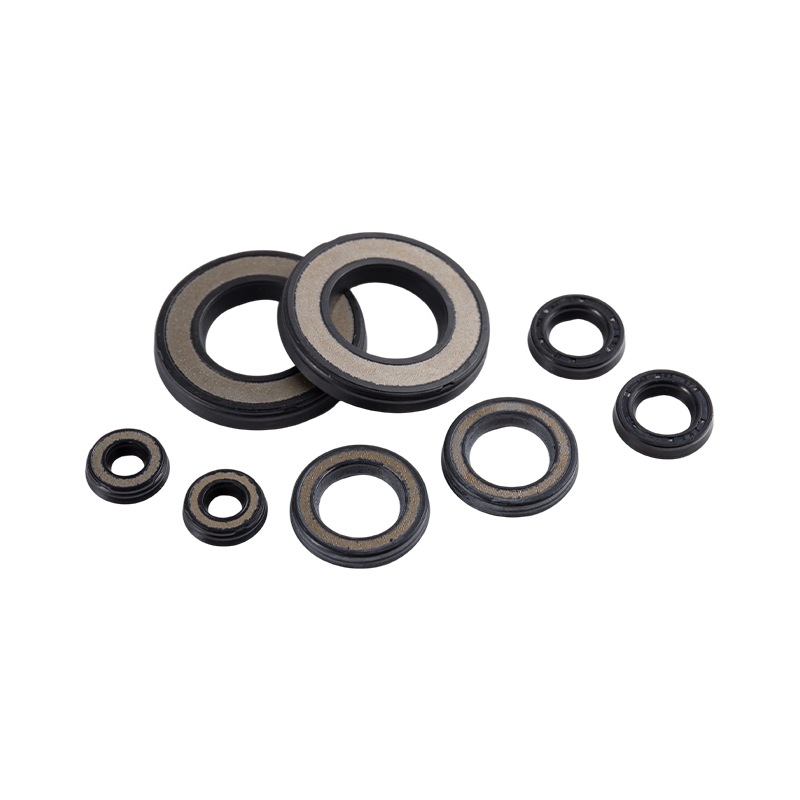
Micro sealing components often determine whether a compact pneumatic or damping device performs smoothly, consistently, and reliably. In applications with limited installation space, low operating force, and sensitive motion requirements, a seal must do more than prevent leakage. It must also start moving easily, maintain contact with the mating surface, resist oil, and remain stable throughout repeated cycles. The Micro Precision Pump Y-Seal is designed around these requirements.
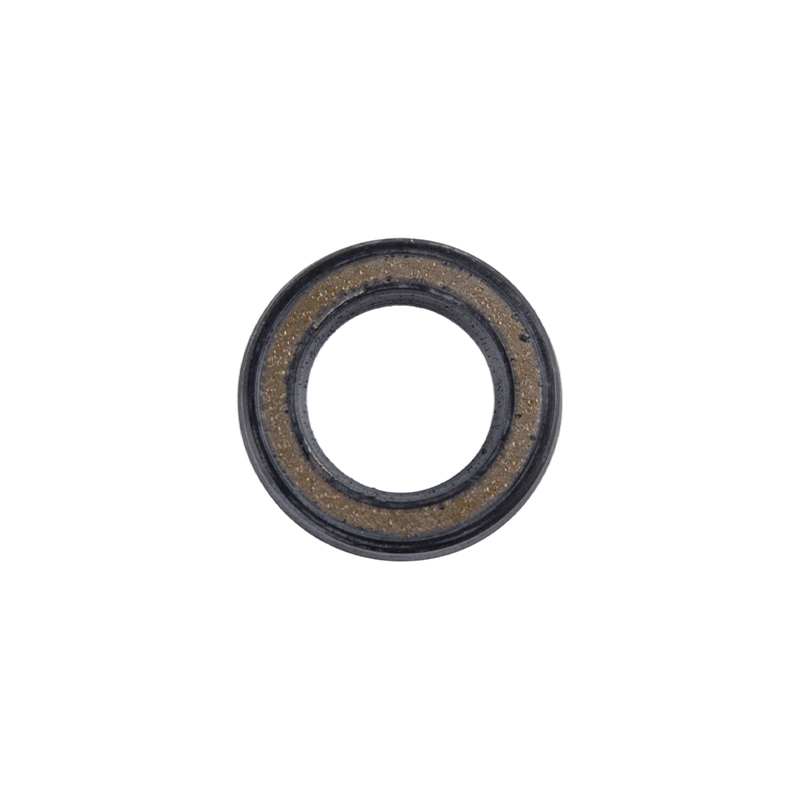
This Y-type oil seal ring is engineered for micro-devices with an outside diameter of approximately 8.8 mm. It is intended for low-pressure environments in the 5–10 N design range and is optimized for applications that require low friction and minimal breakout force. Manufactured from NBR, the seal provides a practical balance of elasticity, oil resistance, wear performance, and cost efficiency for pneumatic and damping systems.
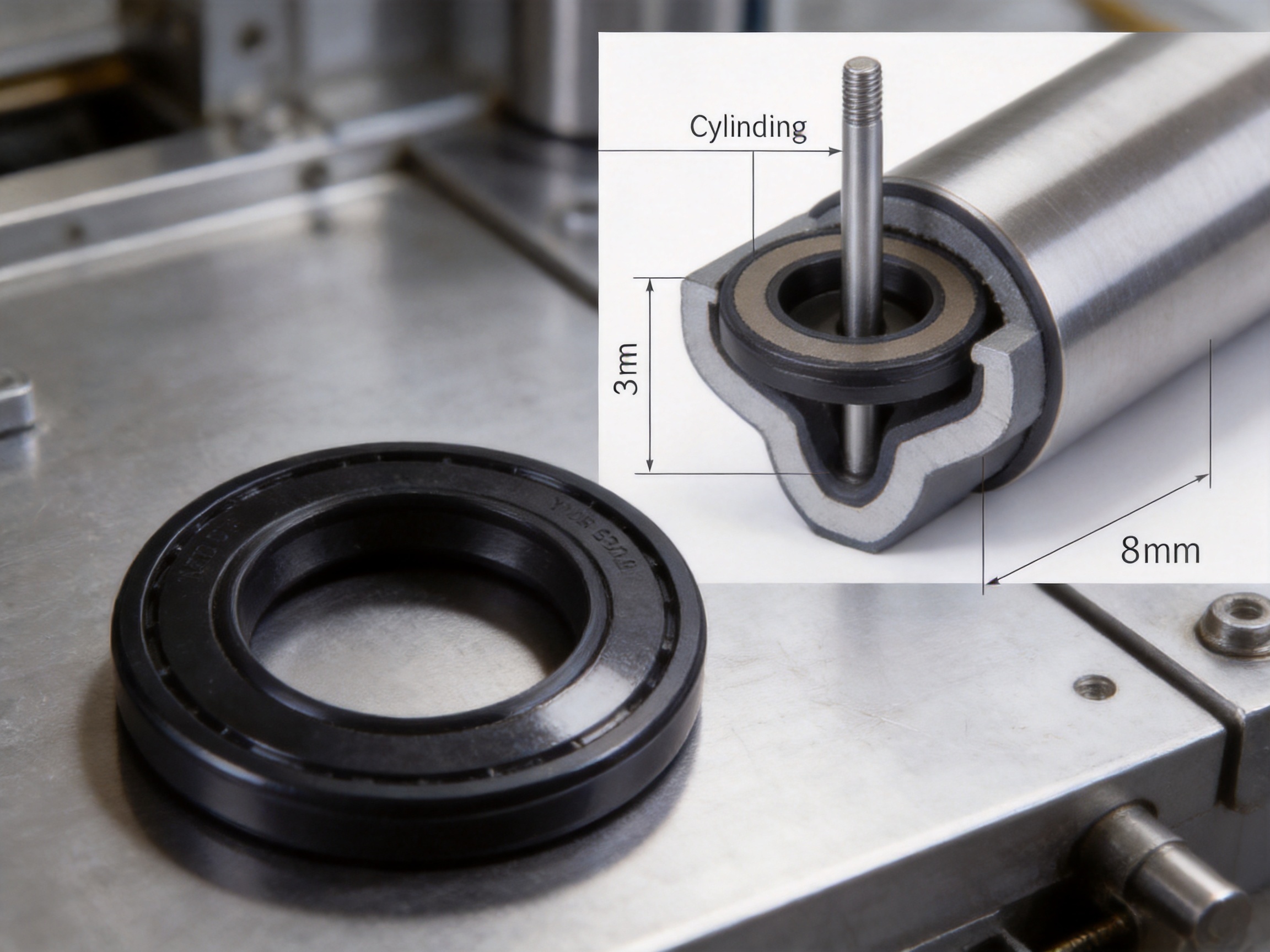
The product is identified by product code A-1-001 and has a nominal specification of 8.9 × 2.5 × 3. Its listed outside diameter is 8.8 mm, inside diameter is 2.5 mm, and height is 3 mm. The recommended mating configuration includes an 8 mm steel pipe inner diameter and a 3 mm piston rod diameter. It can be used for both inflation and damping, giving equipment designers greater flexibility when developing compact gas spring, miniature pump, and damper assemblies.
Micro Precision Pump Y-Seal
Product Overview
The Micro Precision Pump Y-Seal is a compact Y-profile sealing element developed for small pneumatic mechanisms. Its geometry is intended to create effective sealing contact while preserving smooth movement between the piston rod and the surrounding pipe or housing. In a small device, even minor friction or excessive interference can affect the operating force. For this reason, the design emphasizes ultra-low breakout force and controlled friction rather than relying only on high compression.
The seal is suitable for micro-devices with an approximately 8.8 mm outside diameter. Its small dimensions allow it to be integrated into assemblies where conventional industrial seals would be too large or would require excessive installation space. The 2.5 mm internal diameter and 3 mm height provide a compact configuration for a piston rod and cylinder arrangement based on an 8 mm steel pipe and 3 mm rod.
Its primary material is NBR, also known as nitrile butadiene rubber. NBR is widely used in oil seals and O-ring products because it offers useful resistance to mineral oils, lubricants, and many common operating fluids. For pneumatic damping and small oil-containing mechanisms, this makes NBR a practical material choice. It also offers the elasticity needed for the sealing lips to maintain contact during movement.
The product is designed for a 5–10 N low-pressure range. This makes it especially relevant to applications where the seal must respond to small pressure differences and where high friction would reduce the effectiveness of the device. Instead of being selected for high-pressure hydraulic duty, the seal is positioned as a precision component for controlled, low-force motion.
| Product Attribute | Specification |
| Product name | Micro Precision Pump Y-Seal |
| Product category | Y-Type Oil Seal Ring |
| Product code | A-1-001 |
| Material | NBR |
| Nominal product specification | 8.9 × 2.5 × 3 |
| Outside diameter | 8.8 mm |
| Inside diameter | 2.5 mm |
| Height | 3 mm |
| Design applicable pressure range | 5–10 N |
| Steel pipe inner diameter | 8 mm |
| Piston rod diameter | 3 mm |
| O-ring adapter | Not specified |
| Application note | Suitable for both inflation and damping |
Why a Y-Type Seal Is Important in Micro-Devices
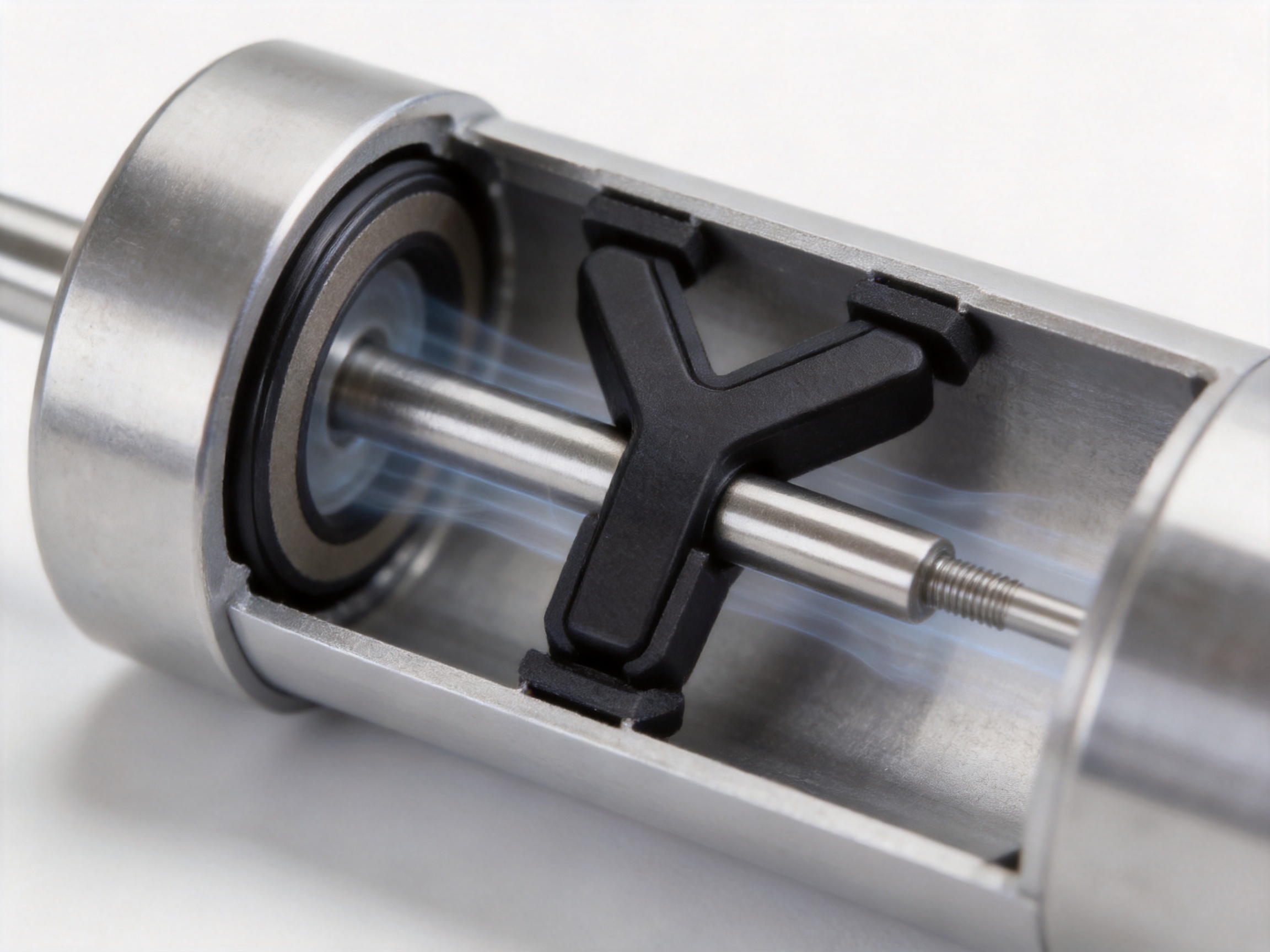
A Y-type seal has a profile designed to form sealing contact through its shaped sealing lips. The profile can respond to movement and pressure while maintaining contact with the shaft or rod and the surrounding groove or bore. In a compact mechanism, this type of geometry can provide a useful combination of sealing performance and movement efficiency.
Micro-devices are particularly sensitive to seal selection. A seal that is oversized, too rigid, or installed with excessive interference can increase actuation force. That additional force may make a small pump difficult to operate, cause a damper to respond unevenly, or reduce the available energy in a gas spring assembly. Conversely, a seal with inadequate contact may permit leakage and shorten the service life of the complete device.
The Micro Precision Pump Y-Seal addresses this balance by emphasizing low breakout force. Breakout force is the initial force required to start movement after the seal and mating surfaces have been stationary. In low-force mechanisms, this initial resistance can be more important than running friction. A low breakout force helps the piston rod begin moving smoothly and can support more predictable performance during repeated extension and compression cycles.
The Y-profile also supports versatile use in pneumatic damping. When a piston moves inside a pipe, the seal must limit unwanted air or oil passage while allowing the rod to travel. The seal must accommodate the dynamic relationship between pressure, motion, lubrication, and material elasticity. The product’s intended 5–10 N operating range reflects its focus on controlled low-pressure systems rather than heavy-duty high-pressure equipment.
Key Performance Advantages
Low Breakout Force
One of the product’s main advantages is its ultra-low breakout force. This characteristic is valuable in precision pumps, miniature dampers, and small gas spring systems because it helps the mechanism respond to a small input force. The device can begin moving without overcoming an unnecessarily high resistance caused by the seal.
Compared with a generic seal selected only by nominal diameter, a seal specifically developed for low-force operation can offer a more suitable balance between sealing contact and mechanical resistance. A generic component may fit physically but still create an unsatisfactory operating feel. It may require greater actuation force, produce stick-slip behavior, or reduce the consistency of a small damper. The A-1-001 design is intended specifically for this type of low-force environment.
Low breakout force can also improve user experience in equipment that is adjusted or moved manually. Furniture dampers, compact home appliances, and small mechanical controls may require smooth motion rather than maximum pressure capability. A seal that starts smoothly can contribute to a more refined movement profile and help reduce sudden release or hesitation.
Minimal Friction During Movement
In a dynamic seal, friction affects energy consumption, temperature generation, noise, and motion consistency. The Micro Precision Pump Y-Seal is optimized for minimal friction, making it appropriate for piston rods that move through a small bore. Reduced friction helps preserve the available force of the pneumatic system and can support smoother damping behavior.
Friction is especially important where the piston rod diameter is only 3 mm. At this scale, the seal, rod surface, lubricant, and bore geometry all have a significant effect on operating performance. A small increase in friction can represent a large proportion of the total available force. A low-friction sealing profile therefore provides an advantage over ordinary seals that may have been developed for larger shafts or higher-pressure applications.
Lower friction can also help reduce wear on the piston rod and sealing lip. Although actual service life depends on surface finish, lubrication, temperature, pressure, alignment, and cycle frequency, minimizing unnecessary friction is a sound design objective for a compact moving assembly.
Oil Resistance
The seal is made from NBR, a material widely selected for oil-resistant sealing applications. Its oil resistance supports use in systems where the sealing element may contact lubricating oil or other compatible fluids. This is particularly relevant to dampers and gas spring-related mechanisms, where a seal may operate in the presence of oil-based lubricants.
Oil resistance helps the material maintain its basic sealing function instead of rapidly swelling, softening, or losing elasticity when exposed to a compatible medium. Stable elasticity is necessary for the sealing lips to maintain contact with the piston rod and housing. However, final fluid compatibility should always be confirmed against the specific oil, additive package, temperature, and exposure time used by the equipment manufacturer.
Compared with an unspecified elastomer, NBR gives engineers a clearer starting point for oil-contact applications. It provides a recognized material platform for product selection, qualification, and replacement planning. Customers requiring a different chemical or temperature profile can consult the manufacturer about alternative sealing materials or customized solutions.
Compact Installation Dimensions
The small dimensions of the A-1-001 seal are a major advantage for micro-equipment. The 8.8 mm outside diameter, 2.5 mm inside diameter, and 3 mm height are suitable for compact assemblies based on an 8 mm steel pipe and 3 mm piston rod. The component can help equipment designers preserve space for other internal parts, reduce overall package size, and develop lighter mechanisms.
A compact seal also helps simplify the architecture of miniature products. When the sealing element is properly matched to the rod, pipe, and groove, the designer may avoid unnecessary adapters or oversized housings. The supplied specification provides a practical reference for evaluating fit before prototype production.
Dimensional compatibility should nevertheless be checked carefully. Seal performance depends not only on nominal diameter but also on groove dimensions, tolerances, rod surface quality, concentricity, installation chamfers, and compression. A successful design review should confirm the complete installation geometry rather than relying on the seal dimensions alone.
Suitable Applications
Miniature Pneumatic Pumps
The Micro Precision Pump Y-Seal is suitable for small pneumatic pump mechanisms that operate within the 5–10 N design range. In these devices, the seal must prevent air or fluid leakage while allowing the piston to move with limited resistance. Its low-friction design can help the pump convert a small input force into useful displacement.
For miniature pumps, sealing performance is closely connected to efficiency. Leakage can reduce pressure generation, while excessive friction can consume a substantial part of the input energy. A seal designed for low-force operation addresses both concerns by aiming to maintain contact without imposing unnecessary resistance.
Pneumatic Damping Systems
The product is specifically described as suitable for pneumatic damping. In a damper, the seal helps control the movement of a piston as air or another medium is displaced through the system. Consistent seal contact contributes to predictable pressure behavior and helps limit uncontrolled leakage around the piston rod.
Low breakout force is particularly useful in damping applications because a damper should begin its motion smoothly. If the seal sticks at the start of travel and then releases suddenly, the resulting movement may feel uneven. The Micro Precision Pump Y-Seal is intended to support a more controlled transition from stationary to moving conditions.
Gas Springs and Related Mechanisms
The manufacturer focuses on sealing technology for gas springs and dampers. The A-1-001 seal can therefore be considered for compact gas spring-related mechanisms where its dimensions and operating range are appropriate. Potential uses may include small lifting supports, controlled-opening devices, compact furniture hardware, and other mechanisms requiring assisted movement.
Gas spring applications can place demanding requirements on seals because the component may encounter repeated motion, pressure changes, lubrication, and varying environmental conditions. The product’s compact profile and NBR material make it a practical candidate for evaluation in low-pressure or miniature assemblies. The final suitability should be verified through application-specific testing.
Furniture and Home Appliance Mechanisms
Furniture and home appliances often include small dampers that control the opening, closing, lifting, or return motion of a component. Smooth operation is important because users directly perceive the quality of these movements. A compact low-friction seal can support gentle, controlled action in devices such as soft-closing mechanisms and small pneumatic supports.
In these applications, space may be limited and the operating force may be intentionally low. The A-1-001 specification provides a potential solution for designers working with an 8 mm pipe and 3 mm piston rod. Its use in a final product should be confirmed through cycle testing, temperature testing, and compatibility evaluation with the selected lubricant.
Medical and Compact Equipment
The manufacturer identifies medical equipment among the industries served by its sealing solutions. The Micro Precision Pump Y-Seal may be evaluated for compact equipment where controlled motion and reliable sealing are required. Medical applications often demand detailed validation, traceability, material review, and cleanliness controls, so the seal should be qualified according to the specific equipment requirements before production use.
Material Selection: NBR
NBR is selected for the A-1-001 product because it combines useful elasticity with resistance to many oils and lubricants. The material can form a flexible sealing interface around a piston rod while maintaining enough resilience to recover from small changes in compression and movement.
For a dynamic oil seal ring, elasticity is essential. The seal must remain in contact with the rod and housing during repeated motion. If the material is too hard, it may create excessive friction or fail to follow small surface variations. If it is too soft, it may deform excessively or lose dimensional stability. NBR provides a widely used material foundation for balancing these factors in ordinary oil-contact environments.
Material selection must always consider the complete operating environment. Important variables include the type of oil, pressure, temperature, speed, surface finish, storage conditions, and cleaning chemicals. NBR is a strong option for many general oil-sealing applications, but customers should provide the manufacturer with detailed working conditions when requesting confirmation or customization.
The manufacturer’s broader product positioning includes NBR, HNBR, and FPM O-ring products. This material range indicates that customers may be able to discuss alternative compounds when the standard NBR configuration does not meet a particular temperature, chemical, or performance requirement. Any alternative material should be selected through technical review and application testing rather than by material name alone.
Manufacturing and Engineering Strengths
Ningguo Jnsseals Sealing Technology Co., Ltd. is a high-tech enterprise founded in 2019 and headquartered in Anhui, China. The company focuses on the research, development, and application of sealing technology for gas springs, dampers, and related O-ring products. This specialization is relevant to the Micro Precision Pump Y-Seal because the product is intended for the same general family of compact pneumatic and damping mechanisms.
The company reports strong research and development capabilities, advanced production equipment, and a professional technical service team. These strengths support a product development approach that goes beyond simply supplying a standard rubber ring. For a precision seal, the design, material, tooling, molding, inspection, and application engineering stages must work together. A specialized sealing manufacturer is better positioned to coordinate these activities than a general rubber parts supplier with no focus on dynamic sealing.
Design and Development
The A-1-001 product demonstrates an application-oriented design approach. The specification includes the outside diameter, inside diameter, height, intended pipe and rod dimensions, applicable force range, material, and use for inflation and damping. Providing these details helps customers evaluate the product against an actual mechanism instead of selecting a seal based only on a catalog diameter.
Design development for a micro-seal requires attention to profile geometry and dimensional control. Small changes in lip shape, thickness, height, or interference can influence friction and leakage. The company’s focus on research and development supports the adjustment of these variables for different equipment requirements.
When a standard configuration does not fit a customer’s design, the company provides customized sealing solutions, including product design, testing, and technical consultation. This can shorten the distance between an initial engineering concept and a production-ready sealing component. Customization may involve dimensions, profile geometry, compound selection, or application-specific validation.
Production Equipment and Process Control
Advanced production equipment is an important strength in the manufacture of small elastomeric seals. Precision molds must reproduce the intended Y-profile consistently, while molding conditions must support stable material flow, curing, and dimensional recovery. Equipment capability influences the repeatability of the final seal and the consistency of its sealing lips.
Process control is particularly important for an 8.8 mm outside diameter product. At this size, flash, short shots, surface defects, dimensional variation, or distortion can affect installation and performance. A structured manufacturing process should control material preparation, mold condition, molding parameters, trimming, inspection, and packaging.
The company’s advanced equipment and technical team provide a foundation for maintaining production consistency. While individual inspection criteria depend on the customer’s drawings and quality agreement, the product’s intended use makes dimensional and visual control essential. Customers can obtain the relevant inspection and quality information during technical communication and product qualification.
Testing and Technical Consultation
Testing is necessary because a seal’s performance depends on its complete operating system. The same seal may behave differently when installed with another rod surface, lubricant, groove design, or pressure profile. The company offers testing and technical consultation as part of its customized sealing solutions, allowing customers to evaluate the product in relation to their actual equipment.
Application testing may include installation trials, leakage checks, breakout-force measurement, friction evaluation, repeated cycling, oil compatibility assessment, and dimensional verification. The exact test plan should be established according to the customer’s equipment and operating conditions. Testing helps identify issues before mass production and supports a more reliable transition from prototype to finished product.
Technical consultation is also valuable during the design stage. Customers can discuss the 8 mm pipe, 3 mm piston rod, 5–10 N design range, NBR material, and available installation space with the manufacturer. This exchange can help determine whether the standard A-1-001 design is appropriate or whether a customized seal should be developed.
Advantages Over Generic Competitor Seals
The strongest competitive advantage of the Micro Precision Pump Y-Seal is its focused application definition. It is not presented as a universal seal for every pressure, temperature, and mechanical system. Instead, it is developed for a specific combination of compact dimensions, low operating force, oil resistance, and pneumatic damping use. This focused positioning can make product selection more accurate.
A generic competitor seal may be available at a lower initial price, but it may not be optimized for an 8.8 mm micro-device or a 5–10 N operating environment. If its friction is too high, the equipment may require a stronger actuator. If its profile is not suited to dynamic movement, the product may suffer from stick-slip, leakage, or inconsistent damping. These indirect costs can exceed the initial savings from selecting an unsuitable standard component.
The A-1-001 design also provides a clear reference configuration: an 8 mm steel pipe inner diameter and a 3 mm piston rod diameter. This dimensional guidance can simplify preliminary design and reduce uncertainty during prototyping. Customers still need to verify groove details and tolerances, but the stated configuration offers a useful starting point.
Another advantage is the combination of product supply and technical support. The manufacturer provides customized design, testing, and consultation rather than limiting its role to shipment of finished parts. This is important when a customer needs to adapt a seal to a special bore, piston rod, lubricant, or movement profile.
The company’s focus on gas spring and damper sealing technology also differentiates it from suppliers whose primary experience may be static gaskets or general rubber molding. Dynamic seals require attention to friction, wear, lubrication, and repeated motion. A supplier familiar with these conditions can contribute more effectively to product development and problem solving.
Installation and Design Considerations
Correct installation is essential to achieving the intended performance of any Y-type seal. Before assembly, the customer should confirm the seal dimensions, groove geometry, pipe diameter, piston rod diameter, surface condition, and installation direction. The sealing lips should not be damaged during insertion or forced over sharp edges.
The 3 mm piston rod should have an appropriate surface finish and should be free from burrs, sharp scratches, metal particles, and corrosion. The 8 mm steel pipe should also be clean and properly aligned. Misalignment can create uneven lip loading, increase friction, and accelerate wear. In a micro-device, even a small assembly error may have a noticeable effect.
Installation chamfers can help protect the seal during assembly. A suitable lubricant compatible with NBR may also reduce insertion damage and support initial movement. The selected lubricant must be evaluated for chemical compatibility and intended use. Excessive lubricant, incompatible oil, or contamination can negatively affect performance.
The customer should also review the pressure and force conditions. The product has a listed design applicable pressure range of 5–10 N, which should be treated as a selection reference for the intended low-pressure environment. It should not automatically be applied to a system with substantially different pressure, speed, temperature, or fluid conditions without technical confirmation.
Storage is another important consideration. Elastomeric seals should be protected from excessive heat, direct sunlight, ozone-generating equipment, moisture, and contamination. They should remain in suitable packaging until installation. Proper storage helps preserve material elasticity and dimensional stability before the seal enters service.
Quality and Reliability in Application
Reliability is not determined by the seal alone. It results from the interaction of the seal material, profile, mating surfaces, pressure, temperature, lubricant, alignment, and operating cycle. The Micro Precision Pump Y-Seal provides a focused component solution, but the complete assembly must still be designed and tested correctly.
For a production program, customers should establish acceptance criteria for dimensions, appearance, flash, surface condition, material identification, and functional performance. Depending on the application, quality documentation may include inspection records, material information, batch traceability, and test reports. These requirements can be discussed with the manufacturer during project development.
Repeated cycling is especially important for damping and gas spring applications. A short static test may confirm that the seal does not leak initially, but it may not reveal friction changes, wear, lip damage, or dimensional recovery issues after extended movement. Life testing under representative oil, temperature, force, and cycle conditions provides a more realistic assessment.
The company’s stated ability to provide product design, testing, and technical consultation supports this type of application development. By involving the manufacturer early, customers can identify potential problems in the prototype stage and make informed decisions about materials, profile design, and manufacturing tolerances.
Customization Opportunities
The standard A-1-001 configuration is intended for a compact 8.8 mm outside diameter application, but equipment designs vary. A customer may require a different rod diameter, bore diameter, height, lip configuration, material, or pressure range. In these cases, a customized seal may provide a better solution than modifying the equipment around an unsuitable standard part.
Customization can begin with a technical information package. Useful details include the bore and rod dimensions, groove drawing, working medium, pressure, operating temperature, movement speed, stroke length, cycle frequency, lubrication method, expected service life, and installation limitations. The more complete the information, the more accurately the manufacturer can evaluate the design.
Depending on the application, customization may involve changing the NBR compound, considering HNBR or FPM, revising the Y-profile, adjusting the sealing interference, or developing a special mold. The best choice depends on the balance between sealing force, friction, chemical resistance, temperature resistance, manufacturing feasibility, and cost.
A customized development program may proceed through design review, sample production, prototype testing, performance adjustment, and final approval. This process helps ensure that the seal is not only dimensionally compatible but also functionally suited to the equipment.
Industries Served by the Manufacturer
Ningguo Jnsseals Sealing Technology Co., Ltd. serves customers in automotive, furniture, home appliances, medical equipment, construction, and other industries. These markets contain many applications requiring reliable sealing under movement, pressure, vibration, or changing environmental conditions.
In automotive-related systems, compact seals may be used in actuators, dampers, adjustment systems, or other mechanisms. Furniture applications may require smooth movement and quiet damping. Home appliances often use small pneumatic or oil-assisted mechanisms that must operate consistently over repeated cycles. Construction equipment may require more robust sealing solutions, while medical equipment may demand carefully controlled materials and validation.
The company’s cross-industry experience can support the transfer of sealing knowledge between different application areas. A design principle developed for a damper may be useful in a furniture mechanism, while a material or testing method used in one industry may inform another project. Each application still requires its own qualification, but broad experience can improve the engineering process.
How to Evaluate the Product for a New Project
The first step is to compare the product dimensions with the proposed assembly. Confirm the 8.8 mm outside diameter, 2.5 mm inside diameter, and 3 mm height against the available space. Check the 8 mm steel pipe inner diameter and 3 mm piston rod diameter, and review whether the groove and installation geometry are compatible.
The second step is to review the operating conditions. Determine whether the application falls within the intended 5–10 N low-pressure range. Record the working medium, oil type, temperature range, movement speed, stroke, cycle frequency, and expected service life. If any condition is outside the standard application, request technical guidance before proceeding.
The third step is to conduct a prototype installation and functional test. Measure assembly force, breakout force, running friction, leakage, and damping behavior. Observe the seal after cycling and inspect the rod and bore for unusual wear or contamination.
The final step is to establish production controls. Confirm incoming inspection, material requirements, dimensional tolerances, packaging, storage, and batch management. A clear quality agreement helps maintain consistency after the product moves from prototype to volume production.
Frequently Asked Questions
What type of seal is the Micro Precision Pump Y-Seal?
It is a Y-type oil seal ring designed for compact pneumatic and damping mechanisms. The product is identified by code A-1-001 and is intended for low-pressure micro-devices.
What material is used?
The standard product is made from NBR, a nitrile rubber commonly used for oil-resistant sealing applications. Customers with special temperature, chemical, or performance requirements can discuss alternative materials and customized solutions with the manufacturer.
What are the main dimensions?
The listed outside diameter is 8.8 mm, the inside diameter is 2.5 mm, and the height is 3 mm. The nominal product specification is stated as 8.9 × 2.5 × 3. The complete equipment drawing and groove dimensions should be checked before production use.
What piston rod and pipe sizes are associated with the product?
The specified configuration includes an 8 mm steel pipe inner diameter and a 3 mm piston rod diameter. These dimensions should be confirmed with the manufacturer against the actual installation design.
What pressure or force range is recommended?
The design applicable range is listed as 5–10 N. This indicates a low-pressure, low-force operating environment. The product should not be applied to substantially different conditions without technical review and testing.
Can it be used for both inflation and damping?
Yes. The product remark states that it is suitable for both inflation and damping. The final suitability depends on the complete assembly, working medium, pressure profile, and operating cycle.
What is the main advantage over a general-purpose seal?
Its main advantage is application-specific optimization for compact dimensions, low breakout force, minimal friction, oil resistance, and pneumatic damping. A general-purpose seal may fit dimensionally but may not provide the same low-force movement characteristics.
Is the product suitable for high-pressure hydraulic systems?
The product is positioned for 5–10 N low-pressure environments and micro-devices. It should not be assumed suitable for high-pressure hydraulic service without separate engineering evaluation, testing, and approval.
Can the manufacturer develop a customized seal?
Yes. The company provides customized sealing solutions that may include product design, testing, and technical consultation. Customers should provide detailed information about dimensions, pressure, temperature, fluid, movement, and service-life requirements.
How should the seal be installed?
The installation should protect the sealing lips from sharp edges, burrs, particles, and excessive stretching. The rod and bore should be clean and properly aligned. A compatible lubricant may be used when appropriate, and the final procedure should be validated through testing.
What industries may use this type of product?
Potential industries include automotive, furniture, home appliances, medical equipment, construction, gas spring systems, dampers, and compact pneumatic equipment. Each application requires its own qualification.
What information should be supplied for technical evaluation?
Customers should provide the seal drawing or required dimensions, groove details, rod and bore sizes, working medium, pressure or force, temperature, speed, stroke, cycle frequency, lubricant, installation method, and expected service life.
Conclusion
The Micro Precision Pump Y-Seal is a focused sealing solution for compact, low-pressure pneumatic and damping equipment. Its 8.8 mm outside diameter, 2.5 mm inside diameter, 3 mm height, and associated 8 mm pipe and 3 mm piston rod configuration make it suitable for micro-device designs where installation space is limited. Its NBR material supports oil-resistant applications, while its low breakout force and minimal-friction design address the motion requirements of small mechanisms.
Compared with generic competitor seals, the product offers the advantage of application-specific development. It is designed around the practical needs of low-force movement, controlled damping, compact installation, and repeated dynamic operation. This focused design approach can help engineers avoid the friction, stick-slip, leakage, or excessive actuation force that may occur when a standard seal is used outside its intended purpose.
The manufacturer strengthens the product offering through research and development, advanced production equipment, technical service, testing, and customized sealing capability. Its experience in gas spring, damper, and O-ring technology provides a relevant foundation for supporting customers from initial design through prototype evaluation and production supply.
For the best result, customers should evaluate the A-1-001 seal as part of a complete system. Dimensional fit, groove design, rod finish, lubricant, pressure, temperature, alignment, and cycle requirements must all be reviewed. When these factors are properly controlled, the Micro Precision Pump Y-Seal can provide a practical and efficient sealing option for compact pneumatic, damping, and related mechanical applications.
References
1. Product specification for Micro Precision Pump Y-Seal, Product Code A-1-001.
2. Manufacturer-provided technical information for NBR Y-type oil seal rings and compact damping applications.
3. General engineering principles for elastomeric dynamic seals, low-friction sealing, and pneumatic damper design.
4. General material guidance for nitrile butadiene rubber in oil-contact sealing applications.
5. Manufacturer-provided company information concerning sealing technology research, development, production equipment, testing, and customized technical services.
Product: Micro Precision Pump Y-Seal

PREV:7.3 mm Pneumatic-Grade O-Ring Seal: Design, Performance, and Manufacturing Advantages
NEXT:1500N Heavy-Duty Hydraulic Seal: Design, Performance, Manufacturing, and Application Guide
NEXT:1500N Heavy-Duty Hydraulic Seal: Design, Performance, Manufacturing, and Application Guide


Want to know more
about us?
about us?

Precision sealing for gas springs and dampers. Durable, wear-resistant, and built for long-life performance in demanding applications.
Product Categories
Quick Links
Contact Us
-
Email: jns@jnsseals.cn

-
Email: LouZhuoyu@outlook.com
-
Manager Gong: +86-18563770820

-
Manager Wang: +8615357558902
-
No. 5, Meilin Avenue, Meilin Industrial Development Zone, Ningguo City, Anhui Province, China

