

 English
 русский
 Deutsch
 Türk
Türk 中文简体
中文简体
13mm Slim-Section Oil-Resistant Ring for Compact Sealing Applications
13mm Slim-Section Oil-Resistant Ring for Compact Sealing Applications
13mm Slim-Section Oil-Resistant Ring for Compact Sealing Applications
13mm Slim-Section Oil-Resistant Ring for Compact Sealing Applications
13mm Slim-Section Oil-Resistant Ring for Compact Sealing Applications
13mm Slim-Section Oil-Resistant Ring for Compact Sealing Applications
13mm Slim-Section Oil-Resistant Ring for Compact Sealing Applications
13mm Slim-Section Oil-Resistant Ring for Compact Sealing Applications
13mm Slim-Section Oil-Resistant Ring for Compact Sealing Applications
13mm Slim-Section Oil-Resistant Ring for Compact Sealing Applications
13mm Slim-Section Oil-Resistant Ring for Compact Sealing Applications
13mm Slim-Section Oil-Resistant Ring for Compact Sealing Applications
13mm Slim-Section Oil-Resistant Ring for Compact Sealing Applications
13mm Slim-Section Oil-Resistant Ring for Compact Sealing Applications
13mm Slim-Section Oil-Resistant Ring for Compact Sealing Applications
13mm Slim-Section Oil-Resistant Ring for Compact Sealing Applications

Lu Wanyin — Senior After-Sales Service Engineer
Home / Author / Lu Wanyin — Senior After-Sales Service Engineer / 13mm Slim-Section Oil-Resistant Ring for Compact Sealing Applications
NEW Category
Contact us
13mm Slim-Section Oil-Resistant Ring for Compact Sealing Applications
Content
- 1 Product Overview
- 2 Why a Slim 1.5mm Section Matters
- 3 NBR Material and Oil-Resistance Performance
- 4 Advantages Compared with Conventional Competitor Options
- 5 Manufacturing Strengths and Process Control
- 6 Application Areas
- 7 Installation Considerations
- 8 Quality, Reliability, and Supply Support
- 9 Selection Guide for Engineers and Buyers
- 10 How the Product Supports Efficient Product Development
- 11 Maintenance and Replacement Benefits
- 12 Frequently Asked Questions
- 12.1 What is the size of the A-4-006 ring?
- 12.2 What material is used?
- 12.3 What is the main design advantage of the product?
- 12.4 Can the ring be used in hydraulic sensors?
- 12.5 Is NBR suitable for every oil?
- 12.6 Can the product be used in dynamic applications?
- 12.7 What should be checked before installation?
- 12.8 Can customized versions be produced?
- 12.9 What alternatives are available if NBR is not sufficient?
- 12.10 How should replacement rings be stored?
- 12.11 What information should be provided for a technical quotation?
- 13 Conclusion
- 14 References
- 15 Product: 13mm Slim-Section Oil-Resistant Ring
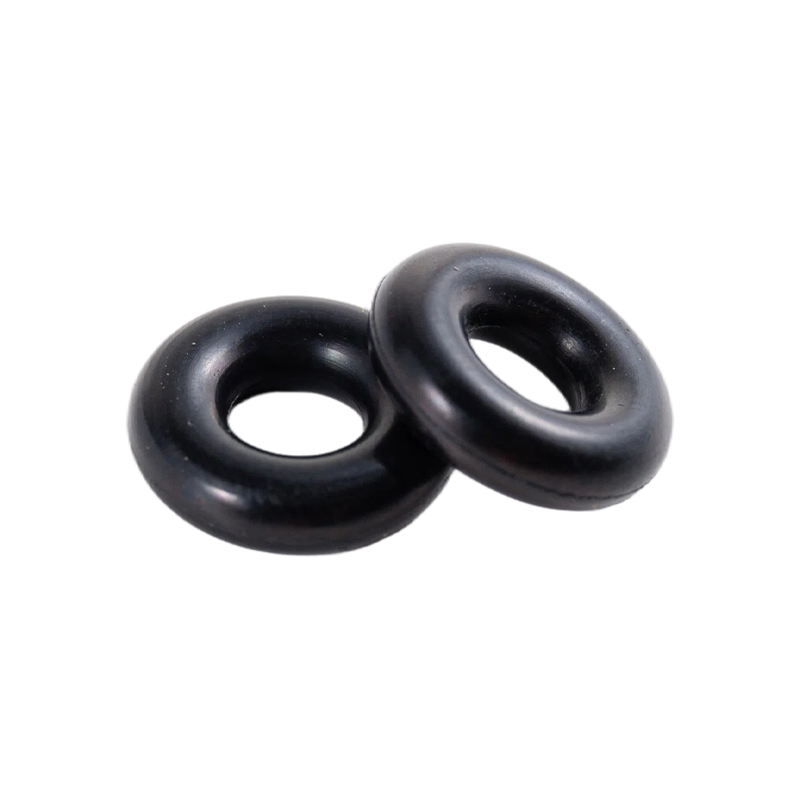
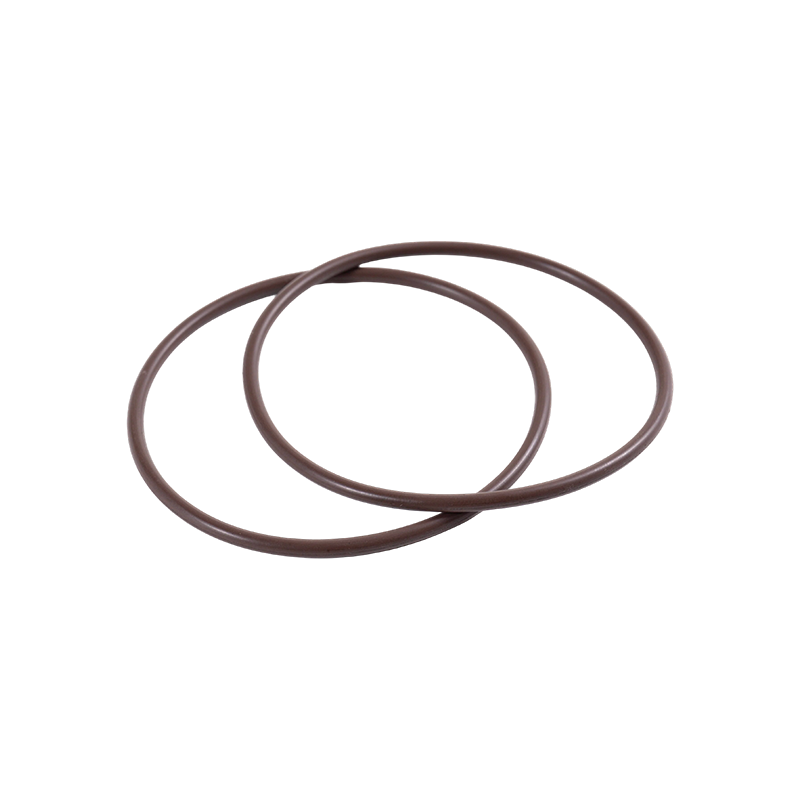
Reliable sealing is essential wherever fluids, pressure, motion, and sensitive components must operate together. In compact hydraulic sensors, gas springs, dampers, automotive assemblies, furniture hardware, appliances, medical equipment, and industrial mechanisms, even a small sealing ring can have a major influence on service life and operating stability. The 13mm Slim-Section Oil-Resistant Ring, identified by product code A-4-006, is designed for applications that require dependable oil resistance while working within a restricted installation space.
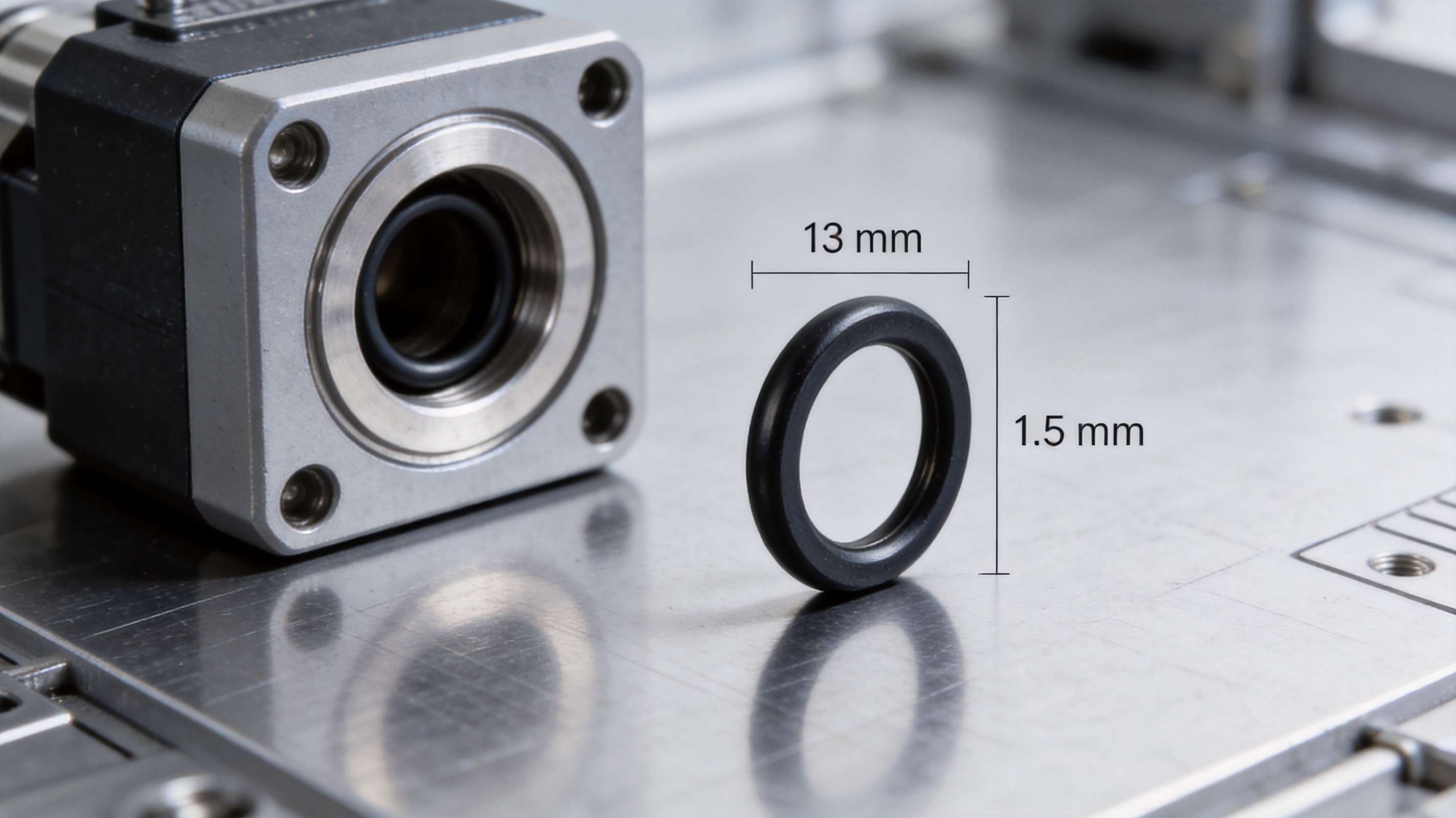
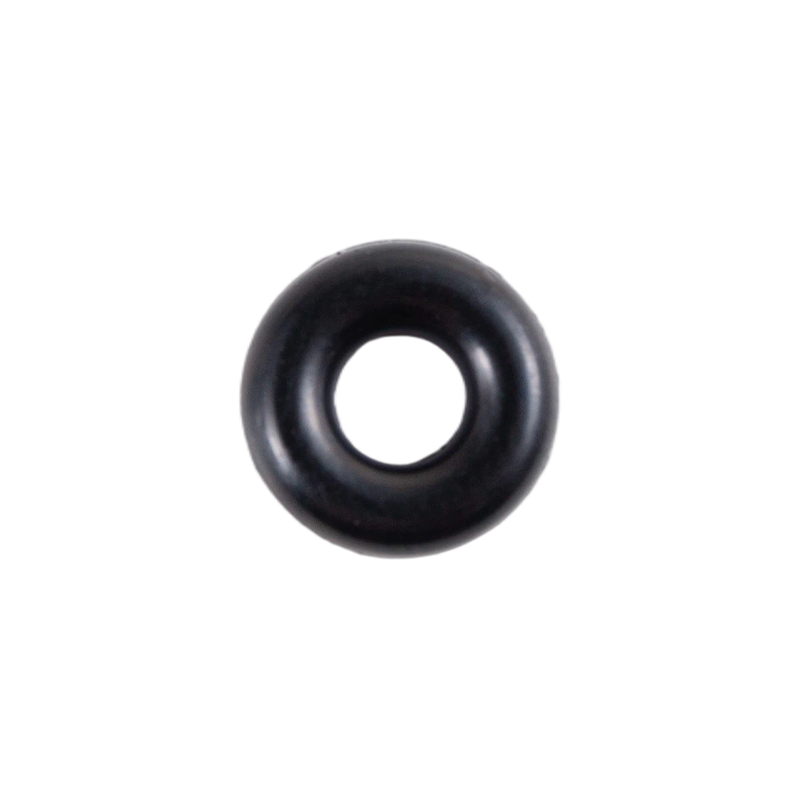
The ring has an inside diameter of 13mm and a cross-sectional diameter, or wire diameter, of 1.5mm. This slim 1.5mm section allows designers to integrate the seal into compact grooves and narrow assemblies without sacrificing the basic sealing function expected from an O-ring. Manufactured from NBR, the product combines a practical elastomer selection with a space-saving profile suited to oil-contact applications.
Its design is particularly relevant to engineers who need to balance sealing reliability, dimensional efficiency, material compatibility, and manufacturing consistency. Instead of using a larger seal simply because space is available, a slim-section O-ring can help reduce the required groove size, support compact product architecture, and simplify the integration of sealing elements into sensors, dampers, and other precision mechanisms.
This article examines the construction, material characteristics, dimensional advantages, manufacturing considerations, application suitability, quality factors, and customization strengths associated with the A-4-006 13mm Slim-Section Oil-Resistant Ring.
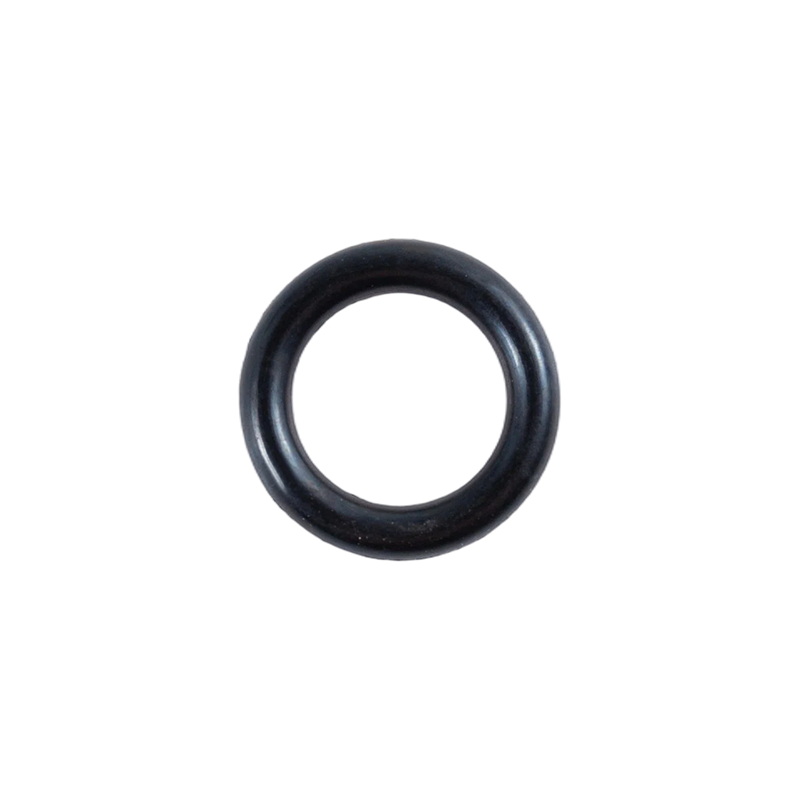
13mm Slim-Section Oil-Resistant Ring
Product Overview
The A-4-006 is an O-shaped oil seal ring developed for sealing configurations where a 13mm internal diameter and 1.5mm section are appropriate. The product is categorized as an O-shaped oil seal ring and uses NBR as its primary material. Its simple circular profile enables the ring to provide sealing through controlled compression inside a suitable groove.
When installed correctly, an O-ring is compressed between two mating surfaces. This compression creates an initial contact force that helps close the clearance between components. During operation, system pressure can further energize the seal by pressing the elastomer against the surrounding groove and sealing surfaces. The result is a compact sealing solution that can protect against leakage, contamination, and the unwanted migration of oil or other compatible fluids.
The A-4-006 focuses on three central requirements:
First, it provides a slim profile for compact installation. A 1.5mm cross-section is useful where a conventional larger O-ring would require excessive radial or axial space.
Second, its NBR construction offers practical resistance to many mineral-oil-based fluids and lubricants commonly found in mechanical and hydraulic environments.
Third, its standardized circular form supports efficient design, straightforward groove preparation, and convenient replacement during maintenance or service operations.
Basic Product Specifications
| Specification | Product Detail |
|---|---|
| Product name | 13mm Slim-Section Oil-Resistant Ring |
| Product code | A-4-006 |
| Seal type | O-shaped oil seal ring |
| Nominal size | 13mm inside diameter × 1.5mm section |
| Inside diameter | 13mm |
| Cross-sectional diameter | 1.5mm |
| Material | NBR |
| Primary design focus | Slim installation profile and oil resistance |
| Representative application | Compact hydraulic sensors and related mechanisms |
The dimensions listed above should be considered the starting point for application evaluation. Final suitability depends on groove geometry, compression, pressure, temperature, surface finish, installation method, fluid composition, and expected service life. A technical review is recommended whenever the ring is used in a critical or unusually demanding environment.
Why a Slim 1.5mm Section Matters
Many modern products are becoming smaller while incorporating more functions. Hydraulic sensors, dampers, compact actuators, furniture mechanisms, and automotive modules often have limited internal volume. In such assemblies, the sealing element must fit within a carefully controlled envelope. A ring that is too large may force a redesign of the housing, reduce available space for other components, or increase the overall size of the finished product.
The 1.5mm section of the A-4-006 addresses this design challenge. Compared with a larger-section O-ring, a slim ring can be installed in a narrower groove and may require less surrounding material. This can help engineers develop more compact housings and reduce interference with adjacent parts.
A smaller seal section may also support more efficient assembly. When the groove and mating components are designed correctly, the seal can be positioned in a precise, controlled location. This is valuable in sensor assemblies where a sealing interface must coexist with electrical parts, pressure ports, moving pins, or other miniature components.
However, slim-section seals require appropriate engineering discipline. The groove must be manufactured accurately, the sealing surfaces must be adequately finished, and the installation process must prevent stretching, twisting, cutting, or rolling. The benefit of a compact profile is greatest when the complete sealing system is designed as a matched assembly rather than when the O-ring is selected by diameter alone.
Space Efficiency in Compact Products
A 13mm inside diameter and 1.5mm section provide a useful combination for relatively small components. The ring can support sealing around a shaft, plug, sensor body, cover, or compact fluid passage, depending on the groove design. Its size makes it suitable for parts where a sealing interface is necessary but internal space is limited.
Space efficiency can influence more than the size of an individual component. It can also affect packaging, material usage, assembly equipment, and product weight. A smaller housing may require less raw material and may simplify integration into a larger system. For high-volume products, even small dimensional improvements can have an important cumulative effect.
Reduced Interference with Adjacent Components
In a compact assembly, a seal with excessive cross-section may interfere with moving parts or reduce the available clearance for electrical and mechanical features. A slim-section ring helps create a more controlled sealing boundary. This may be especially useful in hydraulic sensors, where pressure-related components and sensing elements must operate within a limited housing.
Although the ring is compact, its circular shape retains the familiar installation and replacement advantages of an O-ring. Engineers can use established design methods for groove sizing, compression, stretch, and tolerance assessment while benefiting from the smaller overall profile.
NBR Material and Oil-Resistance Performance
NBR, or nitrile butadiene rubber, is widely used for sealing applications because it offers a practical balance of oil resistance, mechanical strength, elasticity, and cost effectiveness. The performance of NBR depends on its formulation, acrylonitrile content, curing system, hardness, temperature exposure, and the exact fluid involved. Nevertheless, NBR is a common and proven choice for many mineral-oil-based sealing environments.
For the A-4-006, NBR supports the product’s primary purpose as an oil-resistant ring. It is suitable for applications where the seal may encounter lubricating oil, hydraulic oil, grease, or related fluids that are compatible with the selected NBR compound. This makes the material relevant to dampers, hydraulic sensor assemblies, automotive mechanisms, and mechanical equipment that uses oil as a working or lubricating medium.
The oil-resistance advantage of NBR is important because some elastomers can swell, soften, harden, or lose elasticity when exposed to unsuitable fluids. Excessive swelling may create installation problems or unwanted friction. Excessive shrinkage or hardening may reduce contact pressure and increase the risk of leakage. Selecting an elastomer that is compatible with the operating fluid helps maintain the seal’s intended function over time.
Balanced Mechanical Properties
In addition to fluid compatibility, a sealing material must withstand handling and installation. NBR is valued for its useful resistance to abrasion, compression, and mechanical stress in many general-purpose applications. These qualities support the installation of a slim ring, which must be handled carefully because its smaller section can be more sensitive to cuts, twisting, and damage from sharp edges.
For dynamic applications, the operating speed, lubrication condition, pressure, temperature, shaft finish, and clearance must be evaluated together. The A-4-006 may be suitable for certain moving applications, but the final decision should be based on the complete operating profile. A static seal, a reciprocating seal, and a rotating seal experience different mechanical demands.
Material Compatibility Must Be Confirmed
NBR is not universally compatible with every chemical or fluid. Its suitability should be checked against the actual medium, concentration, temperature, pressure, and exposure duration. Applications involving aggressive chemicals, specialized synthetic fluids, high-temperature environments, ozone exposure, or unusual gases may require another elastomer family, such as HNBR or FPM, depending on the conditions.
The company’s broader product capability includes NBR, HNBR, and FPM O-ring products. This material range can support a more flexible approach to sealing design. When an application exceeds the practical limits of standard NBR, a technical discussion can help determine whether an alternative compound or a customized product is more appropriate.
Advantages Compared with Conventional Competitor Options
The A-4-006 is designed to compete through application efficiency rather than simply through size or material cost. Its main advantages are associated with its slim geometry, defined dimensions, oil-resistant NBR material, and the manufacturing and technical support capabilities of its supplier.
Advantage One: Compact Geometry
Some competing products may use larger standard sections that are easy to source but require more installation space. The 1.5mm section of the A-4-006 gives designers another option when a large O-ring is unnecessary or cannot be accommodated. This can reduce the size of the groove and support a smaller assembly design.
Compact geometry can also help when a sealing interface must be positioned near a sensor element, threaded feature, retaining component, or narrow passage. The ring is not intended to replace every larger O-ring. Instead, it provides a targeted solution for applications where dimensional efficiency is a key requirement.
Advantage Two: Focused Oil-Resistance Design
In oil-contact applications, material selection is as important as dimensional selection. A product made from an elastomer with poor fluid compatibility may lose performance even if its dimensions are correct. The NBR construction of the A-4-006 is aligned with many common oil and lubrication applications, providing a practical alternative to general-purpose rings that have not been selected for oil exposure.
Advantage Three: Clear Product Identification
The A-4-006 product code and defined 13mm × 1.5mm specification make the ring easier to identify in engineering documents, purchasing systems, maintenance inventories, and production instructions. Clear identification can reduce the risk of mixing similar-looking rings with different dimensions or materials.
For industrial customers, traceable product identification is especially valuable when multiple O-rings are used within one assembly. A code-based system supports repeat ordering and helps link the seal to drawings, bills of materials, inspection records, and technical communication.
Advantage Four: Access to Material Alternatives
A supplier capable of producing more than one elastomer family can evaluate the sealing requirement more broadly. Although A-4-006 is made from NBR, the availability of HNBR and FPM product capabilities can be useful when customers face higher temperature, stronger chemical exposure, or more demanding aging conditions.
This capability can be more effective than treating every sealing problem as a simple replacement exercise. The correct solution may involve changing the material, adjusting the dimensions, refining the groove, or modifying the installation method. A supplier with product development and technical consultation capability can contribute to this process.
Advantage Five: Customization Support
The manufacturer provides customized sealing solutions that may include product design, testing, and technical consultation. This is an important advantage when an existing standard size is close to the requirement but not fully optimized for the application.
Customization may involve material selection, hardness, dimensional adjustment, cross-section, internal diameter, tolerance, surface treatment, packaging, or inspection requirements. Any modification should be validated through appropriate samples and testing before mass production.
Manufacturing Strengths and Process Control
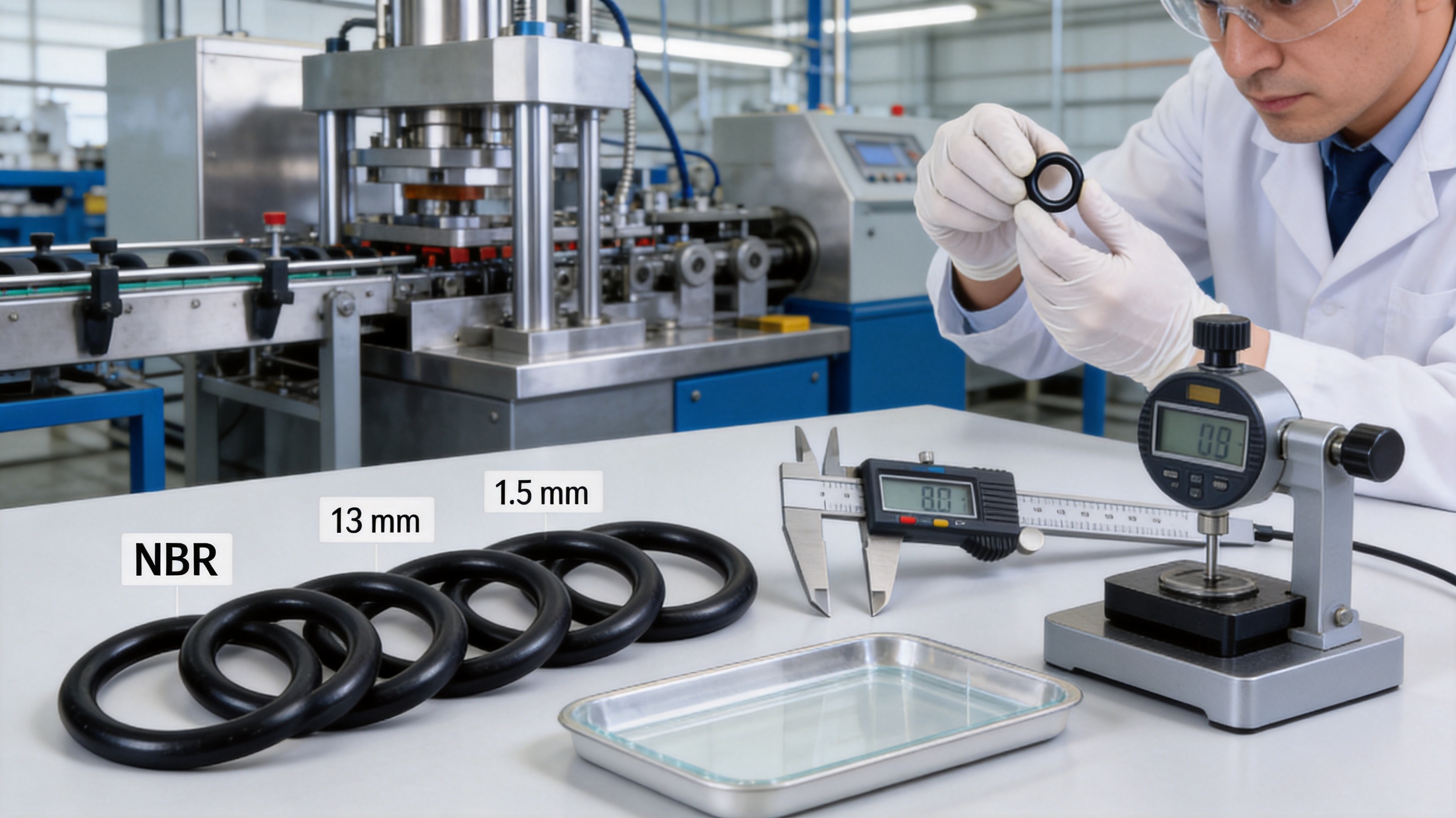
The quality of a small O-ring depends heavily on manufacturing consistency. A ring with the correct nominal diameter but an inconsistent section, damaged surface, poor flash control, or unsuitable material properties may not perform as expected. For this reason, advanced manufacturing should be understood as a complete process that begins with design and material preparation and continues through molding, finishing, inspection, testing, and customer support.
Ningguo Jnsseals Sealing Technology Co., Ltd. is a high-tech enterprise founded in 2019 and headquartered in Anhui, China. The company focuses on sealing technology for gas springs, dampers, and related O-ring products. Its stated strengths include research and development capability, advanced production equipment, and a professional technical service team.
Product and Tooling Development
O-ring production begins with accurate interpretation of the required dimensions and application. For a slim-section ring such as A-4-006, tooling accuracy is especially important. The mold must support consistent internal diameter, cross-sectional geometry, parting-line control, and surface quality.
Engineering review can also identify potential risks before production begins. These risks may include excessive flash, insufficient filling, air entrapment, dimensional shrinkage, uneven curing, or distortion after demolding. A disciplined development process helps ensure that the ring is not only nominally correct but also suitable for real assembly conditions.
Material Preparation and Compounding
Elastomer performance begins with material formulation. NBR compounds are selected and prepared according to the intended balance of oil resistance, elasticity, hardness, compression behavior, and processing stability. The compound must be mixed uniformly so that additives, curing agents, fillers, and other ingredients are distributed consistently throughout the batch.
Consistent compounding is essential for small seals because variations in hardness or elasticity can influence installation force, compression, leakage behavior, and long-term recovery. The selected material must also be processed in a way that supports repeatable curing and stable physical properties.
Molding and Vulcanization
During molding, the prepared NBR compound is formed into the circular O-ring geometry. Vulcanization creates cross-links within the rubber structure, allowing the material to recover elastically after deformation and maintain contact with the sealing surfaces.
Temperature, pressure, time, mold condition, and material flow must be controlled during this stage. Inadequate curing can result in weak or unstable material, while excessive curing may reduce elasticity or produce undesirable hardness. Proper process control helps maintain the balance required for an oil-resistant sealing ring.
Demolding and Finishing
After molding, the rings are removed from the tooling and examined for visible defects. Finishing operations may be used to manage flash or parting-line material. For a slim 1.5mm section, finishing must be performed carefully because excessive removal or mechanical damage can affect the ring’s dimensions and sealing surface.
The finished product should have a clean, continuous surface without cuts, cracks, blisters, significant mold marks, or other defects that could create a leakage path. Visual inspection is an important first layer of quality control, although it should be combined with dimensional and material-property checks.
Dimensional Inspection
Inspection of the 13mm inside diameter and 1.5mm section helps verify that the product conforms to the intended specification. Measuring methods should account for the flexibility of elastomeric materials. The inspection plan may include inside diameter, cross-sectional diameter, roundness, flash, surface condition, and other customer-specific requirements.
Dimensional consistency is particularly important when the ring is used in a compact groove. A small deviation can change the compression level or create excessive stretch. Either condition may affect installation, friction, sealing force, and service life.
Testing and Technical Validation
Depending on the application, product validation may include hardness testing, tensile and elongation testing, compression set evaluation, fluid immersion, aging, leakage testing, and dimensional stability assessment. The exact test program should reflect the customer’s operating conditions.
The company’s technical service and testing capabilities can assist customers in evaluating the appropriate sealing solution. Testing is most meaningful when it reproduces the real fluid, temperature, pressure, movement, and installation conditions expected in service.
Application Areas
The A-4-006 is intended for compact oil-resistant sealing applications. Its representative use in hydraulic sensors reflects the type of environment where a slim, accurately formed ring can provide value. The following application areas may also be considered, subject to engineering validation.
Compact Hydraulic Sensors
Hydraulic sensors often include a pressure interface, sensing element, housing, connector, and sealing boundary. The available space can be limited, particularly when the sensor is integrated into a small actuator or hydraulic control module. A 13mm inside diameter and 1.5mm section may help seal a compact interface while preserving room for other features.
Because sensor reliability can affect the performance of a larger system, the seal must be selected with attention to pressure, fluid compatibility, temperature cycling, vibration, and assembly tolerances. The ring should be installed in a properly designed groove and protected from sharp edges during assembly.
Gas Springs and Dampers
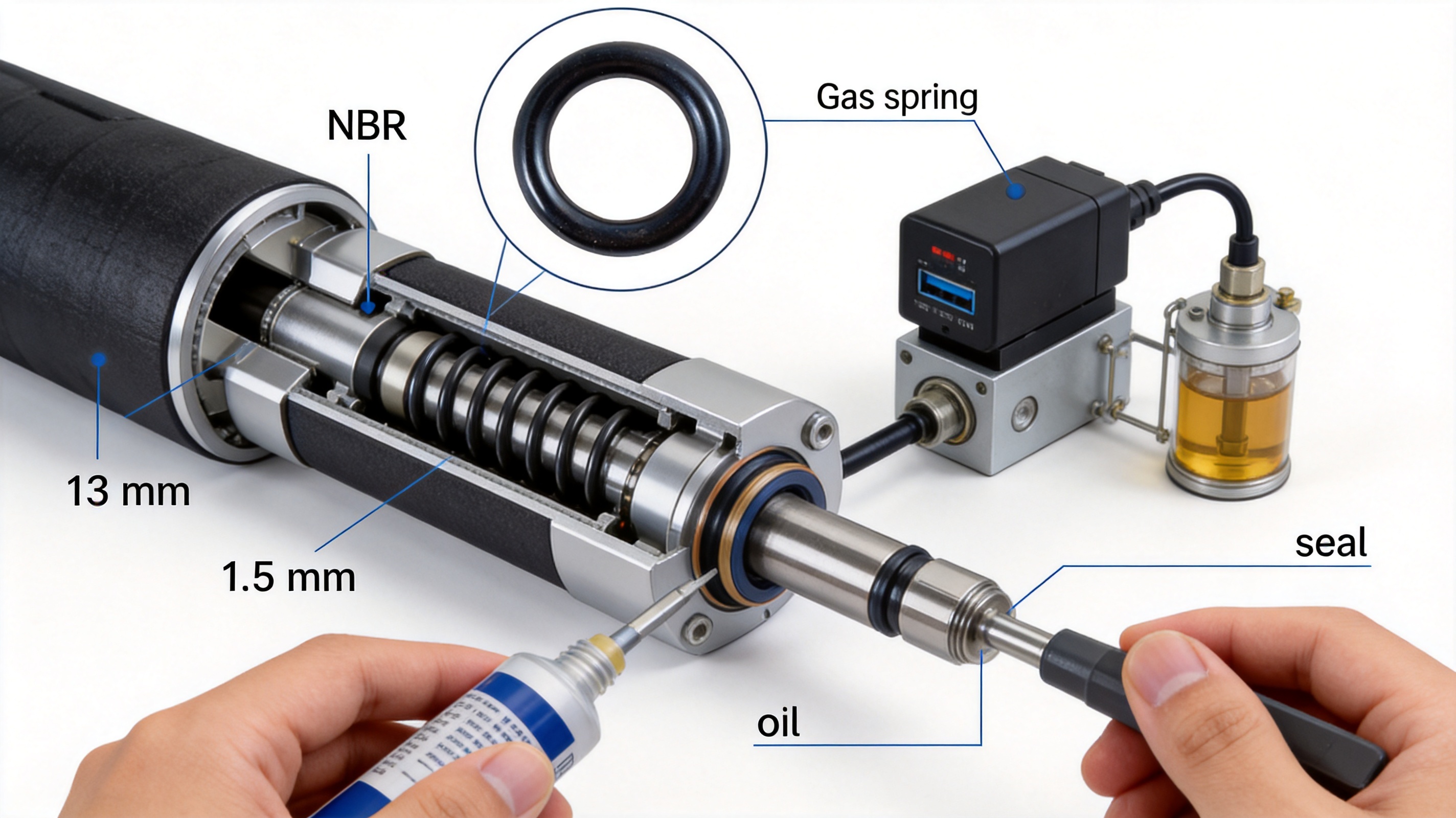
Gas springs and dampers rely on sealing elements to control fluid or gas movement and maintain internal pressure. The manufacturer’s specialization in gas spring and damper sealing technology provides relevant experience for applications requiring compact and durable rings.
In these products, the seal may experience movement, pressure changes, temperature variation, and repeated cycling. The suitability of a slim NBR ring depends on the exact design and medium. In some gas or high-temperature environments, a different compound may be required, which is why application-specific consultation is important.
Automotive Components
Automotive systems often use O-rings in fluid circuits, dampers, actuators, sensors, connectors, and control assemblies. Space restrictions, vibration, thermal cycling, and exposure to oils or lubricants are common considerations. The A-4-006 may be useful in compact automotive mechanisms where NBR compatibility and the 1.5mm section meet the design requirements.
Automotive applications generally require careful documentation, batch consistency, validation, and traceability. Customers should specify their applicable industry standards and testing requirements during the quotation and development stages.
Furniture Hardware
Modern furniture hardware increasingly uses gas springs, dampers, soft-closing mechanisms, and adjustable components. These systems may require compact seals to control movement and prevent lubricant leakage. A slim O-ring can help support small hardware designs without adding unnecessary bulk.
Home Appliances
Appliances may use O-rings in water systems, oil-lubricated mechanisms, dampers, valves, and compact pumps. The correct material depends on the fluid and temperature. For oil-contact mechanisms, NBR may be appropriate, while water, steam, food-contact, or chemical requirements may call for a different compound and compliance review.
Medical and Technical Equipment
Medical equipment and technical instruments often require compact seals around fluid connections, sensor modules, and actuated components. In such applications, material selection, cleanliness, regulatory requirements, and documentation are critical. The A-4-006 should only be used after confirming that the NBR formulation and manufacturing controls satisfy the relevant requirements of the equipment.
Installation Considerations
Correct installation is essential for achieving the intended performance of any O-ring. Even a well-manufactured ring can leak if it is cut, twisted, overstretched, contaminated, or installed in an unsuitable groove.
Groove Design
The groove should be designed for the 13mm inside diameter and 1.5mm cross-section. Important factors include groove width, depth, corner radius, compression, stretch, clearance, pressure direction, and whether the seal is static or dynamic. The groove should provide adequate room for the elastomer without allowing excessive extrusion under pressure.
For a slim-section ring, dimensional tolerances deserve particular attention. Minor variations in groove depth can produce a relatively large change in percentage compression. Engineering calculations and prototype testing are recommended before production release.
Surface Quality
Mating surfaces should be smooth enough to prevent leakage paths but not so polished or damaged that they impair lubrication or contact stability. Scratches, burrs, sharp edges, corrosion, and machining debris can damage the ring during assembly or operation.
Lubrication
A compatible installation lubricant can reduce friction and lower the risk of twisting or cutting during assembly. The lubricant must be compatible with NBR and with the operating fluid. The use of an incompatible grease or assembly compound may cause swelling, softening, or premature degradation.
Handling and Storage
O-rings should be stored away from direct sunlight, ozone-generating equipment, excessive heat, moisture, and chemicals that may attack the elastomer. They should not be stretched unnecessarily or stored under compression for extended periods. Clean gloves or suitable handling practices can reduce contamination and surface damage.
During assembly, the ring should be placed evenly in the groove. It should not be rolled or twisted. If the ring passes over threads, ports, keyways, or sharp edges, protective sleeves, lead-in chamfers, or assembly tools may be required.
Quality, Reliability, and Supply Support
For industrial buyers, product quality includes more than the physical seal. It also includes communication, order accuracy, technical response, repeatability, and supply coordination. The supplier’s ability to support customers through design, testing, consultation, and production can reduce development risk.
Ningguo Jnsseals Sealing Technology Co., Ltd. serves customers in automotive, furniture, home appliance, medical equipment, construction, and other industries. This range of applications indicates experience with different sealing requirements and product environments. The company’s stated philosophy emphasizes people-oriented development, innovation, excellence, and long-term technical progress.
Technical Consultation
Technical consultation is useful when the application involves unusual dimensions, high pressure, frequent motion, temperature cycling, or uncertain fluid compatibility. Customers can provide drawings, operating parameters, fluid information, temperature ranges, pressure data, movement details, and expected service life. These inputs help the supplier recommend a more appropriate material or design.
Customized Sealing Solutions
Some applications cannot be solved with a standard catalog item. The required seal may have a unique internal diameter, cross-section, hardness, compound, tolerance, or packaging configuration. Customized development can address these needs while maintaining a structured process for sampling, testing, approval, and production.
Customization should not be limited to changing dimensions. It may also involve evaluating the complete sealing system, including groove design, surface finish, assembly method, and operating medium. This broader approach can produce a more reliable result than selecting a ring based only on nominal size.
Production Consistency
Repeat orders require stable production conditions. Consistency in compound preparation, mold maintenance, curing, finishing, inspection, and packaging helps ensure that replacement rings perform like the original production batch. This is especially important for customers operating multiple assembly lines or supplying products to different markets.
Selection Guide for Engineers and Buyers
Before ordering the A-4-006, customers should confirm several technical and commercial details. A structured selection process can prevent leakage, premature failure, and unnecessary redesign.
| Evaluation Item | Questions to Confirm | Why It Matters |
|---|---|---|
| Dimensions | Is a 13mm inside diameter and 1.5mm section suitable for the groove? | Incorrect sizing can cause low compression, excessive compression, or installation failure. |
| Material | Is NBR compatible with the actual fluid and temperature? | Incompatible fluids can cause swelling, hardening, softening, or loss of elasticity. |
| Pressure | What are the normal and peak pressures? | Pressure influences extrusion risk and groove requirements. |
| Movement | Is the ring static, reciprocating, oscillating, or rotating? | Dynamic movement changes friction, wear, lubrication, and life expectations. |
| Surface condition | Are mating surfaces free from burrs, scratches, and contamination? | Surface defects can damage the ring or create leakage paths. |
| Temperature | What are the minimum, normal, and maximum temperatures? | Temperature affects elastomer flexibility, aging, and fluid compatibility. |
| Assembly | Will the ring pass over threads, ports, or sharp edges? | Special installation protection may be required. |
| Validation | What tests are required before production approval? | Application-specific testing confirms real-world suitability. |
How the Product Supports Efficient Product Development
A well-defined component can simplify communication between design, procurement, manufacturing, and maintenance departments. The A-4-006 has a clear product code, defined dimensions, and a specified NBR material. These details provide a practical basis for drawings, bills of materials, purchase orders, and inspection records.
Its slim profile may also contribute to a more efficient development process. When designers know that a compact oil-resistant ring is available, they can evaluate smaller housing concepts earlier. This may reduce the need for late-stage changes caused by an oversized sealing element.
For equipment manufacturers, standardizing a suitable ring can reduce inventory complexity. Instead of stocking numerous unverified alternatives, the purchasing team can manage a clearly identified product with known dimensions and material. Any standardization program should still include incoming inspection and periodic performance review.
Maintenance and Replacement Benefits
O-rings are replaceable components, and the availability of a clearly identified product supports efficient maintenance. When the product code, dimensions, and material are recorded, technicians can reduce the risk of installing an incorrect replacement. This is especially important when several rings in a machine have similar appearances but different cross-sections or material properties.
During replacement, the groove should be cleaned and inspected. The old ring should not simply be replaced without identifying the reason for failure. Flattening, cuts, extrusion, swelling, hardening, abrasion, or compression set can reveal problems involving temperature, fluid compatibility, pressure, surface damage, or assembly technique.
If an A-4-006 ring shows premature failure, the customer should review the operating conditions and consult the supplier. A different NBR compound, an HNBR or FPM alternative, a groove adjustment, or an improved installation procedure may be necessary.
Frequently Asked Questions
What is the size of the A-4-006 ring?
The ring has a 13mm inside diameter and a 1.5mm cross-sectional diameter. It is commonly described as a 13mm × 1.5mm O-ring specification.
What material is used?
The product is made from NBR, or nitrile butadiene rubber. NBR is widely selected for applications requiring resistance to many mineral oils, lubricants, and related fluids.
What is the main design advantage of the product?
Its main advantage is the slim 1.5mm section. This allows the ring to be considered for compact sealing grooves and small assemblies where a larger O-ring could occupy too much space.
Can the ring be used in hydraulic sensors?
It is designed with compact hydraulic sensor applications in mind. Final suitability depends on the sensor’s pressure, temperature, hydraulic fluid, groove design, movement, surface finish, and assembly method.
Is NBR suitable for every oil?
No. NBR is compatible with many mineral-oil-based fluids, but the exact formulation and operating conditions must be reviewed. Synthetic fluids, aggressive chemicals, high temperatures, and unusual gas environments may require HNBR, FPM, or another elastomer.
Can the product be used in dynamic applications?
It may be suitable for certain dynamic applications, but the decision depends on speed, stroke, pressure, lubrication, surface finish, clearance, temperature, and expected service life. A static seal and a moving seal should not be evaluated in the same way.
What should be checked before installation?
Confirm the groove dimensions, mating-surface condition, fluid compatibility, temperature range, pressure, assembly path, and use of compatible lubricant. Remove burrs and sharp edges, and avoid twisting or cutting the ring.
Can customized versions be produced?
The company provides customized sealing solutions, including product design, testing, and technical consultation. Customers can discuss different dimensions, materials, performance requirements, or application conditions with the technical team.
What alternatives are available if NBR is not sufficient?
The company’s product capabilities include NBR, HNBR, and FPM O-ring products. The appropriate alternative depends on the operating fluid, temperature, pressure, chemical exposure, and mechanical requirements.
How should replacement rings be stored?
Store them away from direct sunlight, ozone, excessive heat, moisture, and harmful chemicals. Avoid unnecessary stretching, compression, contamination, and contact with sharp objects.
What information should be provided for a technical quotation?
Useful information includes the required inside diameter and section, groove drawing, material preference, fluid type, pressure, temperature, movement, surface finish, quantity, inspection requirements, and expected service life.
Conclusion
The 13mm Slim-Section Oil-Resistant Ring is a focused sealing solution for compact applications that require a 13mm inside diameter, a 1.5mm section, and an NBR material suitable for many oil-contact environments. Its compact profile can help engineers reduce installation space, avoid interference with nearby components, and integrate sealing into hydraulic sensors, dampers, automotive mechanisms, furniture hardware, appliances, and other small assemblies.
Compared with larger or less application-focused alternatives, the A-4-006 offers a useful combination of dimensional efficiency, clear identification, and oil-resistant material selection. Its value is further supported by the supplier’s focus on gas spring, damper, and O-ring sealing technology, along with stated capabilities in research and development, production equipment, testing, technical consultation, and customized sealing solutions.
Correct application remains essential. Engineers must verify groove design, compression, pressure, movement, temperature, fluid compatibility, surface finish, and installation conditions. When these factors are properly controlled, the A-4-006 can serve as a dependable and space-saving sealing component for modern compact equipment.
For applications that exceed standard NBR conditions, the availability of HNBR and FPM alternatives allows the sealing design to be developed around the actual operating environment. This combination of product specificity, material options, manufacturing support, and technical consultation makes the ring suitable for customers seeking reliable and efficient sealing integration.
References
1. ISO 3601, Fluid Power Systems—O-Rings.
2. ISO 23936, Petroleum, Petrochemical and Natural Gas Industries—Non-Metallic Materials Exposed to Media Related to Oil and Gas Production.
3. Parker Hannifin, O-Ring Handbook and Elastomer Selection Guidance.
4. Trelleborg Sealing Solutions, O-Ring Design and Installation Reference Materials.
5. Engineering principles for elastomeric seals, compression, extrusion resistance, fluid compatibility, and installation practice.
6. Product specification information for A-4-006, 13mm × 1.5mm NBR O-shaped oil seal ring.
Product: 13mm Slim-Section Oil-Resistant Ring

PREV:No previous article
NEXT:6000N Giant-Thrust Heavy Seal: High-Load Y-Type Oil Seal Ring for Gas Springs and Dampers
NEXT:6000N Giant-Thrust Heavy Seal: High-Load Y-Type Oil Seal Ring for Gas Springs and Dampers


Want to know more
about us?
about us?

Precision sealing for gas springs and dampers. Durable, wear-resistant, and built for long-life performance in demanding applications.
Product Categories
Quick Links
Contact Us
-
Email: jns@jnsseals.cn

-
Manager Gong: +86-18563770820

-
Manager Wang: +8615357558902
-
No. 5, Meilin Avenue, Meilin Industrial Development Zone, Ningguo City, Anhui Province, China

