

 English
 русский
 Deutsch
 Türk
Türk 中文简体
中文简体
1500N Heavy-Duty Hydraulic Seal: Engineering Performance, Reliable Sealing, and Custom Manufacturing Capability
1500N Heavy-Duty Hydraulic Seal: Engineering Performance, Reliable Sealing, and Custom Manufacturing Capability
1500N Heavy-Duty Hydraulic Seal: Engineering Performance, Reliable Sealing, and Custom Manufacturing Capability
1500N Heavy-Duty Hydraulic Seal: Engineering Performance, Reliable Sealing, and Custom Manufacturing Capability
1500N Heavy-Duty Hydraulic Seal: Engineering Performance, Reliable Sealing, and Custom Manufacturing Capability
1500N Heavy-Duty Hydraulic Seal: Engineering Performance, Reliable Sealing, and Custom Manufacturing Capability
1500N Heavy-Duty Hydraulic Seal: Engineering Performance, Reliable Sealing, and Custom Manufacturing Capability
1500N Heavy-Duty Hydraulic Seal: Engineering Performance, Reliable Sealing, and Custom Manufacturing Capability
1500N Heavy-Duty Hydraulic Seal: Engineering Performance, Reliable Sealing, and Custom Manufacturing Capability
1500N Heavy-Duty Hydraulic Seal: Engineering Performance, Reliable Sealing, and Custom Manufacturing Capability
1500N Heavy-Duty Hydraulic Seal: Engineering Performance, Reliable Sealing, and Custom Manufacturing Capability
1500N Heavy-Duty Hydraulic Seal: Engineering Performance, Reliable Sealing, and Custom Manufacturing Capability
1500N Heavy-Duty Hydraulic Seal: Engineering Performance, Reliable Sealing, and Custom Manufacturing Capability
1500N Heavy-Duty Hydraulic Seal: Engineering Performance, Reliable Sealing, and Custom Manufacturing Capability
1500N Heavy-Duty Hydraulic Seal: Engineering Performance, Reliable Sealing, and Custom Manufacturing Capability
1500N Heavy-Duty Hydraulic Seal: Engineering Performance, Reliable Sealing, and Custom Manufacturing Capability

Lu Wanyin — Senior After-Sales Service Engineer
Home / Author / Lu Wanyin — Senior After-Sales Service Engineer / 1500N Heavy-Duty Hydraulic Seal: Engineering Performance, Reliable Sealing, and Custom Manufacturing Capability
NEW Category
Contact us
1500N Heavy-Duty Hydraulic Seal: Engineering Performance, Reliable Sealing, and Custom Manufacturing Capability
Content
- 1 Product Overview
- 2 Why Heavy-Duty Seal Design Matters
- 3 Material Selection: Why NBR Is Used
- 4 Structural Advantages of the 1500N Model
- 5 Performance Compared with General-Purpose Alternatives
- 6 Manufacturing Process and Quality Considerations
- 7 Engineering Application Guidance
- 8 Industries and Equipment That May Use the Seal
- 9 Customization and Technical Development
- 10 Quality, Supply, and Customer Support Strengths
- 11 Installation and Maintenance Recommendations
- 12 How to Select the Correct Seal for a Project
- 13 Frequently Asked Questions
- 13.1 What is the main purpose of the 1500N Heavy-Duty Hydraulic Seal?
- 13.2 What material is used for this product?
- 13.3 What are the dimensions of the seal?
- 13.4 Does 1500N mean the seal can operate at 1500N in every condition?
- 13.5 Is this seal suitable for high-temperature applications?
- 13.6 Can the seal be customized?
- 13.7 What industries may use this type of seal?
- 13.8 How can premature seal failure be prevented?
- 13.9 Why is the lip angle important?
- 13.10 What information should be supplied when requesting a quotation?
- 14 Conclusion
- 15 References
- 16 Product: 1500N Heavy-Duty Hydraulic Seal
Hydraulic sealing systems depend on small components that must perform under demanding mechanical conditions. A seal may have a compact profile, yet it can determine whether a hydraulic assembly operates smoothly, maintains pressure, resists contamination, and achieves a practical service life. The 1500N Heavy-Duty Hydraulic Seal is designed for this type of application. With a thick-wall structure, an impact-resistant profile, and an optimized sealing lip angle, it is intended to support hydraulic and gas-spring-related assemblies that experience substantial thrust and repeated movement.
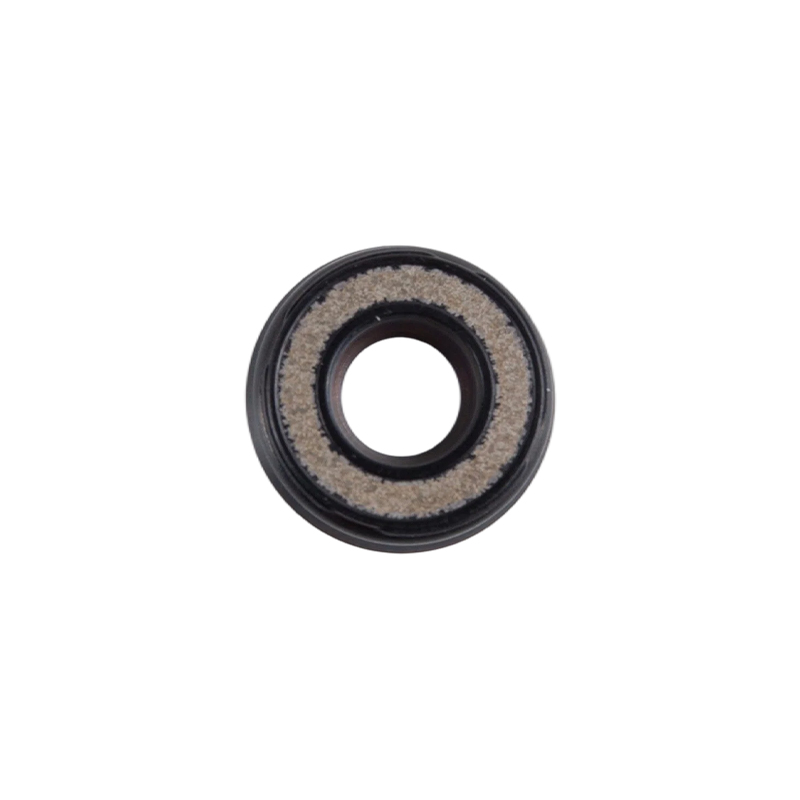
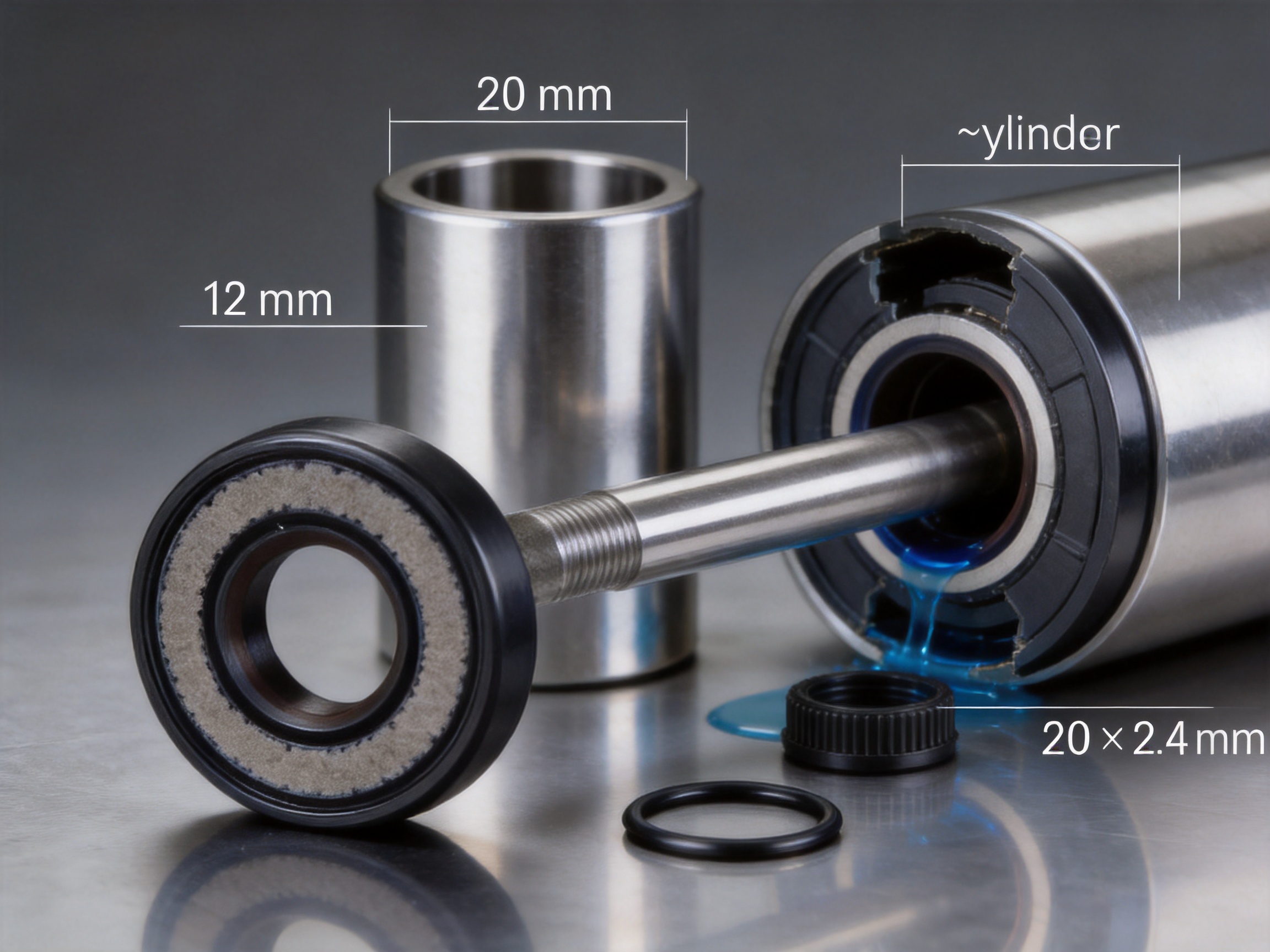
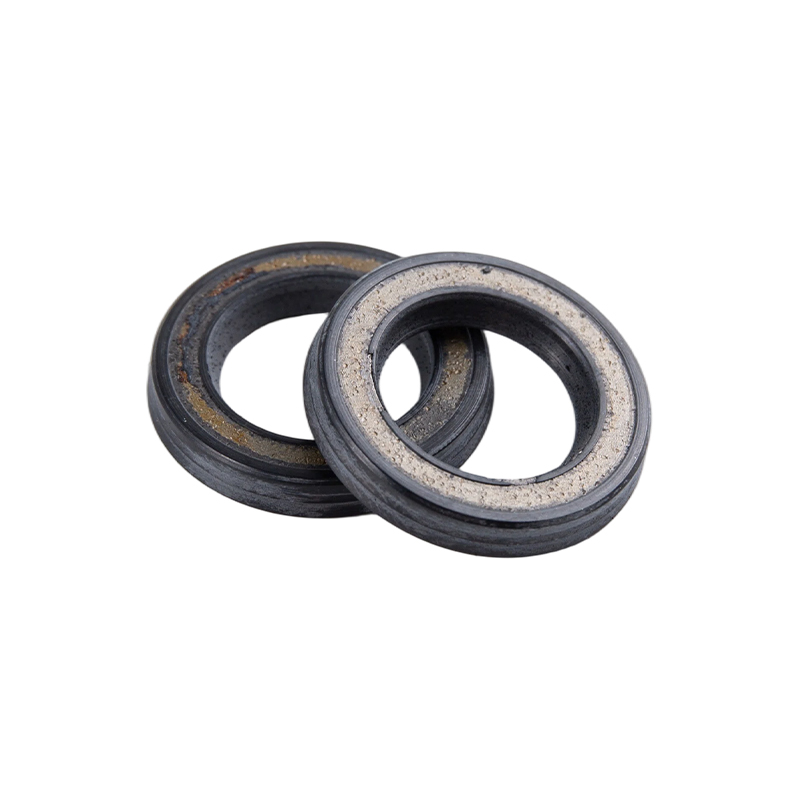
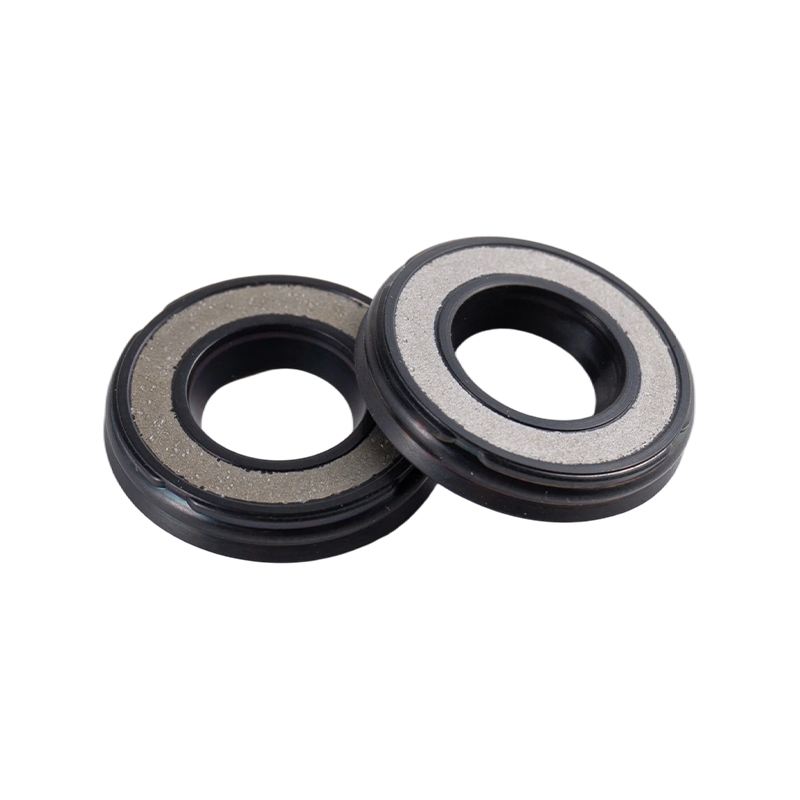
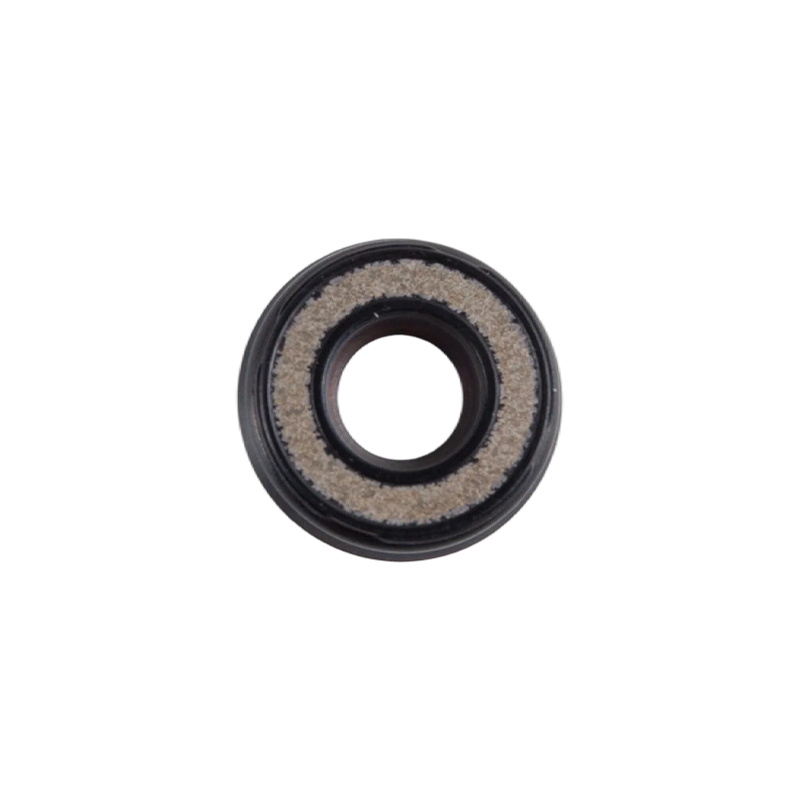
This product is identified by product code A-1-017 and is manufactured from NBR, a widely used elastomer known for its balance of oil resistance, elasticity, abrasion resistance, and cost efficiency. Its specified dimensions are 20.8 mm outside diameter, 11.2 mm inside diameter, and 3.8 mm height. The matching O-ring adapter is listed as 20 × 2.4 mm, while the associated steel pipe and piston rod dimensions are 20 mm and 12 mm respectively. The design applicable load range is stated as 50–1500N, making the seal suitable for applications that require dependable performance from moderate loading through heavy-duty thrust conditions.
Beyond the product itself, the seal reflects a broader manufacturing approach centered on application engineering, material selection, dimensional control, product testing, and technical support. Ningguo Jnsseals Sealing Technology Co., Ltd. develops sealing products for gas springs, dampers, hydraulic equipment, and related O-ring applications. Its capabilities include product design, testing, customization, and technical consultation, allowing customers to obtain more than a standard rubber component.
Product Overview
The 1500N Heavy-Duty Hydraulic Seal is a compact sealing component intended for hydraulic and mechanical assemblies using a piston rod and steel cylinder arrangement. Its primary function is to help prevent fluid leakage while supporting stable reciprocating movement between the rod and the surrounding housing. In a properly designed assembly, the seal also helps limit the entry of dust, moisture, and other contaminants that could damage internal surfaces or degrade the hydraulic medium.
The product is categorized as a Y-Type Oil Seal Ring. This classification reflects the general shape and operating principle of the sealing profile. A Y-type seal normally uses one or more lips to maintain contact with a moving surface. The shape creates a sealing interface that can respond to pressure and movement while maintaining a controlled contact force. Compared with a simple flat gasket, a formed lip seal is better suited to dynamic applications because it can accommodate sliding motion without losing its sealing function.
The designation “1500N” highlights the upper end of the stated applicable load range. It does not mean that every installation will automatically withstand 1500N under all speeds, temperatures, fluids, surface finishes, or assembly conditions. Actual performance depends on the complete system, including bore geometry, piston rod finish, operating stroke, side loading, lubrication, temperature, fluid compatibility, and installation accuracy. Nevertheless, the rating communicates that this model is intended for significantly demanding thrust conditions rather than light-duty static sealing alone.
| Product Attribute | Specification |
| Product Name | 1500N Heavy-Duty Hydraulic Seal |
| Product Code | A-1-017 |
| Seal Category | Y-Type Oil Seal Ring |
| Material | NBR |
| Overall Dimensions | 20.8 × 11.2 × 3.8 mm |
| Outside Diameter | 20.8 mm |
| Inside Diameter | 11.2 mm |
| Height | 3.8 mm |
| O-Ring Adapter | 20 × 2.4 mm |
| Applicable Load Range | 50–1500N |
| Steel Pipe Inner Diameter | 20 mm |
| Piston Rod Diameter | 12 mm |
The dimensions provide a starting point for equipment designers and maintenance teams. However, dimensional compatibility should always be confirmed against the actual housing drawing, groove design, shaft tolerance, and assembly method. A seal that appears similar in nominal dimensions may not function correctly if the groove depth, edge radius, compression, or surface finish is unsuitable.
1500N Heavy-Duty Hydraulic Seal
Why Heavy-Duty Seal Design Matters
Hydraulic and gas-spring mechanisms operate through controlled movement, pressure, and force. Whenever a piston rod travels through a housing, the sealing element must maintain contact with the rod while avoiding excessive friction. If the contact force is too low, leakage can occur. If the contact force is too high, friction, heat generation, and wear can increase. A successful seal design balances these competing requirements.
Heavy-duty applications create additional challenges. The seal may be exposed to greater axial thrust, impact during movement, temporary pressure peaks, vibration, and repeated load cycles. A thin or poorly supported profile may deform, roll, tear, or lose its lip geometry. The thick-wall design of the A-1-017 model is intended to improve structural stability under demanding conditions. Greater material support can help the seal resist local deformation and maintain its designed profile when the assembly is subjected to shock or high thrust.
Impact resistance is especially important in mechanisms that do not move with perfectly uniform speed. Furniture gas springs, automotive support systems, dampers, and industrial actuators may experience sudden stops, rapid extension, or repeated changes in load. During these events, the sealing lip can be exposed to momentary forces that are higher than the average operating force. A robust profile helps reduce the risk of permanent distortion and premature failure.
The optimized lip angle is another important design feature. The angle influences how the seal contacts the moving rod, how pressure acts against the sealing edge, and how friction is distributed during reciprocation. A well-designed lip angle can support stable sealing contact while limiting unnecessary drag. It can also help the seal respond more effectively to pressure changes, allowing the sealing interface to remain active without requiring excessive initial compression.
Material Selection: Why NBR Is Used
NBR, or nitrile butadiene rubber, is one of the most widely used materials for oil seals and hydraulic sealing elements. Its popularity comes from a practical combination of properties. NBR generally provides good resistance to mineral oils, lubricating oils, hydraulic fluids based on petroleum, and many common industrial contaminants. It also offers useful tensile strength, abrasion resistance, and resilience for dynamic sealing applications.
For a product such as the A-1-017 seal, material selection must be considered together with the expected operating environment. NBR is often an effective choice where the fluid is compatible, the temperature is within the material’s working range, and the application requires a balanced solution between performance and cost. Its established processing characteristics also make it suitable for precision molded components with defined lip geometry.
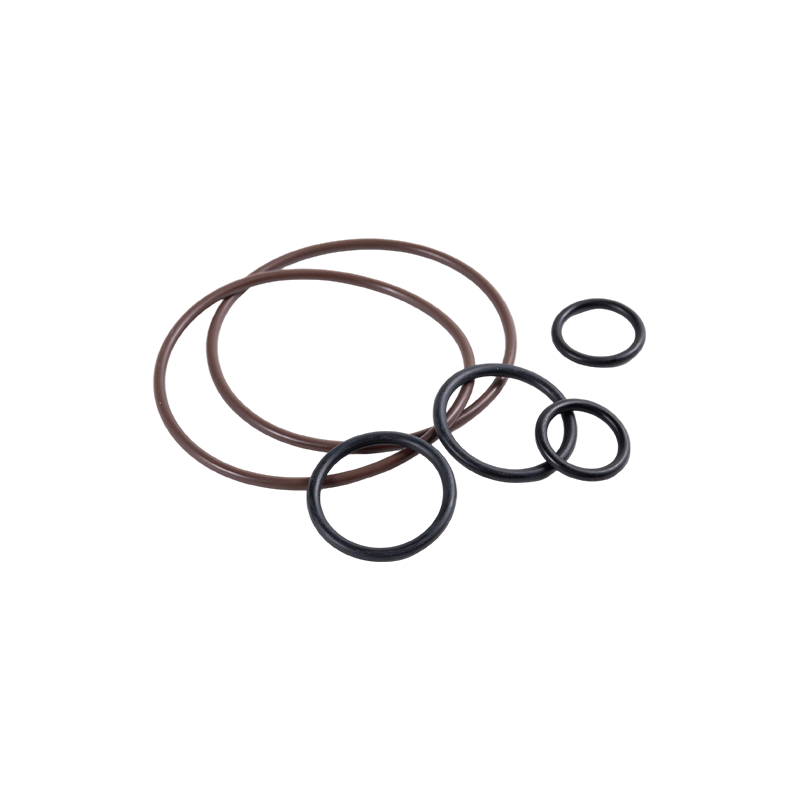
NBR is not universally suitable for every medium or temperature. Exposure to ozone, weathering, strong oxidizing chemicals, certain solvents, or temperatures outside the recommended range may reduce service life. For applications involving elevated temperatures, aggressive fuels, special hydraulic fluids, or unusual chemical exposure, alternative materials such as HNBR or FPM may be considered. The manufacturer’s broader product capabilities include NBR, HNBR, and FPM O-ring products, which supports material selection for different operating environments.
The use of NBR in this specific product represents a focused engineering decision rather than a limitation of the manufacturer’s overall capability. The material is appropriate for many oil-sealing applications and offers a practical combination of elasticity and durability. Customers should provide fluid type, operating temperature, pressure or load, speed, stroke, and expected service life when requesting final material confirmation.
Structural Advantages of the 1500N Model
Thick-Wall Construction
The thick-wall construction gives the seal a more substantial body than a lightweight profile. This additional support can help the seal retain its shape during installation and operation. It can also reduce the likelihood of folding or twisting when the seal is inserted into the groove, provided that the groove and assembly tools are correctly designed.
In high-load applications, structural support is critical. A seal must not only create a flexible lip; it must also maintain a stable base. If the base moves excessively, the lip may lose its alignment with the piston rod. The thick-wall design helps distribute mechanical forces through a greater volume of elastomer, potentially improving resistance to deformation and local stress concentration.
Impact Resistance
Impact resistance supports applications involving abrupt load changes. A seal that is exposed to sudden thrust or mechanical shock needs to absorb temporary deformation without cracking, splitting, or permanently losing its sealing shape. The A-1-017 model is promoted for impact-resistant performance, making it suitable for mechanisms where smooth laboratory movement may not represent real operating conditions.
Impact resistance also contributes to installation reliability. During assembly, an elastomeric seal can encounter edges, shoulders, or temporary compression. A robust design is less vulnerable to minor handling stresses, although careful installation remains essential. No seal should be forced over sharp edges or installed with contaminated tools.
Optimized Lip Angle
The lip angle affects sealing efficiency, friction, heat, and wear. A properly oriented lip can maintain a controlled contact zone against the piston rod. It can also support pressure activation, in which system pressure helps press the lip against the sealing surface. This does not eliminate the need for correct compression and surface preparation, but it improves the seal’s ability to perform as an engineered dynamic component.
An optimized lip angle can also help reduce excessive friction. Lower friction is valuable because it decreases energy loss and limits heat generation during repeated cycles. In gas springs, dampers, and hydraulic actuators, smooth movement is often as important as leakage prevention. A seal that prevents leakage but creates severe drag may still be unsuitable for the equipment.
Compact Dimensional Format
The 20.8 mm outside diameter and 11.2 mm inside diameter provide a compact format for assemblies with limited installation space. The 3.8 mm height allows the seal to be integrated into a relatively small housing profile. Compact dimensions can help equipment designers reduce package size, provided that the surrounding groove and support geometry are properly matched.
Compact size does not mean reduced importance. In many mechanisms, the seal is located in a small but highly loaded area where access for replacement may be limited. Selecting a purpose-designed component with clearly defined dimensions can simplify procurement, maintenance planning, and quality control.
Performance Compared with General-Purpose Alternatives
General-purpose oil seals may be adequate for low-load, low-cycle, or relatively stable applications. However, a heavy-duty model can provide advantages when operating conditions include elevated thrust, repeated movement, impact, or demanding installation constraints. The A-1-017 seal is designed around these more challenging requirements.
One advantage is profile stability. A heavy-duty seal generally has more material supporting the lip and sealing base. This can help it maintain its shape under mechanical loading. A basic seal with a lighter cross-section may deform more easily when exposed to pressure fluctuations or side forces.
A second advantage is resistance to dynamic wear. The optimized lip geometry is intended to create a controlled interface rather than an unnecessarily aggressive contact area. When combined with compatible lubrication and a properly finished rod, this can support smoother movement and more predictable wear behavior.
A third advantage is application clarity. The product specification identifies the associated pipe and piston rod dimensions, the O-ring adapter size, the material, and the applicable load range. These details help engineers evaluate the product against a defined assembly rather than selecting a seal solely by outside diameter or visual similarity.
A fourth advantage is access to customization and technical support. When a standard part does not fully meet a customer’s requirements, the manufacturer can evaluate alternative materials, dimensions, or sealing profiles. This is particularly valuable for original equipment manufacturers and buyers managing several related product platforms.
It is important to make comparisons based on actual operating conditions rather than marketing labels alone. A heavier seal is not automatically better in every application. For example, a very low-friction application may require a different profile, while a high-temperature or chemically aggressive environment may require a different elastomer. The practical advantage of the A-1-017 model is that it is focused on a defined heavy-duty use case and can be evaluated with technical data.
Manufacturing Process and Quality Considerations
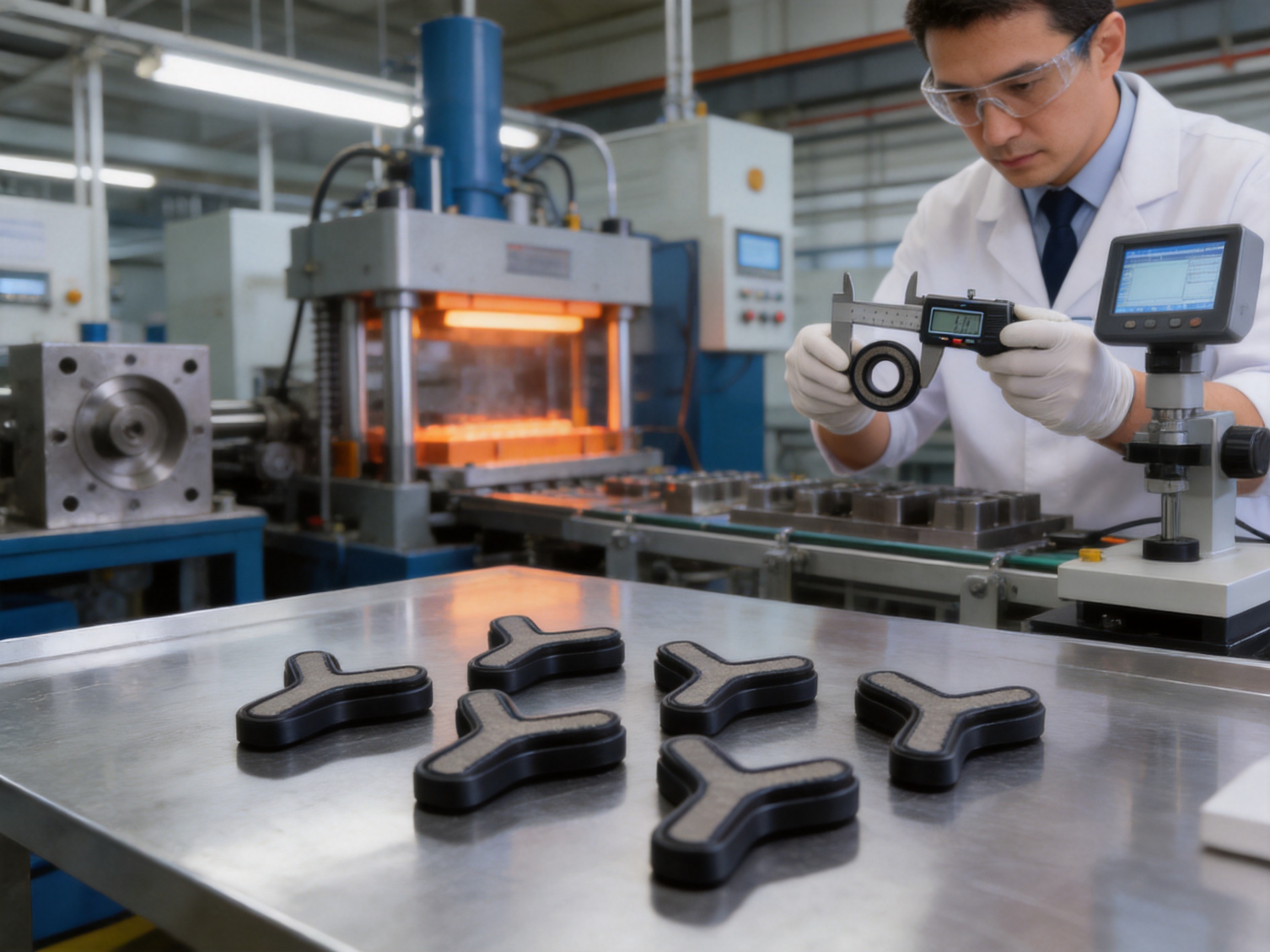
Reliable sealing performance begins with consistent manufacturing. Rubber seals are formed components, and small variations in geometry can influence compression, friction, leakage, and service life. A professional production process therefore requires more than simply molding rubber into a general shape. It includes material preparation, mold control, forming, trimming, inspection, testing, and traceability.
Material Preparation
The manufacturing process starts with the selection and preparation of the NBR compound. The compound must be formulated for the required balance of hardness, elasticity, tensile strength, compression resistance, and fluid compatibility. Raw materials are mixed according to controlled procedures so that additives, fillers, curing agents, and polymer components are distributed consistently.
Proper mixing is important because uneven dispersion can create weak points or variations in elasticity. The compound is normally processed into a form suitable for molding, with attention to storage conditions, batch identification, and processing time. Maintaining material records supports repeatability and helps the manufacturer investigate any quality issue that may arise.
Precision Mold Design
The mold defines the seal’s outside diameter, inside diameter, height, lip angle, wall thickness, and other functional features. For a compact part such as the A-1-017 model, mold accuracy is essential. The lip must be formed cleanly, and the sealing edge must remain free from excessive flash or distortion.
Advanced production equipment and experienced mold engineering can improve the repeatability of these features. Mold design must also consider material flow, air evacuation, curing behavior, part release, and dimensional shrinkage. These factors influence the final result even when the nominal mold dimensions are correct.
Controlled Molding and Vulcanization
During molding, the prepared NBR compound is placed into the mold and shaped under controlled temperature and pressure. Vulcanization transforms the rubber compound into an elastic finished material by creating a cross-linked polymer structure. The curing cycle must be carefully controlled because under-curing and over-curing can both affect performance.
Under-cured rubber may have insufficient strength or excessive permanent deformation. Over-cured rubber may become too hard, less resilient, or more vulnerable to cracking. Consistent time, temperature, and pressure management is therefore fundamental to producing a seal with stable mechanical properties.
Trimming and Surface Finishing
After molding, excess material or flash may need to be removed. Trimming must be performed carefully because the sealing lip is a functional edge. Excessive trimming can reduce the lip’s effective contact area, while incomplete trimming can create interference, leakage paths, or assembly difficulty.
Surface appearance is also inspected for defects such as cuts, voids, blisters, cracks, inclusions, flow marks, or contamination. Visual inspection does not replace dimensional and performance testing, but it is an important first step in preventing visibly defective parts from entering the supply chain.
Dimensional Inspection
Dimensional inspection verifies key values such as outside diameter, inside diameter, height, lip geometry, and adapter compatibility. Measurements must be made under controlled conditions because elastomeric components can deform under excessive measuring force. Appropriate gauges and fixtures help reduce measurement variation.
For the A-1-017 seal, the nominal values of 20.8 mm outside diameter, 11.2 mm inside diameter, and 3.8 mm height provide the reference framework. Production tolerances should be confirmed through the manufacturer’s technical documentation or a customer-specific drawing. When a part is used in a precision assembly, the buyer should request the applicable tolerance information before mass production.
Functional Testing
Functional testing may include compression evaluation, leakage testing, dimensional verification, material hardness checks, tensile or elongation testing, and simulated movement testing. The specific test program depends on the product and customer requirements. For a heavy-duty hydraulic seal, testing should reflect the intended application as closely as practical.
Testing under representative load, movement, fluid, and temperature conditions provides more meaningful information than testing in isolation. It can reveal problems such as excessive friction, lip rollover, extrusion, swelling, hardening, or leakage that may not be visible during a simple dimensional inspection.
Process Traceability
Traceability allows a manufacturer to connect finished parts with raw material batches, production dates, molds, operators, inspection records, and test results. This is valuable for quality management and customer support. If a customer reports an issue, traceability helps narrow the investigation and identify whether the problem is associated with material, process, assembly, or operating conditions.
A company with dedicated research and development, production equipment, and technical service capabilities can use this information to improve products over time. Continuous feedback from field applications can support adjustments to material compounds, mold geometry, packaging, and inspection procedures.
Engineering Application Guidance
The A-1-017 model is associated with a 20 mm steel pipe inner diameter and a 12 mm piston rod diameter. These values should be treated as application references rather than a substitute for a complete engineering drawing. The housing must provide sufficient support for the seal, and the rod must maintain appropriate alignment throughout its stroke.
Rod surface quality is important. A surface that is too rough can abrade the lip and remove material during every cycle. A surface that is too smooth or improperly finished may not retain enough lubricant, increasing friction. Scratches, dents, burrs, corrosion, and spiral machining marks can create leakage paths or accelerate wear.
Groove geometry must also be suitable. The groove should provide the correct radial and axial compression without overstressing the rubber. Sharp edges should be avoided, and lead-in chamfers should be used where appropriate. If the seal is installed over a threaded section, keyway, hole, or other discontinuity, a protective sleeve or suitable assembly tool may be required.
Lubrication should be compatible with NBR and the hydraulic medium. A suitable assembly lubricant can reduce installation damage and help the lip seat correctly. Excessive lubrication, however, should not be allowed to contaminate areas where it may affect bonding or other components.
Alignment is another critical factor. Side loading can push the rod against one side of the seal, creating uneven wear and localized stress. If the mechanism experiences significant lateral force, a guide ring, bearing, or other support element may be required. The seal should not be expected to compensate for an incorrectly guided piston rod.
Temperature should be evaluated across the full operating cycle, including startup, continuous operation, peak load, and storage. NBR performance can change with temperature. Low temperatures may reduce flexibility, while high temperatures can accelerate aging and permanent deformation. The manufacturer should confirm the appropriate compound and operating limits for the intended environment.
Industries and Equipment That May Use the Seal
Automotive Applications
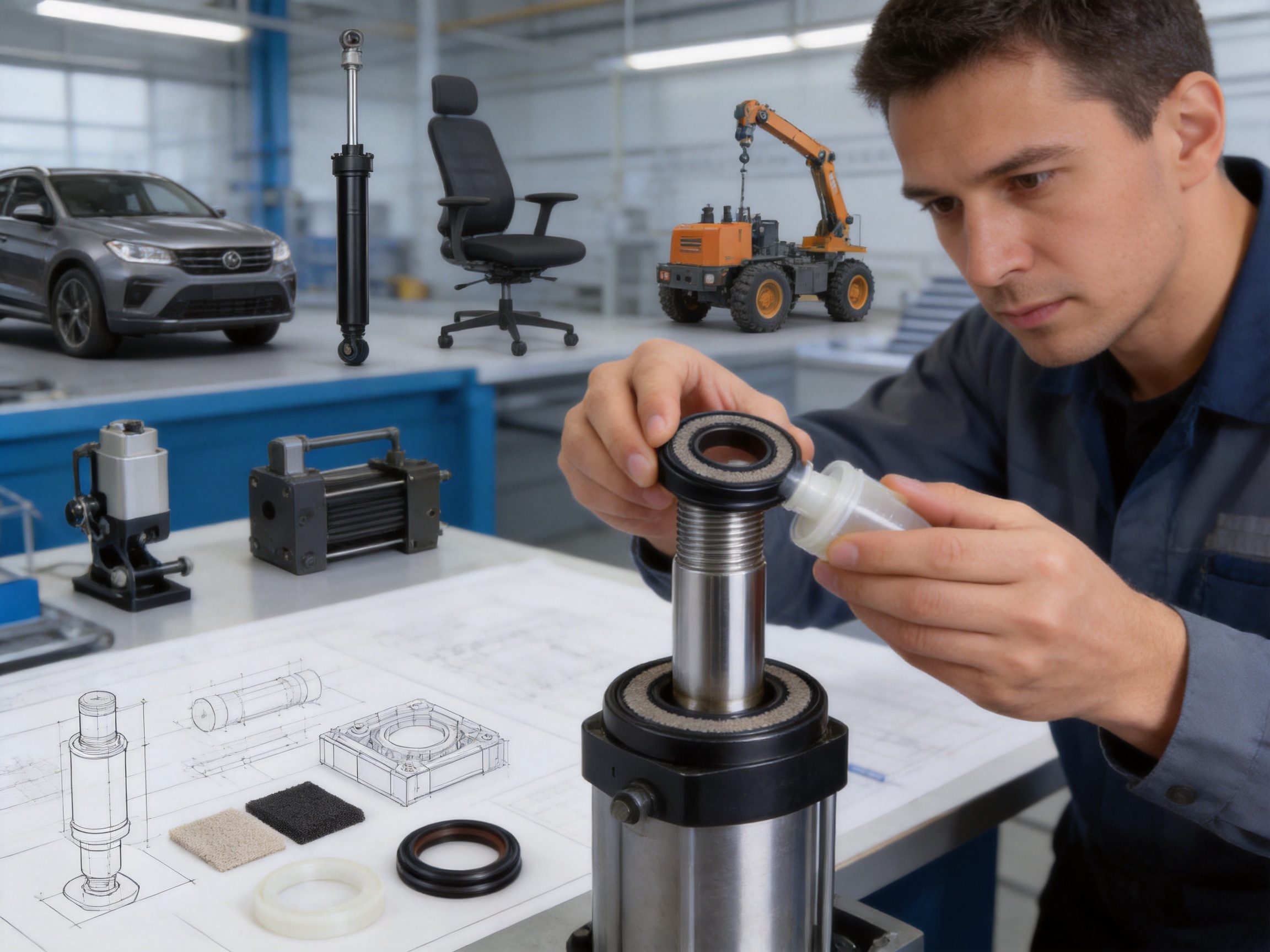
Automotive support systems, dampers, actuators, and gas-spring assemblies often require compact seals that can tolerate repeated movement and changing loads. The A-1-017 model may be considered for mechanisms where the piston rod and cylinder dimensions correspond to the listed specifications. Its impact-resistant profile can be useful in systems that experience sudden extension or compression.
Furniture and Gas Springs
Furniture gas springs operate many times during their service life. Reclining chairs, adjustable desks, lifting mechanisms, cabinet systems, and other products depend on smooth and controlled motion. A seal in these applications must help retain internal gas or oil while maintaining low enough friction for comfortable operation.
Home Appliances
Some home appliances use small dampers, lifting systems, or hydraulic mechanisms. The compact size of the A-1-017 model may be appropriate for assemblies where installation space is limited. Designers should still verify chemical compatibility because cleaning agents, temperature fluctuations, and long storage periods can affect elastomer performance.
Medical Equipment
Medical equipment may include precision movement systems, adjustment mechanisms, and compact actuators. Sealing products used in such equipment must be evaluated according to the specific cleanliness, material, documentation, and regulatory requirements of the application. The seal’s suitability cannot be determined by size alone, and customers should discuss special compliance requirements with the manufacturer.
Construction and Industrial Equipment
Construction-related equipment and industrial machinery can produce higher mechanical loads, vibration, and contamination. A heavy-duty seal may provide a stronger starting point for these conditions than a light-duty profile. Proper protection against dust, mud, water, and abrasive particles remains necessary, because even a strong seal can wear rapidly when contaminants reach the dynamic interface.
Customization and Technical Development
Standard dimensions are valuable because they simplify purchasing and replacement. However, many equipment manufacturers require customized sealing solutions. Differences in cylinder bore, rod diameter, groove design, fluid, temperature, or movement speed may make a standard seal unsuitable. In these cases, technical collaboration can reduce trial-and-error development.
Customization may involve changing the outside diameter, inside diameter, height, lip angle, wall thickness, material hardness, or compound type. It may also involve designing a related O-ring adapter or adjusting the profile to fit an existing housing. The objective is not simply to create a part that fits physically, but to create a seal that performs within the complete system.
A structured development process normally begins with application data. Useful information includes the medium being sealed, pressure or force, temperature, movement type, stroke length, speed, cycle frequency, rod material, surface finish, housing dimensions, expected life, and assembly method. Photographs, drawings, failed samples, and field data can further improve the evaluation.
The manufacturer’s stated capabilities in product design, testing, and technical consultation support this type of development. Strong research and development resources can help transform customer requirements into a practical design. Testing then provides evidence that the proposed solution behaves acceptably under representative conditions.
For original equipment manufacturers, customization can also support platform standardization. A family of related seals may be developed for several actuator sizes or product models. This can reduce inventory complexity while maintaining consistent installation procedures and quality expectations.
Quality, Supply, and Customer Support Strengths
A sealing supplier should be evaluated not only by individual product performance but also by its ability to provide consistent supply. Ningguo Jnsseals Sealing Technology Co., Ltd. was founded in 2019 and focuses on sealing technology for gas springs, dampers, and related O-ring products. Its industry coverage includes automotive, furniture, home appliances, medical equipment, construction, and other sectors.
This cross-industry experience can be valuable because different applications reveal different performance priorities. Automotive customers may emphasize durability and temperature resistance. Furniture manufacturers may prioritize smooth operation and cost control. Industrial customers may require resistance to contamination and high load. Medical equipment developers may need detailed documentation and controlled materials. Exposure to varied requirements can strengthen a supplier’s technical perspective.
The company describes itself as a high-tech enterprise with research and development resources, advanced production equipment, and a professional technical service team. These strengths support a complete service model that can include product selection, design assistance, testing, customization, and technical consultation.
Communication is especially important when a seal is being selected for a new product or when a failure has occurred in the field. A supplier that can review application details and recommend a suitable material or profile is more valuable than a supplier that only provides nominal dimensions. Technical communication can also prevent common problems such as incorrect compression, incompatible fluids, and unsuitable installation methods.
For procurement teams, the A-1-017 product code provides a clear reference for inquiries and repeat orders. Buyers should maintain the code, approved drawing, material requirements, inspection criteria, and application information together. This reduces the possibility of an unintended substitution with a visually similar but functionally different component.
Installation and Maintenance Recommendations
Before installation, inspect the seal, groove, piston rod, and surrounding components. The seal should be free from cuts, cracks, deformation, dirt, and foreign particles. The groove should be clean and free from burrs. The piston rod should be checked for scratches, corrosion, dents, and sharp edges.
Use clean tools and avoid metal implements that could cut the elastomer. If the seal must pass over a thread or shoulder, protect the sealing lip with an installation sleeve or suitable temporary covering. Do not stretch the seal more than necessary, and do not twist it during insertion.
Apply a compatible assembly lubricant when appropriate. The lubricant should not attack NBR or contaminate the working fluid. Seat the seal evenly around the entire circumference. An unevenly installed seal may leak immediately or develop one-sided wear during operation.
After installation, operate the mechanism slowly if possible. Check for leakage, abnormal friction, sticking, noise, or irregular movement. Gradually increase the operating load while monitoring the assembly. Early inspection can identify installation errors before they cause damage to the rod or housing.
During maintenance, inspect the rod surface and the sealing area rather than replacing the seal alone. If a rod is scored or misaligned, a new seal may fail quickly. The cause of the original failure should be investigated, including contamination, excessive temperature, incompatible fluid, overloading, side force, incorrect groove dimensions, or assembly damage.
How to Select the Correct Seal for a Project
Start by confirming the physical dimensions. For the A-1-017 model, the reference values are 20.8 mm outside diameter, 11.2 mm inside diameter, and 3.8 mm height. Confirm whether these values match the equipment drawing and whether the associated 20 mm steel pipe and 12 mm piston rod arrangement is applicable.
Next, identify the operating medium. NBR is suitable for many oil-based applications, but compatibility must be verified for water-based fluids, synthetic fluids, fuels, cleaning chemicals, and special lubricants. If compatibility is uncertain, request a material review before placing a production order.
Then evaluate the load and movement. The listed applicable range is 50–1500N. Record the normal load, peak load, impact load, stroke, speed, and cycle frequency. A system that normally operates at a moderate load may still require a heavy-duty design if it experiences frequent impacts or high side loading.
Temperature and environment should be documented as well. Consider continuous temperature, peak temperature, low-temperature startup, exposure to sunlight or ozone, humidity, dust, water, and storage conditions. These factors can influence material selection and expected service life.
Finally, confirm the installation and quality requirements. Determine whether the customer needs sample approval, inspection reports, material certificates, batch traceability, special packaging, or customized drawings. Clear requirements at the beginning of a project help prevent delays and reduce the risk of unsuitable substitutions.
Frequently Asked Questions
What is the main purpose of the 1500N Heavy-Duty Hydraulic Seal?
The seal is designed to help prevent leakage in hydraulic, damper, and gas-spring-related assemblies that use a moving piston rod. Its thick-wall profile, impact-resistant design, and optimized lip angle are intended to support reliable sealing under repeated movement and substantial thrust.
What material is used for this product?
The specified material is NBR, or nitrile butadiene rubber. NBR is commonly selected for oil seals because it offers a useful balance of oil resistance, elasticity, abrasion resistance, and manufacturing practicality.
What are the dimensions of the seal?
The listed dimensions are 20.8 mm outside diameter, 11.2 mm inside diameter, and 3.8 mm height. The associated O-ring adapter is 20 × 2.4 mm. The application reference includes a 20 mm steel pipe inner diameter and a 12 mm piston rod diameter.
Does 1500N mean the seal can operate at 1500N in every condition?
No. The 50–1500N value is the stated design applicable load range, but actual performance depends on the complete system. Fluid, temperature, speed, stroke, rod finish, alignment, groove design, lubrication, and installation quality all affect service life and sealing behavior.
Is this seal suitable for high-temperature applications?
The product is specified in NBR, so its temperature suitability must be confirmed against the actual operating environment. For higher-temperature or chemically demanding applications, alternative compounds such as HNBR or FPM may be considered after technical evaluation.
Can the seal be customized?
Customized sealing solutions are available through the manufacturer’s product design and technical consultation capabilities. Customers should provide drawings and complete operating data, including dimensions, fluid, temperature, load, speed, stroke, and service-life expectations.
What industries may use this type of seal?
Potential applications include automotive components, furniture gas springs, dampers, home appliances, medical equipment, construction machinery, and other industrial mechanisms. Suitability must be confirmed for each specific design.
How can premature seal failure be prevented?
Use compatible fluids and lubricants, maintain correct groove dimensions, protect the lip during installation, keep the rod surface free from damage, prevent excessive side loading, and inspect the complete assembly when replacing a seal. Correct installation is as important as the seal’s material and profile.
Why is the lip angle important?
The lip angle influences contact pressure, friction, pressure response, and wear. An optimized angle helps the seal maintain controlled contact with a moving rod while supporting effective leakage prevention and smooth movement.
What information should be supplied when requesting a quotation?
Provide the product code, required quantity, drawings or dimensions, fluid type, operating load, peak load, temperature range, movement speed, stroke, cycle frequency, rod material and finish, installation details, and any inspection or packaging requirements.
Conclusion
The 1500N Heavy-Duty Hydraulic Seal is a purpose-oriented Y-type oil seal ring for compact hydraulic, damper, and gas-spring assemblies. Its 20.8 × 11.2 × 3.8 mm dimensions, NBR material, 20 × 2.4 mm O-ring adapter, and 50–1500N applicable load range provide a clear technical starting point for equipment designers and maintenance professionals.
Its main advantages are the thick-wall construction, impact-resistant profile, and optimized lip angle. Together, these features are intended to improve structural stability, support reliable dynamic sealing, and maintain controlled contact with a piston rod during repeated movement. Compared with a basic general-purpose seal, this heavy-duty design is better aligned with applications involving greater thrust, mechanical shock, or demanding cycle conditions.
The product is also supported by a manufacturing organization focused on sealing technology, research and development, precision production, testing, customization, and technical service. By combining material knowledge with application engineering, the manufacturer can assist customers in selecting appropriate products and developing customized sealing solutions when standard dimensions are not sufficient.
Successful performance still depends on correct system design. Buyers should verify dimensions, fluid compatibility, temperature, load, speed, alignment, surface finish, groove geometry, and installation procedures before approving the seal. When these factors are controlled, the A-1-017 model can serve as a dependable component for demanding sealing applications across automotive, furniture, industrial, construction, appliance, and related equipment markets.
References
1. Product specification sheet for the 1500N Heavy-Duty Hydraulic Seal, Product Code A-1-017.
2. Manufacturer-provided technical information for NBR, HNBR, and FPM sealing products.
3. General engineering principles for dynamic oil seals, hydraulic sealing systems, elastomer selection, and reciprocating piston-rod applications.
4. General quality-control practices for molded rubber components, including material preparation, vulcanization, dimensional inspection, visual inspection, and functional testing.
5. General installation and maintenance guidelines for hydraulic seals, O-ring adapters, gas springs, dampers, and compact actuator assemblies.
Product: 1500N Heavy-Duty Hydraulic Seal

PREV:6000N Giant-Thrust Heavy Seal: High-Load Y-Type Oil Seal Ring for Gas Springs and Dampers
NEXT:9mm Series NBR Sealing Washer: Reliable O-Ring Performance for Pump Connectors
NEXT:9mm Series NBR Sealing Washer: Reliable O-Ring Performance for Pump Connectors



Want to know more
about us?
about us?

Precision sealing for gas springs and dampers. Durable, wear-resistant, and built for long-life performance in demanding applications.
Product Categories
Quick Links
Contact Us
-
Email: jns@jnsseals.cn

-
Manager Gong: +86-18563770820

-
Manager Wang: +8615357558902
-
No. 5, Meilin Avenue, Meilin Industrial Development Zone, Ningguo City, Anhui Province, China

