

 English
 русский
 Deutsch
 Türk
 中文简体
16 mm Thickened Anti-Vibration O-Ring Seal for Demanding Mechanical Applications
16 mm Thickened Anti-Vibration O-Ring Seal for Demanding Mechanical Applications
16 mm Thickened Anti-Vibration O-Ring Seal for Demanding Mechanical Applications
16 mm Thickened Anti-Vibration O-Ring Seal for Demanding Mechanical Applications
16 mm Thickened Anti-Vibration O-Ring Seal for Demanding Mechanical Applications
16 mm Thickened Anti-Vibration O-Ring Seal for Demanding Mechanical Applications
16 mm Thickened Anti-Vibration O-Ring Seal for Demanding Mechanical Applications
16 mm Thickened Anti-Vibration O-Ring Seal for Demanding Mechanical Applications
16 mm Thickened Anti-Vibration O-Ring Seal for Demanding Mechanical Applications
16 mm Thickened Anti-Vibration O-Ring Seal for Demanding Mechanical Applications
16 mm Thickened Anti-Vibration O-Ring Seal for Demanding Mechanical Applications
16 mm Thickened Anti-Vibration O-Ring Seal for Demanding Mechanical Applications
16 mm Thickened Anti-Vibration O-Ring Seal for Demanding Mechanical Applications
16 mm Thickened Anti-Vibration O-Ring Seal for Demanding Mechanical Applications
16 mm Thickened Anti-Vibration O-Ring Seal for Demanding Mechanical Applications
16 mm Thickened Anti-Vibration O-Ring Seal for Demanding Mechanical Applications

Lu Wanyin — Senior After-Sales Service Engineer
Home / Author / Lu Wanyin — Senior After-Sales Service Engineer / 16 mm Thickened Anti-Vibration O-Ring Seal for Demanding Mechanical Applications
NEW Category
Contact us
16 mm Thickened Anti-Vibration O-Ring Seal for Demanding Mechanical Applications
Content
- 1 Product Overview
- 2 Why Vibration Creates a Sealing Challenge
- 3 Advantages of the 16 mm Thickened Profile
- 4 Material Characteristics of NBR
- 5 Applications for Vibrating Machinery
- 6 Comparison with Conventional Thin O-Ring Profiles
- 7 Manufacturing and Engineering Strengths
- 8 Production Workflow for a Reliable O-Ring
- 9 Installation Guidance
- 10 Design Considerations for Engineers
- 11 Quality and Customization Benefits
- 12 How This Product Can Compete in the O-Ring Market
- 13 Ordering and Technical Information
- 14 Frequently Asked Questions
- 14.1 What is the size of the A-4-011 seal?
- 14.2 What material is used for this seal?
- 14.3 Why is the seal described as thickened?
- 14.4 Can it be used in vibrating machinery?
- 14.5 Is it suitable for gas springs and dampers?
- 14.6 Can the product be used for every type of oil?
- 14.7 Does a thicker O-ring always provide better performance?
- 14.8 Can the manufacturer provide customized products?
- 14.9 What should be checked before ordering?
- 14.10 How should the rings be stored?
- 14.11 How can premature failure be prevented?
- 15 Conclusion
- 16 References
- 17 Product: 16mm Thickened Anti-Vibration Seal

Reliable sealing is essential wherever machinery must contain pressure, lubricants, gases, or other working media while operating under motion and vibration. A sealing ring that performs well in a stationary application may not provide the same level of protection when equipment is exposed to repeated oscillation, impact, or mechanical displacement. In these environments, the seal must do more than close a gap. It must absorb movement, maintain contact, resist deformation, and continue to function over an extended service period.
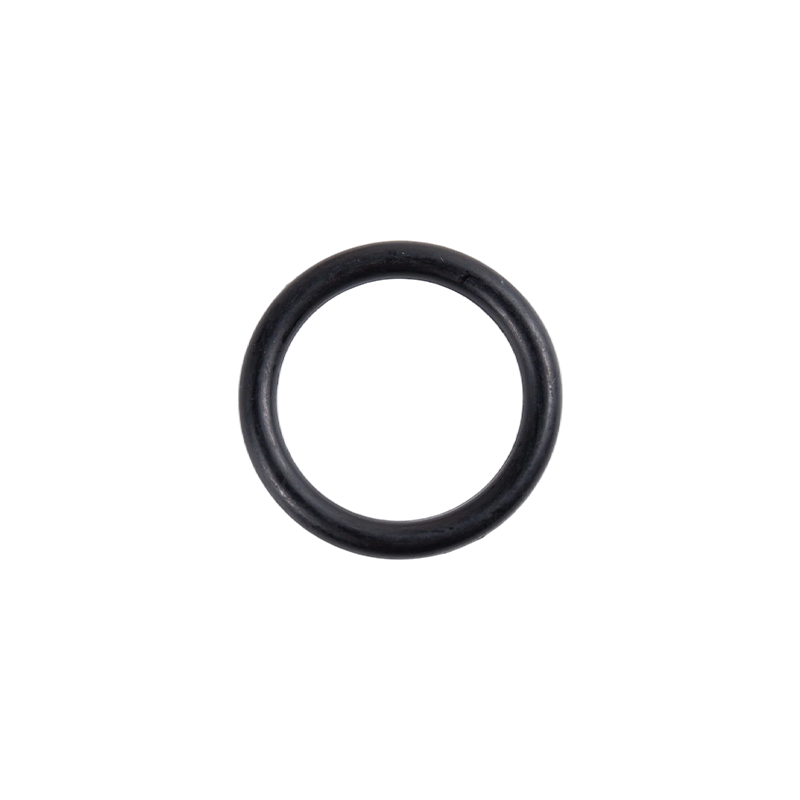
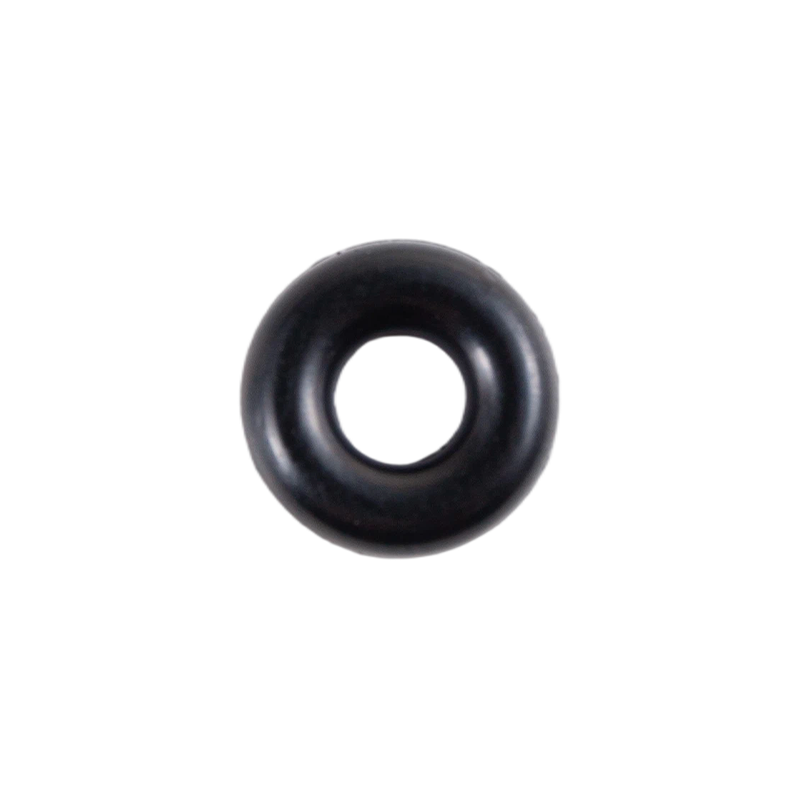
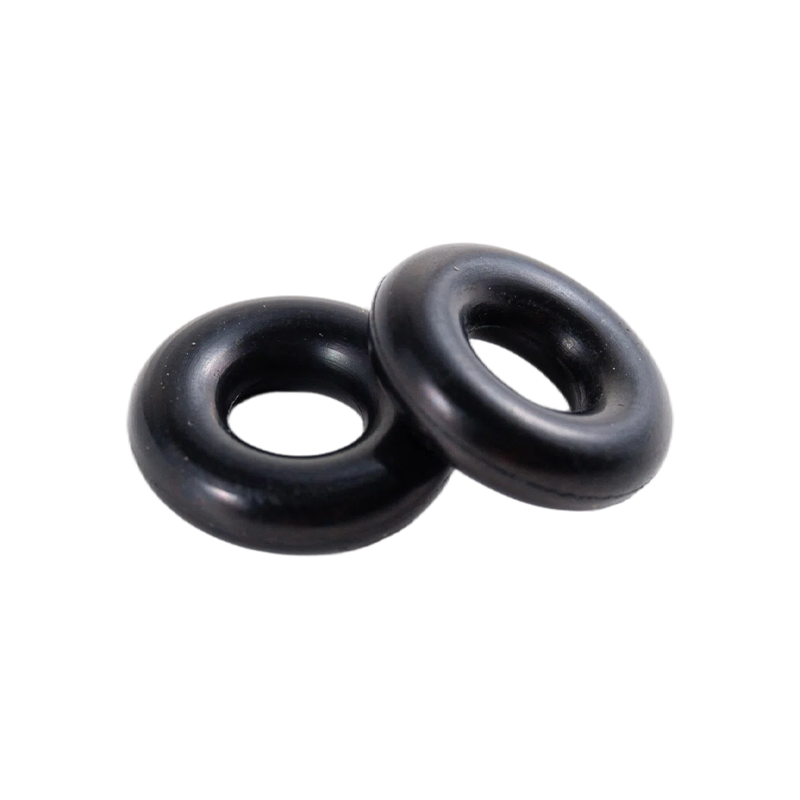
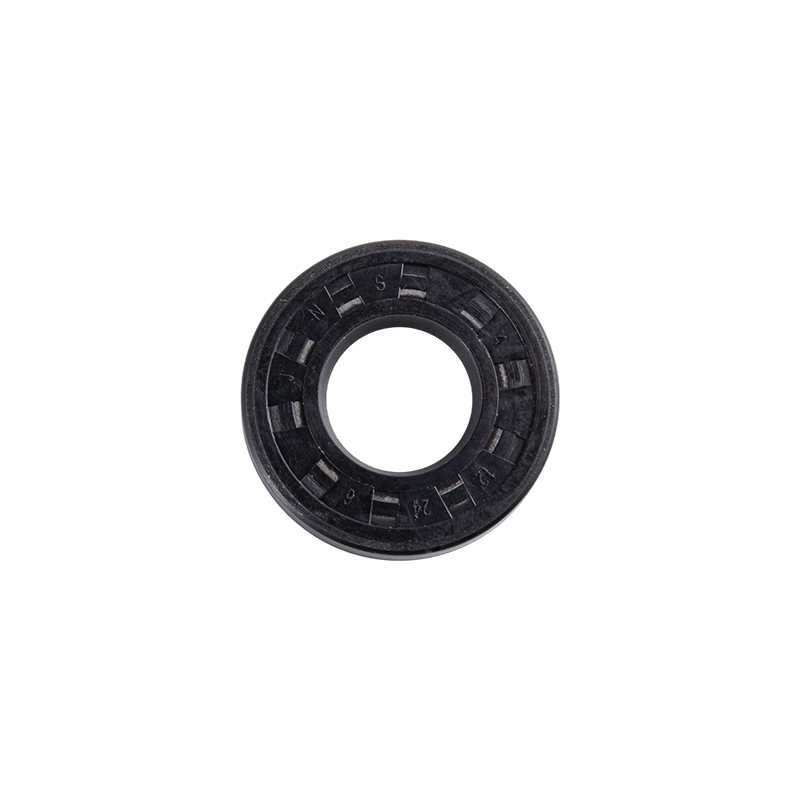
The 16 mm Thickened Anti-Vibration Seal is an O-shaped oil seal ring designed for applications that require additional damping and cushioning. Identified by product code A-4-011, this seal uses NBR material and has a product specification of 16 × 2.4 mm. Its 2.4 mm cross-sectional or WD dimension provides a thicker sealing profile than a conventional ring with the same inside diameter. That additional material gives the seal greater ability to accommodate vibration and mechanical oscillation at suitable sealing positions.
This product is intended for sealing locations in vibrating machinery, gas springs, dampers, and other assemblies where the relationship between components may change slightly during operation. Its design combines the familiar installation advantages of an O-ring with a thicker profile intended to improve cushioning. For equipment manufacturers, maintenance teams, and distributors, it offers a practical option for improving sealing stability without requiring a completely different sealing architecture.
16mm Thickened Anti-Vibration Seal
Product Overview
The A-4-011 seal is an O-shaped ring manufactured from nitrile butadiene rubber, commonly abbreviated as NBR. Its nominal inside diameter is 16 mm, while its WD dimension is 2.4 mm. The product is therefore compact enough for many small and medium-sized mechanical sealing positions while offering a relatively substantial cross-sectional profile for its diameter.
| Product Attribute | Specification |
| Product Name | 16 mm Thickened Anti-Vibration Seal |
| Product Category | O-Shaped Oil Seal Ring |
| Product Code | A-4-011 |
| Product Specification | 16 × 2.4 mm |
| Inside Diameter | 16 mm |
| WD Dimension | 2.4 mm |
| Material | NBR |
| Primary Functional Feature | Enhanced damping and anti-vibration performance |
The most important distinguishing characteristic is the 2.4 mm WD dimension. In a suitable groove, a larger cross-sectional profile can provide increased elastic volume and more contact area than a thinner ring. This may help the ring remain engaged with the mating surfaces when machinery vibrates. The thicker profile can also provide additional cushioning against recurring movement, depending on the groove design, compression ratio, surface finish, pressure, temperature, and working medium.
As with every elastomeric seal, the actual result depends on the complete application. A seal should be selected according to the groove dimensions, installation method, operating temperature, pressure, speed, fluid compatibility, and expected movement. The product’s thickened design is intended to support anti-vibration performance, but it should not be treated as a substitute for correct engineering calculations or installation practices.
Why Vibration Creates a Sealing Challenge
Vibration can affect a seal in several different ways. When two components repeatedly move relative to one another, the ring may experience compression changes, sliding, rolling, twisting, or intermittent loss of contact. These conditions can increase wear and create paths for oil, gas, or other media to escape. In severe cases, vibration may also cause extrusion, abrasion, compression set, or premature material fatigue.
A seal installed in a vibrating machine must maintain a stable interface while the surrounding components experience mechanical oscillation. The ring must be elastic enough to accommodate movement, yet resilient enough to return toward its original shape. It must also resist being displaced from the groove and should maintain sufficient contact pressure over the expected service life.
Thin sealing profiles can be useful where space is restricted or where low friction is a priority. However, a thin ring may provide less elastic volume and less physical cushioning than a thicker ring in an equivalent application. The A-4-011 design addresses this consideration by using a 2.4 mm WD dimension around a 16 mm inside diameter. The additional profile is intended to provide greater damping and more robust contact in appropriate vibrating environments.
Mechanical Oscillation and Contact Stability
Mechanical oscillation may be generated by motors, pumps, dampers, suspension systems, hinges, actuators, compressors, or moving furniture mechanisms. Even relatively small movements can become significant when repeated thousands or millions of times. If the sealing ring cannot respond quickly enough to these changes, short-term leakage or long-term wear may occur.
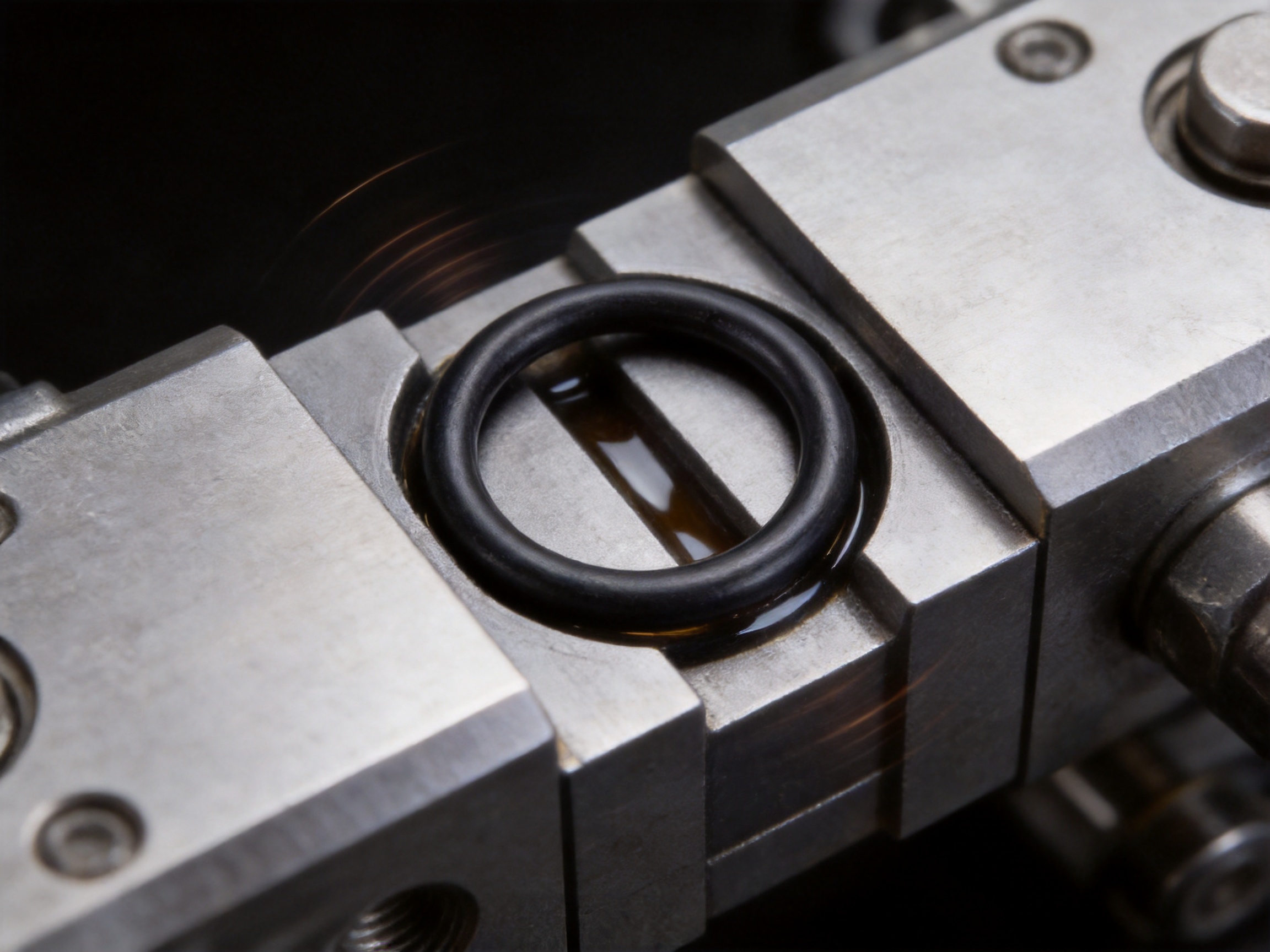
An O-ring works by being compressed between mating surfaces. This compression creates contact pressure around the sealing interface. When the ring is properly sized and installed, the rubber follows minor irregularities in the groove and sealing surface. A thickened profile can offer additional material for this elastic response, helping the ring accommodate small dimensional changes caused by vibration.
The anti-vibration function should be understood as a combination of material elasticity, cross-sectional geometry, compression, and installation stability. No single characteristic guarantees performance in every operating environment. The value of the A-4-011 design is that it combines an NBR elastomer with a thicker O-ring profile specifically intended for locations where cushioning and damping are important selection factors.
Advantages of the 16 mm Thickened Profile
The 2.4 mm WD dimension is central to the product’s application value. Compared with a thinner sealing ring of the same inside diameter, the thickened profile offers a larger body of elastomer between the inner and outer sealing surfaces. This can support several practical benefits when the ring is used in a properly designed groove.
Greater Cushioning Capacity
The thicker ring can provide additional elastic material to absorb minor mechanical oscillations. When components move repeatedly, the seal may deform slightly and recover. The increased profile can act as a small cushioning element within the groove, reducing the severity of direct contact between mating parts in some applications.
More Stable Sealing Contact
A larger cross-sectional profile may maintain a broader contact interface under suitable compression. This can help the seal remain engaged with the mating surfaces during vibration. Stable contact is particularly important in oil-containing assemblies, gas spring systems, dampers, and mechanisms that experience cyclic movement.
Improved Resistance to Minor Displacement
Vibration can encourage a seal to shift, rotate, or move within its groove. A properly selected thicker ring may be less susceptible to minor displacement because it occupies more of the available groove space. The groove must still be designed correctly, and excessive compression should be avoided, but the profile can contribute to improved positional stability.
Useful Balance Between Size and Function
The product remains compact despite its thickened profile. With a 16 mm inside diameter, it can serve small sealing positions where equipment designers need additional anti-vibration support without adopting a large or complex mechanical seal. This makes the product suitable for compact assemblies, provided that the groove and mating components are compatible with the 2.4 mm WD dimension.
Material Characteristics of NBR
NBR is one of the most widely used elastomers for oil seals and O-rings. Its popularity comes from a useful combination of elasticity, sealing ability, mechanical strength, and resistance to many petroleum-based oils and lubricants. These characteristics make it a practical material for general industrial sealing applications.
For the A-4-011 product, NBR provides the flexible body required for compression sealing and vibration response. When the ring is compressed in a groove, the material can conform to the mating surfaces and help close small surface irregularities. Its resilience allows it to recover after temporary deformation, supporting repeated sealing cycles.
NBR is also valued for its abrasion resistance and tensile properties. These features can be important in applications where the seal experiences movement, installation friction, or recurring mechanical loading. In a vibrating assembly, material durability is important because the ring may be exposed to continuous low-amplitude motion rather than a single static compression event.
However, NBR selection should always be matched to the actual working conditions. Temperature range, fluid composition, pressure, exposure time, and movement type all affect service performance. NBR is generally associated with petroleum-based oils and common industrial fluids, while specialized fluids, high-temperature environments, aggressive chemicals, or unusual gases may require HNBR, FPM, or another elastomer. The manufacturer’s product range includes NBR, HNBR, and FPM O-ring products, allowing customers to consider material alternatives when application conditions require them.
| Selection Factor | Why It Matters for the A-4-011 Seal |
| Fluid Compatibility | Confirms whether NBR is suitable for the oil, gas, lubricant, or other medium. |
| Temperature | Determines whether the elastomer can maintain flexibility and compression over the operating cycle. |
| Groove Dimensions | Controls compression, extrusion resistance, and the ring’s stability during vibration. |
| Surface Finish | Affects friction, leakage paths, and wear at dynamic or semi-dynamic interfaces. |
| Pressure | Influences the risk of extrusion and may determine whether a backup element is necessary. |
| Movement | Identifies whether the application involves static, reciprocating, oscillating, or rotating motion. |
Applications for Vibrating Machinery
The A-4-011 seal is suitable for consideration in sealing positions where vibration and damping are important. One potential application area is machinery with recurring mechanical oscillation. This may include compact actuators, damping systems, small hydraulic or pneumatic components, and equipment containing moving or shock-absorbing elements.
In a damper, for example, the seal must help retain the working medium while the internal components move repeatedly. The seal may encounter pressure changes, reciprocating motion, temperature variation, and vibration generated by the surrounding mechanism. A thickened anti-vibration profile can be considered when the design requires added cushioning and stable sealing contact.
Gas spring applications also place strong demands on sealing components. Gas springs are used in furniture, automotive components, equipment covers, adjustable mechanisms, and other products that require controlled movement. The sealing system must help retain pressurized gas and lubricating material while the rod or piston moves through repeated operating cycles.
Other possible application areas include furniture hardware, home appliances, medical equipment, construction machinery, and automotive assemblies. The suitability of the ring must be verified for each application, especially where the seal is exposed to high pressure, unusual fluids, elevated temperature, or demanding dynamic motion.
Automotive and Transportation Equipment
Automotive equipment often combines vibration, limited installation space, temperature changes, and repeated movement. Small sealing rings may be used in dampers, actuators, fluid circuits, adjustable mechanisms, and other assemblies. The compact 16 mm inside diameter may be useful in appropriately sized components where a thicker cross-section can support additional damping.
Transportation equipment may also experience vibration from engines, road surfaces, motors, and structural movement. In such environments, the seal should be selected together with the complete system. The material, groove design, pressure, and surface finish must all be evaluated before production use.
Furniture and Adjustable Mechanisms
Modern furniture may contain gas springs, lift mechanisms, dampers, and adjustable supports. These components often operate in homes, offices, healthcare settings, and commercial environments. Although the loads may differ from industrial machinery, the mechanisms can still experience repeated movement and vibration. An NBR O-ring with a thickened profile may be considered for suitable sealing locations in these systems.
Home Appliances
Appliances commonly include pumps, valves, dampers, moving assemblies, and fluid-containing components. Vibration may be generated by motors, compressors, fans, or rotating parts. A compact anti-vibration seal can help equipment designers address the sealing requirements of small mechanisms, provided that the ring is compatible with the appliance’s temperature and fluid conditions.
Medical and Technical Equipment
Medical and laboratory equipment may require precise sealing in compact mechanisms. In these applications, product consistency, cleanliness, traceability, material documentation, and application-specific validation are particularly important. The A-4-011 product can be considered when its NBR material and dimensional specification meet the equipment requirements. Any medical or safety-critical application should include appropriate qualification and compliance review before use.
Comparison with Conventional Thin O-Ring Profiles
A conventional thin O-ring can be an efficient choice for many static or low-movement applications. It may require less installation space and can offer lower material usage. However, when vibration is a primary concern, the thinner profile may not provide the same degree of cushioning or elastic reserve as a thickened ring.
The A-4-011 design is differentiated by its purpose rather than by a claim that every thicker ring is superior in every situation. Its advantage is most relevant where vibration, oscillation, and contact stability are important. A thin ring may remain appropriate for a narrow groove, low-pressure static seal, or application where friction must be minimized. The 16 mm Thickened Anti-Vibration Seal becomes more attractive when the system can accommodate its 2.4 mm WD dimension and requires additional damping support.
| Characteristic | Thinner Conventional Profile | 16 mm Thickened Anti-Vibration Seal |
| Inside Diameter | Depends on selected standard | 16 mm |
| WD Dimension | Smaller cross-section may be available | 2.4 mm |
| Primary Design Focus | General sealing and space efficiency | Sealing with additional damping and anti-vibration support |
| Material | Depends on product selection | NBR |
| Potential Benefit | Lower installation space and potentially lower friction | Greater elastic volume and cushioning in suitable grooves |
| Best Selection Basis | Static sealing, compact grooves, and general-purpose requirements | Vibrating machinery and applications requiring a thicker profile |
The comparison emphasizes the importance of application-specific selection. A product should not be chosen solely by its nominal inside diameter. WD, groove width, groove depth, compression, pressure, temperature, fluid compatibility, and motion all influence performance. Selecting the correct cross-section can be as important as choosing the correct material.
Manufacturing and Engineering Strengths
The manufacturer, Ningguo Jnsseals Sealing Technology Co., Ltd., is a high-tech enterprise founded in 2019 and headquartered in Anhui, China. Its business focuses on sealing technology for gas springs and dampers, together with related O-ring products. This specialization is relevant to the A-4-011 product because gas springs and damping systems often require sealing components that can handle repeated movement and vibration.
The company states that it supports customers through research and development capabilities, advanced production equipment, and a professional technical service team. These resources are important for producing small elastomeric components consistently. An O-ring may appear simple, but its performance depends on accurate compound preparation, controlled molding, dimensional stability, surface quality, and inspection.
Material and Compound Development
Material selection is an important stage in seal production. NBR compounds can be formulated to achieve different balances of hardness, elasticity, tensile strength, compression set resistance, abrasion resistance, and fluid compatibility. The correct compound depends on the intended application and operating conditions.
A manufacturer with experience in NBR, HNBR, and FPM products can help customers assess material alternatives when standard NBR is not sufficient. HNBR may be considered for applications requiring improved resistance to heat, ozone, or demanding mechanical conditions. FPM may be considered where higher temperature or chemical resistance is required. The final selection should be based on verified application data rather than material name alone.
Precision Molding
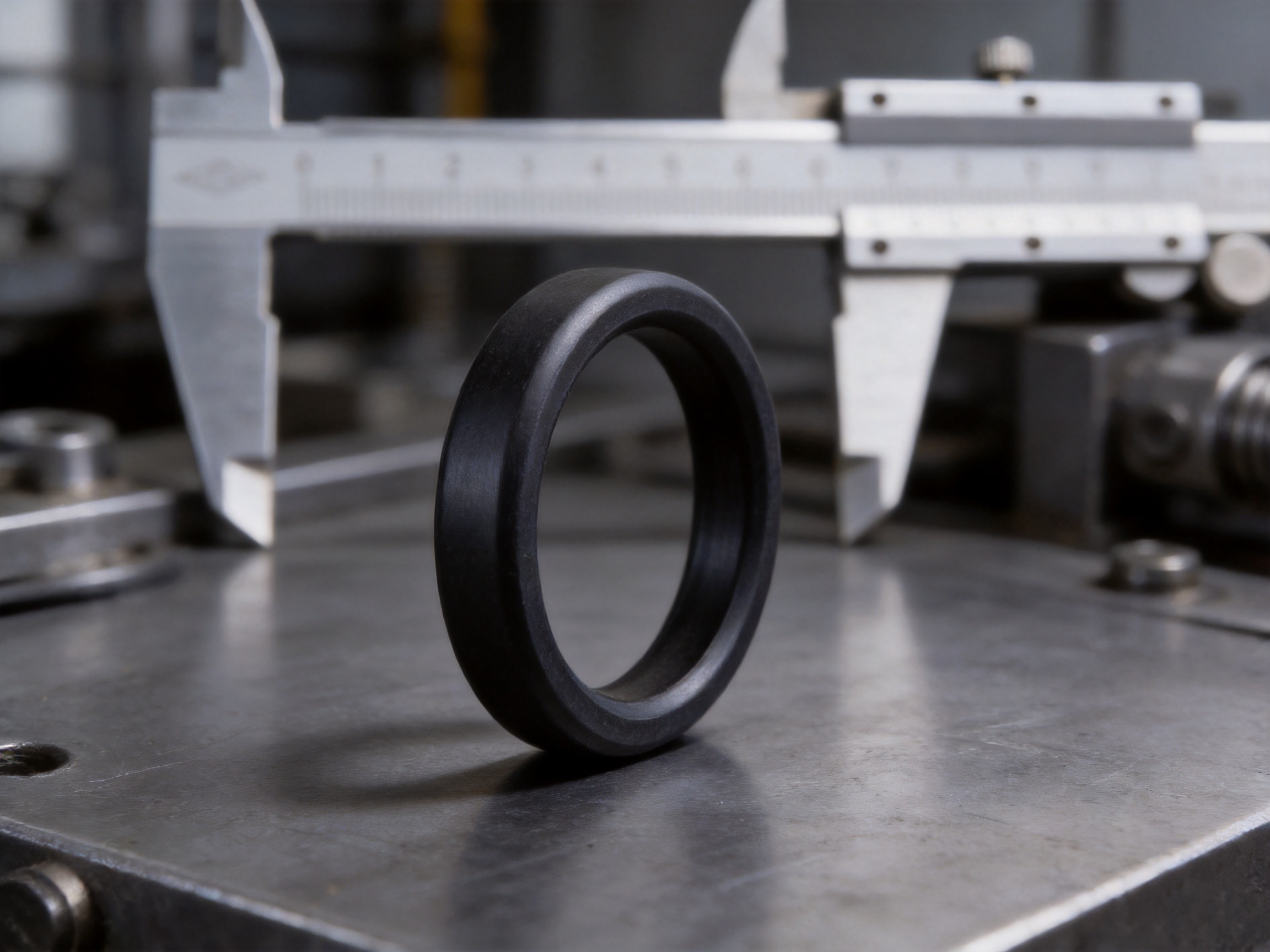
Consistent molding is necessary to produce rings with stable dimensions and reliable sealing behavior. The mold must define the inside diameter and WD dimension accurately, while the process must control temperature, pressure, curing time, and material flow. Inconsistent curing or dimensional variation can affect compression and installation.
For the A-4-011 product, control of the 16 mm inside diameter and 2.4 mm WD dimension is especially important. If the ring is undersized or oversized beyond acceptable limits, the compression ratio may change. This can influence installation force, sealing pressure, friction, and resistance to vibration.
Process Control
Effective process control typically involves monitoring incoming materials, mixing conditions, molding parameters, curing conditions, trimming, visual quality, and dimensional results. The company’s emphasis on advanced equipment and technical capabilities supports a manufacturing approach in which product quality is addressed throughout the process rather than only at final inspection.
For customers purchasing seals in production quantities, process consistency can be as important as individual sample performance. Stable manufacturing helps reduce variation between batches and simplifies assembly-line planning. It also supports more predictable maintenance schedules and replacement-part management.
Inspection and Technical Support
Inspection may include dimensional measurement, visual examination, hardness testing, tensile testing, elongation testing, compression set testing, and application-specific evaluations. Not every test is required for every order, but a professional sealing supplier should be able to discuss relevant quality requirements and documentation.
The company also provides customized sealing solutions, including product design, testing, and technical consultation. This capability is valuable when a standard 16 × 2.4 mm ring is close to the required specification but the application needs a different compound, tolerance, hardness, or profile. Engineering consultation can help determine whether the existing product is suitable or whether customization is more appropriate.
Production Workflow for a Reliable O-Ring
Although specific internal production parameters may vary, a modern elastomer sealing workflow generally includes several connected stages. Each stage contributes to the final function of the ring.
1. Requirement Review
The process begins with a review of the application. Important information includes the sealing medium, operating pressure, temperature range, movement type, cycle frequency, groove dimensions, assembly method, and expected service life. For an anti-vibration product, the vibration amplitude and frequency may also be relevant.
2. Material Selection
The manufacturer evaluates whether NBR is suitable for the operating conditions. If the application includes unusual chemicals, high temperature, ozone exposure, or special gas service, an alternative elastomer may be recommended. The material must be selected before finalizing the molding and quality requirements.
3. Compound Preparation
Raw elastomer and compounding ingredients are processed to produce a compound with the desired properties. Mixing uniformity is important because uneven dispersion can create weak points or inconsistent performance. The compound is then prepared for molding in a controlled form.
4. Molded Forming
The compound is placed into a precision mold and formed under controlled heat and pressure. The mold establishes the ring’s geometry, including the inside diameter and WD dimension. Correct molding conditions help ensure that the ring is fully formed and properly cured.
5. Deflashing and Finishing
After molding, excess material at the parting line may be removed. Finishing must be controlled carefully so that the sealing surface remains smooth and the ring’s dimensions are not damaged. Excessive trimming, cuts, nicks, or surface defects can create leakage risks.
6. Dimensional and Appearance Inspection
Finished rings are checked for dimensions and visible defects. Measurement methods should be appropriate for elastomeric components because rubber can deform under contact. The 16 mm inside diameter and 2.4 mm WD dimension should be verified against the applicable tolerances.
7. Functional Validation
When required, samples can be tested under representative conditions. Testing may evaluate compression behavior, fluid exposure, temperature aging, vibration response, or repeated movement. Application testing is particularly valuable when the seal will be used in a safety-critical or high-cycle assembly.
8. Packaging and Shipment
Proper packaging protects the rings from contamination, deformation, sunlight, ozone, and unnecessary mechanical stress. Storage conditions can influence elastomer service life. Seals should generally be stored in a cool, dry, clean environment away from direct sunlight and ozone-generating equipment.
Installation Guidance
Correct installation is essential to obtain the intended anti-vibration benefit. Even a well-manufactured seal can leak or wear prematurely if it is installed in an unsuitable groove or damaged during assembly.
Before installation, inspect the ring and mating components. The seal should be free from cuts, cracks, embedded particles, severe deformation, or other visible defects. The groove should be clean and free from burrs, sharp edges, chips, and excessive surface damage.
Sharp edges at ports, threads, slots, or component transitions can cut the ring during assembly. Where necessary, use an appropriate lead-in chamfer or protective sleeve. Avoid stretching the ring more than necessary, and do not twist it during installation. A twisted O-ring may create uneven compression and a localized leakage path.
Lubrication may reduce assembly friction, but the lubricant must be compatible with NBR and the working medium. Incompatible lubricants can cause swelling, hardening, softening, or other material changes. The ring should be seated evenly in the groove before the mating parts are brought together.
Because the A-4-011 ring has a 2.4 mm WD dimension, the groove must provide sufficient space for correct compression. Excessive compression can raise friction and installation force, while insufficient compression may reduce sealing contact. The groove should also provide adequate clearance to limit extrusion under pressure and vibration.
| Installation Check | Recommended Attention |
| Seal Condition | Confirm that the ring is clean and free from cuts, cracks, and permanent deformation. |
| Groove | Remove burrs, sharp edges, chips, and contamination. |
| Orientation | Seat the ring evenly without twisting or rolling it into an unintended position. |
| Lubrication | Use only a lubricant compatible with NBR and the working medium. |
| Compression | Verify that the 2.4 mm WD profile matches the groove design. |
| Assembly Force | Investigate unusually high force, which may indicate excessive compression or an installation problem. |
| Final Inspection | Check for pinching, displacement, visible damage, and uniform seating. |
Design Considerations for Engineers
Engineers considering the A-4-011 product should begin with a complete definition of the sealing environment. The 16 mm inside diameter and 2.4 mm WD dimension establish the basic geometry, but these numbers do not independently determine suitability.
Pressure and Extrusion
Pressure can force an elastomer into the clearance gap between mating parts. Vibration may increase this risk by causing intermittent changes in alignment or gap size. Groove clearance, material hardness, pressure level, temperature, and the use of backup elements should be evaluated. If pressure is high or the clearance gap is large, a backup ring or different seal design may be necessary.
Static and Dynamic Service
O-rings generally perform differently in static and dynamic applications. Static applications may involve two surfaces that remain fixed after assembly, while dynamic applications involve reciprocating, oscillating, or rotating movement. The A-4-011 product is intended to support sealing positions affected by vibration, but the exact movement type should be considered before adoption.
Temperature and Aging
Temperature affects rubber hardness, elasticity, compression set, and chemical resistance. Repeated heating and cooling can also accelerate aging. NBR may be appropriate for many common oil-sealing applications, but the specific compound and actual temperature range must be verified. When equipment operates near its material limits, testing under representative conditions is recommended.
Surface Finish and Hardness
The mating surface should be smooth enough to support sealing without creating excessive friction or wear. At the same time, an overly smooth surface may not always be ideal for retaining lubricant, depending on the application. Surface hardness should also be sufficient to resist scratching and deformation during operation.
Maintenance and Replacement
O-rings are wear components and should be replaced when they show flattening, cracking, hardening, swelling, cuts, abrasion, or permanent deformation. During maintenance, the groove and mating surface should be examined for the underlying cause of failure. Replacing the ring without correcting excessive vibration, misalignment, contamination, or incompatible fluid may not solve the problem.
Quality and Customization Benefits
One of the advantages of working with a specialized sealing manufacturer is the ability to discuss the complete application rather than purchasing an isolated component. Customers may need a standard product for immediate use, or they may require a customized seal for a new design. In both cases, technical communication can reduce the risk of selecting an unsuitable material or dimension.
The manufacturer offers customized sealing solutions that may include product design, testing, and technical consultation. Customization can involve alternative materials, dimensions, hardness levels, tolerances, colors, packaging, or application-specific validation. For customers developing gas springs, dampers, or other vibrating assemblies, this support can help connect the seal specification to the actual mechanical design.
The company’s experience across automotive, furniture, home appliance, medical equipment, construction, and other industries also provides a broad application background. Different industries impose different requirements, but the fundamental sealing principles remain connected: controlled dimensions, suitable elastomer selection, reliable manufacturing, and disciplined installation.
A supplier’s ability to maintain communication from initial inquiry through sampling, testing, production, and after-sales technical support can be especially valuable for international customers. Clear product codes, consistent specifications, and organized quality documentation help reduce confusion when the same component is used across multiple production sites.
How This Product Can Compete in the O-Ring Market
The O-ring market contains a wide range of standard and specialized products. Competition is not based only on price. Customers also evaluate consistency, application suitability, lead time, customization, technical support, material options, and manufacturing reliability.
The A-4-011 seal has several features that can distinguish it from a basic general-purpose ring. First, its design focus is clearly associated with anti-vibration and damping performance. Second, its 2.4 mm WD profile provides a defined thickened geometry for applications that need more elastic volume than a thinner ring can provide. Third, its NBR material is widely recognized for oil-sealing applications, which can simplify material selection in many industrial systems.
The manufacturer’s focus on gas springs, dampers, and sealing technology provides additional relevance for customers working with moving and vibrating equipment. Its stated capabilities in research and development, production equipment, testing, and technical consultation support a more complete supply relationship than a purely transactional component source.
Compared with an undifferentiated low-cost seal, a product supported by technical review and application consultation may reduce the risk of repeated leakage, premature replacement, assembly interruption, and field failure. The lowest initial unit price is not always the lowest total cost when poor sealing causes maintenance or warranty problems.
At the same time, responsible product selection requires a fair comparison. Buyers should compare actual dimensions, material properties, tolerances, test results, packaging, and application conditions. The A-4-011 product should be selected where its thickened anti-vibration profile and NBR material match the system requirements.
Ordering and Technical Information
For quotation or technical review, customers should provide the product code A-4-011 and identify the required quantity. Additional information can include the working medium, operating temperature, pressure, movement type, expected cycle count, groove drawing, mating-material specification, and any special quality requirements.
If the standard product is not fully suitable, customers can discuss an alternative material or customized specification. Providing accurate application information allows the manufacturer’s technical team to assess whether NBR is appropriate or whether HNBR, FPM, or another compound should be considered.
The manufacturer is Ningguo Jnsseals Sealing Technology Co., Ltd., located in Ningguo City, Anhui Province, China. Its stated contact channels include the email address jns@jnsseals.cn and sales contacts identified as Manager Gong and Manager Wang. Customers should confirm current contact details, production lead times, packaging requirements, and documentation needs during the purchasing process.
Frequently Asked Questions
What is the size of the A-4-011 seal?
The product specification is 16 × 2.4 mm. The inside diameter is 16 mm, and the WD dimension is 2.4 mm. The groove should be designed or verified for this cross-sectional profile before installation.
What material is used for this seal?
The A-4-011 seal is made from NBR, or nitrile butadiene rubber. NBR is commonly used for oil seals because it offers useful elasticity, mechanical strength, abrasion resistance, and compatibility with many petroleum-based fluids. The actual fluid and temperature conditions should always be checked before use.
Why is the seal described as thickened?
The seal has a 2.4 mm WD dimension around a 16 mm inside diameter. This provides a thicker profile than a smaller cross-section designed for the same general sealing purpose. The additional elastomer volume is intended to improve cushioning and support anti-vibration performance in suitable applications.
Can it be used in vibrating machinery?
Yes, the product is intended for sealing positions in vibrating machinery and is described as providing additional damping and anti-vibration support. Suitability depends on pressure, temperature, fluid, groove design, movement, surface finish, and installation quality.
Is it suitable for gas springs and dampers?
It may be suitable for appropriately designed gas spring and damper sealing positions. These applications should be reviewed for pressure, gas compatibility, rod or piston movement, temperature, lubrication, and expected cycle life. Application testing is recommended for critical designs.
Can the product be used for every type of oil?
No seal should be assumed to be compatible with every oil. NBR works well with many petroleum-based oils and lubricants, but oil formulation, additives, temperature, exposure time, and pressure can affect compatibility. The working medium should be identified before final selection.
Does a thicker O-ring always provide better performance?
No. A thicker ring can provide greater cushioning and elastic volume, but it must match the groove. Excessive compression, insufficient groove space, high friction, or incorrect installation can reduce performance. The best profile is determined by the complete application.
Can the manufacturer provide customized products?
The company states that it provides customized sealing solutions, including product design, testing, and technical consultation. Customers can discuss different materials, dimensions, tolerances, hardness levels, or application requirements with the technical team.
What should be checked before ordering?
Customers should confirm the inside diameter, WD dimension, material, operating medium, temperature, pressure, movement type, groove dimensions, required quantity, packaging, and quality documentation. Providing a drawing or application description can help prevent selection errors.
How should the rings be stored?
O-rings should generally be stored in a cool, dry, clean location away from direct sunlight, ozone-generating equipment, excessive heat, and deformation. They should remain in suitable packaging until needed and should be inspected before installation.
How can premature failure be prevented?
Use a compatible material, verify groove dimensions, clean the assembly, protect the ring from sharp edges, use compatible assembly lubrication, avoid twisting, control pressure and clearance, and investigate any excessive vibration or misalignment. Correct installation and system design are as important as the seal itself.
Conclusion
The 16 mm Thickened Anti-Vibration Seal is a compact NBR O-ring designed for sealing positions where vibration, oscillation, and damping are important considerations. Its 16 mm inside diameter and 2.4 mm WD dimension provide a defined thickened profile that can offer additional elastic volume, cushioning, and contact stability when used in a suitable groove.
Its principal advantages over a thinner general-purpose profile are related to vibration support rather than universal superiority. The product is particularly relevant to gas springs, dampers, vibrating machinery, automotive mechanisms, furniture hardware, home appliances, and other compact assemblies that require reliable oil or fluid sealing under recurring movement.
The manufacturer supports this product with a focus on gas spring and damper sealing technology, NBR, HNBR, and FPM material capabilities, research and development, production equipment, technical service, testing, and customized sealing solutions. These strengths can help customers move from standard product selection to application-specific engineering when required.
For the best result, the A-4-011 seal should be evaluated as part of the complete sealing system. Confirm the fluid, temperature, pressure, movement, groove, surface finish, and installation method before production use. When these factors are properly matched, the thickened NBR profile can provide a practical and dependable solution for demanding anti-vibration sealing positions.
References
1. Manufacturer-provided product specification for A-4-011, 16 × 2.4 mm NBR O-shaped oil seal ring.
2. Manufacturer-provided company information concerning sealing technology, gas springs, dampers, product development, and technical services.
3. General engineering principles for elastomeric O-ring design, groove sizing, compression, installation, and maintenance.
4. General material-selection guidance for nitrile butadiene rubber in oil-sealing applications.
5. General industrial practices for elastomer seal inspection, storage, packaging, and application validation.
Product: 16mm Thickened Anti-Vibration Seal

PREV:66mm Jumbo Flange O-Ring Seal: A Reliable Solution for Large Static Flange Joints
NEXT:Medium-Duty Balanced L-Type Oil Seal for Reliable Hydraulic and Gas Spring Applications
NEXT:Medium-Duty Balanced L-Type Oil Seal for Reliable Hydraulic and Gas Spring Applications


Want to know more
about us?
about us?

Precision sealing for gas springs and dampers. Durable, wear-resistant, and built for long-life performance in demanding applications.
Product Categories
Quick Links
Contact Us
-
Email: jns@jnsseals.cn

-
Email: LouZhuoyu@outlook.com
-
Manager Gong: +86-18563770820

-
Manager Wang: +8615357558902
-
No. 5, Meilin Avenue, Meilin Industrial Development Zone, Ningguo City, Anhui Province, China

