

 English
 русский
 Deutsch
 Türk
Türk 中文简体
中文简体
16mm Industrial Fluid Seal Ring: Reliable O-Ring Sealing for Dynamic and Static Applications
16mm Industrial Fluid Seal Ring: Reliable O-Ring Sealing for Dynamic and Static Applications
16mm Industrial Fluid Seal Ring: Reliable O-Ring Sealing for Dynamic and Static Applications
16mm Industrial Fluid Seal Ring: Reliable O-Ring Sealing for Dynamic and Static Applications
16mm Industrial Fluid Seal Ring: Reliable O-Ring Sealing for Dynamic and Static Applications
16mm Industrial Fluid Seal Ring: Reliable O-Ring Sealing for Dynamic and Static Applications
16mm Industrial Fluid Seal Ring: Reliable O-Ring Sealing for Dynamic and Static Applications
16mm Industrial Fluid Seal Ring: Reliable O-Ring Sealing for Dynamic and Static Applications
16mm Industrial Fluid Seal Ring: Reliable O-Ring Sealing for Dynamic and Static Applications
16mm Industrial Fluid Seal Ring: Reliable O-Ring Sealing for Dynamic and Static Applications
16mm Industrial Fluid Seal Ring: Reliable O-Ring Sealing for Dynamic and Static Applications
16mm Industrial Fluid Seal Ring: Reliable O-Ring Sealing for Dynamic and Static Applications
16mm Industrial Fluid Seal Ring: Reliable O-Ring Sealing for Dynamic and Static Applications
16mm Industrial Fluid Seal Ring: Reliable O-Ring Sealing for Dynamic and Static Applications
16mm Industrial Fluid Seal Ring: Reliable O-Ring Sealing for Dynamic and Static Applications
16mm Industrial Fluid Seal Ring: Reliable O-Ring Sealing for Dynamic and Static Applications

Shen Ruolan — After-Sales Technical Consultant
Home / Author / Shen Ruolan — After-Sales Technical Consultant / 16mm Industrial Fluid Seal Ring: Reliable O-Ring Sealing for Dynamic and Static Applications
NEW Category
Contact us
16mm Industrial Fluid Seal Ring: Reliable O-Ring Sealing for Dynamic and Static Applications
Content
- 1 Introduction
- 2 Product Overview
- 3 Why the 16 × 2 Size Matters
- 4 NBR Material Advantages
- 5 Sealing Performance in Static and Dynamic Service
- 6 Industrial Coolant Leakage Control
- 7 Advantages Compared with Generic Competing Seal Rings
- 8 Manufacturing Strengths and Production Approach
- 9 Applications for the 16mm Industrial Fluid Seal Ring
- 10 Installation Recommendations
- 11 Design Considerations for Engineers
- 12 Quality, Consistency, and Supply Reliability
- 13 Customization and Engineering Support
- 14 Purchasing and Maintenance Benefits
- 15 Storage and Handling
- 16 Why Manufacturer Selection Matters
- 17 Frequently Asked Questions
- 17.1 What is the size of the 16mm Industrial Fluid Seal Ring?
- 17.2 What material is used for the A-4-010 seal ring?
- 17.3 Can this seal ring be used for industrial coolant?
- 17.4 Is the ring suitable for moving parts?
- 17.5 Can it be used in a stationary joint?
- 17.6 What is the product code?
- 17.7 How does this product compare with an unbranded generic O-ring?
- 17.8 Can the manufacturer provide other materials?
- 17.9 What should be checked before installation?
- 17.10 Can the product be customized?
- 17.11 Is NBR suitable for every industrial fluid?
- 17.12 What industries can use this seal ring?
- 18 Conclusion
- 19 References
- 20 Product: 16mm Industrial Fluid Seal Ring
Introduction
Reliable sealing is essential wherever fluids, pressure, motion, and temperature variations meet. In industrial equipment, even a small leakage path can reduce operating efficiency, contaminate surrounding components, increase maintenance requirements, and shorten the service life of an assembly. The 16mm Industrial Fluid Seal Ring, product code A-4-010, is designed to provide a practical sealing solution for industrial applications that require a compact, balanced, and dependable O-shaped seal.
This seal ring is manufactured for 16mm apertures and has a 2mm working diameter. Its 16 × 2 specification provides a useful balance between dimensional compactness and sealing contact. Made from NBR, the ring is suited to many general industrial sealing environments, particularly applications involving mineral-oil-based fluids, lubricants, hydraulic media, and industrial coolant systems where NBR compatibility is appropriate.
The product is designed to function in both stationary and moving parts. This dual-purpose capability makes it suitable for assemblies in which the seal must remain effective during rest while also accommodating movement during operation. The result is a versatile component for equipment builders, maintenance departments, fluid-control manufacturers, and distributors seeking a standardized O-ring solution.
Behind the product is Ningguo Jnsseals Sealing Technology Co., Ltd., a China-based sealing technology manufacturer focused on gas springs, dampers, O-ring products, and related sealing applications. Founded in 2019, the company combines product development, production equipment, testing capabilities, and technical support to serve customers in automotive, furniture, home appliance, medical equipment, construction, and other industrial sectors.
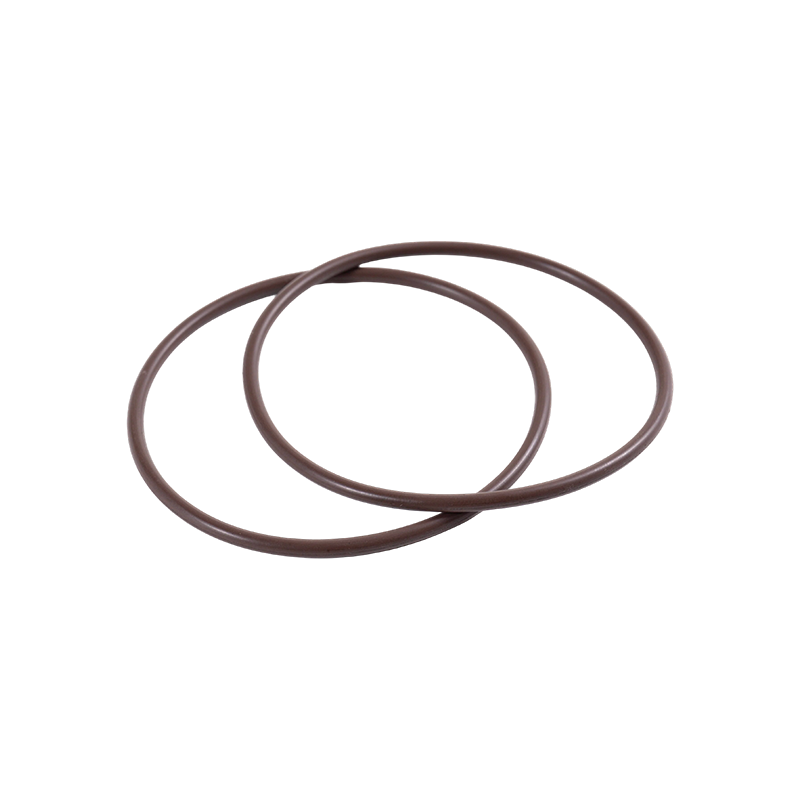
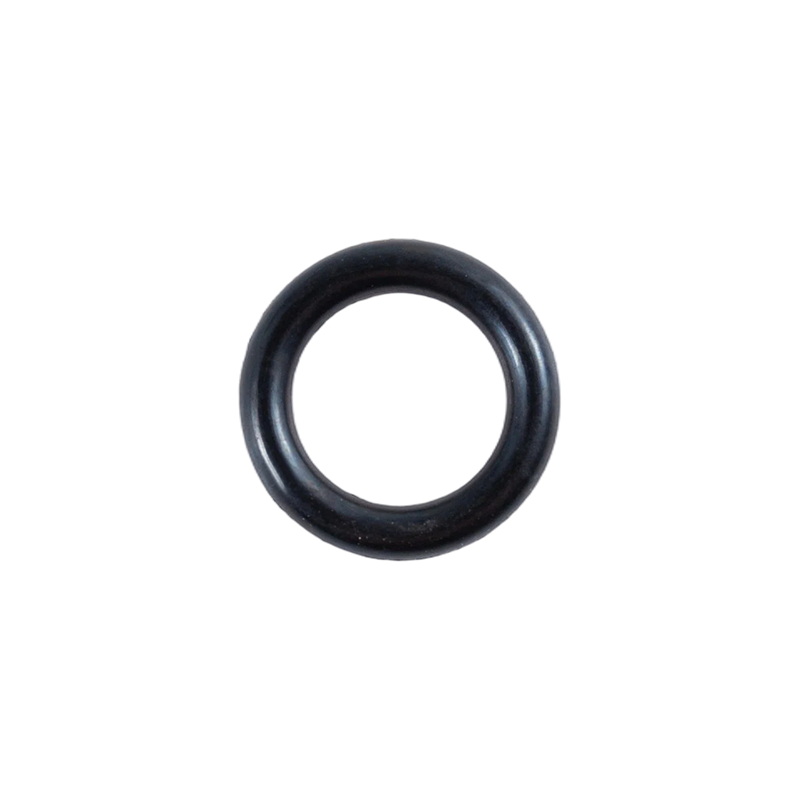
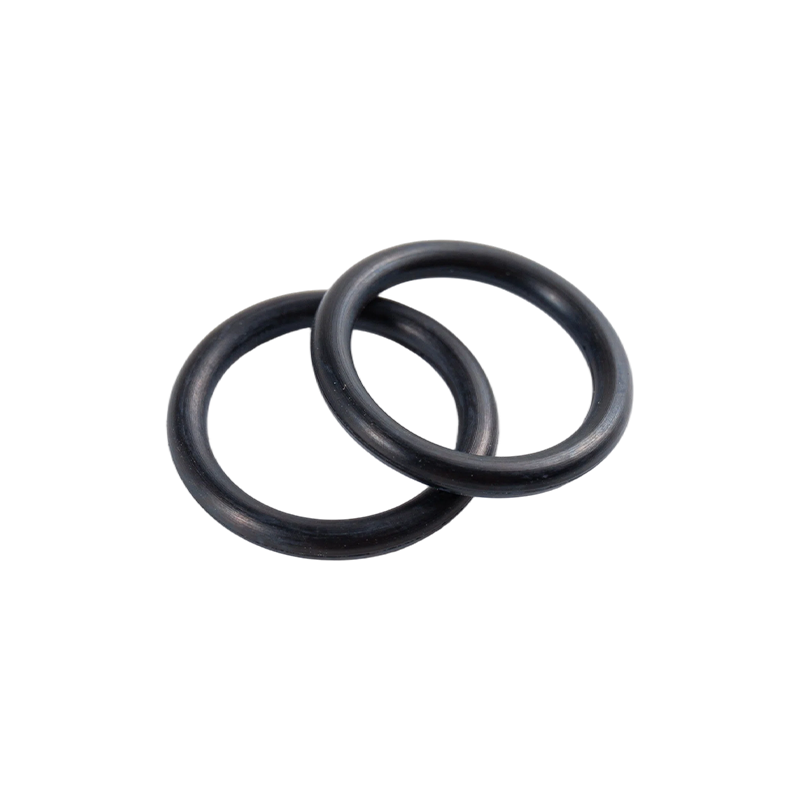
16mm Industrial Fluid Seal Ring
Product Overview
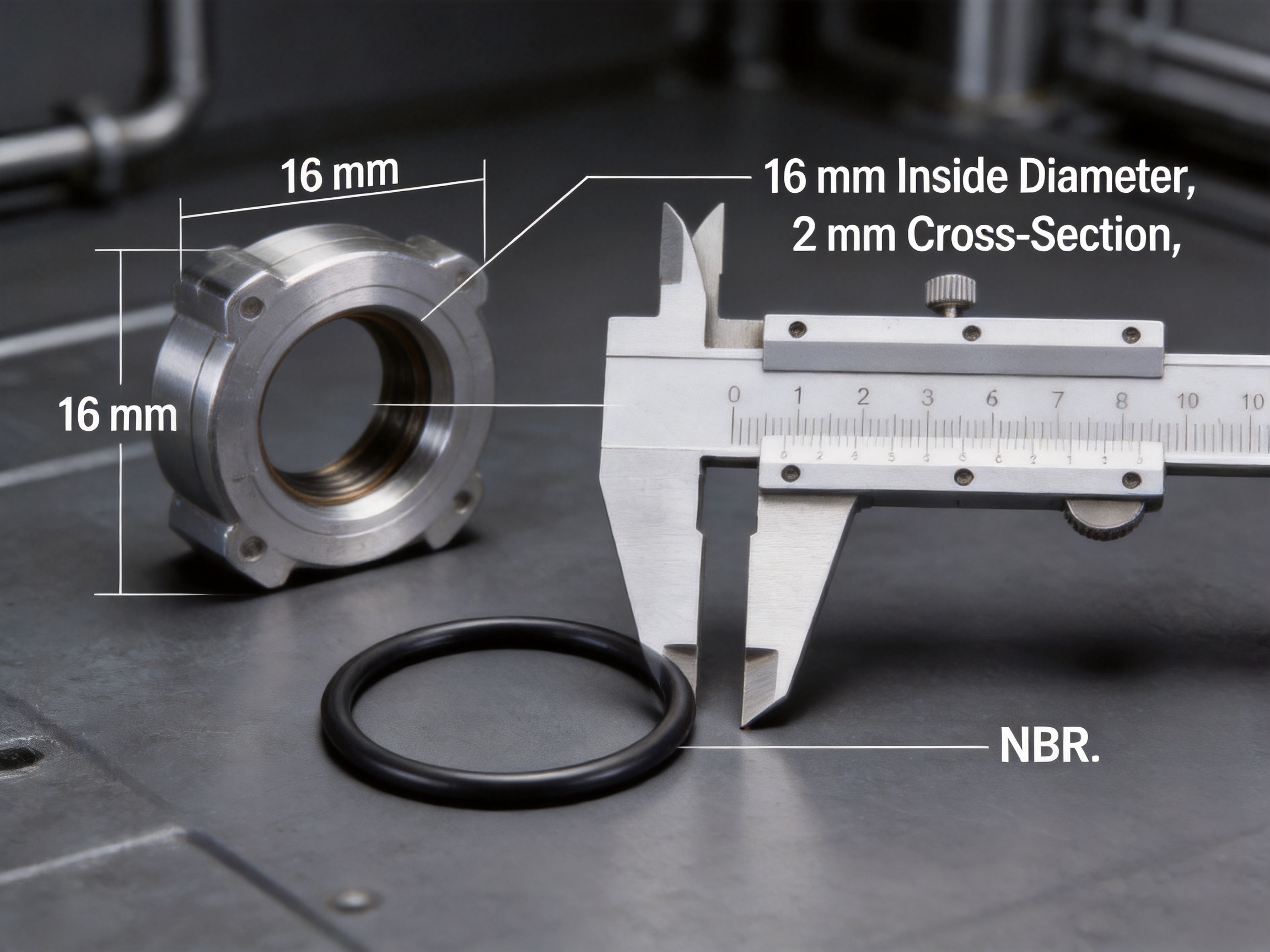
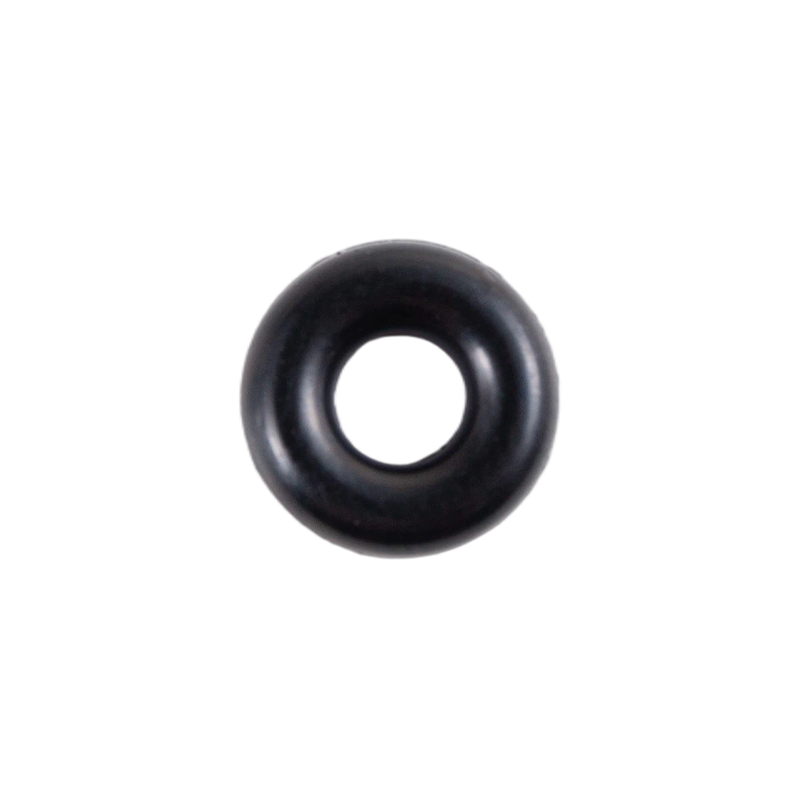
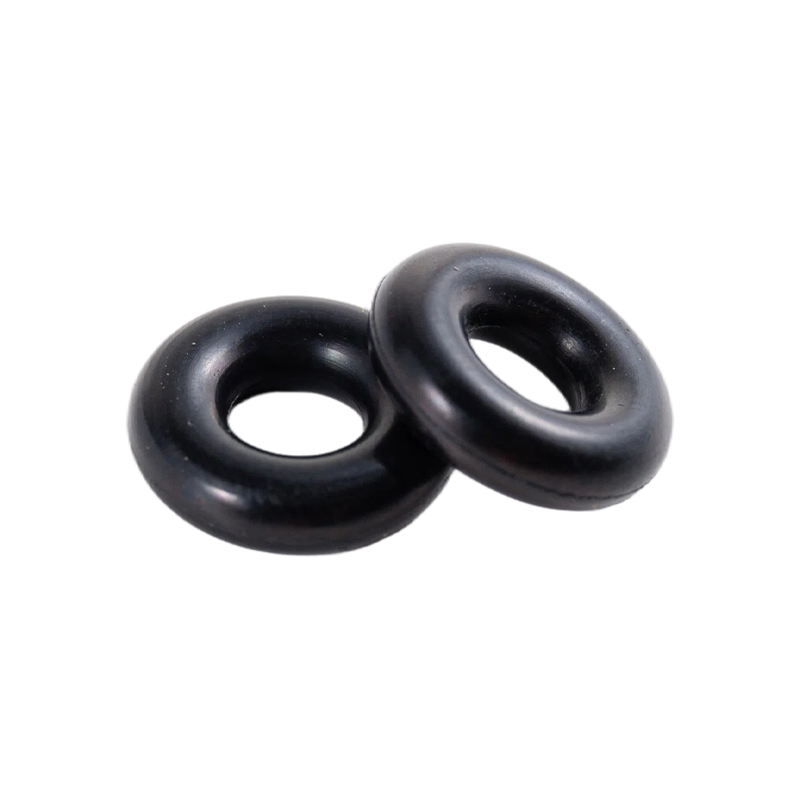
The 16mm Industrial Fluid Seal Ring is an O-shaped oil seal ring identified by product code A-4-010. Its basic product specification is 16 × 2, with an inside diameter of 16mm and a working diameter, or cross-sectional diameter, of 2mm. These dimensions are important because an O-ring must be matched carefully to the groove, shaft, bore, and expected compression conditions of the equipment in which it is installed.
| Product Attribute | Specification |
|---|---|
| Product name | 16mm Industrial Fluid Seal Ring |
| Product category | O-Shaped Oil Seal Ring |
| Product code | A-4-010 |
| Product specification | 16 × 2 |
| Inside diameter | 16mm |
| Working diameter | 2mm |
| Material | NBR |
| Primary sealing purpose | Industrial fluid and coolant leakage control |
| Seal operating modes | Static and dynamic applications |
In practical terms, the 16mm inside diameter allows the ring to fit around a 16mm nominal aperture or mating component, while the 2mm working diameter provides the body thickness required to create sealing contact. The precise installation design remains important. Groove dimensions, squeeze, stretch, clearance, pressure, temperature, lubrication, and surface finish should all be evaluated before production use.
The compact geometry is particularly useful in equipment where installation space is limited. A smaller O-ring can often be integrated into compact valve bodies, fluid fittings, cylinders, dampers, pumps, actuators, and machine interfaces without requiring a large sealing cavity. At the same time, the ring must not be selected solely by nominal diameter. The seal groove and the mating surfaces should be designed according to the intended static or dynamic service conditions.
Why the 16 × 2 Size Matters
O-ring dimensions influence both sealing performance and installation reliability. A ring that is too large may be difficult to install, may experience excessive stretch, or may suffer from premature wear. A ring that is too small may not provide sufficient compression or may be vulnerable to extrusion under pressure. The 16 × 2 format offers a defined dimensional basis for engineers and purchasing teams who need a repeatable replacement or production component.
The 16mm inside diameter is appropriate for assemblies built around a corresponding cylindrical component or aperture. The 2mm cross-sectional size is relatively compact, making the seal suitable for smaller mechanical interfaces. This can help equipment designers preserve space for other components, reduce the size of sealing grooves, and simplify the overall design of compact assemblies.
For static applications, the seal is compressed between two stationary surfaces. The compression creates contact pressure that closes the interface and prevents fluid from passing through the joint. In dynamic applications, the seal must maintain contact while one component moves relative to another. The 2mm working diameter can support this type of compact sealing design when the groove, surface finish, lubrication, and movement speed are properly matched.
Correct dimension selection also improves inventory control. A clearly identified product code and standard size allow maintenance teams to order replacements more easily and reduce the risk of substituting an incorrectly sized ring. For original equipment manufacturers, the defined 16 × 2 specification can be incorporated into bills of materials, assembly drawings, service manuals, and spare-parts programs.
NBR Material Advantages
The A-4-010 seal ring is made from NBR, or nitrile butadiene rubber. NBR is widely used in industrial sealing because it offers a practical combination of oil resistance, mechanical strength, flexibility, abrasion resistance, and cost efficiency. It is a familiar material to engineers and maintenance professionals, which simplifies material selection and replacement planning.
One of the main advantages of NBR is its suitability for many petroleum-based oils and lubricants. This makes it a common choice for hydraulic systems, lubrication circuits, gear assemblies, pumps, actuators, automotive mechanisms, and industrial machinery. NBR can also be suitable for certain coolant and fluid applications, provided that the exact fluid formulation, temperature, pressure, and exposure time are compatible with the selected compound.
NBR also provides useful resistance to abrasion. In dynamic sealing applications, the ring may experience sliding contact, surface friction, and repeated movement. A material with good mechanical durability can help the seal maintain its shape and sealing contact over repeated operating cycles. This is especially valuable in dampers, fluid-control devices, compact actuators, and equipment with recurring motion.
Another strength is the balance between flexibility and hardness. The compound can deform sufficiently to fill small surface irregularities while retaining enough resilience to return toward its original shape after compression. This recovery behavior helps maintain sealing contact when the assembly experiences minor dimensional changes, vibration, or pressure fluctuations.
Compared with some specialized elastomers, NBR is often more economical and more readily available. This can be important for high-volume production and routine maintenance. A cost-effective material does not mean that material selection can be ignored; rather, NBR is valuable because it provides a well-established performance profile across a broad range of common industrial applications.
NBR should nevertheless be selected with service conditions in mind. Strong oxidizing chemicals, certain solvents, ozone-rich environments, and some high-temperature applications may require other elastomer families. JNS also identifies NBR, HNBR, and FPM O-ring products within its broader product capability, enabling customers to consider alternative material solutions when the operating environment requires enhanced resistance.
Sealing Performance in Static and Dynamic Service
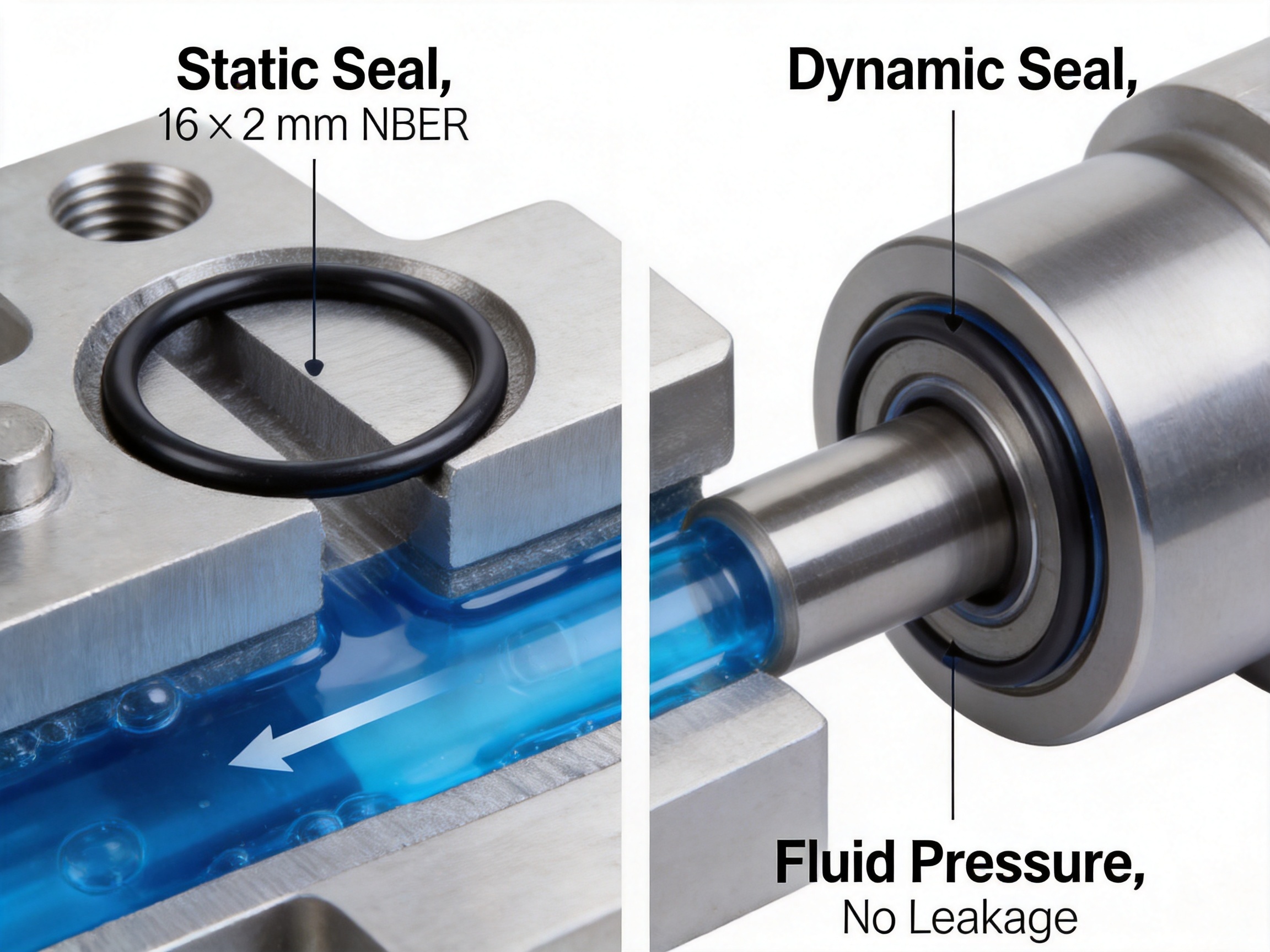
The A-4-010 ring is described as suitable for both moving and stationary parts. This is one of its principal advantages over products designed only for a single sealing mode. A static seal may be used in a cover, flange, plug, housing, or fixed connector. A dynamic seal may be installed where a shaft, piston, rod, or other component moves through or against the sealing interface.
Static Sealing
In static service, the ring remains in a fixed groove while the mating parts stay stationary. The primary objective is to prevent fluid from escaping through the joint or contaminants from entering the assembly. The O-ring is compressed during installation, and this compression produces radial or axial contact depending on the groove design.
Static sealing is common in industrial coolant manifolds, pump housings, valve bodies, inspection covers, hydraulic fittings, filter assemblies, and machine components. The compact 16 × 2 configuration can be helpful when the assembly requires a narrow sealing interface or when the equipment designer wants to keep the housing small.
A successful static installation depends on several details. The groove must have suitable width and depth, the sealing surfaces should be free from sharp edges and damaging defects, and the ring should not be twisted during assembly. Excessive compression can accelerate material fatigue, while insufficient compression can create a leakage path. Proper installation is therefore a necessary part of achieving the expected performance of the product.
Dynamic Sealing
Dynamic service introduces additional demands. The ring may move against a shaft or slide within a bore, generating friction and heat. It may also encounter changes in pressure, speed, direction, and lubrication. The seal must remain sufficiently flexible to follow the moving surface without rolling, cutting, or losing contact.
For moving applications, equipment designers should evaluate surface roughness, shaft hardness, concentricity, clearance, stroke length, speed, temperature, and lubrication. The ring should be installed without twisting or stretching beyond the recommended range. If the design includes reciprocating motion, the groove and clearance should be selected to control extrusion and wear.
The A-4-010 product offers a practical option for dynamic applications because its 2mm working diameter supports compact moving interfaces. Its NBR construction is also recognized for mechanical resilience and resistance to many oil-based lubricants. When matched correctly with the application, these characteristics can help reduce friction-related damage and preserve sealing performance through repeated cycles.
Industrial Coolant Leakage Control
Industrial coolant leakage can create multiple operational problems. Leaked fluid may contaminate work surfaces, affect electrical components, reduce coolant availability, create housekeeping issues, or increase the frequency of machine stoppages. In machining and processing equipment, a reliable sealing ring can help preserve fluid circulation and maintain the intended function of the cooling system.
The A-4-010 ring is designed to help prevent industrial coolant leaks in compatible applications. Its use may be considered in coolant passages, compact fluid connectors, pump components, valve interfaces, machine tools, heat-management equipment, and other assemblies with a 16mm sealing requirement.
Fluid compatibility should always be verified because “industrial coolant” can describe many different formulations. Some coolants are water-based, while others contain oils, additives, corrosion inhibitors, detergents, or solvents. Temperature and concentration can also change the effect of a fluid on an elastomer. NBR is a practical choice for many common industrial fluids, but the equipment designer or user should confirm compatibility with the exact formulation.
Leakage prevention is not limited to material choice. A well-designed sealing system requires appropriate groove geometry, controlled compression, suitable surface quality, correct assembly lubrication, and protection against cutting or contamination. The value of the A-4-010 ring is strongest when it is integrated into a complete sealing design rather than treated as an isolated replacement part.
Advantages Compared with Generic Competing Seal Rings
Many generic O-rings appear similar, but differences in dimensional accuracy, compound consistency, production control, and technical support can affect their performance. The A-4-010 seal ring provides several practical advantages for customers comparing it with unclassified or low-traceability alternatives.
Defined Product Identification
The product has a specific code, A-4-010, and a defined size of 16 × 2. This traceable identification makes it easier to place repeat orders, manage inventory, identify replacement parts, and communicate requirements between engineering, purchasing, production, and maintenance departments.
Balanced Compact Design
The 16mm inside diameter and 2mm working diameter offer a balanced format for compact equipment. A generic ring may be available in a nominally similar size but still differ in cross-sectional tolerance, material formulation, or dimensional consistency. A clearly specified product reduces uncertainty during component selection.
Suitability for Multiple Operating Modes
Some sealing components are optimized for static joints, while others are designed for specialized rotary or reciprocating service. The A-4-010 ring is intended to support both stationary and moving parts. This expands its potential use across different assemblies and can reduce the number of seal types that a customer needs to maintain.
Established NBR Material Choice
NBR is a widely understood elastomer with a broad industrial application history. Its established characteristics simplify engineering review and procurement. Customers can evaluate it using familiar material compatibility procedures rather than relying on an unknown rubber formulation from an unverified supplier.
Application-Oriented Technical Support
The manufacturer’s focus on sealing technology, gas springs, dampers, and customized sealing solutions allows the product to be considered within a broader engineering context. Customers can seek support related to product design, testing, material selection, and technical consultation rather than purchasing a component without application guidance.
Manufacturing and Development Focus
Ningguo Jnsseals Sealing Technology Co., Ltd. describes itself as a high-tech enterprise with research and development capabilities, advanced production equipment, and a professional technical service team. These strengths support a more systematic approach to product development than simple commodity trading or unverified aftermarket supply.
Manufacturing Strengths and Production Approach
The performance of an O-ring begins with the quality of the compound and continues through mixing, forming, vulcanization, trimming, inspection, packaging, and technical documentation. A reliable manufacturer must control each stage because defects at any point can affect sealing performance.
Research and Development
JNS focuses on the research, development, and application of sealing technology for gas springs, dampers, and O-ring products. This specialization is relevant to the A-4-010 ring because gas springs and dampers often require seals that can tolerate movement, pressure changes, lubrication, and repeated cycling.
Research and development capabilities can help a manufacturer refine material formulations, adapt dimensions to customer requirements, evaluate application conditions, and create improved sealing structures. For customers with nonstandard requirements, an R&D-oriented supplier can provide more useful engineering communication than a supplier offering only fixed catalog sizes.
Advanced Production Equipment
The company reports the use of advanced production equipment. In elastomer sealing production, suitable equipment supports repeatable molding, controlled vulcanization, accurate trimming, and efficient handling of production batches. Stable equipment conditions help reduce variation between individual rings and between separate manufacturing lots.
For a small seal such as the 16 × 2 A-4-010, production accuracy is particularly important. A minor dimensional difference can influence compression, installation force, friction, and leakage performance. Controlled production equipment provides the foundation for maintaining the intended shape and dimensional characteristics of the ring.
Testing and Verification
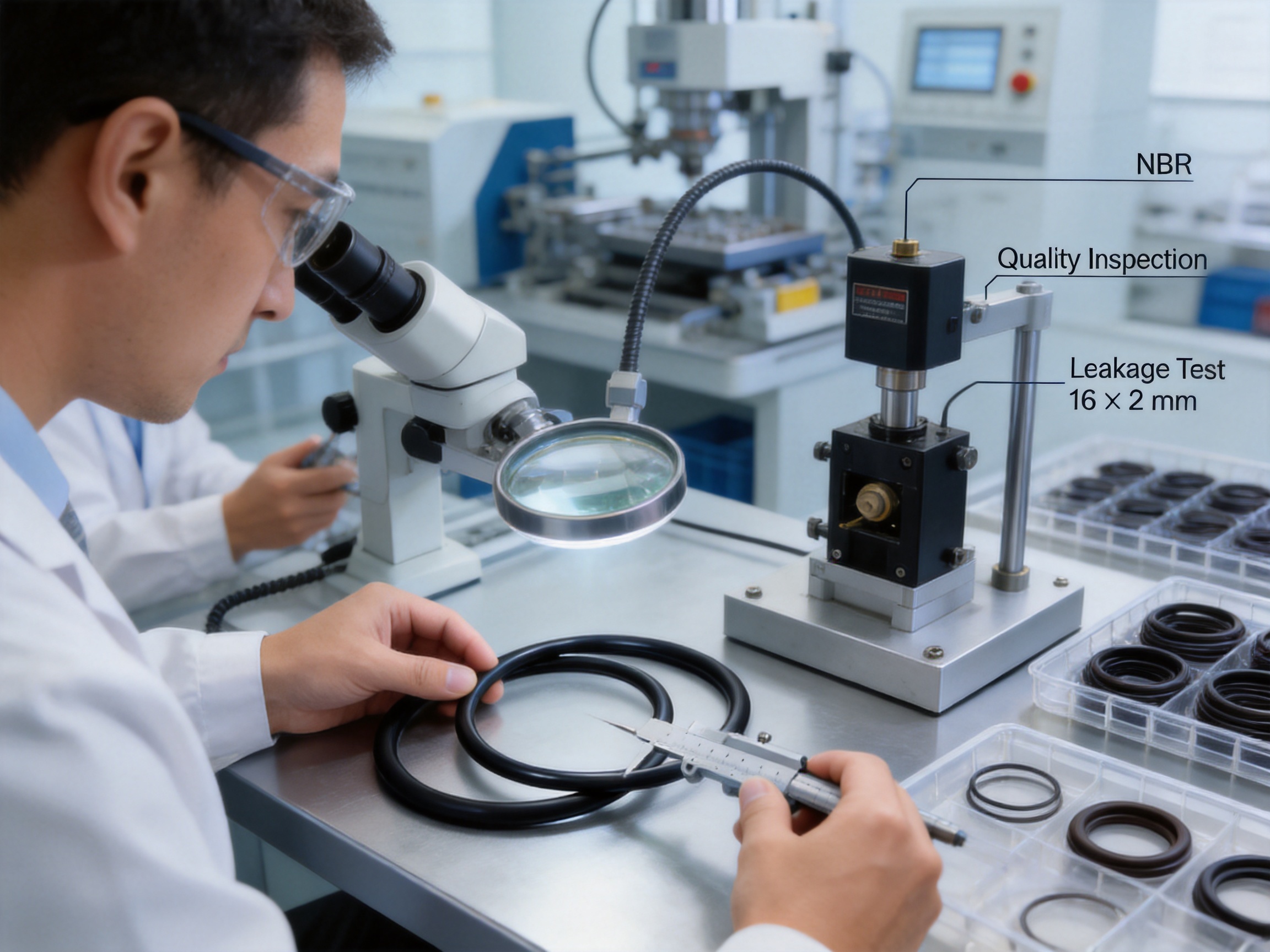
Testing is an important part of sealing product development and quality control. Depending on customer requirements and application conditions, relevant evaluations may include dimensional inspection, visual inspection, hardness measurement, tensile behavior, compression set, fluid compatibility, leakage testing, and dynamic cycling.
The company provides customized sealing solutions that include product design, testing, and technical consultation. This capability allows a customer to discuss not only the purchase of a ring but also the verification method needed for a particular machine or fluid system. Testing should be selected according to actual service conditions, and results should be interpreted together with the equipment design.
Professional Technical Service
Technical service is valuable when customers must choose between NBR, HNBR, FPM, or other materials, or when a standard ring must be adapted to a specific groove. Technical communication can help clarify operating temperature, fluid type, pressure, speed, installation method, and expected service life.
A supplier with technical service capabilities can also support troubleshooting. If leakage occurs, the cause may be incorrect sizing, poor groove design, twisting, extrusion, chemical swelling, thermal hardening, surface damage, or contamination. A systematic review is more effective than simply replacing the ring with another unverified product.
Industry Experience and Application Coverage
JNS products are used in automotive, furniture, home appliances, medical equipment, construction, and other industries. This range indicates experience with different equipment types and sealing requirements. Although each application must still be evaluated individually, cross-industry experience can support broader problem-solving and product customization.
Applications for the 16mm Industrial Fluid Seal Ring
Fluid-Control Equipment
Compact valves, fittings, manifolds, and fluid connectors often require small seals to prevent leakage around ports, plugs, stems, or removable components. The 16 × 2 format can be suitable for designs where a 16mm aperture or mating interface is specified.
Industrial Pumps
Pumps use seals at covers, ports, housings, shafts, and auxiliary fluid passages. The A-4-010 ring may be considered for compatible low- to moderate-demand sealing locations, subject to pump pressure, temperature, rotational speed, fluid chemistry, and groove design.
Machine Tools and Coolant Systems
Machine tools commonly circulate cutting fluids or industrial coolants through pumps, hoses, manifolds, and nozzles. A properly selected NBR ring can help seal compact connections and serviceable components. Preventing leakage supports cleaner operation, more stable coolant flow, and reduced maintenance.
Dampers and Gas-Spring-Related Assemblies
Dampers and gas springs often involve reciprocating motion, pressure, and lubricant exposure. The manufacturer’s specialization in sealing technology for gas springs and dampers is relevant to customers evaluating O-rings for these systems. The exact suitability of the A-4-010 ring depends on pressure, stroke, speed, gas or fluid medium, and temperature.
Automotive Components
Automotive systems contain numerous compact fluid and actuator interfaces. O-rings may be used in cooling, lubrication, hydraulic, pneumatic, fuel-adjacent, and control systems. NBR can be suitable for selected applications, but automotive fluid compatibility and temperature requirements must be verified before use.
Home Appliances and Furniture Hardware
Modern appliances and adjustable furniture may include dampers, fluid mechanisms, compact actuators, and pressure-assisted components. A small O-shaped ring can help maintain fluid containment in these products while fitting into restricted spaces.
Medical and Construction Equipment
Medical equipment and construction machinery have different operating conditions, but both may require dependable sealing. In medical applications, material cleanliness, regulatory requirements, sterilization exposure, and fluid compatibility are critical. In construction equipment, pressure, abrasion, vibration, temperature, and contamination may be more significant. The A-4-010 ring should be evaluated against the applicable requirements of each industry.
Installation Recommendations
Correct installation helps the ring achieve its intended performance. Before assembly, inspect the seal for cuts, cracks, flash, deformation, contamination, or other visible damage. Confirm the product code, inside diameter, working diameter, and material against the equipment documentation.
Inspect the groove and mating surfaces. Sharp edges, burrs, machining marks, corrosion, and embedded particles can damage the ring during installation or operation. Where necessary, use lead-in chamfers or protective sleeves to prevent the seal from being cut as it passes over threads, ports, grooves, or sharp transitions.
Apply a compatible lubricant when required by the equipment design. Lubrication can reduce installation friction, prevent twisting, and support smoother dynamic movement. The lubricant must be compatible with NBR and the operating fluid. An incompatible lubricant can cause swelling, softening, hardening, or loss of mechanical strength.
Install the ring without twisting. A twisted O-ring can create localized stress and an irregular sealing path. In dynamic applications, twisting may lead to spiral failure, accelerated wear, or leakage. Use suitable tools rather than sharp screwdrivers or metal edges that can cut the elastomer.
Do not force the ring into an unsuitable groove. Excessive stretching can reduce cross-sectional thickness and alter the intended compression. Excessive compression can increase friction and installation damage. If the ring does not fit naturally within the specified groove, stop the assembly process and confirm the dimensions.
After installation, check the assembly for smooth movement, correct seating, and signs of pinching. Where possible, conduct a pressure or leakage test before placing the equipment into normal service. The testing method should reflect the actual application and should not exceed the safe limits of the equipment.
Design Considerations for Engineers
When specifying the A-4-010 ring for a new product, engineers should begin by defining the sealing mode. Static axial, static radial, reciprocating, oscillating, and rotary applications place different demands on the ring. A seal that performs well in a stationary flange may not provide the same service life in a high-speed rotary shaft.
Pressure is another important factor. Increased pressure can force the elastomer into the clearance gap, resulting in extrusion or nibbling. Groove clearance, material hardness, backup rings, and pressure direction should be evaluated where pressure levels are significant.
Temperature affects hardness, elasticity, compression set, and fluid interaction. NBR is appropriate for many general industrial conditions, but the highest and lowest expected temperatures should be reviewed. Consider not only normal operating temperature but also start-up, shutdown, cleaning, storage, and accidental overheating conditions.
Surface finish and hardness influence dynamic friction and wear. A surface that is too rough can abrade the ring, while a damaged or contaminated surface may create leakage channels. A surface that is excessively smooth may not always retain lubricant effectively. The final surface specification should be selected according to the motion and material pairing.
Clearance control is especially important for small O-rings used under pressure. Excessive clearance can permit extrusion, while inadequate clearance may increase friction or assembly difficulty. Thermal expansion and manufacturing tolerances should be included in the design calculation.
Engineers should also consider maintenance requirements. A standardized A-4-010 product code can simplify spare-parts identification, but the maintenance documentation should record the ring material, size, installation method, lubricant, inspection interval, and replacement criteria. This information supports consistent servicing across multiple machines.
Quality, Consistency, and Supply Reliability
For production equipment, seal consistency is as important as individual seal performance. A ring that performs well in one batch but varies significantly in another can create unpredictable assembly results and maintenance problems. Controlled material preparation, molding, curing, trimming, inspection, and packaging help support repeatable quality.
Traceability also supports supply reliability. The A-4-010 product code gives purchasing teams a clear reference for quotations, purchase orders, stock records, and replacement requests. When a customer needs a repeat supply, a defined code reduces ambiguity compared with descriptions such as “small black rubber ring” or “16mm oil seal.”
JNS combines manufacturing with technical service and customized product development. This structure can be beneficial to customers who require more than a standard commodity component. For example, an equipment manufacturer may need a change in material, hardness, tolerance, packaging quantity, or inspection documentation. These requirements can be discussed during product development and purchasing review.
Customers should communicate complete application information when requesting a quotation or technical evaluation. Useful information includes the mating dimensions, groove drawing, fluid name and concentration, pressure, temperature, movement type, movement speed, lubrication, expected service life, assembly process, and regulatory requirements. Better input enables more appropriate product selection and testing.
Customization and Engineering Support
Standard dimensions are valuable because they support efficient replacement and production. However, not every application can use an off-the-shelf ring without modification. Differences in groove space, fluid chemistry, temperature, pressure, or movement may require a customized compound or geometry.
JNS provides customized sealing solutions that include product design, testing, and technical consultation. This means customers can explore options such as alternative elastomer selection, changes in hardness, special dimensional requirements, application-specific validation, and packaging arrangements.
NBR is a logical starting point for many oil and coolant applications, but HNBR or FPM may be considered where higher thermal resistance, improved chemical resistance, or enhanced performance is required. The correct choice depends on the complete operating environment rather than on a general material ranking.
Customization should be supported by a clear technical process. First, the application is defined. Next, the sealing concept and material are selected. Prototype or trial samples can then be produced and evaluated. Testing may include leakage, pressure holding, movement cycling, fluid immersion, aging, or dimensional stability. Once the design is validated, production controls and inspection criteria can be established.
Purchasing and Maintenance Benefits
For purchasing departments, the A-4-010 ring offers a clear specification that can be communicated across departments and suppliers. The defined size, material, product category, and code make it easier to compare quotations and avoid receiving a technically different substitute.
For maintenance teams, a standard small-size O-ring can be useful in routine repair kits. Its compact format may serve multiple compatible locations across a machine or product family. However, maintenance personnel should not assume that all 16mm rings are interchangeable. The cross-sectional diameter, material, hardness, and operating conditions must match the original requirement.
Reliable replacement seals can reduce unplanned downtime. When a leaking ring is identified, fast access to the correct product helps return equipment to service. Keeping rings clean, protected from sunlight and ozone, and stored away from excessive heat or compression can help preserve their condition before installation.
Inventory planning should account for operating environment and replacement frequency. Rings exposed to aggressive fluids, high temperatures, or frequent motion may require more regular inspection. A maintenance program should monitor leakage, friction changes, pressure loss, visible wear, and unusual deformation.
Storage and Handling
Elastomer seals should be stored in a clean and controlled environment. Excessive heat, direct sunlight, ozone-generating equipment, oils that are not part of the intended application, and sharp objects can damage or age the material before use.
Rings should remain in their original packaging when possible. Avoid hanging them on nails, hooks, or wires because prolonged stretching can deform the seal. Do not stack heavy parts on top of packages. When removing a ring from storage, inspect it for flattening, cracking, surface tackiness, or other signs of degradation.
First-in, first-out inventory rotation can help ensure that older stock is used appropriately. Storage conditions and shelf-life guidance should follow the manufacturer’s recommendations and the applicable elastomer storage standards. If there is uncertainty about an old or improperly stored ring, replacement is generally safer than installing a visibly degraded component.
Why Manufacturer Selection Matters
Choosing an O-ring manufacturer involves more than comparing unit price. The seal is a functional component that can affect fluid containment, equipment availability, customer satisfaction, and safety. A manufacturer with dedicated sealing expertise can contribute to material selection, geometry review, testing, and troubleshooting.
Ningguo Jnsseals Sealing Technology Co., Ltd. has built its business around sealing technology and related product applications. Its focus includes gas springs, dampers, O-rings, and customized sealing solutions. This specialization supports an understanding of the mechanical and fluid-related conditions that seals must withstand.
The company’s stated strengths include R&D capability, advanced production equipment, a professional technical service team, and experience across several industries. Together, these capabilities provide a foundation for producing standardized products such as the A-4-010 ring while also supporting application-specific projects.
The company’s development philosophy emphasizes people-oriented operation, innovation, and pursuit of excellence. For customers, this philosophy is most valuable when it is reflected in practical actions: responsive communication, careful technical review, consistent manufacturing, meaningful testing, and dependable after-sales support.
Frequently Asked Questions
What is the size of the 16mm Industrial Fluid Seal Ring?
The product specification is 16 × 2. It has a 16mm inside diameter and a 2mm working diameter.
What material is used for the A-4-010 seal ring?
The ring is made from NBR, or nitrile butadiene rubber. NBR is commonly selected for oil resistance, mechanical durability, flexibility, and compatibility with many industrial fluids.
Can this seal ring be used for industrial coolant?
It is designed to help prevent industrial coolant leakage in compatible applications. The exact coolant formulation, concentration, temperature, pressure, and exposure time should be checked before use because coolant chemistry can vary significantly.
Is the ring suitable for moving parts?
Yes. The product is intended for both dynamic and static sealing applications. For moving parts, the groove design, surface finish, lubrication, speed, pressure, and temperature must be suitable for NBR and the 2mm working diameter.
Can it be used in a stationary joint?
Yes. The ring can be used in suitable static sealing arrangements such as housings, covers, plugs, fittings, and compact fluid connections.
What is the product code?
The product code is A-4-010. Using the product code during purchasing and maintenance helps reduce confusion with other 16mm seal rings.
How does this product compare with an unbranded generic O-ring?
The A-4-010 ring has a defined size, identified NBR material, traceable product code, and support from a sealing technology manufacturer. These factors can provide greater purchasing and engineering clarity than an unclassified product with uncertain material or dimensional consistency.
Can the manufacturer provide other materials?
The company identifies NBR, HNBR, and FPM O-ring products among its capabilities. Customers with higher-temperature, chemical-resistance, or application-specific requirements can discuss alternative materials with the technical team.
What should be checked before installation?
Confirm the product size and material, inspect the groove and mating surfaces, remove burrs and contamination, use compatible lubrication if required, and install the ring without twisting, cutting, or excessive stretching.
Can the product be customized?
The manufacturer provides customized sealing solutions that may include product design, testing, and technical consultation. Customers should provide detailed application information so the appropriate material and dimensions can be evaluated.
Is NBR suitable for every industrial fluid?
No. NBR is suitable for many oils, lubricants, and compatible industrial fluids, but it may not be appropriate for every solvent, oxidizing chemical, high-temperature medium, or specialized fluid. Compatibility must be confirmed for the actual service environment.
What industries can use this seal ring?
Potential industries include industrial machinery, automotive, machine tools, fluid-control equipment, dampers, gas springs, furniture hardware, home appliances, construction equipment, and selected medical equipment applications. Each use requires a separate compatibility and design review.
Conclusion
The 16mm Industrial Fluid Seal Ring is a compact NBR O-ring designed for dependable sealing in compatible industrial fluid applications. Its 16 × 2 dimensions provide a clear and practical specification for equipment designers, maintenance departments, distributors, and OEM purchasing teams. With a 16mm inside diameter and 2mm working diameter, the ring can support compact sealing arrangements while offering the flexibility required for both stationary and moving parts.
Its main advantages include a defined product code, a widely used NBR material, suitability for static and dynamic sealing, compact installation dimensions, and application potential in industrial coolant systems and other fluid-handling equipment. Compared with an unclassified generic ring, the product offers greater specification clarity and can be supported by a manufacturer with dedicated sealing technology capabilities.
Ningguo Jnsseals Sealing Technology Co., Ltd. strengthens the product offering through research and development, advanced production equipment, testing, technical consultation, and customized sealing solutions. Its experience in gas springs, dampers, O-rings, and multiple industrial sectors provides a relevant foundation for customers seeking both standard products and engineered alternatives.
The best results come from matching the ring to the complete application. Groove design, fluid compatibility, pressure, temperature, motion, lubrication, surface finish, installation practice, and inspection should all be considered. When these factors are controlled, the A-4-010 16 × 2 NBR seal ring can provide a practical and economical approach to reducing industrial fluid leakage and supporting reliable equipment operation.
References
1. Ningguo Jnsseals Sealing Technology Co., Ltd., Product Information for A-4-010 16mm Industrial Fluid Seal Ring.
2. Ningguo Jnsseals Sealing Technology Co., Ltd., Corporate Profile and Sealing Technology Capability Statement.
3. International Organization for Standardization, Elastomeric Sealing Elements and O-Ring Dimensional Guidance.
4. Rubber Manufacturers Association, Engineering Guidelines for Elastomeric Seals and O-Ring Applications.
5. Parker Hannifin Corporation, O-Ring Handbook and Seal Design Principles.
6. Engineering Design Practice, Industrial Fluid Sealing, Material Compatibility, Groove Design, and Installation Considerations.
Product: 16mm Industrial Fluid Seal Ring

PREV:6000N Giant-Thrust Heavy Seal: Reinforced NBR Sealing for Extreme Loads
NEXT:Lightweight High-Frequency Seal for Low-Load Gas Spring and Damper Applications
NEXT:Lightweight High-Frequency Seal for Low-Load Gas Spring and Damper Applications


Want to know more
about us?
about us?

Precision sealing for gas springs and dampers. Durable, wear-resistant, and built for long-life performance in demanding applications.
Product Categories
Quick Links
Contact Us
-
Email: jns@jnsseals.cn

-
Manager Gong: +86-18563770820

-
Manager Wang: +8615357558902
-
No. 5, Meilin Avenue, Meilin Industrial Development Zone, Ningguo City, Anhui Province, China

