

 English
 русский
 Deutsch
 Türk
Türk 中文简体
中文简体
6000N Giant-Thrust Heavy Seal: Reinforced NBR Sealing for Extreme Loads
6000N Giant-Thrust Heavy Seal: Reinforced NBR Sealing for Extreme Loads
6000N Giant-Thrust Heavy Seal: Reinforced NBR Sealing for Extreme Loads
6000N Giant-Thrust Heavy Seal: Reinforced NBR Sealing for Extreme Loads
6000N Giant-Thrust Heavy Seal: Reinforced NBR Sealing for Extreme Loads
6000N Giant-Thrust Heavy Seal: Reinforced NBR Sealing for Extreme Loads
6000N Giant-Thrust Heavy Seal: Reinforced NBR Sealing for Extreme Loads
6000N Giant-Thrust Heavy Seal: Reinforced NBR Sealing for Extreme Loads
6000N Giant-Thrust Heavy Seal: Reinforced NBR Sealing for Extreme Loads
6000N Giant-Thrust Heavy Seal: Reinforced NBR Sealing for Extreme Loads
6000N Giant-Thrust Heavy Seal: Reinforced NBR Sealing for Extreme Loads
6000N Giant-Thrust Heavy Seal: Reinforced NBR Sealing for Extreme Loads
6000N Giant-Thrust Heavy Seal: Reinforced NBR Sealing for Extreme Loads
6000N Giant-Thrust Heavy Seal: Reinforced NBR Sealing for Extreme Loads
6000N Giant-Thrust Heavy Seal: Reinforced NBR Sealing for Extreme Loads
6000N Giant-Thrust Heavy Seal: Reinforced NBR Sealing for Extreme Loads

Shen Ruolan — After-Sales Technical Consultant
Home / Author / Shen Ruolan — After-Sales Technical Consultant / 6000N Giant-Thrust Heavy Seal: Reinforced NBR Sealing for Extreme Loads
NEW Category
Contact us
6000N Giant-Thrust Heavy Seal: Reinforced NBR Sealing for Extreme Loads
Content
- 1 Product Overview
- 2 Why High-Thrust Sealing Is Difficult
- 3 Reinforced Construction and Low Deformation
- 4 Advantages Compared with Conventional Light-Duty Seals
- 5 NBR Material Benefits
- 6 Dimensional Compatibility and Installation Considerations
- 7 Application Areas
- 8 Manufacturing Strengths and Process Capability
- 9 Research, Development, and Customization
- 10 Quality and Supply Considerations
- 11 Engineering Selection Guide
- 12 Comparison Framework for Purchasing Teams
- 13 Maintenance and Service-Life Practices
- 14 Q&A
- 14.1 What type of product is the 6000N Giant-Thrust Heavy Seal?
- 14.2 What is the maximum listed load range?
- 14.3 What are the product dimensions?
- 14.4 What structure is the seal designed to fit?
- 14.5 Why is the seal described as reinforced?
- 14.6 What is the main advantage of low deformation?
- 14.7 Why is NBR used for this product?
- 14.8 Can the seal be used in automotive applications?
- 14.9 Can the manufacturer provide customized sealing solutions?
- 14.10 What information should be supplied when requesting technical advice?
- 14.11 How should the seal be installed?
- 14.12 What should be checked before ordering?
- 14.13 Does the 6000N rating guarantee performance in every application?
- 15 Conclusion
- 16 References
- 17 Product: 6000N Giant-Thrust Heavy Seal
High-load sealing applications demand far more than a component that simply fits a groove. A seal must maintain contact, resist deformation, control leakage, tolerate repeated movement, and continue performing when mechanical forces become substantial. These requirements are especially important in gas springs, dampers, industrial actuators, furniture support systems, and other assemblies built around a piston rod and steel cylinder. In such applications, an undersized or insufficiently reinforced seal can lead to premature leakage, unstable movement, accelerated wear, and unnecessary maintenance.
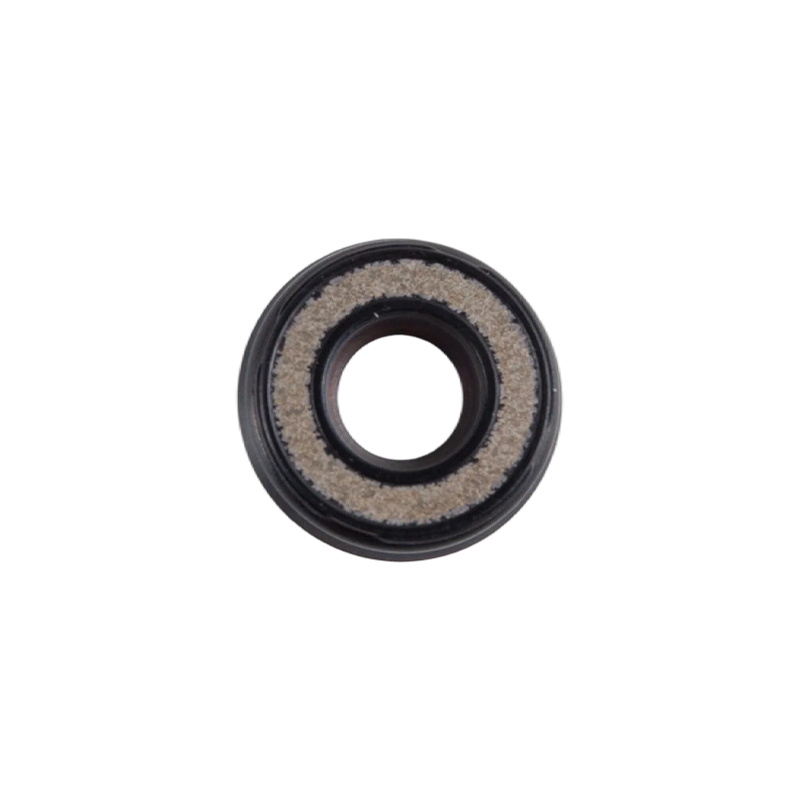
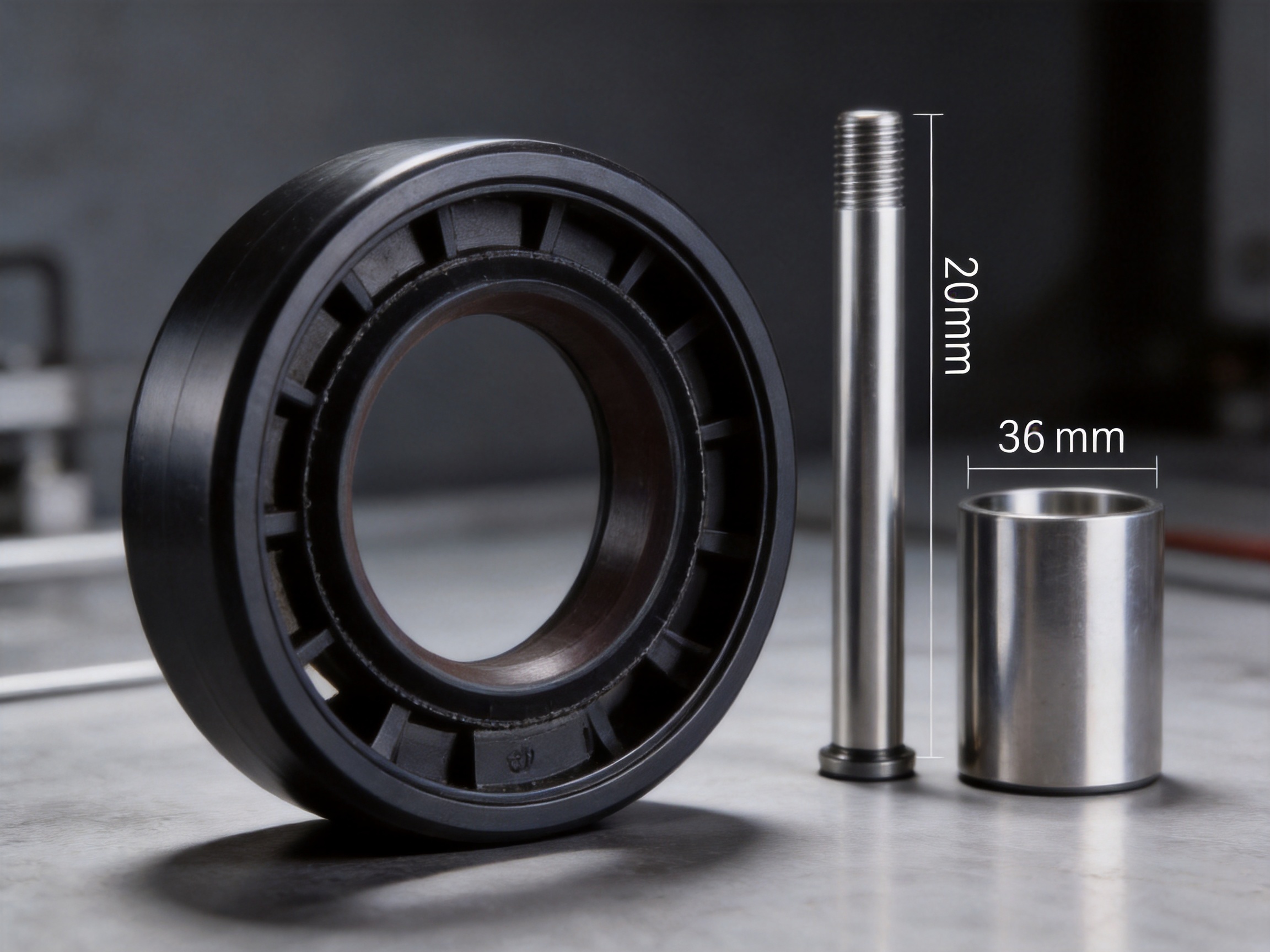
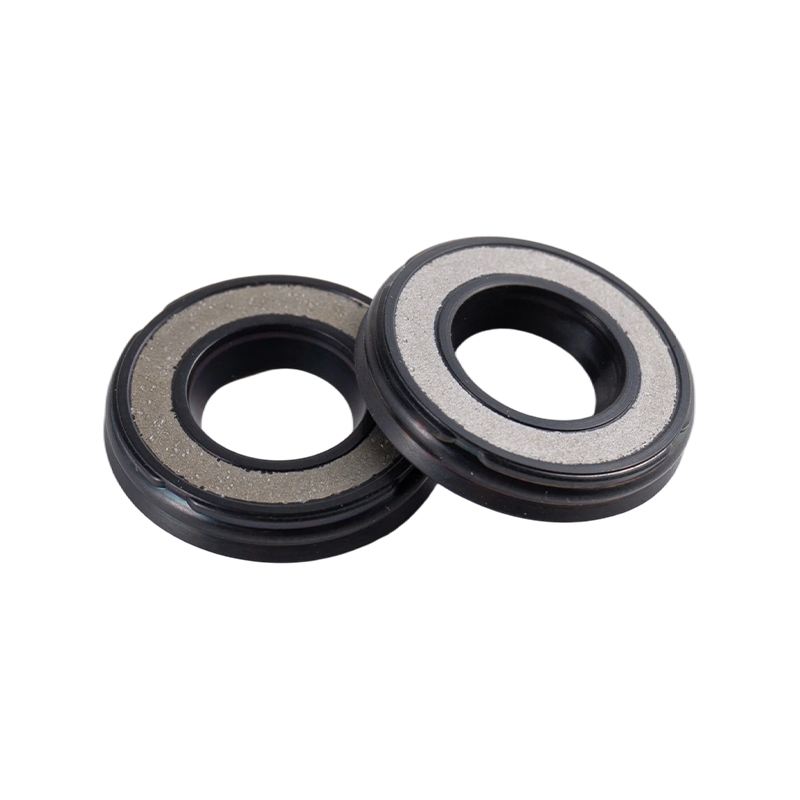
The 6000N Giant-Thrust Heavy Seal is designed for applications requiring unusually high load capacity within a compact sealing profile. Identified by product code A-1-035, this Y-type oil seal ring has an outside diameter of 37 mm, an inside diameter of 19.1 mm, and a height of 5 mm. Its recommended structural application is a steel pipe with a 36 mm inner diameter paired with a 20 mm piston rod. The design pressure range is listed as 100–6000N, making it the largest and most heavily rated product in the supplied product list.
Its central value lies in the combination of a reinforced section, high load capability, and low deformation. The seal is manufactured from NBR, a material widely used for oil resistance, elasticity, and dependable general-purpose sealing performance. By combining this elastomer with a geometry intended for heavy thrust conditions, the product addresses the practical problems that arise when ordinary seals are exposed to excessive axial force or demanding rod movement.
6000N Giant-Thrust Heavy Seal
Product Overview
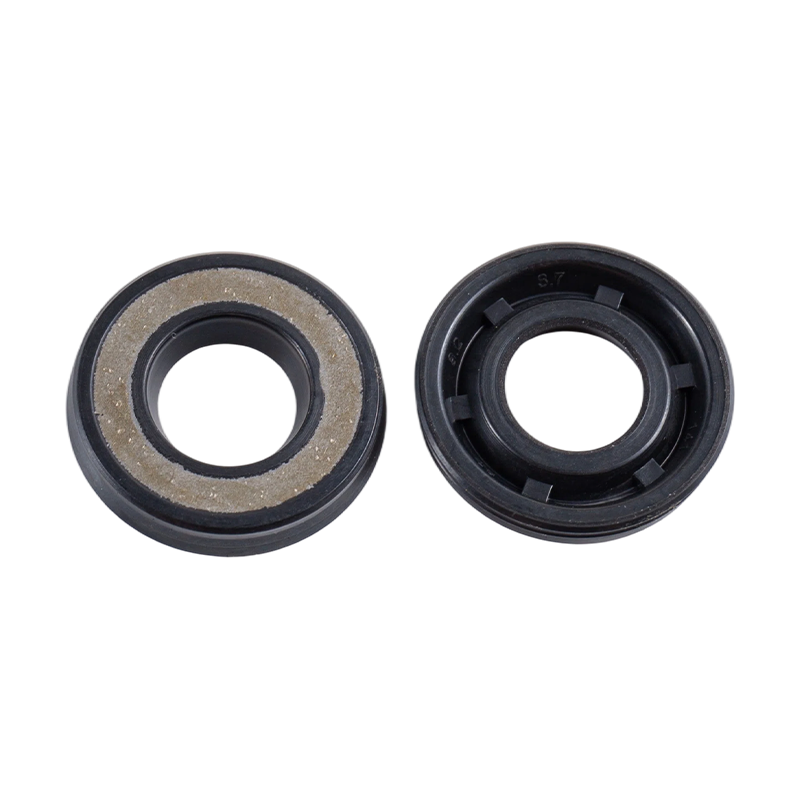
The 6000N Giant-Thrust Heavy Seal is a specialized Y-type oil seal ring developed for demanding gas spring and damper structures. Its 37 mm outside diameter gives it the largest external dimension among the listed products, while its 19.1 mm internal diameter is suited to a nominal 20 mm piston rod in a 36 mm steel pipe. The 5 mm section height provides a compact installation envelope while allowing the sealing profile to retain a reinforced load-bearing structure.
The designation “Giant-Thrust Heavy Seal” reflects the product’s principal purpose: managing very high mechanical loading without excessive distortion. The product is specified for a design applicable pressure range of 100–6000N. In this context, the force rating is particularly relevant to gas spring and damper assemblies in which the seal is exposed to strong axial loads, pressure-induced forces, and the frictional effects of a moving piston rod.
Unlike a basic static gasket, a Y-type oil seal ring must interact dynamically with the piston rod and housing. Its sealing lips or contact surfaces need to remain sufficiently engaged with the mating components while still allowing controlled movement. If the seal is too soft, it may be squeezed, rolled, or permanently deformed. If it is too rigid, it may create excessive friction or fail to follow small surface irregularities. The A-1-035 design is intended to balance these competing requirements through a reinforced cross-section and carefully selected NBR material.
| Product Attribute | Specification |
| Product name | 6000N Giant-Thrust Heavy Seal |
| Product category | Y-Type Oil Seal Ring |
| Product code | A-1-035 |
| Outside diameter | 37 mm |
| Inside diameter | 19.1 mm |
| Height | 5 mm |
| Recommended structural pairing | 36 mm steel pipe inner diameter × 20 mm piston rod diameter |
| Design applicable pressure range | 100–6000N |
| Material | NBR |
| O-ring adapter | Not specified |
Why High-Thrust Sealing Is Difficult
In a conventional low-load assembly, the sealing element may only need to prevent fluid migration and maintain contact during relatively gentle movement. High-thrust systems are more complicated. The force transmitted through the rod and cylinder can place the seal under compression, shear, and friction simultaneously. The seal may also be affected by pressure fluctuations, temperature changes, surface finish, installation tolerances, and repeated cycling.
When the applied load increases, the sealing ring can experience a tendency to deform away from its designed profile. Excessive deformation may open a leakage path or alter the contact pressure distribution. In dynamic equipment, deformation can also produce uneven friction. One section of the seal may press too strongly against the rod while another section loses contact. This uneven condition can cause stick-slip motion, localized wear, heat generation, and eventual loss of sealing performance.
A high-thrust seal must therefore do more than present a tight fit at the time of assembly. It must retain its shape under load. It must remain stable in the housing. It must maintain appropriate contact against the moving piston rod. It must accommodate normal manufacturing and assembly variation without collapsing or extruding. These requirements explain why a reinforced heavy-duty profile can offer a meaningful advantage over a standard light-duty oil seal.
The A-1-035 product is specifically positioned for this demanding operating environment. Its reinforced section is intended to improve resistance to distortion, while its low-deformation design helps preserve the original sealing geometry. These characteristics are especially valuable in structures described as 36×20, where a 36 mm steel pipe inner diameter is matched with a 20 mm piston rod diameter.
Reinforced Construction and Low Deformation
The most important design feature of the 6000N Giant-Thrust Heavy Seal is its reinforced section. Reinforcement provides structural support around the sealing profile, helping the ring withstand the forces generated by a high-load gas spring or damper. Under these conditions, a seal with insufficient support may flex excessively or lose its intended lip position. A reinforced design is better suited to maintaining controlled contact under heavy thrust.
Low deformation is equally important. A sealing ring that changes shape significantly during operation may no longer distribute contact pressure evenly. It may also become more sensitive to pressure direction, rod movement, or small dimensional variations. By limiting deformation, the A-1-035 design aims to preserve a stable interface between the seal, piston rod, and housing.
In practical terms, reduced deformation can support several performance objectives. It can help maintain a more consistent sealing line, reduce the possibility of pressure-driven leakage, and control friction changes during repeated cycling. It can also improve predictability during product testing because the seal is less likely to shift from its original geometry under load.
The reinforced profile should not be viewed only as a method of increasing force capacity. It also supports reliability. When a seal retains its form, the surrounding components experience more consistent conditions. The piston rod can move with fewer sudden changes in resistance, the working medium is less likely to pass the sealing interface, and the system can maintain its intended force characteristics for a longer operating period.
Advantages Compared with Conventional Light-Duty Seals
Many standard oil seal rings are appropriate for moderate loads and ordinary operating conditions. However, a light-duty profile may not be the best choice for a system designed around high thrust. The 6000N Giant-Thrust Heavy Seal provides several application-level advantages over seals selected only by nominal diameter.
Higher Load-Oriented Design
The stated 100–6000N design applicable pressure range clearly positions this product for high-force structures. Instead of treating load as a secondary consideration, the product is designed around it. This allows engineers and purchasers to select a seal according to the mechanical demands of the assembly rather than relying only on bore size or general appearance.
Greater Resistance to Profile Collapse
A standard seal can lose effectiveness if its cross-section is compressed or displaced beyond its intended working condition. The reinforced section of the A-1-035 is intended to resist such profile collapse. This is especially relevant where the seal is exposed to strong thrust, repeated compression, or pressure variation.
Improved Suitability for 36×20 Structures
The product is identified for a steel pipe inner diameter of 36 mm and a piston rod diameter of 20 mm. This dimensional information gives manufacturers a clearer basis for compatibility evaluation. Rather than adapting a general seal through trial and error, designers can begin with a product developed for the relevant structural combination.
Compact 5 mm Height
Heavy-duty capability does not always mean a large installation envelope. With a height of 5 mm, the seal can be considered for assemblies where axial space is limited. A compact section can help product designers preserve the overall dimensions of a gas spring or damper while still selecting a more robust sealing element.
Stable NBR Material Platform
NBR is widely recognized as a practical elastomer for many oil-sealing applications. Its combination of elasticity, oil resistance, and broad industrial familiarity makes it suitable for a large range of gas spring, damper, hydraulic, automotive, furniture, and equipment applications. Using NBR also supports manufacturing consistency because the material is well established in sealing production and quality control.
More Predictable Product Selection
Product selection becomes more reliable when a seal is described by its dimensions, material, load range, and intended structure. The A-1-035 specification includes all of these core data points. This information helps engineering teams compare the product with existing designs, assess installation compatibility, and determine whether additional verification is necessary.
NBR Material Benefits
NBR, or nitrile butadiene rubber, is commonly chosen for sealing applications involving oils and lubricants. Its practical value comes from its ability to provide resilient contact while resisting many petroleum-based fluids. The exact performance of any NBR formulation depends on its composition, hardness, temperature range, fluid exposure, and operating conditions. Nevertheless, NBR remains one of the most widely used elastomers for general oil seal production.
For a Y-type oil seal ring, elasticity is essential. The seal must press against the piston rod and maintain contact as the rod moves. If the material cannot recover after movement or compression, the sealing line may weaken. NBR offers the elastic response needed for this type of dynamic interface while also providing the material familiarity required for efficient industrial production.
The material is also suitable for applications where the seal must balance flexibility and resistance to deformation. A seal that is extremely flexible may not support high loads effectively, while a seal that is excessively hard may generate unnecessary friction. The A-1-035 product combines NBR with a reinforced design so that the material and geometry work together rather than relying on material hardness alone.
Material selection should always be verified against the final application. Buyers should consider operating temperature, oil type, gas or fluid composition, rod speed, pressure conditions, surface finish, and expected service life. NBR is a strong general-purpose choice, but specialized environments may require a different compound. The manufacturer’s technical team can support customized evaluation where application conditions exceed normal assumptions.
Dimensional Compatibility and Installation Considerations
The A-1-035 seal has an outside diameter of 37 mm, an inside diameter of 19.1 mm, and a height of 5 mm. These dimensions should be checked against the actual housing, groove, piston rod, and assembly drawings before production use. Nominal dimensions alone are not sufficient to confirm compatibility because groove width, groove depth, corner radii, clearance, rod tolerance, and surface finish can also affect sealing behavior.
The listed structural application is a steel pipe with a 36 mm inner diameter and a 20 mm piston rod diameter. This information serves as an important starting point for design review. The small difference between the nominal rod diameter and the seal’s listed inside diameter contributes to the working contact condition, but the final installation must follow the approved design dimensions and tolerances.
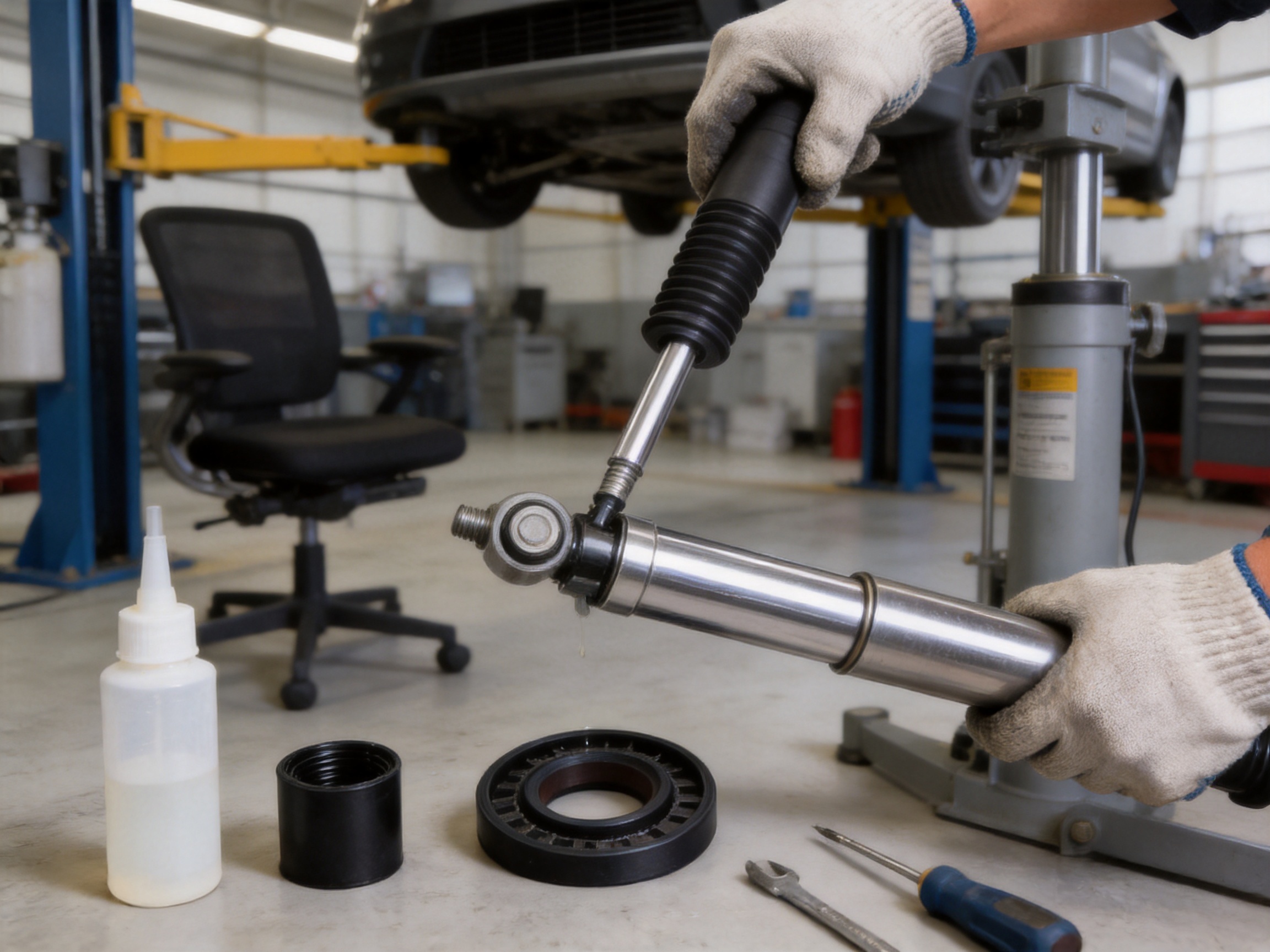
During installation, the sealing ring should be protected from sharp edges, burrs, damaged grooves, and contaminated tools. Any cutting or tearing of the sealing lip can create a leakage path that may not be visible during assembly. The mating surfaces should be clean, and suitable assembly lubrication should be used when permitted by the application. The ring should not be twisted, rolled, or forced into an undersized groove.
Correct orientation is also important for a Y-type profile. The sealing direction, pressure side, and movement direction should be identified from the approved technical drawing or installation instruction. If the seal is installed in the wrong orientation, the sealing action may be reduced even when the dimensions appear correct.
After assembly, functional testing should include leakage inspection, rod movement evaluation, and, where appropriate, force measurement across the intended operating range. Testing helps identify problems related to installation, tolerance stack-up, lubrication, or surface condition before the assembly reaches mass production.
Application Areas
Gas Springs
Gas springs rely on controlled internal pressure and smooth rod movement. The seal is a critical barrier between the pressurized working area and the external environment. In high-force gas springs, the sealing element must withstand significant thrust while minimizing friction and leakage. The 6000N rating makes this product particularly relevant to heavy gas spring structures where ordinary profiles may not provide sufficient mechanical support.
Dampers
Dampers require controlled movement and stable sealing over repeated cycles. Whether used in furniture, vehicles, industrial equipment, or other mechanisms, a damper may experience alternating loads and frequent rod travel. A low-deformation seal helps maintain a stable interface as the rod moves through the sealing zone.
Automotive Components
Automotive applications often combine vibration, repeated motion, temperature variation, and strict reliability expectations. Seals used in gas struts, dampers, seat systems, hood supports, tailgate mechanisms, and other rod-based assemblies must maintain performance under changing loads. The heavy-duty structure of the A-1-035 can be evaluated for applications where a 20 mm rod and 36 mm housing structure are appropriate.
Furniture and Adjustable Support Systems
Furniture mechanisms can require strong gas springs to support heavy lids, doors, reclining systems, height-adjustable components, and movable frames. Although these products may operate in homes, offices, hospitals, or commercial spaces, their gas springs can be exposed to high thrust and frequent user cycles. A reliable seal helps provide controlled movement and reduces the risk of pressure loss.
Industrial Equipment
Industrial actuators and support systems may use sealing rings in demanding environments where downtime is costly. A high-load seal can be considered for equipment that uses pressurized cylinders, dampers, or gas spring assemblies. The final suitability depends on operating media, temperature, speed, pressure, and the required service life.
Medical and Specialized Equipment
Medical equipment and specialized devices often require smooth, predictable movement and a clean, dependable mechanical design. Sealing components can contribute to the long-term performance of adjustable supports, positioning mechanisms, and controlled-motion assemblies. Product selection for these applications should include additional review of material compatibility, cleanliness, traceability, and regulatory requirements.
Manufacturing Strengths and Process Capability
The product is supplied by Ningguo Jnsseals Sealing Technology Co., Ltd., a high-tech enterprise founded in 2019 and headquartered in Anhui, China. The company focuses on sealing technology for gas springs and dampers, along with related O-ring products. This specialization is important because product performance depends not only on rubber formulation but also on practical knowledge of rod seals, gas spring structures, pressure behavior, and dynamic sealing interfaces.
The company reports strong research and development capabilities, advanced production equipment, and a professional technical service team. These capabilities create a foundation for producing seals with controlled dimensions and repeatable profiles. In a high-thrust product, manufacturing consistency is particularly important because small variations in lip geometry, diameter, height, or cross-section can influence contact pressure and assembly behavior.
Material Preparation and Compound Control
Manufacturing begins with suitable raw material preparation. For an NBR seal, the rubber compound must be managed so that the finished material provides the required balance of elasticity, strength, oil resistance, and deformation control. Compound processing may include weighing, mixing, conditioning, and inspection before molding. Consistent material preparation supports consistent curing and reduces variation between production batches.
For high-load products, compound control should be coordinated with profile design. A material that performs well in a standard seal may not deliver the same result in a reinforced heavy-duty profile unless the formulation and curing conditions are properly matched. The manufacturer’s experience in gas spring and damper sealing enables the product design and material process to be considered together.
Precision Tooling and Profile Formation
A Y-type oil seal ring depends on the accuracy of its sealing lips, support sections, and external locating surfaces. Precision tooling is therefore essential. The mold must reproduce the intended 37 mm outside diameter, 19.1 mm inside diameter, 5 mm height, and reinforced internal geometry with stable repeatability.
Controlled molding helps prevent defects such as incomplete filling, flash, surface voids, dimensional distortion, or uneven lip formation. In a heavy-thrust seal, these defects can affect not only appearance but also the way force is distributed during operation. Advanced production equipment can improve process stability, especially when combined with regular tool maintenance and dimensional inspection.
Vulcanization and Curing Management
Rubber sealing performance depends strongly on vulcanization. If curing is insufficient, the material may lack strength and resilience. If curing is excessive or poorly controlled, the seal may become too hard, brittle, or dimensionally unstable. A controlled curing process helps the NBR reach the intended balance between elastic recovery and mechanical support.
For the A-1-035, curing consistency is particularly relevant to low-deformation behavior. The reinforced section must retain its structural properties, while the sealing lip must remain flexible enough to maintain contact with the piston rod. A stable curing process supports both functions and reduces batch-to-batch variation.
Deflashing and Surface Finishing
After molding, excess rubber may need to be removed from parting lines or functional edges. Deflashing must be performed carefully so that the sealing lip, contact surfaces, and locating features remain undamaged. Poorly controlled finishing can create cuts, nicks, or uneven edges that compromise the seal.
Surface inspection is important because the sealing interface must be continuous. Visual checks, dimensional checks, and appropriate sampling procedures can identify defects before products are packed and shipped. A professional technical service team can also help customers determine which inspection points are most important for a specific assembly.
Dimensional Inspection
Inspection of outside diameter, inside diameter, height, profile geometry, and critical lip features helps verify that the product remains within the intended specification. For a seal used in a 36×20 structure, dimensional stability is essential because the component must fit into the housing while maintaining the proper relationship with the piston rod.
Dimensional inspection may be supported by gauges, optical measurement equipment, profile projectors, coordinate measurement systems, or other suitable tools. The exact inspection method depends on the production volume, tolerance requirements, and customer quality standard. The important principle is that the critical dimensions must be measurable, repeatable, and linked to the product specification.
Performance Testing
Performance testing can include compression evaluation, material property testing, leakage assessment, friction measurement, and dynamic cycling. Testing under representative conditions helps determine whether the seal maintains its intended behavior when exposed to load, movement, pressure, and temperature.
Because the A-1-035 is intended for loads up to 6000N, application-specific validation is especially valuable. Testing should reproduce the actual rod diameter, housing geometry, working medium, temperature, movement profile, and expected cycle count whenever possible. Such testing gives customers greater confidence than relying only on a dimensional match.
Research, Development, and Customization
The company provides customized sealing solutions that can include product design, testing, and technical consultation. This is an important advantage for customers whose requirements do not match a standard catalog part exactly. Gas spring and damper manufacturers may need adjustments to dimensions, material formulation, sealing geometry, friction behavior, or load range.
Customization is most effective when it begins with complete application data. Customers should provide the rod diameter, cylinder or pipe dimensions, installation space, operating force, pressure conditions, working temperature, movement speed, cycle count, fluid or gas type, surface finish, and leakage expectations. With this information, the engineering team can assess whether the standard A-1-035 is appropriate or whether a modified design should be considered.
Product development can include design review, prototype production, sample testing, performance comparison, and design refinement. This process reduces the risk of choosing a seal solely by nominal dimensions. It also allows the seal to be integrated into the broader system rather than treated as an isolated component.
A strong technical service capability is particularly useful when customers are replacing a competitor’s seal or solving a recurring leakage problem. The issue may not be caused by the seal material alone. It could result from an incorrect groove, excessive rod roughness, misalignment, insufficient lubrication, installation damage, or an unsuitable pressure direction. Technical consultation can help identify the actual cause and recommend a more complete solution.
Quality and Supply Considerations
For industrial buyers, quality is not limited to the performance of one sample. It also includes repeatability across production lots, reliable documentation, stable packaging, and responsive technical support. A seal supplier should be able to connect the product code, material, dimensions, manufacturing batch, inspection results, and customer order information in a clear quality system.
The A-1-035 product code provides a useful reference for purchasing and engineering communication. When ordering, buyers should specify the product code, required quantity, application structure, material requirement, and any special inspection or packaging requirements. Clear communication reduces the risk of receiving a visually similar but technically different seal.
Packaging should protect the rings from contamination, deformation, ultraviolet exposure, excessive heat, and mechanical damage during storage and transport. Seals should be stored in a clean, dry environment and protected from sharp objects or compression that could change their shape before installation.
For long-term supply programs, customers may benefit from an agreed inspection plan. This plan can define critical dimensions, acceptable appearance, material verification, sampling frequency, packaging identification, and performance validation. Such arrangements are valuable for automotive, furniture, medical, and industrial customers that require stable quality over repeated orders.
Engineering Selection Guide
Before selecting the 6000N Giant-Thrust Heavy Seal, engineers should confirm the basic dimensional relationship between the seal, housing, and piston rod. The 37 mm outside diameter must fit the intended housing or groove, while the 19.1 mm inside diameter must provide the required contact condition for the 20 mm rod. The 5 mm height must be compatible with available axial space.
Next, the load should be reviewed. The listed design applicable pressure range is 100–6000N. The expected operating force should remain within the validated range, and the customer should consider whether peak loads, shock loads, or assembly forces may exceed normal operating values. If the application includes unusual transients, additional testing is recommended.
Operating conditions should then be compared with NBR compatibility. The working oil, lubricant, gas, temperature, and environmental exposure can affect elastomer life. NBR is a practical material for many oil-related uses, but the exact compound should be confirmed when the application involves aggressive media, extreme temperatures, or unusual additives.
Rod and housing quality should also be evaluated. Surface roughness, hardness, concentricity, alignment, and burr-free edges can significantly affect seal life. Even a well-designed heavy-duty seal cannot compensate for a badly damaged rod or an incorrectly machined groove.
Finally, a functional test should be performed using representative components. Measure leakage, rod force, movement smoothness, and any changes after repeated cycles. This validation is especially important when the seal is being used in a new gas spring design or replacing a product with a different profile.
Comparison Framework for Purchasing Teams
Purchasing teams often compare seals by unit price, but the lowest initial price does not always represent the lowest total cost. A seal that deforms under load may cause leakage, warranty claims, rework, field replacement, or damage to adjacent components. A more robust product can be economically advantageous when it reduces these risks.
When comparing the A-1-035 with competing products, buyers should review several factors. These include load rating, actual dimensions, material, deformation resistance, test results, manufacturing repeatability, technical support, customization capability, and delivery reliability. A product should not be considered equivalent simply because its outside diameter appears similar.
The A-1-035 offers a clear competitive position through its combination of a 6000N design range, reinforced section, low-deformation objective, 37 mm outside diameter, and compatibility with a 36×20 structure. Its value is strongest in applications where the seal must carry or withstand substantial thrust while remaining within a compact 5 mm height.
Another differentiating factor is the supplier’s specialization in gas spring and damper sealing. A manufacturer focused on this field is more likely to understand the relationship between sealing performance, gas spring force, rod movement, and system durability than a general rubber molding supplier with no application-specific experience.
Maintenance and Service-Life Practices
Seal service life depends on the entire assembly. Operators should avoid exposing the piston rod to scratches, rust, dirt, or impact. Contaminants carried into the sealing interface can abrade the NBR surface and accelerate wear. Where the equipment design permits, rod cleanliness should be maintained throughout service.
Abnormal force, noise, jerky movement, or visible oil leakage may indicate a sealing problem or a wider mechanical issue. Early inspection can prevent a minor problem from developing into a complete loss of gas spring or damper function. If a seal is replaced, the groove and rod should also be inspected rather than installing a new ring into a damaged assembly.
Replacement seals should be stored in their original protective packaging until needed. They should not be bent sharply, compressed under heavy objects, or exposed unnecessarily to heat, sunlight, ozone-generating equipment, or chemical contamination. Correct storage helps preserve the material’s elastic properties before installation.
Where equipment operates continuously or under high load, preventive maintenance schedules should be based on cycle count, force level, environment, and historical failure data. High-thrust applications deserve particular attention because seal wear can progress quickly if the rod surface or alignment is not maintained.

Q&A
What type of product is the 6000N Giant-Thrust Heavy Seal?
It is a Y-type oil seal ring designed for high-load gas spring and damper structures. The product code is A-1-035, and its material is NBR.
What is the maximum listed load range?
The design applicable pressure range is listed as 100–6000N. The actual suitability of the product must be confirmed against the complete operating conditions, including peak load, movement, temperature, medium, and assembly geometry.
What are the product dimensions?
The specified dimensions are 37 mm outside diameter, 19.1 mm inside diameter, and 5 mm height.
What structure is the seal designed to fit?
The product is identified for a steel pipe inner diameter of 36 mm and a piston rod diameter of 20 mm. Customers should verify the complete groove and tolerance design before installation.
Why is the seal described as reinforced?
The product includes a reinforced section intended to improve resistance to deformation under high thrust. This helps the seal maintain a more stable profile and contact condition than a lighter-duty design may provide.
What is the main advantage of low deformation?
Low deformation helps the seal retain its intended geometry when exposed to pressure and mechanical force. This can support more consistent contact, controlled friction, and improved resistance to leakage caused by profile distortion.
Why is NBR used for this product?
NBR provides a practical combination of elasticity and resistance to many oils and lubricants. It is widely used in dynamic and static sealing applications. The final material suitability should be checked against the application’s temperature and fluid conditions.
Can the seal be used in automotive applications?
It can be evaluated for automotive gas springs, dampers, support mechanisms, and other rod-based assemblies with compatible dimensions and operating conditions. Application testing is recommended before mass production.
Can the manufacturer provide customized sealing solutions?
Yes. The company reports capabilities in product design, testing, and technical consultation. Customers can discuss modified dimensions, materials, profiles, or application requirements with the technical team.
What information should be supplied when requesting technical advice?
Useful information includes rod diameter, housing dimensions, groove details, operating force, pressure, temperature, movement speed, cycle count, working medium, surface finish, leakage requirements, and expected service life.
How should the seal be installed?
The installation area should be clean and free from burrs or sharp edges. The seal should be installed in the correct orientation, protected from cuts and twisting, and assembled according to the approved drawing or technical instruction. Suitable assembly lubrication may be used when permitted by the application.
What should be checked before ordering?
Buyers should confirm the product code, dimensions, material, load range, structural compatibility, operating medium, temperature, and required quantity. They should also determine whether special inspection documents or packaging requirements are needed.
Does the 6000N rating guarantee performance in every application?
No. The rating is a design reference, not a replacement for application validation. Actual performance depends on the complete system, including the housing, rod, surface finish, alignment, fluid, temperature, speed, installation, and load profile.
Conclusion
The 6000N Giant-Thrust Heavy Seal is a specialized NBR Y-type oil seal ring for high-load gas spring and damper applications. Its 37 mm outside diameter, 19.1 mm inside diameter, and 5 mm height are designed for a 36×20 structural combination, while its 100–6000N design applicable pressure range places it at the heavy-duty end of the supplied product selection.
The product’s main advantages are its reinforced section, low-deformation design, compact profile, and suitability for demanding thrust conditions. Compared with a conventional light-duty seal, it offers a more application-focused solution for systems where high force, repeated movement, and shape retention are central concerns.
Its performance is supported by the supplier’s focus on gas spring and damper sealing technology, research and development capability, production equipment, technical service, and customized product development. Controlled material preparation, precision molding, curing management, finishing, dimensional inspection, and application testing all contribute to a more reliable sealing solution.
For manufacturers seeking a high-capacity seal for a 36 mm housing and 20 mm piston rod, the A-1-035 provides a strong starting point for engineering evaluation. Proper installation, compatible operating conditions, quality mating surfaces, and representative validation remain essential. When these factors are addressed together, the 6000N Giant-Thrust Heavy Seal can help support reliable, low-deformation sealing in heavy-duty gas spring, damper, automotive, furniture, industrial, and specialized equipment applications.
References
1. Product specification for 6000N Giant-Thrust Heavy Seal, Product Code A-1-035.
2. Manufacturer-provided information on NBR Y-type oil seal rings and gas spring sealing applications.
3. Manufacturer-provided company profile describing research and development, production equipment, technical service, and customized sealing solutions.
4. General engineering principles for elastomeric seals, dynamic rod sealing, and high-load gas spring applications.
5. General quality-control practices for molded rubber seals, including material preparation, vulcanization, dimensional inspection, and performance testing.
Product: 6000N Giant-Thrust Heavy Seal

PREV:No previous article
NEXT:16mm Industrial Fluid Seal Ring: Reliable O-Ring Sealing for Dynamic and Static Applications
NEXT:16mm Industrial Fluid Seal Ring: Reliable O-Ring Sealing for Dynamic and Static Applications


Want to know more
about us?
about us?

Precision sealing for gas springs and dampers. Durable, wear-resistant, and built for long-life performance in demanding applications.
Product Categories
Quick Links
Contact Us
-
Email: jns@jnsseals.cn

-
Manager Gong: +86-18563770820

-
Manager Wang: +8615357558902
-
No. 5, Meilin Avenue, Meilin Industrial Development Zone, Ningguo City, Anhui Province, China

