

 English
 русский
 Deutsch
 Türk
Türk 中文简体
中文简体
6000N Giant-Thrust Heavy Seal for High-Load Gas Springs and Dampers
6000N Giant-Thrust Heavy Seal for High-Load Gas Springs and Dampers
6000N Giant-Thrust Heavy Seal for High-Load Gas Springs and Dampers
6000N Giant-Thrust Heavy Seal for High-Load Gas Springs and Dampers
6000N Giant-Thrust Heavy Seal for High-Load Gas Springs and Dampers
6000N Giant-Thrust Heavy Seal for High-Load Gas Springs and Dampers
6000N Giant-Thrust Heavy Seal for High-Load Gas Springs and Dampers
6000N Giant-Thrust Heavy Seal for High-Load Gas Springs and Dampers
6000N Giant-Thrust Heavy Seal for High-Load Gas Springs and Dampers
6000N Giant-Thrust Heavy Seal for High-Load Gas Springs and Dampers
6000N Giant-Thrust Heavy Seal for High-Load Gas Springs and Dampers
6000N Giant-Thrust Heavy Seal for High-Load Gas Springs and Dampers
6000N Giant-Thrust Heavy Seal for High-Load Gas Springs and Dampers
6000N Giant-Thrust Heavy Seal for High-Load Gas Springs and Dampers
6000N Giant-Thrust Heavy Seal for High-Load Gas Springs and Dampers
6000N Giant-Thrust Heavy Seal for High-Load Gas Springs and Dampers

Shen Ruolan — After-Sales Technical Consultant
Home / Author / Shen Ruolan — After-Sales Technical Consultant / 6000N Giant-Thrust Heavy Seal for High-Load Gas Springs and Dampers
NEW Category
Contact us
6000N Giant-Thrust Heavy Seal for High-Load Gas Springs and Dampers
Content
- 1 Product Overview
- 2 Why High-Load Sealing Requires a Specialized Design
- 3 Structural Advantages of the A-1-035 Seal
- 4 NBR Material and Its Application Value
- 5 Advantages Compared with General-Purpose Competitor Seals
- 6 Manufacturing Strengths and Production Capabilities
- 7 Recommended Applications
- 8 Installation and Design Considerations
- 9 Quality Control for Heavy Sealing Products
- 10 Total Cost and Supply Chain Benefits
- 11 How the Product Supports Product Development
- 12 Comparison Checklist for Buyers
- 13 Storage and Handling Recommendations
- 14 Technical Service and Custom Solutions
- 15 Frequently Asked Questions
- 15.1 What is the 6000N Giant-Thrust Heavy Seal?
- 15.2 What load range is specified for the product?
- 15.3 Which structure is the seal designed to fit?
- 15.4 What material is used?
- 15.5 Why is the reinforced section important?
- 15.6 What does ultra-low deformation mean?
- 15.7 Can the seal be used in every high-load application?
- 15.8 Can the manufacturer provide customized sealing solutions?
- 15.9 What industries can use this seal?
- 15.10 How should the piston rod be prepared?
- 15.11 How can buyers compare this product with a competitor’s seal?
- 15.12 Is the 6000N value a pressure rating?
- 16 Why Choose a Specialized Sealing Manufacturer
- 17 Conclusion
- 18 References
- 19 Product: 6000N Giant-Thrust Heavy Seal
Reliable sealing is one of the most important factors in the service life, safety, and performance of a gas spring or damper. A seal must retain pressure, control friction, resist deformation, and maintain stable operation while exposed to repeated piston movement. When the application requires a high load capacity within a compact 36 × 20 structure, ordinary sealing elements may not provide sufficient mechanical support. The 6000N Giant-Thrust Heavy Seal is designed for this demanding operating environment.
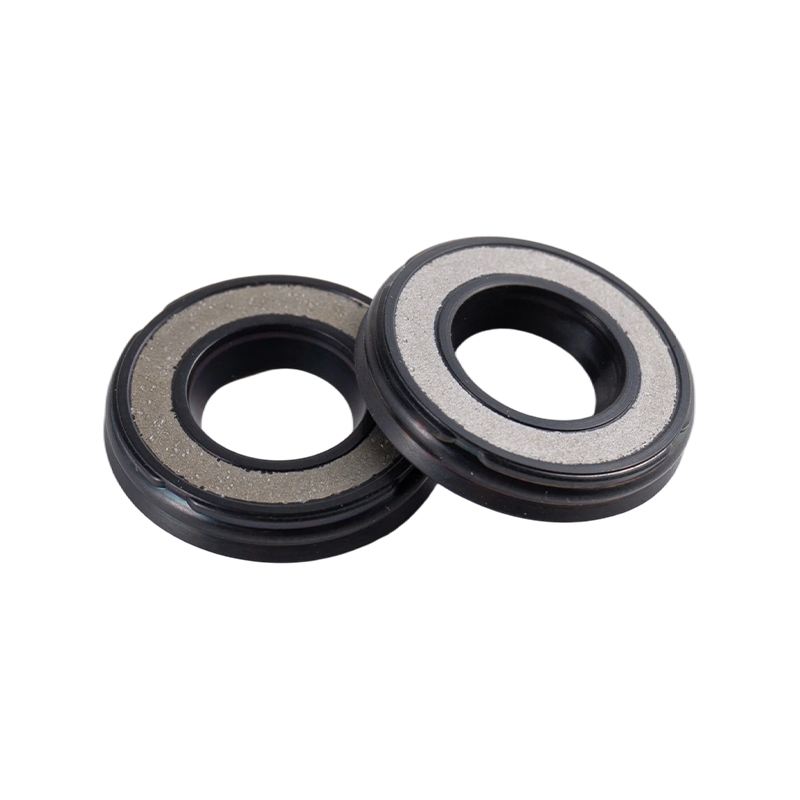
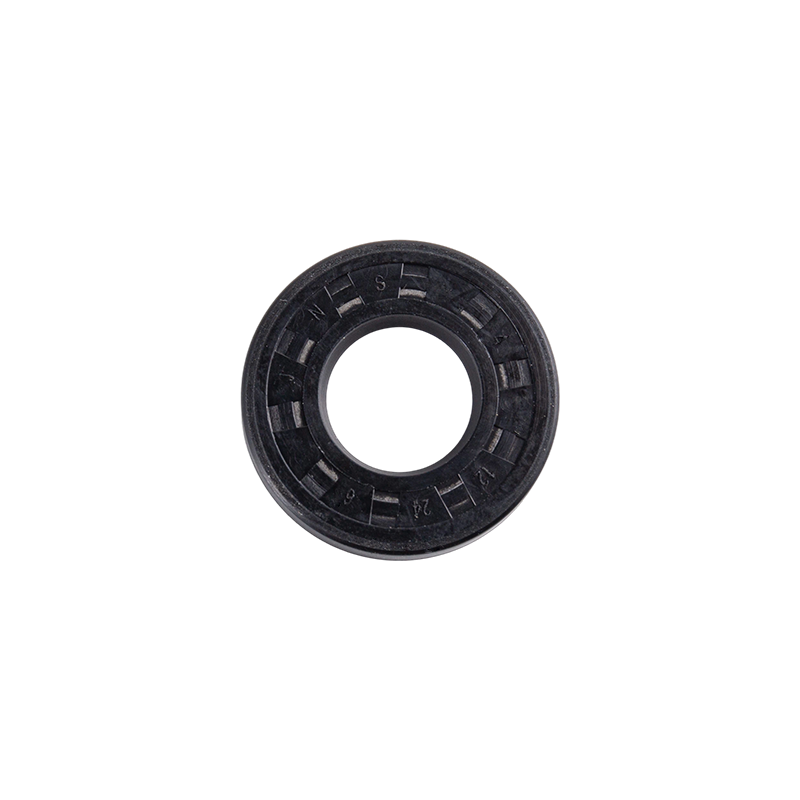
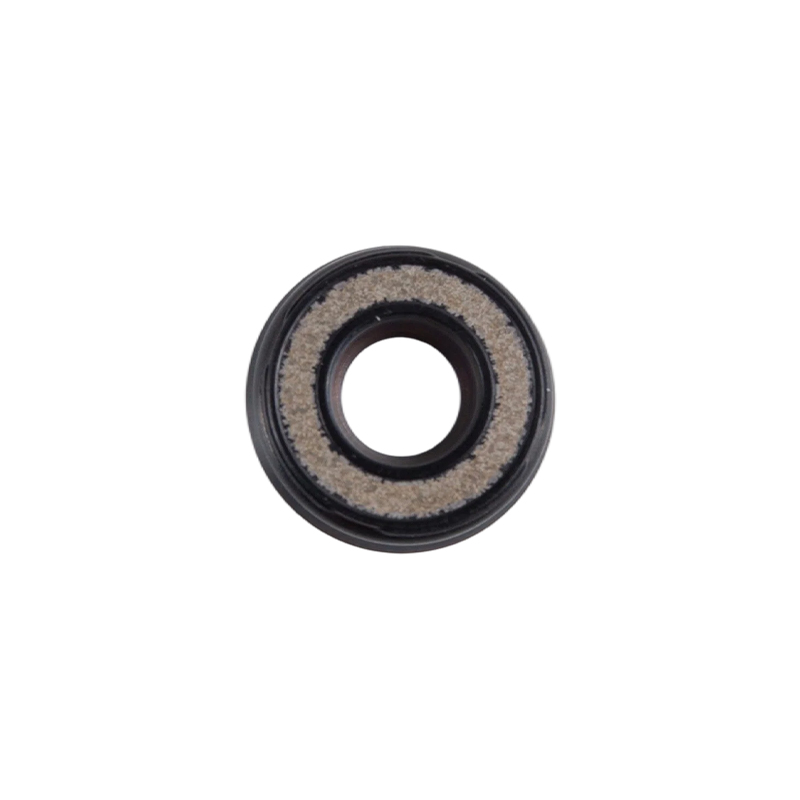
With an outside diameter of 37 mm, an inside diameter of 19.1 mm, and a height of 5 mm, this Y-type oil seal ring is engineered for heavy-duty sealing structures. Its recommended design load range extends from 100N to 6000N, making it suitable for applications in which the seal must withstand substantial axial thrust and repeated mechanical stress. The product is identified by product code A-1-035 and is manufactured from NBR, a widely used elastomer for oil sealing, gas spring, and damper applications.
The seal is intended for steel pipe inner diameter and piston rod diameter combinations of approximately 36 × 20 mm. Its reinforced section and low-deformation design help it remain stable under high loading conditions. Rather than functioning as a basic replacement seal, it is developed as a heavy-load sealing component for demanding assemblies that require a balance of sealing performance, structural strength, and dimensional consistency.
This article examines the product’s construction, material, technical specifications, advantages, manufacturing background, application suitability, installation considerations, quality factors, and selection benefits. It also explains how a specialized sealing manufacturer supports product development through research, testing, production equipment, and technical consultation.
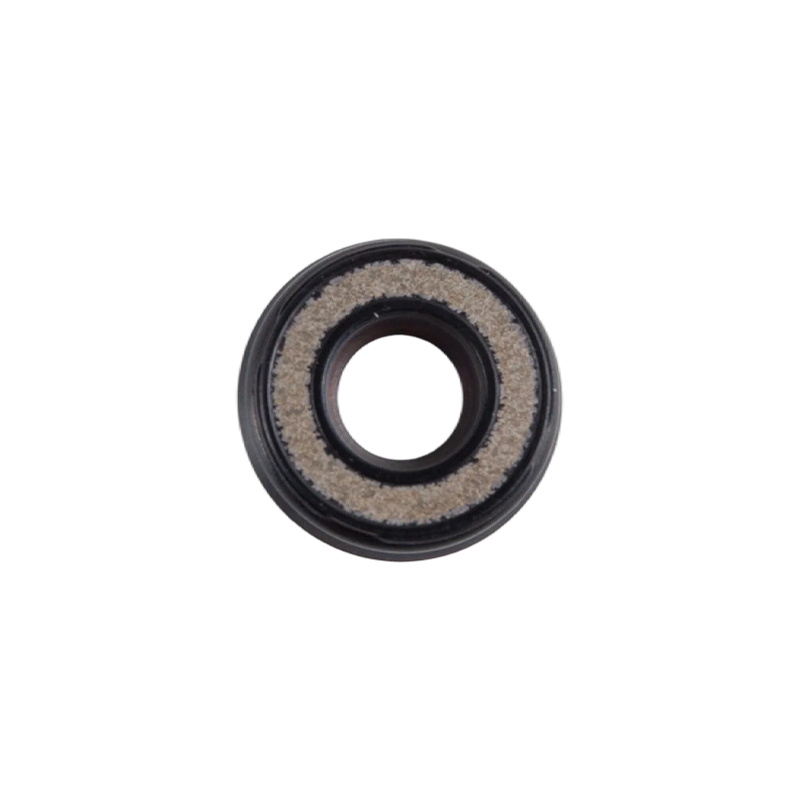
6000N Giant-Thrust Heavy Seal
Product Overview
The 6000N Giant-Thrust Heavy Seal belongs to the Y-Type Oil Seal Ring category. A Y-type profile generally uses sealing lips that create controlled contact with a shaft or piston rod. The geometry is intended to provide sealing contact while allowing the component to accommodate movement and pressure within the assembly. In a gas spring or damper, this profile can help prevent the working medium and lubricating oil from escaping along the piston rod.
The product’s key distinction is its load-oriented design. Many conventional seals are selected primarily according to diameter, material, and basic pressure conditions. In contrast, a heavy seal must also be evaluated according to deformation, extrusion resistance, contact stability, and the amount of mechanical thrust transferred through the sealing structure. The A-1-035 design addresses these requirements with a reinforced section and a structure intended to minimize deformation.
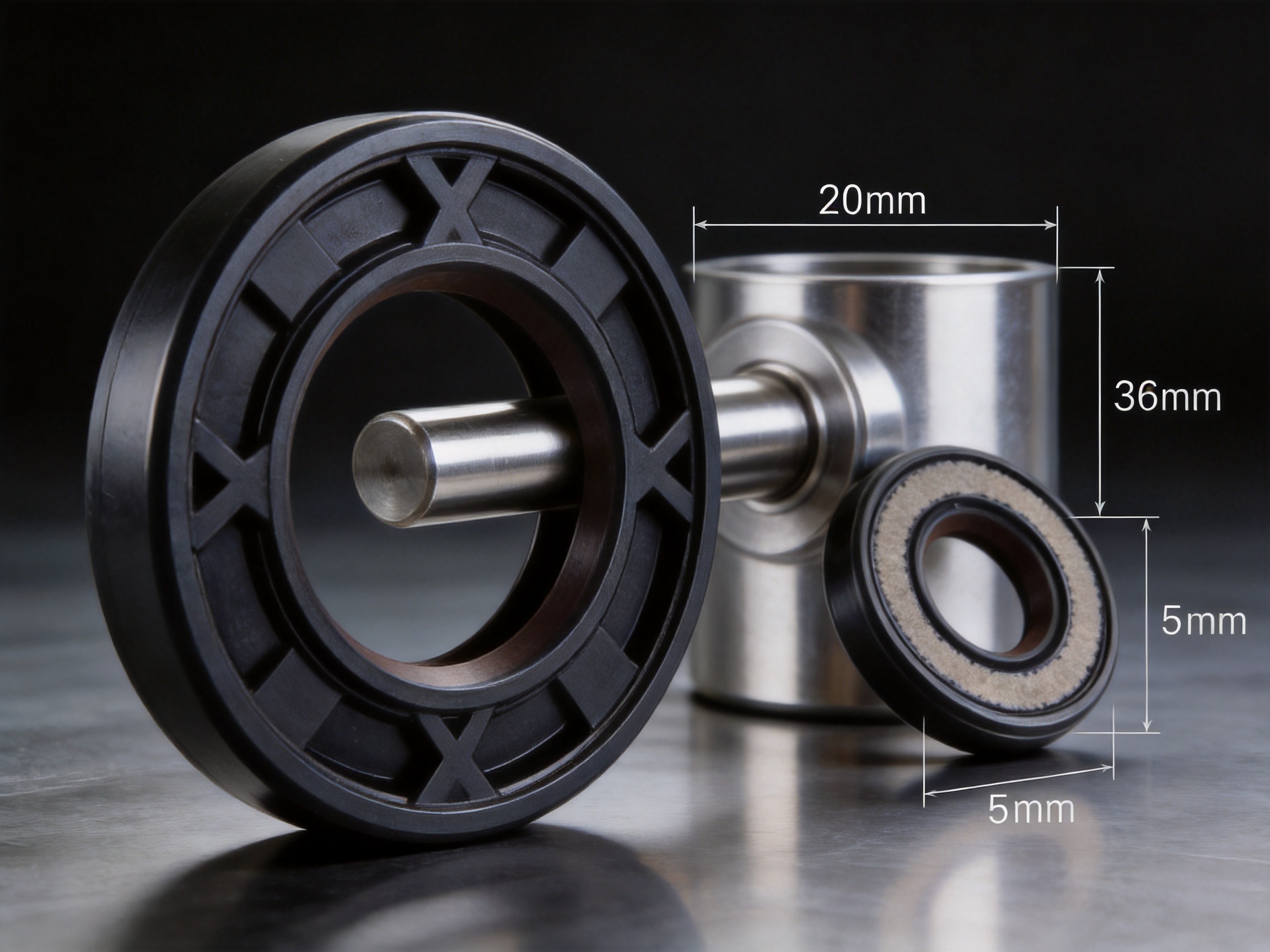
The seal has a 37 mm outside diameter, a 19.1 mm inside diameter, and a 5 mm height. These dimensions allow it to fit a designated 36 mm steel tube and 20 mm piston rod structure when the surrounding groove and assembly tolerances are correctly designed. The dimensional relationship between the seal, housing, piston rod, guide components, and retaining elements is essential to achieving dependable performance.
The stated design applicable load range is 100N to 6000N. This value should be understood as an application design range rather than a universal guarantee for every operating condition. Actual seal life depends on pressure, temperature, piston rod speed, surface finish, lubrication, eccentricity, installation quality, and the compatibility of the working medium with NBR. Engineers should validate the seal in the complete assembly before mass production.
| Item | Specification |
| Product name | 6000N Giant-Thrust Heavy Seal |
| Seal category | Y-Type Oil Seal Ring |
| Product code | A-1-035 |
| Product specification | 37 × 19.1 × 5 mm |
| Outside diameter | 37 mm |
| Inside diameter | 19.1 mm |
| Height | 5 mm |
| Compatible structure | 36 mm steel pipe inner diameter × 20 mm piston rod diameter |
| Material | NBR |
| Design applicable load range | 100N to 6000N |
| O-ring adapter | Not specified |
Why High-Load Sealing Requires a Specialized Design
A gas spring or damper is subjected to several forces at the same time. Internal pressure acts on the piston and rod, while the rod experiences axial movement and may also be exposed to side loading. The seal must maintain contact with the moving rod without creating excessive friction. It must also resist the tendency of pressure to distort the elastomer and force it into clearances.
At higher load levels, even small amounts of deformation can affect the sealing interface. A deformed lip may lose contact in one area and create excess friction in another. This can lead to leakage, uneven rod movement, wear particles, and shortened service life. If the seal is too soft for the application, it may be displaced or extruded. If it is too rigid, it may not follow minor surface irregularities and can increase operating resistance.
The 6000N Giant-Thrust Heavy Seal is designed around this balance. Its reinforced section provides additional support in the body of the seal, while the low-deformation structure helps preserve the intended profile under load. This does not eliminate the need for correct groove dimensions or proper installation, but it gives the application a stronger sealing foundation than a lightly built general-purpose ring.
High-load sealing also places greater demands on manufacturing precision. A difference in lip geometry, height, or material distribution can change contact pressure around the rod. Therefore, the value of a heavy seal is not based solely on its nominal dimensions. It also depends on the consistency with which those dimensions and material properties are produced from one batch to another.
Structural Advantages of the A-1-035 Seal
Reinforced Cross-Section
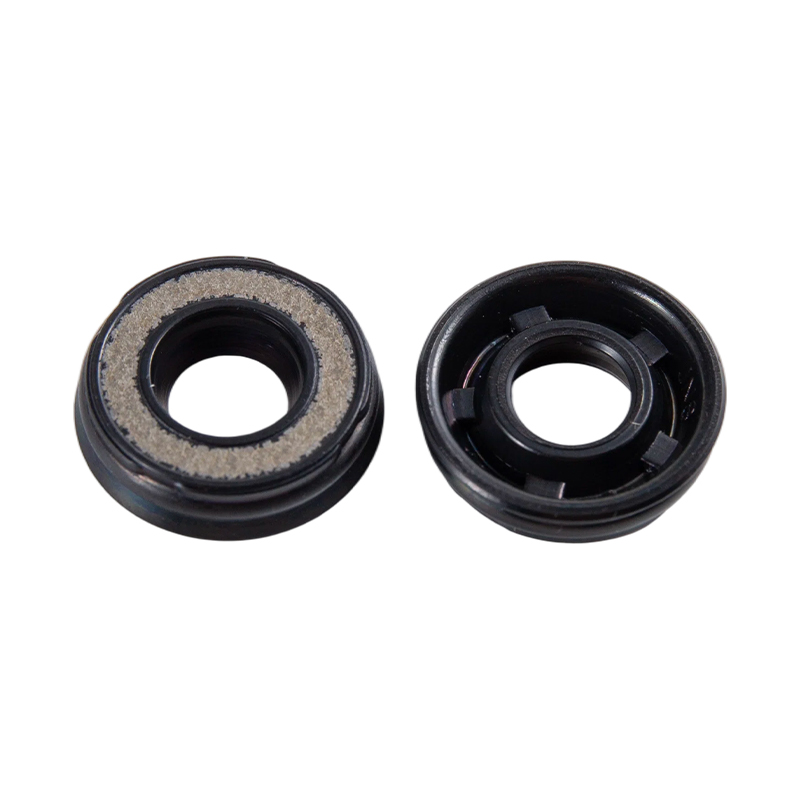
The reinforced section is one of the product’s principal design features. In a high-thrust installation, the seal body needs sufficient structural support to remain seated in its housing. A reinforced profile helps distribute mechanical stress through the seal rather than concentrating it at a thin lip or narrow contact area.
This construction can be especially beneficial in compact gas spring assemblies, where there is limited space for additional backup rings, support rings, or separate thrust components. By providing greater inherent support within the sealing profile, the seal can help simplify the design of the sealing package while preserving the required installation envelope.
Ultra-Low Deformation
Low deformation is important because sealing performance depends on maintaining a stable shape. Under pressure and mechanical load, an elastomer can change its dimensions. Excessive deformation may result in lip rollover, extrusion, loss of preload, or increased drag. The A-1-035 seal is described as having ultra-low deformation characteristics, making it suitable for applications where the sealing profile must remain stable under substantial force.
Reduced deformation can also improve repeatability. When a seal returns more consistently to its intended shape after loading, the piston rod is more likely to experience stable friction and predictable movement. This is valuable in furniture mechanisms, automotive support systems, adjustable equipment, and other products in which users expect smooth and repeatable operation.
Large Outside Diameter for a Compact Heavy-Duty Structure
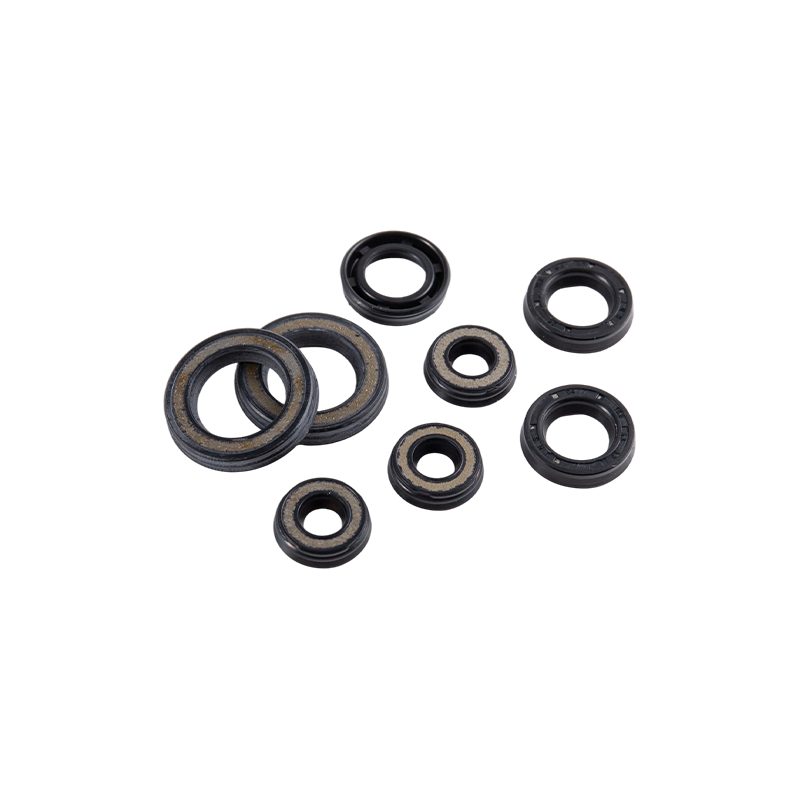
The 37 mm outside diameter is the largest size in the referenced product list. The size is paired with a 19.1 mm inside diameter and a 5 mm height, creating a sealing element intended for a 36 × 20 structural arrangement. The relatively substantial outer section supports the product’s heavy-load positioning and distinguishes it from smaller or lightly constructed seal profiles.
Size alone does not determine capacity, but a properly proportioned cross-section can provide more material for load distribution and greater resistance to deformation. The product is therefore suited to engineers who need high thrust capability without moving to an entirely different housing architecture.
Y-Type Lip Contact
The Y-type configuration provides a functional sealing interface around the piston rod. Its lip arrangement is intended to retain oil and pressurized gas while allowing reciprocating movement. A well-designed Y-type seal can offer a practical balance between sealing force and friction, provided the rod surface, lubrication, groove, and operating conditions are correctly matched.
Because the seal operates dynamically, the contact edge must remain flexible enough to follow the rod while retaining sufficient force to control leakage. The NBR compound and the geometry of the A-1-035 profile work together to create the required contact behavior. Application testing remains important because the actual balance between friction and leakage depends on the complete system.
NBR Material and Its Application Value
The 6000N Giant-Thrust Heavy Seal is made from NBR, or nitrile butadiene rubber. NBR is widely used in sealing applications because it provides a useful combination of oil resistance, mechanical strength, abrasion resistance, and cost efficiency. These characteristics make it a common material for gas springs, dampers, hydraulic-related components, automotive parts, and industrial equipment.
NBR is particularly useful when the assembly includes lubricating oils or mineral-oil-based media. Its resistance to many commonly used oils allows it to maintain a stable sealing interface over a broad range of practical applications. NBR also offers good resistance to wear, which is important for a seal that repeatedly contacts a moving piston rod.
The material is not universally suitable for every environment. Compatibility must be checked when the application uses aggressive chemicals, specialized synthetic fluids, high ozone exposure, or unusually high temperatures. HNBR, FPM, or other elastomer compounds may be more appropriate for certain conditions. The manufacturer’s broader product capabilities include NBR, HNBR, and FPM O-ring products, allowing customers to discuss material selection when NBR is not the best option.
Material selection should consider temperature, medium, pressure, speed, compression, storage conditions, and expected service life. A seal that performs well in an oil-lubricated indoor damper may require a different compound in an outdoor automotive application with strong ozone exposure. For this reason, NBR should be selected based on verified operating conditions rather than simply because it is a familiar material.
| Material factor | Importance in application |
| Oil resistance | Helps retain sealing performance when exposed to compatible lubricating oils. |
| Mechanical strength | Supports resistance to deformation under load. |
| Abrasion resistance | Helps manage repeated contact with a reciprocating piston rod. |
| Elastic recovery | Helps the seal maintain contact after movement and pressure changes. |
| Temperature compatibility | Must be checked against the actual operating and storage temperature. |
| Fluid compatibility | Should be confirmed for the specific gas, oil, and cleaning agents used. |
Advantages Compared with General-Purpose Competitor Seals
When comparing the A-1-035 with a general-purpose seal, buyers should evaluate more than initial price. The most meaningful comparison involves load range, deformation behavior, dimensional suitability, material consistency, technical support, and total cost over the product life cycle.
Higher Load Orientation
A general-purpose seal may be adequate for a low-load gas spring or light damper, but it may not be designed for a 6000N application. The A-1-035 is specifically positioned for high thrust, with a design applicable range extending to 6000N. This gives engineers a product option when a standard low-load profile is likely to experience instability or premature wear.
Improved Resistance to Deformation
Many low-cost seals are selected primarily by dimensional similarity. Two products can have the same nominal diameter while differing substantially in profile support, material formulation, and resistance to compression or extrusion. The reinforced and low-deformation design of the A-1-035 provides a stronger basis for high-load service than a lightly supported standard ring.
Better Fit for a Defined Structural Arrangement
The specified compatibility with a 36 mm steel pipe inner diameter and a 20 mm piston rod gives the product a clear application target. This reduces uncertainty during initial selection. Instead of adapting an unrelated seal to the structure, an engineer can begin with a product developed around the required dimensional relationship.
Potential for More Stable Dynamic Performance
Seal instability can create inconsistent friction, rod hesitation, leakage, and noise. A low-deformation Y-type profile is intended to maintain a more stable sealing interface during reciprocation. When combined with a properly finished rod and suitable lubrication, this can support smoother product operation.
Technical Customization Support
Another difference between a specialized manufacturer and a generic seal reseller is the ability to support customization. Ningguo Jnsseals Sealing Technology Co., Ltd. provides sealing solutions that can include product design, testing, and technical consultation. This is valuable when the standard A-1-035 dimensions are close to, but not exactly the same as, the required assembly.
Customization may involve material selection, profile adjustment, tolerance review, testing conditions, or adaptation to a different rod and tube combination. Such support can reduce the engineering risk associated with selecting a seal based only on a catalog dimension.
Manufacturing Strengths and Production Capabilities
The performance of a heavy-duty seal is closely related to the manufacturing process used to produce it. A strong design must be converted into a consistent molded or formed part. This requires reliable tooling, controlled material preparation, accurate molding conditions, careful trimming, dimensional inspection, and appropriate packaging.
Ningguo Jnsseals Sealing Technology Co., Ltd. is a high-tech enterprise founded in 2019 and headquartered in Anhui, China. The company focuses on the research, development, and application of sealing technology for gas springs and dampers, together with related O-ring products. This specialization gives the company direct experience in applications where reciprocating motion, pressure retention, friction control, and compact installation are important.
Research and Development Focus
A dedicated research and development capability supports the improvement of seal profiles, materials, and application performance. For a product such as the A-1-035, development work may include reviewing the load path, evaluating the sealing lip geometry, analyzing likely deformation, and checking how the seal interacts with the piston rod and housing.
Research is also important when customers need a customized solution. The company’s stated capabilities include product design, testing, and technical consultation. These services allow sealing requirements to be discussed as part of a complete mechanism instead of treating the seal as an isolated commodity component.
Advanced Production Equipment
Advanced production equipment contributes to repeatability in elastomer manufacturing. Controlled molding conditions help maintain the intended profile and reduce variation in dimensions. Proper tooling maintenance supports uniform lip geometry, while controlled post-processing helps limit flash and edge defects that could affect installation or dynamic sealing.
For a heavy seal, process control is especially important. Small inconsistencies in a sealing edge can affect friction and leakage. A capable production system should therefore manage material preparation, mold temperature, pressure, curing time, demolding, trimming, inspection, and storage conditions in a coordinated manner.
Professional Technical Service
Technical service is an important part of industrial sealing supply. Customers often need assistance with installation dimensions, material compatibility, sample evaluation, testing arrangements, and production quantities. A professional technical team can help identify whether the problem is caused by the seal, the rod finish, the housing, the lubricant, the assembly process, or the operating conditions.
The company’s technical service approach supports customers in automotive, furniture, home appliance, medical equipment, construction, and other industries. These sectors have different expectations for reliability, appearance, service life, and customization, so a flexible technical support structure is an important manufacturing strength.
Application-Oriented Manufacturing
Manufacturing seals for gas springs and dampers requires an understanding of the final product. The seal is not merely a round rubber part; it is part of a pressurized, moving mechanism. Application-oriented production helps connect the shape and material of the seal with the requirements of the complete assembly.
This approach can help improve product selection, reduce trial-and-error development, and support more efficient communication between the seal manufacturer and the equipment manufacturer. It is especially useful for customers developing a new gas spring or replacing an existing sealing package.
Recommended Applications
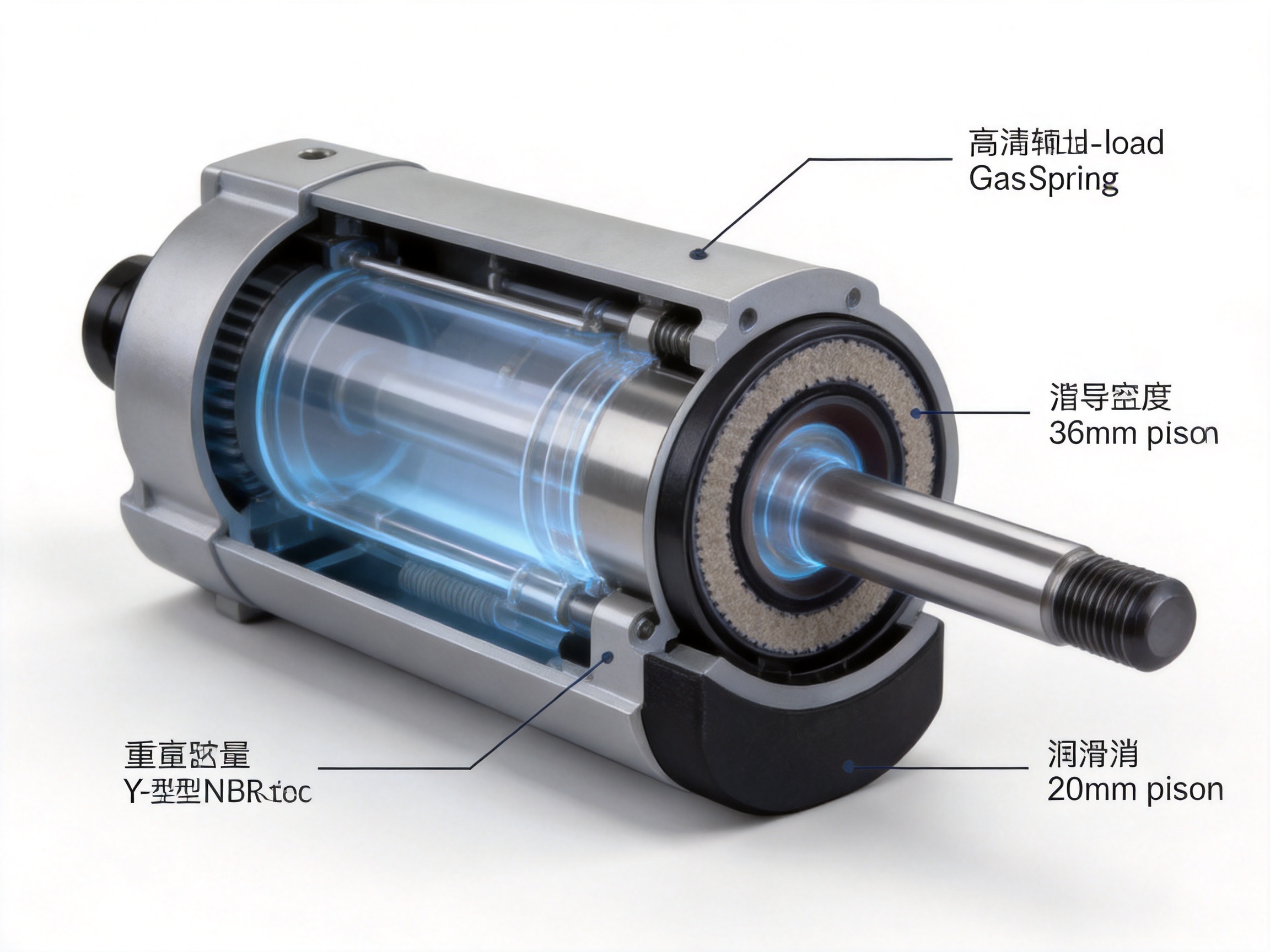
The A-1-035 seal is intended for high-load gas spring and damper structures that use a 36 mm steel pipe inner diameter and a 20 mm piston rod diameter. It may be considered for applications where the sealing element must withstand high thrust and repeated reciprocation.
Automotive Components
Automotive support mechanisms, lifting systems, seat structures, hood supports, tailgate systems, and other adjustable components may use gas springs or dampers. These products can experience repeated cycles, vibration, temperature changes, and varying loads. A heavy-duty seal can support reliability when the design requires strong sealing contact and reduced deformation.
Furniture and Seating Systems
Adjustable chairs, reclining furniture, height-adjustable products, and other furniture mechanisms often use gas springs. The customer expects smooth movement and reliable support throughout the service life of the product. The A-1-035 may be suitable for large or high-load furniture mechanisms designed around the specified tube and rod dimensions.
Home Appliances
Appliance doors, lifting mechanisms, damped panels, and adjustable assemblies can benefit from dependable gas spring sealing. In these applications, the seal may need to provide consistent motion while remaining compact and economical for high-volume production.
Medical Equipment
Medical beds, examination tables, patient support systems, and positioning equipment may use gas springs or dampers. Smooth operation and dependable load retention are essential in such products. Material compatibility, cleanliness requirements, and validation procedures should be considered carefully before choosing the seal for medical equipment.
Construction and Industrial Equipment
Construction equipment, access panels, covers, lifting assists, and industrial mechanisms can expose seals to high mechanical loads and demanding cycle conditions. The reinforced design of the A-1-035 may help support these applications when the geometry and environment are suitable.
| Application sector | Typical sealing requirement | Relevant product characteristic |
| Automotive | Repeated cycling, vibration, and load variation | High-load design and low deformation |
| Furniture | Smooth motion and compact installation | Y-type dynamic sealing profile |
| Home appliances | Reliable operation and production consistency | Standardized 37 × 19.1 × 5 mm dimensions |
| Medical equipment | Controlled movement and application validation | Technical consultation and material review |
| Construction equipment | Mechanical strength and durability | Reinforced section for heavy thrust |
Installation and Design Considerations
Even a high-performance seal can fail if it is installed incorrectly. Before installation, the housing, piston rod, groove, retaining features, and adjacent guide components should be checked. The dimensions listed for the A-1-035 are product dimensions, not a complete groove design. The actual groove must be developed according to the seal profile, compression, pressure direction, tolerance, and assembly method.
Piston Rod Condition
The piston rod should have a suitable surface finish, hardness, straightness, and cleanliness. Deep scratches, burrs, corrosion, sharp edges, or excessive roughness can damage the sealing lip during the first assembly or during operation. Any lead-in chamfer should be designed to prevent the rod from cutting or rolling the lip.
Housing and Groove Accuracy
The housing should hold the seal securely without excessive compression. Too little compression can cause leakage or seal movement, while too much compression can increase friction and accelerate wear. The groove should also be free from sharp edges and contamination. Dimensional tolerances should be reviewed together with the expected temperature range and material expansion.
Lubrication
Appropriate lubrication reduces starting friction and helps protect the lip during reciprocation. The lubricant must be chemically compatible with NBR and the other assembly materials. Excessive lubricant, contamination, or an incompatible compound can negatively affect performance.
Assembly Tools
Installation should use suitable tools that do not stretch, cut, twist, or scrape the seal. If the seal must pass over threads, holes, grooves, or sharp edges, a protective sleeve or temporary guide may be required. The seal should be oriented correctly according to the pressure direction and the intended function of the Y-type lips.
Pre-Production Validation
Before launching a high-volume product, manufacturers should conduct representative testing. Tests may include leakage evaluation, friction measurement, endurance cycling, pressure retention, temperature exposure, and dimensional checks after operation. The test program should reflect the actual gas, oil, rod speed, load, and environmental conditions of the final product.
Quality Control for Heavy Sealing Products
Quality control should begin with incoming raw materials. NBR compound properties must be controlled so that hardness, elasticity, tensile behavior, compression characteristics, and resistance to the application medium remain within the required range. Material traceability is useful for identifying batch variation and supporting corrective action if a problem occurs.
During production, molding conditions should be monitored to ensure that the seal is fully cured and that the profile is formed correctly. Incomplete curing can reduce mechanical strength and elastic recovery. Excessive curing can make the material too hard or brittle. Flash, mold mismatch, surface defects, and contamination should be controlled through process inspection.
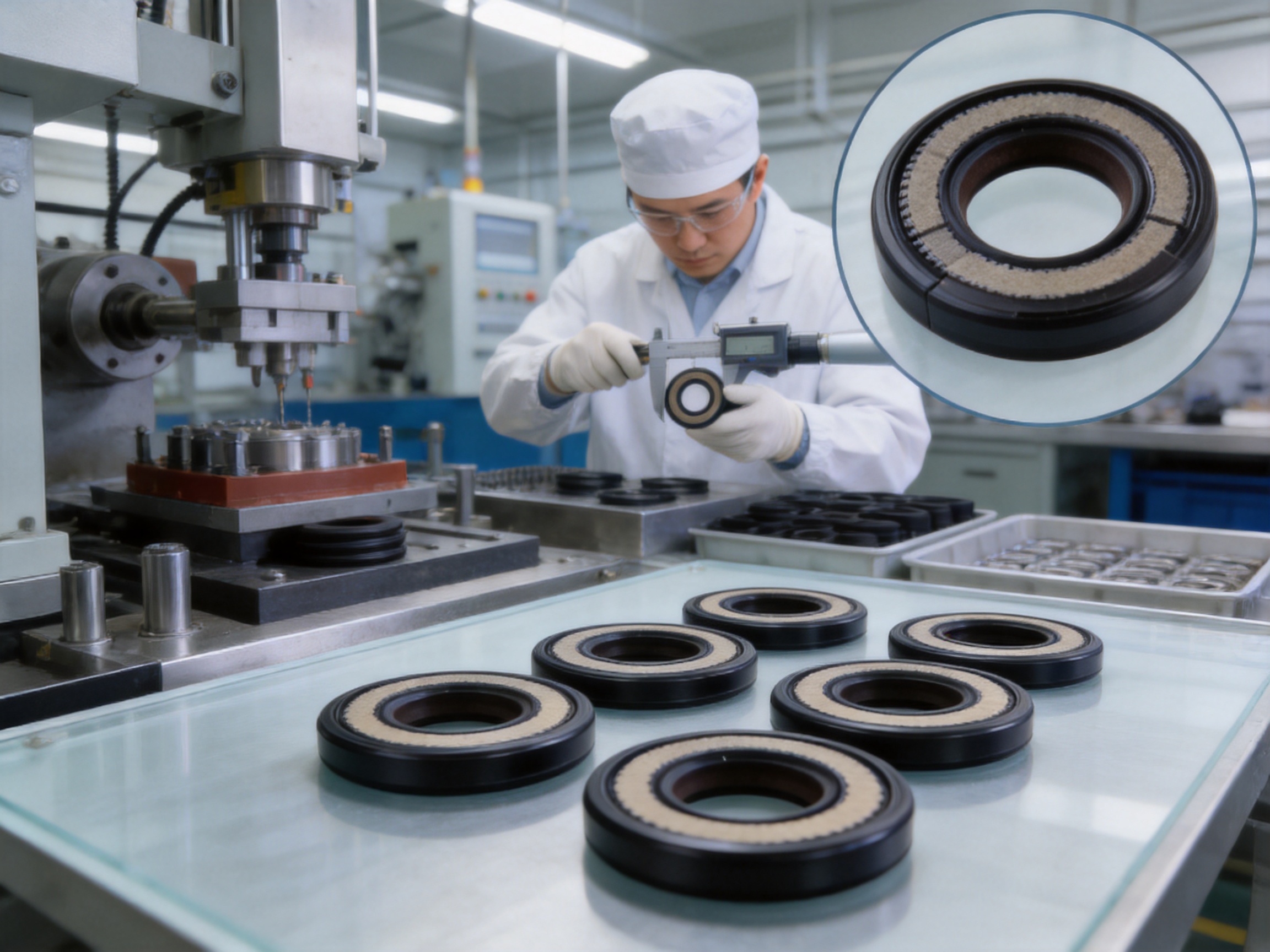
Dimensional inspection is particularly important for the A-1-035 because its intended structure has a defined 36 × 20 relationship. The outside diameter, inside diameter, height, lip geometry, and critical sealing features should be checked using appropriate gauges or measuring equipment. Inspection methods should account for the flexibility of the elastomer and should be applied consistently.
Functional tests can provide additional confidence. A dimensional check alone cannot confirm how the seal behaves under pressure and movement. A suitable test can reveal leakage, abnormal friction, lip damage, extrusion, or deformation that may not be visible before operation.
| Quality stage | Example control objective |
| Raw material inspection | Confirm NBR compound identity and required physical properties. |
| Tooling inspection | Verify mold condition and profile accuracy. |
| Process monitoring | Control molding, curing, trimming, and handling conditions. |
| Dimensional inspection | Confirm diameter, height, lip profile, and critical tolerances. |
| Visual inspection | Identify flash, cuts, cracks, contamination, and surface defects. |
| Functional testing | Evaluate leakage, friction, durability, and deformation in representative conditions. |
| Packaging inspection | Protect the seal from damage, contamination, heat, and unsuitable storage exposure. |
Total Cost and Supply Chain Benefits
The purchase price of a seal is only one part of its cost. A seal that fails early may create warranty claims, assembly interruptions, product recalls, field service, and customer dissatisfaction. A more suitable heavy-duty seal can offer better total value when it reduces the probability of premature failure in a high-load application.
The A-1-035 can also help reduce development time when its dimensions and load orientation match the intended structure. Engineers can begin with a defined product specification instead of adapting a seal with unknown deformation behavior. This is particularly useful for manufacturers that need a reliable component for a new gas spring or damper design.
Working with a specialized manufacturer may provide additional supply chain benefits. Product design, testing, technical consultation, and production can be coordinated through one source. This can simplify communication and make it easier to address changes in material, geometry, packaging, or production volume.
For international customers, consistent technical documentation is also important. Product code A-1-035, specification 37 × 19.1 × 5 mm, and the stated compatible 36 × 20 structure provide a clear basis for inquiry and sample management. Customers should communicate the complete application conditions, including load, pressure, temperature, speed, medium, expected cycles, and installation method.
How the Product Supports Product Development
Seal selection should take place early in the design process. If the groove, tube, rod, and guide system are finalized before the seal is chosen, later changes may become expensive. Selecting a high-load seal at the beginning allows the engineering team to account for sealing compression, installation space, rod movement, and pressure direction.
The A-1-035 can serve as a starting point for a high-load design review. Engineers can compare the 37 mm outside diameter and 19.1 mm inside diameter with the planned housing. They can then assess whether the 5 mm height is compatible with the available axial space and whether the 36 mm tube and 20 mm rod structure meet the product’s intended design basis.
If the application differs from the standard specification, technical discussion may identify whether a customized profile or material is appropriate. Customization should not be treated as simply changing one dimension. A change in diameter, height, lip angle, or material can affect stress distribution, friction, extrusion resistance, and assembly behavior. Proper engineering review is therefore necessary.
Testing should be performed with production-intent components whenever possible. A seal may behave differently when installed in a prototype housing with a different rod surface or lubricant. Testing the complete gas spring or damper provides a more realistic evaluation than testing the seal alone.
Comparison Checklist for Buyers
Purchasers and engineers can use a structured checklist when comparing the A-1-035 with alternative products. The first question is whether the competitor’s seal is genuinely designed for the required load. A nominal size match does not guarantee equivalent thrust capability.
The second question concerns deformation. Ask whether the competitor provides data or test results showing how the seal behaves under the intended load and pressure. If no information is available, the risk of selecting an unsuitable profile is higher.
The third question is material compatibility. NBR is suitable for many oil-based applications, but an alternative seal may use a different compound with different temperature, oil, or gas resistance. The material should be matched to the complete operating environment rather than selected only on price.
The fourth question concerns manufacturing consistency. A high-load seal requires stable dimensions and a consistent lip profile. Customers should review inspection procedures, sampling methods, batch control, and the manufacturer’s ability to maintain quality during volume production.
The fifth question is technical support. A supplier that can assist with design, testing, and troubleshooting may provide greater value than a supplier that only offers a catalog number. This is particularly important when the seal is used in safety-related, high-cycle, or high-volume equipment.
| Comparison topic | Questions to ask |
| Load capacity | Is the seal designed for the required 100N to 6000N range? |
| Deformation | Does the profile remain stable under high thrust? |
| Dimensions | Does it match the 37 × 19.1 × 5 mm specification and 36 × 20 structure? |
| Material | Is the elastomer compatible with the oil, gas, temperature, and environment? |
| Quality control | How are dimensions, curing, flash, and surface defects controlled? |
| Engineering support | Can the supplier provide design review, testing, and customization? |
| Lifecycle value | Will the product reduce leakage, downtime, warranty exposure, and replacement cost? |
Storage and Handling Recommendations
Elastomer seals should be stored in a clean, dry, and temperature-controlled environment. Direct sunlight, ozone-generating equipment, excessive heat, humidity, dust, and contact with incompatible chemicals can reduce storage life. Products should remain in their original packaging until they are needed for assembly.
Seals should not be stored under heavy compression, folded sharply, or hung in a way that permanently distorts the profile. Heavy objects should not be placed on cartons or bags containing sealing rings. Stock should be managed using a first-in, first-out approach so that older material is used appropriately.
During handling, workers should use clean hands or suitable gloves. Metal tools, sharp fingernails, and contaminated surfaces can create small cuts that later become leakage paths. Any seal that shows cracks, permanent deformation, contamination, or visible damage should be removed from production.
Technical Service and Custom Solutions
Different industries often need different sealing solutions. A furniture manufacturer may prioritize smooth operation and cost control, while a medical equipment manufacturer may emphasize validation and controlled materials. An automotive customer may require long endurance, temperature cycling, and strict batch consistency. A capable supplier must be able to understand these differences.
Ningguo Jnsseals Sealing Technology Co., Ltd. states that it provides customized sealing solutions, including product design, testing, and technical consultation. This capability can be useful when customers require an adaptation of the A-1-035 or need another material such as HNBR or FPM for a more demanding environment.
A technical inquiry should include the tube inner diameter, piston rod diameter, groove dimensions, pressure or force range, operating temperature, rod speed, lubrication, working medium, expected cycle life, and installation method. Photos or drawings of the assembly can also help the supplier understand the sealing position and the direction of pressure.
When a problem occurs in the field, technical analysis should examine the complete system. Leakage may result from a damaged rod, poor alignment, incorrect groove compression, incompatible lubricant, contamination, excessive side load, or an unsuitable seal material. A manufacturer with application experience can help separate these possible causes and recommend a corrective action.
Frequently Asked Questions
What is the 6000N Giant-Thrust Heavy Seal?
It is a Y-type oil seal ring designed for high-load gas spring and damper applications. The product code is A-1-035, and its dimensions are 37 mm outside diameter, 19.1 mm inside diameter, and 5 mm height.
What load range is specified for the product?
The stated design applicable load range is 100N to 6000N. This range should be used as a design reference. The complete assembly must be validated because actual performance depends on pressure, temperature, speed, rod condition, lubrication, alignment, and other factors.
Which structure is the seal designed to fit?
The product is specified for a structure using a 36 mm steel pipe inner diameter and a 20 mm piston rod diameter. The housing groove and assembly tolerances must still be designed and verified for the actual application.
What material is used?
The standard product material is NBR, or nitrile butadiene rubber. NBR offers a useful combination of oil resistance, mechanical strength, abrasion resistance, and elasticity for many gas spring and damper applications.
Why is the reinforced section important?
The reinforced section helps support the seal body under high mechanical thrust. It can reduce the risk of profile instability and support more uniform stress distribution compared with a lightly constructed general-purpose seal.
What does ultra-low deformation mean?
It means the product is designed to resist excessive shape change under operating load. Maintaining the intended profile helps support stable sealing contact, controlled friction, and resistance to extrusion or lip displacement.
Can the seal be used in every high-load application?
No. The product must be evaluated against the actual medium, temperature, pressure, rod speed, surface finish, groove design, alignment, and expected cycle life. NBR may not be appropriate for every chemical or temperature environment.
Can the manufacturer provide customized sealing solutions?
The company provides customized sealing solutions that may include product design, testing, and technical consultation. Customers should submit complete application data so the appropriate material and profile can be assessed.
What industries can use this seal?
Potential industries include automotive, furniture, home appliances, medical equipment, construction, and general industrial equipment. Suitability depends on whether the application matches the product’s dimensions and operating requirements.
How should the piston rod be prepared?
The rod should be clean, straight, free of burrs and scratches, and manufactured with a suitable surface finish and hardness. A proper lead-in chamfer should be used to prevent damage to the sealing lip during installation.
How can buyers compare this product with a competitor’s seal?
Buyers should compare load capability, deformation behavior, material compatibility, dimensional accuracy, quality control, testing, technical support, and total lifecycle value. A similar nominal size does not necessarily indicate equal performance.
Is the 6000N value a pressure rating?
The supplied specification describes a design applicable range in newtons, which is a unit of force. It should not automatically be interpreted as a pressure rating in pascals or megapascals. Engineers should confirm the pressure and force conditions of the complete assembly.
Why Choose a Specialized Sealing Manufacturer
A specialized manufacturer brings more than production capacity. It brings knowledge of elastomer behavior, sealing geometry, gas spring structures, damper mechanisms, and application testing. This knowledge can help customers avoid common problems such as selecting a seal only by diameter or overlooking the effect of rod surface finish and side loading.
The company’s focus on sealing technology for gas springs and dampers aligns closely with the intended use of the A-1-035. Its research and development capabilities support product improvement, while advanced production equipment helps achieve repeatable manufacturing. A professional technical service team can assist with design reviews, testing, customization, and troubleshooting.
The company serves customers in several industries and is positioned to support both standard products and application-specific requirements. Its stated business philosophy emphasizes people-oriented operation, innovation, pursuit of excellence, and reliable sealing technology. These principles are relevant to customers seeking long-term cooperation rather than a one-time component purchase.
For overseas customers, Ningguo Jnsseals Sealing Technology Co., Ltd. is located at No. 5, Meilin Avenue, Meilin Industrial Development Zone, Ningguo City, Anhui Province, China. Product inquiries and technical discussions can be directed to the company through its commercial contact channels.
Conclusion
The 6000N Giant-Thrust Heavy Seal is a specialized Y-type oil seal ring for high-load gas spring and damper structures. Its 37 × 19.1 × 5 mm dimensions, NBR construction, reinforced section, and low-deformation design make it a strong candidate for applications based on a 36 mm steel tube inner diameter and a 20 mm piston rod diameter.
Its main advantage over a basic general-purpose seal is its high-load orientation. The product is designed for an applicable range of 100N to 6000N, providing engineers with a dedicated option for demanding thrust conditions. Its profile is intended to support stable sealing contact, resist deformation, and maintain reliable operation during repeated reciprocation.
Product performance depends on correct system design. Rod condition, groove dimensions, lubrication, alignment, pressure, temperature, and material compatibility must all be considered. Proper installation and representative testing are essential before production approval.
The manufacturing strength behind the product is equally important. Ningguo Jnsseals Sealing Technology Co., Ltd. combines sealing technology research, production equipment, professional technical service, and customization capabilities. This application-oriented approach can help customers select, validate, and improve sealing solutions for automotive, furniture, appliance, medical, construction, and industrial products.
For manufacturers seeking a heavy-duty seal for a compact 36 × 20 structure, the A-1-035 provides a defined starting point for engineering evaluation. Its robust design concept and high applicable load range make it suitable for customers who require more than a standard replacement ring and who value dependable performance, manufacturing consistency, and technical cooperation.
References
1. Product specification sheet for 6000N Giant-Thrust Heavy Seal, product code A-1-035.
2. Manufacturer-provided technical information for Y-Type Oil Seal Rings and gas spring sealing applications.
3. General engineering principles for reciprocating elastomer seals, dynamic sealing interfaces, and seal groove design.
4. General material selection guidance for NBR, HNBR, and FPM sealing compounds.
5. General quality control practices for molded rubber sealing components.
6. Manufacturer company profile and information concerning research, development, production equipment, testing, customization, and technical service.
Product: 6000N Giant-Thrust Heavy Seal
PREV:Lightweight High-Frequency Seal for Low-Load Gas Spring and Damper Applications
NEXT:26mm Durable Industrial Seal: Design, Performance, and Application Guide
NEXT:26mm Durable Industrial Seal: Design, Performance, and Application Guide


Want to know more
about us?
about us?

Precision sealing for gas springs and dampers. Durable, wear-resistant, and built for long-life performance in demanding applications.
Product Categories
Quick Links
Contact Us
-
Email: jns@jnsseals.cn

-
Manager Gong: +86-18563770820

-
Manager Wang: +8615357558902
-
No. 5, Meilin Avenue, Meilin Industrial Development Zone, Ningguo City, Anhui Province, China

